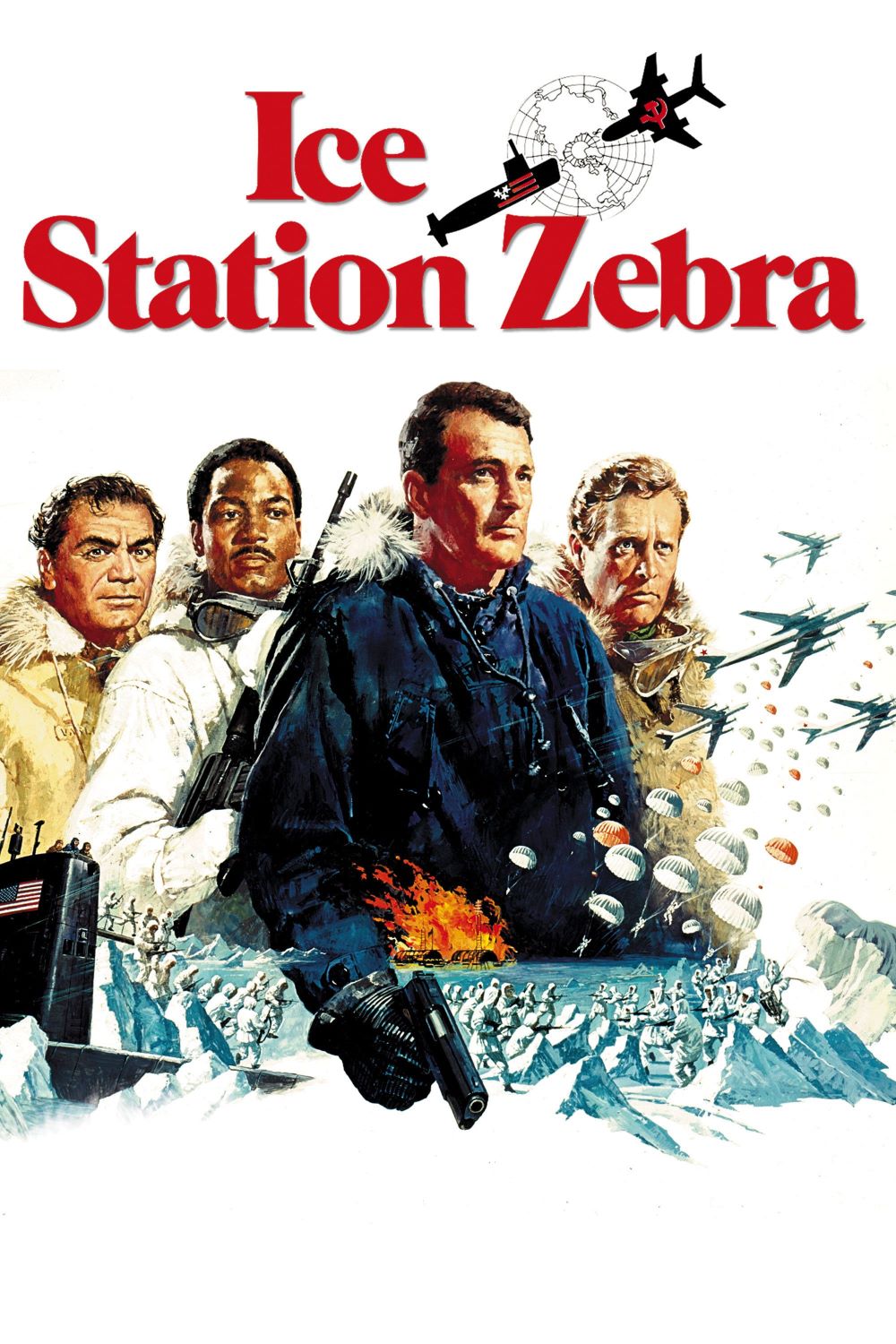
Guilty Pleasure No. 90: Ice Station Zebra (dir. by John Sturges)


Ice Station Zebra, directed by John Sturges in 1968, slides into guilty pleasure territory like a submarine slipping under polar ice—full of big Cold War ambitions, shadowy spy games, and submarine peril that tease something epic, but so loaded with pacing hiccups, studio shortcuts, and earnest overreach that it ends up a lopsided, lovably messy ride. Sturges had already cemented his rep with crowd-roaring hits like The Magnificent Seven, where a ragtag posse of gunslingers delivered razor-sharp tension and quotable showdowns, or The Great Escape, a WWII breakout yarn crackling with clever schemes, sweaty escapes, and Steve McQueen’s motorcycle glory. Those films moved like a well-oiled engine, every scene stacking stakes and character beats into unforgettable momentum. By contrast, Ice Station Zebra feels like Sturges chasing that same high-wire ensemble vibe—a U.S. nuclear sub, the USS Tigerfish, barreling toward a trashed Arctic outpost—but bloating into a 148-minute sprawl that swaps tight plotting for endless red-lit corridor glares and withheld mission secrets. It’s not in the same league as his earlier triumphs, lacking their propulsive drive and lived-in grit, yet that very shortfall turns it into quirky comfort viewing for fans who dig flawed ’60s spectacle.

The setup hooks you quick: Commander James Ferraday, Rock Hudson’s square-jawed everyman at the helm, gets tapped for a hush-hush run to Ice Station Zebra after a satellite supposedly carrying spy photos crashes nearby. No full briefing for him, just orders to play it cool while three mystery passengers board—Mr. Jones, a buttoned-up British agent with evasive smirks; Boris Vaslov, Ernest Borgnine’s barrel-chested Russian turncoat oozing fake bonhomie; and Captain Anders, Jim Brown’s steely Marine barking orders over a squad of jarheads. As the Tigerfish dives under thickening ice floes, the sub’s innards come alive with flickering sonar pings, steam-hissing valves, and crewmen hunched over gauges in perpetual sweat. It’s claustrophobic gold at first, the hull creaking like it’s got a bad case of frostbite, echoing the trapped dread Sturges nailed in his POW camp classic but without the same spark of rebellion. Then sabotage strikes—a flooded missile bay, a wild plunge toward crush depth—and fingers start pointing. Who tampered with the ballast? Jones with his locked trunk of gadgets? Vaslov’s too-friendly vodka toasts? The Marines itching for a fight? The scene builds real sweat, divers suiting up in the nick of time, but Sturges lets the fallout drag, turning interrogation into a tea party of suspicions rather than the cutthroat blame game his best films thrived on.

These early stumbles set the tone for a film that’s promising yet perpetually off-kilter, far from the seamless revenge rhythm of The Magnificent Seven‘s dusty trails. Production fingerprints show everywhere: rumors swirl of Navy brass forcing script tweaks to glorify their boats, last-minute casting shifts from bigger names to Hudson, and a roadshow rollout with overture, intermission, and 70mm pomp that screams overambition. The Arctic plunge delivers tense highlights—the sub ramming upward through ice chunks like a whale breaching, sparks flying from shorted panels, crew barking damage reports—but lulls follow with tech jargon dumps and characters circling motives without committing to conflict. Hudson anchors it all with unflappable poise, barking commands like a TV dad in a crisis, but he lacks McQueen’s sly charisma or Yul Brynner’s brooding fire. Borgnine hams it up as Vaslov, his accent flipping from gravelly growl to vaudeville schtick during mess-hall ribbing, while McGoohan brings the sharpest edge as Jones, his dry barbs hinting at deeper layers. Brown’s Anders gets muscle but little nuance, leading a Marine crew that feels like stock tough guys waiting for their cue.

Pushing topside, the flaws bloom into full charm. The ice cap arrival unfolds in sweeping widescreen vistas—endless white expanses, howling gales whipping snow devils—but close-quarters betray the soundstage: actors plodding through “blizzards” in lightweight jackets, no puffing breath in the deep freeze, sets that wobble if you squint. It’s the kind of earnest cheesiness that sinks modern blockbusters but endears this relic, especially when the station siege erupts. Soviets drop from the sky in parachutes like deadly snowflakes, scouring the charred ruins for a buried film capsule packed with NATO missile coords. Americans fan out in white camo, trading potshots amid smoke grenades and collapsing tunnels, loyalties cracking as Vaslov’s true colors flash. Ferraday’s cool bluff seals a three-way stalemate, denying everyone the prize in a nod to mutually assured secrets. Michel Legrand’s score surges here, horns blaring over the chaos like a war drum, giving Sturges’ action chops a late workout. Yet even this payoff sprawls, talky standoffs eating screen time where his peak films would’ve sprinted to the finish.

What seals Ice Station Zebra‘s guilty pleasure status is embracing its dated quirks as features, not bugs—hammy all-male bravado, Cold War jitters turned quaint, plot gaps you could park a destroyer in. Sturges conjures submerged panic and frosty fireworks that nod to his glory days, the sub’s practical effects holding up better than some CGI today, but without the narrative steel of The Great Escape‘s tunnel triumphs or The Magnificent Seven‘s mythic standoffs, it coasts on atmosphere over precision. Clocking 148 minutes, it tests patience with filler like extended sail sequences and coy reveals, yet rewards surrender: grin at Borgnine’s bear hugs masking menace, chuckle at the Navy polish glossing gritty potential, savor the sheer balls of staging Arctic Armageddon on a backlot. Howard Hughes reportedly looped it endlessly in his casino screening rooms, and you get why—it’s hypnotic in its wonkiness, a time capsule of late-’60s Hollywood flexing before New Wave grit crashed the party.

Pop this on a stormy night with cocoa and zero expectations, and Ice Station Zebra shines as cozy flawed fun. Sturges’ touch keeps the chills coming amid the clunkers, delivering submarine squeezes, betrayals under the aurora, and a finale with enough brinkmanship bang to forgive the bloat. It’s no peer to his earlier masterpieces, more a quirky footnote, but that’s the hook: imperfect promise wrapped in icy spectacle, begging a rewatch to spot every goofy grace note. For ’60s thriller buffs, submarine nuts, or anyone needing a break from slick reboots, it’s a frosty, flawed feast worth the dive.

Previous Guilty Pleasures

  1. Half-Baked
  2. Save The Last Dance
  3. Every Rose Has Its Thorns
  4. The Jeremy Kyle Show
  5. Invasion USA
  6. The Golden Child
  7. Final Destination 2
  8. Paparazzi
  9. The Principal
  10. The Substitute
  11. Terror In The Family
  12. Pandorum
  13. Lambada
  14. Fear
  15. Cocktail
  16. Keep Off The Grass
  17. Girls, Girls, Girls
  18. Class
  19. Tart
  20. King Kong vs. Godzilla
  21. Hawk the Slayer
  22. Battle Beyond the Stars
  23. Meridian
  24. Walk of Shame
  25. From Justin To Kelly
  26. Project Greenlight
  27. Sex Decoy: Love Stings
  28. Swimfan
  29. On the Line
  30. Wolfen
  31. Hail Caesar!
  32. It’s So Cold In The D
  33. In the Mix
  34. Healed By Grace
  35. Valley of the Dolls
  36. The Legend of Billie Jean
  37. Death Wish
  38. Shipping Wars
  39. Ghost Whisperer
  40. Parking Wars
  41. The Dead Are After Me
  42. Harper’s Island
  43. The Resurrection of Gavin Stone
  44. Paranormal State
  45. Utopia
  46. Bar Rescue
  47. The Powers of Matthew Star
  48. Spiker
  49. Heavenly Bodies
  50. Maid in Manhattan
  51. Rage and Honor
  52. Saved By The Bell 3. 21 “No Hope With Dope”
  53. Happy Gilmore
  54. Solarbabies
  55. The Dawn of Correction
  56. Once You Understand
  57. The Voyeurs 
  58. Robot Jox
  59. Teen Wolf
  60. The Running Man
  61. Double Dragon
  62. Backtrack
  63. Julie and Jack
  64. Karate Warrior
  65. Invaders From Mars
  66. Cloverfield
  67. Aerobicide 
  68. Blood Harvest
  69. Shocking Dark
  70. Face The Truth
  71. Submerged
  72. The Canyons
  73. Days of Thunder
  74. Van Helsing
  75. The Night Comes for Us
  76. Code of Silence
  77. Captain Ron
  78. Armageddon
  79. Kate’s Secret
  80. Point Break
  81. The Replacements
  82. The Shadow
  83. Meteor
  84. Last Action Hero
  85. Attack of the Killer Tomatoes
  86. The Horror at 37,000 Feet
  87. The ‘Burbs
  88. Lifeforce
  89. Highschool of the Dead

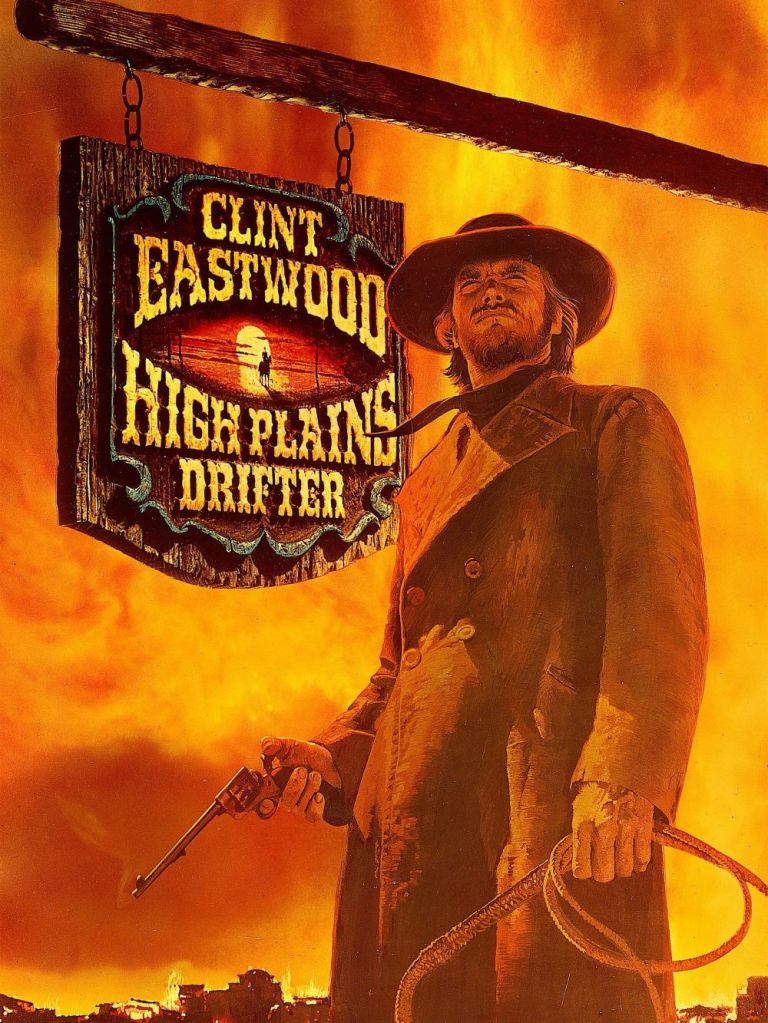
Horror Review: High Plains Drifter (dir. by Clint Eastwood)


“Don’t count on me to make you feel safe.” — The Stranger

High Plains Drifter stands as one of the bleakest, most enigmatic entries in Clint Eastwood’s filmography—a Western that bleeds unmistakably into the realms of psychological and supernatural horror. This 1973 film is not just another dusty tale of lone gunfighters and frontier justice. It’s a nightmare set in broad daylight, a morality play whose hero is more monster than man.

Eastwood’s Stranger comes riding into the town of Lago from the shimmering desert, a silhouette both akin to and apart from his famed Man With No Name persona. The townsfolk are desperate, haunted by fear—less afraid of imminent violence, more of the sins they’ve half-buried. This is a place where a lawman was brutally murdered by outlaws while the townspeople looked away, their silence paid for with cowardice and greed. When the Stranger assumes command, he does so with often-gleeful sadism—kicking people out of their hotel rooms, replacing the mayor and sheriff with the dwarf Mordecai, and ordering that the entire town be painted red before putting “Hell” on its welcome sign.

There’s a surface plot: the Stranger is hired to protect Lago from the same three outlaws who once butchered its marshal. But he’s there for far more than that. The story unspools through dreamlike sequences, flashbacks that suggest the Stranger may well be an avenging spirit or a revenant—the dead lawman, spectral and merciless, returned to claim what the townsfolk owe to Hell itself.

The horror here isn’t about jump scares or gothic haunted houses. The supernatural lurks everywhere and yet nowhere. The Stranger moves with the implacable calm—and violence—of a slasher villain, transforming Lago into his personal stage for retribution. His nightmares, full of images of past atrocities, are painted with the same vivid brutality as the daytime violence. Eastwood’s use of silence, the squint of a face, the twitch of a pistol replaces musical cues in amplifying dread. The sound design evokes otherness—a howling wind, footsteps echoing across empty streets—that builds a shadow of terror around the Stranger’s presence.

This violence is hurried and brutal; its sexual politics unflinching. When the Stranger enacts revenge, he punishes not just the outlaws, but the townsfolk complicit in their crimes. There is little comfort in his sense of justice—the pleasures he takes border on sadistic. The film’s moral ambiguity cuts deeper than most Westerns or horrors: this is not a clear-cut tale of good versus evil, but a brutal reckoning of collective guilt, cowardice, and corruption.

Lago itself acts almost like a town stuck in purgatory—a holding pen between redemption and eternal damnation. The infamous “Welcome to Hell” sign the Stranger paints at the town’s entrance serves as a grim message. It’s no welcome to law and order, but a symbolic beacon to the very outlaws the Stranger is hired to confront, suggesting that Lago is a place where sin festers and punishes itself. The town’s dance with Hell is both literal and metaphorical. The inhabitants aren’t just awaiting judgment; they have invited it in their desperate attempts to hide their cowardice and greed under the guise of civilization.

This notion of Lago as purgatory stands in sharp contrast to other recent horror Westerns, which serve as prime examples of the genre’s thematic spectrum. These films tend to focus on the primal terror of nature barely held at bay by the fragile veneer of civilization the settlers claim. They pit human beings against the ancient, untamed forces of the wilderness—whether monstrous creatures or surreal phenomena—emphasizing that the supposed order and progress of the West remain fragile and constantly threatened. This dynamic symbolizes the uneasy balance between civilization’s reach and nature’s primal power, often revealing how thin and tenuous that barrier truly is.

Among these, Bone Tomahawk and Ravenous stand out as vivid examples. Bone Tomahawk confronts menacing cannibals lurking in the wild, reminding viewers that the West’s order is fragile and under perpetual threat from untamed wilderness. Ravenous uses cannibalism and survival horror as metaphors for nature’s savage predation hidden beneath the polite façade of civilization—nature’s horrors masked but not erased.

By contrast, High Plains Drifter directs its horror inward, exposing the corruption that manifest destiny imposed on settlers themselves. Instead of fearing nature as an external force, the film presents settlers as haunted by their own moral failures and complicity in violence and betrayal. The Stranger’s vengeance is a reckoning with the darkness festering inside the community, a brutal meditation on guilt, collective cowardice, and the price of greed disguised as progress.

Eastwood’s film strips away the mythic promises of the American West as a land of freedom and opportunity, revealing instead the brutal reality of communities locked in complicity, violence masquerading as justice, and the moral rot at the heart of manifest destiny. This moral ambiguity and psychological depth give High Plains Drifter a unique position in the horror Western subgenre, elevating it beyond simple scares to a profound exploration of American cultural myths.

The Stranger is not a traditional hero but a spectral judge, embodying divine or supernatural retribution. His calm yet ruthless punishment exposes the cruelty, cowardice, and malevolence within Lago’s population, meting out a justice that is neither neat nor forgiving. His supernatural aura and sadistic tendencies make him an unforgettable figure of terror and fate.

Visually, the film’s harsh daylight contrasts with the romanticized Western landscapes of earlier films. Instead of shadows hiding evil, blinding light exposes the town’s moral decay. Characters are reduced to symbols of greed, fear, and cruelty, highlighting that the true horror lies within human nature and the failure to uphold justice.

High Plains Drifter operates on multiple levels—a Western, a ghost story, a horror film, and a dark morality play. It is a relentless meditation on justice and punishment and a dismantling of the traditional Western hero myth. Through layered narrative, stark visuals, and Eastwood’s chilling performance, it remains an essential entry in the horror Western canon.

For those seeking a Western that doesn’t just entertain but unsettles and challenges, High Plains Drifter offers an unforgiving descent into darkness. It strips away the comforting myths of the frontier and exposes the raw, rotting core beneath. Unlike other modern horror Westerns such as Bone Tomahawk and Ravenous, which confront external terrors lurking in the wilderness, this film turns its gaze inward—on the moral decay, guilt, and violence festering within the settlers themselves. It’s a brutal, haunting reckoning, and Eastwood’s Stranger is the cold, relentless agent of that reckoning. This is a journey into a hell both literal and psychological, where justice is merciless and safety is a long-forgotten promise.

Film Review: High Plains Drifter (dir by Clint Eastwood)


In 1973’s High Plans Drifter, Clint Eastwood plays …. The Stranger.

No, not the Man With No Name.  The Stranger has a name but he chooses not to share it.  That said, when one person says that he doesn’t even know the Stranger’s real name, the Stranger replies, “Yes, you do.”  The Stranger appears to emerge from the heat of the desert, riding into the small mining town of Lago and gunning down the three bullies that the townspeople hired to protect them after the murder of their town marshal.  With no other option, the townspeople accept the Stranger as the town’s new protector.

The Stranger is drawn to the town and the townspeople but he doesn’t seem to particularly like any of them, with the exception of Mordecai (Billy Curtis), the dwarf that the Stranger appoints as the town’s new sheriff.  The townspeople, the majority of whom are cowardly and motivated by greed, aren’t particularly likable themselves.  The Stranger rules the town like a dictator, kicking everyone out of the hotel so that he can have it for himself and ordering that every building in the town be painted red.  Over the town’s welcome sign, he paints one word: “Hell.”  When the townspeople see how well the Stranger can shoot, they celebrate in the belief that they’ll always be safe.  The Stranger responds by leaving town just as three sadistic outlaws, led by Stacey Bridges (Geoffrey Lewis), approach.  The Stranger may be looking for revenge on Bridges but he also seems as if he wants to make the town suffer for its sins as well.

Much as with the case of The Man With No Name, the Stranger is not motivated by kindness or any sort of concern for the safety of the townspeople.  He often shows a cruel-streak when it comes to dealing with the cowardly townspeople.  He doesn’t attack unless he’s attacked first but once you’re on his bad side, he’ll gun you down without a hint of emotion.  When the Stranger sleeps, he is haunted by nightmares of the previous marshal (played by Buddy Van Horn, Clint Eastwood’s stunt double) being murdered by Bridges and his men while the townspeople stood by and did nothing.  We learn that the townspeople, worried that it might be bad for their business interests, didn’t even give the late marshal a decent headstone after his death.  One woman mentions that spirits can’t rest unless they have a proper marker….

Getting the idea?

High Plains Drifter is probably the closest that Eastwood has ever come to making a supernatural horror film.  The Stranger may or may not be a vengeful ghost (the movie leaves that for you to decide) but he turns the small town of Lago into his own personal version of Hell and, when he attacks the men who killed the marshal, he moves with the ruthless determination of a slasher villain.  The scene where Bridges and his men ride into the town is like a filmed nightmare.  This is a dark film, one in which Eastwood’s Stranger is not the hero because he’s particular heroic but just because everyone else in the film is so bad.

This was also Eastwood’s second film as a director (following Play Misty For Me) and also the first of many westerns that Eastwood would direct.  The imagery is often haunting, all the more so because some of the most violent scenes take place in broad daylight.  The scenes where the Stranger seems to materialize out of the desert’s heatwaves perfectly capture the mythology of the old west and its “heroes.”  Eastwood gets good performances out of his ensemble cast and, even more importantly, he shows that Eastwood the director had a perfect understanding of Eastwood the actor.  As the Stranger, Eastwood says more with a snarl or a half-smile than most actors could say with a multi-page monologue.

High Plains Drifter is violent, often disturbing, and ultimately unforgettable.

Love on the Shattered Lens: Barefoot In The Park (dir by Gene Saks)


The 1967 film, Barefoot in the Park, tells the story of two newlyweds.

Paul Bratter (Robert Redford) may have a terrible last name (seriously, Bratter?) but he’s an up-and-coming lawyer with a bright future.  He’s a little bit uptight and doesn’t seem to have the greatest understanding of human nature but he’s handsome and he’s charming and he means well.  Paul has just recently married Corie (Jane Fonda).  Corie is a free spirit who cringes at the idea of conformity.  Having been raised by a judgmental mother who has always told her that she will never be good enough to make it on her own, Corie has decided to murder Paul and steal all of his money by insisting that they live in a drafty apartment that’s on the fifth floor of an New York apartment building that doesn’t have an elevator.  If climbing up the stairs doesn’t kill Paul, the fact that the skylight has hole in it probably will.  Helping Corie with her plan is her eccentric neighbor, Victor Velasco (Charles Boyer).  When Paul comes home one day to discover Victor lifting up his lingerie-clad wife, Victor says, “We are heating up the apartment.”  Corie assures Paul that they’re just trying to get the radiator to start working but we know the truth….

Okay, that’s actually the Lifetime version of Barefoot in the Park.  The real Barefoot in the Park is a charming, lighter-than-light adaptation of Neil Simon’s famous play.  (If I’m biased towards the play, it’s because I once played Corie in a heavily edited version of the play that we put on in high school.  I was the perfect Corie, if I may say so myself.)  As played by Robert Redford, Paul is charming but uptight and, as played by Jane Fonda, Corie is a free spirit who doesn’t really seem to have much common sense about the realities of living in New York City.  (Running barefoot in Central Park?  Probably not a good idea in 1967.)  They do end up living on the fifth floor and there are a lot of jokes (in fact, there’s probably too many jokes) about people getting out of breath from having to climb all of the stairs.  There’s also a broken skylight, which is a problem since it snows in New York.  However, Corie never deliberately plots to kill Paul.  Instead, she tries to set her mom (played, in an Oscar-nominated performance, by Mildred Natwick) up with Victor.

Barefoot in the Park is probably one of those films that seemed semi-daring when it was originally released in 1967 (“Look!  A honeymoon sex joke!  Look!  Corie’s walking around in Paul’s shirt!  Look!  Paul looks like he’s about to say a forbidden word!”) but today, it seems like an old-fashioned but likable fantasy about what’s like to be a newlywed in New York.  The city’s beautiful and full of romance.  The dialogue is witty and zippy.  (Zippy’s a word, isn’t it?)  Charles Boyer overacts in the most charming way possible and Mildred Natwick has some good moments as Corie’s mom.  (To appreciate Natwick’s peformance, it helps to imagine what the film would have been like if Shelley Winters had played the role.)  Most importantly, Robert Redford and Jane Fonda have got an amazing chemistry and, as they were both young in 1967 and considerably less weather-beaten than they are today, it’s hard to imagine a more beautiful couple.  Though Gene Saks’s direction is visually flat and, cinematically, the film never quite breaks out of its stage-bound origins, the chemistry of Redford and Fonda and Boyer and Natwick carry you through the occasional rough patch.

Seriously, I kind of love this movie!