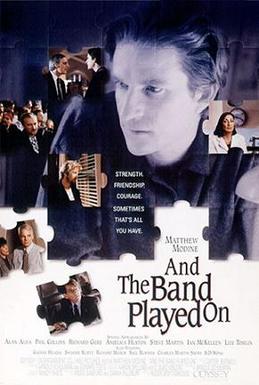
Film Review: And The Band Played On (dir by Roger Spottiswoode)


I live in a very cynical time.

That was one of my main thoughts as I watched 1993’s And The Band Played On.

Directed by Roger Spottiswoode and featuring an all-star cast, And The Band Played On deals with the early days of the AIDS epidemic.  It’s a film that features many different characters and storylines but holding it all together is the character of Dr. Don Francis (Matthew Modine), an epidemiologist who is haunted by what he witnessed during the Ebola epidemic in Africa and who fears that the same thing is going to happen in America unless the government gets serious about the mysterious ailment that is initially called “gay cancer” before then being known as “GRID” before finally being named AIDS.  Dr. Francis is outspoken and passionate about fighting disease.  He’s the type who has no fear of yelling if he feels that people aren’t taking his words seriously enough.  In his office, he keeps a track of the number of HIV infections on a whiteboard.  “Butchers’ Bill” is written across the top of the board.

Throughout the film, quite a few people are dismissive of Dr. Francis and his warnings.  But we, the audience, know that he’s right.  We know this because we know about AIDS and but the film also expects us to trust Dr. Francis because it’s specifically stated that he worked for the World Health Organization before joining the Center For Disease Control in Atlanta, Georgia.  As far as the film is concerned, that’s enough to establish his credentials.  Of course, today, after living through the excesses of the COVID pandemic and the attempts to censor anyone who suggested that it may have begun due to a lab leak as opposed to some random guy eating a bat, many people tend to view both the WHO and the CDC with a lot more distrust than they did when this film was made.  As I said, we live in a cynical time and people are now a lot less inclined to “trust” the experts.  To a large extent, the experts have only themselves to blame for that.  I consider myself to be a fairly pragmatic person but even I now find myself rolling my eyes whenever a new health advisory is issued.

This new sense of automatic distrust is, in many ways, unfortunate.  Because, as And The Band Played On demonstrates, the experts occasionally know what they’re talking about.  Throughout the film, people refuse to listen to the warnings coming from the experts and, as a result, many lives are lost.  The government refuses to take action while the search for a possible cure is hindered by a rivalry between international researchers.  Alan Alda gives one of the best performances in the film, playing a biomedical researcher who throws a fit when he discovers that Dr. Francis has been sharing information with French scientists.

It’s a big, sprawling film.  While Dr. Francis and his fellow researchers (played by Saul Rubinek, Glenne Headly, Richard Masur, Charles Martin Smith, Lily Tomlin, and Christian Clemenson) try to determine how exactly the disease is spread, gay activists like Bobbi Campbell (Donal Logue) and Bill Kraus (Ian McKellen) struggle to get the government and the media to take AIDS seriously.  Famous faces pop up in small rolls, occasionally to the film’s detriment.  Richard Gere, Steve Martin, Anjelica Huston, and even Phil Collins all give good performances but their fame also distracts the viewer from the film’s story.  There’s a sense of noblesse oblige to the celebrity cameos that detracts from their effectiveness.  All of them are out-acted by actor Lawrence Monoson, who may not have been a huge star (his two best-known films are The Last American Virgin and Friday the 13 — The Final Chapter) but who is still heart-breakingly effective as a young man who is dying of AIDS.

Based on a 600-page, non-fiction book by Randy Shilts, And The Band Played On is a flawed film but still undeniably effective and a valuable piece of history.  Director Roger Spottiswoode does a good job of bringing and holding the many different elements of the narrative together and Carter Burwell’s haunting score is appropriately mournful.  The film ends on a somber but touching note.  At its best, it’s a moving portrait of the end of one era and the beginning of another.
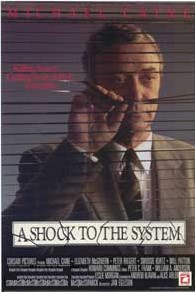
A Shock To The System (1990, directed by Jan Egleson)


Graham Marshall (Michael Caine) has spent years toiling away as an executive at an advertising firm and being nagged by his wife (Swoosie Kurtz), who claims that Graham doesn’t have enough of a killer instinct to get ahead.  When Graham is passed over for a promotion that he felt was promised to him, Graham starts to reconsider everything that he once believed.  While Graham is waiting for the train to take him home, he is approached by an obnoxious panhandler who always asks him for money.  That night, instead of ignoring the panhandler, Graham shoves him in front of the train.  When no one notices that Graham has murdered the panhandler, Graham decides to get revenge on everyone who he blames for the sorry state of his life.

With each murder, Graham rises higher in the company and he feels better about his life.  But each murder brings to Graham a new set of complications that he has to clean up.  Lt. Laker (Will Patton) thinks that Graham is responsible for all of the deaths that have recently occurred but he doesn’t have the evidence to charge him.  His murder spree brings him a chance of romantic redemption with Stella (Elizabeth McGovern) but soon, even she suspects that Graham might actually be a killer.  Luckily for him, Graham learns that he can get away with his crimes because the system is set up to protect men like him.

A Shock To The System is a pitch-black comedy that benefits from the casting of Michael Caine in the lead role.  Caine is one of the few actors who can make a resentful and bitter sociopath likable and he does that in A Shock To The System.  Graham starts out beaten down by the world and being passed over for younger executives like Bob Benham (Peter Reigert) but, by the end of the film, he’s become as ruthless a killer as Jack Carter.  Just as in Get Carter, A Shock To The System features Michael Caine making evil very compelling.

Cleaning Out The DVR: Get Over It (dir by Tommy O’Haver)


“I wouldn’t play with that, Kelly,” Berke Landers (Ben Foster) says as Kelly Woods (Kirsten Dunst) playfully aims a crossbow at him.

Kelly laughs and tells him that it’s just a prop.

Berke suggests again that she should probably stop aiming it at him.

Kelly laughs and proceeds to fire an arrow straight into Berke’s arm.

The next scene, of course, is Berke in the back of an ambulance, groaning in terrible pain while Kelly apologizes and a paramedic repeatedly warns Berke not to look at his arm.  In most movies, that would seem like a pretty dramatic plot development and, at the very least, you would expect that Berke would try to avoid Kelly and perhaps have his arm in a sling for the rest of the film.  In the 2001 film, Get Over it, Berke recovers rather quickly, he and Kelly fall in love, and the film ends with Kelly making a joke about how she thought the crossbow was a prop.

That’s just the type of film that Get Over It is.  This is a film from the age when all teen comedies were very loosely based on Shakespeare and they usually had a three word name like She’s All That or Drive Me Crazy or …. well, Get Over It.  Ben Foster has the type of role that would usually go to Freddie Prinze, Jr.  Sisqo has the Usher rule of the supercool sidekick who raps over the end credits.  Shane West speaks with a British accent and steps into the Matthew Lillard role of the obnoxious teen celebrity.  Melissa Sagemiller is the girl who the main guy thinks he’s in love with while Martin Short plays the eccentric and overdramatic theater teacher.  And finally, Kirsten Dunst gets to play another version of her Bring It On role as the quirky and perky girl who wants to do the right thing.  Meanwhile, Zoe Saldana, Mila Kunis, Colin Hanks, Swoosie Kurtz, and Ed Begley, Jr. all have small parts.  It’s a good cast, if nothing else.

Get Over It centers around a high school production of a musical version of A Midsummer’s Night Dream.  Basketball star Berke auditions for the play because he thinks that it will convince his ex-girlfriend, Alison (Sagemiller) to take him back.  Instead, Alison ends up falling for the duplicitous Striker Scrumfeld (West), who has the exact type of personality that you would expect someone named Striker Scrumfeld to have.  Meanwhile, Berke is falling in love with Kelly, who is the sister of his friend, Felix (Colin Hanks).

It’s all very predictable but, at the same time, the cast is absolutely charming and there’s enough quirky humor to make it memorable.  I’ve watched Get Over It several times and, every time that I rewatch it, I’m always a little bit surprised to rediscover just how funny it actually is.  For instance, as Berke leaves Alison’s house after being dumped by her, Vitamin C and a marching band suddenly appear behind him and start to perform Love Will Keep Us Together until Berke finally loses it and starts screaming.  The musical production of A Midsummer’s Night Dream is the perfect parody of every pretentious high school play ever produced and Martin Short cheerfully throws himself into being the director for Hell.  Ben Foster is a bit too intense to be a romantic or, for that matter, comedic leading man but the rest of the cast is enjoyably laid back and fully embrace their quirky roles.

Get Over It may not be a classic but it is a fun 90 minutes.

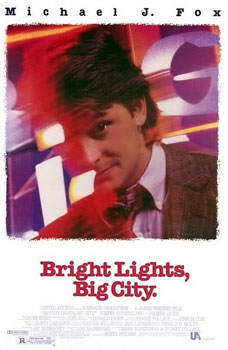
Embracing the Melodrama Part II #80: Bright Lights, Big City (dir by James Bridges)


Bright_Lights_Big_CityThe 1988 film Bright Lights, Big City is one of the many films from the late 80s in which Kiefer Sutherland plays a demonic character.  In this case, his character is so demonic that his name is — seriously, check this shit out — Tad Allagash.  Nobody named Tad Allagash has ever been a good guy!

Tad is the best friend of Jamie Conway (Michael J. Fox), an aspiring writer who has moved to New York City from some middle-America farm state and who now has a job as a fact checker at the New Yorker.  Jamie is still struggling to deal with both the death of his mother (played in flashbacks by Dianne Wiest) and the collapse of his marriage to Amanda (Phoebe Cates).  Tad helps out his depressed little friend by taking him out to the clubs and supplying him with so much cocaine that Jamie literally spends the entire film on the verge of having a geyser of blood shoot out from his powder-coated nostrils.

And the thing is, Tad knows that he’s not a good influence on Jamie’s life but he doesn’t care.  Whenever Jamie starts to get a little bit too wrapped up in his self-pity, Tad is there to make a tasteless joke.  Whenever Jamie tries to argue that he and Amanda aren’t really broken up, Tad is there to remind him that Amanda wants nothing to do with him.  Whenever Jamie starts to think that doing all of this cocaine is potentially ruining his life, Tad is there to cheerfully cut another line.  Tad makes no apologies for being Tad Allagash.  He’s too busy having a good time and it’s obvious that Sutherland’s having an even better time playing Tad.  As a result, Tad Allagash becomes the perfect antihero, the bad guy that you like despite yourself.

Unfortunately, Bright Lights, Big City isn’t about Tad Allagash.  You’re happy whenever Kiefer shows up but he doesn’t show up enough to actually save the film.  No, Bright Lights, Big City is the story of Jamie Conway and that’s why the film is a bit of a pain to sit through.  Despite having a great Irish name, Jamie Conway is one of the whiniest characters that I have ever seen in a film.  From the minute he first appears on screen and starts complaining about the failure of his marriage, you want someone to just tell him to shut up.  When he tells an alcoholic editor (Jason Robards) that his latest short story was autobiographical, you nod and think, “So, that’s why it hasn’t been published.”

Of course, since Jamie is the main character, everyone in the film feels sorry for him but he really is just insufferable.  There’s a lengthy scene where Jamie delivers a drunken monologue to a sympathetic coworker, Megan (played by Swoosie Kurtz).  And while Jamie goes on and on about how he first met Amanda and how their marriage fell apart (and how it was all her fault), poor Megan has to sit there and try to look sympathetic.  Personally, I would have kicked Jamie out of my apartment after the first minute of that whiny diatribe.  Megan has the patience of a saint.

There is some curiosity value to watching Michael J. Fox snort cocaine.  (I wonder if contemporary audiences shouted, “McFly!” as they watched Fox sniffing up the devil’s dandruff.)  But otherwise, Bright Lights, Big City is a relic of 80s cinema that can be safely forgotten.

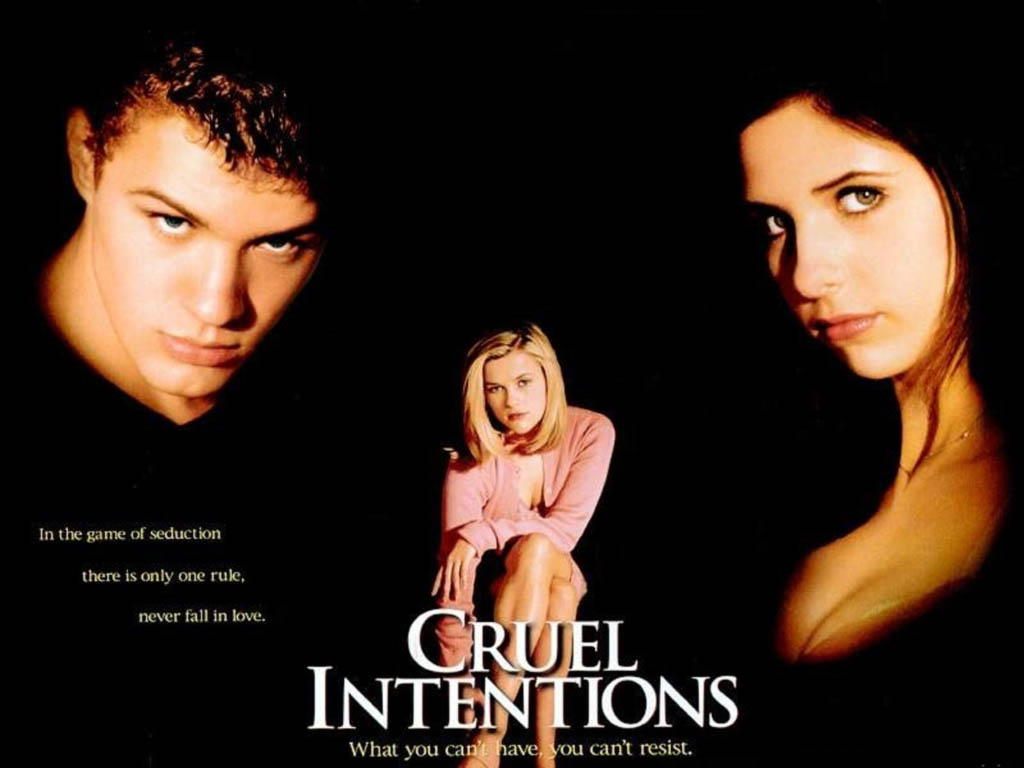
Embracing the Melodrama #47: Cruel Intentions (dir by Roger Kumble)


For the past 10 days, I’ve been reviewing some of the most and least memorable melodramas ever filmed.  Starting with 1916’s Where Are My Children?, we’ve been moving chronologically through film history.  We’re now coming to the end of the 90s and what better way to end that decade than by taking a look at 1999’s Cruel Intentions?

Cruel Intentions takes place in the upscale world of a New York private school.  Rich and popular Kathryn Merteuil (Sarah Michelle Gellar) is also a manipulative hypocrite who destroys reputations on a whim and carries cocaine in her ever-present cross necklace.  Kathryn is upset because her boyfriend has recently dumped her and is now dating the sweet and innocent Cecile (Selma Blair).  Kathryn asks her decadent cousin Sebastian Valmont (Ryan Phillippe) to seduce Cecile.  However, Sebastian refuses, saying that the challenge would be too easy.  Instead, he plans to seduce Annette Hargrove (Reese Whitherspoon), who has recently written an acclaimed essay about the importance of chastity and who also happens to be the daughter of the school’s headmaster.  Kathryn is intrigued by Sebastian’s plan and makes a bet with him.  If Sebastian manages to take Annette’s virginity than Kathryn will have sex with him…

Now, if you’ve already read my previous review of Dangerous Liaisons, the plot of Cruel Intentions probably sounds a bit familiar.  That’s because both of these films are based on the same source material —  Les Liaisons dangereuses by Pierre Choderlos de Laclos.  The main difference between the two films — beyond the fact that Dangerous Liaisons is set in pre-Revolutionary France and Cruel Intentions is set in 1990s New York — is that Dangerous Liaisons uses the material to comment on the excesses of the rich while Cruel Intentions is all about style.

And, to be honest, while Dangerous Liaisons is undoubtedly the better film, Cruel Intentions is a lot more fun.  I first saw Cruel Intentions shortly before I started my sophomore year of high school and I excitedly thought to myself, “So this is what high school is going to be like!”  Well, unfortunately, it turned out that I was wrong but oh well!  (Though, in all fairness to the film, I went to a public high school in the suburbs of Dallas as opposed to a rich private school in New York.)  The movie still a lot of fun, even if it didn’t quite match up with reality.  Everything from the costumes (I absolutely LOVED every single outfit that Sarah Michelle Gellar wore and, even before it was revealed to be full of cocaine, that cross necklace was to die for) to the ornate sets to the wonderfully melodramatic and self-aware performances — it all works towards creating a vivid and engrossing alternative universe.

So no, don’t take Cruel Intentions seriously.

Just enjoy the dance while it lasts.

cruel-intentions

Tomorrow, embracing the melodrama enters the 21st Century!

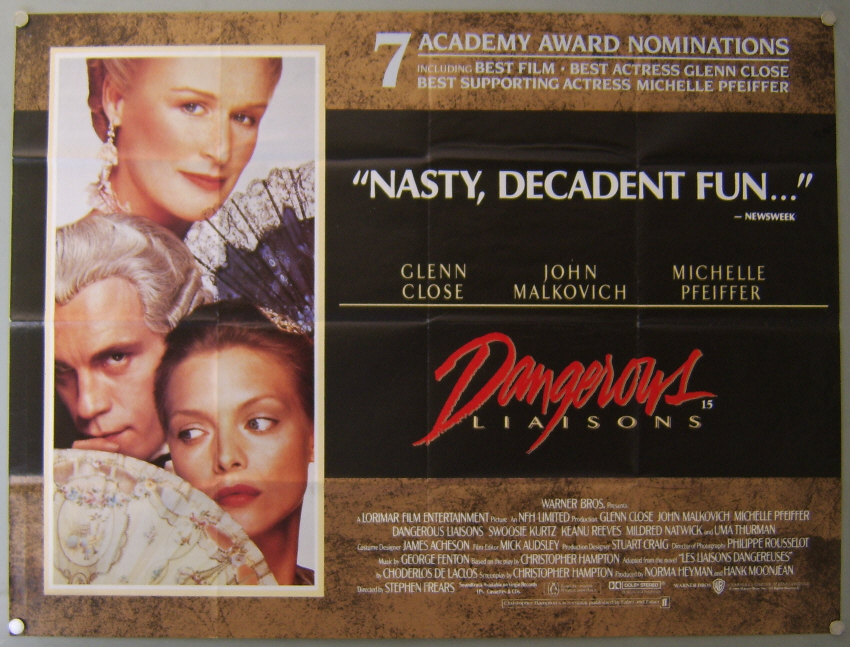
Embracing the Melodrama #37: Dangerous Liaisons (dir by Stephen Frears)


When watching a film like the 1988 best picture nominee Dangerous Liaisons, it helps to know something about history.  The film takes place in 18th century France and, even though it’s never specifically stated in the film, I watched it very much aware that the story was taking place just a few years before the French Revolution.  Even the aristocratic libertines who survive until the end of the film are probably destined to end up losing their lives at the guillotine.  Even though you don’t see anyone losing their head during Dangerous Liaisons (nor do you hear anyone say, “Let them eat cake.”), the film offers up such an atmosphere of decadence and manipulation that it leaves the viewer with little doubt as to why the people occasionally feel the need to rise up and destroy their social betters.

Dangerous Liaisons tells the story of the Vicomte de Valmont (John Malkovich) and the Marquise de Mertuil (Glenn Close), two amoral members of the aristocracy who deal with their boredom by playing games with the emotions of others.  Valmont is a notorious womanizer while Mertuil is obsessed with “dominating” the male sex and “avenging my own.”  At the start of the film, Mertuil has discovered that a former lover is planning on marrying the innocent Cecile (18 year-old Uma Thurman, stealing every scene that she appears in), who has basically spent her entire life in a convent.  Mertuil asks Valmont to seduce and take Cecile’s virginity before the wedding.  At first, Valmont says that Cecile is to easy of a challenge and declines.  Instead, Valmont has decided that he wants to seduce Madame de Tourvel (Michelle Phieffer), a married woman who is renowned for both her strong religious feelings and her virtuous character.  Mertuil agrees that she will sleep with Valmont if he can provide her with written proof that he’s managed to seduce Tourvel.

Tourvel is staying with Valmont’s aunt (Mildred Natwick), which gives Valmont — with the help of his servant, Azolan (Peter Capaldi) — several chances to try to trick Tourvel into believing that he’s a better man than everyone assumes him to be.  (With Azolan’s help, Valmont finds a poor family and donates money to them.  Of course, he makes sure that word of this gets back to Tourvel.)  However, Valmont then discovers that Cecile’s mother (Swoosie Kurtz) has been writing letters to Tourvel, warning her about Valmont’s lack of character.  To get revenge, Valmont agrees to seduce Cecile.

Dangerous Liaisons, which is based on a play that was based on a novel, is sumptuous costume drama.  If you’re like me and you love seeing how the rich and famous lived in past centuries, you’ll find a lot to enjoy in Dangerous Liaisons.  With the elaborate costumes and the ornate sets, the film is a real visual feast.

The film is also a feast for those of us who enjoy good acting as well.  With the exception of a very young Keanu Reeves (who is oddly miscast as the poor music teacher who falls in love with Cecile), the entire film is perfectly cast, right down to the most minor of characters.  (I particularly enjoyed listening to Peter Capaldi, even if his Scottish accent occasionally did seem rather out-of-place in a film about the pre-Revolution France.)  For me, the biggest shock was John Malkovich.  Don’t get me wrong — I’ve always felt that Malkovich was a good character actor but he’s never been someone that I would think of as being sexy.  However, he gives close to a perfect performance as Valmont and, oddly enough, the fact that he’s not really conventionally handsome only serves to make Valmont all the more seductive.  Purring out his cynical dialogue and openly leering at every single woman in Paris, Malkovich turns Valmont into a familiar but all too appealing devil.

Dangerous Liaisons was later remade as Cruel Intentions, which is a film that I’ll be taking a look at very soon.

liaisons