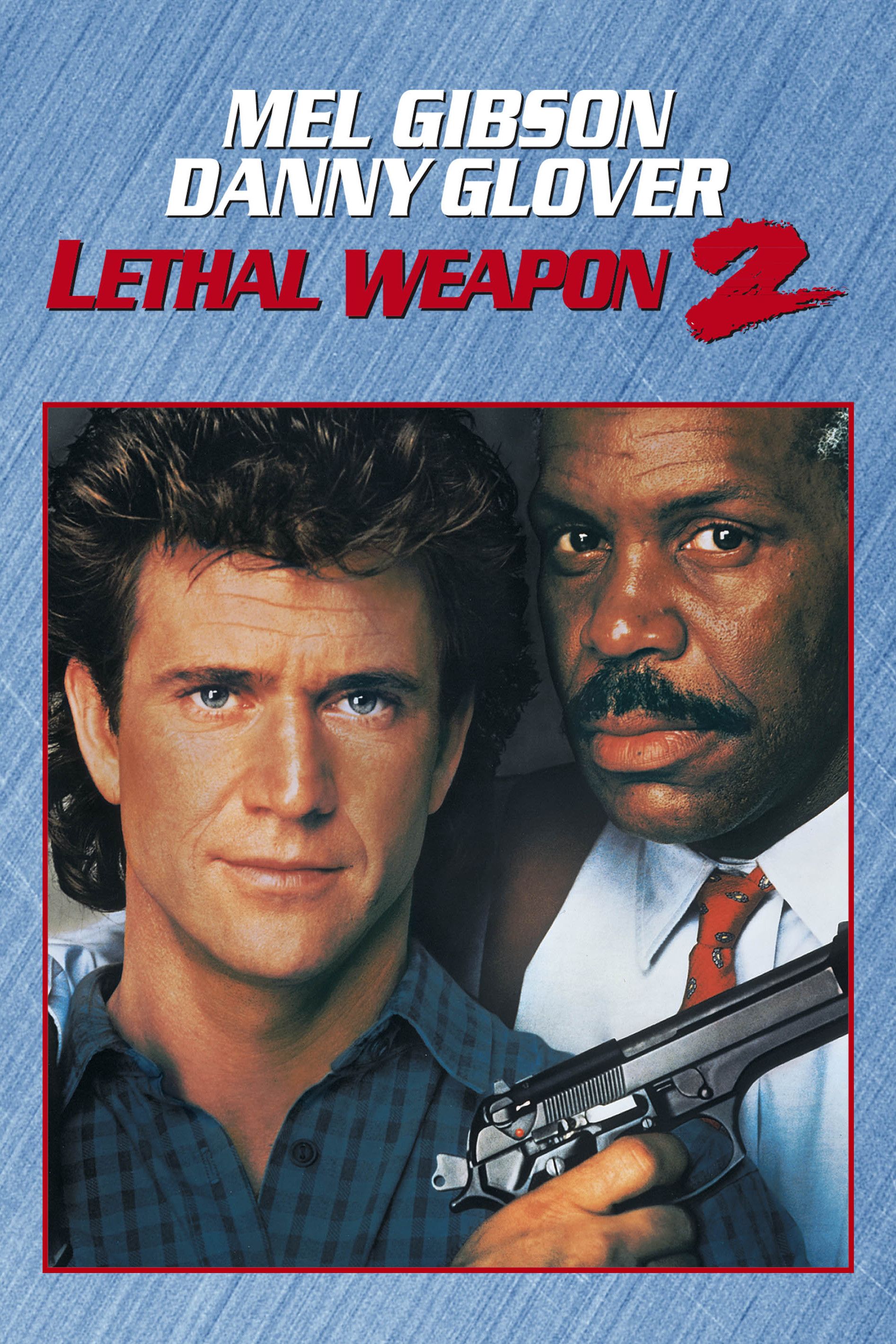
Lethal Weapon 2 is the kind of sequel that doesn’t really try to reinvent what worked the first time so much as crank the volume on everything: the action is bigger, the jokes come faster, and the chaos feels almost constant. Depending on what you loved about Lethal Weapon, that approach delivers more of the high-energy partnership in a flashier package. It’s a confident, very entertaining 80s action movie that knows it’s a sequel and leans into the spectacle that status allows.
Plot-wise, Lethal Weapon 2 wastes no time reminding you what this world feels like. It drops Riggs and Murtaugh into a wild car chase almost immediately, and from there the story locks onto a case involving South African diplomats hiding behind apartheid-era “diplomatic immunity” while running a massive drug and money-laundering operation. It’s a cleaner, more high-concept hook than the original’s murkier web of Vietnam vets and heroin smuggling, and the script makes the villains broad on purpose, almost cartoonishly arrogant, to give the audience someone very easy to hate. The trade-off is that the plot feels a bit more mechanical this time; you always know who the bad guys are and what the destination is, so the film’s real energy comes from the detours, jokes, and set-pieces rather than any mystery.
One of the big shifts from Lethal Weapon to Lethal Weapon 2 is tone. The first film balanced brutal violence and dark humor with a surprisingly heavy focus on Riggs’ suicidal grief and Murtaugh’s fear of getting too old for the job. The sequel keeps those elements in the background but leans harder into banter, slapstick timing, and outrageous gags like the now-famous exploding toilet sequence, with Richard Donner’s direction pushing the script toward action comedy. It’s still R-rated and not shy about blood or cruelty, but the emotional intensity is dialed down compared to the original’s raw edges.
Mel Gibson and Danny Glover remain the anchor, and their chemistry is as sharp as ever. Gibson’s Riggs is still reckless and unhinged, but there’s a looser, more playful side to him this time; he’s less haunted and more of a live-wire prankster until the story gives him something personal to latch onto. Glover’s Murtaugh continues to be the grounded center, constantly exasperated and always half a step away from just walking off the job, and the film has a lot of fun putting his straight-man persona through increasingly humiliating situations while still letting him be competent when it counts. Compared to the first film, where their partnership slowly thawed from suspicion to genuine trust, Lethal Weapon 2 starts from “these guys are already a team” and builds its best moments from how comfortably they now bounce off each other.
The biggest new ingredient is Joe Pesci as Leo Getz, a federal witness turned tagalong who basically functions as the franchise’s third stooge. Pesci leans into the motor-mouthed, paranoid, endlessly complaining energy that would become his signature, and his presence tips some scenes from gritty cop story into broad comedy. He undercuts tension at times, but he also gives the movie a different rhythm, especially in the quieter in-between beats where the first film might have lingered more on Riggs’ inner damage.
In terms of action, Donner clearly has more money and confidence to play with, and it shows. The chases are bigger, the shootouts are staged with a slicker sense of geography, and there’s a steady escalation in scale that makes the film feel like a genuine summer sequel rather than just another mid-budget cop movie. The original had a grimy, street-level intensity, with brutal fistfights and sudden bursts of violence; Lethal Weapon 2 is more interested in creative set-pieces, crowd-pleasing payoffs, and moments designed to make an audience cheer. It’s less intimate, but it is rarely dull.
Where the film lands in a more complicated space is its attempt to keep some emotional stakes alive while also going bigger and funnier. Riggs’ grief over the loss of his wife is still part of his character, and the story finds ways to poke at that wound again, including a new relationship that lets him imagine some kind of future beyond the constant death wish. Those beats are there to echo what worked so well in the first movie, but they have less room to breathe, often getting squeezed between an action scene and a joke instead of shaping the entire film’s tone. You can feel the push and pull between wanting to keep the darker emotional spine and delivering the kind of lighter, more easily marketable sequel a studio would understandably chase.
The villains themselves are effective in that pulpy 80s way: not nuanced, but very punchable. Arjen Rudd, with his smug talk of “diplomatic immunity,” is a villain designed to make audiences grind their teeth, and his main henchman adds a physically intimidating, quietly sadistic presence to the mix. Compared to the original’s more grounded ex-military antagonists, these guys feel one step closer to Bond territory, and that shift mirrors the film’s overall move toward heightened, almost comic-book stakes. What the sequel loses in plausibility, it gains in revenge-fantasy satisfaction.
When stacked directly against Lethal Weapon, the second film feels like a classic case of “if you liked hanging out with these characters once, here’s more time with them.” The original is tighter, more emotionally focused, and arguably more distinctive, with a stronger sense of danger and genuine unpredictability around Riggs’ mental state. Lethal Weapon 2 smooths some of those jagged edges and replaces them with quips, bigger set-pieces, and a more overtly crowd-pleasing structure, which makes it an easier, more consistently fun watch but also a slightly less resonant one. It is still a good film, but in many ways it is also the moment where the franchise shifts from a character-driven cop thriller with action to a full-on action-comedy machine.
As a fair, middle-of-the-road assessment, Lethal Weapon 2 works very well on its own terms and delivers exactly what most people want out of a late-80s buddy-cop sequel. The chemistry is intact, the action is energetic, and the film moves with the kind of confident pace that never really lets you get bored. At the same time, the tonal tilt toward broader humor and more cartoonish villains means it doesn’t quite have the same staying power or emotional punch as Lethal Weapon, especially if what hooked you the first time was how wounded and volatile it all felt. For fans of the original, it’s an enjoyable continuation—a louder, flashier second round that may not hit as hard, but still knows how to entertain.
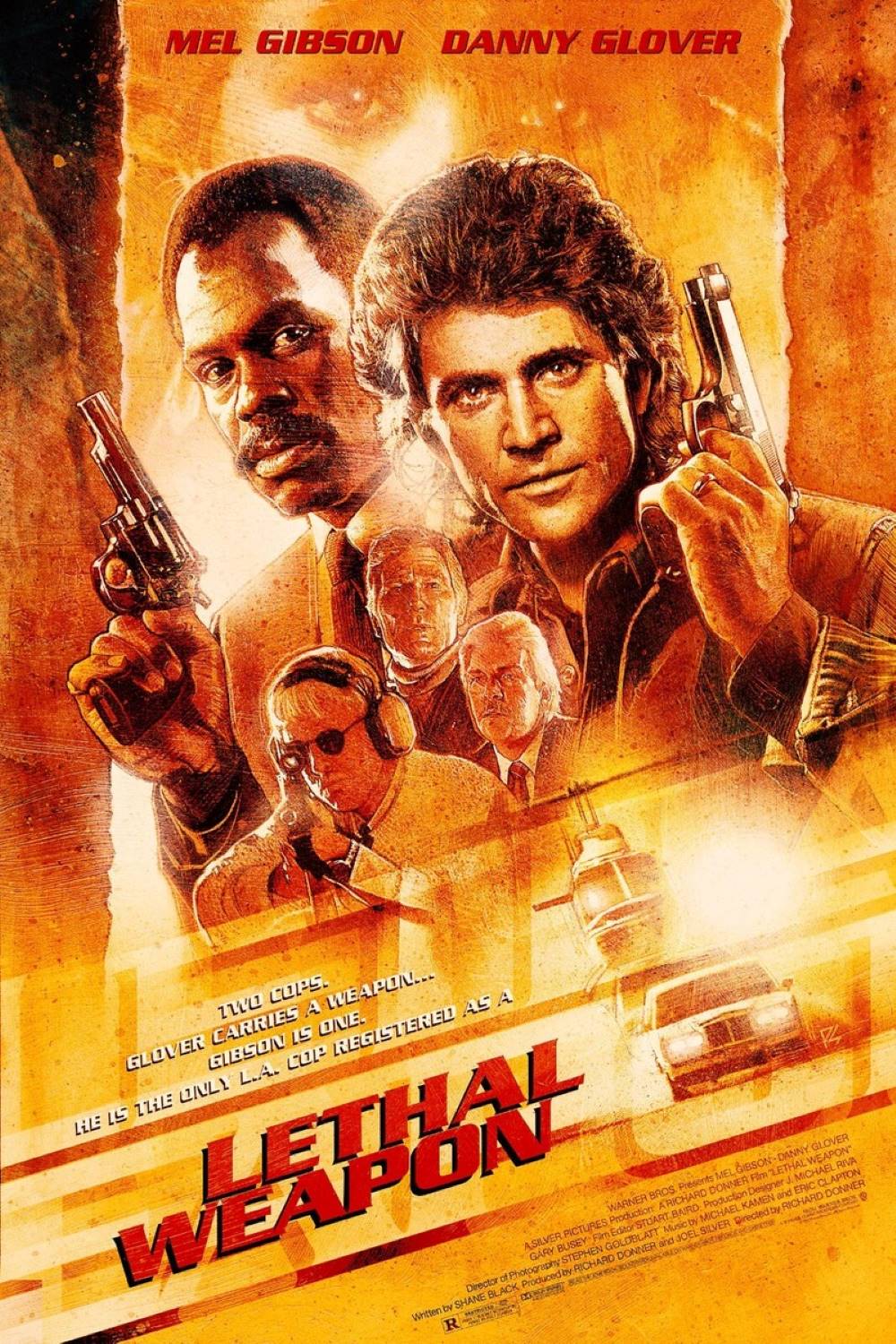
Lethal Weapon is one of those action movies that looks like pure genre formula on paper but somehow plays like lightning in a bottle on screen. From the opening moments, it feels like a film that knows exactly what kind of ride it wants to deliver and leans into that mission with confidence, attitude, and just enough heart to make the bullets and explosions actually matter.
The premise itself is as straightforward as they come, and that simplicity is part of the charm. Martin Riggs is the textbook “cop on the edge,” a former special forces sniper whose life has completely fallen apart after the death of his wife. He’s volatile, depressed, and teetering on the edge of suicidal, which gives everything he does an extra layer of danger. On the other side of the pairing is Roger Murtaugh, a seasoned detective staring down his 50th birthday, trying to balance a long career in homicide with the quiet, constant pull of his family at home. When these two are thrown together and assigned to a case involving drugs, dead bodies, and shady ex-military criminals, the story plays out across familiar beats: suspicious deaths, escalating confrontations, close calls, and a trail that leads them deeper into a dangerous operation. The crime plot is pulpy and direct rather than twisty, but the film uses it as a sturdy framework rather than the main point of interest, keeping the investigation moving while the characters come into focus. Much of that sharp setup and snappy progression comes from Shane Black’s script, which crackles with knowing genre savvy, pitch-perfect banter, and a keen eye for how personal pain fuels action-hero antics.
What really makes Lethal Weapon feel alive is how much time it spends letting Riggs and Murtaugh exist as people before they fully morph into the “classic duo” that pop culture remembers. The film doesn’t rush past the small stuff. Riggs is introduced living in a rundown trailer on the beach with his scruffy dog for company, drinking and stumbling through life with the casual recklessness of someone who genuinely doesn’t care if he sees tomorrow. Those early moments of him alone, flirting with self-destruction, give his later heroics a sense of tragic context: he’s not just fearless, he’s half-convinced he has nothing left to lose. Murtaugh’s introduction is a complete contrast: a crowded home, kids, a loving wife, and the kind of loud, chaotic domestic life that’s full of relatable irritation and warmth. Seeing him grumble through birthday milestones or awkwardly handle family situations does more for his character than any speech about his years on the force could. These slices of everyday life build a strong emotional foundation so that when the bullets start flying, there’s something at stake beyond catching bad guys. Black’s writing shines here, weaving those intimate details into the thriller beats without ever feeling forced or preachy.
The chemistry between Mel Gibson and Danny Glover is the film’s true secret weapon. Gibson plays Riggs as an unpredictable live wire, able to flip from goofy physical comedy to chilling seriousness in an instant. He sells the idea that this is a man barely keeping it together, yet still razor-sharp when it comes to the job. There’s a constant sense that his jokes and antics are a flimsy barrier over something very raw. Glover, by contrast, keeps Murtaugh grounded and human; his performance is packed with little sighs, muttered reactions, and weary facial expressions that speak volumes. He comes across as a guy who has seen too much, loves his family, and genuinely wants to do the right thing, but is exhausted by how hard that is in practice. Their initial friction hits the expected “mismatched partners” beats: Murtaugh thinks Riggs is unstable and dangerous, while Riggs treats Murtaugh like a fussy old man who doesn’t get it. Yet as they move through stakeouts, interrogations, and gunfights, their banter evolves from pure irritation into an easy rhythm filled with barbs, mutual respect, and eventually real affection. Shane Black’s dialogue is the glue for all of it—witty, profane, and laced with just enough vulnerability to make the laughs land harder and the tension feel real.
Richard Donner’s direction is a huge part of why all of this clicks as well as it does. He has a knack for blending big, commercial genre instincts with an eye for character detail, and Lethal Weapon is a textbook example of that balance. He stages action scenes with clear geography and rhythm, so even when things get loud and chaotic, you always know where you are and what everyone is trying to do. At the same time, he’s just as interested in the quiet beats: a pause on Riggs’ face after a joke lands flat, Murtaugh’s body language when he walks into his noisy home after a brutal day, the way a conversation in a car can shift from banter to confession in a couple of lines. Donner keeps the film moving at a brisk pace, but he knows when to let a shot linger or a silence hang long enough to tell you what the characters can’t quite say out loud. His tonal control—jumping from dark to funny to tense without completely losing the thread—is a big reason the movie doesn’t collapse under its own genre juggling, and it pairs beautifully with Black’s script that sets up those shifts so precisely.
Tonally, Lethal Weapon walks a tricky line, and that’s a big part of its identity. On one hand, this is a story with genuinely dark undercurrents. Riggs’ suicidal impulses are not a throwaway character quirk; the film gives time to scenes where he nearly acts on them and struggles in a very raw way with his grief and loneliness. The case they’re working breaks open into territory involving drugs, exploitation, and violence that’s sometimes nasty rather than cleanly heroic. On the other hand, the film is full of humor, ranging from quick one-liners to broad physical bits. The Murtaugh household provides a lot of that levity: awkward conversations with his kids, Riggs stumbling through family dynamics, and the contrast between domestic calm and the chaos of the streets. The movie often jumps from heavy emotional beats to comedic ones and back again, and while the transitions can be abrupt, that mixture is part of what keeps it from feeling like just another grim cop story. The laughter doesn’t erase the darker material, but it does give the movie a sense of momentum and charm that keeps it entertaining instead of oppressive. Black’s screenplay nails this push-pull, using humor as both release valve and revelation.
As an action film, Lethal Weapon delivers a steady run of sequences that are energetic, clear, and tactile. The action is built around physical stunts, dangerous-looking falls, and gunfights that feel chaotic without becoming incoherent. One memorable sequence has Riggs dealing with a jumper on a rooftop in a way that instantly tells you everything about his mentality and willingness to risk himself. Another set piece in a more open, exposed environment lets the film escalate tension step by step before violence finally erupts. Through it all, Donner keeps a strong sense of spatial clarity; you can track where the characters are, what they’re trying to do, and how each decision raises the stakes. The fights feel scrappy and painful rather than overly slick, and that slightly rough quality actually works in the movie’s favor, making each impact land harder. Riggs, especially, moves like a human weapon, hurling himself into situations with a recklessness that ties directly into his psychological state, all fueled by Black’s clever plotting that makes those risks feel personal.
Underneath the gunfire and explosions, there’s a surprisingly sturdy emotional core tying everything together. Riggs’ grief isn’t just window dressing; it’s the lens through which his every decision makes sense. The movie doesn’t lecture you about what he’s feeling, but it shows it—through quiet moments alone, through the anger that erupts at all the wrong times, and through the way he throws his body into danger almost as if daring the world to take him out. Murtaugh’s arc is more subtle but still strongly drawn. He’s at an age where he has to confront the reality that he can’t keep pace with younger, more reckless colleagues forever, and yet his sense of duty keeps pulling him into situations where his family might lose him. Throughout their investigation, Murtaugh’s protective instincts—toward his loved ones, toward Riggs, and toward innocent people caught in the crossfire—become as important as his skills as a detective.
The relationship that develops between Riggs and Murtaugh is the heart of the film and the main reason it sticks in the memory. At first, Murtaugh just wants to survive partnering with a man he genuinely believes might be unhinged, while Riggs seems to treat their pairing as just another chaotic twist in a life already off the rails. As they trade confessions, back each other up in tight spots, and slowly understand what the other is carrying, their bond shifts into something like brotherhood. Murtaugh becomes a kind of anchor for Riggs, offering not just backup in a fight but also a place at the table, both literally and figuratively. Riggs, in turn, forces Murtaugh out of his comfort zone, reminding him that he still has plenty of courage and fire left in him. The film doesn’t turn their connection into a sentimental soapbox, but it lets small moments—a shared laugh after a narrow escape, a quiet conversation after the chaos—do the emotional lifting, with Black’s words giving those scenes their understated power.
If there’s a clear weak spot, it’s that the villains are fairly thinly drawn, operating more as looming threats than fully realized characters. They are dangerous and organized, capable of serious brutality and clearly involved in serious criminal operations, but the movie doesn’t spend much time exploring their motivations or inner lives. They’re the kind of antagonists designed to be obstacles: formidable enough to make the heroes’ victories feel earned, but not so complex that they distract from the central duo. For a character-driven action film, that trade-off mostly works. When Lethal Weapon is firing on all cylinders, the tension doesn’t come from wondering what the bad guys will do next so much as from seeing how Riggs and Murtaugh will handle whatever gets thrown at them and what that reveals about who they are.
Structurally, the film keeps a tight pace, always nudging the story forward even when it pauses for character beats. Expository scenes rarely feel like dry info dumps; they’re often laced with jokes, personal jabs, or subtle shifts in how the two leads relate to each other. The downtime moments—a quiet drink, a shared meal, a conversation in a car between partners who would rather pretend they’re fine—are as important as the louder ones. By the time the case ramps up to its most intense passages, there’s been enough time with these characters to care less about the mechanics of the plot and more about whether these two damaged, stubborn men can come out the other side with something to hold onto.
What ultimately makes Lethal Weapon work so well is that it doesn’t settle for being just a checklist of genre requirements. Yes, it has gunfights, dark humor, car chases, and tough-guy posturing. But wrapped around all of that is a story about grief, aging, loyalty, and how unlikely partnerships can change the trajectory of a person’s life. Donner’s steady hand behind the camera, Shane Black’s razor-sharp script, and the powerhouse performances turn what could have been a forgettable cop thriller into something much more memorable. For anyone who enjoys action movies that care as much about the people pulling the triggers as the bullets they fire, Lethal Weapon stands out as a defining entry in the buddy-cop mold, powered by the messy, heartfelt dynamic at its center and the sure-footed craftsmanship that brings it all together.
59 years ago today, the first episode of Star Trek aired in America.
There’s been a lot of different StarTrek shows and crews over the decades. I have to admit that I’ve always preferred the Original Series, with Kirk sleeping with every alien he met, McCoy and Spock bickering about logic, and Scotty warning that the engines can’t take much more. The Next Generation was strong as well, especially in the later seasons. The subsequent series have been hit-and-miss for me.
I was born long after the Original Series went off the air so, like a lot of people, my real introduction to Star Trek came through watching the films. This weekend, I sat down and watched all fourteen of the Star Trek films in order, from The Motion Picture to Section 31. Here are my thoughts.
Star Trek: The Motion Picture (1979, directed by Robert Wise)
In the first Star Trek film, Voyager returns to Earth, now known as V’ger. James T. Kirk (William Shatner) returns to the Enterprise with his old crew and takes command from Decker (Stephen Collins). Spock (Leonard Nimoy) returns from Vulcan is not happy about it.
Directed by Robert Wise, the first Star Trek film feels out-of-place amongst the films that followed it. It’s long and slowly paced and it doesn’t have the sense of humor that runs through the best of the films featuring the original cast. The film favors Kirk and Spock, with the rest of the original cast being largely used as bit players. Even the costumes are different from the uniforms worn in the later films, making Star Trek: The Motion Picture feel like an entry from an alternate universe.
Despite mixed review, Star Trek: The Motion Picture made the most money of any of the pre-reboot films at the box office. Because the film itself was so expensive, it was still judged to be a box office disappointment. The Star Trek films would continue but in a new direction.
Star Trek II: The Wrath of Khan (1982, directed by Nicholas Meyer)
Featuring a character-driven script, exciting action, the best villain in the history of the franchise, and an ending that will bring tears to the eyes of the most cynical viewer, The Wrath of Khan is the film that set the standard for the Star Trek films that would follow.
Ricardo Montalban, recreating a character that he originally played in the television series, is a compelling villain as the vengeance-driven Khan. Montalban and William Shatner make for perfect rivals, two sides of the same coin. At the same time, the other members of the original cast all get their moments to shine, especially Walter Koenig as Chekhov. Kirstie Alley is the sexist Vulcan to ever appear in the franchise and even the revelation that Kirk has a son is handled effectively. Kirstie Alley, Bibi Besch, and Merritt Butrick all fit in with the original crew.
But the thing everyone remembers about The Wrath of Khan is the death of Spock. Even though the movie features plenty of hints that Spock will return (including his command of “Remember” to McCoy), it’s impossible not to get emotional when Spock sacrifices himself for the crew. “I have always been your friend.” To quote George Costanza, that was hell of a thing when Spock died. In that scene, Leonard Nimoy shows that he was the (logical) heart of the franchise. Just as Spock brought out the best in the rest of the crew, Nimoy brought out the best in his co-stars. Shatner was never better than when he was mourning Spock.
Star Trek III: The Search For Spock (1984, directed by Leonard Nimoy)
Spock’s back! It’s not a surprise. I think everyone knew, at the end of Wrath of Khan, that the Genesis Project would bring back Spock. Star Trek III isn’t bad. Christopher Lloyd reminds us of how brutal the Klingons were before their Next Generation makeover. The self-destruction of the Enterprise is a powerful moment. I just wish that a film about Spock being given a new life hadn’t featured so much death. Both the revelation that David Marcus tampered with the Genesis Project and his subsequent death feel like missteps. Robin Curtis takes over the role of Saavik and Kirstie Alley is very much missed. DeForest Kelley playing McCoy possessed by Spock was, for me, the highlight of the film.
Star Trek IV: The Voyage Home (1986, directed by Leonard Nimoy)
Returning home after rescuing Spock from the Genesis Planet, the Enterprise crew is instead sent back into the past so that they can bring two whales into the future. The Voyage Home might not be the best Star Trek film (that honor belongs to Wrath of Khan) but it is the most likable and the most entertaining. Every member of the cast gets something to do in 20th Century San Francisco. The film is full of classic moments, from Chekhov looking for the “nuclear wessels” to Scotty trying to speak to the computer. The moment with the punk on the bus is a crowd-pleaser. I always laugh at Spock’s “One damn minute, Admiral.” After the violence in The Search for Spock, The Voyage Home‘s humor, gentle sincerity, and emphasis on the efforts of the entire ensemble is a welcome development.
Star Trek V: The Final Frontier (1989, directed by William Shatner)
Leonard Nimoy got his chance to shine as the director of the previous two Star Trek films so William Shatner was allowed to direct The Final Frontier. The Enterprise crew is brainwashed by a religious fanatic (Laurence Luckinbill) who is also, improbably, Spock’s brother. Only Kirk is able to resist and confront the entity claiming to be God. “What does God need with a starship!?” Kirk demands. It’s such an obvious question that I can’t believe the entity didn’t already have an answer worked out.
The Final Frontier gets no respect and it was probably doomed as soon as Shatner was announced as director. Shatner also developed the story and it’s probably not surprising that the main theme is that Kirk was the only person on the Enterprise strong enough to not be brainwashed by the film’s fake God. Laurence Luckinbill gave a good performance as Sybok but this film really does feel like an unfortunate episode of the original television series.
Star Trek VI: The Undiscovered Country (1991, directed by Nicholas Meyer)
Star Trek VI featured the final appearance of the Original Series cast as a group and they get a send-off worthy of their legacy. Having been previously established as the Federation’s greatest enemies, the Klingons finally pursue peace. Just as only Nixon could go to China, only Kirk and the original Enterprise crew can go to the Klingons. This movie is what Star Trek was all about, with enough world-building and continuity for the hardcore fans and a story that was interesting enough to hold the attention of the casual viewers. By featuring the start of the era of peace between the Federation and the Klingons, this film also filled in some of the Next Generation‘s backstory. The Final Frontier was meant to be the final Star Trek film featuring any of the original cast and it would have been the perfect entry for Captain Kirk to go out on. Unfortunately, that didn’t happen.
Star Trek Generations (1994, directed by David Cason)
William Shatner meets Patrick Stewart as one Star Trek crew passes the torch to the new Star Trek crew. Malcolm McDowell is the latest villain with an ill-defined plan. Picard and Kirk team up to stop McDowell’s villain. They succeed but at the cost of Kirk’s life. As opposed to Spock’s death in Wrath of Khan, Kirk’s death feels pointless and tacked on for no reason other than to signify the arrival of The Next Generation to the films. Seeing Shatner and Stewart together is interesting. Stewart may have been the better actor but Shatner still dominates their scenes together. Not giving Kirk a better send-off was one of the franchise’s biggest sins.
Star Trek: First Contact (1996, directed by Jonathan Frakes)
After the disappointing Generations, Picard and his crew finally got a film worthy of them with First Contact. Not only do the Borg return but the crew goes back into their past and experience a key date in the history of the Federation. After being outshone by Shatner in Generations, Patrick Stewart takes control in this film, giving a multi-layered and commanding performance that still gives the rest of the cast room to shine. Director Jonathan Frakes not only handles the action well but he also shows that he understands what makes the characters click. This was, without a doubt, the best of the Next Generation films and one the best of the Star Trek films overall.
Star Trek: Insurrection (1998, directed by Jonathan Frakes)
Entertaining but forgettable, Insurrection features Picard pulling a Kirk and defying orders from from a superior officer (played by Anthony Zerbe) and going out of his way to save Data from being decommissioned. Insurrection feels like an extended episodes of the Next Generation television series and lacks the epic scale of First Contact. Under the direction of Jonathan Frakes, the ensemble is strong and watching them interact feels like spending time with a group of old friends. F. Murray Abraham and Anthony Zerbe make for effective villains.
Star Trek: Nemesis (2002, directed by Stuart Baird)
Just as the Original Series crew sought peace with the Klingons in The Undiscovered Country, the final Next Generation film finds Picard, Riker, and the rest seeking peace with the Romulan Empire. Tom Hardy plays a clone of Picard who is now the leader of the Romulans. Data sacrifices himself in a move that tries too hard to duplicate the death of Spock. Picard retires. Director Stuart Baird emphasizes action over the chemistry of the Next Generation cast and the end result is a disappointing finale that left critics and audiences underwhelmed.
Star Trek (2009, directed by J.J. Abrams)
I think people forget about what a big deal this Star Trek reboot was when it first came out. Today, people focus on things like Kirk being a Beastie Boys fan and they forget how exciting it was to see Chris Pine, Zachary Quinto, Karl Urban, Simon Pegg, Anton Yelchin, John Cho, and Zoe Saldana all effortlessly stepping into the roles of the younger versions of the original cast. The storyline is predictable and Eric Bana’s a bland villain but the scenes between Leonard Nimoy and Zachary Quinto were a reminder of how important Spock was and is to Star Trek.
Star Trek wasn’t perfect, of course. In retrospect, I think creating an alternate timeline was a mistake because it created a situation where, even if someone died, it was just an alternate version dying and not the version that audiences knew and cared about. The alternate timeline would also lead to one of the biggest missteps in the history of the franchise.
Star Trek Into The Darkness (2013, directed by J.J. Abrams)
After the surprising success, both critically and commercially, of his Star Trek reboot, J.J. Abrams. Robert Orci, Alex Kurtzman, and Damon Lindelof wasted most of that good will by messing around with one of the franchise’s most memorable characters.
There are some good things to be said about Star Trek Into The Darkness. I like the action sequences and the climatic battle in the film’s futuristic version of San Francisco. But casting Benedict Cumberbatch, of all people, as Khan is a misstep that can’t be overcome. That the movie brought back Khan instead of exploring “strange new worlds” exposed the weakness of Abrams entire reboot. For all the hype, did the Star Trek reboot actually have anything new or original to offer? The answer here seemed to be no.
Star Trek Beyond (2016, directed by Justin Linn)
The final (for now) Star Trek theatrical film featured a memorable villain in the form of Idris Elba and a plot that felt like it could have just as easily been an episode of the original series. In retrospect, the film is mostly memorable for featuring the announcement of the death of Ambassador Spock. (The film was released a year after the death of Leonard Nimoy.) The death of Spock, this time with no Genesis Project around to bring him back, makes this installment feel like right place to end the films. For many of us, Nimoy was Star Trek.
Stark Trek: Section 31 (2025, directed by Olatunde Osunsanmi)
Though there have been many subsequent televisions shows, there hasn’t been a Star Trek theatrical release since 2016. The next installment has been in pre-production limbo for nearly ten years. (Quentin Tarantino was supposedly attached at one time.) Instead of coming to theaters, the latest Star Trek movie came to Paramount Plus.
I debated whether or not to include Section 31 in this list, both because it was a “made-for-TV” movie and also because it was so bad that I think most Star Trek fans would rather forget about it. A mediocre heist film that wastes star Michelle Yeoh and which doesn’t feel like it belongs in the Star Trek universe, Section31 may still represent the way forward for the franchise. With theaters having never recovered from the COVID shut-downs and more and more people preferring to stream their entertainment at home, the future of the Star Trek films could very well be a collection of assembly line Paramount Plus movies.
Finally, Case turned me onto this short film:
765874: Unification (2024, directed by Carlos Baena)
A collaboration between Otoy, a VFX company, and The Roddenberry Archive, with support from Paramount, 765874: Unification is a 10-minute short film that imagines Kirk meeting Spock in the afterlife. Shatner returns as Kirk, de-aged with CGI. Just as Kirk and Spock were friends in the film, the same was true of Shatner and Nimoy in real life. (You only have to compare Nimoy’s comments about Shatner with George Takei’s endlessly bitter takes to see what true class actually is.) This short film gives both characters the finale that they deserved.
It’s possible that we may never see another true Star Trek film. Most of the original cast is gone now. Patrick Stewart will always be Picard but even he is now approaching 90. But whatever the future may hold, I’m happy for the films that Star Trek gave us.
In 1996’s Executive Decision, terrorists hijack an airplane. Their leader, Nagi Hassan (David Suchet) demands that the U.S. government not only give him and his men safe passage but that they also release Hassan’s commander, Jaffa (Andreas Katsulas).
In Washington D.C., it is decide to use a stealth plane to transport Col. Austin Travis (Steven Seagal) and his men into the passenger plane. Accompanying them will be Dr. David Grant (Kurt Russell), a consultant for U.S. Intelligence. Dr. Grant is the world’s leading expert on Hassan, even though neither he nor anyone else is even sure what Hassan looks like. Travis distrusts Grant because he’s a civilian and also because he holds Grant responsible for a botched raid on a Russian safehouse in Italy. Dr. Grant is going to have to prove himself to Col. Travis because Travis doesn’t have any time for people who can’t get the job done. And Travis is determined to get on that plane and save all those passengers.
In other words, Travis is a typical Steven Seagal character and, for the first fourth of this movie, Seagal gives a typical Steven Seagal performance. He delivers his line in his trademark intimidating whisper, he glares at everyone else in the film, and essentially comes across as being a total douchebag who can still handle himself in a fight.. However, when it’s time to board the airplane through a docking tunnel, something goes wrong. Everyone — even nervous engineer Dennis Cahill (Oliver Platt) is able to slip through the stealth plane’s docking tunnel and get into the hijacked airplane cargo hold without being detected. But the two planes are hit by severe turbulence. Suddenly, it becomes apparent the one man is going to have to sacrifice his life and close the hatch before the docking tunnel decompresses.
David, already in the cargo hold, looks down at Austin in the tunnel. “We’re not going to make it!”
“You are!” Austin replies before slamming the hatch shut and getting sucked out of the tunnel. (There’s your Oscar Cheers Moment of 1996!) After all that build-up, Steven Seagal exits the film early and now, it’s up to Kurt Russell and what’s left of Austin Travis’s men to somehow stop the terrorists. Not only do they have to stop Hassan but they also have to do it before the Air Force — which has no way of knowing whether or not any of their men were able to get on the plane before the tunnel fell apart — shoots down the airliner.
(If the airplane looks familiar, that’s because Lost used the same stock footage whenever it flashed back to the plane crash that started the show.)
It’s actually a rather brilliant twist. When this film came out, Seagal was still a film star. He played characters who always got the job done and who were basically infallible. He wasn’t a very good actor but he did manage to perfect an intimidating stare and that stare carried him through a lot of movies. No one would have expected Seagal to die within the first 30 minutes of one of his movies and when Col. Travis, who the film has gone out of its way to portray as being the consummate warrior, is suddenly killed, there really is a moment where you find yourself wondering, “What are they going to do now?” In just a matter of minutes, Executive Decision goes from being a predictable Steven Seagal action film to a genuinely exciting and clever Kurt Russell thriller. For once, Russell is not playing a man of action. He’s an analyst, a thinker. And, to the film’s credit, he uses his mind more than his brawn to battle Hassan’s terrorists. With excellent support from Halle Berry (as a flight attendant who discreetly helps out David and the soldiers), Oliver Platt, B.D. Wong, Whip Hubley, David Suchet, Joe Morton, and even John Leguizamo (as Travis’s second-in-command), Executive Decision reveals itself to be an exciting and ultimately rewarding thrill ride.
And to think, all it took was sacrificing Steven Seagal.
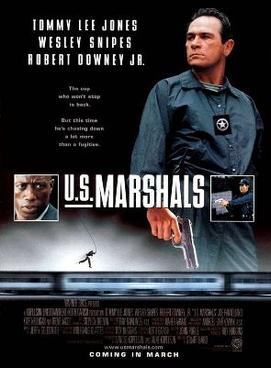
Mark Roberts (Wesley Snipes), formerly of the Diplomatic Security Service and wanted for murder, escapes when his prison transport aircraft crashes into an Illinois swamp. U.S. Marshal Sam Gerard (Tommy Lee Jones) was on the same flight and quickly assembles his team so that they can track down and capture the fugitive. That’s what Sam Gerard does. He’s the best fugitive hunter around. Complicating matters is that an inexperienced DSS agent named John Royce (Robert Downey, Jr.) has been assigned to the team. Royce says that the men that Mark killed were friends of his and this hunt is personal for him. However, Sam suspects that Mark might not be as guilty as he seems. Considering that the last high-profile fugitive that Sam chased was also innocent, I have to wonder why Sam has any faith in the system at all.
Based on the classic televisions how, The Fugitive was one of the biggest film hits of 1993 and it also became one of the few action films to receive an Oscar nomination for Best Picture of the Year. Even though the film starred Harrison Ford as a doctor wrongly convicted of murdering his wife, it was Tommy Lee Jones who got all the best lines and all the critical attention. Tommy Lee Jones was also the one who received an Oscar for his work on the film. The Fugitive was such a hit that it was pretty much guaranteed that there would be a sequel. Since there were only so many times that Richard Kimble could reasonably be wrongly convicted of murder, it also made sense that future films were focus on Sam Gerard and his team.
U.S. Marshals was the first Fugitive sequel and, as a result of terrible reviews and a lackluster box office performance, it was also the only sequel. I saw U.S. Marshals when it was first released in 1998. I enjoyed it but I was also a teenage boy. Back then, I liked everything as long as it featured a car chase, a gunfight, and a leggy female lead. Last night, I rewatched the film for the first time since it was originally released and I still enjoyed it but I could also understand why U.S. Marshals didn’t lead to a Sam Gerard franchise.
The plane crash was as cool as I remembered. So was the scene where Wesley Snipes escaped from Sam by jumping onto a train. (That scene was featured in all of the commercials.) The scenes of Tommy Lee Jones getting frustrated with incompetent local law enforcement were still entertaining, as were the scenes of him interacting with his team. I even liked the much-criticized cemetery stakeout. There was much about the film to like but the main problem was that Sam Gerard works better as a supporting player than as a leading character.
Harrison Ford really doesn’t get enough credit for the success of The Fugitive. One the main reasons why that film works is because Ford is so likable and sympathetic as Richard Kimble. It’s entertaining to check in on Sam and his team but it’s Ford who makes us care about the story. In U.S. Marshals, Wesley Snipes’s character is never as clearly defined as Kimble. We learn very little about him, other than he tries not to actually hurt anyone while escaping. There’s no emotional stakes to whether Mark is innocent or guilty and no real suspense as Sam goes through the motions of hunting him. Sam may still have a way with words but, in U.S. Marshals, he’s just doing his job. Things do get personal when Sam and his team are betrayed by one of their allies and a member of the team is killed but even then, it doesn’t make sense that the bad guy, who had been pretty careful up until that point, would mess up his plans by impulsively killing someone who hadn’t really witnessed anything that incriminating.
I think U.S. Marshals missed its calling. Sam and his team were entertaining enough that, if they had starred in a weekly television show called U.S. Marshals, it probably would have run for ten seasons. As a movie, though, it can’t escape the long shadow of The Fugitive.


 Through the Shattered Lens