Horror Scenes I Love: Salem’s Lot (Part 2)


sddefault

“Look at me teacher.”

Those were some of the most terrifying words I’ve ever heard growing up. It’s all because of one scene from the tv mini-series which adapted Stephen King’s vampire novel, Salem’s Lot. It was a scene in the novel that terrified me as a young boy reading King for the first time.

I’ve always been gifted (or I sometimes say cursed) with having a very overactive imagination. This is why horror has always been such a fascinating genre for me. Even where the horror is all up in one’s face with it’s gore and messy aftermath my mind’s eye would make things worst or just constantly play it on repeat in my head days after the film has ended. It’s even worst when the horror comes across less through gore and more through atmosphere and built-up dread moving towards a jump-scare or something more insidious.

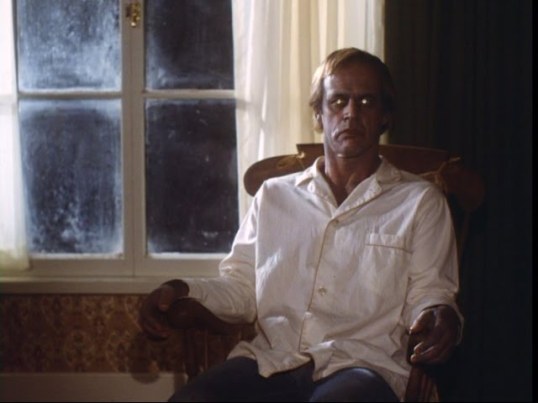
This particular scene is my second favorite from the Salem’s Lot mini-series. The first one I had posted a couple years back which just barely lags behind this one for third. What made this scene so effective despite it’s tv-style production was Tobe Hooper’s direction. Despite working with the censorship inherent in broadcast tv, Hooper was able to create a palpable sense of dread as the old English teacher Matt Burke senses a presence up in one of his house’s rooms. It was the same room where one of his former students had passed away in his sleep.

As the audience we already have an idea who or what is in that second floor room. Matt Burke has an idea as well, but his morbid curiosity wins out as he decides to investigate. Yet, despite such a lack in judgement he does come armed with a crucifix in hand. The way the scene builds and builds as Burke climbs the stairs and hesitating before opening the door to the room was almost too much to bear.

The reveal of his former student, Mike Ryerson, back in the room sitting in the rocking chair as one of the undead only increases the horror of the scene. His snake-like mannerisms was a new take on the vampire behavior. It’s not the usual silk and lace bloodsucker we grew up watching. This was a vampire that behaved like a predator beguiling it’s next prey. From the way Ryerson (played by Geoffrey Lewis) hissed his words and undulated his body as he stood to face his former teacher was disturbing at the very least.

Just writing about it and seeing the scene for the umpteenth time still gives me the shakes.

Icarus File No. 2: Maximum Overdrive (dir by Steven King)


mo

There is exactly one effective sequence to be found in Maximum Overdrive, a horror film from 1986 that attempts to show us what would happen if all of Earth’s machines decided to destroy humanity.

It takes place at the end of a little league game.  The coach, happy that his team has won, declares soda for everyone!  He walks over to the soft drink machine and puts in his coins and…nothing happens.  The coach stares at the machine perplexed.  His team gathers around him.

Suddenly, a can flies out of the machine and hits the coach in the groin.  Coach falls to his knees, just to get another can driven straight into his skull, leaving him with a big bloody hole in his head.  As the coach twitches, his teams starts to run away.  Suddenly, the machine is shooting cans out at them.  Some of the kids escape but quite a few don’t.

Suddenly, as the kids flee, a driverless steamroller crashes through a fence and drives across the field, graphically flattening one of the players…

It’s over-the-top, it’s kind of scary, it’s fun in a naughty sort of way, and it’s exciting to watch.  It’s totally absurd and yet it’s effective at the same time.  It’s a really brilliant scene, one that hints at what Maximum Overdrive could have been.  It hints that Maximum Overdrive‘s first-time director did have some potential and watching it, one is tempted to feel a pang of regret over the fact that he never directed another film after this one.

However, then you watch the rest of Maximum Overdrive and you realize that one effective scene was a total fluke.  To your horror, you realize that this film’s director (and screenwriter) has decided to set nearly the entire film in the ugliest and most disgusting truck stop in the world.  You realize that the director has no idea how to maintain suspense and that his idea of horror appears to be having a lot of trucks constantly circling the truck stop.  And then, worst of all, you realize that the unlikable caricatures inside the truck stop are meant to be our heroes!

And you find yourself wondering if things could possibly get any worse.  Well, believe me — they can.

First off, a guy named Camp Loman (Christopher Murney) shows up and reveals himself to be a total lech and then starts trying to sell bibles and really, what do you expect from someone named Camp Loman?  And, what’s annoying, is that the film’s director seems to think that he’s blowing our mind by presenting us with an hypocritical bible salesman.  I mean, seriously — the amount of time devoted to Camp Loman will make you nostalgic for scenes of a steamroller crushing a child.

And then Emilio Estevez shows up as our hero but he scowls through the entire movie and delivers all of his lines through gritted teeth, as if he’s pissed off about appearing in Maximum Overdrive and really, who can blame him?  That said, it doesn’t really make for an enjoyable performance.

But hey — Emilio’s not the only person in the truck stop.  There’s also Pat Hingle, playing the owner of the truck stop.  He’s overweight, wears a tie, smokes a cigar, and speaks with a vaguely Southern accent.  Hmmmmm, do you think he’s going to be a bad guy?

Oh!  And let’s not forget the waitress played by Ellen McElduff.  “WE MADE YOU!” she shouts at the machines and then she shouts it again and again and again and again and it’s almost as if the film is being directed by a guy so in love with his own dialogue that he doesn’t realize how annoying the same line gets when it’s screeched over and over again.

And I haven’t even gotten to the helium-voiced newlyweds yet…

When I recently watched Maximum Overdrive on Encore, there were a lot of things that annoyed me, such as the bad pacing, the bad acting, the bad dialogue, the bad special effects, the bad cinematography, and the bad everything else.  But what really got to me was just how inconsistent this movie was.  Some machines turned into killers but oddly, others did not.  At one point, a machine gun starts shooting at the people in the truck stop but the weapons that Pat Hingle keeps in the truck stop never turn on their human masters.  Seriously, if you’re going to make a terrible movie, at least be consistent.

So, you may be asking, why is this an Icarus File?  Well, it was directed by Stephen King, the writer who is routinely called the “master of horror.”  King may be a great writer but, judging from this movie, he was a really crappy director.  I imagine, when the film was in pre-production, the logic was that if King could write a scary book then he could definitely direct a scary movie.

Nope.

It turns out that, just as Icarus should never have gotten so close to the sun, Stephen King should never have directed a movie.

Previous Icarus Files:

  1. Cloud Atlas

4 Shots From 4 Films: Stephen King Edition


With just minutes left til the end of the day I thought it was time to wish one of my favorite a happy birthday.

I pretty much spent my junior high and high school years reading everything that Stephen King had written and published up to that point. The habit followed me after high school graduation and I’ve picked up on other authors since.

While Stephen King has slowed down some when it comes to the amount of novels he has released in the last decade or so, he is still one of the few authors whose books I will buy without even knowing what it’s about.

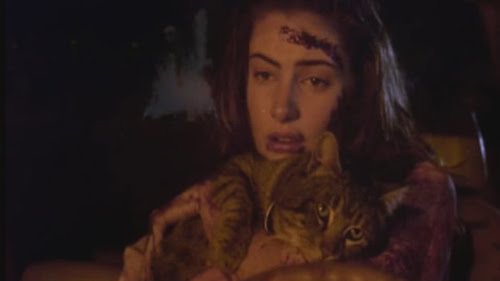
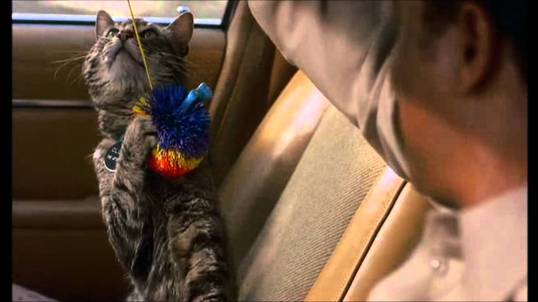
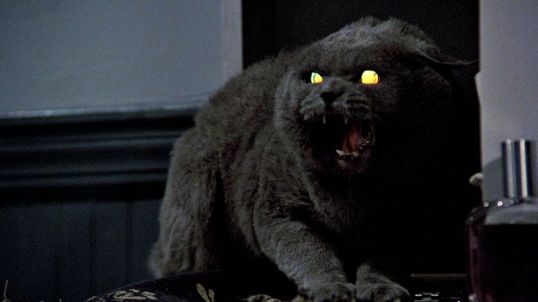
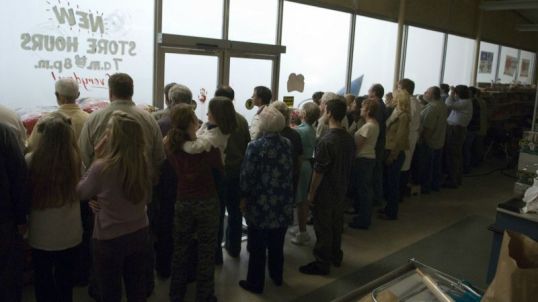
Here are just four films adapted from his stories that I consider favorites of mine. They’re just stories about a boy’s first car, a man waking up from a long sleep, a cat named Church and a grocery store full of people.

4 SHOTS FROM 4 FILMS

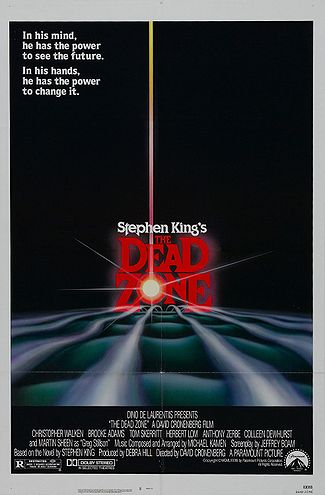
Shattered Politics #49: The Dead Zone (dir by David Cronenberg)


The_Dead_Zone

So, it seems like every time that I write a review of any film based on a novel by Stephen King, I always have to start out by explaining that I think, while King’s success is undeniable, the fact that he’s overrated is also undeniable.  It’s a comment that I always make and then I have to deal with people going, “But, Lisa, everyone loves Stephen King!  He’s the most commercially successful author ever!  He’s a modern-day Charles Dickens!”

Bleh.

Make no mistake, I think that Stephen King is a talented writer.  However, I don’t think that he’s the greatest writer that has ever lived and that’s where I often come into conflict with King’s fans.  (Stephen King fans tend to be like religious fanatics when it comes to defending their belief.)  Having read both King’s earlier work and his more recent books, it’s hard for me not to feel that Stephen King has been growing steadily complacent.  There’s a certain self-importance to his prose and his plotting that, for me, is the literary equivalent of nails on chalk board.  If anyone is guilty of believing the most fawning praise of his biggest fans, it would appears to be Stephen King who, to judge from his twitter feed, appears to also believe that he’s our most important cultural critic as well.

(To be honest, I’d probably have more tolerance for King’s attempts at cultural and political criticism if he wasn’t so  predictable about it all.  Stephen King may write best sellers but that doesn’t mean he has anything interesting or unique to say about current events.)

Anyway, since I don’t feel like having to deal with all of that shit all over again, I’m not going to start this review by saying that I think Stephen King is overrated.  In fact … whoops.

Okay, so much for that plan.

Even I have to admit that The Dead Zone is one of Stephen King’s better books.  First off, it’s less than a 1,000 pages long.  Secondly, the hero isn’t a writer who spends all of his time whining about the political preferences of his neighbors.  Third, it deals with all of the “big” issues of faith, destiny, and morality but it does so in a far less heavy-handed manner than most of King’s books.

The Dead Zone is also the basis for one of the better films to be adapted from a Stephen King novel.  Directed by David Cronenberg and starring Christopher Walken, the film’s plot closely follows the novel.  Johnny Smith (Christopher Walken) is a high school teacher who, after a horrific car crash, spends five years in a coma.  When he finally wakes up, he discovers that his girlfriend, Sarah (Brooke Adams), has married another man.  His mother has become a religious fanatic.  And, perhaps most importantly, whenever Johnny touches anyone, there’s a good chance that he’ll see either the person’s past or a possible future.

Needless to say, Johnny struggles with how to deal with his new powers.  After he helps to catch a local serial killer, Johnny goes into seclusion.  However, when he discovers that Sarah is now volunteering for ambitious politician Greg Stillson (Martin Sheen), Johnny goes to a Stillson rally, shakes the man’s hand, and has a vision.  Johnny discovers that, if Stillson is elected to the senate, he’ll eventually become President and then he’ll destroy the world.

Much like The Shining, The Dead Zone benefits from being directed by a filmmaker who was both confident and strong enough to bring his own individual style to the material.  (Usually, when a King adaptation fails, it’s because it followed the source material too closely, as if the film’s producers were scared of upsetting any of King’s constant readers.)  Though the film’s plot may closely follow the novel, the movie itself is still definitely more of a product of David Cronenberg than Stephen King.  Whereas King’s novel devoted a good deal of time to Johnny and Sarah’s relationship, it’s treated as almost an afterthought in Cronenberg’s film.  Whereas King’s novel presented Johnny Smith as being an everyman sort of character, Cronenberg’s film gives us a Johnny who, from the start of the film, is a bit of an outsider even before he starts to see the future.  Whereas King put the reader straight into Johnny’s head, Cronenberg approach is a bit more detached and clinical.  Cronenberg’s Johnny is a bit more of an enigma than King’s version.

Fortunately, Cronenberg was fortunate enough to be able to cast Christopher Walken in the role of Johnny Smith.  King’s preference for the role was Bill Murray.  As odd as it may sound, you can actually imagine Bill Murray in the role when you read King’s book.  But, for Cronenberg’s more detached vision, Walken was the perfect choice.  People tend to spend so much time focusing on Christopher Walken’s quirky screen presence that there’s a tendency to forget that he’s actually a very talented actor as well.  He’s very likable and sympathetic as Johnny and brings a humanity and a sense of humor to the role, which provides a good balance to Cronenberg’s sense of detachment.

The Dead Zone is a good book and it was later turned into an occasionally good (and, just as often, not-so-good) television series.  However, the film is still the best.

http://www.youtube.com/watch?v=lmC5oPc7L3M

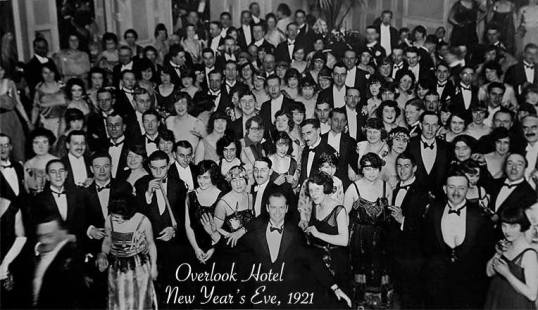
Scenes I Love: The Shining (HAPPY NEW YEAR)


10906245_532818603524393_7761477604827146346_n

HAPPY NEW YEAR!

What better way to end 2014 than through one of my favorite scenes from Kubrick’s film adaptation of The Shining.

For those who have watched the film they understand the impact of this scene. For those still needing to see this classic piece of horror filmmaking then what better way to open up the new year than making a resolution to finally sit down and watch The Shining.

Horror Film Review: Big Driver (dir by Mikael Salomon)


Bleh Stephen King

You have to be careful about admitting that you think Stephen King is overrated.

For a year and a half, I’ve been meaning to write a post entitled “10 Reasons Why Stephen King Sucks” but I haven’t. Some of that is because I don’t necessarily think that he does suck.  I think he’s a good writer but I also think that he’s overrated and that his novel about the Kennedy assassination got so many details about Texas wrong that I don’t even know where to begin.  (However, following the rules of clickbait, “sucks” works better than “overrated.”)  Mostly, though, it’s just because Stephen King fans tend to be a bit cult-like.  Criticizing King is like saying you don’t care about Beyonce’s marriage or admitting that you find President Obama to be a dull speaker or telling Vermont to go fuck itself or listing 10 Reasons Why You Hated Avatar.  You shouldn’t do it unless you want to run the risk of dealing with a lot of angry and irrational true believers.

That said, it’s always a little bit safer to criticize the movies that have been made from Stephen King’s books and short stories.  Even King’s most slavish followers will admit that Stephen King films tend to be uneven as far as quality is concerned.  Stanley Kubrick’s The Shining is one of the best horror films of all time but it’s interesting to note that Stephen King himself rarely has a good word to say about Kubrick’s adaptation of his novel.  For reasons that I’ve never quite understood, a lot of people love The Shawshank Redemption.  Then there are the adaptations that nobody likes, like Bag of Bones and Dreamcatcher.

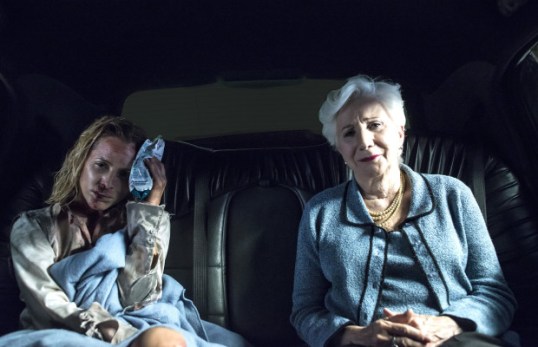
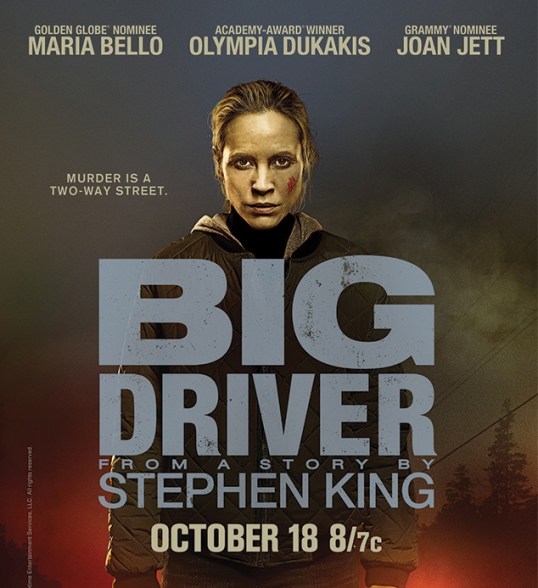
And then there’s Big Driver, an adaptation of a Stephen King novella that aired on Lifetime last night.  For the past two months, Lifetime has been advertising this film with short but effective commercials that featured a bloodied Maria Bello running down a dark road while a gigantic truck ominously followed behind her.  I saw the commercials and, seeing as how Maria Bello is a favorite actress of mine and how much I love Lifetime movies in general, I was excited to see Big Driver.  Then, I saw another commercial in which Stephen King was quoted as saying, “This is the film that Stephen King fans have been waiting for,” and I have to admit that it left me a little bit less enthused because, quite frankly, I’ve always been under the impression that Stephen King will endorse anything as long as he gets paid and his ass gets kissed.  (Someday, we’ll have to do a survey to discover just how many crappy books come with a Stephen King pull quote on the cover describing the book’s author as being “the future of horror!”)  And I have to admit that I resented the fact that Lifetime seemed to be assuming that I would ever allow Stephen King to tell me what was good and what was bad.  I can decide that for myself without having someone else tell me what I’ve been “waiting for.”

(I have issues with authority.  Can you tell?)

Big Driver, incidentally, is Stephen King’s take on I Spit On Your Grave.  Mystery writer Tess Thorne (Maria Bello) is raped and left for dead by a serial killer who is known as Big Driver (Will Harris).  Feeling that the police would simply say that she was “asking for it”, Tess does not report the attack but instead uses the same techniques that she writes about in her books to track down both Big Driver and his mother (Ann Dowd) and sets out to get both revenge for herself and justice for all of Big Driver’s other victims.  (Those detective techniques, by the way, largely seem to consist of knowing how to use Google.)  Along the way, Tess hallucinates conversations with both her car’s GPS and with one of the fictional detectives from her books (played by Olympia Dukakis).

BD

When I watched Big Driver last night, I actually had to stop watching after an hour.  The film was just too intense and disturbing for me to handle in one sitting.  The scene where Tess was raped was too painful to watch and Maria Bello’s performance was so raw and real that I had to change the channel.  It wasn’t the film’s fault.  It’s just that I wasn’t in the right emotional state to watch the movie.  It was a lot more intense than anything that I would have ever expected to see on Lifetime.  (Lifetime, after all, is the television equivalent of comfort food.)  So, I stopped watching after an hour and I turned over to SyFy so I could watch a much more light-hearted horror film, Finders Keepers.  Fortunately, I had the DVR recording Big Driver and I finished watching the film early this morning.

What I discovered, when I watched the rest of the film, is that Big Driver is a frustratingly uneven film.  The first half is difficult to watch and that’s the way it should have been.  But, as I watched the rest of the film, I found myself growing annoyed with Tess’s imaginary friends.  The talking GPS and the spectral presence of the fictional detective all served to make Tess look less like a woman demanding justice and more like the proverbial unstable person who shouldn’t have been messed with.  One reason why the original I Spit On Your Grave has recently been reevaluated by several feminist film critics is because the victim in that film is never portrayed as being crazy or unbalanced.  Her actions are purely the result of what has been done to her and, as such, that film is ultimately far more empowering than most critics will ever be willing to admit.   By calling into question Tess’s grip on reality, Big Driver fails to empower and, if a film like this isn’t going to be empowering, than what is the point?

Big Driver is, however, redeemed by Maria Bello’s fierce performance as Tess.  Maria Bello is one of my favorite actresses.  When you see that a character is played by Maria Bello, you know that character is not going to put up with any bullshit and she’s not going to be afraid to kick someone’s ass if she has to.  Even when the film’s script lets the character down, Maria Bello keeps Tess strong.  It’s a great and, I would say, even an important performance.

As for Big Driver‘s place in the pantheon of Stephen King film adaptations, it’s about in the middle.  It’s neither as good or as bad as it could have been but it is undeniably effective.

big-driver-stephen-king-lifetime

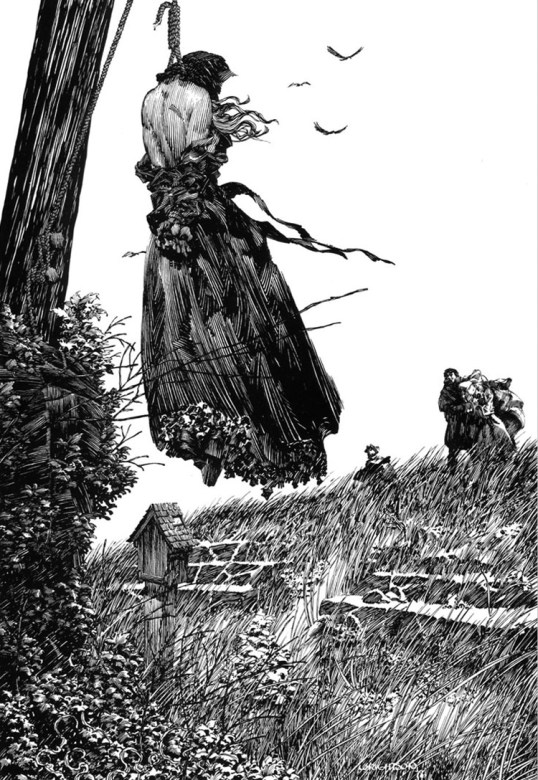
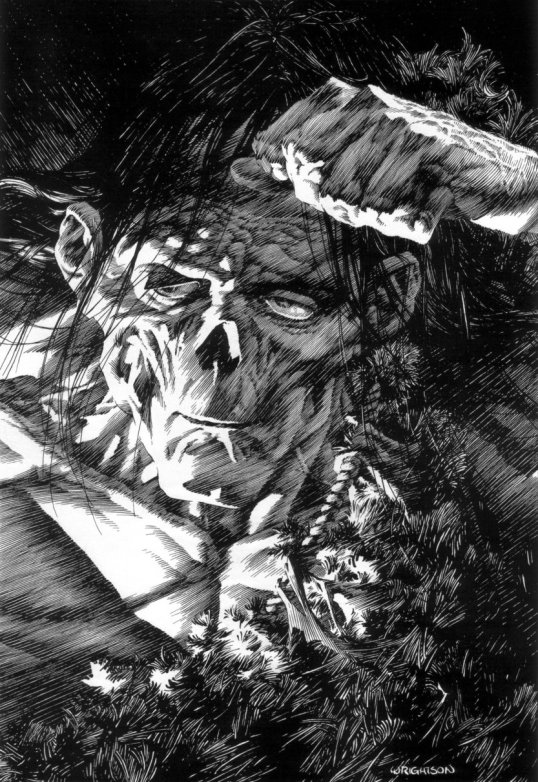
Horror Artist Profile: Bernie Wrightson (1948- )


BerniWrightson01

Horror fans know who Bernie Wrightson is even if not by name, but by the work he has done in the horror field.

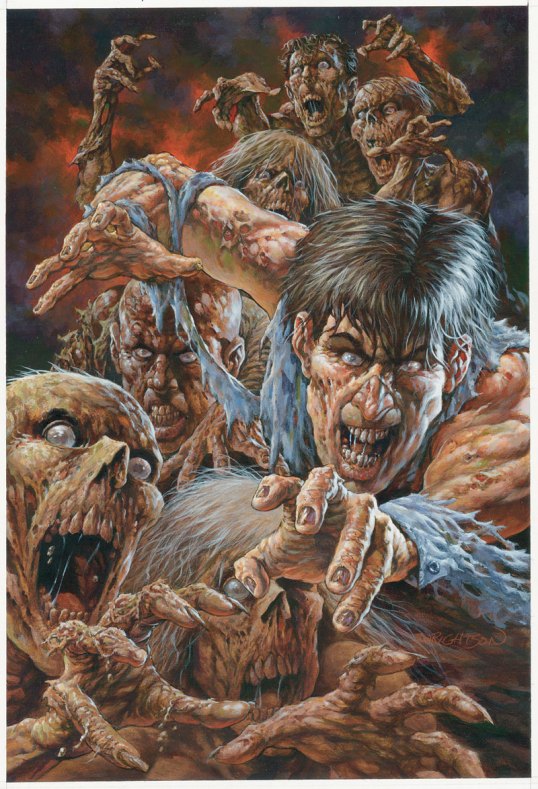
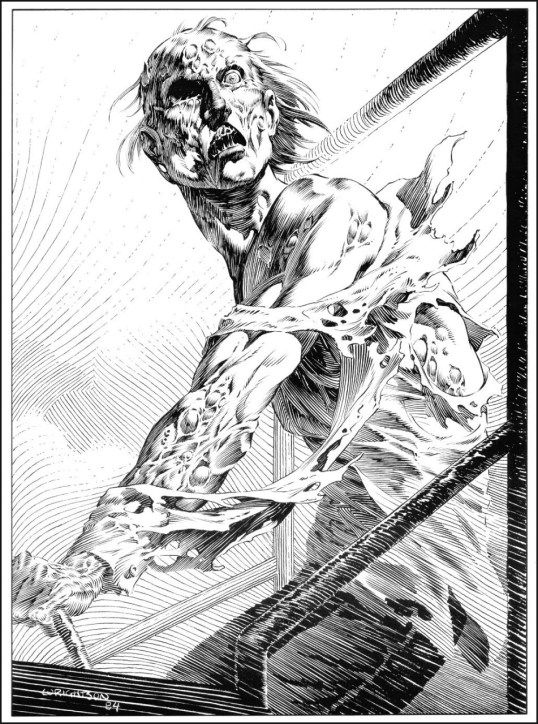
Born in October 27, 1948, Bernie Wrightson has made his name creating some of the more recognizable horror illustrations since the 1970’s. Wrightson would have his break out work in conjunction with Len Wein in co-creating the character Swamp Thing for DC Comics in 1971. In time, Wrightson would move on from DC Comics and the character he created for Warren Publishing that were well-known for producing black-and-white horror titles.

Throughout the years, Wrightson would end up producing some classic images for horror stories ranging from Mary Shelley’s novel Frankenstein right up to several Stephen King novels (The Stand, Cycle of the Werewolf and Wolves of the Calla).

Here’s to hoping that Wrightson has many more years of horror work ready to fire up the imaginations of horror fans everywhere.

BernieWrightson02

BernieWrightson03

BernieWrightson05

BernieWrightson06

BernieWrightson07

BernieWrightson08

BernieWrightson09

BernieWrightson04

Horror On The Lens: The Night Flier (dir by Mark Pavia)


Cover_of_The_Night_Flier

For today’s Horror on the Lens offering, we present you with The Night Flier, a 1997 adaptation of a Stephen King short story.  Miguel Ferrer plays a sleazy tabloid reporter, named Richard Dees, who is pursuing a serial killer who could very well be a vampire.

I have to admit that I’m not quite as big a Stephen King fan as some of my fellow writers here at the Shattered Lens.  In fact, I’ve been meaning to write a “10 Reasons Stephen King Is Overrated” article for a while.  Far too often, it seems like Stephen King adaptations manage to capture all of King’s weaknesses without making use of any of his strengths.  However, The Night Flier is one of the more effective King adaptations.  It’s no Shining but it’s still better than The Shawshank Redemption.  Plus, it features a great lead performance from Miguel Ferrer.

Enjoy!

Arleigh’s Top 10/Bottom 5 Stephen King Film Adaptations


StephenKingbooks

“We make up horrors to help us cope with the real ones.” — Stephen King

Last week we saw the release of the Carrie remake starring Chloe Grace Moretz and directed by Kimberly Peirce. This got me to thinking that of all the writers I grew up reading it was Stephen King whose novels, novellas and short stories made for easy film adaptations. His stories may be supernatural, horror scifi or dark fantasy but they all share that common denominator of having some basis in the real world.

They’re stories of how the real world and it’s seemingly normal inhabitants will react to something just beyond the norm, the pale and the real. In one story we pretty much have a Peyton Place-like setting having to deal with a arrival of a Dracula-like figure. On another we see the isolated work of hotel sitting during the winter turn into something both supernatural and a look into the mind of someone cracking under the pressure of issues both personal and professional.

With all the Stephen King film adaptations since the original Carrie I know I have seen them all and can honestly say that I’ve become an expert on the topic. So, here’s what amounts to what I think would be my top 10 best and bottom 5 worst film/tv adaptations from Stephen King stories.

Top Ten

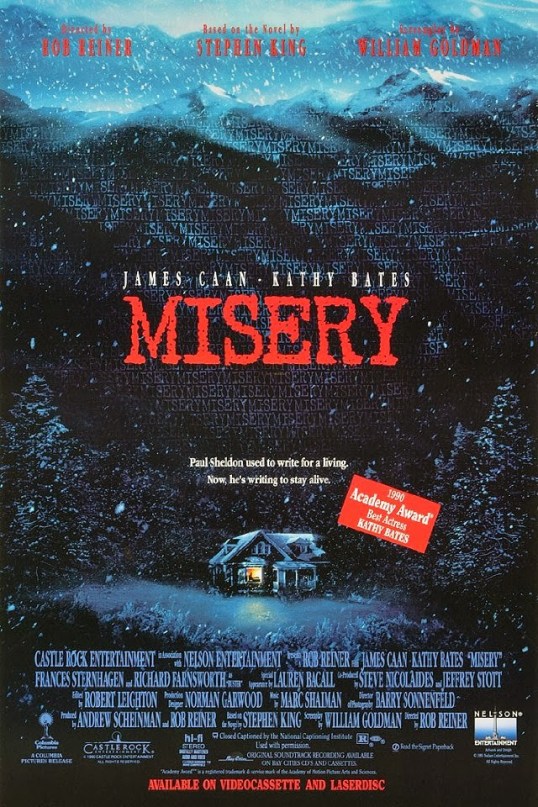
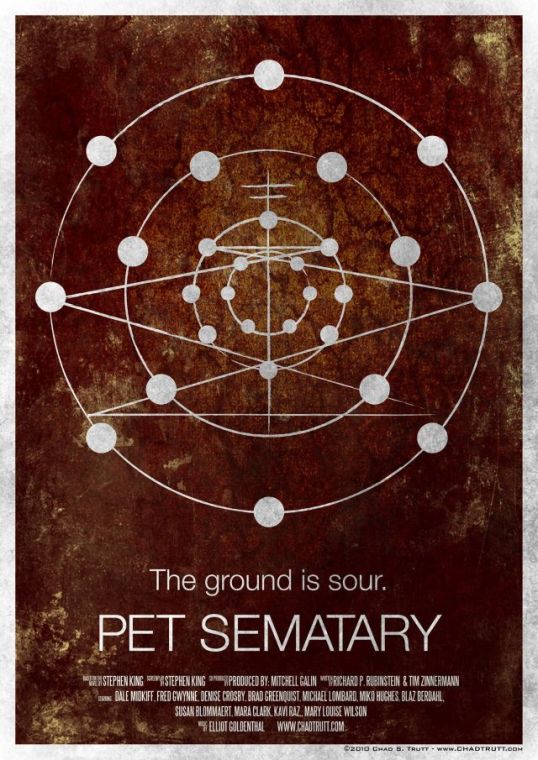
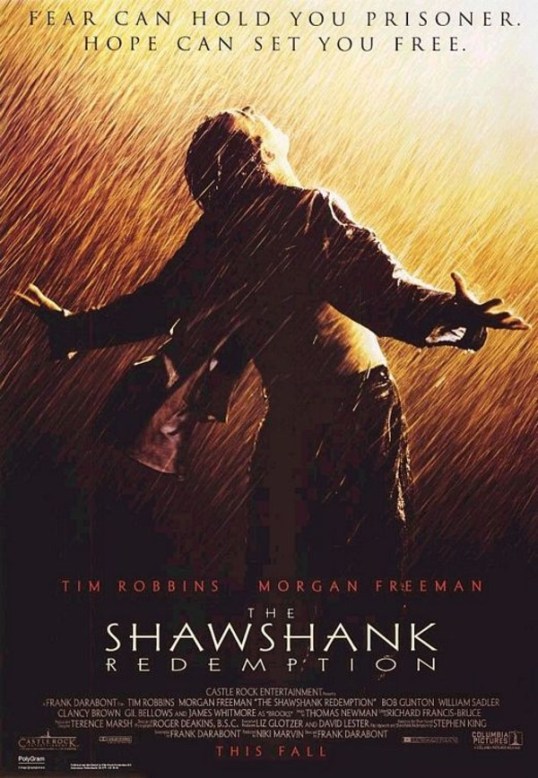
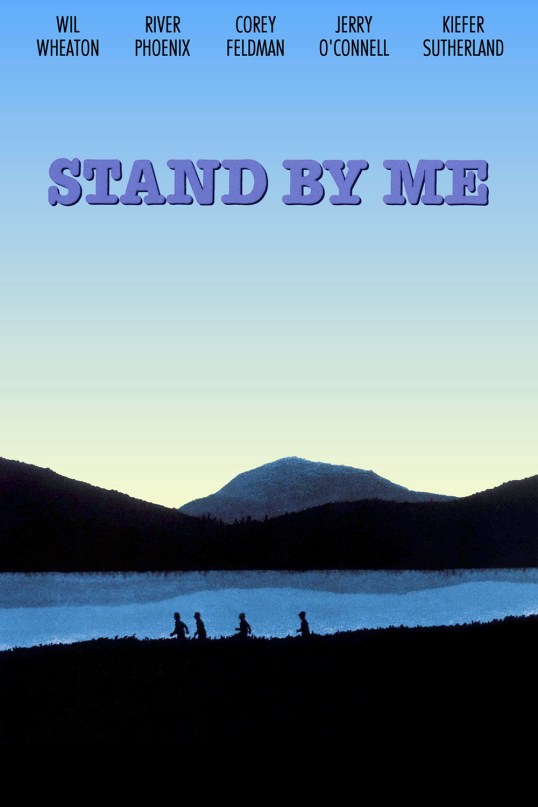
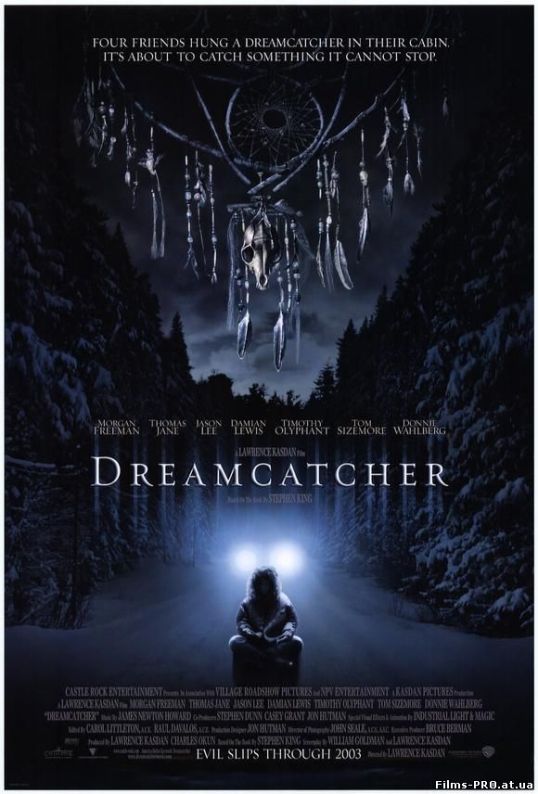
1. Salem'sLot2. TheShining3. DeadZone4. Carrie5. Christine6. Misery7. TheMist8. PetSematary9. shawshankredemption10. standbyme

Bottom Five

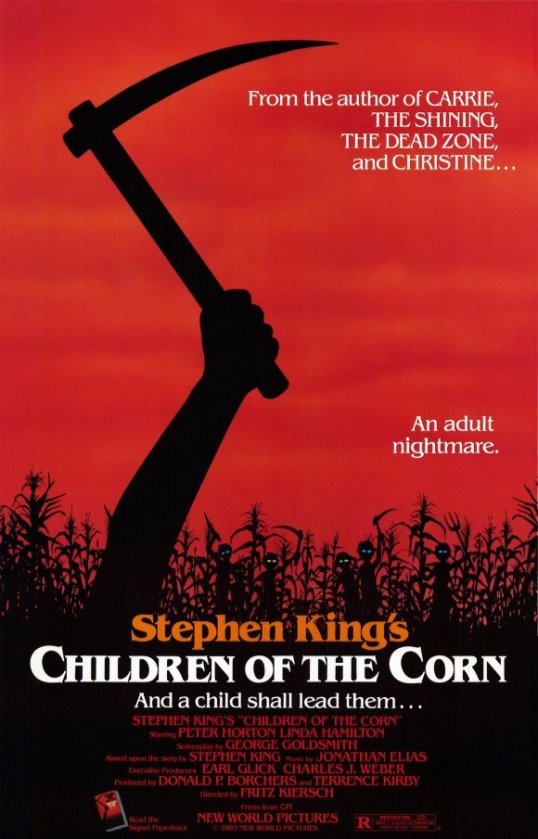
1. GraveyardShift2. maximumoverdrive3. Dreamcatcher4. TheMangler5. ChildrenoftheCorn

Halloween Horrors 2013 : “Carrie” (2013)


Carrie-movie-poster


Let me preface this review by saying one thing : Lou Reed died today, so not much else matters.

Seriously — in a world dominated by poseurs and phonies, Lou was the read deal. Avant garde before there was avant garde, glam before there was glam, punk before there was punk, new wave before there was new wave — Lou stayed six steps ahead of all trends by simply not giving a flying fuck about any of them and staying true to himself. Plus, he was quintessential New York in a way that just can’t be faked. In many ways, he was a mirror to the Big Apple’s other favorite creative son, Woody Allen — Woody’s world is one of stuffy academia, anally rententive dinner parties, emotionally distant family patriarchs and matriarchs, and lifeless and pretentious gallery openings, while Lou’s world wasn’t just the streets but the gutters : strung-out drag queens who will give head to strangers to earn enough for their next heroin fix; two-bit hustlers looking for a gullible mark from out of town; desperate AIDS patients freezing in the cold because they lost their homes, families, and jobs; kids fresh from the Port Authority bus terminal looking to hit it big but willing to do anything to get by in the meantime while secretly knowing from the outset that their dreams are never gonna come true.

In short, the kind of people Woody Allen tells stories about are outnumbered by the kind of people Lou Reed told stories about by a factor of about 1,000 to 1, but the rarified elites from planet Woody love to glamorize and pine for the kind of lives that folks on Planet Lou lived — unless, of course, they had to spend one night on the streets, outside the safe confines of their luxury condos, at which point their romanticized notions of life among the “unwashed” would dissipate in a hurry. They know that, of course, so they just “take a walk on the wild side” comfortably by purchasing framed photographs and paintings by down-and-out artists who may or may not become “the next big thing” but are, they know, quite likely living hand-to-mouth existences right now and probably always will.

Burroughs. Warhol. Basquiat. Reed. Our connection to that New York as it was is fading rapidly, isn’t it? Disney has cleaned up 42nd Street. The grindhouses are gone. Harlem has been Clintonized. And another link to the past was severed today, irrevocably. New York’s got class now, but it ain’t got soul. Characters like Alan Alda’s blowhard from Woody’s Crimes And Misdemeanors have won. Poverty and desperation are more widespread than ever, but they’re inside, keeping their mouths shut. And one of the last honest voices that chronicled the lives of the poor and desperate with no pretense, no bullshit, and no flinching is silent  forevermore. Iggy Pop’s doing car commercials now, for Christ’s sake, and Debbie harry’s touring the casino circuit — all is lost.

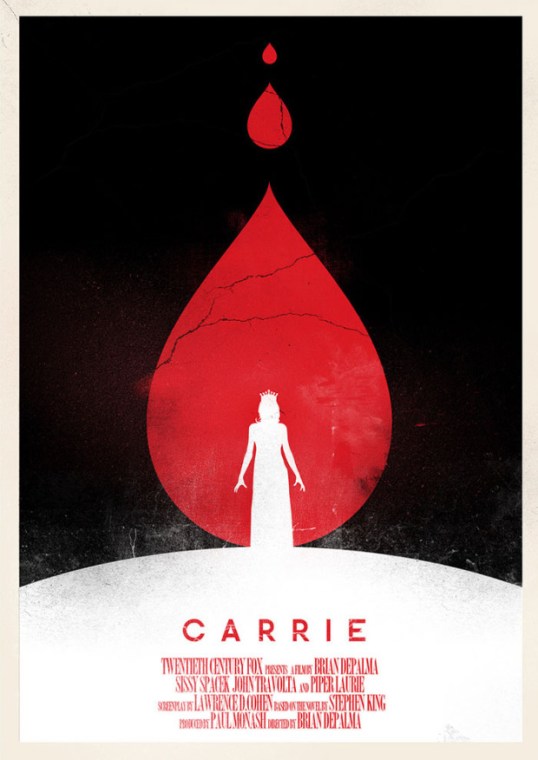
And on that note, let’s talk about this new Carrie remake, shall we?

chloe-grace-moretz-as-carrie-white-in-carrie-718x400


Competence shouldn’t be a dirty word, all things considered, but when it’s all a movie has going for it, is that really saying very much? Director Kimberly Peirce doesn’t really do anything new with Stephen King’s horror classic apart from giving the unfortunate title character a more lurid backstory, but it’s not like she’s done anything actively bad here, either. The story proceeds more or less along the lines of the original (and along the lines of the made-for-cable remake starring Angela Bettis), so hey — it’s a decent little horror tale, we all know that. Likewise, Chloe Grace Moretz turns in a respectable enough performance in the lead role, Julianne Moore takes a completely different tack with the elder White than did Piper Laurie but it really works, and among the supporting cast Gabriella Wilde deserves special mention for her nice turn as the well-enough-meaning-but-hopelessly-misguided  Sue Snell.

Still — where’s the soul? Like the new, cleaned-up Manhattan, Carrie circa 2013 is an exercise in mere presentation, with no substance beneath it whatsoever. DePalma’s dramatics are nowhere to be found here, nor his shocks. This is a movie that knows we already know the story and proceeds accordingly. “Just don’t fuck things up” seems to be all the more that Peirce and company were aiming for here, and as a result that’s all we get — a movie that gets in, does the job, and gets out.

Chloe-Grace-Moretz-and-Julianne-Moore-in-Carrie-2013-Movie-Image-3


Little touches like having Carrie make her prom dress herself make sense, but serve no real purpose in terms of broadening our understanding of the character or her situation, much less get us to go so far as to re-evaluate either — and adding camera phones to the infamous shower scene at the beginning don’t so much as “modernize” the proceedings as they draw attention to the fact that elements are being tacked on her for the sake of — well, nothing, I suppose.

So — we come back to competence again. Lou Reed wasn’t a “good singer” in any conventional sense of the term, but man, he was in there. He lived and breathed the kind of life he wrote songs about. He brought the same kind of immediacy to his work that Brian DePalma brought to Carrie in 1976. And that’s what’s missing here in Perice’s cold, clinical, by-the-numbers remake. That doesn’t make this new version a bad one, I guess, as I said — but it does make it a pointless one. This has all been done before, and been done a whole lot better, so — why bother?

Carrie-the-movie-every-bully-should-see


But again — none of this matters all that much. Lou Reed died today. I’m wasting your time — and mine — by talking about anything other than that.