January Positivity: Mercy Streets (dir by Jon Gunn)


2000’s Mercy Streets is a strange film.

Two twin brothers, John and Jeremiah, grew up in a series of terrible group homes.  One night, John fell off a bridge and Jeremiah failed to rescue him from the water below.  Jeremiah was convinced that John drowned.  Wracked with guilt, Jeremiah turned his life around.  He became an upstanding citizen and, as an adult, he’s an Episcopal deacon who is just a few weeks away from being ordained.  His girlfriend (Cynthia Watros) loves him but can tell that he’s not always open with her about his past and his emotions.

What Jeremiah doesn’t know is that John did not drown.  He survived and grew up to be a career criminal.  Having spent the last few years in jail, he tracks down his mentor, Rome (Eric Roberts), as soon as he’s released.  (That’s right!  This is an Eric Roberts film!)  Rome wants John to help him out with a scheme involving counterfeit money.  John decides to grab the money and run.  When Rome can’t catch John, he decides to abduct Jeremiah instead.

Meanwhile, John takes over Jeremiah’s life.  Pretending to be his brother, John fixes Jeremiah’s relationship with his girlfriend and he even proves to be better at delivering sermons than Jeremiah, despite the fact that John is not religious at all.  While Jeremiah gets a crash course in how to be a counterfeiter, John learns how to be an upstanding member of society.

Of course, it doesn’t last.  Jeremiah eventually escapes from Rome and finds himself on the streets, where he struggles to not fall into the same criminal lifestyle that previously captured his brother.  Fortunately, Jeremiah runs into a priest named Tom (Stacy Keach), who offers some good advice.  Meanwhile, John learns about the importance of forgiveness and redemption and discovers that Jeremiah has spent his entire life mourning the brother who he thought was dead.

Mercy Streets is an odd mix of religion and action.  On the one hand, the film features David A.R. White playing two brothers who feel like they could have walked out of one of his wholesome Pureflix  movies.  (White, while being a decent actor, is not exactly the most believable hardened criminal that I’ve ever seen.)  On the other hand, you’ve got Eric Roberts teaching Jeremiah how to be a criminal and basically taking over the entire film whenever he’s onscreen.  (The scene where Rome teaches Jeremiah how to pass fake money is surprisingly well-acted and directed.)  The movie runs into the same problem that plagued many a DeMille production.  The heroes may all be Godly but the sinners appear to be having more fun.  That said, this film at least reminds us of what a good actor Eric Roberts can be when he’s got a decent role.

Previous Eric Roberts Films That We Have Reviewed:

  1. Star 80 (1983)
  2. Blood Red (1989)
  3. The Ambulance (1990)
  4. The Lost Capone (1990)
  5. Love, Cheat, & Steal (1993)
  6. Love Is A Gun (1994)
  7. Sensation (1994)
  8. Dark Angel (1996)
  9. Doctor Who (1996)
  10. Most Wanted (1997)
  11. Wolves of Wall Street (2002)
  12. Mr. Brightside (2004)
  13. Six: The Mark Unleased (2004)
  14. Hey You (2006)
  15. In The Blink of an Eye (2009)
  16. Enemies Among Us (2010)
  17. The Expendables (2010) 
  18. Sharktopus (2010)
  19. The Dead Want Women (2012)
  20. Deadline (2012)
  21. The Mark (2012)
  22. Miss Atomic Bomb (2012)
  23. Bonnie And Clyde: Justified (2013)
  24. Lovelace (2013)
  25. The Mark: Redemption (2013)
  26. Self-Storage (2013)
  27. This Is Our Time (2013)
  28. Inherent Vice (2014)
  29. Road to the Open (2014)
  30. Rumors of War (2014)
  31. Amityville Death House (2015)
  32. A Fatal Obsession (2015)
  33. Stalked By My Doctor (2015)
  34. Enemy Within (2016)
  35. Joker’s Poltergeist (2016)
  36. Prayer Never Fails (2016)
  37. Stalked By My Doctor: The Return (2016)
  38. The Wrong Roommate (2016)
  39. Dark Image (2017)
  40. Black Wake (2018)
  41. Stalked By My Doctor: Patient’s Revenge (2018)
  42. Clinton Island (2019)
  43. Monster Island (2019)
  44. The Savant (2019)
  45. Seven Deadly Sins (2019)
  46. Stalked By My Doctor: A Sleepwalker’s Nightmare (2019)
  47. The Wrong Mommy (2019)
  48. Exodus of a Prodigal Son (2020)
  49. Free Lunch Express (2020)
  50. Her Deadly Groom (2020)
  51. Top Gunner (2020)
  52. Deadly Nightshade (2021)
  53. Just What The Doctor Ordered (2021)
  54. Killer Advice (2021)
  55. The Poltergeist Diaries (2021)
  56. The Rebels of PT-218 (2021)
  57. A Town Called Parable (2021)
  58. Bleach (2022)
  59. My Dinner With Eric (2022)
  60. Aftermath (2024)
  61. The Wrong Life Coach (2024)
The Unnominated: The Long Riders (Dir by Walter Hill)


Though the Academy of Motion Picture Arts and Sciences claim that the Oscars honor the best of the year, we all know that there are always worthy films and performances that end up getting overlooked.  Sometimes, it’s because the competition too fierce.  Sometimes, it’s because the film itself was too controversial.  Often, it’s just a case of a film’s quality not being fully recognized until years after its initial released.  This series of reviews takes a look at the films and performances that should have been nominated but were, for whatever reason, overlooked.  These are the Unnominated.

First released in 1980, The Long Riders is one of the many films to tell the story of the James/Younger Gang.

A group of former Confederate guerillas who became some of the most notorious bank robbers to roam post-Civil War America and who were based in Missouri, the brothers who made up the James/Younger Gang were hunted by the Pinkertons and beloved by the citizens who viewed them as being 19th Century Robin Hoods.  Following a disastrous attempt to rob a bank in Northfield, Minnesota, the Younger brothers were captured by the government while Jesse and Frank James made it back to Missouri.  Jesse was shot in the back by Bob Ford while Frank subsequently surrendered to authorities and made a good living on the lecture circuit.

The Long Riders tells the story of the gang, from their first encounter with the heavy-handed Pinkertons to the Northfield raid to Frank’s eventual surrender.  Director Walter Hill both celebrates the legend of the James/Younger Gang while also emphasizing that all the members of the gang were also individual humans who had their strengths and their flaws.  Hill emphasizes the idea of the gang being a group of post-war rebels, still fighting a war against a government that is more interested in protecting banks than looking after people.  The Long Riders deconstructs the legend while also celebrating it.

The main thing that sets The Long Riders apart from other films about the James/Younger Gang is the fact that the brothers are played by actual brothers.  David, Keith, and Robert Carradine plays the Youngers.  Randy Quaid plays Clell Miller while Dennis Quaid assumes the role of the cowardly Ed Miller.  Nicholas and Christopher Guest make a memorably creepy impression as Charley and Bob Ford.  And finally, Jesse and Frank James are played by James and Stacy Keach.  (The Keaches also worked on the film’s script).  And while Stacy is definitely the more charismatic of the Keach brothers, the film makes good use of James’s rather stoic screen presence.  While the rest of the gang enjoys the outlaw life, James Keach’s Jesse is rigid, serious, and ultimately too stubborn and obsessive for his own good.

Now, the casting might sound like a gimmick but it works wonderfully.  When Clell chooses the gang over Ed, it carries an emotional weight because we’re watching real brothers reject each other.  The comradery between the Carradines carries over to the comradery between the Youngers and it also informs their occasional rivalry with the better known James brothers.  While it is Stacy Keach and David Carradine who ultimately dominate the film, every brother in the cast makes a strong impression.  Also giving a memorable performance is Pamela Reed as a defiantly independent Belle Starr, who loves David Carradine’s Cole Younger but marries Sam Starr (James Remar).  The knife fight between Carradine and Remar is one of the film’s highlights, as is the violent and disastrous attempt to rob the bank in Northfield.

The Long Riders is an exciting and ultimately poignant western but sadly, it received not a single Oscar nomination, not even for the stunning cinematography or Ry Cooder’s elegiac score.  Fortunately, just like the legend of the James/Younger Gang, The Long Riders lives on.

Previous entries in The Unnominated:

  1. Auto Focus 
  2. Star 80
  3. Monty Python and The Holy Grail
  4. Johnny Got His Gun
  5. Saint Jack
  6. Office Space
  7. Play Misty For Me

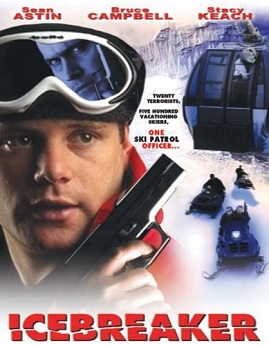
Icebreaker (2000, directed by David Giancola)


Carl Grieg (Bruce Campbell) is a terminally ill terrorist who takes over a Vermont ski resort while his henchpeople search the nearby mountains for a lost shipment on plutonium.  The only man who can stop Carl is a wiseass but determined ski patroller, Matt Foster (Sean Astin).  Not only does Matt have to stop Carl from getting his hands on the plutonium but he also has to save his fiancée (Suzanne Turner) and her father (Stacy Keach), both of whom are being held hostage by Carl.  Since his future father-in-law thinks that he’s nothing more than good for nothing ski bum, this is Matt’s chance to prove himself worthy of joining the family.

Icebreaker tries to be Die Hard in a Ski Lodge but it fails because Sean Astin is no one’s idea of an action star.  With his laid back and goofy manner, Astin miscast as someone who can leap from from an exploding ski lift and land in the snow with barely a scratch on him.  This was the last film that Sean Astin made before Peter Jackson offered him the role of Sam in the Lord of the Rings trilogy.  Needless to say, Astin was much better cast in that role than as a knock-off of Bruce Willis.

As for the rest of the cast, Bruce Campbell hams it up as Carl and, while it is always good to see Bruce, he also appears to be having so much fun that it makes him a less than convincing terrorist.  With his shaved head, it’s easy to mistake Bruce for Billy Zane.  Stacy Keach does a good job playing someone who is never not annoyed.  Considering that his daughter wants to marry a ski bum and they’re being held hostage by a villain who wants to make his very own nuclear bomb, can you blame him?

There’s some skiing action but none of it is really memorable.  There is also a scene featuring repeated shots of a counter on a bomb, announcing that Astin only had 30 seconds to do what he needs to do before everything explodes.  I think the timer may have been broken because it took a lot long than 30 seconds for that countdown to reach zero.  If you really want to see Die Hard In A Ski Resort, I suggest sticking with Cliffhanger.  That one not only only has Sylvester Stallone and Michael Rooker cracking jokes but also John Lithgow speaking with a posh accent.

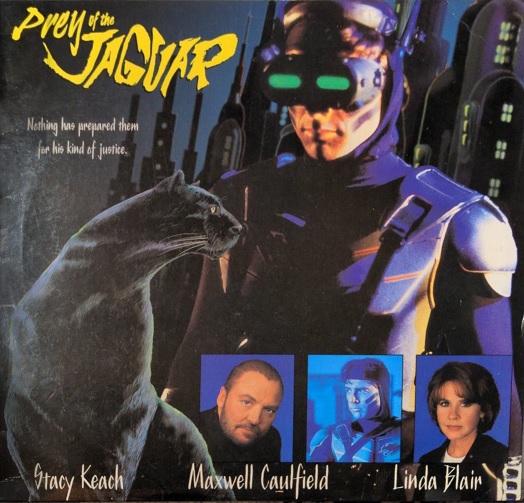
Prey of the Jaguar (1996, directed by David DeCoteau)


Derek Leigh (Maxwell Caulfield) is a former Special Ops agent whose son and wife are killed by a drug lord (Trevor Goddard) than Leigh helped to put behind bars.  Inspired by his dead son’s love of super heroes, Leigh puts on a purple rubber suit and learns karate from Master Yee (John Fujioka) while The Toymaker (Paul Bartel) supplies him with an arsenal of weapons.  Calling himself the Jaguar, Leigh goes after the men who killed his family.

Caulfield wears an obviously fake mustache for the first half of the film so that he can shave it off when he becomes The Jaguar.  The camera never stops spinning around.  Most of the fights look fake and the exterior of Derek’s house changes from shot-to-shot.  Stacy Keach plays a high-ranking government official but doesn’t bother to get a haircut or hide his pony tail.  Linda Blair plays a cop and sounds like she sucked helium before filming her lines.  I’m not sure what she was doing in the movie.  She may not have been sure either.  Prey of the Jaguar is a reminder of just how cheap and cruddy most super hero films were before Marvel took over Hollywood.  Of course, Derek doesn’t really have any super powers, beyond getting proficient at martial arts in record time.  He is just wearing the outfit to honor the spirit of his dead son.  That actually makes more sense than most of the Marvel origin stories.  The movie itself was too cheap to work and the actors were so disinterested that they seemed to actively be trying to make sure that there would never be a Prey of the Jaguar 2.

The most interesting thing about the film are the opening credits, which reveal that this film was executive producer by the Wolf of Wall Street himself, Jordan Belfort.

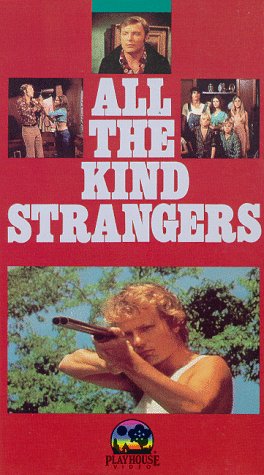
Horror Film Review: All The Kind Strangers (dir by Burt Kennedy)


This 1974 made-for-television movie opens with photojournalist Jimmy Wheeler (Stacy Keach) driving down an isolated country road.  He’s driving across America, heading towards California.  However, when he sees a young child walking on the side of the road and struggling to carry two bags of groceries, Jimmy pulls over and offers the child a ride.

That’s a big mistake.  As Jimmy soon discovers, the child lives on an isolated farmhouse in the middle of nowhere.  He resides with his six brothers and sisters.  The family is led by Peter (John Savage), the oldest sibling.  Jimmy discover that there’s only one other adult on the farm.  The children refer to her as being their mom and Carol Ann (Samantha Eggar) certainly does seem to be busy, cooking dinner and keeping the house clean.  It’s only when the children leave the kitchen that Carol Ann finally tells Jimmy the truth.  She’s not related to the children.  Instead, she is someone who made the same mistake that Jimmy did.  She gave one of the kids a ride home and she’s never been allowed to leave.

It turns out that the children’s parents died a few years ago but, because the family lives so far away from town, no one has ever noticed.  Peter has been in charge of the family but he’s reaching the point where he no longer wants to spend his entire life on the farm.  He wants to experience Mardi Gras and then visit California.  So, Peter has been sending out the children to tempt random adults to come to the house, where Peter auditions them to see if they would be good parents.  Peter has decided that Carol Ann can be the mother.  Now, he just needs to find someone to serve as the father.

Jimmy seems like a good candidates, except for the fact that he doesn’t want to spend the rest of his life in the middle of nowhere and raising a bunch of odd children.  Unfortunately, Jimmy soon discovers that it won’t be easy to escape.  The farm is guarded by a pack of dogs and Peter has a way of taking care of all the kind strangers who fail their audition….

Even though it’s only 75 minutes long, All The Kind Strangers is a bit of a slow film and often, it seems like it can’t decide whether it wants to be a straight horror film or a family melodrama.  Add to that, one of the kids is played Robby Benson, who showed up in a lot of 70s films, always playing awkward teenagers.  Benson gives such a bizarrely over the top performance that it’s hard to take him or any situation in which he’s involved seriously.  (Benson also sings the film’s easy listening theme song.)  That said, the film still manages to create and maintain an effectively creepy atmosphere and Stacy Keach, Samantha Eggar, and John Savage all give good performances.  The fact that the kids aren’t evil as much as they’re incapable of understanding the consequences of their actions actually serves to make them even creepier than the typical demented children who appear in films like this.

All The Kind Strangers has its moments, even if it doesn’t make a huge impression.

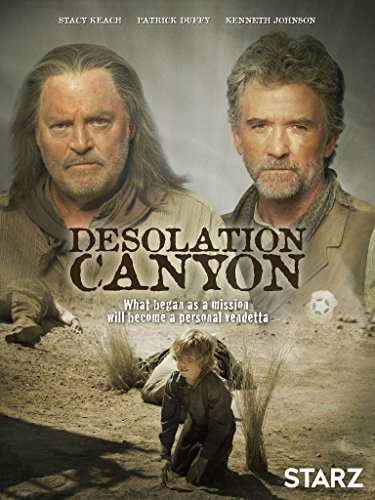
Desolation Canyon (2006, directed by David Cass)


After robbing a bank in a small western town, an outlaw stops by the home of his estranged wife and takes his own son hostage.  The town’s aging sheriff (Patrick Duffy) teams with the boy’s grandfather (Stacy Keach) to take the outlaw down and save the child’s life.  Accompanying them is the bank president, Edwin Bornstein (David Rees Snell).  Edwin may be a city boy who talks about how much he’s always wanted to say “I reckon,” but it turns out that there’s more to him than meets the eye.  He’s also good with a gun.

I probably should have given up on Desolation Canyon as soon as I saw that it was a “Hallmark Presents” film but I like westerns and Stacy Keach has always done well whenever he’s been cast as a gunslinger so I decided to give it a try.  Starting with a bank robbery and endings with a duel, Desolation Canyon is about as old-fashioned as an old-fashioned western can be.  Because it was made by Hallmark, there’s nothing dangerous or edgy about the film.  A few people do get shot but there’s no blood.  The shoot outs in Red Dead Redemption are more violent and suspenseful than anything to be found in this film.  (Of course, that’s because most of the shootouts in Red Dead Redemption occur because the play pushed the wrong button while trying to greet someone.  I still feel bad for accidentally shooting the kindly old homesteader who just wanted someone to help him collect some flowers for his wife.)  This is the type of western that you can safely watch with your grandparents, since that’s who the film was made for.  That’s not bad because grandparents need movies to but if you’re looking for a complex or an unpredictable western in the style of a Larry McMurtry novel or a later Eastwood film, I reckon this ain’t it.

Giving some credit where credit is due, Stacy Keach, David Rees Snell, and even Patrick Duffy are credible in their roles.  Stacy Keach is especially convincing a former gunfighter who can still outdraw anyone.  Stacy Keach is 81 years old and still working.  Someone needs to write a great Stacy Keach role and they need to do it now.

The Life and Times of Judge Roy Bean (1972, directed by John Huston)


During the lawless day of the old west, a drifter named Roy Bean (Paul Newman) wanders into the desolate town of Vinegaroon, Texas.  When he enters the local saloon, he meets the vagrants who run the town.  They beat him, they rob him, and they tie him to the back of his horse and leave him to die.

Bean, however, does not die.  Instead, he’s nursed back to health by a beautiful young woman named Maria Elena (Victoria Principal).  Carrying a gun, Bean reenters the saloon and promptly kills nearly everyone who previously attacked him.  (“I’m not done killing you yet!” Bean yells at one fleeing woman.)  Bean sits down in front of the saloon and waits for justice.  Instead, he’s visited by a lecherous traveling preacher (Anthony Perkins), who buries the dead and gives Bean absolution.  Bean declares that he is now the “law of the West Pecos.”  As the preacher leaves, he looks at the audience and says that he never visited Bean again and later died of dysentery in Mexico.  He hasn’t seen Bean since dying so the preacher is sure that, wherever Bean went, it wasn’t Heaven.

Judge Roy Bean dispenses rough and hard justice from his saloon and renames the town Langtry, after the actress Lillie Langtry.  Bean has never met Langtry or even seen her perform but he writes to her regularly and pictures of her decorate the walls of his saloon.  Bean hires outlaws to serve as his town marshals and sentences prostitutes to remain in town and marry the citizens.  Lawbreakers are left hanging outside of the saloon.  Bean enters into a common law marriage with Maria and, for a while, they even own a bear, who drinks beer and helps Bean maintain order in the court.  Bean may be crazy but his methods clean up the town and Langtry starts to grow.  As Langtry becomes more civilized and an attorney named Arthur Gass (Roddy McDowall) grows more powerful, it starts to become apparent that there may no longer be a place for a man like Judge Roy Bean.

The real-life Judge Roy Bean did hold court in a saloon and he did name the town after Lilly Langtry.  It’s debatable whether or not he was really a hanging judge.  Because he didn’t have a jail, the maximum punishment that he could hand out was a fine and usually that fine was the same amount of however much money the accused had on him at the time of his arrest.  Because of his eccentricities and his reputation for being the “only law west of the Pecos,” Roy Bean became a legendary figure.  The Life and Times of Judge Roy Bean acknowledges from the start that it’s not a historically accurate, with a title card that reads, “Maybe this isn’t the way it was… it’s the way it should have been.”

Based on a script by John Milius and directed by Hollywood veteran John Huston, The Life and Times of Judge Roy Bean is one of the strangest westerns to ever be released by a major studio.  Featuring multiple narrators who occasionally speak directly to the camera, The Life and Times of Judge Roy Bean is an episodic mix of low comedy, graphic violence, and syrupy romance.  (The film’s sole Oscar nomination was for the song that played over scenes of Bean and Maria going on a romantic picnic with their pet bear.)  Familiar faces show up in small roles.  Along with Perkins and McDowall, Tab Hunter, Ned Beatty, Jacqueline Bissett, Ava Gardner, and Anthony Zerbe all play supporting roles.  Even a heavily made-up Stacy Keach makes an appearance as an albino outlaw named Bad Bob.

Jacqueline Bisset in The Life and Times of Judge Roy Bean

Milius has gone on the record as calling The Life and Times of Judge Roy Bean a “Beverly Hills western” and he has a point.  He envisioned the script as starring Warren Oates as a less likable and much more morally ambiguous version of Judge Roy Bean and he was not happy that his original ending was replaced by a more showy pyrotechnic spectacle.  Milius envisioned the film as a low-budget spaghetti western but Huston instead made a Hollywood epic, complete with celebrity cameos and a theme song from Maurice Jarre and Marilyn Bergman.  Milius said that his experience with The Life and Times of Judge Roy Bean is what led to him deciding to direct his own films.

Again, Milius has a point but John Huston’s version of The Life and Times of Judge Roy Bean has its strengths as well.  Though he may not be the madman that Milius originally envisioned, Paul Newman gives a good, grizzled performance as Roy Bean and the role served as a precursor for the type of aging but determined characters that Newman would specialize in during the final phase of his career.  Due to its episodic structure, the film is uneven but it works more often than it doesn’t.  The chaotic early scenes reflect a time when the west was actually wild while the later scenes are more cohesive, as society moves into Langtry and threatens to make formerly indispensable men like Roy Ban obsolete.  Even the cameo performances fit in well with the film’s overall scheme, with Anthony Perkins standing out as the odd preacher.  Finally, the young Victoria Principal is perfectly cast as the only woman that Roy Bean loved as much as Lily Langtry.

Though it’s impossible not to wonder what Warren Oates would have done with the title role, The Life and Times of Judge Roy Bean is a good end-of-the-west western.

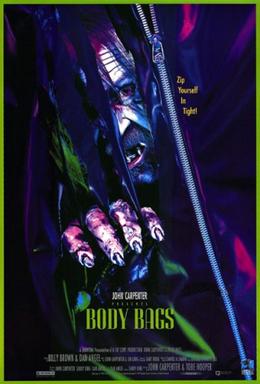
The TSL’s Grindhouse: Body Bags (dir by John Carpenter and Tobe Hooper)


An odd but mildly likable film, that’s the best description of Body Bags.

Originally, Body Bags wasn’t even meant to be a film.  Instead, in 1993, Showtime wanted to do a horror anthology show, one that would mix comedy and chills in the style of HBO’s Tales From The Crypt.  Three episodes were filmed.  Two were directed by John Carpenter.  The other was directed by Tobe Hooper.  Robert Carradine, Stacy Keach, and Mark Hamill all agreed to appear on the show.  That’s an impressive collection of talent but, for whatever reason, Showtime decided not to pursue Body Bags as a series.  So the three episodes were strung together in an anthology film.  Linking the stories was a warp-around segment where Carpenter played a coroner and Tobe Hooper and Tom Arnold played morgue attendants!

Now, it must be said that John Carpenter probably made the right decision when he decided to become a director instead of an actor.  That said, what Carpenter lacked in acting technique, he made up for with unbridled enthusiasm.  Carpenter appears to be having a blast playing an old style horror host.  Who can blame him?  In fact, I would say one the most appealing things about John Carpenter as a personality is that he always seems to be truly enjoying himself, regardless of all the crap that he’s had to put up with in Hollywood.

As for the segments …. well, they’re uneven.  That’s not really a shock. Part of the problem is that, because they weren’t originally envisioned as all airing together, a lot of ideas and story points are repeated from segment to segment.  The first segment is about a serial killer.  The second segment is about a transplant.  The third segment is about both a transplant and a serial killer.  It gets a bit repetitive.

Carpenter directed the first two segments, The Gas Station and HairThe Gas Station is a bit too simple for its own good.  Robert Carradine is a serial killer who harasses a woman at a gas station.  That’s pretty much it.  Carradine gives a good performance ad Halloween fans will get a laugh out of a reference to Haddonfield but there’s not much else going on.  Hair is a bit better.  Stacy Keach plays a businessman who gets a hair transplant, just to discover that the hair is extraterrestrial in origin.  Hair is clever and playful, like an above average episode of The Twilight Zone.  Keach plays his role with the right mix of comedic outrage and genuine horror.

The third segment is called Eyes and it was directed by Tobe Hooper.  Mark Hamill plays a baseball player who is losing his eyesight as the result of a car accident.  He gets an eye transplant.  At first, everything seems fine but soon, he’s having visions of himself murdering people!  It turns out that the eye once belonged to a serial killer.  You can guess where this is going but Mark Hamill really throws himself into the role and Tobe Hooper’s direction is appropriately intense.

Body Bags is a pretty minor entry in the filmographies of two great directors but, at the same time, it’s enjoyable in its own silly way.  There’s a likable goofiness to John Carpenter’s wrap-around segment and it lets us know that we shouldn’t take any of this too seriously.  Watch it for your own amusement.

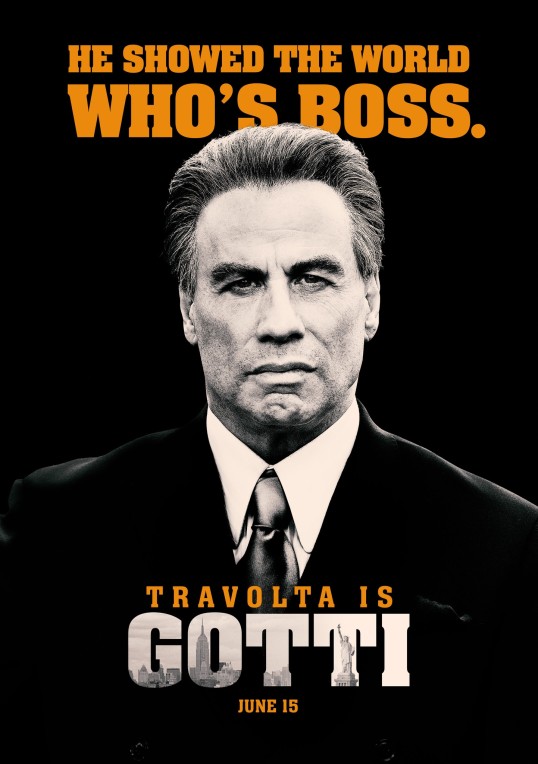
An Offer You Can’t Refuse #23: Gotti (dir by Kevin Connolly)


Few recent films have been as misunderstood as Gotti.

When this film was first released in 2018, it was slammed by critics and it flopped at the box office.  On Rotten Tomatoes, it managed a score of 0% from the critics.  At the same time, the opening day audience score was 80%.  (Over subsequent days, the audience score would drop to 46%.)  This disparity was blamed on studio employees inflating the audience score, though I think it’s more likely that, after months of negative press about the film’s troubled productions, critics were already looking forward to slamming the film before they even had a chance to see it.  At the same time, the buzz on Gotti was so bad that the opening day audience was made up of a combination of John Travolta die-hards (whoever they may be) and people who were expecting such a trainwreck that all Gotti had to do to surpass their expectations was to occasionally be in focus.

Then again, it could be that some members of the audience understood what I instinctively understood when I first watched GottiGotti is not really a film about John Gotti, the flamboyant New York mob boss who ruled the streets with an iron fist and who eventually ended up dying of cancer in prison.  Instead, whether it was the filmmaker’s actual intention or not, Gotti is a film about the audience’s fascination with not only gangsters but also the movies that have been made about them.

It’s true that John Travolta may be playing someone namned John Gotti but the film goes out of its way to remind you that he’s not the real John Gotti.  The film is full of archival news footage of the real John Gotti, either laughing it up with reporters or smirking while sitting in a courtroom.  Every time that we’re shown footage of the real John Gotti, we’re reminded of the fact that, at not point during the film, does Travolta look anything like John Gotti.  Add to that, the real Gotti is always smirking whereas Travolta always looks somewhat grim.  At the time this film came out, many claimed that this was evidence of lazy filmmaking but I viewed it as being a Brechtian distancing device.  Whenever the real Gotti makes an appearance, we’re reminded that we’re just watching a movie and then we’re encouraged to ask ourselves why we would want to watch a movie about such a disreputable figure.

The movie opens with John Travolta standing next to the Brooklyn Bridge and speaking directly to the camera.  Though Travolta is meant to be speaking to us as John Gotti, the sight of him standing near a bridge in New York will automatically remind some viewers of a previous Travolta film, Saturday Night Fever.  The character that Travolta played in Saturday Night Fever, Tony Manero, has come to epitomize New York in the 70s.  The film suggests that, in much the same way, Gotti epitomized New York in the 80s and 90s.  Gotti, the film is saying, is as much of an icon of the popular imagination as Tony Manero dancing in a white suit.

Why is Gotti speaking directly to us in that scene?  It may seem like a framing device until, a few minutes later, we see a bald and sickly Gotti in a prison meeting room, telling his life story to his son, John, Jr. (Spencer LoFranco).  Gotti talking in prison is then established as the narrative’s other framing device.  So, why was Gotti speaking to us on the bridge and why did he look so healthy and have a full of head of hair when the film has made it clear that the newly bald Gotti is going to die in prison?  When I first saw the film, my initial thought was that the Gotti who speaks directly to the audience was meant to be a ghost.  But then it occurred to me that he’s actually not meant to be John Gotti at all.  Instead, the Gotti who talks to us on the bridge is meant to be our popular conception of what gangsters like John Gotti as like.  He’s what we imagine gangsters to be — i.e., tough-talking, well-dressed, and played by an iconic actor.  As such, the film’s narration is not being provided by John Gotti.  Instead, it’s being provided by the person that we imagine someone like Gotti to have been.

Is the imprisoned Gotti meant to be the real Gotti?  Perhaps.  However, it’s hard not to notice that, over the course of the film, Gotti’s son never ages.  Though several decades pass, Gotti’s son always looks like he’s in his mid-twenties.  When he visits his father in prison and talks about having teenage children of his own, it feels odd because he barely looks old enough to be out of high school.  That may seem like lazy filmmaking but again, I would argue that this is a distancing device.  It’s a reminder that we’re not watching reality.  Instead, we’re choosing to watch actors pretending to be gangsters.

Once you accept that Gotti is a film not about John Gotti but instead about those of us in the audience who are watching, the film makes a lot more sense.  The film’s cliches about life in the Mafia are revealed to be not so much the result of an uninspired script as they’re an homage to American folklore.  Of course, there’s going to be a scene where Gotti tells his children never to rat on their friends.  Of course, there’s going to be random shootings and burly men demanding respect.  This is a gangster movie, after all.  By populating the cast with people who you normally wouldn’t expect to see playing members of the Mafia — Stacy Keach, Chris Mulkey, Pruitt Taylor Vince — Gotti continually reminds you that you’re watching a movie.  The real mafia isn’t like this, Gotti is saying, but the mafia of the popular imagination is.  Why are we horrified by real-life crime and yet we flock to movies that claim to recreate it for our entertainment?  This is the issue at the heart of Gotti.

Gotti’s flaws are there to remind us that we’re just watching a movie.  They’re also there to make us wonder why we’re watching that particular movie.  Gotti asks us why audience idolize killers like John Gotti.  Why do we turn them into folk heroes?  Is it because we imagine them to be characters in films as opposed to actual human beings?  Whether or not one feels that the film succeeded in its goal, this is an offer that you cannot refuse.

Previous Offers You Can’t (or Can) Refuse:

  1. The Public Enemy
  2. Scarface (1932)
  3. The Purple Gang
  4. The Gang That Could’t Shoot Straight
  5. The Happening
  6. King of the Roaring Twenties: The Story of Arnold Rothstein 
  7. The Roaring Twenties
  8. Force of Evil
  9. Rob the Mob
  10. Gambling House
  11. Race Street
  12. Racket Girls
  13. Hoffa
  14. Contraband
  15. Bugsy Malone
  16. Love Me or Leave Me
  17. Murder, Inc.
  18. The St. Valentine’s Day Massacre
  19. Scarface (1983)
  20. The Untouchables
  21. Carlito’s Way
  22. Carlito’s Way: Rise To Power

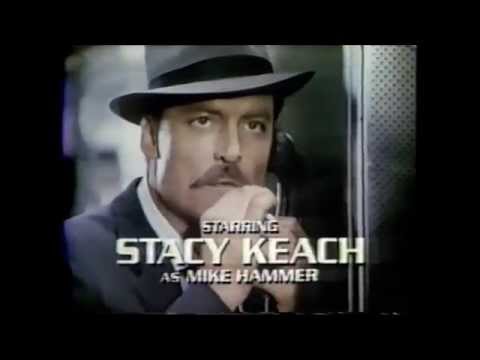
Murder Me, Murder You (1983, directed by Gary Nelson)


When two employees of an all-female courier service are murdered, Private Investigator Mike Hammer (Stacy Keach) is on the case.  The service was owned by his ex-girlfriend, Chris (Michelle Phillips), and she wants him to protect her while she testifies in front of a grand jury.  It turns out that her courier service has gotten involved in some shady business, transporting deliveries between a helicopter company and a South American dictator.  Chris fears that she’ll be murdered to keep her from testifying.  Hammer agrees to protect her and she tells him that he has a 19 year-old daughter who he’s never met.

While Chris is testifying, she suddenly dies on the stand.  The doctors say that it was a heart attack but Hammer knows that it was murder.  Hammer sets out to not only get revenge for Chris but also to find his daughter, who has disappeared into the world of underground pornography.  It’s all connected though, as is traditional with Mike Hammer, it can sometimes be difficult to keep up with how.

Murder Me, Murder You was a pilot film for a brief-lived but fondly-remembered Mike Hammer TV series that aired in the 80s.  Murder Me, Murder You takes Mickey Spillane’s famous detective into what was then the modern age but it allows him to remain a man of the hard-boiled noir era.  Hammer’s narration is tougher than leather, he’s more interested in listening to swing music than new wave, and he still dresses like an old-fashioned private eye, complete with a fedora on his head.  As played by Stacy Keach, he’s also just as dangerous and quick to kill as Hammer was in Spillane’s original novels.  In the novels, Hammer was an unapologetic brute who often bragged about how much he enjoyed killing criminals and communist spies and whose closest associate was his gun, which he nicknamed Betsy.  When Spillane’s novels were filmed, the violence of Hammer’s character was often downplayed.  (A notable exception was Robert Aldrich’s Kiss Me Deadly, which suggested that Hammer was such a fascist that he would eventually be responsible for the end of the world.  The Mike Hammer of Spillane’s novels would probably dismiss Kiss Me Deadly as being red propaganda and set out to deliver American justice to the Hollywood communists who wrote it.)  In Murder Me, Murder You, Mike Hammer is just as brutal an avenger as Spillane originally imagined him to be.  With his hulking frame, grim eyes, and his surly manner, Stacy Keach is the perfect Mike Hammer.

Murder Me, Murder You is a convoluted and often difficult-to-follow murder mystery but with Keach’s bravura lead performance, a strong supporting cast (including notable tough guys Tom Atkins and Jonathan Banks) and good direction from TV movie vet Gary Nelson, this movie comes about as close as any to capturing the feel of Mickey Spillane’s original novels.  Murder Me, Murder You was released on DVD fourteen years ago.  Though it is now out-of-print, copies are still available on Amazon.