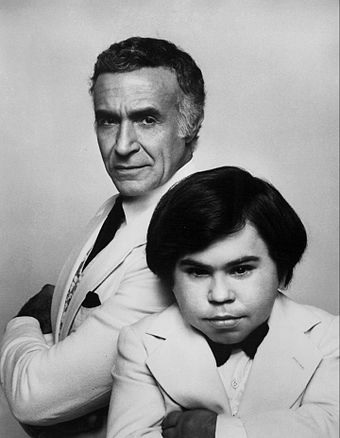
Welcome to Retro Television Reviews, a feature where we review some of our favorite and least favorite shows of the past! On Tuesdays, I will be reviewing the original Fantasy Island, which ran on ABC from 1977 to 1984. Unfortunately, the show has been removed from most streaming sites. Fortunately, I’ve got nearly every episode on my DVR …. nearly being the word to remember.
This week, Sammy Davis Jr. comes to Fantasy Island.
That’s be cool, right?
Episode 6.19 “Edward/Extraordinary Miss Jones”
(Dir by Don Ingalls, originally aired on April 9th, 1983)
Or, it would have been cool if my DVR had actually recorded this episode!
Sorry, it’s the curse of the DVR. This is one of the episodes that my DVR did not record. I’m not sure if it’s a case of the episode not being aired or perhaps the cable itself was out when it should have been recording but, for whatever reason, I do not have this episode and I also don’t remember having watched it in the past.
For now, I can’t review it. But I’m going to leave this here as a placeholder, in case the show ever starts streaming again.
Again, I regret not being able to review this episode at this time. But, as Mr. Roarke always says, “Smiles, everyone, smiles!”
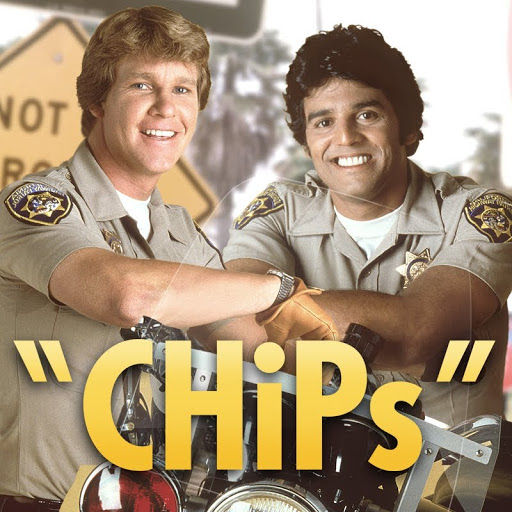
Welcome to Late Night Retro Television Reviews, a feature where we review some of our favorite and least favorite shows of the past! On Mondays, I will be reviewing CHiPs, which ran on NBC from 1977 to 1983. The entire show is currently streaming on Prime!
This week, someone is performing emergency surgery on the street!
Episode 3.23 “Nightengale”
(Dir by Don Weis, originally aired on March 23rd, 1980)
Something strange is happening in Los Angeles. Every time there’s a serious accident, a middle-aged woman (Louise Latham) appears and provides medical help to the injured. At the start of the episode, she even performs an emergency tracheotomy on the side of the freeway. Whenever the highway patrol officer on the scene asks her for her name, she avoids the question. And, whenever an ambulance shows up, she always manages to slip away. As Jon and Ponch discover, the woman is named Lucy Kenton and, even though she’s a medical expert, she’s not a doctor. With the help of the always-understanding Sgt. Getraer, Jon and Ponch help her to get her medical license so that she can legally perform surgery on the street. Good for them!
This was a bit of an odd episode. It seemed strange that the woman somehow always seemed to be around whenever there was an accident. A car would crash and suddenly, Lucy would come running up, almost as if she had been patiently waiting. The show acted as if it was just a coincidence but what are the chances that the same woman would be present at the sites of multiple accidents over the course of just a few days? And what are the chances that Ponch would just happen to be the responding officer at two of those accidents?
To be honest, that’s one of the things that always struck me as being strange about CHiPs. Somehow, the same people keep running into Ponch and Jon over and over again. I mean, Los Angeles is a big city and it’s home to a lot of people. But if you run into Ponch and Jon once, it seems you’re destined to keep seeing them for at least a week. Once they get that first speeding ticket or stern warning, people literally can’t step outside of their house without Ponch and Jon just happening to be somewhere nearby. That’s the sort of thing that would make me paranoid.
The B-plot of this episode featured a teenage couple whose van kept breaking down whenever they tried to run away from home. There wasn’t much to this story but it did feature “special guest star” Dana Plato as the younger sister of the female half of the couple. Plato delivered all her lines as if she was auditioning for a school play. Oddly enough, Dana Plato appeared at the start of this season as herself. She was one of the many celebrities to show up for the roller disco episode.
There really wasn’t much to this episode. It wasn’t terrible but it did feel somewhat insubstantial. We’re coming up on the end of the season and, from the last few episodes, I get the feeling the show’s writers just wanted to wrap things up and start their vacations. I don’t blame them!
Welcome to Retro Television Reviews, a feature where we review some of our favorite and least favorite shows of the past! On Mondays, I will be reviewing Miami Vice, which ran on NBC from 1984 to 1989. The entire show can be purchased on Prime!
This week, it’s the most infamous episode of MiamiVice ever!
Episode 4.7 “Missing Hours”
(Dir by Ate De Jong, originally aired on November 13th, 1987)
This is an episode that I had been waiting for years to see. From the moment I decided to review MiamiVice, I started to read about and hear about this seventh episode of the four season. This was the episode was supposedly so bad that many people consider it to be the point that MiamiVice “jumped the shark.” This is the episode were James Brown plays a white-suited singer named Lou de Long, who has going from performing songs to giving lectures about UFOs. (James Brown is essentially playing himself, right down to the presence of IFeelGood on the soundtrack.) This is the episode where Trudy disappears for 12 hours and then returns with no firm memories of where she was. This is the episode where even Crockett and Tubbs see a UFO. Even though his appearance here does not receive as much attention as much a James Brown’s, Chris Rock made his television debut as a nerdy technician named Carson who was into UFOs. Carson mentions getting his information for “computer bulleting boards” and everyone looks at him as if he’s speaking Esperanto.
This is the episode that is frequently cited as being the worst in MiamiVice history and really, who am I to disagree?
It pains me to say that. I really wanted to like this episode, just because it is so strange and and I’ve always been a bit of a contrarian at heart but …. no, this episode really doesn’t work. The sad truth of the matter is that, for all of his other talents, James Brown was a lousy actor and, with the exception of Michael Talbott and Philip Michael Thomas (who both appear to be having fun), the regular cast gives performance that suggest they all knew this episode was a bad idea. MiamiVice was at its best when it was a cynical and downbeat show about the futility of the war on drugs. There’s really no reason for MiamiVice to ever do a science fiction-themed episode. Somehow, this is the second such episode to air during the fourth season.
Of course, the episode’s most unforgivable sin is that it ends with Trudy waking up in bed. Not only is that ending a cop out but it’s also pretty rude to anyone who was actually trying to follow the plot or who was actually worried about whether or not Trudy had been brainwashed by the aliens. Perhaps if this had been a Halloween episode, all of this could have been excused but apparently, this episode aired in the middle of November.
Poor Trudy. Seriously, Olivia Brown didn’t really get many episode built around her character. It’s a shame that, when they gave her one, it was this one. Next week on MiamiVice, who knows? I’m on vacation. We’ll see what happens!
Welcome to Late Night Retro Television Reviews, a feature where we review some of our favorite and least favorite shows of the past! On Sunday, I will be reviewing the Canadian series, Degrassi High, which aired on CBC and PBS from 1989 to 1991! The series can be streamed on YouTube and Tubi
In yourself, you must believe …. let’s return to DegrassiHigh.
Episode 2.6 “Crossed Wires”
(Dir by Kit Hood, originally aired on December 10th, 1990)
Alex is dating Tessa but he has yet to kiss her and Tessa’s getting tired of waiting for him. Arthur and Yick (remember them?) both tell Alex that he’s a total wimp. Myself, I’m just wondering how Alex somehow went from being a background character to suddenly getting storylines. For the record, Alex does eventually kiss Tessa and he leaves her breathless, which seems like a bit of an overreaction. I mean, it’s just Alex….
Of course, any Tessa storyline that doesn’t involve Joey is going to feel somewhat odd because true Degrassi fans know that Tessa is eventually going to end up pregnant after sleeping with Joey, leading to a jealous Snake dropping the first F-bomb ever heard on Canadian television. But, that was all far in the future. When this episode aired, Tessa was still just the girl who apparently only owned that one blue dress.
Alex and Tessa’s rather silly storyline is matched with one where Liz, after going on a date with Tim (Keith White, finally getting a storyline after spending so much time as a background character), freaks out after Tim attempts to kiss her goodnight after taking her to a Pogues concert. Liz eventually tells Spike that she was sexually abused by her mom’s ex-boyfriend and that’s why Liz doesn’t allow anyone to get close to her. (In many ways, this episode feels like a dry run for the Jane Says episodes of Degrassi: The Next Generation.) This episode handles the subject with sensitivity, as Degrassi (to its credit) always did. Tonally, it can be a bit of shock to go from the silliness of Tessa’s story to the seriousness of Liz’s but that’s kind of the way it is when you’re a teenager. One minute, you’re in a sitcom. The next minute, you’re in the most depressing drama ever. That’s certainly the way it was for me when I was in high school. I preferred the sitcom moments but the fact that I can cry on cue came in useful whenever things started to get serious.
Finally, Dwayne’s moronic friends are upset because Dwayne will no longer let them beat up on Joey. Dwayne doesn’t care. Joey’s the only person that knows that Dwayne is HIV positive. Joey has kept his word and not revealed Dwayne’s secret. Dwayne helps Joey fix his car and Joey, in return, gives Dwayne a life home. Dwayne going from being a bully to a sensitive guy is another character arc that would become a Degrassi tradition.
Welcome to Retro Television Reviews, a feature where we review some of our favorite and least favorite shows of the past! On Sundays, I will be reviewing Homicide: Life On The Street, which aired from 1993 to 1999, on NBC! It can be viewed on Peacock.
This week, it’s another red ball on Homicide!
Episode 3.12 “The City That Bleeds”
(Dir by Tim Hunter, originally aired on January 27th, 1995)
This week’s episode opens with Bolander, Munch, Howard, and Felton having a morning meeting outside of an apartment building. They put on bullet-proof vets because they (and several uniformed officers) are about to arrest Glenn Holton, a sex offender who is believed to have murdered a child. Unfortunately, because of a transcription error on the warrant, the detective go to Apartment 201 instead of 210. As they knock on the door to 201, someone on the stairwell opens fire on them. Bolander, Howard, and Felton are hit. Munch somehow avoids being shot.
It’s red ball time! We’re only 12 episodes into season 3 and this is our third “all hands on deck” red ball of the season. NBC reportedly wanted showrunner Tom Fontana to give them more drama in return for renewing the low-rated Homicide and Fontana delivered.
And that’s not necessarily a bad thing. This was a compelling episode, featuring Pembleton tracking Glenn Holton across the city while Bayliss tried to deal with his guilt over being relieved that he wasn’t shot. After visiting the hospital, Giardello had an emotional breakdown while Lewis was driving him back to the station. Felton’s wife returned from Philadelphia to visit him in the hospital. Gloria Reuben and Tony Lo Bianco guest-starred as detectives who came in to help with the case and, for both of them, this episode felt like an audition to join the cast. Things ended with a cliffhanger. Holton is still at large. Felton is awake but hospitalized. Bolander and Kay are still in critical condition. It was an exciting episode.
And yet, one can understand why Ned Beatty later said, in an interview, that this was one of the episodes that eventually led to him leaving the show. First off, why the detectives would be serving the arrest warrant as opposed to the uniformed cops or, considering Holton’s crimes, even the SWAT team, I’m not sure. Munch makes a comment about how the four of them had served hundreds of arrest warrants in the past but it’s not something that we’ve ever seen them do on the show before. That the nonstop emotional drama was compelling was due to the strength of the cast and not the strength of the script, which was occasionally so overwrought that it felt almost like a parody of a cop show. This episode worked but, after it ended, I found myself thinking about how different it felt from the deliberately-paced and moody episodes the aired during the first and second seasons.
And finally, it’s hard not to get annoyed that, with everything going on, we still had to deal with all of Felton’s stupid domestic nonsense. I’m tried of hearing about Felton’s wife and kids and how he can’t make his marriage work. I’m even more tired of Megan Russert, a character who could be a total badass, being solely defined by her relationship with Felton.
This episode, the first of a three-parter, held my attention while I was watching it and it was only afterwards that I realized I kind of had mixed feelings about it overall. Homicide is changing. We’ll see where it goes.
Welcome to Late Night Retro Television Reviews, a feature where we review some of our favorite and least favorite shows of the past! On Saturdays, I will be reviewingthe Canadian sitcom, Check it Out, which ran in syndication from 1985 to 1988. The entire show is currently streaming on Tubi and Peacock!
This week, Howard goes for a higher office!
Episode 3.18 “Vote For Me”
(Dir by Alan Erlich, originally aired on January 16th, 1988)
The local Business Owners Association asks Howard to run for city council because …. well, I’m not sure why they would ask Howard. Howard refuses but then he sees his campaign assistant Lila (Heather Smith) and changes his mind.
Howard is shocked to discover that he will be running against a former baseball player and local celebrity named Patrick O’Malley (Bill Lake). Everyone agrees that there is no way that Howard can win and that’s pretty much the entire episode. Howard never has a chance, he screws up every opportunity that he’s given, and he ends up getting 400 votes and running behind a write-in campaign for Edna. (Edna answered some questions in Howard’s place when the latter was late to a campaign forum.) Howard is stunned by his loss. Viker says that he was not one of the people who write in Edna’s name before mentioning, “I voted for O’Malley.” Howard promises to take his employees to the best party in town, the O’Malley victory party.
This was a weird episode. It’s unfortunate that it didn’t work because the idea of a bumbling egomaniac like Howard running for political office definitely had potential and I will admit I did laugh at Howard’s insane explanation of why getting rid of the police would get rid of crime. (To be honest, it really wasn’t that different from the arguments I heard during the Defund protests.) But the show wrote itself into a corner by making Howard such an idiot that there was never any chance of him actually winning. The entire episode was essentially scene after scene of Howard saying something dumb while everyone else rolled their eyes. It got predictable fairly quickly.
I think if Jack Christian had been the one who was recruited to run for city council, the episode could have worked. Christian is as much of a jackass as Howard but Jeff Pustil always manages to give the character a hint of insecurity so you root for him despite your better instincts. Howard, on the other hand, is often portrayed as being so incredibly dumb and clueless that it’s difficult really get involved in his attempts to be something more than just a grocery store manager.
Welcome to Retro Television Reviews, a feature where we review some of our favorite and least favorite shows of the past! On Saturdays, I will be reviewing The American Short Story, which ran semi-regularly on PBS in 1974 to 1981. The entire show can be purchased on Prime and found on YouTube and Tubi.
This week, we have an adaptation of an Ambrose Bierce short story.
Episode 1.2 “Parker Adderson, Philosopher”
(Dir by Arthur Barron, originally aired on January 8th, 1974)
This adaptation of an Ambrose Bierce short story takes place during the Civil War. Parker Adderson (Harris Yulin) is a Union spy who is captured behind Confederate lines. Brought into the ramshackle Confederate camp, he’s put into a small cabin. He knows that, as a spy, he’s going to be executed in the morning and he seems to be at peace with that. For the most part, his captors treat him humanely. Though they may be at war, there doesn’t seem to be any real animosity between Adderson and the Confederate general (Douglass Watson) who is in charge of the camp. They are two men who have a job to do and they both seem to respect each other. At night, the General and Adderson have a conversation, talking about the war and mortality. Adderson gets a last meal. Everything seems to be strangely peaceful …. until Adderson discovers that he’s not going to be executed the way that he wants to be executed. By the time the morning sun rises, three men are dead. The formerly philosophical Adderson dies in a rage against his captors while the General dies with the peace and grace that Adderson originally envisioned for himself.
This was an effective and melancholy adaptation of Ambrose Bierce’s short story, one that captured both Bierce’s anti-war sentiments and his cynical view of the human condition. For all of his efforts to put himself above the realities of war, Adderson falls apart once the reality of his impending death becomes obvious. Meanwhile, the previously boorish general finds a certain redemption in his death, perhaps because the General, unlike Adderson, never tried to rationalize the violence of war or the cruelty of fate.
It’s a nicely-done episode, featuring good performances from both Watson and Yulin. I’ve gotten so used to seeing Yulin cast as corporate and government villains that it was really eye-opening to see him playing a complicated character for once. Clocking in at a little over 30 minutes, ParkerAdderson, Philosopher is a thought-provoking look at war and the men who fight it.
Welcome to Late Night Retro Television Reviews, a feature where we review some of our favorite and least favorite shows of the past! On Fridays, I will be reviewing Friday the 13th: The Series, a show which ran in syndication from 1987 to 1990. The entire series can be found on YouTube!
This week …. ugh.
Episode 3.15 “The Long Road Home”
(Dir by Allan Kroeker, originally aired on February 12th, 1990)
This week’s episode starts where most episodes end. Micki and Johnny retrieve the cursed antique. In this case, it’s a yin-yang charm that allows the owner to swap minds with a recently deceased person. That sounds like a really cool antique and I have to admit that I’m kind of annoyed that this is one of those shows where the antique is recovered early. I would have enjoyed seeing the entire search.
I certainly would have enjoyed it more than having to spend the next 40-something minutes listening to Micki and Johnny discuss whether or not to start a relationship while, at the same time, being pursued by an inbred redneck and his brother. This episode goes off the rails as soon as Micki and Johnny step into a roadside diner that is owned by a family of homicidal hillbillies. In order to save their lives, Johnny had to use the cursed antique himself so that he could enter the body of one of the brothers. That went against everything that the show previously established about the cursed antiques. You’re not supposed to use a cursed antique, not even once. Johnny uses it and everything works out fine for him. It feels like cheating and it was something that Ryan would never have done. God, I miss Ryan.
But I want to get back to this relationship nonsense. Since when is Micki attracted to Johnny? Johnny’s been hitting on Micki since his first appearance and she’s never been interested in the past. Now, suddenly, they’re having a relationship talk? It comes out of nowhere. In the end, Micki and Johnny agree not to have a relationship as long as there are still cursed antiques that need to be found and that’s a good idea. Still, the whole thing just felt tacked on.
This episode was dull. Chris Wiggins wasn’t in it and that’s a shame because this episode needed his steady, no-nonsense presence.
Welcome to Retro Television Reviews, a feature where we review some of our favorite and least favorite shows of the past! On Fridays, I will be reviewing St. Elsewhere, a medical show which ran on NBC from 1982 to 1988. The show can be found on Hulu and, for purchase, on Prime!
This week, St. Eligius gets a new plastic surgeon.
Episode 2.2 “Lust Et Veritas”
(Dir by Mark Tinker, originally aired on November 2nd, 1982)
This episode sees the addition of two new doctors to the hospital’s staff and they’re both played by familiar actors. Elliott Axlerod is played by Stephen Furst. He’s a new resident and obviously terrified of screwing up in the ER. He asks Ehrlich and Fiscus for advice. When told that he’s required to perform a rectal exam on every patient, he asks, “Is it too late to go to law school?” Ehrlich assures him that it is.
(It’s never too late!)
Secondly, Mark Harmon joins the cast as plastic surgeon Bobby Caldwell and not even a porn star mustache can obscure the fact that young Mark Harmon was amazingly hot. (Actually, old Mark Harmon isn’t that bad either. He aged well.) Bobby, we learn, was brought to St. Eligius by Dr. Craig. He’s cocky and confident and it’s obvious that he loves being lusted after by Dr. Armstrong and Nurse Daniels. However, he already has a secret lover as this episode finds him showering with Joan Halloran, the city hall bureaucrat who spends most of her time arguing with Dr. Craig about whether or not to shut down one of the hospital’s non-profit programs.
Dr. Craig is nervous because he’s waiting for a heart to become available so he can perform his first transplant on Eve Leighton (Marian Mercer), a teacher who wants to get back into her classroom as soon as possible. Ehrlich is nervous because Craig is taking all of his frustrations. and his nervousness out on him.
Meanwhile, Jerry Singleton (Alan Arkin), the demanding husband of stroke-victim Fran (Piper Laurie), continued to push his wife to recover until finally, at the end of the episode, she yelled that he was pushing her too hard. It was a heart-breaking moment. Jerry thinks that he’s helping his wife but, as this episode showed, he’s actually been torturing her with his overbearing demands that she hurry up and get better.
Finally, a former resident named Barry Dorn (Peter Horton) returns to the hospital to try to convince Dr. Cavanero to change her negative evaluation of his job performance. Everyone acts as if Barry was a character on the show during the previous season, even though he wasn’t. It’s even revealed that he is Wendy Armstrong’s former boyfriend. When Cavanero refuses to change her evaluation, Armstrong accuses her of not having any feelings. (Seriously, Armstrong is the worst!) Even worse, when Cavanero heads to the doctor’s lounge, she finds Barry waiting for her. Barry punches her, busting open her lower lip. Armstrong stitches up the cut and then says that Cavanero is lucky because now, she’ll have an excuse to meet Dr. Caldwell! Armstrong then offers a half-hearted apology for previously accusing Cavanero of being heartless. (Again, Armstrong is the worst!!!!)
This wasn’t a bad episode. Mark Harmon and Stephen Furst seem like they’ll be good additions to the show’s ensemble. The Barry story felt a bit odd, just because Barry was apparently present but 0ff-camera during the entire first season. It sounds like Barry went through a lot of the same things that Peter White went through during the first season and Peter was not present in this episode. There’s a part of me that suspects that Barry was originally meant to be Peter but the show’s producers obviously decided they wanted to keep Peter around for a bit longer.
Next week …. well, I have no idea how things are going to develop. There’s a lot going on in this hospital. We’ll see what happens.
Welcome to Late Night Retro Television Reviews, a feature where we review some of our favorite and least favorite shows of the past! On Thursdays, I will be reviewing Highway to Heaven, which aired on NBC from 1984 to 1989. The entire show is currently streaming on Tubi and several other services!
This week, the third season comes to a close.
Episode 3.25 “The Gift Of Life”
(Dir by Michael Landon, originally aired on May 6th,1987)
Jonathan and Mark’s new assignment finds them working as bodyguards for a businessman named Richard Benson (Leslie Nielsen). Richard is in charge of a company that pollutes the ocean. He owns an apartment building were people people are forced to live with rats. He makes no apologies for being greedy. He has Jonathan and Mark accompany him to a parking garage so he can offer someone a bribe.
Eventually, Jonathan just comes straight out and says, “I’m angel.” Jonathan did that a lot over the course of season 3 and it always kind of bothered me. It was as if Jonathan decided he couldn’t be bothered to maintain his cover story. Richard doesn’t believe in angels, though he does accept the Bible that Jonathan gives him. Jonathan instructs him to read it before going to sleep.
That night, someone shoots Richard while he’s reading his Bible. Jonathan and Mark appear to him and give Richard a tour of all the misery that he’s caused by being greedy and selfish. Jonathan forces Richard to look at a dead seagull. Richard is then allowed to relive the past seven days of his life so that he can do some good and have a chance to get into heaven.
Wow, that sounds intense, right?
And I guess it would be, except for the fact that it’s now impossible to watch Leslie Nielsen without laughing. Before everyone rushes off to comment, I am fully aware that Nielsen spent decades as a dramatic actor before emerging as a comedy superstar. I’ve reviewed a few of his serious films here on the site. But the fact of the matter is that Nielsen’s comedy was so built around his deadpan delivery of absurd lines that even his serious performances leave you feeling as if everything’s building up to a punchline. That’s the case here. Jonathan, Mark, and Richard might be talking about environmental pollution and poverty but every scene leaves you wondering when Nielsen is going to say, “And don’t call me Shirley.”
Would the episode have worked better with someone else in the role of Richard? Yes and no. Another actor would not have left us waiting for punch lines that were destined to never come but the episode’s script would have still been incredibly heavy-handed. Richard Benson has just died and Jonathan and Mark immediately show up and start yelling at him. They make it clear that they don’t care if he goes to Hell or not. That’s not a very good attitude for an angel to have.
Fortunately, Richard gets his second chance and he manages to survive a redo of the assassination attempt. (Fortunately, he falls asleep with his Bible over his heart. The Bible is thick and strong enough to stop the bullet so I’m going to guess that Richard was given a Catholic Bible as opposed to a wimpy Protestant one.) And so, Richard goes on to be a better person and I imagine his company will end up going bankrupt as a result.
That’s it for Season 3! Season 3 had some good episodes, like Codename: Freak. It also had the worst episode of the show so far, GhostRider. Next week, we’ll start Season 4!