Sinners Wins In Washington!


The Washington DC Area Film Critics Association have announced their picks for the best of 2025!  The winners are in bold!

Film
Hamnet
Marty Supreme
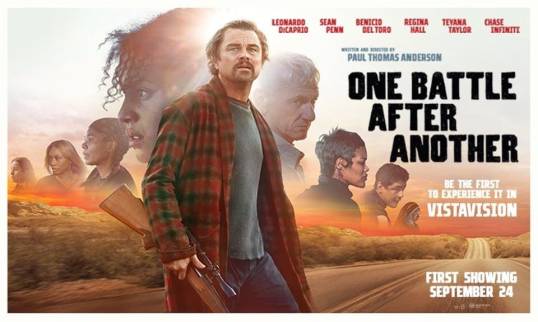
One Battle After Another
Sentimental Value
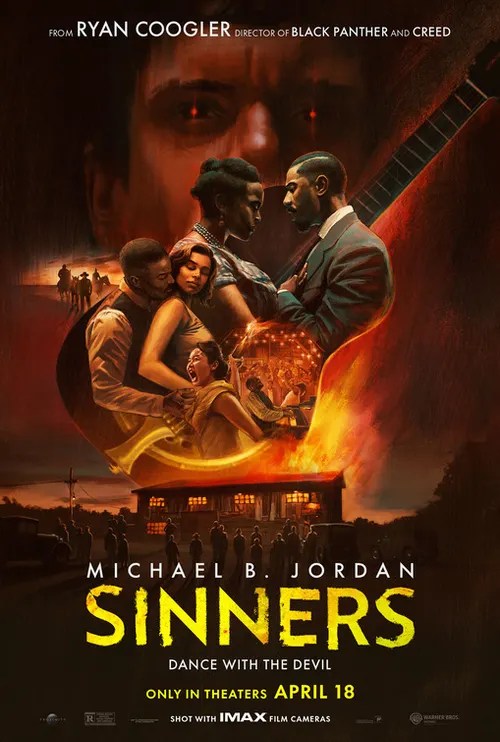
Sinners

Director
Paul Thomas Anderson – One Battle After Another
Ryan Coogler – Sinners
Jafar Panahi – It Was Just an Accident
Josh Safdie – Marty Supreme
Chloé Zhao – Hamnet

Actor
Timothée Chalamet – Marty Supreme
Leonardo DiCaprio – One Battle After Another
Joel Edgerton – Train Dreams
Ethan Hawke – Blue Moon
Michael B. Jordan – Sinners

Actress
Jessie Buckley – Hamnet
Rose Byrne – If I Had Legs I’d Kick You
Cynthia Erivo – Wicked: For Good
Chase Infiniti – One Battle After Another
Renate Reinsve – Sentimental Value

Supporting Actor
Benicio del Toro – One Battle After Another
Jacob Elordi – Frankenstein
Delroy Lindo – Sinners
Sean Penn – One Battle After Another
Stellan Skarsgård – Sentimental Value

Supporting Actress
Ariana Grande – Wicked: For Good
Inga Ibsdotter Lilleaas – Sentimental Value
Amy Madigan – Weapons
Wunmi Mosaku – Sinners
Teyana Taylor – One Battle After Another

Youth Performance
Miles Caton – Sinners
Cary Christopher – Weapons
Shannon Mahina Gorman – Rental Family
Jacobi Jupe – Hamnet
Mason Thames – How to Train Your Dragon
Nina Ye – Left-Handed Girl

Voice Performance
Jason Bateman – Zootopia 2
Arden Cho – KPop Demon Hunters
Ginnifer Goodwin – Zootopia 2
Yonas Kibreab – Elio
Ke Huy Quan – Zootopia 2

Motion Capture Performance
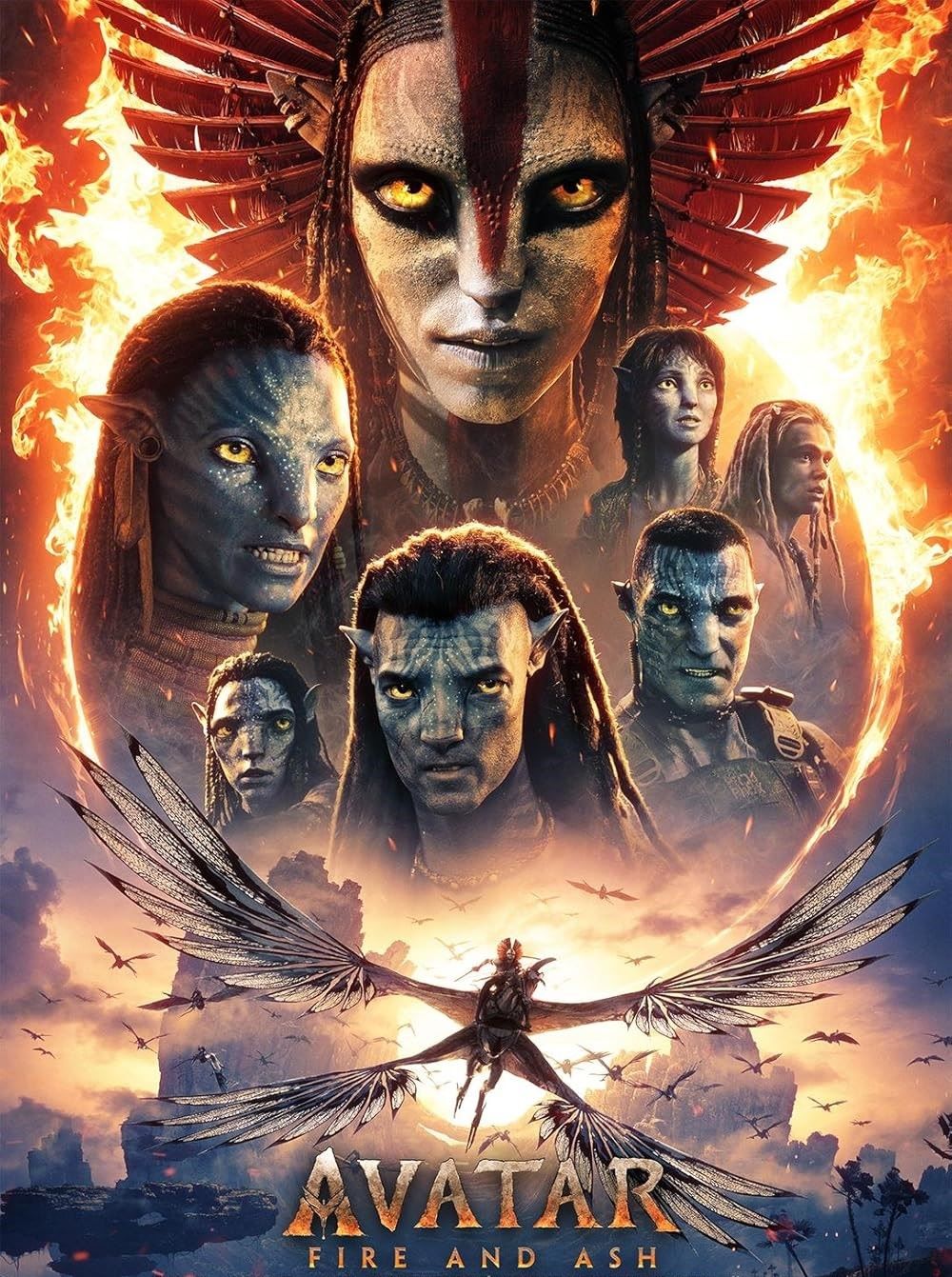
Oona Chaplin – Avatar: Fire And Ash
Stephen Lang – Avatar: Fire And Ash
Zoe Saldaña – Avatar: Fire And Ash
Sigourney Weaver – Avatar: Fire And Ash
Sam Worthington – Avatar: Fire And Ash

Ensemble
Hamnet
It Was Just an Accident
Marty Supreme
One Battle After Another
Sentimental Value
Sinners
Wake Up Dead Man

Original Screenplay
It Was Just an Accident
Marty Supreme
Sentimental Value
Sinners
Weapons

Adapted Screenplay
Bugonia
Frankenstein
Hamnet
One Battle After Another
Train Dreams

Animated Film
Arco
Elio
KPop Demon Hunters
Little Amélie Or The Character Of Rain
Zootopia 2

Production Design
The Fantastic Four: First Steps
Frankenstein
Hamnet
Sinners
Wicked: For Good

Cinematography
Frankenstein
Marty Supreme
One Battle After Another
Sinners
Train Dreams

Editing
F1: The Movie
Hamnet
Marty Supreme
One Battle After Another
Sinners

Score
Frankenstein
Hamnet
Marty Supreme
One Battle After Another
Sinners

Joe Barber Award for Portrayal of Washington, DC
Anniversary
Captain America: Brave New World
A House of Dynamite
Nuremberg
Thunderbolts

Stunts
F1: The Movie
Mission: Impossible – The Final Reckoning
One Battle After Another
Sinners
Superman

Documentary
Come See Me in the Good Light
The Librarians
Orwell: 2+2=5
The Perfect Neighbor
Put Your Soul on Your Hand and Walk

Foreign Language Film
It Was Just an Accident
Left-Handed Girl
No Other Choice
The Secret Agent
Sentimental Value

Here are the nominations of the Washington DC Area Film Critics Association!


Here are the nominations of the Washington DC Area Film Critics Association!

Film
Hamnet
Marty Supreme
One Battle After Another
Sentimental Value
Sinners

Director
Paul Thomas Anderson – One Battle After Another
Ryan Coogler – Sinners
Jafar Panahi – It Was Just an Accident
Josh Safdie – Marty Supreme
Chloé Zhao – Hamnet

Actor
Timothée Chalamet – Marty Supreme
Leonardo DiCaprio – One Battle After Another
Joel Edgerton – Train Dreams
Ethan Hawke – Blue Moon
Michael B. Jordan – Sinners

Actress
Jessie Buckley – Hamnet
Rose Byrne – If I Had Legs I’d Kick You
Cynthia Erivo – Wicked: For Good
Chase Infiniti – One Battle After Another
Renate Reinsve – Sentimental Value

Supporting Actor
Benicio del Toro – One Battle After Another
Jacob Elordi – Frankenstein
Delroy Lindo – Sinners
Sean Penn – One Battle After Another
Stellan Skarsgård – Sentimental Value

Supporting Actress
Ariana Grande – Wicked: For Good
Inga Ibsdotter Lilleaas – Sentimental Value
Amy Madigan – Weapons
Wunmi Mosaku – Sinners
Teyana Taylor – One Battle After Another

Youth Performance
Miles Caton – Sinners
Cary Christopher – Weapons
Shannon Mahina Gorman – Rental Family
Jacobi Jupe – Hamnet
Mason Thames – How to Train Your Dragon
Nina Ye – Left-Handed Girl

Voice Performance
Jason Bateman – Zootopia 2
Arden Cho – KPop Demon Hunters
Ginnifer Goodwin – Zootopia 2
Yonas Kibreab – Elio
Ke Huy Quan – Zootopia 2

Motion Capture Performance
Oona Chaplin – Avatar: Fire And Ash
Stephen Lang – Avatar: Fire And Ash
Zoe Saldaña – Avatar: Fire And Ash
Sigourney Weaver – Avatar: Fire And Ash
Sam Worthington – Avatar: Fire And Ash

Ensemble
Hamnet
It Was Just an Accident
Marty Supreme
One Battle After Another
Sentimental Value
Sinners
Wake Up Dead Man

Original Screenplay
It Was Just an Accident
Marty Supreme
Sentimental Value
Sinners
Weapons

Adapted Screenplay
Bugonia
Frankenstein
Hamnet
One Battle After Another
Train Dreams

Animated Film
Arco
Elio
KPop Demon Hunters
Little Amélie Or The Character Of Rain
Zootopia 2

Production Design
The Fantastic Four: First Steps
Frankenstein
Hamnet
Sinners
Wicked: For Good

Cinematography
Frankenstein
Marty Supreme
One Battle After Another
Sinners
Train Dreams

Editing
F1: The Movie
Hamnet
Marty Supreme
One Battle After Another
Sinners

Score
Frankenstein
Hamnet
Marty Supreme
One Battle After Another
Sinners

Joe Barber Award for Portrayal of Washington, DC
Anniversary
Captain America: Brave New World
A House of Dynamite
Nuremberg
Thunderbolts

Stunts
F1: The Movie
Mission: Impossible – The Final Reckoning
One Battle After Another
Sinners
Superman

Documentary
Come See Me in the Good Light
The Librarians
Orwell: 2+2=5
The Perfect Neighbor
Put Your Soul on Your Hand and Walk

Foreign Language Film
It Was Just an Accident
Left-Handed Girl
No Other Choice
The Secret Agent
Sentimental Value

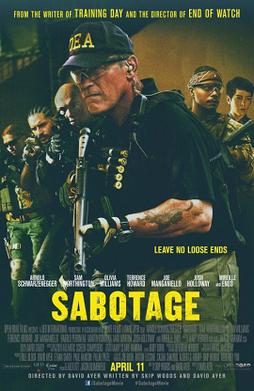
Sabotage (2014, directed by David Ayer)


Atlanta Homicide detective Caroline Brentwood (Olivia Williams) and her partner, Darius Jackson (Harold Perrineau), are the primaries on the murder of a former DEA agent.  Their investigation leads them to an elite special operations team led by “Breacher” Wharton (Arnold Schwarzenegger).  Wharton and his crew were previously suspended for six months while the FBI investigates their last raid and why there was a $10 million dollar discrepancy between the amount of money the team reporter and the amount of money the FBI was expecting to be recovered.  Someone is murdering the members of Breacher’s team one-by-one.  Breacher and Brentwood investigate the murder and what happened to the money but they both discover that they can’t trust anyone.

Sabotage has got a cast that is full of talent and familiar faces, including Sam Worthington, Mireille Enos, Terrence Howard, Joe Manganiello, Martin Donavon, and Josh Holloway.  It also has one truly great action scene, a violent chase down a busy Atlanta street that comes to sudden and very bloody conclusion.  The film’s final scene takes Sabotage into western territory, with Schwarzenegger dominating the screen like a larger-than-life Sergio Leone hero.  It’s just too bad that the rest of the movie isn’t as a good as its final shot or that one chase scene.  Unfortunately, most of the film feels repetitive and half-baked, with way too much time being wasted on supporting characters who tend to blend together.

Arnold Schwarzenegger gives one of his better performances.  When he made Sabotage, he was no longer a governor and he was also no longer an automatic box office draw and there’s a tired weariness to his performance.  Unfortunately, the rest of the cast is either miscast (Olivia Williams) or stuck playing one-dimensional characters (everyone else).  There’s enough good action sequences to keep Sabotage watchable and Schwarzenegger shows that he can actually be a very good actor but it’s also easy to see why this film didn’t reignite his his career.

The Films of 2024: Horizon: An American Saga: Chapter One (dir by Kevin Costner)


Horizon: An American Saga: Chapter One is the rather unwieldy title of the first part of what Kevin Costner has said will be an epic four-part movie about the settling of the American frontier.

It’s very, very long.

It has a running time of three hours, during which time a lot of characters are introduced and a lot of plotlines are initiated but, because this is the only first chapter, none of them come to a close.  In fact, as the film ends, it’s still a mystery as to how some of the characters are even related.  I watched all three hours and I took my ADD meds this morning so you can be assured that I was actually paying attention.  That said, I still struggled to keep track of who everyone was or even where they were in proximity to each other.  Indeed, it was only towards the end of the film that I realized that several years were supposed to have passed over the course of the first chapter’s running time.

That’s not to say that the film is a disaster.  While it’s not quite the nation-defining epic that Costner obviously envisioned it as being, it’s also not quite the cinematic atrocity that several critics made it out to be.  It’s a throwback of sorts, to the epic westerns of old.  As such, the film features taciturn gunslingers, a woman with a past, dangerous outlaw families, fierce Indian warriors, and a wise Indian chief who has dreamed of the coming of the white man.  The film is full of actors — like Michael Rooker, Sienna Miller, Sam Worthington, Danny Huston, Will Patton, James Russo, Dale Dickey, and Kevin Costner himself — who feel as if they belong to a different era of filmmaking.  Just about everyone in the film is heading to the settlement of Horizon, which sits in Apache territory.  Despite the efforts of the Indians to kill every settler who shows up, they keep coming.  As one army officer explains it, the Indians have made the mistake of thinking that the settlers will come to believe the land is cursed while the settlers, all of whom are full of American optimism, instead chose to believe that the previous settlers were unlucky but that the next wave of settlers will make it work.  Costner has the right visual sensibility for a western.  The film reveals a director who is obviously in love with the Western landscape and the film is at its best when it simply frames the characters against the beauty of the frontier.  But when it comes to actually telling a compelling story, he struggles.  There are a lot of moving parts to the first chapter of Horizon and the problem is not that they don’t automatically connect but instead that Costner never gives us any reason to believe that they’ll ever connect.  There are no visual clues or bits of dialogue to assure the viewer that everything they’re watching is going to eventually pay off.  Costner asks his audience to have faith in him and remember that he directed Open Range and Dances With Wolves while forgetting about The Postman.

The first hour, which features a brutal raid on the settlement by a group of Indians, is the strongest.  It really drives home the brutality of what we now call the old west.  In the style of Michael Cimino’s The Deer Hunter, Costner closely observes the individual customs of the film’s settlers and carefully introduces several appealing characters who leave the viewer feeling as if they’ve met a very special and very unique community of people.  That makes it all the more devastating when the majority of those characters are subsequently wiped out with casual cruelty in a raid led by the Indian warrior Pionsenay (Owen Crow Shoe).  (Later — much later — a tracker played by Jeff Fahey will show similar brutality while wiping out a group of Apaches.)  The first hour establishes the frontier as being beautiful but also dangerous and it also drives home the mix of determination, desperation, and even madness that led so many to follow Horace Greeley’s advice and “Go west!”  Though the film was shot in early 2023, the brutality of the raid brought to mind the terrible images of the October 7th attacks on Israel.  The subsequent scenes in which Pionesenay and his followers ridiculed those in the tribe who wanted peace mirrored the current schism that’s driving apart the worldwide Left.  The U.S. Army, for their part, arrives a day late and can only offer up not-so subtle condescension.  The surviving settlers, however, remain determined to make a home for themselves.

The second hour focuses on Hayes (played by Costner), who rides into a mining town and gets involved with a family of outlaws who are looking for the woman who shot their father.  The second hour is a bit more of a traditional western than the first hour, though some of the violence is still shockingly brutal.  (Even being comedic relief won’t save you in this film.)  Abbey Lee gives a good performance as the woman with a past and a baby and Kevin Costner is  …. well, he’s Costner.  He could play this type of role in his sleep.

The third hour is a mess, introducing a wagon train and featuring a miscast Luke Wilson as the leader of the settlers and Jeff Fahey giving a strong performance as a ruthless tracker.  The third hour meandered as a whole new set of characters were introduced and I was left to wonder why the film needed new characters when the characters from the first two hours were perfectly adequate.  It was during the third hour that I started to really get impatient with the film and its leisurely approach to storytelling.

The film ends with a montage of what we can expect from the next few chapters of Horizon and I will say that the montage actually looked pretty cool.  That’s because the montage was almost totally made up of action scenes, with none of the padding that caused Chapter One to last an unwieldy three hours despite only having 90 minutes worth of story.  Still, one has to wonder if we’ll actually get to see the next three chapters.  The first chapter bombed at the box office and didn’t exactly excite critics.  Costner is producing and financing the films himself and I doubt he’ll give up on them.  The Horizon saga will be completed but will it made it to theaters or will it just end up on streaming?  Personally, I think the whole thing would work best as a miniseries but who knows?  (If Horizon was airing on Paramount, it would probably be a Yellowstone-style hit.)  All I really do know is that Chapter Two has yet to be released.  And that’s a shame because, for all of Chapter One‘s flaws, I’d still like to see how the story turns out.

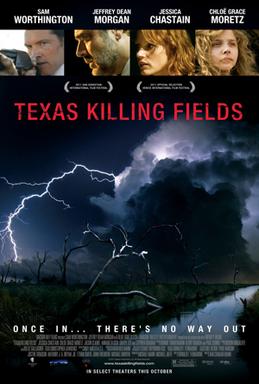
October True Crime: Texas Killing Fields (dir by Ami Canaan Mann)


The so-called Texas Killing Fields are a stretch of land situated off of Interstate-45 and about 26 miles southeast of Houston.  Despite being surrounded by oil refineries and being near one of Texas’s busier interstates, it’s a location where one can easily disappear.  Since 1971, over 30 bodies have been found in the Texas Killing Fields, the majority of them being girls and young women.  Many of them came from the surrounding area but others were last seen far away from Houston.  Kelli Cox, for instance, disappeared from Denton.  Jessica Cain was last seen in a suburb of Fort Worth.  Michelle Garvey disappeared from Connecticut, just for her body to later be discovered in the Texas Killing Fields.

Because of the number of bodies and the length of time, it’s believed that multiple serial killers use the killing fields as a dumping ground for their victims.  Over the years, there’s been many suspects and a few convictions.  Most recently, a trucker named William Reece was convicted of three of the Killing Fields murders.  Another person convicted of committing two of the murders, Michael Self, is now believed to have been innocent and to have only confessed after being tortured by the police.  Unfortunately, Self died in prison while waiting for his appeal to be heard.

The 2011 film, Texas Killing Fields, is very loosely based on the murders and the area’s reputation for being a serial killer dumping ground.  Sam Worthington plays Detective Mike Souder and Jeffrey Dean Morgan plays his partner, Detective Brian Heigh.  (The characters are based on real-life detectives Brian Goetschius and Mike Land.)  Brian is originally from New York and is a devout Catholic who views his work as almost being a holy crusade.  Mike is from Texas and is a bit more cynical.  He’s not happy that Brian insists on helping out Mike’s ex-wife, Detective Pam Stall (Jessica Chastain), whenever a body is found in Pam’s jurisdiction.

The discovery of a dead sex worker leads to Mike and Brian pursuing two pimps (played by Jason Clarke and Jon Eyez).  However, it soon becomes apparent that the pimps aren’t the only murderers stalking the area and using the fields as a dumping ground.  A young mother is attacked in her house and, when interrogated by Mike and Brian, demands to know why they aren’t out on the streets, looking for the men who attacked her.  Later, a mysterious phone call leads Mike, Brian, and Pam out to the killing fields, where they discover another body.

While this is going on, Brian also tries to look after Anne Sliger (Chloe Grace Moretz), a 12 year-old girl who spends her time wandering around town because it’s preferable to spending any time at her home with her mother (Sheryl Lee) or her mother’s creepy boyfriend (Stephen Graham).  When Anne is kidnapped, Brian and Mike head into the Killing Fields to find her.

Directed by Ami Canaan Mann, The Texas Killing Fields is an atmospheric film in which every frame is full of a sense of dread.  Much as David Fincher did with Zodiac, Mann creates a feeling of a world that has been taken over by evil.  Unfortunately, the film itself gets bogged down with a few subplots that don’t really go anywhere.  (Jessica Chastain’s character and her relationship with Mike felt somewhat superfluous.)  As well, the film’s examination of both Mike’s atheism and Brian’s Catholicism felt a bit shallow at best, as if it was added at the last minute to try to give this thriller some theological heft.  The identity of all the killers is pretty obvious from the start.  That said, Ami Canaan Mann gets good performances out of her cast and the action scenes are well-executed.

As a final note, the film was not actually shot in the actual Texas Killing Fields.  Instead, much like the same year’s Killer Joe and 2013’s Dallas Buyers Club, it was filmed in Louisiana and, to be honest, it looks like it was filmed there as well.  There’s little about the film that feels authentically Texan, though it does do a good job of capturing the atmosphere of the bayous.

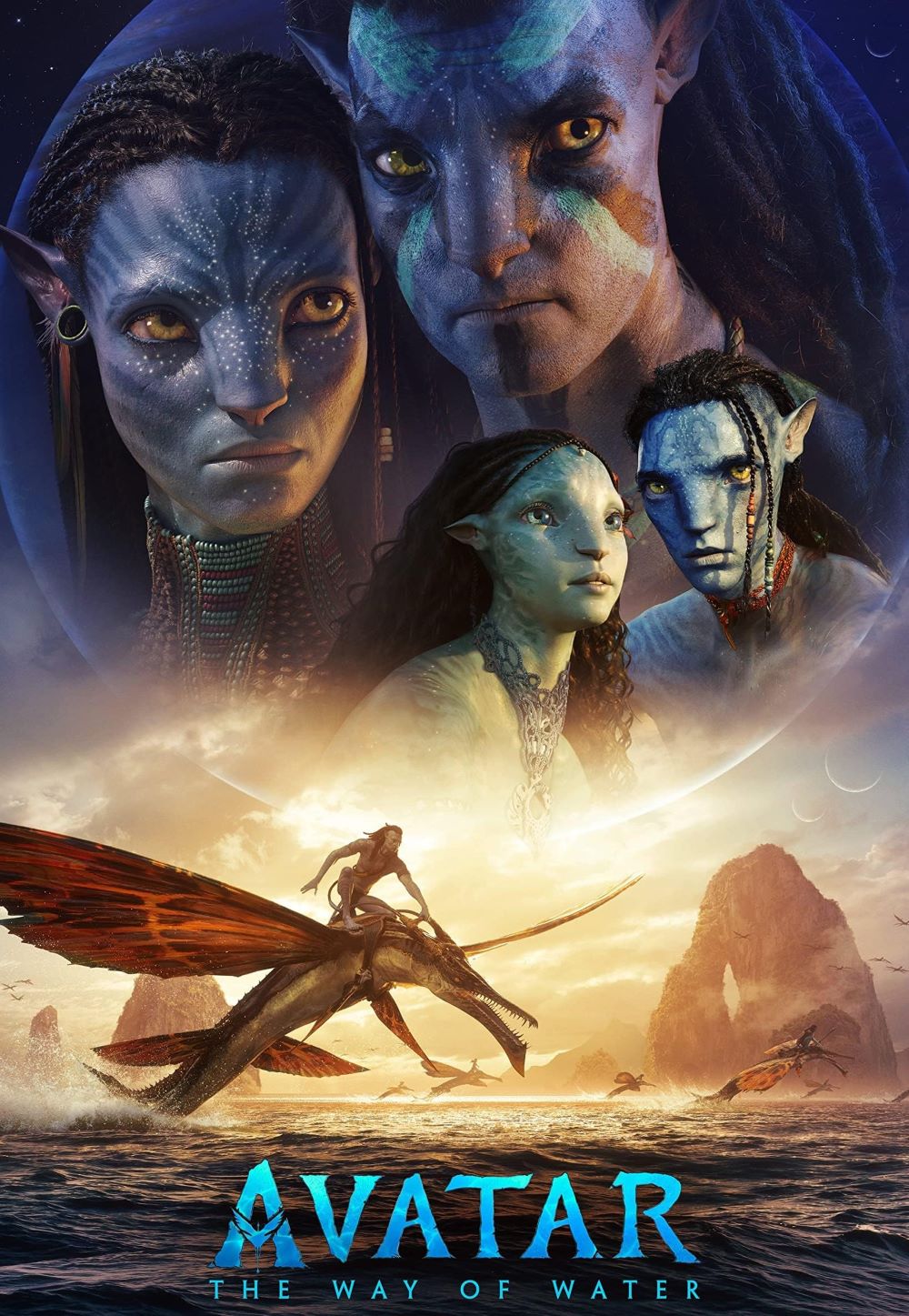
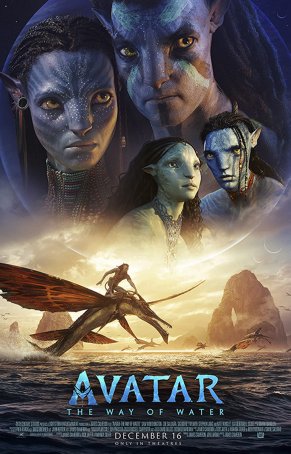
Avatar: The Way of Water (dir. by James Cameron)


James Cameron is still out there, trying to push the envelope.

My showing of Avatar: The Way of Water was not only 3D, but in HFR (High Frame Rate), which threw me for a loop. The only other movie I’ve ever watched on a large screen in HFR was The Desolation of Smaug and what was by mistake. The underwater scenes in the film are a sight to behold, but your eyes and mind need to adjust to it. HFR is that thing Christopher McQuarrie and Tom Cruise warned us all about earlier this year, the feature on most modern tv’s that enable a ‘smoothing’ effect. Films that normally look grainy are suddenly “live” under the HFR. It works really well for nature shows and sports events, and with a land as lush as Pandora, it’s good if you know what it is. I’m just not sure how well that will translate for audiences at home or for individuals who are new to it all. I can’t even begin to know what the underwater shooting was like for this film. James Cameron is known to be hard on his cast & crew. Ed Harris supposedly decked him once on the set of The Abyss and Mary Elizabeth Mastratonio once walked off set after they had a film issue on one point. I want to say that whatever they went through for The Way of Water seems to have paid off, but the state of movie theatres overall may have something else to say about that.

There were maybe only 3 people in my 3pm showing, and they seemed to stay for it. I know Cameron wants to save it all, but I feel the theatre experience is still dying. That’s a discussion all it’s own, but not here and now.

The Way of Water finds us having moved on some years after the events of the first film. Jake (Sam Worthington, Man on a Ledge) and Neytiri (Zoë Zaldaña, Guardians of the Galaxy) have a family of five now, living amongst the Omaticaya clan of Na’vi in the lands they moved to since losing Hometree in the first film. The boys, Neteyam (Jamie Flatters, Black Dog) and Lo’ak (Britian Dalton, Ready Player One) are like teenage Marines in training, dutifully following their dad’s orders up until the point where curiousity gets the best of them. The daughters, Kiri (Sigourney Weaver, Aliens) and little Tuk (Trinity Jo-Li Bliss), take a bit after their mom in some ways. There’s also Spider (Jack Champion, The Night Sitter), a young human who is close to Kiri. When humans return to Pandora, the Sullys find themselves once again under attack and on the run, colonization being the big bad it always was. Jake’s just trying to protect his family as best he can, something any parent can relate to. This takes them to a separate water based Na’vi tribe that takes them in and shows them their way of life. That, I really enjoyed. Though I’m mostly a loner at heart, seeing families and communities gel and work together plucks all the right heartstrings for me. There’s nothing that good teamwork can’t resolve and the story keeps circling that with Cameron’s “Family as a Fortress” theme.

If the Saw Movies taught us anything, it’s that you can always expand on a single story with fillers. They took one film, and weaved tons of side points without damaging the main thread. The Fast & Furious films did the same, making sure to keep the continuity, while adding additional content in between. Cameron had four other writers on board along with himself – Shane Salerno (Aliens vs. Predator: Requiem), Amanda Silver (War of the Planet of the Apes), Rick Jaffa (Dawn of the Planet of the Apes), and Josh Friedman (Terminator: The Sarah Connor Chronicles). With The Way of Water, I felt they were pretty successful at doing the same. The film even plants a few seeds here and there for future installments, should Cameron get the green light to go forward with his other 3 films.

If the plot suffers from any problems, it’s that they also took a page out of the Top Gun: Maverick flight manual in following the first film’s flow a little too closely. While The Way of Water has a plethora of new content – vehicles, machines, animals, locales – the story still moves along the path of the first film, making it just a little predictable. I was able to call out two scenes before they occurred. Other than those moments, I spent most of the film either really worrying about the Sully family – they’re outgunned, after all – and marveling at the views.

The editing is also a little weird. I understand this is a big undertaking, but some of the cuts between scenes seemed really abrupt to me, as if someone said…”This scene is out to explain this..you got it?! Good! Moving on to the next…” ..while the audience is still frantically taking notes on what just happened. At 3 hours and 12 minutes (just 11 minutes longer than Avengers: Endgame), there’s a lot to see, but I felt the pacing was okay. If there’s any part of the movie that could be used for a bathroom break, there is an extended sequence with a whale-like creature that could be your best opening. The movie might require more than one viewing to take it all in, but perhaps this is Cameron’s plan all along. One never truly knows.

The sound in The Way of Water was good. Explosions are sharp, animal sounds are cute and the hissing/wailing of Na’vi are clear (though strangely annoying after a while – we get it, you’re in pain or angry, ). The one element I was concerned with was the music. With James Horner’s passing in 2015, those shoes would be a little hard to fill. I originally hoped that Marc Streitenfeld would get the nod, based of his work on Prometheus. Composer Simon Franglen picks up where Horner left off, having worked together on the original Avatar score. Franglen knocks it out of the park, with a score that pays homage to Horner’s work while still making it his own sound.

The Way of Water introduces some new characters and cast. In addition to those previously mentioned, we also have Kate Winslet (Titanic) and Cliff Curtis (Sunshine) as the leaders of the Water Na’vi. Bailey Bass (Claudia in AMC’s Interview With the Vampire) plays their daughter, who helps to train the Sully children. Edie Falco (Nurse Jackie) is on board as a General charged with operations on Pandora. Jermaine Clement (What We Do In The Shadows) is also on hand as a marine scientist. Although everyone’s performances are good, the movie really belongs to the Sully children, with Weaver’s Kiri being the standout. Kiri’s a great character, reminding me a lot of Jinora from The Legend of Korra, and her story arc might be the best one of the lot.

Overall, Avatar The Way of Water is some serious eye candy. You might feel a little sad coming back to Earth after all the wonder Pandora has to offer. Disney could go wild on the merchandizing on this if they wanted (and they probably will). It manages to drop a number of surprises and information on the audience, though the overall trip may be a little too similar to the first film. I’m hoping Cameron gets the 3rd film set.

Everything is Blue in the Avatar: The Way of Water Teaser


Anyone who saw Doctor Strange and the Multiverse of Madness was treated to the Teaser Trailer for James Cameron’s Avatar: The Way of Water. This one shocked me because it picked up a bit of applause in the theatre. After all, it’s been 13 years. Not that anyone ever asked for a sequel (or 2 more), I get the feeling Cameron has faith in himself and his crew.

Two things really stood out for me with this teaser. One, Mech-Spiders fixing buildings, what are those?! Two, is that Simon Franglen’s score playing? It’s nice, and with James Horner gone (and missed), I’m hoping the rest of it will be good.

Taking place some time after the first story, Jake Sully (Sam Worthington) and Neytiri (Zoe Saldana) have a family now, and we’ll get to see Pandora’s watery depths. Supposedly, Cameron’s been pushing for upgrades in 3D technology, so it’ll be interesting to find out what advances have happened in a decade.

Avatar: The Way of Water is set for a December release.

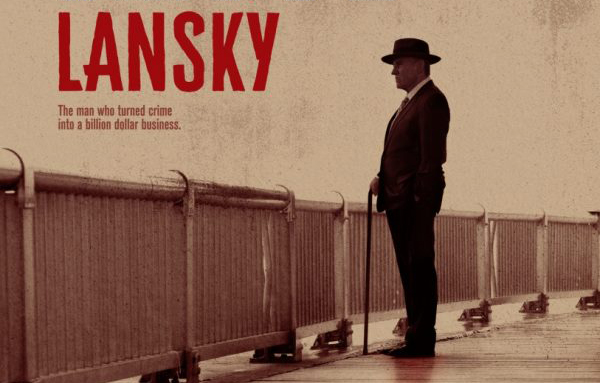
Film Review: Lansky (dir by Eytan Rockaway)


Over the course of his long and distinguished career, Harvey Keitel has only been nominated once for an Academy Award.

And, amazingly enough, he wasn’t nominated for any of the films for which he is best remembered. He wasn’t nominated for Mean Streets or Taxi Driver or any of his other collaborations with Martin Scorsese. He wasn’t nominated for playing the Wolf in Pulp Fiction or Mr. White in Reservoir Dogs. He was not nominated for The Piano. He certainly wasn’t nominated for baring his soul in Bad Lieutenant. Instead, Harvey Keitel’s only nomination was for playing real-life gangster Mickey Cohen in the 1991 Best Picture nominee Bugsy.

Bugsy was one of the many films to be made about the life of Bugy Siegel, the reputedly psychotic gangster who left New York for Hollywood and who later helped to create the wonderland of Las Vegas. In both the movie and real-life, Siegel was gunned down by his former associates, who felt that he was recklessly wasting their money out in the middle of the desert. It’s generally agreed that the order to murder Siegel was given by Lucky Luciano and Meyer Lansky, two of Siegel’s long-time friends and business partners. In Bugsy, Lansky was played by Ben Kingsley. Kingsley was also nominated for Best Supporting Actor. Unfortunately, whenever two actors from the same film are nominated for an Oscar, they usually end up canceling each other out. That’s what happened in the case of Bugsy, with both Kingsley and Keitel losing the Oscar to City Slickers‘s Jack Palance.

30 years after Busgy, Harvey Keitel once again acted out of the story of the death of Bugsy Siegel. Except, things time, Keitel played Meyer Lansky, Mickey Cohen was nowhere to be seen, and the film was called Lansky.

Of course, there’s more to Lansky than just the falling out with Bugsy Siegel. As you can tell from the film’s title, it attempts to deal with Lansky’s entire life. The film starts in 1979, with a friendly but terminally ill Meyer Lansky meeting with a writer named David Stone (Sam Worthington). David desperately needs the money that would come from writing the only authorized biography of Meyer Lansky. Lansky, knowing that he’s dying, wants to tell his story. Of course, Lansky has a few conditions. David can only publish the book after Lansky has died and David is not to talk to anyone about anything that Lansky tells him. David agrees.

From there, the film jumps back and forth in time. We watch the young Lansky (played by John Magaro) as he teams up with Lucky Luciano (Shane McRae) and Bugsy Siegel (David Cade) to change the face of organized crime. Along the way, he gets involved in the casino business, the CIA, and the Cuban revolution, and he fights Nazis at home and abroad. Lansky turns organized crime into a business and, as a result, becomes known as “the Mob’s accountant.” The FBI hounds him for almost his entire life, determined to discover where he’s hidden the millions of dollars that he’s rumored to have earned through his crimes.

While Lansky tells his story to David, the two of them form a slightly uneasy friendship Lansky is friendly and curteous but, as becomes clear as the film progresses, he’s still as capable of ordering a murder as ever. David, meanwhile, is being pressured by the FBI. They want him to become an informant and to press Lansky for information on where he’s hiding his money.

Lansky is a film that requires some patience. The first hour or so is a bit messy, with the film awkwardly trying to strike a balance between the flashbacks and the scenes of David talking to Lansky. At times, the film becomes a bit of an odd buddy picture, with Lansky offering David some unexpected life advice. However, once the FBI starts pressuring David, things pick up. The arrival of the FBI adds some much needed tension to the film’s storyline. As you watch the main agent (played by David James Elliott) pressure David into becoming an informant and essentially put his life at risk, it’s hard not to contrast Lansky with the men who are determined to put him away. Lansky may be a criminal but he has a code of ethics and, most importantly, he doesn’t harass innocents. The FBI, though, has no problem with bullying and manipulating informants and witnesses, all in the name of trying to figure out where a dying man is hiding his money. When the attention shifts from Lansky telling his story to Lansky outwitting the FBI, the film takes on an entirely new feel. When a smug FBI agent flies all the way to Israel in search of Lansky’s money, it’s impossible not to cheer a little when he gets outsmarted.

Due to the film’s flashback structure, Harvey Keitel is not in as much of Lasnky as you might expect. And yet he dominates the entire film. He perfectly captures both Lansky’s determination and his grim humor. Even facing death, Lansky is determined to keep control over every situation. In the film’s most powerful moments, he discusses what it’s like to be an outsider in America. Lansky knows that, as a Jew, he’ll never be fully accepted by the establishment. So, instead of begging for hand-outs, Lansky created his own establishment, one that operated in the shadows but which ultimately proved to be as successful as any corporation. When Lansky discovers that the American government is pressuring Israel to refuse to grant Lansky citizenship, Keitel perfectly captures both Lansy’s pain and his defiance. It all leads to a haunting final scene of Lansky on the beach. Appropriately enough, Meyer Lansky is alone.

Lansky is a both a portrait of a fascinating life and a tribute to the talent of Harvey Keitel. It may require some patience but that patience will be rewarded.

The Titan (Dir. Lennart Ruff)- Review by Case Wright


Titan guy

Movies should first entertain, BUT in a pandemic, they really just need to be on the TV and better than Hallmark Channel Christmas movie background noise.  Lennart Ruff, the director, has an IMDB page similar to the film itself:  there’s moments of talent, but they’re muffled by a plot and directing style that morphs more than the lead character and he loses his fingers and genitals.

The Titan is part of an ever growing eco-disaster film sub-genre that basically want us to recycle or die. If it means these movies will stop, I will sort my plastic (no…no, I won’t).  The Earth is in collapse, but that doesn’t totally make sense either because the film says that the Earth is overpopulated, causing this eco-disaster.  However, it posits that 50%+ of the Earth population will perish….Ok….so wouldn’t we just be Populated then and return to normal over a period of centuries?  This is where I don’t get environmentalism; it has this underlying “I Told You So! Now, it’s all over and there’s nothing you can do about it! HA!” feel to it.

Professor Martin Collingwood (Tom Wilkinson) has a plan to get us off earth and survive by moving to Brooklyn… no wait… Titan the moon that’s around Saturn. But how will Professor Collingwood accomplish this task? He will do it with forced evolution and yelling a lot.  The key to his plan is Lieutenant Rick Janssen. A number of critics and dry white toast claim that Sam Worthington is a bland actor.  I don’t really see that as much as I think he’s trying to be very Gary Cooper and maybe he succeeds. Professor Collingwood arranges to have all these military heroes and Rick go through forced evolution so that they can survive the horrible conditions on Titan, lose their genitals.

As the forced evolution goes forward, Rick changes into an alien. Well? So? That’s what he was supposed to become and …. he did.  I did not understand the outrage with that.  He does end up looking like a space alien mated with a Pandora escapee, but this is about saving the species- sort of.

The last act act was as entertaining as it was disconnected from the preceding plot-line. There was killing, speeches, more killing, a quasi-love scene, anime-tentacle stuff goin on, and he kinda flies at end. It was weird.  It did have some syfy elements, but overall – it was really really dumb.

The biggest issue that I have with the film is that it goes from being directed like a documentary, which was fun to watch like an Apollo 11 behind the scenes feel.  Unfortunately, it went from that to a marriage struggle film, to an Erin Brokovich feel, to a monster movie, and then there was the whole flying around thing, tentacles doing things. It was was more all over the place than a drunken Jackson Pollack.

If it had just picked one genre instead of 30, it would’ve been a pretty great film.  Who are we kidding? You can’t leave your house and those 4800 rolls of toilet paper aren’t making you any healthier.  Really, it’s either this movie or Tiger King. I knew about people in Arkansas getting tigers for years and never sought to know more.  I might watch it eventually, but it rubs me the wrong way for now at least.  See how annoying it is when a person goes off on a tangent?  Imagine that for about two hours, but The Titan is louder than background noise and has no genitals.

Film Review: Hacksaw Ridge (dir by Mel Gibson)


hacksaw_ridge_poster

To be honest, Hacksaw Ridge is probably not the type of film that I would usually watch.  I’m not a huge fan of war movies and the trailer really didn’t inspire much enthusiasm within me.  However, ever since the film was released last Friday, it’s been the subject of some Oscar buzz and … well, you know me and the Oscars.  There’s no easier way to get me to take a chance on a movie than to tell me that it might be nominated for an Oscar.  I’m a completist, after all.  If they’re going to nominate 8 to 10 movies for best picture, you better believe I’m going to make sure that I’ve seen all of them.

So, after voting yesterday, I saw Hacksaw Ridge and all I can say is, “Wow!”  Hacksaw Ridge left me with tears in my eyes and feeling totally exhausted.  This is one of those films that kind of sneaks up on you.  I spent the first half of the film thinking to myself, “Okay, this is good and all but I still don’t see what the big deal is.”  And then suddenly, that second half started and soon, I was totally struggling to catch my breath.

I’ll just say this right now: Hacksaw Ridge is one of the most powerful anti-war films that I’ve ever seen.  It’s also an incredibly violent film, one that will leave non-veterans amazed at the number of ways that soldiers can be shot, stabbed, blown up, and set on fire.  But, despite all the visceral action that plays out across the screen, Hacksaw Ridge never glorifies combat.  It never glamorizes the destructive power of war.  We may be happy when we see a certain soldier somehow manage to survive but we never find ourselves cheering.  Instead, often times, we worry what awaits that soldier after the war.  The combat in Hacksaw Ridge is so brutal and so terrifying that you find yourself wondering not only how anyone could survive but also how anyone could ever go on with “normal” life after seeing the horrors of war.

Hacksaw Ridge tells the true story of Desmond Doss, a conscientious objector who served, as a combat medic, in the U.S. Army during World War II.  As a Seventh Day Adventist, Doss both refused to carry a rife and refused to train on the Sabbath.  Despite all the efforts of both his sergeant and his captain to convince Doss to leave the service, Doss stayed in the Army, served in combat despite refusing to carry a rifle, and became the first C.O. to be awarded the Medal of Honor.  In the film, Doss is played by Andrew Garfield, who is one of those extremely talented actors who has been miscast in several films.  Fortunately, he’s perfect for Hacksaw Ridge.  Though his rural accent occasionally slips, Garfield is convincing as both a relatively naive farmboy and a man of such strong convictions that he’s willing to risk being court martialed to uphold them.  If Hacksaw Ridge is about Doss proving himself to his fellow soldiers, it’s also a film about Andrew Garfield, who is still perhaps best known for being awkwardly cast as Spiderman, proving himself as a unique and interesting actor.

Garfield pretty much dominates the film but a few of the supporting performers do manage to make an impression.  Vince Vaughn is surprisingly effective as the tough and no-nonsense sergeant and Teresa Palmer is sympathetic as Doss’s wife.  Hugo Weaving plays Doss’s alcoholic father, a man who is still haunted by what he saw during the first world war and he does a great job.

I know that some people are going to be hesitant about Hacksaw Ridge because it was directed by Mel Gibson but you know what?   You may not expect Mel Gibson to direct one of the most searing anti-war films of the past decade but that’s exactly what he managed to do.  It’s an important film, one that reminds us that war is neither fun nor an adventure.  It’s a film that shows what our combat veterans had to deal with (and when we countless men lost their legs as the result of a Japanese rocket, it’s hard not to make the connection to the countless vets who have lost limbs in the Middle East) and, in its way, chastises a society that would abandon them after the war is over.  If Doss, working on his own, was willing to put his life at risk to save 75 wounded soldiers, how can we, as a society, justify not taking care of our wounded veterans?   Hacksaw Ridge is a film that works both as a tribute to our veterans and a reminder that the costs of war are all too real.

It’s a good and important film.  I recommend the Hell out of it.