Welcome to Retro Television Reviews, a feature where we review some of our favorite and least favorite shows of the past! On Wednesdays, I will be reviewing the original Love Boat, which aired on ABC from 1977 to 1986! The series can be streamed on Paramount Plus!
The Love Boat promises something for everyone!
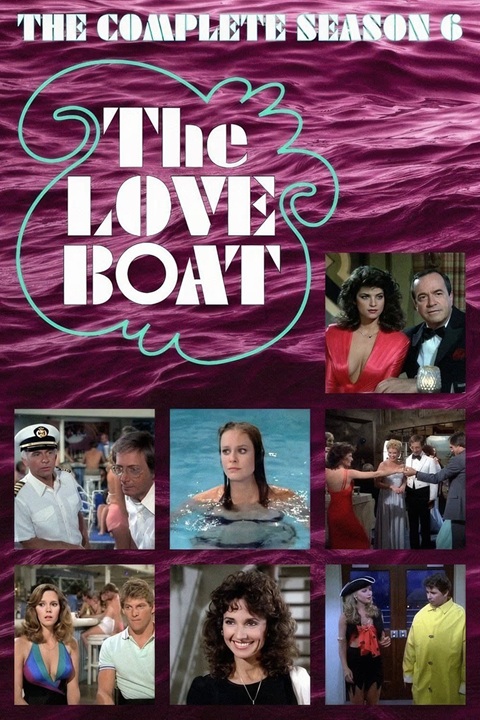
Episode 6.26 “The Professor Has Class/When The Magic Disappears/We, The Jury”
(Dir by Richard Kinon, originally aired on April 2nd, 1983)
I sent a message to my friend Jason, letting him know about this week’s episode of The Love Boat.
“This week’s episode featured a Van Patten and a Van Dyke!” I wrote.
He wrote back, “Two Dicks?”
“No, one Dick and a Barry.”
Dick Van Patten plays The Great Stellini. He’s upset that his daughter (Mary-Margaret Humes) wants to marry Joey Gardiner (Barry Van Dyke), a novice magician. The Great Stellini thinks that Joey wants to steal all of his tricks. His daughter teaches Stellini a lesson by actually disappearing during their stage show. Stellini is humiliated but he learns an important lesson about letting go and also supporting younger magicians.
Meanwhile, Anne Meara played Jerry Stiller’s former landlady. Anne was using Jerry for damaging her property. Gopher decided that a jury made up of the crew should decide the case. Huh? Why? That makes no sense. But you know what? Anne Meara and Jerry Stiller were so cute together that it didn’t really matter.
Finally, a 91 year-old professor (Sam Jaffe) was upset to discover that one of his former students (Bettye Ackerman) was going to replace him. Luckily, everyone fell in love. Sam Jaffe was one of the great character actors and it was kind of nice to see him on this show, acting opposite his wife, Bettye Ackerman. This was Jaffe’s final performance and he had a twinkle in his eye. He seemed to be having fun.
First released in the groovy and psychedelic year of 1970, The Dunwich Horror stars Sandra Dee as Nancy, an somewhat innocent grad student at Massachusetts’s Miskatonic University. When the mysterious Wilbur Wheatley (Dean Stockwell) comes to the university and asks to take a look at a very rare book called The Necronomicon, Nancy agrees. She does so even though there’s only one edition of The Necronomicon in existence and it’s supposed to be protected at all costs. Maybe it’s Wilbur’s hypnotic eyes that convince Nancy to allow him to see and manhandle the book. Prof. Henry Armitage (Ed Begley) is not happy to see Wilbur reading the book and he warns Nancy that the Wheatleys are no good.
Nancy still agrees to give Wilbur a ride back to his hometown of Dunwich. She finds herself enchanted by the mysterious Wilbur and she’s intrigued as to why so many people in the town seem to hate Wilbur and his father (Sam Jaffe). Soon, she is staying at Wilbur’s mansion and has apparently forgotten about actually returning to Miskatonic. She has fallen under Wilbur’s spell and it soon becomes clear that Wilbur has sinister plans of his own. It’s time to start chanting about the Old Ones and the eldritch powers while naked cultists run along the beach and Nancy writhes on an altar. We are in Lovecraft county!
Actually, it’s tempting to wonder just how exactly H.P. Lovecraft would have felt about this adaptation of his short story. On the one hand, it captures the chilly New England atmosphere of Lovecraft’s work and it features references to such Lovecraft mainstays as Miskatonic University, the Necronomicon, and the Old Ones. As was often the case with Lovecraft’s stories, the main characters are students and academics. At the same time, this is very much a film of the late 60s/early 70s. That means that there are random naked hippies, odd camera angles, and frequent use of the zoom lens. The film makes frequent use of solarization and other psychedelic effects that were all the rage in 1970. Lovecraft may have been an unconventional thinker but I’m still not sure he would have appreciated seeing his fearsome cult transformed into a bunch of body-painting hippies.
Really, the true pleasure of The Dunwich Horror is watching a very earnest Sandra Dee act opposite a very stoned Dean Stockwell. Stockwell was a charter member of the Hollywood counterculture, a friend of Dennis Hopper’s who had gone from being a top Hollywood child actor to playing hippie gurus in numerous AIP films. As for Sandra Dee, one gets the feeling that this film was an attempt to change her square image. When Wilbur tells Nancy that her nightmares sound like they’re sexual in origin and then explores her feelings about sex, Nancy replies, “I like sex,” and it’s obviously meant to be a moment that will make the audience say, “Hey, she’s one of us!” But Sandra Dee delivers the line so hesitantly that it actually has the opposite effect. Stockwell rather smoothely slips into the role of the eccentric Wilbur. Wilbur is meant to be an outsider and one gets the feeling that’s how Stockwell viewed himself in 1970. Sandra Dee, meanwhile, seems to be trying really hard to convince the viewer that she’s not the same actress who played Gidget and starred in A Summer Place, even though she clearly is. It creates an oddly fascinating chemistry between the two of them. Evil Wilbur actually comes across as being more honest than virtuous Nancy.
Executive produced by Roger Corman, The Dunwich Horror is an undeniably campy film but, if you’re a fan of the early 70s grindhouse and drive-in scene, it’s just silly enough to be entertaining. Even when the film itself descends into nonsense, Stockwell’s bizarre charisma keeps things watchable and there are a few memorable supporting performances. (Talia Shire has a small but memorable roll as a nurse.) It’s a film that stays true to the spirit of Lovecraft, despite all of the hippies.
Ah, the 1930s. America was mired in the Great Depression. FDR was plotting to pack the courts. The American public, sick of playing by the rules and getting little in return, began to admire gangsters and outlaws. The horror genre became the new way to vent about societal insecurity. In Europe, leaders were trying to ignore what was happening in Italy, Spain, and Germany. As for the Academy, it was still growing and developing and finding itself. With people flocking to the movies and the promise of an escape from reality, the Academy Awards went from being an afterthought to a major cultural event.
And, of course, the snubs continued.
1930 — 1931: Crime Doesn’t Pay For Little Caesar and The Public Enemy
When people think about the 1930s, gangsters are probably one of the first things that come to mind. In the 30s, audiences flocked to movies about tough and streetwise criminals who did what they had to do in order to survive during the Depression. Unfortunately, the Academy was not always as quick to embrace the gangster genre. Though The Public Enemy did pick up a nomination for its screenplay, both it and Little Caesar were largely ignored by the Academy. Not only did the films fail to score nominations for Best Picture but neither James Cagney nor Edward G. Robinson would be nominated for bringing their title characters to life. It’s a crime, I tells ya.
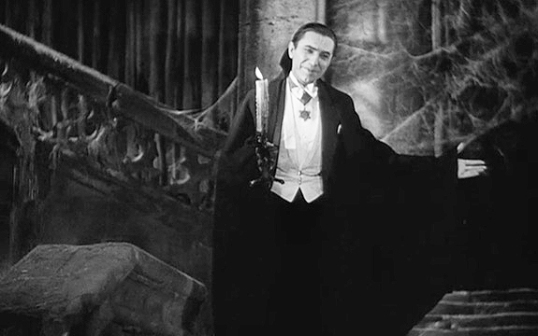
1930 — 1931: Bela Lugosi Is Not Nominated For Best Actor For Dracula
Admittedly, the 1931 version of Draculais a bit of a creaky affair, one that feels quite stagey to modern audiences. But Bela Lugosi’s performance in the title role holds up well, despite the number of times that it has been parodied. Unfortunately, from the start, the Academy was hesitant about honoring the horror genre.
Frankenstein (1931, dir by James Whale)
1931 — 1932: Boris Karloff Is Not Nominated For Best Actor For Frankenstein
Again, the Academy snubbed an iconic horror star. Not only was Boris Karloff not nominated for Frankenstein but the film itself was not nominated for Best Picture, despite being infinitely better than at least one of the 8 films that were nominated. (That film, by the way, was Bad Girl. When is the last time that anyone watched that one?) In fairness to the Academy, they did honor one horror film at that year’s awards. Fredric March won Best Actor for Dr. Jekyll and Mr. Hyde. Of course, he also tied with Wallace Beery, who was nominated for The Champ. Obviously, the Academy still had to work out its feelings towards the horror genre, a process that continues to this very day.
1932 — 1933: King Kong Is Not Nominated For Best Picture
Oh, poor King Kong. Film audiences loved him but the Academy totally ignored both him and his film. Unfortunately, back in 1933, the Academy had yet to introduce a category for special effects.
1932 — 1933: Duck Soup Is Ignored By The Academy
King Kong was not the only worthy film to be ignored at the 1932-1933 Oscars. The Marx Brothers’s greatest film also went unnominated.
1934: The Scarlet Empress Is Not Nominated For Best Picture
Josef von Sternberg’s surreal historical epic was totally ignored by the Academy. Not only did it miss out on being nominated for Best Picture but the sterling work of Marlene Dietrich and Sam Jaffe was ignored as well. How was the opulent set design ignored? How did it not even pick up a nomination for costume design? My guess is that Paramount chose to promote Cleopatra at expense of The Scarlet Empress. Either the way, the Best Picture Oscar was won by one of my favorite films, It Happened One Night.
1935: Fred Astaire and Ginger Rogers Are Not Nominated For Top Hat
Top Hat scored a best picture nomination but the film’s two stars went unnominated.
1936: My Man Godfrey Is Nominated For Everything But Best Picture
My Man Godfrey, a classic screwball comedy, was nominated for Best Actor, Best Actress, Best Supporting Actor, Best Supporting Actress, Best Director, and Best Screenplay but somehow, it was not nominated for Best Picture. It’s a shame because My Man Godfrey, along being a very funny movie, is also a film that epitomizes an era. Certainly, it’s far more entertaining today than the film that won Best Picture that year, The Great Ziegfeld. (Interestingly enough, William Powell played the title role in both Godfrey and Ziegfeld.)
1937: Humphrey Bogart Is Not Nominated For Best Supporting Actor in Dead End
Dead End featured one of Bogart’s best gangster roles. As a gangster who returns to his old neighborhood and is rejected by his own mother, Bogart was both menacing and, at times, sympathetic. Like Cagney and Robinson, Bogart definitely deserved a nomination for his portrayal of what it was like to live a life of crime. Unfortunately, Bogart was an actor who was taken for granted for much of his career. It wasn’t until he played Rick Blaine in Casablancathat the Academy would finally nominate him.
The Adventures of Robin Hood (1938, dir by Michael Curtiz)
1938: Errol Flynn Is Not Nominated For Best Actor In The Adventures of Robin Hood
This is truly one of the more shocking snubs in Academy history. Errol Flynn’s performance as Robin Hood pretty much set the standard for every actor who followed him. Russell Crowe is undoubtedly a better actor than Flynn was but Crowe’s dour interpretation of Robin could in no way compete with the joie de vivre that Flynn brought to the role.
Agree? Disagree? Do you have an Oscar snub that you think is even worse than the 10 listed here? Let us know in the comments!
Up next: 1940s, in which Hollywood joins the war effort and the snubs continue!
Night Gallery was a horror anthology series that aired on NBC in the early 70s. Each episode featured Rod Serling, of Twilight Zone fame, serving as the curator of a museum where all of the paintings have a somewhat macabre theme. (One could even say that the museum was a …. wait for it …. night gallery!) Serling would give each painting a properly pithy introduction and then the audience would see the story behind the artwork. It was a bit like the Twilight Zone, except the Night Gallery episodes were in color, they were all horror-themed, and, for the most part, they steered away from social commentary. The series ran from 1970 and 1973 and it still airs in syndication and on some of the retro stations. (I believe it currently airs on Comet TV.) Even if it wasn’t as consistently good as Twilight Zone, it’s still a pretty fun little series.
Two Christmases ago, I was gifted Night Gallery: The Complete Series on DVD. Though I’ve watched several episodes from the DVD, I recently realized that I have never actually sat down and watched every episode in order. With the world currently shut down due to the pandemic (a development that, if we’re going to be honest, sounds like something Rod Serling would have used on the Twilight Zone), I figured what better time to watch the entire series then now?
I started out by watching the Night Gallery pilot film. This originally aired on November 8th, 1969, a full year before Night Gallery became a weekly series. It features three different stories (all written by Rod Serling) of the macabre. As with every episode of the subsequent series, each story is introduced by Serling standing in front of a painting. In the pilot, though, the museum is rather bare and the painting’s are a bit minimalist. I have to admit that, as a lover of the baroque, I was a bit disappointed in that aspect of the pilot.
But what about the stories themselves? Read on!
The Cemetery (dir by Boris Sagal)
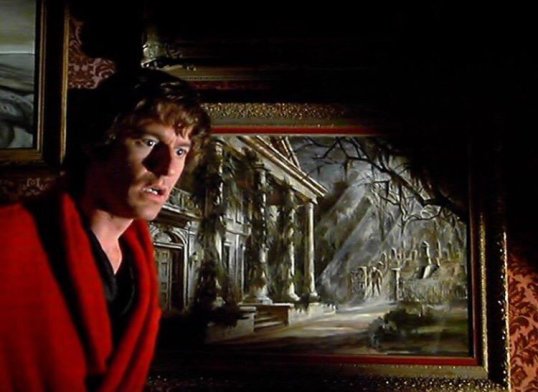
The first story was The Cemetery, a cheerfully gruesome little tale that featured Roddy McDowall and Ossie Davis. McDowall plays Jeremy, a spoiled young man who murders his uncle so that he might inherit the dead man’s estate. At first, it looks like McDowall’s plot is a complete success but then McDowall notices a painting of the family graveyard hanging above a staircase. (To be honest, it seems odd to hang a painting of a graveyard in the foyer but I guess that’s something old rich people do.) The painting keeps changing. One minute, the painting looks normal. The next minute, it features a newly dug grave. And then something emerging grave. And then something heading towards the house….
Is Jeremy losing his mind or is the painting warning him that his uncle has risen from the dead and is seeking revenge!? You’ll probably be able to guess the answer long before poor Jeremy but no matter. This is a fun little horror story and it benefits from two enjoyably arch performances, from McDowall and, in the role of a butler who may have an agenda of his own, Ossie Davis.
Eyes (dir by Steven Spielberg)
Of the three stories presented in the pilot, Eyes probably gets the most attention from critics because it not only stars Joan Crawford in one of her final performances but it was the professional directorial debut (if you don’t count Amblin’) of 22 year-old Steven Spielberg. Spielberg apparently had some issues dealing with the veteran crew members, many of whom didn’t like the idea of taking orders from a 22 year-old. (It probably didn’t help that pictures from that era suggest that Spielberg looked several years younger than his age. Let’s just say that it’s easy to understand why he eventually grew that beard.) I’d like to think that Joan Crawford yelled at everyone and defended Spielberg and maybe even Rod Serling came down with Luca Brasi and said, “You’re going to the give this kid the respect he deserves or your brains are going to be all over that union contract.” I don’t know if that’s true but it’s a nice thought.
That said, Eyes is pretty good. Even if the crew doubted him, Spielberg proved himself as a director with this story. It’s about a hateful and selfish woman (Joan Crawford) who happens to be both rich and blind. She has manipulated a doctor into performing an experimental operation that will allow her to see. The only catch is that the operation will only be good for 22 hours and a donor (Tom Bosley, as a bookie who is in trouble with the mob) will be required to give up his eyes so that Crawford can have those 22 hours.
On the one hand, this is very-much a Rod Serling-type tale. It’s easy to imagine Eyes, with its belief in karma and its final macabre twist, as a Twilight Zone episode. At the same time, Spielberg very much brings his own signature style to the film, livening up dialogue-heavy scenes with interesting camera angles and getting good performances from Crawford, Barry Sullivan, and Tom Bosley. Eyes is a clever story but, for modern viewers, the most interesting thing about it will be discovering that, even at the age of 22, Spielberg already had a clear directorial style.
The Escape Route (dir by Barry Shear)
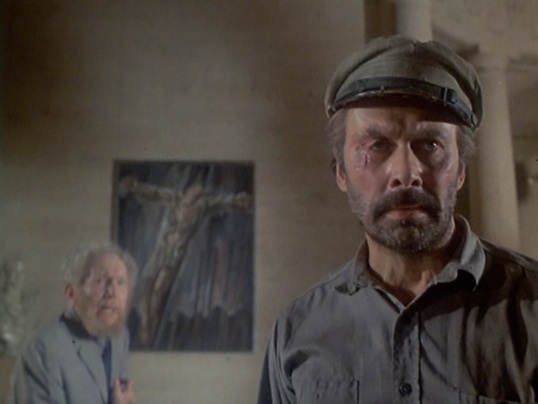
The Escape Route is about an Nazi war criminal named Joseph Strobe (played by Richard Kiley) who is hiding out in South America and spending all of his time nervously looking over his shoulder. One day, he enters a museum where he finds himself drawn to two paintings. One painting features a man who has been crucified in a concentration camp, which we learn was Strobe’s trademark back when he, himself, was a camp commandant. The other painting features a fisherman in a peaceful setting. Even though Strobe imagines himself as the peaceful fisherman, his attention keeps getting redirected to the painting of the concentration camp. Soon, Strobe realizes that a survivor of the camp (played by Sam Jaffe) is also in the museum and that he is studying the painting as well.
Compared to Eyes and especially The Cemetery, The Escape Route may seem like a rather low-key story but it has a power that sneaks up on you. Hiding out (as many real-life Nazi war criminals did) in South America, Strobe is full of excuses for his past and he may indeed be sincere in his wish that he had just become a fisherman as opposed to a brutal Nazi. But, in the end, Strobe can neither escape his past nor his final punishment. Justice cannot be escaped, no matter how hard Strobe tries to outrun it. In the end, there is no escape for the wicked. Richard Kiley and Sam Jaffe both give excellent performances. The Escape Route will stick with you.
As a series, Night Gallery was a bit uneven but the pilot stands as a classic of its type, featuring three short films that all deserve to be remembered.
As for me, I’m going to try to watch an episode or two a day. I may review a few more Night Gallery episodes here on the Shattered Lens. As I said, the series itself was a bit uneven and not every episode is as good as the pilot. Still, there’s definitely some gems to be found in the Night Gallery and I’ll share them as I come across them.
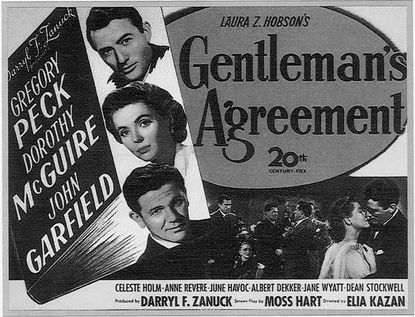
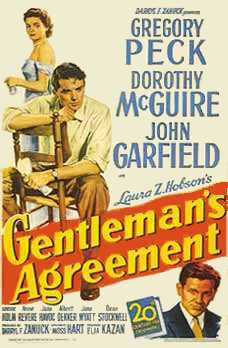
Earlier today, as I was watching the 1947 film, Gentleman’s Agreement, I found myself thinking about a conversation that I had in 2006.
This was when I was in college. I was having lunch with some friends from one of my classes. As we were eating, the conversation turned to the war in Iraq. That, in itself, was not surprising because, in 2006, it seemed like every conversation somehow turned to what was happening in the Middle East.
One of the people with whom I was having lunch was Olivia, self-styled intellectual who fancied herself as the most knowledgeable person on campus. To be honest, I can’t think of anyone who liked her that much but she had a skill for subtly weaseling her way into almost every conversation. She was one of those incredibly pretentious types who started every sentence with “Actually….” and who had embraced Marxism with the shallow vapidness of someone who had grown up in Highland Park and who would never have to struggle to pay a bill.
On that day, Olivia announced to us all that the only reason we were in Iraq was because we were doing the bidding of Israeli lobbyists and then she went on to talk about how 9-11 was an inside job. She repeated the old lie about Jews calling in sick on 9-11 and claimed that five MOSSAD agents were arrested in New York for celebrating after the collapse of the Twin Towers.
After Olivia said this, there was the briefest silence as everyone else tried to figure out how to react. Finally, someone tried to change the subject by making a joke about our professor. Realizing the no one was going to openly disagree with Olivia and risk an argument, I said, “That’s not true.”
“What’s not true?” Olivia asked.
“About Jewish people calling in sick on 9-11 and celebrating after the Towers fell. That’s not true.”
Olivia looked a little bit surprised that she was being openly challenged. Finally, she said, in a surprisingly sincere tone of voice, “I’m sorry. I didn’t realize you were Jewish.”
I’m not Jewish. I’m Irish-Italian-Spanish and pretty much all of my immediate ancestors were Catholic. But, as far as Olivia was concerned, I had to be Jewish because why else would I object to her repeating an anti-Semitic conspiracy theory? When she apologized (and, make no mistake, there was not a hint of sarcasm in her tone when she said she was sorry), it wasn’t for being a bigot. Instead, it was for being a bigot in front of the “wrong” person. It didn’t occur to her that I was upset because what she said was bullshit.
Anyway, I wish I could say that I threw a drink in Olivia’s face or that I stood up on the table and delivered an impassioned speech but, once again, the other people at the table hastily changed the subject. Anything to avoid a conflict, I suppose. That was the last time I ever had a conversation with Olivia. For the rest of the semester, I ignored her and I felt pretty proud of myself for shunning her. It’s only been recently that I realized that Olivia also didn’t really make any effort to really talk to me after that conversation. I shunned her because of her bigotry and I can only assume that she shunned me because of her misconception about my ancestry.
Gentleman’s Agreement is about a Gentile reporter named Phillip Green (Gregory Peck) who, while researching a story about anti-Semitism, poses as a Jew and discovers that the world is full of people like Olivia. His own fiancee, a self-declared liberal named Kathy (Dorothy McGuire), reacts to Phil’s plan by asking him, “But you’re not really Jewish …. are you?” By the simple act of telling everyone that his last name is actually “Greenberg,” Phil discovers that he suddenly can’t get a hotel reservation. People stop returning his calls. When he and Kathy have an engagement party in a wealthy community in Connecticut, many of Kathy’s friends stay away. (Kathy, meanwhile, begs Phil to let her tell her family that she’s not actually engaged to a Jew.) When Phil’s son, Tommy (Dean Stockwell), is harassed at school, Phil is shocked to hear Kathy tell Tommy that he shouldn’t listen to the bullies not because they’re a bunch of bigots but because “you’re not actually Jewish.”
Meanwhile, Phil’s friend, Dave Goldman (John Garfield), has returned from serving in World War II, just to discover that he can’t even rent a home for his family because many landlords refuse to rent to Jews. When Phil learns that Katy owns a vacant cottage, he suggests that she rent it out to Dave. Despite her sympathy for Dave, Kathy is shocked at the suggestion. What will the neighbors think?
Gentleman’s Agreement was produced by Darryl F. Zanuck, who took on the project after he was refused membership in the Los Angeles Country Club because the membership committee assumed that Zanuck was Jewish. It was considered to be quite a controversial film in 1947, as it not only dealt with American prejudice but it also called out two prominent elected anti-Semites — Sen. Theodore Bilbo and Rep. John E. Rankin — by name. Zanuck often claimed that the other studio moguls asked him to abandon the project, saying that a film would only inspire more of what it was trying to condemn. Still, Zanuck stuck with the project and it was not only a box office hit but it also won the Oscar for Best Picture.
Seen today, Gentleman’s Agreement has its flaws. In the lead role, Gregory Peck is a bit of a stiff and Elia Kazan’s directs in an efficient but bland manner. Because this film was made in 1947 and a happy ending was a must, Kathy is given a rather convenient opportunity at redemption. The film’s most compelling performers — John Garfield, Celeste Holm, and June Havoc (playing Phil’s Jewish secretary, who had to change her last name before anyone would even consider hiring her) — are often underused.
And yet, with all that in mind, Gentleman’s Agreement is still a very effective film. Gentleman’s Agreement understand that there’s more to prejudice than just the morons who go to rallies or the degenerates who shout slurs across the street. Gentleman’s Agreement understands that, for prejudice to thrive, it also needs people like Kathy or Olivia, people who have that prejudice so ingrained in their system that they don’t even think twice about it and Dorothy McGuire does a very good job of playing a self-satisfied liberal who is blind to her own prejudice. Gentleman’s Agreement understands that bigotry isn’t just about the openly hateful. It’s also about the people who silently tolerate it and who refuse to stand up against it. It’s about the people who respond to prejudice not with outrage but who instead attempt to change the subject.
In the UK, one of the two major political parties has basically surrendered itself to anti-Semitism. Here in the US, Congress can’t even bring itself to condemn the frequently anti-Semitic comments of two of its members. Elected leaders and pundits only offer up the weakest of condemnation when Jewish people are viciously attacked in the streets. When a man attacked a group of Jews on Hanukkah, many excused the man’s attack by trying to say that he was just upset about gentrification. For many reasons, Gentleman’s Agreement is still relevant and important today.
Long before there was Lost, there was Lost Horizon!
Much like the famous television show, the 1937 film Lost Horizon begins with a group of strangers on an airplane. They’re people from all walks of life, all with their separate hopes and dreams. When the plane crashes, they find themselves stranded in an uncharted land and, much like the Lost castaways, they are shocked to discover that they are not alone. Instead, they’ve found a semi-legendary place that is ruled over by a man who has lived for centuries. Much as in Lost, some want to return to civilization while others want to remain in their new home. Both Lost and Lost Horizon even feature a terminally ill woman who starts to recover her health after becoming stranded.
Of course, in Lost, everyone was just flying from Australia to America. In Lost Horizon, everyone is trying to escape the Chinese revolution. Among the passengers on the plane: diplomat Robert Conway (Ronald Colman), his irresponsible brother, George (John Howard), a con artist named Henry (Thomas Mitchell), a paleontologist (Edward Everett Horton), and the very ill Gloria (Isabel Jewell).
While Lost featured a plane crash on a tropical island, Lost Horizon features a plane crash in the Himalayas. In Lost, the sinister Others sent spies to infiltrate the survivors. In Lost Horizon, the mysterious Chang (H.B. Warner) appears and leads the survivors to a place called Shangri-La.
Shangi-La is a lush and idyllic valley that has somehow flourished in one of the most inhospitable places on Earth. The happy inhabitants inform the survivors that they never get sick and they never fight. They’re led by the High Lama (Sam Jaffe), a philosopher who explains that he is several hundred years old. The valley is full of magic and the Lama tells the survivors that Shangri-La is their new home.
Now, I’ve seen enough horror movies that I spent most of Lost Horizon waiting for the Lama to suddenly reveal that he was a vampire or an alien or something. Whenever anyone in a movie seems to be too good to be true, that usually means that he’s going to end up killing someone about an hour into the story. But that didn’t happen in Lost Horizon. Instead, the Lama is just as wise and benevolent as he claims to be and Shangri-La is as much of a paradise as everyone assumes. I guess we’re just naturally more cynical in 2018 than people were in 1937.
Of course, the Lama isn’t immortal. Not even the magic of Shangri-La can prevent the inevitably of death. The Lama is looking for a successor. Could one of the survivors be that successor? Perhaps. For instance, Robert absolutely loves Shangri-La. Of course, his brother George is determined to return to the real world. He has fallen in love with one of the inhabitants of Shagri-La and plans to take her with him, despite the Lama’s warning about trying to leave…
Frank Capra was a huge fan of James Hilton’s book, Lost Horizon, and he spent three years trying to bring it to the big screen. Based on Capra’s previous box office successes, Colombia’s Harry Cohn gave Capra a budget of $1.25 million to bring his vision of Shangri-La to life. That may not sound like much today but, at the time, that made Lost Horizon the most expensive movie ever made. The production was a notoriously difficult one. (The original actor cast as the elderly Lama was so excited to learn he had been selected that he dropped dead of a heart attack.) As a result of both its ornate sets and Capra’s perfectionism, the film soon went overbudget. When Capra finally delivered a first cut, it was over 6 hours long. Capra eventually managed to edit it down to 210 minutes, just to then have Harry Cohn order another hour taken out of the film. When Lost Horizon was finally released, it had a running time of 132 minutes.
Seen today, Lost Horizon is definitely an uneven work. With all the cutting and editing that went on, it’s hard to guess what Capra’s original vision may have been but, in the final version, much more time is devoted to the characters discussing the philosophy of Shangri-La than to the characters themselves. (It’s always good to see Thomas Mitchell but he really doesn’t get much to do.) Since you never really feel like you know what any of these characters were like outside of Shangi-La, it’s hard to see how being in Shagri-La has changed them. You just have to take their word for it. That said, it’s a visually stunning film. Capra may have gone over budget creating the look of Shangri-La but it was money well-spent. If I ever find myself in a magic village, I hope it looks half as nice as the one in Lost Horizon.
Despite all of the drama that went on behind the scenes and a rather anemic box office reception, Lost Horizon was nominated for best picture. However, it lost to The Life of Emile Zola.
When two aging fishermen (Thomas Mitchell and John Qualen) attempt to buy a new boat, they run into a problem with local mobster, Harold Goff (John Garfield). As Goff explains, if they do not pay him $5.00 a week, something bad could happen to their boat. When one of the fisherman’s daughter (Ida Lupino) falls in love with Goff, she makes the mistake of letting him know that her father is planning on giving her $190 so that she can take a trip to Cuba. When Goff demands the money for himself, the fishermen attempt to go to the police, just to be told that there is nothing that the authorities can do. Goff tricked them into signing an “insurance” contract that allows him to demand whatever he wants. The two fishermen are forced to consider taking drastic measures on their own. Out of the Fog is an effective, early film noir, distinguished mostly be John Garfield’s sinister performance as Harold Goff.
Out of the Fog is also memorable as an example of how Hollywood dealt with adapting work with political content during the production code era. Out of the Fog was based on The Gentle People, a play by Irwin Shaw. In the play, which was staged by The Group Theater in 1939, Harold Goff was obviously meant to be a symbol of both European fascism and American capitalism. In the play, the two fisherman had Jewish names and were meant to symbolize those being persecuted by the Third Reich and its allies. In the transition for stage to film, Jonah Goodman became Jonah Goodwin and he was played by the very talented but definitely not Jewish Thomas Mitchell. The play ended with Harold triumphant and apparently unstoppable. Under the production code, all criminals had to be punished, which meant the ending had to be changed. Out of the Fog is an effective 1940s crime thriller but, without any political subtext, it lacks the play’s bight.
One final note: while Out of the Fog had a good cast, with up and comer John Garfield squaring against old vets Thomas Mitchell and John Qualen, the original Broadway play’s cast was also distinguished. Along with contemporary film stars Sylvia Sidney and Franchot Tone, the play’s cast was a who’s who of actors and directors who would go on to be prominent in the 1950 and 60s: Lee J. Cobb, Sam Jaffe, Karl Malden, Martin Ritt, and Elia Kazan all had roles.
Leon Alastray (Anthony Quinn) is an outlaw in 18th century Mexico who is given sanctuary and hidden from the Spanish authorities by a kindly priest, Father Joseph (Sam Jaffe). In return, Leon agrees to escort the priest to a peasant village that is under siege from the Yaqui Indians. During the journey, Joseph dies and when Leon arrives at the village, he is mistaken for the priest. Even though Leon’s an atheist and a womanizer, he pretends to be a man of God and tries to broker a peace with the Yaqui’s bloodthirsty leader, Golden Lance (Jaime Fernandez). Standing in the way is Teclo (Charles Bronson), a mestizo rebel who wants to keep the Spanish and the Yaqui at war.
Because it features a score by Ennio Morricone and co-stars Charles Bronson, Guns For San Sebastian is often mistakenly referred to as being a spaghetti western. Instead, it was a big budget American-French co-production that was filmed, on location, in Mexico. (The majority of spaghettis were filmed in Spain.) While revolution in Mexico was a popular backdrop for many spaghetti westerns, none of them were as sympathetic to the church or the government as Guns for San Sebastian. If Guns For San Sebastian were a true spaghetti western, Teclo would be the hero.
Guns For San Sebastian is an above average western that starts out slow but gets better as it approaches the exciting final battle between the villagers and Yaqui. Morricone provides another great and rousing score but the main reason to watch Guns For San Sebastian is to see Anthony Quinn and Charles Bronson, two legendary tough guys, acting opposite each other and competing to see who can be the most intimidating. In the movie, Quinn may win but you can still see the determined presence that led to Bronson becoming an unlikely movie star in the 70s.
(For those following at home, Lisa is attempting to clean out her DVR by watching and reviewing 38 films by this Friday. Will she make it? Keep following the site to find out!)
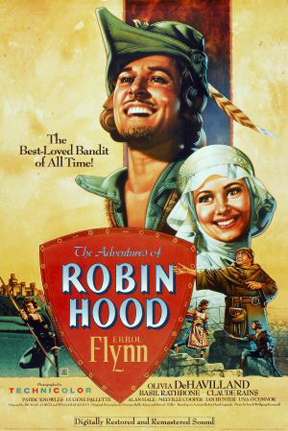
Flamboyant. Athletic. Joyous. Determined. Handsome. Outspoken. Bigger than life. Revolutionary. Anarchist. Sexy. Libertarian. Is there any doubt why Errol Flynn remains the definitive Robin Hood?
And. for that matter, is there any doubt why the 1938 film The Adventures of Robin Hood remains not only the definitive Robin Hood film but also one of the most influential action films in history?
The Adventures of Robin Hood tells the story that we’re all familiar with. The King of England, Richard The Lionhearted (Ian Hunter), is captured while returning from the Crusades. His brother, King John (Claude Rains, in full autocratic villain mode), usurps the throne while Richard is gone and immediately raises taxes. He claims that he’s only doing this to raise the money to set Richard free. Of course, the real reason is that John is a greedy tyrant.
The only nobleman with the courage to openly oppose John is Sir Robin of Locksely (Errol Flynn). Sir Robin protects his fellow citizens from John’s main henchman, Sir Guy of Gisbourne (Basil Rathbone, also in full autocratic villain mode). In fact, Robin is so brave that, on multiple occasions, he even enters Sir Guy’s castle so that he can specifically tell King John and Sir Guy that he has no use for their laws. This, of course, always leads to Robin having to make a dramatic escape while arrows flies and swords are unsheathed all around.
And through it all, Robin Hood keeps smiling and laughing. He’s a wonderfully cheerful revolutionary. He may be fighting a war against a ruthless and unstoppable enemy and he may be the most wanted man in England but Robin is determined to have fun. One need only compare Robin to his humorless foes to see the difference between freedom and bureaucracy.
(We could use Errol Flynn’s Robin Hood today, though I suspect our government would just blow him up with a drone and then issue a statement about how, by stealing money from the rich and giving it to the poor, Robin was keeping the government from being able to rebuild bridges and repair roads.)
When Robin isn’t exposing the foolishness of organized government, he’s hanging out in Sherwood Forest. He’s recruiting valuable allies like Friar Tuck (Eugene Pallette) and Little John (Alan Hale, Sr.) He’s playing constant pranks and promoting revolution and, to his credit, he’s a lot more fun to listen to than that guy from V For Vendetta. He’s also romancing Maid Marian (Olivia de Havilland) and good for him. Two beautiful people deserve to be together.
Even better, he’s doing it in glorious Technicolor! There’s a lot of great things about The Adventures of Robin Hood. The action scenes are exciting. The music is thrilling. The film is perfectly cast. Errol Flynn may not have been a great actor but he was a great Robin Hood. But what I really love about the film is just the look of it. We tend to take color for granted so it’s interesting to watch a film like The Adventures of Robin Hood, one that was made at a time when color film was something of a novelty. For those of us who spend a lot of time talking about how much we love old school black-and-white, The Adventures of Robin Hood is a film that says, “Hey, color can be great too!”
(True, nobody in The Adventures of Robin Hood shouts, “I declare him to be …. AN OUTLAAAAAAAAAAAAWWWWWWWW!” Actually, now that I think about it, Ridley Scott’s Robin Hood would have worked much better if Oscar Isaac and Russell Crowe had switched roles.)
The Adventures of Robin Hood was nominated for best picture and it probably should have won. However, the Oscar went to Frank Capra’s You Can’t Take It With You.
I’m actually kind of upset with myself because, at one point, I was planning on spending all of February watching TCM’s 31 Days of Oscars and reviewing all of the best picture nominees that showed up on the channel. Unfortunately, I ended up getting busy with other things (like Shattered Politics, for instance) and it was only tonight that I finally got a chance to sit down and watch TCM. Oh well, maybe next year! But for now, I’m just going to watch and review as much as I can before the month ends.
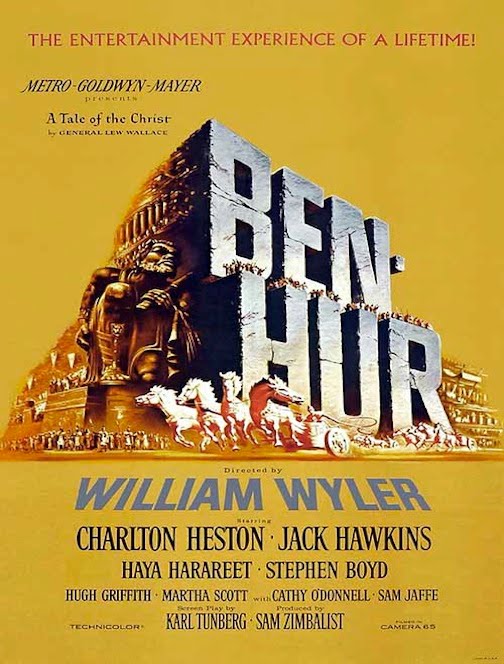
With that in mind, I just spent four hours watching the 1959 best picture winner Ben-Hur.
In many ways, Ben-Hur feels like a prototypical best picture winner. It’s a big epic film that obviously cost a lot to produce and which features a larger-than-life star surrounded by a bunch of a memorable character actors. It features two spectacular set pieces and some human drama that’s effective without being particularly challenging. It’s a film that deals with big themes but does so in a rather safe way. Perhaps not surprisingly, it’s a film that, today, is often dismissed as being old-fashioned and simplistic and yet it’s still a lot of fun to watch.
Opening with no less of an event than the birth of Jesus, Ben-Hur tells the story of Judah Ben-Hur (Charlton Heston), a wealthy Jewish aristocrat who, as a young man, was best friends with a Roman named Messala (Stephen Boyd). When Messala is named as the new commander of the local Roman garrison, he is upset to discover that Ben-Hur is more loyal to his religion than to the Roman Empire. Feeling personally rejected by his best friend (and perhaps more, as there are a lot of theories about the subtext of their relationship), Massala frames Ben-Hur for the attempted assassination of Judea’s governor.
Over the next 220 minutes, we watch as Ben-Hur goes from being a prisoner to a galley slave to the adopted son of a Roman general (Jack Hawkins) and finally one of the best chariot racers in ancient Rome. Throughout it all, he remembers a mysterious man who once attempted to give him a sip of water. Meanwhile, Ben-Hur’s family has been imprisoned and afflicted with leprosy. Appropriately, for a film that opened with the Nativity, it ends with the Crucifixion, during which Ben-Hur’s struggle to save his family also comes to a climax.
Ben-Hur is undoubtedly flawed film. (Among the film that were nominated for best picture of 1959, my favorite remains Anatomy of Murder.) The film runs about an hour too long, some of the supporting actors give performances that are a bit too over-the-top, and the entire film is so reverential that in can be difficult for modern audiences, especially in this age of nonstop irony, to take it seriously. In the lead role, Charlton Heston is always watchable and has a strong physical presence but you never quite believe that he’s the thinker that the script insists that he is. There’s nothing subtle about Heston’s performance but, then again, there’s nothing subtle about the film itself.
And yet, if the film struggles to connect on a human level, Ben-Hur still works as a spectacle. The gigantic sets and the ornate costumes are still impressive to look at. The film’s two big action sequences — a shipwreck and the chariot race — are still exciting and thrilling to watch. Ben-Hur may be dated but you can still watch it and understand why it was so popular with audiences in 1959 and, though I may not agree with a lot of the decisions, I can see why the Academy honored Ben-Hur with a record 11 Oscars. It’s the type of spectacle that, in 1959, could only have been found on the big screen. By honoring Ben-Hur, the Academy was honoring the relevance of the Hollywood establishment.
In the end, Ben-Hur may not hold up as well as some best picture winners but it’s still worth watching.






 When two aging fishermen (Thomas Mitchell and John Qualen) attempt to buy a new boat, they run into a problem with local mobster, Harold Goff (John Garfield). As Goff explains, if they do not pay him $5.00 a week, something bad could happen to their boat. When one of the fisherman’s daughter (Ida Lupino) falls in love with Goff, she makes the mistake of letting him know that her father is planning on giving her $190 so that she can take a trip to Cuba. When Goff demands the money for himself, the fishermen attempt to go to the police, just to be told that there is nothing that the authorities can do. Goff tricked them into signing an “insurance” contract that allows him to demand whatever he wants. The two fishermen are forced to consider taking drastic measures on their own. Out of the Fog is an effective, early film noir, distinguished mostly be John Garfield’s sinister performance as Harold Goff.
 Leon Alastray (Anthony Quinn) is an outlaw in 18th century Mexico who is given sanctuary and hidden from the Spanish authorities by a kindly priest, Father Joseph (Sam Jaffe). In return, Leon agrees to escort the priest to a peasant village that is under siege from the Yaqui Indians. During the journey, Joseph dies and when Leon arrives at the village, he is mistaken for the priest. Even though Leon’s an atheist and a womanizer, he pretends to be a man of God and tries to broker a peace with the Yaqui’s bloodthirsty leader, Golden Lance (Jaime Fernandez). Standing in the way is Teclo (Charles Bronson), a mestizo rebel who wants to keep the Spanish and the Yaqui at war.
 Through the Shattered Lens