A group of drug dealers try to pressure football player Buddy Harris (Tom Campitelli) into throwing the big game. Buddy fakes an injury to get out of playing so the dealers murder not only Buddy but also his mother and his younger brother. Big mistake! Buddy’s older brother, Clete (Wings Hauser), is a CIA agent who is working as a listener in Honduras. Clete returns home and, with the help of an arms dealer (Robert Tessier, playing a good guy for change), Clete hunts down and kills everyone who killed his family. Clete not only gets revenge for his family but he also heads down to Bolivia to show the syndicate that, for them, there is no safe haven!
This is one of the ultimate Wings Hauser films, one that he both wrote and starred in. When Clete seeks revenge, he doesn’t mess around. One gunman gets set on fire while standing on his balcony. (He can either burn to death on the balcony or he can jump to a quicker death below. Either way, Clete’s going to take a lot of pictures) Wings chases the villains down with speedboats and helicopters and he does it all with a slight smirk that suggests he’s not only getting revenge but he’s also having the time of his life. This is Wings Hauser at his most demented and he’s playing the hero! Luckily, the villains are even crazier than Wings. I have to make a special mention of Branscombe Richmond, laughing and yelling and killing in a way that you would never expect if you only knew him from Renegade.
This is Wings Hauser at his best, in a movie that’s mean, violent, and never less than compelling. Clete kills a lot of people but it’s okay because, to quote True Lies, they were all bad. Wings throws himself into the role with his trademark intensity and shows why no one’s safe from Clete Harris. I’m going to miss Wings Hauser. Only he could have played Clete Harris. Only he could have made No Safe Haven the B-action classic of 1987.
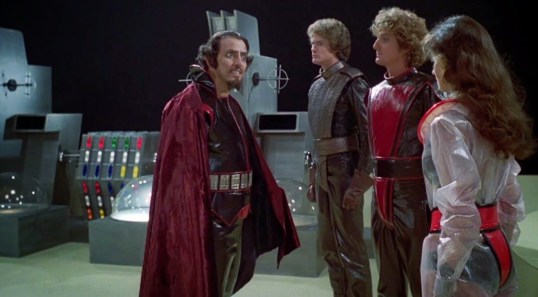
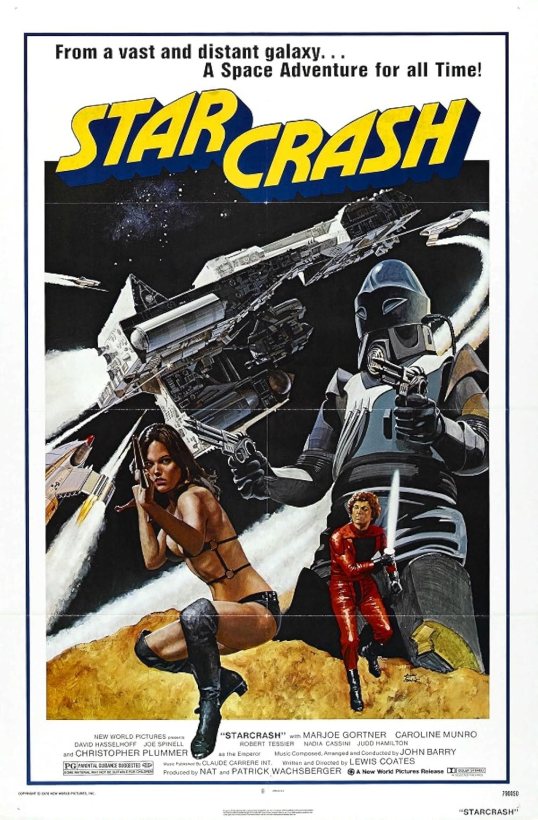
First released in 1978, Starcrash takes place in a galaxy that is probably far, far away. The evil Count Zath Arn (Joe Spinell) is attempting to overthrow the benevolent Emperor (Christopher Plummer). Zath Arn has built a weapon that is so large and so powerful that it can only be hidden inside of another planet. (“Like a Death Star?” you say. Hush, don’t go there….) The Emperor’s son, Prince Simon (David Hasselhoff), led an expedition in search of the weapon but a surprise attack of glowing red lights led to his ship crashing on the unknown planet. Simon is missing and Zath Arn’s power is growing.
Two legendary smugglers — Stella Starr (Caroline Munro) and the enigmatic Akton (Marjoe Gortner) — are released from prison and tasked with tracking down both the weapon and Simon. (Stella was already in the process of escaping when she got the news of her release.) Accompanied by the duplicitous Thor (Robert Tessier) and the loyal Elle (Judd Hamilton), a robot with a thick Southern accent, Stella and Akton set out to explore the haunted stars.
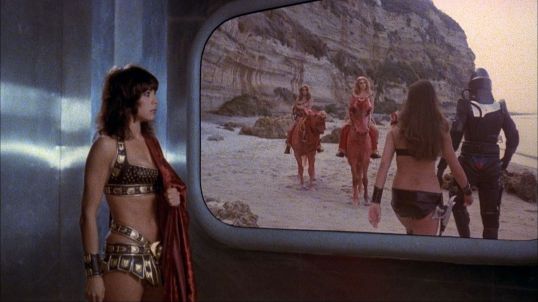
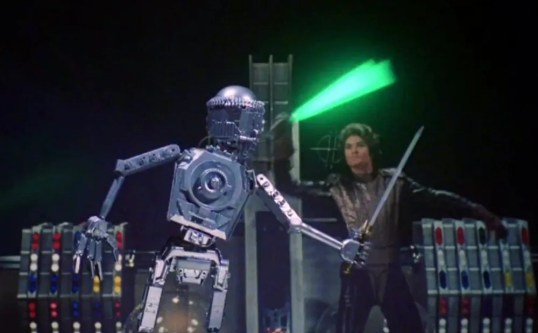
It’s a journey that leads them to …. well, actually, it only leads them to three planets. It turns out that the weapon wasn’t that well-hidden after all. Still, one planet is populated by Amazons and protected by a giant, tin robot. Another planet is populated by cannibals who wear stone masks. And then there’s an ice planet where the clouds race across the sky while Stella and Elle try to make it back to their ship without freezing to death. And if that’s not enough to make things exciting, this film also features David Hasselhoff with a light saber!
There’s no point in denying that Starcrash would never have been made if not for the success of the first Star Wars. Indeed, the film even begins with an opening crawl and features a shot that is almost a recreation of the first scene in Star Wars. However, director Luigi Cozzi doesn’t limit himself to just mining Star Wars for inspiration. The giant tin robot owes a huge debt to the creations of Ray Harryhausen. The judge that sentences Stella and Akton to prison is the same talking head that appeared in Invaders From Mars. A scene in which Stella explores an abandoned spaceship owes more than a little to 2001: A Space Odyssey. Even Akton, with his telepathic powers, seems like he could have stepped out of an episode of Star Trek.
Starcrash makes no secret of its influences but it’s such an energetic and good-natured film that all of the borrowing feels like like a rip-off and more like a very affectionate homage. It’s obvious that director Luigi Cozzi loved the films from which he borrowed and that love is present in every frame of Starcrash. Starcrash is a fast-paced space adventure and it’s a lot of fun. It’s certainly more fun than any of the recent entries in the Star Wars franchise. Working with a low-budget, an energetic cast, and some surprisingly creative special effects, Cozzi crafts a genuinely entertaining movie. Marjoe Gortner was never better than he was in Starcrash. Christopher Plummer, to his credit, brings a truly noble bearing to the role of the Emperor. Joe Spinell obviously understood that his role didn’t require subtlety and he delivers all of his lines like a villain in an old time serial. As for David Hasselhoff …. he’s the Hoff and he brings his trademark earnestness to the role of Simon. Starcrash is the best film that Cozzi ever directed.
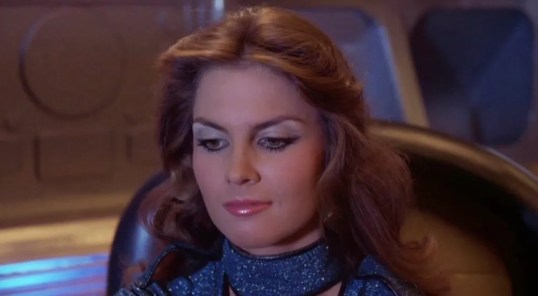
A good deal of the success of Starcrash is due to Caroline Munro, who gives such a committed and likable performance as Stella Starr that it’s hard not to mourn the fact that Cozzi was never able to make any more films about the character. As played by Munro, Stella Starr is a smart, confident, and strong. Stella loves doing what she does and it’s impossible not share her joy when she announces she’s taking the ship into “hyperspace.” Even though Stella spends the majority of the film running around in a leather bikini, Munro brings a definite touch of class to the role. No one is going to push Stella Starr around and certainly, no one is going to destroy the Galaxy on her watch. Thank to Caroline Munro’s fearless performance, Starcrash is one of the most empowering science fictions ever made.
Starcrash ends with hints of a possible sequel but sadly, there never came to be. (Not surprisingly, there was an unrelated film that was advertised as being a sequel but which was actually just a softcore science fiction version of Lady Chatterley’s Lover.) It’s a shame. Stella Starr definitely deserved to have many more adventures.
Welcome to Retro Television Reviews, a feature where we review some of our favorite and least favorite shows of the past! On Tuesdays, I will be reviewing the original Fantasy Island, which ran on ABC from 1977 to 1984. Almost the entire show is currently streaming on Daily Motion, YouTube, Plex, and a host of other sites.
It’s time for another trip to the Island!
Episode 5.4 “The Last Cowboy/The Lady and the Monster”
(Dir by Don Chaffey, originally aired on October 31st, 1981)
For the second week in a row, Tattoo is notably absent in this episode. He is seen in the stock footage that opens each episode of FantasyIsland. Shortly afterwards, his pre-recorded voice is briefly heard when Mr. Roarke explains to Julie that Tattoo has been turned invisible so that he can help with the fantasy of another guest who is also invisible. Seriously, that’s the excuse that the show goes with. Tattoo is “there” but he can’t be seen. I can only imagine what was going on behind-the-scenes with Herve Villechaize. It’s easy to assume that Villechaize was holding out for more money but, to be honest, it’s almost too easy to assume that. It’s also possible that Villechaize may have just asked for some time off to pursue his career as a singer.
As for the fantasies, the better of the two featured Lynda Day George as scientist Carla Frankenstein, who comes to the island because she wants to clear her ancestor’s reputation for being mad. Fortunately, the castle of Baron Frankenstein just happens to be on the Island! In the castle, Carla finds evidence that, rather than trying to bring the dead back to life, the Baron was instead working on ways to extend the average lifespan. She also discovers that the Baron’s monster (played by veteran character actor William Smith) is still living in the castle!
The Monster is a dignified old soul who has been mistreated every time that he’s left the Castle. Carla befriends him but again, the Monster is forced to confront the pettiness of the outside world when a corporate spy (Ken Swofford) tries to take both Carla and Julie hostage. After Carla and Julia are rescued, the Monster retreats to the Castle but Carla promises that she will not only return to see him but that she will also continue her ancestor’s research. In fact, her company is going to build a lab on the Island and presumably employ the one or two Islanders who aren’t already employed by Mr. Roarke.
This was a Halloween episode so a Frankenstein fantasy feels appropriate. William Smith played the role of the Monster with a wounded dignity that was actually quite touching. His lonely existence was quite sad and I was actually glad when Roarke suggested that he and Julie would, from now on, be joining the Monster for dinner.
As for the other fantasy, Joe Campbell (Stuart Whitman) is yet another city slicker who wants to be a cowboy. Joe thinks that Roarke is going to send him to the old west, as he has done for so many other people with the exact same fantasy. Instead, Roarke gets all technical and says that Joe’s specific fantasy was to be a cowboy and not to travel to the old west. Joe finds himself working as a hired hand on a modern-day ranch. Once Joe stops whining (and it takes a while), he falls in love with widow Margaret Blair (Diane Baker), becomes a surrogate father to Jimmy Blair (Jimmy Baio), and he chasess off an evil biker (Robert Tessier). In the end, Joe asks for permission to remain at the ranch and Fantasy Island. Roarke agrees, probably so Joe can potentially replace Julie if she ever asks for a raise like Tattoo did.
This fantasy felt a bit too familiar. It’s always weird how Roarke will arbitrarily decide to be strict with some guests while letting others do whatever they want.
Welcome to Retro Television Reviews, a new feature where we review some of our favorite and least favorite shows of the past! On Fridays, I will be reviewing The Master, which ran on NBC from January to August of 1984. The show can be found on Tubi!
This week, Lee Van Cleef gets a chance to show off what he can do!
Episode 1.7 “Juggernaut”
(Dir by Gordon Hessler, originally aired on March 16th, 1984)
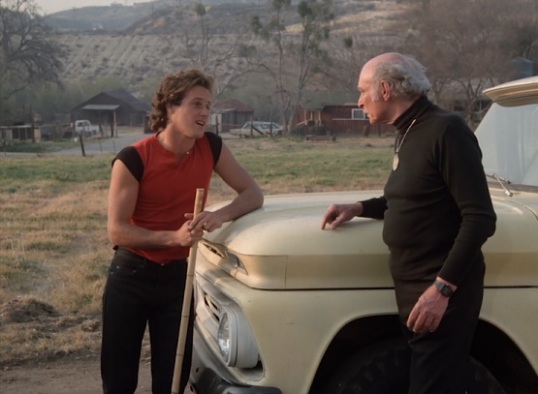
This week’s episode of The Master opens with Max’s totally groovy van driving across what appears to be farmland. Judging from the mountains in the background, it appears that they are back in California. (If they did mention their specific location during this episode, I missed it.) Last week, as you may remember, Max and McAllister were looking for McAllister’s daughter in Louisiana. Now, they’re apparently just hanging out in California again. It’s odd that McAllister left behind his life in Japan so that he could come to America to find his daughter but, now that he’s actually in America, there doesn’t really seem to be any sense of urgency when it comes to actually tracking her down.
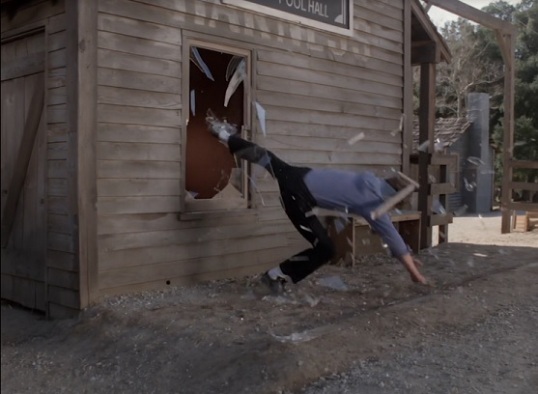
Inside the van, McAllister informs Max that he’s concerned about the way that Max is always losing his temper and starting fights. Max promises that there will be no more unprovoked fights on his part. When they stop in front of a local bar, Max says he’s going to get a beer but he also promises McAllister that he will not be getting tossed through the bar’s window.
Five minutes later:
Now, in all fairness, it isn’t totally Max’s fault that he got thrown through that window. Max went in the bar and saw Alan Kane (veteran TV and movie bad guy William Smith) harassing Cat Sinclair (Tara Buckman). When Max told Alan to back off, Alan challenged Max to a fight. Max was forced to explain that he’s not allowed to fight. Cat rolled her eyes and then Alan tossed Max through the window. Seeing that his protegee is in trouble, McAllister enters the bar, beats up Alan, and saves Max and Cat.
Even though Cat is not impressed with Max’s refusal to fight, she still gets in his van and allows him to give her a ride home. It turns out that Cat and her mother, Maggie (Diana Muldaur), are farmers but an evil land baron named Hellman (Stuart Whitman) is trying to intimidate them off their land. Alan works for Hellman and, because of him and his thugs, none of the farmers have been able to get their crops to market.
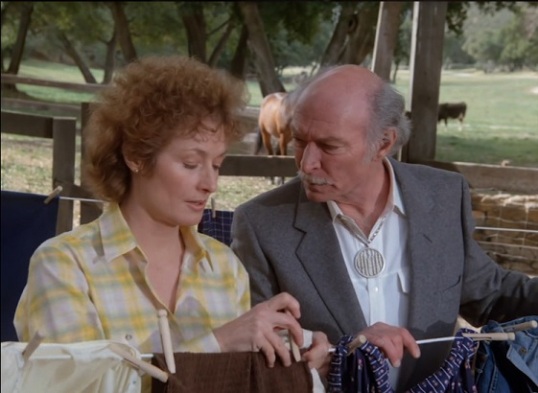
Both Cat and Maggie refuse to accept any help from Max and McAllister so our heroes get back in their totally happening van and try to leave town. However, when one of Hellman’s truckers runs the love van off the road, the engine is damaged and the local mechanic informs Max that it will take 48 hours to fix it. Stranded in town, Max searches for proof that Hellman’s trucker was the one who ran them off the road. Meanwhile, McAllister returns to the farm and, turning on some of that Lee Van Cleef charm, proceeds to fall in love with Maggie.
If any of this sounds familiar, it’s because, with the exception of McAllister falling in love, it’s pretty much the same thing that happened in not only the first episode but also the third episode. Max and McAllister have an uncanny talent for randomly wandering into towns that are controlled by evil businessmen. Just as the first and third episodes featured Max giving impassioned speeches about the rights of the workers, this episode features McAllister giving a speech at a meeting in a barn.
While McAllister is giving his speech, Max is getting arrested for snooping around Hellman’s property. Fortunately, McAllister puts on a fake beard and breaks him out of jail. McAllister then directs the farmers to form a convoy and to work together to get their crops to market. Though Alan attempts to set off a bunch of explosives on the way, McAllister uses a cropduster to fool Alan into setting off the explosions early. Then, Lee Van Cleef’s stunt double beats up Hellman. McAllister and Max congratulate each other on a job well done.
Having saved the farmers and beaten up the bad guys, it’s time for Max and McAllister to once again continue their journey across America. McAllister may love Maggie but he still needs to (eventually) find his daughter so he gets in the Chevy van and waves goodbye.
As I said before, this episode felt very familiar. It’s probably not a good sign that, after just seven episodes, The Master was pretty much repeating itself. That said, the episode did feature the great William Smith playing yet another rural bully and Stuart Whitman always made for a convincing villain. With Max sidelined by McAllister’s demand that he stop fighting, Lee Van Cleef got his moment to shine in this episode. He was obviously frail, making it all the more obvious that his fight scenes involved a stunt man, but Van Cleef still got a chance to show off some of his old school movie star charisma.
Next week: The Master steals the Crown Jewels of the United Kingdom! …. sure, why not?
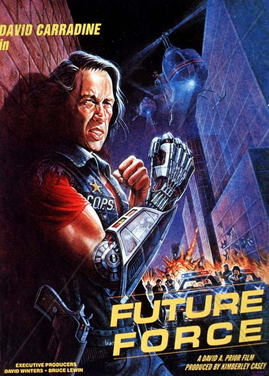
The time is the future, which looks a lot like 1990s Los Angeles. Because of out of control crime, the police have been deemed useless and have been defunded. (Like that could ever happen in real life!) Seeing a need and a decent profit margin, private enterprise has stepped up. The law is enforced by C.O.P.S., which stands for Civilian Operated Police Systems. Not held back by the Constitution or any oversight at all, C.O.P.S. has become just as corrupt and dangerous as the criminals that it battles. When a reporter named Marion (Anna Rapagna) threatens to do a story about the out of control C.O.P.S., the head of the company hacks the justice system and puts out a warrant for Marion on the charge of treason. Because of the seriousness of the charge, the bounty hunters of C.O.P.S. don’t have to bring her in alive to get paid. In fact, they are encouraged to bring her in dead.
Tucker (David Carradine) is weary and disillusioned member of C.O.P.S. but he is still enough of an idealist that he wants to arrest Marion without killing her. When he discovers that Marion is being set up, Tucker goes out of his way to protect her from the evil Becker (Robert Tessier) and all the other C.O.P.S. It turns out to be pretty easy because Tucker is apparently the only members of C.O.P.S. who isn’t terrible at his job. Helping Tucker out is a wheelchair-bound hacker named Billy (D.C. Douglas) and a robotic glove that can shoot laser beams.
A Robocop rip-off that lacks that film’s satiric bite, Future Force takes place in a future where everyone drives cars from the 70s and where every bar is a strip club that looks like it could have been used in the type of movies that used to show up on late night Cinemax. It’s a future of empty warehouses, deserted streets, and fires in trash cans. Robot glove aside, the movie’s future is unconvincing even by the standards of 1989. There’s a lot of car chases and strange gunfights where no one seems to be aiming at each other but there’s also many scenes that were added to pad out the movie’s running time. Marion gets upset when Tucker ruthlessly kills two people who were trying to kill her but she barely shrugs when she later discovers that the bad guys have killed her sister. As bad the movie is, give some respect, though, to David Carradine whose general air of “I don’t want to be here, just give me my paycheck so I can go home,” fits his character like a glove.
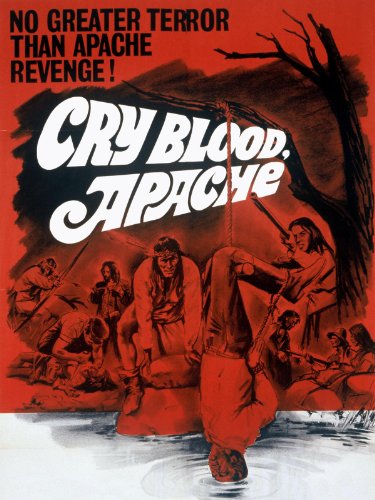
A group of old west outlaws stumble across an Apache camp. Though everyone’s friendly at first, the outlaws discover that the Apaches have gold so they kill all of the Apaches except for one, Jemme (Maria Gahua). They drag Jemme off with them, intent on having their way with her after forcing her to lead them to more gold. Only one member of the gang, Pitcallin (Jody McCrea), is willing to protect Jemme and treat her with kindness. (In fact, Pitcallin is such a nice and decent person that it doesn’t make any sense for him to be riding with the outlaws in the first place.) Meanwhile, Jemme’s brother (Marcus Rudnick) discovers the camp and, upon discovering his family dead, cries and screams for several minutes. Then he sets off for revenge against the gang.
The best thing about Cry Blood, Apache is that it opens with Joel McCrea, father of Jody, playing the elderly Pitcallin and riding his horse to the where the old Apache camp used to be. While the old Pitcallin is looking around, he hears the voices of the former members of the gang and then the rest of the film is told in flashback. This makes it seem like Cry Blood, Apache is going to be about an old outlaw coming to terms with the terrible things that happened in the past. Unfortunately, Joel McCrea’s only in the movie for about two minutes and since the movie sat on the shelf for three years before it was finally released, it’s probable that his scenes were shot long after the rest of the movie. Along with starring in the film, Jody McCrea also produced it and Joel probably only agreed to lend some star power to the movie as a favor to his son. But teasing western fans with Joel McCrea, just to then bring out Jody McCrea is just plain unfair.
Other than the opening scenes with Joel McCrea, the rest of this film is so poorly put together that it’s a struggle to sit through. Cry Blood, Apache is edited in such a haphazard manner that it’s nearly impossible to follow the plot. While the gang searches for more gold, Jemme’s brother searches for the gang but the film never makes it clear how close the brother is to finding the gang so there’s zero suspense generated. Jody McCrea was too naturally amiable to play a believable outlaw. There was nothing tough about him. Meanwhile, both Marcus Rudnick and Maria Gahua overact to such an extent that scenes that should be emotionally wrenching become unintentionally humorous instead.
Cry Blood, Apache was directed by Jack Starrett, who went on to direct far better movies than this one. He also appears in the film as a member of the gang, the bible-quoting Deacon. Even though he’s got long hair and is considerably younger in his film, most viewers will hear his voice and immediately recognize him as Galt, the sadistic cop from First Blood.
If it was producer Albert Ruddy’s idea to team macho actor Burt Reynolds with macho director Robert Aldrich for THE LONGEST YARD, then the man’s a bloody genius (Ruddy was no stranger to machismo himself, having previously produced THE GODFATHER)! This testosterone-fueled tale of an ex-NFL star turned convict, forced to assemble a football team of hardened criminals to take on the sports-mad warden’s goon squad of guards, is one of Burt’s best vehicles, and a comeback of sorts for Aldrich, who hadn’t scored a hit since 1967’s THE DIRTY DOZEN . Both men hit the end zone with this sports-themed film, and led the way for an onslaught of football films to come.
Former star quarterback Paul Crewe (Reynolds), who was thrown out of the NFL in a points shaving scandal, finds himself under arrest after fighting with his girlfriend, stealing…
California. The 1870s. Sheriff Pearce (Ben Johnson) boards a train with his prisoner, an alleged outlaw named John Deakin (Charles Bronson). The train is mostly full of soldiers, under the command of Major Claremont (Ed Lauter), who are on their way to Fort Humboldt. The fort has suffered a diphtheria epidemic and the soldiers are supposedly transporting medical supplies.
However, it’s not just soldiers on the train. There’s also Gov. Fairchild (Richard Crenna) of Nevada, his fiancée (Jill Ireland), the Reverend Peabody (Bill McKinney), and a conductor named O’Brien (Charles Durning). As the train continues on its journey, it becomes obvious that all is not as it seems. People start to disappear. A man is thrown from the train. Two cars full of soldiers are separated from the train and plunge over a cliff. There is also more to Deakin than anyone first realized and soon, he is the only person who can bring the murderers to justice.
In both real life and the movies, Charles Bronson was the epitome of a tough guy, so it’s always interesting to see him playing a more cerebral character than usual. There are some exciting and surprisingly brutal action scenes, including a scene where Bronson fights a cook (played by former professional boxer Archie Moore) on top of the speeding train, but Breakheart Pass is more of a murder mystery than a typical action film. If Louis L’Amour and Agatha Christie had collaborated on a story, the end result would be much like Breakheart Pass. Bronson spends as much time investigating as he does swinging his fists or shooting a gun. It’s not a typical Bronson role but he does a good job, showing that he could think as convincingly as he could kill. Acting opposite some of the best character actors around in the 70s, Bronson more than holds his own.
Apparently, back in 1975, audiences were not interesting in watching Bronson think so Breakheart Pass was a disappointment at the box office and it is still not as well known as Bronson’s other films. However, even if you’re not already a fan of the great Bronson, Breakheart Pass is worth discovering.
Once, Paul “Wrecking” Crewe (Burt Reynolds) was a superstar NFL quarterback. That was until he was caught up in a point-shaving scandal and kicked out of the league. When a drunk Crewe steals his girlfriend’s car, gets into a high-speed police chase, and throws a punch at a cop, he ends up sentenced to 18 months at Citrus State Prison.
The warden of the prison, Rudolph Hazen (Eddie Albert), is a football fanatic who, at first, is excited to have Crewe as an inmate. The prison guards have a semi-pro football game and Hazen wants Crewe to coach the team and help them win a national championship. Though initially reluctant and just wanting to do his time, Crewe relents after witnessing and experiencing the cruelty of the prison system. Crewe forms The Mean Machine, a team made up of prisoners, and agrees to play an exhibition game against the guards.
At first, the members of the Mean Machine are just looking for an excuse to hit the guards without being punished but soon, they realize that they have a chance to win both the game and their dignity. But Hazen is not above blackmailing Crewe to throw the game.
When it comes to understanding the Tao of Burt, The Longest Yard is the place to start. Starting with a car chase and ending with near martyrdom, The Longest Yard is the ultimate Burt Reynolds film. Paul Crewe ranks alongside Deliverance’s Lewis Medlock and Boogie Night‘s Jack Horner as Reynolds’s best performance. Before injuries ended his athletic career, Reynolds was a college football star and, on the prison’s playing field, he holds his own with the large group of former professional football players who were cast to play the guards and the prisoners. The Longest Yard’s climatic football game takes up over an hour of screen time and reportedly, the action was largely improvised during shooting. Unlike most movie football games, the one in The Longest Yard looks and feels like a real game.
The Longest Yard was directed by Robert Aldrich, who specialized in making movies about anti-authoritarians fighting the system. The scenes of Crewe recruiting and training The Mean Machine are very reminiscent of Aldrich’s best-known movie, The Dirty Dozen. With its combination of dark humor, graphic violence, rebellious spirit, and Southern-friend melodrama, The Longest Yard is a movie that could only have worked in the 1970s. The Adam Sandler remake may have made a lot of money at the box office but it still comes nowhere close to matching the original.
For tomorrow’s movie a day, it’s the best film of 2016, which also happens to be about a football player in prison.
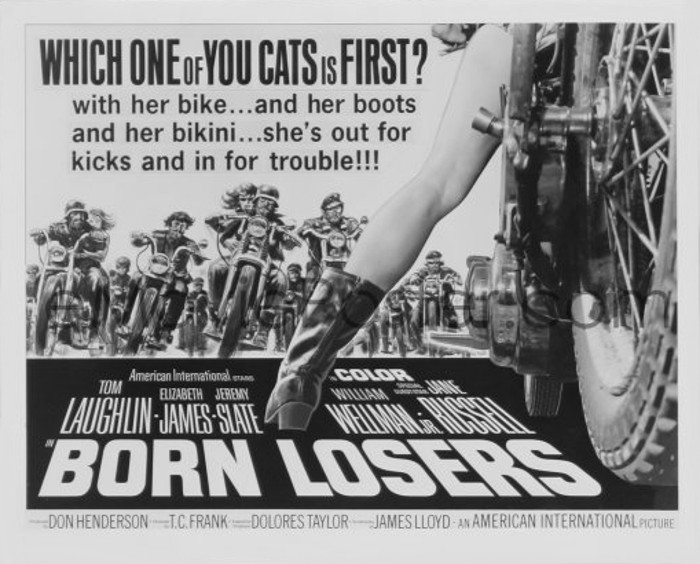
The character Billy Jack, star of the wildly popular 1971 film (and its two sequels), made his debut in this 1967 exploitation flick about a sociopathic biker gang and the lone man who stands up to them. Tom Laughlin, a minor figure in Hollywood at the time who had appeared in GIDGET and THE DELINQUENTS, conceived the character way back in 1954. Unable to get his original screenplay produced, he and co-star Elizabeth James banged out this motorcycle drama and he was given the opportunity to direct by American International Pictures, always on the lookout to make a quick exploitation buck.
The Born Losers are a degenerate gang of outlaw bikers terrorizing the small town of Big Rock. Ex-Green Beret Billy Jack, a half-breed Indian back from ‘Nam, saves a local kid from getting an ass kicking by breaking out his rifle, winds up the one locked up and given 120 days in jail or $1,000…
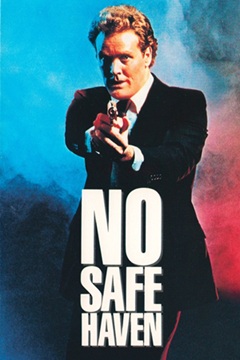 A group of drug dealers try to pressure football player Buddy Harris (Tom Campitelli) into throwing the big game. Buddy fakes an injury to get out of playing so the dealers murder not only Buddy but also his mother and his younger brother. Big mistake! Buddy’s older brother, Clete (Wings Hauser), is a CIA agent who is working as a listener in Honduras. Clete returns home and, with the help of an arms dealer (Robert Tessier, playing a good guy for change), Clete hunts down and kills everyone who killed his family. Clete not only gets revenge for his family but he also heads down to Bolivia to show the syndicate that, for them, there is no safe haven!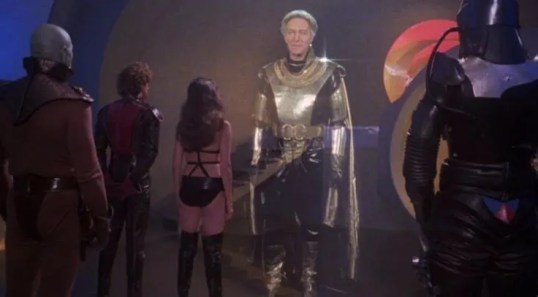






 California. The 1870s. Sheriff Pearce (Ben Johnson) boards a train with his prisoner, an alleged outlaw named John Deakin (Charles Bronson). The train is mostly full of soldiers, under the command of Major Claremont (Ed Lauter), who are on their way to Fort Humboldt. The fort has suffered a diphtheria epidemic and the soldiers are supposedly transporting medical supplies.


 Through the Shattered Lens