Scenes that I Love: Walter Matthau Talks To Robert Shaw in The Taking of Pelham One Two Three


100 years ago, on this date, Joseph Sargent was born in New Jersey.  Sargent would go on to become one of the busiest directors of the 70s, 80s, and 90s, working in both film and television.  Though he would never receive the type of critical attention as some of his contemporaries, Sargent was a skilled director who specialized in making entertaining, no-nonsense films.  Though his reputation was tarnished a bit by the fourth Jaws film, it should be remembered that Sargent was also responsible for films like Colossus: The Forbin Project, Tribes, Nightmares, and The Taking of Pelham One Two Three.

1974’s The Taking of Pelham One Two Three has come to be recognized as a genre classic.  It’s certainly one of my favorite films about how New Yorkers will be rude to anyone in any circumstances.  You can see an example of this in today’s scene that I love.  Having hijacked a train, Robert Shaw calls in his last of demands and gets a very New York response.

Scenes I Love: Jaws


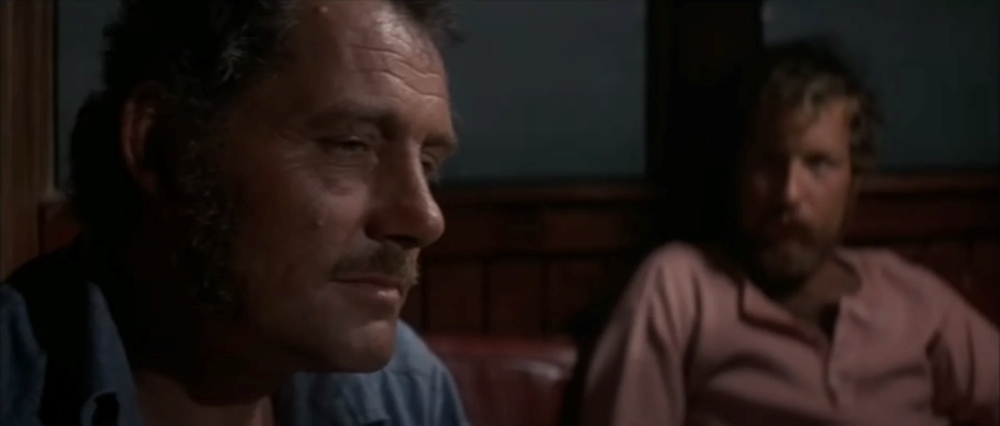
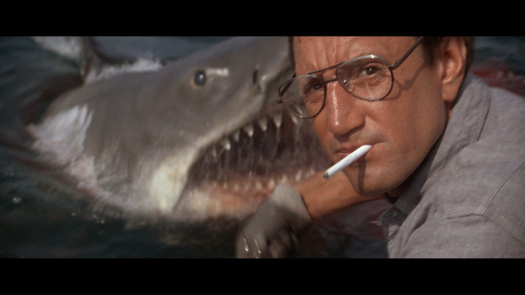
“You know the thing about a shark, he’s got…lifeless eyes, black eyes, like a doll’s eye. When he comes at ya, doesn’t seem to be livin’. Until he bites ya and those black eyes roll over white.” — Quint

People have blamed Spielberg and his breakout film, Jaws, as the cause of the blockbuster mentality that studios have had since this film came out. Studios and producers wanted to recreate the ultra-successful box-office numbers of Jaws. Despite the fact that this film was modestly budgeted, people nowadays who think they’re film experts point to it as the culprit. They’ve called it the film that begun the dumbing down of Hollywood when creativity was sacrificed for profit.

Why did I pick a scene from this film as a favorite? I picked this particular scene because it’s one reason why the film succeeded and made people come back again and again. It’s a scene that perfectly captures one reason why we love to see films in a communal setting. We want to share the same experience and emotions this scene brought up from the pit of each audience’s psyche.

Jaws didn’t ruin the creativity in filmmaking. I like to think that this one film was a filmmaker at his most creativie (shark wouldn’t work properly so Spielberg kept it off-screen which just added to the terror and tension in the film). This very scene goes down as one of the greatest film monologues. It sets up the danger the trio faces with some anecdotal evidence from the very person who survived the experience, but who might have become unhinged because of it. I love the look of frozen terror on the face of Richard Dryefuss’ character as he listens to Robert Shaw tell the story of the ill-fated journey of the U.S.S. Indianapolis.

This latest “Scenes I Love” is why I consider Spielberg one of the best filmmaker of his generation and probably beyond that.

Film Review: The Man In The Glass Booth (dir by Arthur Hiller)


Who is Arthur Goldman?

That’s the question at the heart of the 1975 film, The Man In The Glass Booth.

When we first meet Arthur Goldman (Maximilian Schell), he is a wealthy businessman who lives in a Manhattan high-rise and who appears to rarely leave the safety of his penthouse.  He is waited on by two assistants, Jack (Henry Brown) and Charlie (Lawrence Pressman), both of whom he talks to and treats as if they are members of his own family.  His most frequent visitor is his psychiatrist, Dr. Weissburger (Robert H. Harris), who frequently stops by and asks Arthur if he’s been taking his medication.

Arthur Goldman is a man who loves to talk.  Indeed, the first hour of the film feels almost like a nonstop monologue on the part of Goldman, with just occasional interjections from the other characters.  Goldman was born in Germany.  He talks about how, when he was young, he and his family were sent to a concentration camp and it was there that he witnessed the murder of his father by the camp’s sadistic commandant, Dorff.  Dorff is one of the many Nazis who disappeared to South America at the end of the war.

When Goldman spots a car that always seems to be parked across the street from his building, he becomes paranoid.  He says that he’s being watched and even suggests that Dorff has come to capture him.  Instead, it turns out that Mossad come for him.  As the agents explain it to Charlie, dental records prove that Arthur Goldman is actually Commandant Dorff.  Goldman/Dorff is taken back to Israel to stand trial for his crimes.

Are Arthur Goldman and Dorff the same man?  Once in Israel, Goldman tells anyone who will listen that he is Dorff and that he feels no guilt for his actions.  He insists on being allowed to wear his SS uniform during the trial.  Because of threats to his safety, a booth made of bullet-proof glass has been placed in the courtroom.  As the trial commences, The Man in the Glass Booth continues to rant and rave and declare his guilt.  However, the prosecutor (Lois Nettleton) comes to doubt that the man is who he says he is.

The Man In The Glass Booth is based on a novel and play by Robert Shaw.  (The same year that The Man In The Glass Booth was released, Shaw played Quint in Jaws.)  The film was produced as a part of an experiment called American Film Theatre, in which well-known plays would be adapted to film and then would be shown at 500 participating movie theaters in America.  Each production would only be shown four times at each theater and subscriptions were sold for an entire “season” of films.  It sounds like an interesting experiment and the type of thing that I would have enjoyed if I had been around back then.  Today, of course, these productions would have just premiered on a streaming service.

The Man In The Glass Booth is a film that very much feels like a filmed play.  There are only three locations — Goldman’s penthouse, his cell, and the courtroom where he is put on trial.  The three act structure is very easy to spot.  Maximilian Schell’s performance is also very theatrical.  In fact, it’s so theatrical that, for the first hour or so, I found myself wishing that he would just stop talking for a few second or two.  He was so dramatic and so flamboyant and so intentionally over-the-top that he became somewhat exhausting.  But, during the second hour, I came to see that all of that “overacting” was actually setting up the film’s final act.  Schell talks so much that, when he finally does find himself unable to explain himself, it’s a shocking moment and one that perfectly captures not just the evil of the Nazis and the Holocaust but also how the legacy of that evil lives on after the fall of the Third Reich and the deaths of the majority of the Holocaust’s perpetrators.  At that moment, I realized that The Man In The Glass Booth never stopped speaking because silence would force him to confront the horrors of the past and the trauma, guilt, and uncertainty lurking in his subconscious.  Maximilian Schell was nominated for an Oscar for his performance here and, by the end of the film, I totally understood why.

The Man In The Glass Booth requires some patience.  Actually, it requires a lot of patience.  However, those who stick with it will discover an intelligent and thought-provoking film about not only the horror of the past but also how those in the present deal with and rationalize those horrors.  Though the film is a bit too stagey for its own good, it’s also one that sticks with you even after the curtain falls and the end credits roll.

Scenes that I Love: Walter Matthau Talks To Robert Shaw in The Taking of Pelham One Two Three


98 years ago, on this date, Joseph Sargent was born in New Jersey.  Sargent would go on to become one of the busiest directors of the 70s, 80s, and 90s, working in both film and television.  Though he would never receive the type of critical attention as some of his contemporaries, Sargent was a skilled director who specialized in making entertaining, no-nonsense films.  Though his reputation was tarnished a bit by the fourth Jaws film, it should be remembered that Sargent was also responsible for films like Colossus: The Forbin Project, Tribes, Nightmares, and The Taking of Pelham One Two Three.

1974’s The Taking of Pelham One Two Three has come to be recognized as a genre classic.  It’s certainly one of my favorite films about how New Yorkers will be rude to anyone in any circumstances.  You can see an example of this in today’s scene that I love.  Having hijacked a train, Robert Shaw calls in his last of demands and gets a very New York response.

10 Oscar Snubs From The 1960s


Ah, the 60s. Both the studio system and the production code collapsed as Hollywood struggled to remain relevant during a time of great social upheaval. The Academy alternated between nominating films that took chances and nominating films that cost a lot of money. It led to some odd best picture lineups and some notable snubs!

1960: Psycho Is Not Nominated For Best Picture and Anthony Perkins Is Not Nominated For Best Actor

To be honest, considering that the Academy has never really embraced horror as a genre and spent most of the 60s nominating big budget prestige pictures, it’s a bit surprising that Psycho was actually nominated for four Oscars.  Along with being nominated for its production design and its cinematography, Psycho also won nominations for Alfred Hitchcock and Janet Leigh.  However, Anthony Perkins was not nominated for Best Actor, despite giving one of the most memorable performances of all time.  The film literally would not work without Perkins’s performance and, considering that Perkins pretty much spent the rest of his career in the shadow of Norman Bates, it’s a shame that he didn’t at least get a nomination for his trouble.  Psycho was also not nominated for Best Picture, despite being better remembered and certainly more influential than most of the films that were.

1962: The Man Who Shot Liberty Valance Is Almost Totally Snubbed

The Man Who Shot Liberty Valance was not totally snubbed by the Academy.  It received a nomination for Best Costume Design.  But still, it deserved so much more!  John Ford, James Stewart, John Wayne, Lee Marvin, Vera Miles, and the picture itself were all worthy of nominations.  Admittedly, 1962 was a year full of great American films and there was a lot of competition when it came to the Oscars.  Still, The Man Who Shot Liberty Valance definitely deserved a best picture nomination over the bloated remake of Mutiny on the Bounty.  Today, if the first Mutiny on the Bounty remake is known for anything, it’s for Marlon Brando being difficult on the set.  But The Man Who Shot Liberty Valance is still remembered for telling us to always print the legend.
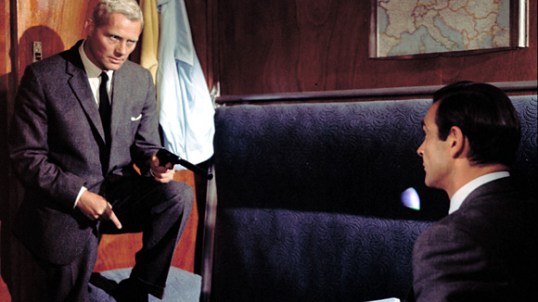
1964: From Russia With Love Is Totally Snubbed

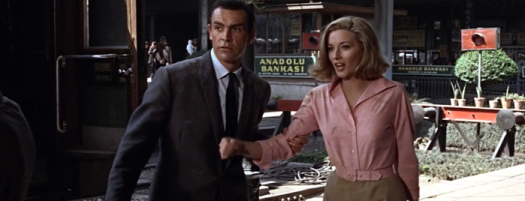
The same year that the Academy honored George Cukor’s creaky adaptation of My Fair Lady, it totally ignored my favorite James Bond film.  From Russia With Love is a Bond film that works wonderfully as both a love story and a thriller.  Sean Connery, Lotte Lenya, Robert Shaw, and Terence Young all deserved some award consideration.  From Russia With Love was released in the UK in 1963.  In a perfect world, it would have also been released concurrently in the U.S., allowing From Russia With Love to be the film that gave the the Academy the chance to recognize the British invasion.  Instead, Tom Jones was named the Best Picture of 1963 and From Russia With Love had to wait until 1964 to premiere in the U.S.  It was snubbed in favor of one of old Hollywood’s last grasps at relevance.

1964: Slim Pickens Is Not Nominated For Best Supporting Actor

Playing three separate roles, Peter Sellers dominates Dr. Strangelove: Or How I Learned To Stop Worrying And Love The Bomb.  But, as good as Sellers is, the film’s most memorable image is definitely Slim Pickens whooping it up as he rides the bomb down to Earth.  George C. Scott and Sterling Hyaden also undoubtedly deserved some award consideration but, in the end, Pickens is the one who brings the film to life even as he helps to bring society to an end.

1967: In Cold Blood Is Not Nominated For Best Picture

In Cold Blood, though not a perfect film, certainly deserved a nomination over Dr. Doolittle.  In Cold Blood is a film that still has the power to disturb and haunt viewers today.  Dr. Doolittle was a box office debacle that was nominated in an attempt to help 20th Century Fox make back some of their money.
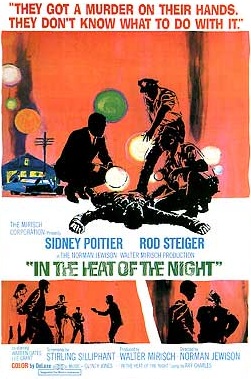
1967: Sidney Poitier Is Not Nominated For Best Actor For In The Heat Of The Night

In 1967, Sidney Poitier starred in two of the films that were nominated for Best Picture but somehow, he did not pick up a nomination himself.  His restrained but fiercely intelligent performance in In The Heat Of The Night provided a powerful contrast to Rod Steiger’s more blustery turn.  That Poitier was not nominated for his performance as Virgil Tibbs truly is one of the stranger snubs in Academy history.  (If I had to guess, I’d say that the Actors Branch was split on whether to honor him for In The Heat of the Night or Guess Who’s Coming To Dinner or even for To Sir With Love and, as a result, he ended up getting nominated for none of them.)

1968: 2001: A Space Odyssey and Planet of the Apes Are Not Nominated For Best Picture

Neither one of these classic science fiction films were nominated for Best Picture, despite the fact that both of them are far superior and far more influential than Oliver!, the film that won that year.

1968: The Good, The Bad, and the Ugly Is Totally Ignored

Not even Ennio Morricone’s score received a nomination!

1968: Petulia Is Totally Snubbed

Seriously, I don’t know what was going on with the Academy in 1968 but it seems they went out of their way to ignore the best films of the year.  Richard Lester’s Petulia is usually cited as one of the definitive films of the 60s but it received not a single Oscar nomination.  Not only did the film fail to receive a nomination for Best Picture but Richard Lester, George C. Scott, Julie Christie, Shirley Knight, Richard Chamberlain, and the film’s screenwriters were snubbed as well.

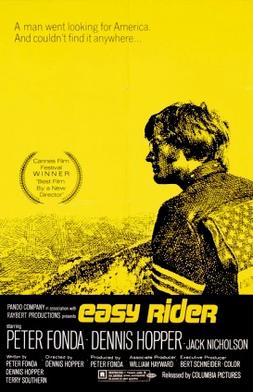
1969: Easy Rider Is Not Nominated For Best Picture

Yes, I know.  Easy Rider is a flawed film and there are certain moments that are just incredibly pretentious.  That said, Easy Rider defined an era and it also presented a portrait of everything that was and is good, bad, and timeless about America.  The film may have been produced, directed, and acted in a drug-razed haze but it’s also an important historical document and it was also a film whose success permanently changed Hollywood.  Certainly, Easy Rider’s legacy is superior to that of Hello, Dolly!

Agree? Disagree? Do you have an Oscar snub that you think is even worse than the 10 listed here? Let us know in the comments!

Up next: It’s the 70s!
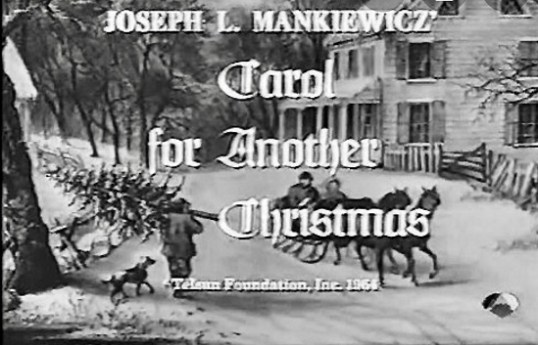
Holiday Film Review: Carol For Another Christmas (dir by Joseph L. Mankiewicz)


Daniel Grudge (Sterling Hayden) is a wealthy American industrialist who served in World War II and who, despite seeing first hand the horrors of Hiroshima, still believes that war is sometimes the only answer.  He spends his Christmas Eve sitting in darkened study, thinking about his dead son (who was killed in combat) and listening to an old record.  When his nephew, Fred (Ben Gazzara), stops by, it leads to an argument about American foreign policy.  (Who stops by their uncle’s house on Christmas Eve to argue politics?)  Fred is do-gooder.  Daniel Grudge hates do-gooders.

So, naturally, it’s time for Daniel Grudge to be visited by three ghosts!  The Ghost of Christmas Past (Steve Lawrence) takes Grudge first to a troop ship that is full of coffins, representing the dead of World War I.  Then he forces Grudge to relive his own callous reaction to Hiroshima.  Grudge sees how his actions upset the nurse (Eva Marie Saint) who was traveling with him.  The Ghost of Christmas Present (Pat Hingle) invites Grudge to eat a feast in front of a camp full of refugees.  The Ghost of Christmas Future (Robert Shaw) takes Grudge to the future where, after a devastating nuclear war, a buffoonish leader (Peter Sellers) encourages his followers to continue to make war and to live only for themselves.  Grudge watches as his former butler (Percy Rodriguez) is murdered for advocating for peace.  Back at his mansion, Fred shows up again and Grudge must now decide …. will he support the work of the United Nations?

YEEEEESH!  What a heavy-handed movie!  Really, I guess I shouldn’t be surprised at how unsubtle the film’s message was.  Originally made for television, A Carol For Another Christmas was actually co-produced by the United Nations.  It was the first of four UN-produced films that aired on ABC between 1964 and 1966.  Seen today, with all that we know about the UN’s signature mix of corruption and incompetence, the film’s message seems almost laughably naïve.   “Only the UN can bring peace,” the film says.  Tell that to Israel, the next time that the UN passes a resolution condemning it for existing and defending itself.  Say that only the UN can make the world a better place when some of the worst dictatorships on the planet are sitting on the Human Rights council.

The heavy-handed message aside, A Carol For Another Christmas was full of talent both behind and in front of the camera.  This was the only TV movie to be directed by Joseph L. Mankiewicz and, whatever else one might say about the film, he was responsible for some intriguingly moody shots.  The script was written by Rod Serling who, unfortunately, allowed his didactic tendencies to get the better of him and wrote a film where characters didn’t have conversations as much as they just gave speeches.  The cast, however, is uniformly strong.  Sterling Hayden, Robert Shaw, and Steve Lawrence are obvious stand-outs.  Pat Hingle does fine until his role is diminished to one long harangue.  Playing the so-called “Imperial Me,” Peter Sellers brings so much needed unpredictability to the film, even if his character is saddled with the film’s most heavy-handed moment.  The Imperial Me teaches his followers that the individual is more important than the state and that everyone should focus on “me” instead of “we.”  Cutting-edge satire this is not and again, there’s something rather offensive about the UN being held up as humanity’s last hope against rampant individualism. 

This is very much a film of its time.  The fear of nuclear war runs through every frame.  The disillusionment that came with the assassination of John F. Kennedy is present in the film’s open-ended conclusion.  What good is convincing one man when the rest of the world continues to think for itself? the film seems to be asking.  Dickens, I think, would probably say that Serling missed the point of A Christmas Carol and it’s hard not to feel that Dickens would be correct.

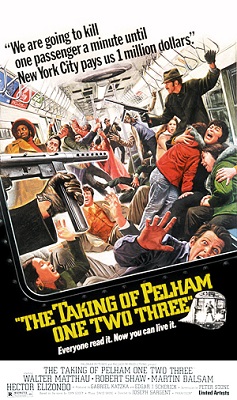
Film Review: The Taking of Pelham One Two Three (dir by Joseph Sargent)


Welcome to New York in the 1970s!  While the intellectuals flock to the latest Woody Allen movie and the wealthy throw radical chic parties in Manhattan and disturbed young men drive taxis at night and pray for a real flood to clear away all the vermin, most of the city’s citizens are just trying to make it through the day.  For many of them, that means spending an hour or two riding the subway.  In some ways, the subway is the great equalizer.  The minute that you sit down on a filthy train car, it doesn’t matter how old you are or how you vote or the color of your skin.  All that matter is finding a way to avoid making eye contact with anyone else.

Four men, all wearing obvious disguised, board the downtown Pelham 1-2-3 train.  They all look suspicious but, this being New York, no one wants to make eye contact.  Everyone just wants to reach their next stop.  The men — who are known as Mr. Blue (Robert Shaw), Mr. Green (Martin Balsam), Mr. Grey (Hector Elizondo), and Mr. Brown (Earl Hindman) — have other plans.  Revealing that they’re armed, they take the 18 passengers of the first car hostage.  Their leader, Mr. Blue, has a simple demand.  He wants a million dollars to be delivered to the car within an hour.  If the money’s late, he will kill one hostage every minute, until he receives what he wants.

While the cold-stricken mayor (Lee Wallace) tries to figure out how to 1) raise a million dollars and 2) handle the situation without losing any potential votes in his reelection campaign, Lt. Zach Garber (Walter Matthau) communicates with Mr. Blue via radio.  With Mr. Blue underground and Zach above ground, the two of them establish a cautious rapport.  Robert Shaw plays Blue as being efficient, polite, but ruthless while Walter Matthau plays Garber with his usual rumpled but intelligent style.  As embodied by Matthau, Garber is New York City in human form while Shaw is perfectly cast as the outsider who, for at least an hour or two, has managed to bring the city to its knees.

Even though the original The Taking of Pelham One Two Three is often described as being a Walter Matthau film or a Robert Shaw film, the film’s main character actually is the city of New York City.  The film portrays the city as being chaotic, angry, and unpredictable but, at the same time, also resilient and strong.  Yes, Garber may spend a lot of time bickering with his co-workers but, in the end, he and Lt. Rico Patrone (Jerry Stiller, another great New York figure) work together to do what has to be done to resolve the situation.  For all the time that’s spent on how Mr. Blue and his compatriots take that train hostage, just as much time is spent focusing on how the police, the politicians, and the Transit Authority react to what’s happened.  Not having any firsthand knowledge of the New York subway system (beyond being told not to use it when I was in NYC a few years ago), I can’t say whether or not the film is realistic but what’s important is that it feels realistic.  Even though the film is full of familiar character actors, it still seems as if you’re just watching a bunch of New Yorkers having a very long day.  Though guns are fired and there is a runway train, The Taking of Pelham One Two Three takes a refreshingly low-key approach to its story.  There’s no huge action set pieces.  The film’s classic final shot hinges not on Garber’s marksmanship but instead on his ability to remember the small details.

The Taking of Pelham One Two Three is one of my favorite heist movies.  It’s well-acted.  It’s got an interesting plot.  It’s got a few moments of unexpected humor.  Robert Shaw is a great (and, at times, almost compelling) villain while Walter Matthau and Jerry Stiller make for a great detective team.  The great Martin Balsam also turns in a wonderful turn and, even though he’s playing a bad guy, it’s hard not to sympathize him.  You need only see his apartment to understand why exactly he felt the city of New York owed him more than it had given him.  Best of all, The Taking of Pelham One Two Tree is a tribute to a great American city.  The Taking of Pelham One Two Three celebrates New York City in all of its rude, messy, and brilliant glory.

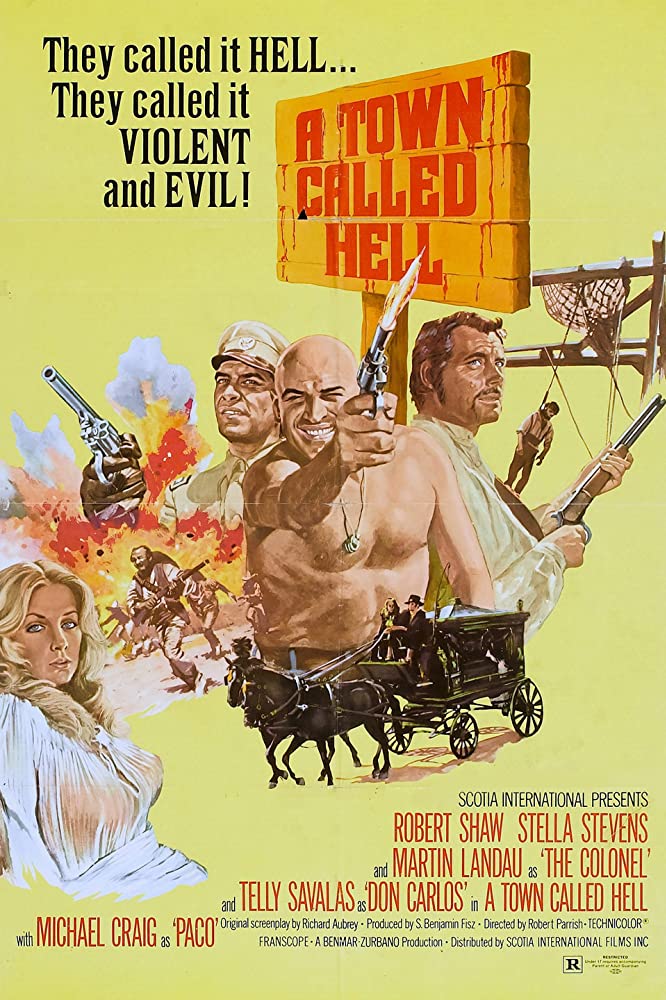
A Town Called Bastard (1971, directed by Robert Parrish)


A Town Called Bastard is a British-produced Western that was shot in Spain and which was obviously designed to capitalize on the popularity of the Spaghetti westerns of the two Sergios, Leone and Corbucci.  When the movie was released in the United States, the title was changed to A Town Called Hell because it was felt that Americans would find the word “bastard” to be too offensive.  I’m not sure how naming your town Hell is somehow an improvement on naming a town Bastard but apparently, that was the thinking.  Actually, the town is called Bastardo is both versions of the film so the American title makes less and less sense the more you think about it.

Of course, how you can expect a film to make sense when the opening scenes feature Martin Landau and the very British Robert Shaw as two Mexican revolutionaries who, in the year 1895, ride into the town town of Bastardo and murder almost everyone that they see.  Ten years later, Robert Shaw is still living in the town but he’s now a priest and he’s renounced his formerly evil ways.  The town itself is ruled by a ruthless outlaw played by Telly Savalas, who doesn’t bother to hide his New York accent despite playing a Mexican outlaw.

One day, a black carriage arrives in town.  Inside the carriage is a glass coffin and inside the coffin in Stella Stevens, who is very much alive.  Stevens’s husband was among those killed by Shaw and Landau back in the day and she offers gold to anyone who can avenge his death.  Savalas is interested in the gold but then his character literally disappears from the film.  Instead, Martin Landau rides back into town.  He’s now a colonel in the Mexican army and is searching for a fugitive.

A Town Called Bastard has potential but it’s done in by poor casting and Robert Parrish’s inconsistent direction.  The story is told so messily and the editing is so sloppy that it often feels like major scenes were left on the cutting room floor.  (Just try to figure out what’s going on with Telly Savalas’s character, for example.)  Stella Stevens has one or two good moments as the vengeful widow and her entrance into the town is one of the few interesting moments in the movie but both Savalas and Shaw overact in an attempt to hide just how miscast they are while Martin Landau’s main concern seems to be to get his paycheck and move on to the next movie.

In the end, A Town Called Bastard goes straight to Hell.

Bond Is Back!: FROM RUSSIA WITH LOVE (United Artists 1963)


gary loggins's avatarcracked rear viewer

The Cold War got really hot when James Bond returned to the screen in FROM RUSSIA WITH LOVE, second in the film series starring Sean Connery as Ian Fleming’s Secret Agent 007. Picking up where DR. NO left off, the film is popular with Bond fans for its more realistic depiction of the spy game, though there’s still plenty of action, romance, and quick quips, along with the introduction of several elements soon to be integral to the series.

FROM RUSSIA WITH LOVE has Bond falling for Soviet defector Tatiana Romanova (Daniela Bianchi), who’s willing to help steal a Russian Lektor decoding machine for Her Majesty’s Secret Service. But both she and Bond are just pawns in a larger game, with the international crime cartel SPECTRE making all the moves. Their goal is to not only posses the decoder and ransom it back to the Russians, but to eliminate 007…

View original post 340 more words

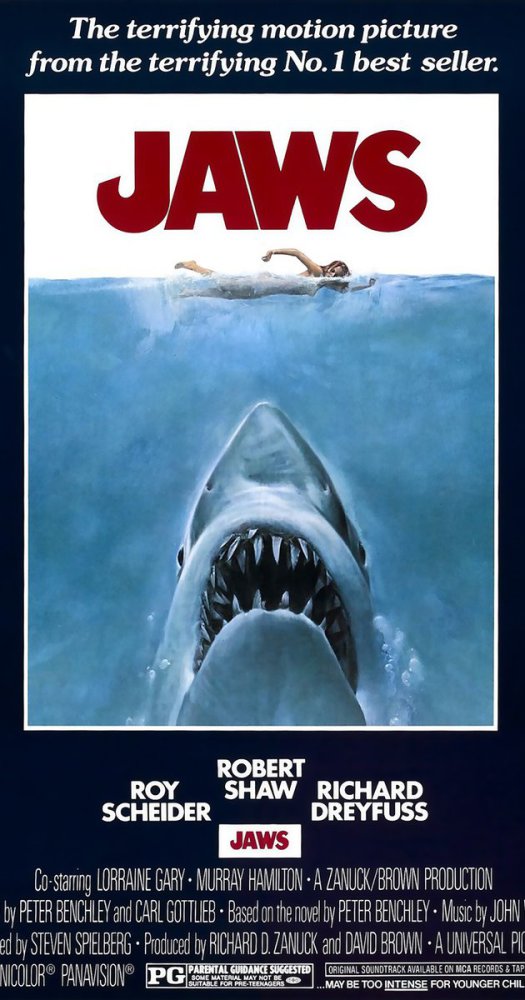
A Big Screen, Some Popcorn, and JAWS (Universal 1975)


gary loggins's avatarcracked rear viewer

Dun-dun, dun-dun, dun-dun, dun-dun…..

This past Wednesday night, I went out to New Bedford’s Zeiterion Theater to watch a screening of the summertime classic JAWS. The Z, as we locals call it, began life as a vaudeville palace in 1923, and five months later changed its name to The State and ran the latest silent movies. The State operated as a movie house until the late 70’s, with the historic building refurbished in 1982 and retro rebranded as the Zeiterion, hosting concerts, plays, dance, and other performing arts. The city (which now owns and operates the Z) recently purchased a state-of-the-art high-definition digital projector and, after an absence of almost a year,  movies are back in New Bedford! They kicked off a “summer series” of films with Steven Spielberg’s summer blockbuster scarefest, filmed not far from here (just a fast ferry ride away aboard the Sea Streak) on Martha’s Vineyard.

“You’re gonna need a bigger boat!”

And…

View original post 330 more words