Ever since the end of the Twilight series, Robert Pattinson has been picking unexpected and edgy projects. And, while there is occasionally a hint of desperation to Pattinson’s picks (“I am not Edward, goddammit!” seems to be the common subtext), it’s also led to him appearing in some genuinely interesting films and proving that, if nothing else, he’s a far better actor than Zac Efron.
(For the record, I still say that Pattinson was brilliantly cast in Cronenberg’s Cosmopolis.)
Here’s the trailer for Pattinson’s latest, Good Time. This film, which takes place over the course of one night, features Pattinson as a career criminal who is desperately trying to put together enough money to get his brother out of prison. Judging from the trailer, this is either going to be really good or a complete mess.
Last night, I finally saw the latest Werner Herzog film to be released in the United States, Queen of the Desert.
Queen of the Desert has actually been around … well, I was going to say forever but actually, I first started to hear about it in 2014. It premiered (to less-than-enthusiastic reviews) at the Berlin International Film Festival in February of 2015 and was released in Germany later that same year. Originally, it was going to get a wide release in America but then IFC acquired the distribution rights and ended up sitting on it for two years. (During that time, Herzog went on to direct another film, Salt and Fire.) Only last month did Queen of the Desert finally get a very limited theatrical and VOD release here in the United States.
Despite all of the bad things that I had heard, I was still looking forward to seeing Queen of the Desert. Why not? Werner Herzog is one of my favorite directors. The star of Queen of the Desert, Nicole Kidman, is one of my favorite actresses. Of course, there was also the Franco factor. I knew that Queen of the Desert featured James Franco in a small role and, if you’ve been reading this site for a while, y’all know how I feel about James Franco.
Having now watched it, I can say that Queen of the Desert is not the disaster that so many have been insisting. That doesn’t mean that it’s a great film or even a good film. It’s a very middle-of-the-road film, one that is too well-made to really be a disaster but, at the same time, is never as memorable as it should be.
Queen of the Desert tells the story of Gertrude Bell (Nicole Kidman), who abandoned a safely comfortable but restrictive life in turn-of-the-century Britain so that she could explore the world. In the film, Gertrude falls in love twice and, following the unhappy (and tragic) conclusions of those affairs, she always returns to the Middle East, where surviving the harshness of the desert and exploring the ruins of past civilizations brings her peace and gives her life a greater meaning.
That’s a theme that should be familiar to anyone who has watched any of Herzog’s documentaries or feature films. The problem is that, as told in this film, there’s no real spark to the story or to Gertrude as a character. Herzog’s best work has often dealt with people driven to the point of madness by their obsessions. Think about Nicolas Cage in Bad Lieutenant: Port of Call New Orleans. Think about Timothy Treadwell, obsessively living with the grizzlies until one them ate him in Grizzly Man. Consider the introverted eccentrics who explored The Cave of Forgotten Dreams or even Christian Bale’s refusal to allow himself to be broken in the POW film, Rescue Dawn. Think about Klaus Kinski in just about every film he ever made with Herzog. For that matter, just think about Werner Herzog himself is Les Blank’s documentary, The Burden of Dreams. Nicole Kidman would seem like an ideal choice for Gertrude and she does a good job with the role but, as written, Gertrude never has that touch of madness. Unlike Aguirre, she’s not looking to conquer nature. Unlike Fitzcarraldo, she’s not trying to bring “civilization” to the isolated spot in the world. Unlike Timothy Treadwell, she’s not even trying to literally become one with nature. Instead, she’s just someone who deals with heartache by going on a trip. I do that every time I spend the weekend up at Lake Texoma.
(The real-life Gertrude Bell died, under somewhat mysterious circumstances, of an overdose of sleeping pills. Whether it was suicide or an accidental overdose is not known. In the film, the circumstances of her death — which seem very Herzogian, to be honest — are glossed over by an end title card that simply informs us that she died in 1926.)
As I said earlier, Queen of the Desert is disappointing but it’s not terrible. Visually, it’s quite stunning and the scenes of the sand blowing in the desert are often a hundred times more interesting than the film’s storyline. Whenever Herzog is letting his camera focus on the desert or glide over the ruins of an ancient palace, you can understand why Herzog wanted to make this film. But, unfortunately, the film keeps returning to a story that’s about as middling as an old soap opera.
Nicole Kidman does a good job as Gertrude but she runs into the same problem that she ran into with Grace of Monaco. She’s stuck with a script that repeatedly tells us that the lead character is fascinating without ever really giving her a chance to prove it. (Before I get any angry comments, I know that Grace Kelly was fascinating and I’m sure that Gertrude Bell was too. I’m merely talking about the way that they were portrayed in their biopics.) As the men in her life, James Franco and Robert Pattinson are both ideal but Damian Lewis is a bit on the dull side.
All in all, this is not one of Werner Herzog’s best but, with all that said, I’ll still follow him anywhere that he chooses to go.
I’ve been so busy from the holidays that I forgot to share the trailer for next year’s The Lost City of Z. Based on a historical novel, The Lost City of Z features Charlies Hunman as explorer Percy Fawcett and follows him as he and his son (Tom Holland) and an assistant (Robert Pattinson) obsessively search for a missing civilization.
The Lost City of Z was directed by James Gray, who is one of those directors who has always been more popular with critics than audiences. It seems like every year we’re told that Gray’s latest film will be an Oscar contender. Remember The Immigrant? How about We Own The Night? Both of these films were promoted as being surefire Oscar contenders, both of them flopped at the box office, and both of them are now kind of forgotten. Will that happen with The Lost City of Z?
Well, The Lost City of Z is one of those things that sounds like it should be a surefire Oscar contender (and it got very positive reviews when it premiered at the New York Film Festival) but it’s being released in April. Traditionally, it’s thought that films released that early in the year will be forgotten by Oscar time. However, both The Grand Budapest Hotel and Mad Max: Fury Road were released early in the year and both managed to do quite well when the Oscar nominations were announced.
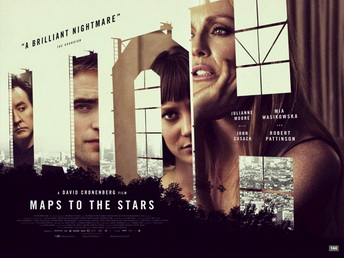
I have to admit that, for the most petty of reasons, I was dreading the 2014 release of David Cronenberg’s Maps to the Stars.
This was despite the fact that I happen to be a big fan of just about everyone in the cast and David Cronenberg as a director. (I still say that Cosmopolisis one of the best films of the decade and I don’t care who disagrees.)
My initial issue with Maps to the Stars — and again, I admit this is really petty — was that Sasha Stone, over the Awards Daily web site, was so damn fanatical about singing the film’s praises. I have a theory that Sasha tends to overpraise certain films specifically so she can have an excuse to get angry and go off on a rant when they don’t receive any Oscar nominations. Ever since Sasha went batshit crazy over The King’s Speech beating The Social Network, Awards Daily has pretty much gone from being a site about the Oscars to being a site about Sasha screaming in the wilderness like a biblical prophet (and not one of the interesting biblical prophets, like Elijah. We’re talking about Haggai here.) From what I had read about Maps To The Stars and judging from the response that it got at Cannes (where, despite mixed reviews, it did win an award when Julianne Moore was named best actress), this film seemed like the epitome of another deliberate lost cause.
Fortunately, the release date of Maps To The Stars was moved to 2015 and civilization was spared from having to deal with a thousand “If Cronenberg doesn’t get an Oscar, society is doomed!” rants. Instead, we had to deal with a thousand “If Hillary Swank doesn’t win for The Homesman, society is doomed!” rants.
“Okay,” you’re saying, “that’s great Lisa. Thank you for whatever all that was. But what about the movie itself!? Is it any good?”
Eh … I guess.
I mean, Maps to The Stars isn’t a bad movie. It’s not bad at all. It’s just maddeningly uneven.
One of my favorite up-and-coming stars, Mia Wasikowska, has a great role in it. She plays a schizophrenic, named Agatha, who comes to Hollywood. Agatha’s arms and the back of her neck are covered with burn scars and she is always taking pills. She is also obsessed with a vile teen star named Benjie Weiss (Evan Bird). There’s more to her obsession than you might originally think.
Benjie, meanwhile, has just gotten out of rehab and he is literally one of the worst characters ever. The film does try to build up some sympathy for him by revealing just how fucked up his home life is. His fragile mother (Olivia Williams) always seems to be on the verge of collapse. His father (John Cusack) is a glib and shallow psychologist. Benjie serves as a stand-in for every child star who has been destroyed by Hollywood. Unfortunately, the film devotes so much time to Benjie being a monster that it never really allows us to see why Benjie’s a star in the first place. Evan Bird gives such a boring, uninteresting, and flat performance that you never really buy the idea of Benjie could be a success. (Say what you will about Justin Bieber, he does at least have a cute smile. Evan Bird can’t even claim that.)
Agatha meets a lot of people in Hollywood, including a limo driver (Robert Pattinson) who is an aspiring screenwriter. She eventually gets a job working for actress Havana Segrand (Julianne Moore). Havana, herself the daughter of a legendary and self-destructive actress, is a monster but — unlike, Benjie — she’s a sympathetic monster. She’s a talented actress who grew up in Hollywood and now, because she’s no longer in her 20s, is being discarded by Hollywood. Havana is as much a victim as a victimizer.
Anyway, the film kinda wanders about. Along with all the other stuff going on, the characters are regularly visited by ghosts. Secrets are revealed. Hearts are broken. Lives are lost. And yes, relevant points about Hollywood are made but … well, so what? There’s nothing in Maps to the Stars that you couldn’t learn from rewatching Sunset Boulevardand Sunset Boulevard is a lot less pretentious. Plus, William Holden was a much better actor than Evan Bird.
As for Cronenberg’s direction — well, Maps to the Stars is definitely David Cronenberg on autopilot. It’s filled with identifiable Cronenberg touches. The emphasis placed on Agatha’s scars, for instance, is trademark Cronenberg. But still, Cronenberg’s direction often just seems to be going through the motions. Unlike his work in the far more interesting and challenging Cosmopolis (not to mention Eastern Promises), Cronenberg doesn’t really seem to care that much about the story that he’s telling.
Maps to the Stars is worth watching for the performances of Julianne Moore and Mia Wasikowska. Otherwise, it’s just another well-made but only occasionally interesting Hollywood melodrama.
I was one of the few people to appreciate David Cronenberg’s previous collaboration with Robert Pattinson, the criminally underrated Cosmopolis. Here’s the trailer to the second Cronenberg/Pattinson collaboration, Maps To The Stars.
A lot of people are probably going to be inclined to dismiss The Rover out-of-hand simply because it stars Robert Pattinson. I suggest that, if those people need proof that Pattinson is capable of more than Twilight, they should go watch Cosmopolis.
And besides, even if you aren’t a fan of Pattinson’s, you should still be willing to take a chance on The Rover because it was directed by David Michod, who previously directed the absolutely brilliant Animal Kingdom, and it co-stars the great Guy Pearce.
“I wanted you to save me.” — Paul Giamatti in Cosmopolis
It’ll probably take the rest of the world a few years to realize this but David Cronenberg’s Cosmopolis is not only a good film but occasionally, it’s even a great film. What it is not is an easy film. Instead, this film is a throwback to the such Cronenberg films as Videodrome and eXistenZ, films that served to not only challenge the audience’s expectations but to occasionally attack them as well.
Plotwise, Cosmopolis is a day in the life of a 28 year-old billionaire named Eric Packer (played by Robert Pattinson, who gives an excellent performance that hints at the neurosis that boils underneath surface ennui). Packer wants to get a haircut so he spends nearly the entire day sitting in the back of his stretch limo, being driven through an increasingly violent and disturbing New York. Rarely leaving the safety of his limo, Packer has several chance meetings with his wife, who refuses to have sex with him, and picks up several other women who are willing to have sex with him. He also finds the time to have a prostate exam and discuss (and discuss) the meaning of life with several of his cronies, all of whom seem to pop up in the back of his limousine without warning and who also seem to vanish once Packer tires of listening to them. Along the way, Packer finds both himself and his limousine being targeted for destruction but he never changes his plans or his direction. After all, he needs a haircut…
Many reviewers are treating Cosmopolis, with its portrayal of a man who has too much money and not enough humanity, as if it’s some sort of Occupy manifesto and, indeed, there are several scenes where Cosmpolis does seem to serve as a mouthpiece for the anti-capitalist Occupy ideology. There are also several scenes where Cosmopolis plays as a very deliberate modern-day version of Jean-Luc Godard’s Marxist-themed, pro-revolution Weekend. However, to simply call Cosmopolis a pro-Occupy film is to offer up an interpretation that’s a bit too simplistic. After all, when the Cosmopolis version of the Occupy protestors do make an appearance, they’re either rioting in the streets (and getting nothing more than a bemused smirk from Packer) or else they’re being represented in the form of a shambling and somewhat pathetically bitter character played by Paul Giamatti. When Giamatti accuses Packer of hurting other people with his lifestyle, Packer confidently replies, “Don’t pretend that you care about other people,” and it’s rather obvious that, in the troubled world of Cosmopolis, both the excesses of the 1% and the Occupy movement spring from the same poisoned well of narcissism and anger. In Cosmopolis, neither of the competing ideologies are presented as being a solutions but instead, both are seen as signs that the world is beyond saving.
Ultimately, Cosmopolis is a return to themes that should be familiar to anyone who is familiar with Cronenberg’s work. Like many Cronenberg protaganists, Eric Packer is a neurotic man who has attempted to make himself invulnerable to a messy and imperfect world and, in the process, he has surrendered his humanity. While the world outside collapses, Packer is sealed off in his stretch limo. Over the course of the day, it becomes increasingly obvious that he stays in the limo because that limousine is an environment that he can control. It also becomes apparent that the sterility of his perfect limo has left his incapable of relating to or even understanding the world outside. It’s only as the film progresses and Packer continually finds himself forced to exit the limousine that his true nature starts to come to the surface. It’s only when, at the end of the film, Packer finds himself permanently separated from his limousine that the film can reach its apocalyptic ending.
Ever since it appeared at Cannes, Cosmopolis has been getting a lot of mixed reviews and it’ll probably never be the type of film that is embraced by the masses. It’s too cold and clinical to be beloved by many filmgoers.
Well, that’s their loss.
In a year that’s been dominated by bland and safe movies, Cosmopolis is a film that dares to challenge the audience. It’s a film that dares to say that all is not right with the world and that there might not be any easy or crowd-pleasing solutions.
Love it or hate it, we need (and deserve) films like Cosmopolis.
“Harry Potter is about confronting fears, finding inner strength and doing what is right in the face of adversity. Twilight is about how important it is to have a boyfriend.” – Stephen King
I have a problem with the notion that says you have to have someone in your life in order for your life to be considered perfect or grand. I’m of the mind that you step into the world alone and leave it the same same way. Even if you are surrounded by your nearest and dearest friends when you pass, you’re still the only one making that trip. And while I love the notion of Romance, I don’t believe it needs to translate to “Omigod, if you’re not near me, I’m going to jump off this building, I swear it because I can’t talk about you without stammering.” or the other obsessive notions that Twilight seems to bring up. This doesn’t mean I outright hate everything that Twilight is, but I’m not totally fond of the overall message it conveys. Perhaps I’m just emotionally cold that way.
And yet, I may know more about Twilight than any other guy in the known universe. It’s an enigma, I know.
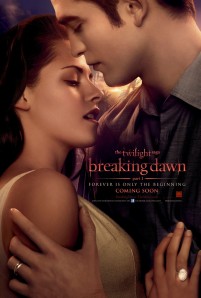
A little background on why I, a guy, am writing a review for The Twilight Saga: Breaking Dawn, which is pretty much geared for girls. Note that I’ll refer to the film just as Breaking Dawn, because I really don’t see Twilight as a Saga by any means.
In the early 90’s, I hit a “Vampire Phase”. Between playing games of Vampire: The Masquerade and reading every Vampire Chronicle novel that Anne Rice wrote up until Tale of the Body Thief, I was pretty involved. I grew up with Vampires that were monsters to be feared (and sometimes admired), and dodged the sun more or less. I even owned two vampire encyclopedias. Somewhere between Mark Danielewski’s “House of Leaves” (a book I still haven’t finished) and Andrew Davidson’s “The Gargoyle”, I picked up a hardcover copy of Stephenie Meyer’s “Twilight” from Barnes & Noble. I didn’t think much of the books, save that they were quick reads. Meyer and her vampires were far from Rice and her universe lacked the erotic flair of Laurell K. Hamilton’s earlier books in the Anita Blake series. They were more or less books for teens, but they had vampires in them, so I pretty much inhaled all four books (Twilight, New Moon, Eclipse, and Breaking Dawn) twice in Hardcover. I even went so far to read Meyer’s “The Host” and have seen all of the other Twilight films in the theatre. While they all seem to be really close to the source material, there’s something strange in the translation. What made sense on paper really didn’t on screen (Sparkling Vampires jump to mind), but I guess that’s for an Editorial.
So, when it came to reviewing Breaking Dawn, we at the Shattered Lens drew straws. While we hold to the tenet that any movie can be reviewed by anyone even if the movie was previously reviewed by anyone else (for alternate viewpoints), this was a film that was pretty much off our collective radars. I think we all secretly wanted Lisa or Erin to take it, but both Lisa and my cousin gave the argument that I could probably give a different perspective on the film than all of the girls who planned to see it, most of whom would sprout something like the following:
“I love Edward so much, and that he took his time with Bella was just so heartfelt that I wanted to cry. I felt so bad for Jacob that he could haven’t have her. He deserves better than that!! If anyone doesn’t like what I’m saying, then I will come to their houses and stab them with rusty blades in their beds because no one – I mean no one – gets in the way of my Twilight Love!! You haters could suck it! Team Edward/Jacob Forever!!!!”
So, here I am, writing this. Let’s see what becomes of it, shall we?
For those of you who managed to avoid the Twilight books and movies like they were Sutter Cane novels, here’s everything you’ll ever need to know.
Twilight is the story of Isabella Swan (Kristen Stewart) who moves from Arizona (where Meyer lives) to Forks, Washington to live with her Sheriff father, Charlie (Billy Burke). While in school, she meets an interesting but strange fellow in Edward Cullen (Robert Pattinson). After being saved from a near fatal car crash in an impossible fashion by Edward, Bella becomes intrigued with who and what he may be. A little big of Googling and book buying leads her to discover that Edward is in fact, a Vampire. He explains he’s dangerous. She doesn’t care. He states he’s a killing machine. She loves the danger. He steps into the sunlight to show he doesn’t burn, he just sparkles. She’s just mesmerized.
The original Twilight was Bella’s introduction to The Cullens (who are more or less Vegetarians in that they don’t go after humans, but animals instead):
Carlyle (Peter Facinelli) – Father figure and Doctor. He recruited the rest of the family.
Esmee (Elizabeth Reaser) – Carlyle’s Wife and Mother Figure.
Emmett (Kellan Lutz) – The Muscle of the Family and companion to Rosalie.
Rosalie (Nikki Reed) – Emmett’s Companion and is pretty much opposed to Bella up until Breaking Dawn, for reasons she explains in Eclipse.
Alice (Ashley Greene) – Companion to Jasper and has the ability to see the decisions that others make before they make them.
Jasper (Jackson Rathbone) -The newest vampire of the group and companion to Alice. Has the ability to manipulate the emotional tides of others.
In Twilight, Bella and the Family run into a trio of vampires, one of which decides he has to hunt down and kill Bella (because she’s food). The family is able to kill the vampire and get on with their undead lives, not before a final parting shot showing the vampire’s girlfriend and her desire to kill Bella in return. Bella decides it’s in her best interests to become a vampire and tries to persuade Edward to change her, but he refuses, citing she has many years ahead of her worth living.
In New Moon, Edward decides to celebrate Bella’s birthday at his place. After an accident occurs that leaves her bleeding, Jasper loses it and attacks her. The family is able to save her, but this convinces Edward that it just won’t work out and the entire family leaves town. Left on her own, Bella spends the next four months crying and screaming in her sleep over Edward until her father convinces her to hang out with her friends. She ends up spending more time with Jacob Black (Taylor Lautner), a friend who lives on a nearby reservation that clued her into what the Cullens really were. They get closer as friends and eventually, she discovers that Jacob and his family are actually Werewolves. While cool, she also learns that the Werewolves don’t get along with Vampires and despise the Cullens. They haven’t killed the vampires because of a Treaty that was enacted long ago. Werewolves stay on their side, Cullens on the other and no humans get hurt. Victoria (the girlfriend of that dead vampire in Twilight) returns to town to kill Bella, but she’s protected by the Wolves. She ends up doing a little cliff diving, which catches Alice’s attention and she manages to reunite with the family, though learns that Edward plans to kill himself. Edward believes she died when she jumped off the cliff, volunteering himself to death by the Vampire Congress known as the Volturri.
Alice and Bella fly to Italy and intercede, rescuing Edward from his fate and meeting the Volturri. As Bella knows too much, the Volturri leader demands that within a year she has to becomes a vampire. This of course, excites Bella and annoys Edward, who throws in a “Let’s get Married First” clause into the works. The idea of this is to help give closure to all the humans in Bella’s life. She reluctantly agrees to it. Jacob catches wind of this and spends the next book & film, Eclipse, trying to convince Bella that she should live and that he’s the better choice of a love interest.
Okay, Eclipse. Victoria knows that she can’t get to Bella on her own without dealing with both the Werewolves and the Vampires. She finds a resident of Forks in Seattle named Riley Biers and changes him to a Vampire, convincing him that the Cullens are bad and killed her friend. He builds an army and they attack the Cullens en masse, but somewhere along the line, Victoria forgot to mention there may be giant dogs in the area. The Cullens and Werewolves join forces and defeat the newborns with ease. In the process, Bella learns more about the Wolves and their ability to “Imprint”, meaning they basically obsess over one person for the rest of their lives (much like whales, I suppose). Luckily, Jacob hasn’t Imprinted on Bella yet. Edward eventually dispatches Riley and Victoria, leaving the romance to continue. In Eclipse, the Cullens explain to Bella how they came to be, partially to help her what she has to look forward to, positive or negative.
And all that brings us to Breaking Dawn, Part I.
Of the Twilight movies, I still feel Eclipse was the strongest one. Breaking Dawn covers everything the 1st half of the book does and manages to do it without stepping past the PG-13 bounds it created. The film starts off with Edward and Bella’s Wedding, with different reactions from everyone. Jacob hates it, wolfs out and runs to Canada. The Cullens are ecstatic. Charlie manages to deal with it. The wedding ceremony is done well, and gives some screen time to all of the high school friends (who we won’t be seeing after the wedding). Stephenie Meyer herself even has a cameo here (and eerily looks like my mother). Even the honeymoon is done better than I thought it would. Anyone expecting Bella and Edward’s honeymoon to look like something out of a late night Cinemax series may be disappointed, but the romance is nice to see and there were some laughs in the audience. Again, it’s Twilight. I’m not expecting Jane Eyre or Sense & Sensibility romance levels. At least, that’s what the snoring mother sitting next to me who brought her kids felt, I think.
After the married couple’s wild honeymoon, Bella discovers she’s miraculously pregnant and even worse, the unborn child is sucking the very life from her. The wolves find out about this and feel that she needs to be eliminated, along with the rest of the Cullens, as it breaks the Treaty. Bella is rushed home while the Cullens try to find a way to save both the baby and the mother. Will Bella make it? Will the Wolves pounce on the vampires? Those are some of the questions brought to the table.
Jacob finds himself taking sides with the Cullens, which causes him to recall his Alpha Status in his wolf pack and stand alone (or nearly alone) against his family. In the book, this was done pretty well, but translated to the screen the scene with wolves telepathically yelling at one another seemed a little cartoonish. Just change back to people and talk it over. I guess it was done that way to show how animals have the whole Alpha / Omega relationship, and remains one embarrassing moment in a sea of scenes that were okay.
Visually, Eclipse was a serious step up from both Twilight and New Moon. Breaking Dawn seemingly returns to the look and feel of the original Twilight, right down to Carter Burwell’s score. With the exception of the Bella’s Lullaby theme (which worked incredibly well, especially at the last two minutes of the film), the music felt a little weak to me. I actually preferred Howard Shore’s score to Eclipse. Don’t get me wrong, the movie goes where it’s supposed to, but you’d expect things to look a little better as it goes along. It would be nice if they improved on that.
One other thing I’ll give this (and that’s all of the Twilight mess) is the audience. I live for seeing audiences react to what they’re seeing on the screen, and I can’t remember a more reactive audience set since Captain America. Some of the girls who go to see this really go wild over it, and some of the guys grumble loudly. My theatre was packed, right down to the front seats where you have to crane your neck up to see everything. It’s the closest to a Midnight Movie experience you could have at a Matinee.
The big problem Breaking Dawn Part II will have will be trying to be exciting, because there isn’t a lot that occurs in the second half of the story that’s worthy of stretching it out to nearly two hours. It’ll be interesting to see what they do with that.
Overall, Breaking Dawn doesn’t really break any new ground in Vampire myths or anything like that. For anyone unfamiliar with the Twilight movies or books, it may feel slow and even a little boring at times. For it’s target audience (readers of the book), it gives them just about everything they wanted.
For my first post-birthday review post, I want to take a look at 6 films that I saw earlier this year but, for whatever reason, I haven’t gotten a chance to review yet. My goal has been to review every single 2011 release that I’ve seen this year. So far, I’ve only seen 106 2011 films and I still need to review 21 of them. So, without further ado, let’s “gang bang this baby out” as a former employer of mine used to say. (*Shudder* Seriously, what a creepy thing to say…)
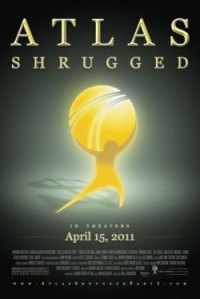
What to say about Atlas Shrugged, Part One? When I recently rewatched it OnDemand with a friend of mine who had just gotten back from Occupying somewhere, he threw a fit as soon as he heard wealthy 1 percenter Graham Beckel declaring, “I am on strike!” When I first saw it earlier in the year, in a theater full of strangers, they broke out into applause when they heard the same line. Atlas Shrugged is a wonderfully divisive film. If you’re a political person, your enjoyment of this film will probably come down to which news network you watch. If you enjoy those MSNBC spots where Rachel Maddow won’t shut up about the freakin’ Hoover Dam, you’ll probably hate Atlas Shrugged. If you truly believe that Fox News is “fair and balanced,” chances are you’ll enjoy it. But what if you’re like me and the only politics you follow are the politics of film and you only bow at the altar of cinema? Well, I enjoyed Atlas Shrugged because the film really is a grindhouse film at heart. It’s an uneven, low-budget film that has a few good performances (Beckel and Taylor Schilling), several bad performances, and ultimately, it goes totally against what establishment films have conditioned us to expect when we go to the movies. Ultimately, the film is a big middle finger extended at both the film and the political establishments and who can’t get behind that? Add to that, Roger Ebert hated it and when was the last time he was right about anything?
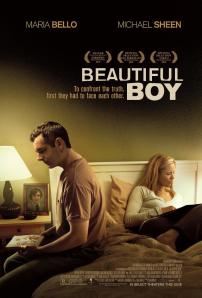
I’ve read a lot of rapturous reviews of this film online and my aunt Kate loved it when she saw it at the Dallas Angelika earlier this year. So, admittedly, when I watched this film via OnDemand, I had pretty high hopes and expectations but, unfortunately, none of those expectations came anywhere close to being met. In the film, two of my favorite performers — Michael Sheen and Maria Bello — play the middle-class parents who have to deal with the consequences (both emotional and physical) of a terrible crime perpetrated by their son. The film is based on the Virginia Tech massacre and both Sheen and Bello give excellent performances but overall, the film feels like a thoroughly shallow exploration of some various serious issues. Ultimately, the film’s refusal to provide an explanation for the crime feels less like a brave, artistic choice and more like a cop-out. The film is less abstract than Gus Van Sant’s Elephant and Denis Villeneuve’s Polytechnique but it’s also a lot less effective.
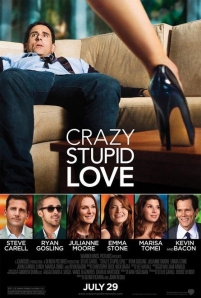
I don’t know if I’ll ever forgive Steve Carell for abandoning The Office and forcing upon me the current, almost painful season of the show. Still, I can’t totally blame him because the guy is totally a film star and he proves it in Crazy, Stupid Love by holding his own with other certifiable film stars like Ryan Gosling, Kevin Bacon, Marisa Tomei, Julianne Moore, and Emma Stone. In the film, Julianne Moore plays Carell’s wife who leaves him for a coworker (played by Kevin Bacon, doing his charming jerk routine). The depressed Carell is taken under the wing of womanizer Gosling who teaches Carell how to be more confident and appealing. Things seem to be working out well until Gosling starts going out with Carell’s daughter (played by Emma Stone). The movie, itself, isn’t anything special and it’s really kind of a mess but it’s saved by a massively appealing cast. And, by the way, Ryan Gosling —très beau! Seriously.
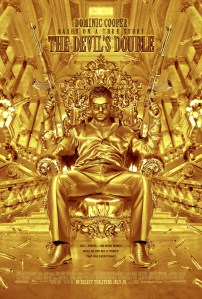
Taking place in pre-Desert Storm Iraq, The Devil’s Double claims to tell the true story of Latif Yahia, an Iraqi who was forced to serve as the double for the sociopathic young dictator-in-training Uday Hussien. I’ve read that there’s some debate as to how faithful The Devil’s Double is to the facts of the story and it is true that Latif is portrayed as being almost too good to be true but no matter. The Devil’s Double is a compelling and oddly fascinating little gangster film, one that manages to show the dangerous appeal of the excessive lifestyle of a man like Uday Hussien without ever actually being seduced by it. The film is dominated by Dominic Cooper, who gives a great performance playing both the tortured Latif and the cheerfully insane Uday.
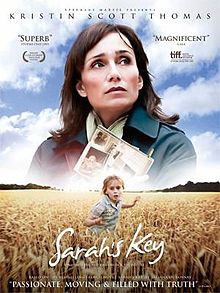
Sarah’s Key tells two stories at once and, the result, is a film that feels very schizophrenic in quality. The better part of the film deals with Sarah, a 10 year-old Jewish girl living in Nazi-occupied France. When Sarah and her parents are sent to a concentration camp, her younger brother is left behind in Paris. Sarah eventually manages to escape and desperately tries to get back to Paris to rescue her brother. Meanwhile, in the modern-day, a journalist (Kristen Scott Thomas) researches Sarah’s story and discovers that her French husband’s family has a connection of their own with Sarah’s story. The film is compelling and heart-breaking as long as it concentrates on Sarah but, unfortunately, the modern-day scenes feel forced and predictable and the end result is a film that’s never quite as good as it obviously could have been.
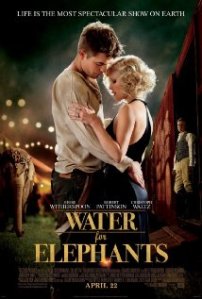
Look, I make no apologies — I freaking loved this movie. Yes, plotwise, this film feels almost like a parody and yes, so much of this film was over-the-top and kinda silly but I don’t care. I loved this film for the old-fashioned, melodramatic, and rather campy spectacle that it is. Robert Pattinson plays a Depression-era Ivy League college student-turned-hobo who ends up joining the circus and falling in love with Reese Whitherspoon, the wife of insane circus owner, Christoph Waltz. Pattinson isn’t much of an actor but he’s easy on the eyes and he and Whitherspoon have just enough chemistry to remain watchable. The film, however, is totally dominated by Waltz who is both charming and scary. The next time your man makes you sit through anything starring Jason Statham, you make him watch Water for Elephants.

 Through the Shattered Lens