October True Crime: Mob Town (dir by Danny A. Abeckaser)


In 1957, the Commission — the governing board that regulated organized crime in America — seemed like it was on the very of collapsing.  Bugsy Siegel was dead.  Lucky Luciano had been exiled to Sicily.  Meyer Lansky was more concerned with running his casinos in Cuba than with keeping track of who was angry with who in America.  The ruthless Vito Genovese was moving in on everyone’s business and was suspected of being behind the assassination of Albert Anastasia and the shooting of Frank Costello.

Genovese, looking to solidify his control and perhaps bring some peace to the warring factions, called for a summit in upstate New York, at the estate of Joseph Barbara.  Bosses from across the country gathered in Apalachin, New York.  It started out as a nice weekend, with stories being told and fish being grilled.  But then, suddenly, the cops showed up and 50 of the country’s most powerful mobsters made a run for it.  Many of them ducked into the woods, where they were subsequently rounded up by the cops.

In the end, several mobsters were arrested and convicted of various crimes.  All of those convictions were overturned on appeal.  However, the arrests revealed to America that the Mafia wasn’t just an urban legend.  Up until the bust at Apalachin, FBI director J. Edgar Hoover insisted that there was no such thing as the Mafia.  After the bust, Hoover not only acknowledged that the Mafia existed but he also started a special division of the FBI to deal with it.

(Not that it did much good, of course.  Being exposed still didn’t stop the Mafia from fixing the vote in Illinois during the 1960 presidential election.)

The 2019 film Mob Town details the events leading up to the Apalachin Conference.  Robert Davi is properly intimidating as the ruthless Vito Genovese.  The film’s director, Danny A. Abeckaser, plays Joseph Barbara while Jami-Lyn Sigler plays Barbara’s wife, tasked with putting together a dinner for a growing list of guests.  Josephine Barbara goes from being happy about her husband working his way up the ranks of the mob to growing increasingly frustrated as the number of expected bosses rises from 30 to 50 and I have to say that I could very much relate to Josephine.  Finally, David Arquette plays Edgar Croswell, the New York state trooper who figured out that something big was happening at the Barbara place.  Croswell spends most of the film trying to get people to take him seriously.  At the end of the film, he gets a congratulatory call from President Eisenhower.  I’m enough of a history nerd that I appreciate any film that ends with a congratulatory call from President Eisenhower.

Mob Land was obviously made for a low-budget and it doesn’t always move as quickly as one might like.  When Croswell isn’t trying to expose the mob, he’s pursuing a romance with Natalie (Jennifer Esposito) and Arquette’s permanently dazed expression doesn’t always make him the most convincing state trooper.  It’s an uneven movie that traffics in almost every mob cliche but I can’t be too critical of it.  Robert Davi was a more convincing Genovese than Robert De Niro was in Alto Knights.  I appreciated the scenes of the Barbaras trying to get their place ready for the meeting.  That was mob action to which I could relate.

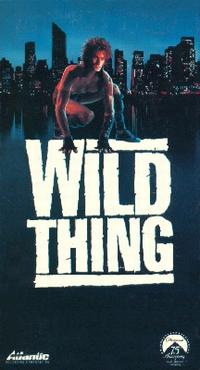
Wild Thing (1987, directed by Max Reid)


After his hippie parents are murdered by a drug dealer named Cutter (Robert Davi!), a young boy is taken in and raised by a homeless woman (Betty Buckley).  The boy eventually grows up to be Wild Thing (Robert Knepper), an urban Tarzan who jumps from rooftop to rooftop at night and who protects the neighborhood for evil doers (like Cutter).  A social worker (Kathleen Quinlan) hears the legend of Wild Thing and eventually finds him.  She continues his education, explaining to him why people do the “body bump.”  Carrying a bow and arrow and accompanied by a surprisingly loyal cat, Wild Thing fights the bad guys and seeks revenge for his parents.

Wild Thing is one of those movies that should be incredibly bad but somehow it isn’t.  John Sayles was one of three writers to work on the script (Sayles was the only one to get credit) and the film has a self-aware sense of humor similar to the scripts that Sayles wrote for films like Alligator, Battle Beyond The Stars, and Piranha.  A young Robert Knepper is probably about as convincing as anyone could be as an urban Tarzan who speaks broken English and who carries a bow and arrow as he makes his way across the rooftops of his neighborhood.  As always, Robert Davi is a good villain.  Davi knows that he’s appearing in a live action comic book and he gives an appropriate performance.

Wild Thing is a surprisingly enjoyable movie and yes, the song Wild Thing is heard in the movie but not as much as you might think.  There’s a few scenes where the song starts to play and is then cut off, as if the movie is teasing our expectations.  I just wish Sam Kinison had been invited to perform his version.


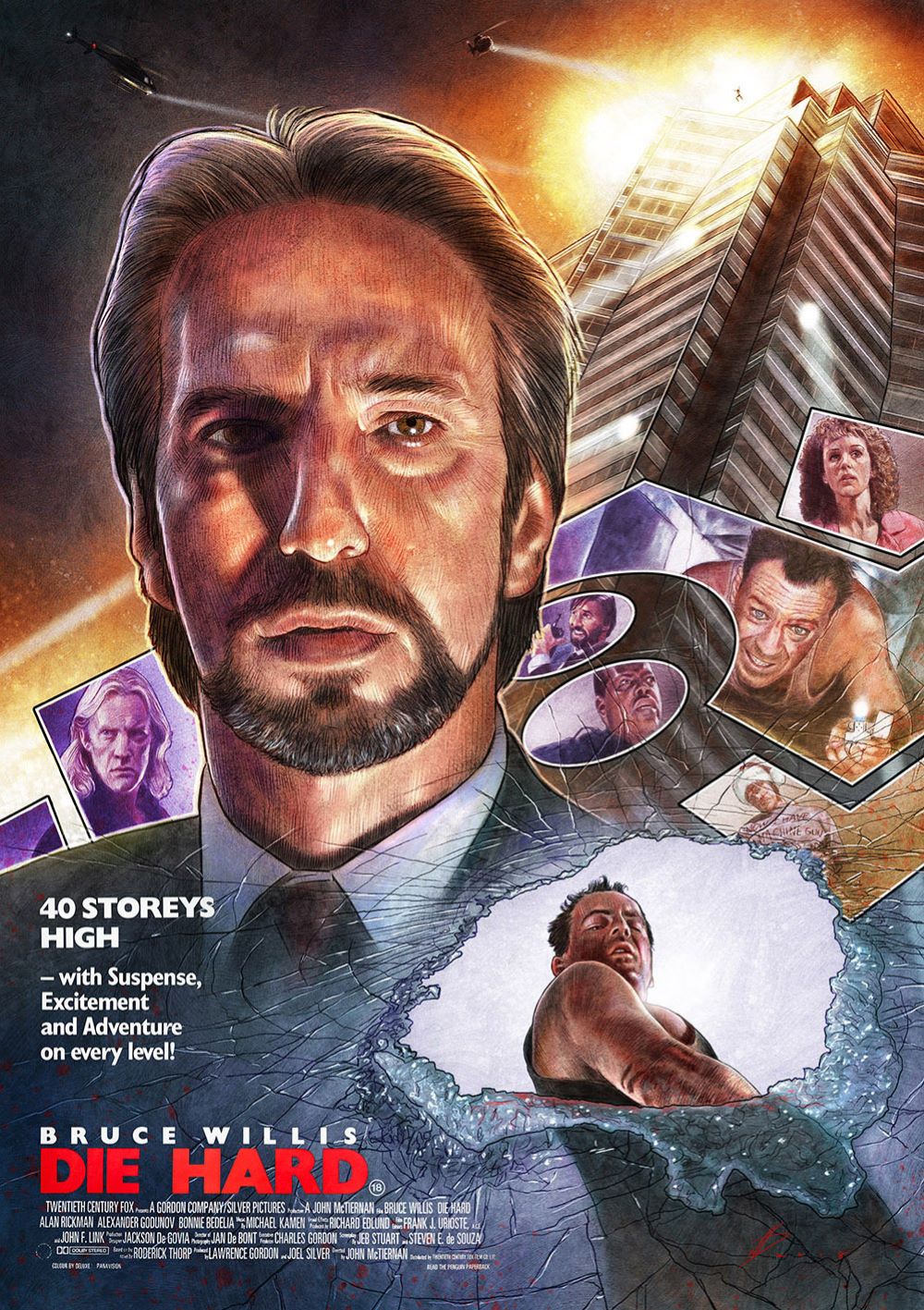
Brad’s Scene of the Day – “Just Like Saigon” from DIE HARD (1988)!


I noticed that character actor Robert Davi turns 74 years old today, which gives me an excuse to share a favorite scene from DIE HARD!

Happy Birthday, Robert! I hope it’s a “Just like Saigon” level of happiness for you today!

Film Review: City Heat (dir by Richard Benjamin)


In 1984’s City Heat, Clint Eastwood plays Lt. Speer, a tough and taciturn policeman who carries a big gun, throws a mean punch, and only speaks when he absolutely has to.

Burt Reynolds plays Mike Murphy, a private investigator who has a mustache, a wealthy girlfriend (Madeleine Kahn), and a habit of turning everything into a joke.

Together, they solve crimes!

I’m not being sarcastic here.  The two of them actually do team up to solve a crime, despite having a not quite friendly relationship.  (Speer has never forgiven Murphy for quitting the force and Murphy has never forgiven Speer for being better at everything than Murphy is.)  That said, I would be hard-pressed to give you the exact details of the crime.  City Heat has a plot that can be difficult to follow, not because it’s complicated but because the film itself is so poorly paced and edited that the viewer’s mind tends to wander.  The main impression that I came away with is that Speer and Murphy like to beat people up.  In theory, there’s nothing wrong with that.  Eastwood is legendary tough guy.  Most people who watch an Eastwood film do so because they’re looking forward to him putting the bad guys in their place, whether it’s with a gun, his fists, or a devastating one-liner.  Reynolds also played a lot of tough characters, though they tended to be more verbose than Eastwood’s.

That said, the violence in City Heat really does get repetitive.  There’s only so many times you can watch Clint punching Burt while various extras get gunned down in the background before it starts to feel a little bit boring.  The fact that the film tries to sell itself as a comedy while gleefully mowing down the majority of the supporting cast doesn’t help.  Eastwood snarls like a pro and Reynolds flashes his devil-may-care smile but, meanwhile, Richard Roundtree is getting tossed out a window, Irene Cara is getting hit by a car, and both Kahn and Jane Alexander are being taken hostage.  Tonally, the film is all over the place.  Director Richard Benjamin was a last-minute replacement for Blake Edwards and he directs without any sort of clear vision of just what exactly this film is supposed to be.

On the plus side, City Heat takes place in Kansas City in 1933 and the production design and the majority of the costumes are gorgeous.  (Unfortunately, the film itself is often so underlit that you may have to strain your eyes to really appreciate it.)  And the film also features two fine character actors, Rip Torn and Tony Lo Bianco, are the main villains.  For that matter, Robert Davi shows up as a low-level gangster and he brings an actual sense of menace to his character.  There are some good things about City Heat but overall, the film is just too messy and the script is a bit too glib for its own good.

Burt Reynolds and Clint Eastwood had apparently been friends since the early days of their careers.  This was the only film that they made together.  Interestingly enough, Reynolds gets the majority of the screentime.  Eastwood may be top-billed but his role really is a supporting one.  Unfortunately, Reynolds seems to be kind of bored with the whole thing.  As for Clint, he snarls with the best of them but the film really doesn’t give him much to do.

A disappointing film, City Heat.  Watching a film like this, it’s easy to see why Eastwood ended up directing himself in the majority of his films.

The Films of 2024: Reagan (dir by Sean McNamara)


In Reagan, Dennis Quaid stars at the 40th President of the United States.

Framed as a story being told by a former KGB agent (Jon Voight) who is attempting to make a younger politician understand why Russia lost the Cold War, Reagan starts with Reagan’s childhood, includes his time as an actor and as the anti-communist head of the SAG, and then gets into his political career.  Along the way, several familiar faces pop up.  Robert Davi plays a thuggish Russian leader.  Mena Suvari plays Reagan’s first wife while Penelope Ann Miller plays his second.  Xander Berekely plays George Schultz (who was just previously played by Sam Waterston in The Dropout miniseries.)  C. Thomas Howell, Kevin Dillon, Dan Lauria, and Lesley-Anne Down all have small but important roles.  And the usual suspects when it comes to conservative filmmaking — Nick Searcy, Kevin Sorbo, and Pat Boone — are there to compliment Voight and Davi.  I was a little surprised to see that Dean Cain was not present.

As usually happens to films that feature sympathetic Republicans, Reagan was slammed by critic but better-appreciated by the audience for which the film was made.  I wasn’t particularly surprised.  Movie critics tend to be liberal and Reagan is very much not that.  For a professional film critic, a film like Reagan must be met with snark and derision because otherwise, one would risk cancellation.  Don’t get me wrong.  I’m not saying that there aren’t things to criticize about Reagan the film.  I’m just saying that one should always keep in mind that critics have their own individual biases.  One reason why the Rotten Tomatoes score is such an unfortunate development is because it ignores the fact that most films have things that work and things that don’t work and that quality is often in the eye of the beholder.  Instead, it just tells us that a film is either a 90% or a 10%.

As for Reagan, it’s definitely a bit on the heavy-handed side but, then again, I think the same can be said for just about every political film that’s come out over the last few decades.  For those who claim Reagan is somehow more heavy-handed than most, I invite them to sit through Rob Reiner’s LBJ.  Indeed, the only director who has really shown a willingness to admit that a President can be both good and bad was Oliver Stone and when was the last time anyone watched NixonReagan is at its weakness when it tries to recreate Reagan’s time as an actor.  Dennis Quaid gives a good and charming performance throughout the film but he’s also 70 years old and, in the scenes where he plays the youngish Ronald Reagan, all of the soft-lighting and Vaseline on the lens ends up making him look like a wax figure.  Once Reagan gets older, Quaid is allowed to act his age and both he and the film become much more convincing.  I enjoyed the film once Reagan became President, though you should understand that I have biases of my own.  I’m a fan of low taxes and individual freedom, which is why I’m also not a fan of communism or, for that matter, any extreme ideology that attempts to tell people how to live or think.  “Tear down this wall!” Regan says while standing in front of the Berlin Wall and it’s a rousing moment, both in reality and on film.

In the end, Reagan is a film that will be best appreciated by people who already like Ronald Reagan.  Yes, the film is heavy-handed and the framing device is a bit awkward.  But Dennis Quaid’s heartfelt (and, towards the end, heartbreaking) performance carries the film.  The film is not at all subtle but you know what?  I’ve seen a countless number of mediocre films that have portrayed Reagan negatively, often with as little nuance and just as heavy-handed an approach as Reagan uses in its positive portrayal of the man.  I sat through The Butler, for God’s sake.  There’s nothing wrong with having a film that looks at the man from the other side.  Those who like Ronald Reagan will feel vindicated.  Those who don’t will say, “What was up with that Pat Boone scene?”

Cops and Robbersons (1994, directed by Michael Ritchie)


Chevy Chase is Norman Robberson, a hen-pecked suburban dad who likes to watch cop shows.  When he is informed that his next door neighbor, Horace Obsborn (Robert Davi), is suspected of being a Mafia hitman, he agrees to allow Detectives Jake Stone (Jack Palance) and Tony Moore (David Barry Gray) to use his house as their stakeout location.

Cops and Robbersons is just as terrible as its title.  Norman is basically Clark Griswold without the excuse of a vacation or the holidays to explain away his stupidity.  Jack Palance growls and looks annoyed but without the same comedic flair that he brought to City Slickers.  Dianne Wiest is wasted as Norman’s wife.  Of course, Norman’s daughter develops a crush on Tony while Norman’s son dressed up like Dracula and tries to put the bite on Stone.  Norman keeps getting in the way of the two cops and trying to conduct an investigation on his own.  There has to be an easier way to capture a hitman.  The only thing that really works is Robert Davi’s performance as the hitman.  Davi doesn’t try to be funny, which actually brings out the best in Chase whenever they share a scene.  Chase’s goofy dad shtick works best when he’s dealing with someone who isn’t trying to score laughs of his own.

How did the great Michael Ritchie end up directing movies like this?  Whoever let that happen should be ashamed.


Retro Television Review: St. Elsewhere 1.7 “Legionnaires: Part Two”


Welcome to Retro Television Reviews, a feature where we review some of our favorite and least favorite shows of the past! On Fridays, I will be reviewing St. Elsewhere, a medical show which ran on NBC from 1982 to 1988.  The show can be found on Hulu!

This week, the hospital’s in chaos!

Episode 1.7 “Legionnaires: Part Two”

(Dir by Mark Tinker, originally aired on December 14th, 1982)

With one of the wards shut down due to a Legionnaires outbreak, the hospital is in crisis.  All of the patients from the infected ward and their doctors have been moved to a new floor and now, everyone is stressed and overworked.  Dr. Westphall insists to the Hospital Board that he has no regrets about shutting down the ward and that he did what he had to do.  Westphall is vindicated when it turns out that he was correct about the Legionnaires outbreak but he still has to admit that administrator H.J. Cummings (Christopher Guest) has a point about Westphall’s actions causing a panic.  Cummings argues that Westphall could have quietly closed the ward without alerting the media.  In the end, it doesn’t matter as Cummings explains that he’ll be the one who gets fired over the bad publicity, not Westphall.  The episode ends with Westphall returning to his small home, carrying the birthday present that he was supposed to give his son that day.  Westphall has dedicated his life to the hospital and it’s obvious that his family has often had to wait until he has time for them.

(I’m starting to understand why Westphall always seems so damn depressed.)

Some people take advantage of the chaos.  Two gang members (one of whom is played by a very young Robert Davi) hit Fiscus over the head and steal his wallet after Fiscus stitches up one of their hands.  Peter White, eager to get away from his troubled marriage, shows up to work Morrison’s shift for him.  Dr. Chandler glares at a nurse that he previously accused of unprofessional behavior.  Dr. Craig tries to find someone foolish enough to buy his old convertible from him.  And head nurse Helen Rosenthal finds herself being called over and over again to the room of patient Martha Mulvahey (Ann Bronston).

Poor Martha!  She has a reputation for being a problem patient, because she’s always calling for the nurses and asking them to do things for her, like wash her hair or raise her bed.  Only Helen is willing to put up with Martha but even Helen loses her temper when Martha asks for help putting on her makeup.  Finally, Martha breaks down and explains that her arthritis is so severe that she can barely move her hands.  She’s a librarian and she can’t even turn the pages of a book anymore.  (Excuse me, I think I have something in my eye….)  A friend is coming to visit her at the hospital and she just wants to look good for him because she doesn’t want him to remember her as someone who can’t even get out of a hospital bed.  Helen helps Martha put on her makeup.  At the end of the episode, the hospital may be in chaos but Martha gets to see her friend and that made me happy and brought even more tears to my eyes.

Meanwhile, psychiatric patient Jane Zontell (Laraine Newman) returns to the hospital and checks herself back in for treatment.  Dr. Beale (G.W. Bailey) is shocked to learn that Jane is three months pregnant.  But it’s only been two months since Jane was last a patient at St. Eligius so that father must be someone at the hospital.  Uh-oh.

(Personally, I suspect Fiscus.)

This was a good episode.  I cried for Martha.  I felt bad for Westphall.  I hope someone buys Dr. Craig’s car so he’ll stop bothering everyone else about it.  This episode was about how bad things can get at a hospital but, with Martha and Rosenthal, it offered up some hope as well.  All in all, it worked.

Retro Television Review: St. Elsewhere 1.5 “Samuels and the Kid”


Welcome to Retro Television Reviews, a feature where we review some of our favorite and least favorite shows of the past! On Fridays, I will be reviewing St. Elsewhere, a medical show which ran on NBC from 1982 to 1988.  The show can be found on Hulu!

This week’s episode of St. Elsewhere featured Dr. Craig winning an award.  Good for him!

Episode 1.5 “Samuels and the Kid”

(Dir by Thomas Carter, originally aired on November 30th, 1982)

This week’s episode of St. Elsewhere was kind of boring,  It wasn’t a bad episode because the show was well-acted and even the boring subplots felt as is they were part of a bigger whole but, especially when compared to last week’s episode, Samuels and the Kid just wasn’t as compelling.

The Kid of the title is Robbie Durant (Jeremy Licht), a young patient who needs to have some minor surgery done on his ankle.  Dr. Samuels take a really intense interest in the kid, bonding with him and even offering him tickets to a Patriots football game.  At first, it seems like Samuels is just trying to be nice to a kid who is in a scary situation.  (When I was growing up, I spent a few nights in the hospital because of my asthma and it always scared me to death.)  But, at the end of the episode, it is revealed that Samuels had a son who was Robbie’s age who died in a freak accident.  As for Robbie, the operation is a success but he still dies as the result of an embolism.  It was sad but, at the same time, I knew Robbie was going to die as soon as he showed up in the hospital.  I’ve seen enough medical shows to know.

Dr. Cavanero was at a bed-and-breakfast when she learned that one of her patients had gone into labor and was at her apartment alone.  Cavenro had to beg people for change so that she could use a pay phone to call the patient’s neighbors so that she could talk them through delivering the baby.  Seen today, the most interesting thing about this storyline is that it takes place at a time when people had to carry around quarters so that they could call each other in case of an emergency.  (There is a very dusty old payphone a few blocks away from my house.  I assume it doesn’t work and I don’t think it’s been touched by human hands since the 90s — and I’m certainly not going to touch it! — but it’s always interesting to see it sitting there like some haunted beacon of the past.)

Dr. Fiscus continued to have sex with Kathy Martin.  Good for them but I really don’t know that I need to spend a good deal of time listening to Howie Mandel talk about his sex life.

Dr. Chandler (Denzel Washington) accused a nurse of being incompetent.  Nurse Rosenthal (Christina Pickles) got mad at him for yelling at the nurse in the hospital hallway.  Dr. Westphall mediated and agreed to move the nurse to another floor.  Denzel Washington is always fun when he’s yelling at people.

There was one very funny scene.  Dr. Craig won an award for surgeon of the year and gave an extremely long, pompous, and rather bitter acceptance speech.  (The award was a plaster cast of his own hands.)  William Daniels played the scene perfectly and I have a feeling that Dr. Craig is going to end up becoming my favorite character.  As a bonus, Daniels’s wife, Bonnie Bartlett, appeared as Craig’s wife.  By the middle of Craig’s speech, even she had stoppled listening and lit a cigarette.

As I said, this was a little bit of a boring episode.   Still, I look forward to the future of the show!

Speaking of the future, this is my last St. Elsewhere review of 2024.  My next review of this show will post on January 3rd!


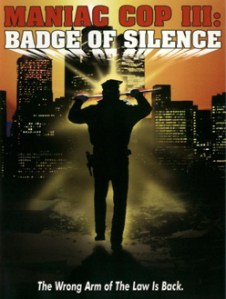
Maniac Cop III: Badge of Silence (1992, directed by William Lustig)


Despite finally getting his burial with honors at the end of Maniac Cop 2, Matt Cordell (Robert Z’Dar) returns for one last outing.  Raised from the dead by a voodoo houngan (Julius Harris), Cordell invades a hospital to seek vengeance for a comatose policewoman named Katie Sullivan (Gretchen Baker).  In a coma due to the wounds she received while thwarting a convenience store robbery, Katie is being framed by unscrupulous reporters and attorneys who claim that Katie was a bad cop who killed a clerk in cold blood.  Cordell sees Katie as being a fellow victim of anti-cop bias and he is not going to let anyone treat her with disrespect, which is something that two doctors (Robert Forster and Doug Savant) are unfortunate enough to discover.  Sean McKinney (Robert Davi) and Dr. Susan Lowery (Caitlin Dulany) try to figure out how to bring peace to the souls of both Cordell and Katie.

As opposed to the first two films, Maniac Cop III had a troubled production.  Lustig and screenwriter Larry Cohen wanted to set the film in a Harlem hospital and bring in an African-American detective to investigate Cordell’s activities.  The film’s Japanese producers insisted that Robert Davi return as the lead, even though the script’s lead character had little in common with the way Sean McKinney was portrayed in Maniac Cop 2.  Larry Cohen then refused to do any rewrites on the script unless he was paid more.  William Lustig filmed what he could and ended up with a 51-minute movie.  Extra scenes were directed by one of the film’s producers and the film was also padded out with outtakes from Maniac Cop 2.

The film is disjointed and there’s too much time devoted to Jackie Earle Haley playing a character who has much in common Leo Rossi’s serial killer from the second film.  (Haley’s performance is fine but the character feels superfluous).  But the movie’s hospital setting leads to some interesting kill scenes and Z’Dar and Davi both give good performances as two different types of maniac cops.  The supporting cast is full of good character actors like Haley, Forster, Savant, Julius Harris, Bobby Di Cicco, and Paul Gleason.  Despite the film’s flaws, Maniac Cop III is a solid ending for the trilogy.

Maniac Cop 2 (1990, directed by William Lustig)


Maniac Cop 2 picks up where the first Maniac Cop ended.

The NYPD thinks that the undead maniac cop Matt Cordell (Robert Z’Dar) has been destroyed but he is actually still alive and killing civilians and cops in New York.  He has even teamed up with a serial killer named Steven Turkell (Leo Rossi, ranting and raving like a pro).  Jack Forrest (Bruce Campbell) and Theresa Malloy (Laurene Landon) both return from the first film but both of them are killed by Cordell before the movie is even halfway over.  Maniac Cop 2 is not playing around.

With Jack and Theresa gone, it falls to Detective Sean McKinney (Robert  Davi) and Officer Susan Riley (Claudia Christian) to discover what the rest of the audience already knows, that Cordell is seeking revenge against the system that abandoned him in prison.  The new police commissioner, Ed Doyle (Michael Lerner), is determined to cover up what happened but Cordell is even more determined to have his vengeance.  Working with Turkell, Cordell heads to the prison where he was unjustly incarcerated and murdered.

Maniac Cop 2 is a marked improvement on the first film.  Cordell is no longer a lumbering and slow monster.  He is now a ruthless, Terminator-style executioner who, in the film’s best-known scene, wipes out an entire police precinct in a matter of minutes.  Cordell is so ruthless that he won’t even stop when he’s on fire.  His partnership with Turkell adds a new twist to the Maniac Cop saga.  Turkell views Cordell as his partner-in-crime but Cordell is only interested in getting his revenge.  (Turkell was originally meant to be Frank Zito, the main character from Lustig’s Maniac.  When Maniac star Joe Spinell died before shooting began, the role was changed to Leo Rossi’s Steven Turkell.)

Stepping into the shoes of the main investigation, Robert Davi gives one of his best performances.  As opposed to the boring heroes of the first film (sorry, Bruce!), Davi’s Sean McKinney is just as obsessive and ruthless as Cordell.  Cordell sets fire and McKinney uses those fires to light his cigarettes.

William Lustig has described Maniac Cop 2 as being his best film and he’s probably right.  It is definitely the best of the Maniac Cop films and the only one to fully take advantage of its premise.