Trailer: Exodus: Gods and Kings (Final)


Exodus Banner

Ridley Scott has been hit-or-miss (mostly misses) of late and response to the trailers and news about Exodus: Gods and Kings doesn’t seem to be helping.

Yet, despite all the indifference to Scott’s upcoming Biblical epic (and calls of whitewashing) I am quite intrigued about this take on the Book of Exodus. Will it have the pageantry of Demille’s The Ten Commandments (both of them)? Or will it be another CGI-overload? Or will it be a piece of entertaining pulp a la Gladiator? I guess we will find out this Holiday season.

Exodus: Gods and Kings is set for a December 12, 2014 release date.

Trailer: Exodus: Gods and Kings (Official)


Exodus Banner

Ridley Scott has been instrumental in bringing back the sword-and-sandal epic when he unleashed Gladiator to audiences everywhere in the summer of 2000. Since then he has made many films which range from black comedy to historical epic right up to horror and a war film.

With Exodus: God and Kings, Scott returns to the sword-and-sandal epic but now with a heavy dose of the Biblical as he adapts the Old Testament Book of Exodus. A film working on the same scope and scale as Cecil B. Demille The Ten Commandments released in 1956, this latest adaptation of Moses, Ramses and the exodus of the Israelites from Egypt looks to put the epic back in 2014.

With each passing year, more and more of Scott’s films have taken on the unavoidable sheen of the CGI as his visuals attempt to recreate time and places of Earth’s past. For some, Scott’s been more miss than hit with the last couple films yet they all remain visual feasts and Exodus: Gods and Kings looks to continue that streak. Whether the film will be good storytelling will be something that’s still to be decided.

Exodus: Gods and Kings is set for a December 12, 2014 release date.

Let’s Play Catch Up With The Trailer for Exodus: Gods and Kings


Here’s another trailer that came out while I was busy Embracing the Melodrama.  I’m not really sure how I feel about Exodus: Gods and Kings.  The trailer looks good and epic and all that but what’s the deal with all of the”sword and sandal” films coming out this year?  Not only do we have two Hercules films, Pompeii, and the 300 sequel, we also had Noah and now we’ve got Exodus coming out.  Last year, we saw a spate of end-of-the-world films.  This year, we’re seeing films that are meant take place at the beginning of the world.  Anything to avoid dealing with present, I suppose.

Incidentally, I still say that Ridley Scott’s previous film, The Counselor, was far better than most people realize.

Film Review: Someone To Watch Over Me (dir by Ridley Scott)


Last night, my BFF and I were searching for a movie to watch.  As we were looking through what was available on demand, we came across a film from 1987 called Someone To Watch Over Me.  The film was described as being a romantic thriller about a “happily married cop who becomes infatuated with the wealthy and beautiful woman he’s been assigned to protect from a death threat.”

“This sounds like it might be good,” I said, “Plus, it’s directed by Ridley Scott and he’s good … sometimes.”

“Who’s in it?” my BFF asked.

“Tom Berenger.”

“Who?”

“He was in Inception.”

“Who did he play in Inception?  Was he the rich guy or was he one of Leonardo DiCaprio’s friends?”

“Neither.  He was just kinda there.”

Anyway, whether it was the Inception-connection or the fact that my friend was tired of listening to me obsessively read the description of every single film that was available on demand, we decided to watch Someone To Watch Over Me.

And you know what?

It’s no Inception but Someone To Watch Over Me is still a fairly entertaining little film.

In Someone To Watch Over Me, a youngish Tom Berenger plays Mike Keegan, a New York cop who has just been promoted to detective.  When wealthy socialite Claire Gregory (Mimi Rogers) witnesses a murder, Mike is among the detective assigned to guard her.  Though the resolutely blue-collar Mike and the sophisticated Claire come from different backgrounds, they both find themselves attracted to one another.  For Mike, Claire represents the type of lifestyle that he can only dream of.  For Claire, Mike is the opposite of the pretentious and vapid men that usually surround her.  Unfortunately, a sinister gangster is attempting to kill Claire and Mike’s down-to-earth wife Ellie (played by Lorraine Bracco) will kill him if she ever finds out.

Now, let’s make one thing clear.  The plot of Someone To Watch Over Me is just as predictable as you think it is.  As you read my summary, you probably guessed every single thing that happens in the film.  There are no surprises and there are no twists.  Everything in the movie plays out exactly the way that you’re expecting it too.

And yet, as predictable as it was, I still enjoyed Someone To Watch Over Me.  One reason was because of a scene in which Ellie reacts to Mike’s self-serving apologies by punching him in the face.  Lorraine Bracco — who is great in this film — throws that punch as if the fate of every woman on the planet’s self-respect depended upon it.  When she strikes out at her husband, it changes the film.  It’s no longer a film about romance.  Instead, it becomes a film about adultery.  Even while the film itself tries to play up the romance between Claire and Mike, both Ellie and Lorraine Bracco refuse to be pushed to the side.  After sitting through so many films that feature women nobly stepping aside so that their significant other can find happiness with his “true love,” it was refreshing to see Ellie call Mike out on his sanctimonious bullshit.

Secondly, I enjoyed Someone To Watch Over Me because it truly is a time capsule of the time when it was made.  I was born in 1985, which perhaps is why I’ve always been fascinated by 80s films.  If nothing else, they give me a chance to see what was going on in the rest of the world while I was busy learning how to walk.  Someone To Watch Over Me was released in 1987 and everything about it — from the fashion to the celebration of wealth and glamour to Ridley Scott’s artfully composed shots of New York at night to the vaguely cokey vibe given off by some members of the supporting cast to the landline phones — made me feel as if I had stepped into my own personal time machine.

So, in the end, Someone To Watch Over Me is not exactly a great or even a memorable film.  However, I’m still glad we watched it.


Defending the Counselor


The_Counselor_Poster

(Spoilers Below)

The Counselor was one of the most anticipated films of 2013.  After all, it was based on a screenplay by the Pulitzer-prize winning novelist Cormac McCarthy and it was directed by Ridley Scott.  Its cast included such stars as Michael Fassbender, Javier Bardem, and Brad Pitt.  The film’s two trailers promised a return to the thematic territory that the Coen Brothers explored in their Oscar-winning adaptation of McCarthy’s No Country For Old Men.

And yet, when The Counselor was released in October, the reviews were scathing and audience response was reportedly terrible.  Writing for Salon, film “critic” Andrew O’Hehir suggested that The Counselor was not only the worst film of 2013 but the worst film of all time.

And you know what?

For not the first time, Andrew O’Hehir was wrong.  The Counselor is not the worst film of 2013.  Instead, it’s one of the best.  It’s a film that will be studied long after more acclaimed films have been forgotten.

Why is The Counselor so hated?

It’s not an easy film to love.  In fact, the film is rather brave about alienating its audience and refusing to allow for the crowd-pleasing moments that viewers have come to expect from even the most prestigious of films.

In order to truly defend the Counselor, it’s necessary to know the plot of The Counselor.  Needless to say, everything that follows constitutes a huge spoiler so, if you’re one of those types, feel free to stop reading now.

Brad-Pitt-Michael-Fassbender-Counselor

Okay, still here?  Here’s a condensed version of what happens in The Counselor:

The Counselor (Michael Fassbender) is an honest lawyer in El Paso who has never broken the law and is engaged to marry the beautiful and saintly Laura (Penelope Cruz).  For reasons that are never explicitly stated (but, as I’ll explain below, are obvious to anyone who is willing to look for the clues), The Counselor agrees to help his clients Westray (Brad Pitt) and Reiner (Javier Bardem) smuggle a huge shipment of cocaine into the U.S. from Mexico.  However, Reiner’s girlfriend Malkina (Cameron Diaz) steals the drugs and frames the Counselor for the theft.  As a result, Reiner ends up getting executed by the Mexican cartel, Westray is beheaded on the streets of London, and the Counselor ends up hiding out in Juarez, Mexico, sobbing as he looks at a DVD copy of a cartel-produced snuff film that features Laura being murdered.  The end.

Yeah, it’s not exactly a happy film.  And yet, it’s a film that sticks with you, a portrait of a shadowy underworld that is fueled solely by greed, paranoia, and masculine posturing.  Ridley Scott makes good use of the South Texas landscape and the talented cast creates a memorable gallery of rouges.

And yet, The Counselor is getting some of the worst reviews of the year.  What’s especially interesting is that the things that so many critic cite as flaws are actually the film’s greatest strengths.

The Counselor

Consider the following common criticisms:

1) The film features some of the most overly articulate drug deals of all time.

This is the most frequent complaint that I’ve come across concerning The Counselor and there is some validity to it.  The Counselor is a very talky film.  The film’s first hour is pretty much made up of The Counselor having three conversations, all about the same thing and all reaching the same conclusion.  Cormac McCarthy’s dialogue is, perhaps not surprisingly, rather portentous and florid.  The Counselor does ask the audience to accept a world where even the head of Mexico’s most powerful cartel is given to going off on long philosophical digressions.  The Counselor is one of those films where nearly every line seems to have a double meaning.

That said, I think that those who attacking the film’s dialogue are missing the point.  This is not meant to be a naturalistic film.  Instead, it’s a heavily stylized B-film that uses its sordid story as a metaphor for dealing with deeper issues of greed, masculinity, and the changing mores of American culture.  Much as every line of dialogue has a deeper meaning, so does every pulpy plot twist.  It takes a while to adjust to McCarthy’s dialogue but, ultimately, that dialogue serves to remind us that the film has a lot more on its mind than just telling the story about a drug deal gone bad.  The combination of overly articulate dialogue with primitive violence and desires encourages us to look under the film’s surface.

2) The film’s plot is predictable.

This may be true but I think that’s actually McCarthy’s point.  From the start of the film, the Counselor is continually warned that things could potentially go very wrong.  Despite these warnings, the Counselor still gets involved in Reiner’s drug and, through a combination of hubris and fate, he loses everything that he loved.

The Counselor’s downfall is not meant to be a surprise.  Instead, McCarthy’s point is that the consequences of our actions are usually obvious but we, as human beings, chose to live in denial about just how little control we actually have over our own fate.

TheCounselor-Diaz-Cheetah-Tat

3) Ridley Scott’s direction is stylish but ultimately empty.

This argument goes that, while Scott manages to capture some gorgeous images of the Texas/Mexico border, those images ultimately don’t add up to much.  The idea goes back to a charge that is frequently leveled against Ridley Scott as a director, that he’s all style and technique with little substance.  (Interestingly enough, this is the same charge that is often made against the Coen Brothers.)

In the past, I’ve been critical of Ridley Scott.  (For proof, check out my reviews of Robin Hood and Gladiator.)  However, that being said, I think that, with The Counselor, Scott does a good job of visually interpreting the concepts at the heart of McCarthy’s script.  My mom was from South Texas and I’ve spent enough time down there to understand just how perfectly Ridley Scott manages to capture the combination of beauty and harshness that one finds along the border between Texas and Mexico.  In Scott’s hands, the emptiness of the Texas landscape serves as a perfect parallel for the emptiness of the lives of the majority of the film’s characters.

Speaking of which…

4) The motivations of the Counselor remain a mystery.

Why does the Counselor get involved in the drug deal in the first place?  Many of the film’s critics have complained that the Counselor’s motivations remains a mystery and therefore make it impossible for audiences to sympathize with the character.

Nothing could be further from the truth.

What these critics are failing to realize is that the Counselor’s motives are obvious every time that he appears on-screen.  The audience has to be willing to look for them.  The audience has to be willing to think and that, of course, is asking quite a bit of some viewers.
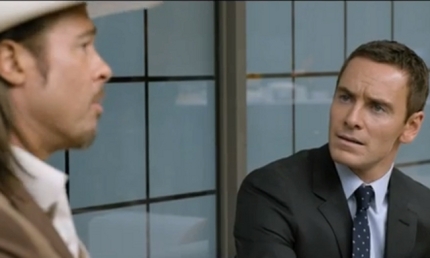
The-Counselor

While the Counselor hints that his reason for getting involved with the drug deal is so that he can make enough money to provide a good life for Laura, his actual motivations are far more selfish.  One need only see the Counselor in his perfectly pressed suits or in his sleek but sterile home to understand exactly who the Counselor is.  He is a character who has made his living by defending those who break the law but who has never had the courage to actually flaunt the rules himself.   He is a man who lives in a self-constructed prison of ennui and associating with Reiner and Westray gives him a chance to escape from his conventional existence.   He is a character who spends his day profiting from the crimes of others but, because he can go home to his beautiful home and his beautiful fiancee, assumes that he’s somehow detached from the consequences of the actions of his associates.

The Counselor starts the film as an unemotional, blank-faced cipher, a man whose entire identity is based on his job title.  (Indeed, we never learn once learn or hear the character’s actual name.)  The only time that he shows even a hint of human depth or emotion is when he’s with Laura.  He’s a man who, in many ways, is dead on the inside.  It’s only after he gets involved with Reiner and Westray that the Counselor starts to show any signs of life until, by the end of the film, he literally cannot control his emotions.   The Counselor frees himself from his stifling and conventional existence at the cost of everything and everybody that he loves.  In his pursuit of freedom, he simply moves from one self-imposed prison to another.

5) Particularly in its portrayal of Malkina, there is a strong streak of misogyny running through the film.

This is a point that I’ve seen made by several critics and it’s one that bothers me as both a feminist and as a female who happens to love genre films.  Just because a film features a misogynistic character does that therefore make the film itself misogynistic?

The majority of those who claim that The Counselor is anti-female often point to the character of Malkina.  As played by Cameron Diaz, Malkina is a hyper sexual sociopath who manipulates and destroys everyone else in the film.  Even though he’s obsessed with her, Reiner also claims to fear her and he has several conversations with the Counselor in which he cites her as proof that women cannot be trusted.

However, just because Reiner says this, that doesn’t necessarily mean that the film agrees.  In fact, as should be obvious to anyone who is actually willing to pay attention to the film, Reiner is portrayed as being a fool who, ultimately, is just as delusional as the Counselor.  Reiner, Wainstray, and the Counselor all exist in a hyper masculine environment.  For all of their posturing and macho talk, it’s also obvious that none of them are capable of truly dealing with women.  Wainstray can only bring himself to acknowledge them as potential sexual partners while the Counselor both idealizes Laura and uses her happiness as an excuse to pursue his own criminal enterprises.  Reiner, meanwhile, is both attracted to and terrified of Malkina.

the-counselor-ferrari-diaz

In perhaps the film’s most infamous scene, Malkina removes her panties and then grinds against the windshield of a Ferrari while Reiner watches from inside the car.  Some have argued that, with this scene, the filmmakers are equating Malkina’s sexuality with evil.  I, however, would argue that this scene shows that Malkina — alone of all the film’s major characters — understands the fact that all of the men in her life are essentially boys who are either incapable of or unwilling to grow up.  Malkina uses her sexuality not because she’s evil but because she’s intelligent enough to use every weapon at her disposal to make sure that she will be one of the few characters to survive to the movie’s conclusion.  By the end of the film, it’s obvious that Malkina is both the strongest and the most intelligent character in the film.

There’s an interesting scene towards the end of the film in which the Counselor, who is hiding out in Juarez, stumbles across a group of protesters who are holding pictures of young women who have either been killed on or vanished from the streets of Juarez.  Since 1993, over 4000 women have been murdered in Juarez.  The majority of those murders are still unsolved, with many blaming the Spanish tradition of machismo.  The feeling of many is that “good” girls stay home while “bad” girls get jobs in the city and are often  murdered as a result.  And, since the victims shouldn’t have been pursuing a life outside of domestic servitude in the first place, why waste the time trying to win them any sort of justice?  For the past decade, brave activists have put themselves in danger by daring to demand justice for the dead of Juarez.  When the Counselor stumbles across their rally, it’s a brief moment in which the real world and the cinematic landscape come together.

It’s also a scene that serves to remind us that the film’s characters are living in a hyper masculine world, one that embraces the concept of machismo without understanding or caring about the consequences of that destructive  culture.  The Counselor’s horrified reaction to the rally is the reaction of a man who has finally been forced to confront the evil of which he is now a permanent part.

6) The film’s ending is depressing.

Complaining about Cormac McCarthy writing a depressing ending is a bit like getting upset at a cat for purring.  It’s what McCarthy does and anyone with any knowledge of his work has no right to be shocked that the film ends on a note of hopelessness.  Much as with No Country For Old Men, The Counselor ends the only way that it can.  It may not be a happy ending but it is, at least, an honest ending.

The Counselor may not be an easy film to like but it’s definitely a film that deserves better than to be dismissed as the worst of 2013.


Counselor-Bardem2

Trash Film Guru Vs. The Summer Blockbusters : “Prometheus”


It’s funny how our expectations going into a film shape our perceptions of it while we’re watching it and, ultimately, our final opinions about it after we’ve seen it. Case in point : yesterday on this very blog I was talking about Snow White And The Huntsman, a movie I frankly expected nothing from, and about how, even though it delivered nothing but a substance-free series of pretty pretty pictures to look at, I wasn’t too pissed off about spending my hard-earned money to see because I wasn’t even sure it would deliver that much (or that little). Today, on the other hand, I’m going to be discussing a flick that I flat-out expected to suck, and that pretty much delivered on those expectations — yet left me feeling pretty well ripped off even though it, too was gorgeous to look at and even though, again, I figured it would be at least as bad as it was, if not worse.

I’m talking, of course, about Prometheus, Ridley Scott’s completely unnecessary Alien prequel. The reasons I went into this with essentially no optimism whatsoever are numerous — Scott hasn’t made a good film since Blade Runner, the script was co-authored by some guy named Jon Spaihts and one of the chief culprits behind the unwatchable, thoroughly confused mess that was TV’s Lost, Damen Lindelof (who’s apparently irked huge segments of the online film geek community with a recent series of over-the-top-in-the-self-serving-department comments), and frankly because any film that set out to “explain” and “demystify” the H.R. Giger-designed evil aliens form the original film series sounded like something with the power to not only be completely pointless (some power), but to actively detract from the impact the first film had by filling in a bunch of blanks that are best left — well, blank.

Of course, there were reasons for optimism, as well — a first-rate cast, sure-fire scrumptious CGI effects, and a promised “return to the Alien series’ roots” after some rather unfortunate side-steps and detours all sounded pretty cool, but I still went into this one prepared for the worst.

I didn’t get that. Instead I got a confused, cliched, every-bit-as-unnecessary-as-I’d-expected mess of a film that, in its defense, at least really does look amazing. Which was enough for me to give Snow White And The Huntsman a pass, admittedly — but hyprocrite that I am I just can’t be as forgiving when it comes to Prometheus. Why not? Because at the end of the day I don’t really give a shit either way about the Snow White legend, but I do care about the Alien franchise. A lot. Scott’s first film rates right up there with John Carpenter’s The Thing on my list of all-time great sci-fi horrors, and I even enjoyed most of the various sequels to one degree or another. So it’s fair to say that, even though I didn’t figure it would be, I still wanted this flick to be good.

So where to begin with the reasons why it wasn’t? Well, how about we start with that stellar cast I mentioned a minute ago. It’s completely wasted. Apart from the film’s “Ripley-lite” protagonist, Dr. Elizabeth Shaw (Noomi Rapace, who turns in a heck of a good performance), none of the characters are developed at all. the very talented Idris Elba is stuck in a one-dimensional role as the titular ship’s captain and can’t even seem to decide what accent he should settle on when he’s speaking. Charlize Theron plays an ice princess — again. Michael Fassbender, at the top of pretty much every current Hollywood “hot” list, turns in a dry, uninvolved turn as the ship’s android that won’t be causing Ian Holm to lose any sleep (although, in Fassbender’s defense, the fact that Spaihts and Lindelof reveal that he’s robotic from the outset doesn’t help matters any). Guy Pearce, as old man Weyland, the expedition’s financier, might as well be replaced with a computer-generated stand-in. There’s even a completely pointless two-second cameo from Patrick Wilson inserted for reasons I can’t even begin to fathom. So much talent with oh so little to actually, you know, do.

Then there’s the script. Dear God, what a disaster. Shoehorning a bunch of unnecessary Chariots Of The Gods-style crap into the Alien “mythos” is about the worst direction these truly Lost writers could have chosen to go. Instead of illuminating anything (not , again, that much “illumination” was really needed — the original story stood on its own just fine), it just muddies the waters. There’s some laughably atrocious dialogue that wouldn’t sound out of place in an Ed Wood film (like when the ship’s geologist, in the midst of a massive freak-out, declares ” I like rocks, right? I really like rocks!”). And the main thrust of the action is essentially a direct carbon copy of the “story arc” from the first film (you know, for instance, who the only survivor is going to be from the outset). It’s like Spaihts and Lindelof can’t decide between trying to do something completely out of left field (albeit thoroughly confusing) or just settling on the same old blueprint so in the end, they go for both — and end up doing each competing narrative impulse a massive disservice.

I keep coming back to the amazing visual prowess Scott’s CGI gurus display here consistently from start to finish, and I suppose it’s worth mentioning one more time just to balance the scales here a bit, but what’s that old saying about lipstick on a pig? Prometheus cakes on the makeup, but underneath, its true face is still that of the victim of a particularly nasty car wreck. And like an accident victim, it’s so disfigured and tragic that you’re almost tempted to feel sorry for it — until you learn that said victim was driving drunk at 150 mph and the person in the other car (I guess that would be the audience in this case — bear with me as I stretch this metaphor way beyond the breaking point) didn’t make it out alive.

It takes an almost Herculean effort to not be as bad as I was fearing Prometheus would be yet still somehow leave me feeling even more cheated and let down than I would have felt had it actually been even worse (if that makes any sense at all) —yet that’s exactly what Scott, Spaihts, and Lindelof  have managed to do here. File that under “go figure” and then, to return the already-worn-out accident metaphor, move along, folks — nothing to see here.

Trailer: Prometheus (International Launch)


We get what could be the definitive trailer for Ridley Scott’s prequel to his Alien film.

This latest trailer is the international launch trailer and runs just a shade under 3 minutes. We definitely get a sense of what the film is about but not so much that it spoils the film’s entire story. Some have been anticipating this film since it was first announced and with each release of production stills and teasers the hype just continues to build. Then there are those who hate this film without even seeing it because they see it as either a cash grab or an attempt by a filmmaker to break a string of sub-par films.

I stand pretty much between these two camps. While I’ve always enjoyed Ridley Scott’s work even those he whiffs badly on I’m also hesitant to fully embrace this prequel as a can’t-miss without having seen it. So much about the Alien franchise has been ruined by badly made sequels and mash-ups that it’s going to take something momentous to have me put unquestioned faith back into the franchise.

Maybe Scott returning to something he’s familiar with and having had learned more about filmmaking since the first film means he’ll bring something new to the franchise and help bring it back from the brink of mediocrity. Here’s to hoping that is the case. One thing I’m sure of is that he’s got an all-star cast to work with.

Prometheus is set for a June 8, 2012 release date.

Prometheus: Peter Weyland TED 2023 (Video Clip)


The video above was released today by 20th Century Fox as part of their marketing machine to help create buzz for their upcoming summer blockbuster scifi film Prometheus.

It’s a clip of a fictional keynote speech by one Peter Weyland at the TED 2023 conference. Guy Pearce plays the role of Peter Weyland and talks about how technology’s influence in human history from the beginning with fire (he mentions the Greek myth of Prometheus stealing the technology of fire from the gods and giving it to man) all the way to artificial intelligence and realistic cybernetic constructs.

Anyone who has been a fan of the Alien franchise will recognize the name Weyland. It’s the fictional transnational corporation which has become a major part of the films in the franchise and, to a degree, even to the Predator franchise. They’re the corporation which sends Ripley and the crew of the ore mining hauler Nostromo to the desolate planet of LV-426 where they encounter the very lifeform that would become one of film’s iconic monsters. It is also the corporation which 70+ years later would send a terraforming colony to the very same planet which would become a major part of the plot for Aliens. Even the David Fincherdirected third film, Alien 3, would use the corporation as the monolithic badguy behind-the-scenes.

Weyland is just part of the corporation’s name as through the years it would combine with another corporation to become Weyland-Yutani. While the aliens in the franchise have been the immediate threat in all the films in the franchise it would be Weyland-Yutani who became the face of the corporate evil that continues to try to get samples of the very alien the franchise is known for.

It’s going to be interesting how this viral video ties into the upcoming Ridley Scott “prequel” to Alien and whether Weyland-Yutani will play a major role in the film’s plot. One thing I’m sure is that Pearce definitely plays a convincing corporate visionary with a God-complex that’s part Steve Jobs and part Richard Branson (if both iconic businessmen channeled their inner-darkside).

Prometheus is set  for a June 8, 2012 release date.

Lisa’s Thoughts On 10 Best Picture Nominees That She’s Recently Seen: The Alamo, Becket, Elmer Gantry, Gaslight, Gladiator, Kramer Vs. Kramer,Marty, Of Mice and Men, Out of Africa, and Wilson


Since it’s Oscar weekend, I’ve been watching past and present Best Picture nominees like crazy.  Here are my thoughts on ten of them.

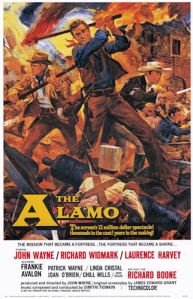
The Alamo (1960, directed by John Wayne, lost to The Apartment) — I’m a Texan which means that I’m legally required to watch both this film and the 2004 remake whenever they show up on television.  Both films are way too long and feature way too many characters speaking speeches as opposed to dialogue but, if I had to choose, I would have to go with the 1960 version of the story.  The original Alamo might be heavy-handed, poorly paced, and awkwardly acted but at least it’s sincere in its convictions.  I always cry when Richard Widmark dies.

Becket (1964, directed by Peter Glenville, lost to My Fair Lady) — This one is a personal favorite of mine.  The film is about the friendship and the eventual rivalry of King Henry II (Peter O’Toole) and Thomas Becket (Richard Burton).  Becket and Henry II start out the film drinking and whoring but eventually, Henry makes Becket Archbishop of Canterbury.  Becket, however, rediscovers his conscience and soon, Henry is famously asking, “Who will rid me of this troublesome priest?”  Becket is an exciting historical drama and Peter O’Toole is at his absolute best as the flamboyantly decadent Henry.

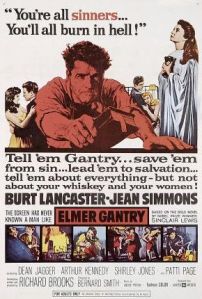
Elmer Gantry (1960, directed by Richard Brooks, lost to The Apartment) — Burt Lancaster plays Elmer Gantry, a traveling salesman and con artist who ends up falling in love with a saintly evangelist (played by Jean Simmons).  Gantry soon starts preaching himself and soon has an army of loyal followers.  However, Gantry’s new career is threatened when an ex-girlfriend-turned-prostitute (Shirley Jones) pops up and starts telling people how Gantry “rammed the fear of God into” her.  With its unapologetically corrupt lead character and its looks at how commerce and religion are often intertwined, Elmer Gantry makes a perfect companion piece to Paul Thomas Anderson’s There Will Be Blood.  Lancaster won an Oscar for his powerful and intense performance in the title role.

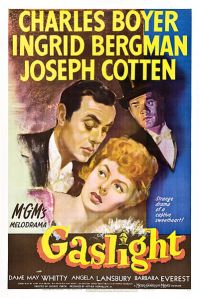
Gaslight (1944, directed by George Cukor, lost to Going My Way) — Evil Charles Boyer marries Ingrid Bergman and then attempts to drive her crazy.  Luckily, Inspector Joseph Cotten is on the case.  Gaslight is, in many ways, an old-fashioned melodrama but it’s still a lot of fun to watch.  Boyer is a suave devil and Joseph Cotten (one of my favorite of the old film actors) is a dashing hero.

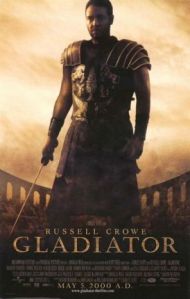
Gladiator (2ooo, directed by Ridley Scott, won best picture) — One thing that I’ve recently discovered is that men love Gladiator.  Seriously, they obsess over this film and hold Russell Crowe’s surly gladiator up as some sort of mystical ideal and if you dare to say a word against it in their presence, be ready for big and long argument.  So, I won’t criticize Gladiator too much other than to say that the film has always struck me as being kinda overlong, that the CGI is occasionally cartoonish, and that, despite his fearsome reputation, Russell Crowe is a lot more interesting as an actor when he plays a thinker as opposed to a fighter.  Joaquin Phoenix, playing the Emperor Commodus, is a lot of fun to watch.

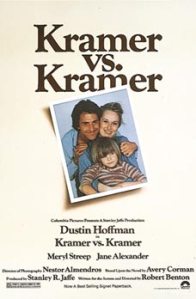
Kramer Vs. Kramer (1979, directed by Robert Benton, won best picture) — Dustin Hoffman plays a workaholic New York advertising executive who, after his wife Meryl Streep leaves him, ends up as a single father.  Kramer Vs. Kramer won best picture in 1979 but I have to admit that I didn’t care much for it.  Then again, I don’t think that I was the intended audience.  Instead, Kramer vs. Kramer appears to have been made to appeal to men frustrated with women wanting to have a life outside of being a domestic servant.  The film is well-acted though Hoffman’s character becomes insufferably smug once he gets comfortable with being a single father.

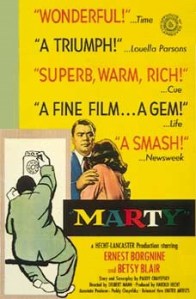
Marty (1955, directd by Delbert Mann, won best picture) — Lonely butcher Marty (Ernest Borgnine) romantically pursues a shy school teacher named Clara (Betsy Blair).  However, Marty’s friends and his family don’t like Clara and Marty soon finds himself having to choose between them.  Marty is a bit of an anomaly when it comes to best picture winners.  It’s not an epic, it doesn’t claim to solve any of the world’s problems, and it’s based on a tv show.  However, it’s also a sincerely sweet and heartfelt  film and also features excellent performances from Borgnine and Blair.

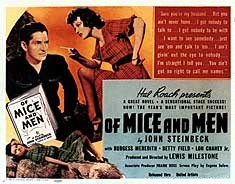
Of Mice and Men (1939, directed by Lewis Milestone, lost to Gone With The Wind) — “Tell me about the rabbits, George.”  Yes, it’s that film.  Smart and little George (Burgess Meredith) and big but simple Lenny (Lon Chaney, Jr.) are migrant farm workers who get a job working at ranch where Lenny ends up accidentally killing the rancher’s daughter-in-law.  Despite the fact that we all now tend to naturally smirk when we hear anyone say “Tell me about the rabbits, George,” Of Mice and Men remains an effective tear-jerker and both Meredith and Chaney give strong performances.

Out of Africa (1985, directed by Sydney Pollack, won best picture) — I recently sat down to watch this film because 1) my aunts love this film and get excited whenever they see that it’s going to be on TV and 2) Out of Africa was named the best film of the year I was born.  So, I sat down and watched it and then three or five hours later, I realized that the film was nearly over.  Anyway, the film is about a Danish baroness (Meryl Streep) who moves to a plantation in Africa and ends up having an affair with a British big game hunter.  The hunter is played by Robert Redford, who refuses to even try to sound British. (USA! USA! USA!)  Anyway, the film is pretty in that generic way that most best picture winners are but the film ultimately suffers because its difficult to care about any of the characters.  Streep acts the Hell out of her Danish accent but she and Redford (who seems to be bored with her) have absolutely no chemistry. I saw one review online that dismissed Out of Africa as a “big budget Lifetime movie” but Lifetime movies are a lot more fun.

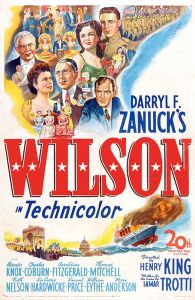
Wilson (1944, directed by Henry King, lost to Going My Way) — Wilson is a two-and-a-half biopic about Woodrow Wilson and his presidential administration.  Wilson is well-played by Alexander Knox, who later showed up in countless exploitation films.  Wilson shows up on cable occasionally and every time I’ve seen it, I’ve had mixed feelings about it.  The critical part of me tends to be dismissive of this film because it’s way too long, extremely stagey, and it glosses over the fact that Wilson was a virulent racist who idolized the Ku Klux Klan.  However, as a secret history nerd, I can’t help but enjoy seeing a film where Vincent Price plays the Secretary of the Treasury.

Trailer: Prometheus (dir. Ridley Scott)


This week leading up to the Christmas weekend has surely been quite a busy one for film fans everywhere. Earlier in the week we got to see the new trailer for The Dark Knight Rises (and to a lesser extent the trailer for Wrath of the Titans). That was soon followed a day later by the first teaser trailer for Peter Jackson’s upcoming return to the world of Middle-Earth with The Hobbit: An Unexpected Journey. Now we reach the triumvirate of awesome film trailers for the week with the release of the first official trailer for Ridley Scott’s return to the film franchise which made him a household name and helped redefined sci-fi (especially of the horror variety) films.

The trailer for Prometheus looks beautiful especially when viewed on 720p/1080p HD. It still doesn’t explain just exactly what the plot of the film is, but it does show some interesting imagery which harkens back to the original Alien from 1979. We even get to see a glimpse of the pilot chair where the “space jockey” sits and the very ship itself found by Ripley and the crew of the Nostromo from the first film. Even the trailer pays major homage to the original film by slowly revealing the film’s title one section at a time.

Scott has been saying that Prometheus is not a prequel to Alien and that it’s a film that could stand on it’s own without people needing to see the films in the franchise. So far, we haven’t glimpsed any of the typical xenomorphswhich defines the franchise. Time to see if they make an appearance when the film finally comes out on June 8. 2012.