Lisa Cleans Out Her DVR: Don’t Bother To Knock (dir by Roy Ward Baker)


(I am currently attempting to clean out my DVR.  I recorded the 1952 film Don’t Bother To Knock off of FXM on April 3rd.)
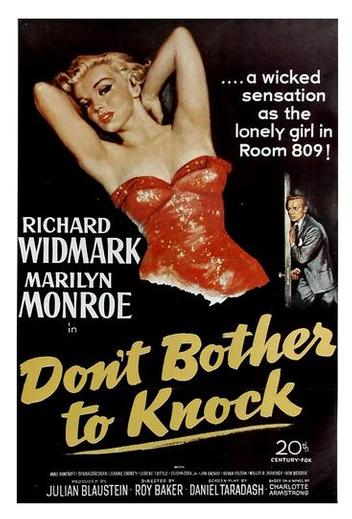
Welcome to the McKinley Hotel in New York City!  The McKinley is a nice place, though it’s no Grand Budapest Hotel.  Presumably, the McKinley was named after the late President William McKinley.  While I’m sure that McKinley would have appreciated the gesture, I don’t know how he would feel about all the melodrama that’s occurring behind closed doors.

For instance, there’s Lyn Lesley (Anne Bancroft, making her screen debut).  Lyn sings in the hotel bar and, though she might seem to be cynical and tough, she actually has a big heart.  In fact, she cares so much about humanity that she broke up with her longtime boyfriend, Jed Towers (Richard Widmark), because he doesn’t seem to have a heart at all.  Of course, she broke up with Jed by sending him a letter.  When Jed checks into the hotel and tracks her down in the bar, he has questions about their breakup and he wants answers that won’t require any reading.  She tells him that he’s not capable of caring about anyone so why should she waste her time on him?  Then she sings a love song because that’s her job.

As for Jed, he’s kind of a jerk in the way that most men tend to be in movies from the 1950s.  He’s an airline pilot who served overseas during World War II and spent a year living in England.  He’s tough and he’s cynical and now, he’s single.  He’s also got a room in a hotel for the night.

And then there’s Peter and Ruth Jones (Jim Backus and Lurene Tuttle), who have a function to attend in the hotel ballroom but who don’t have anyone to look after their ten year-old daughter, Bunny (Donna Corcoran).  Fortunately, the hotel’s elevator operator, Eddie (Elisha Cook, Jr.), has a niece named Nell (Marilyn Monroe).  Nell is quiet and shy and needs the money.  She’ll be more than willing to babysit!

Of course, the only problem with Nell is that she’s a little unstable.  This becomes obvious when she’s left alone with Bunny and promptly says that, if Bunny isn’t careful, something bad might happen to one of her toys.  Inside the apartment, Nell is impressed by all the pretty things owned by Ruth.  She tries on her jewelry.  She sprays her perfume in the air.  She puts on Nell’s negligee and looks at herself in the mirror.  Eddie is not amused when he discovers what Nell’s been doing.  If she wants all of this stuff, he tells her, she needs to marry someone rich.  That’s not bad advice but the only problem is that Nell is currently single.  She’s been single ever since her boyfriend died in a plane crash.  In fact, Nell was so upset by his death that she even tried to commit suicide afterward.

From his room, Jed has a direct view of Nell trying on Ruth’s clothes.  When he and Nell spot each other, Nell invites him over.  She tells Jed that she’s a guest at the hotel and that Bunny is her daughter.  Jed can immediately tell that there’s something strange about Nell.  Nell, meanwhile, thinks that Jed is her dead boyfriend.  Meanwhile, Bunny is helpless in her room…

Clocking in at a brisk 72 minutes, Don’t Bother To Knock feels less like a movie and more like a one-act play or maybe even an adaptation of an old television production.  (After watching the movie, I was shocked to discover that it was based on neither.)  Seen today, it’s mostly memorable for featuring Marilyn Monroe’s first true starring role.  After appearing in small roles in several films (including All About Eve), Don’t Bother To Knock was not only Marilyn’s shot at stardom but also her first dramatic performance.  Reportedly basing her performance on her troubled mother, Marilyn is sympathetic and almost painfully vulnerable.  Her scenes with Elisha Cook, Jr. are especially charged, full of a subtext that will probably be easier for modern audiences to spot than it was for audiences in 1952.  Marilyn gave an incredibly poignant performance and she is the main reason to watch Don’t Bother To Knock.
Embracing the Melodrama #39: True Colors (dir by Herbert Ross)


True Colors

For the past 9 days, I’ve been posting chronological reviews of 54 of the most (and least) memorable melodramas ever filmed.  I started with a film from 1916 and yesterday, I completed the 80s.  Today, we start in on the 90s with the 1991 political drama True Colors.

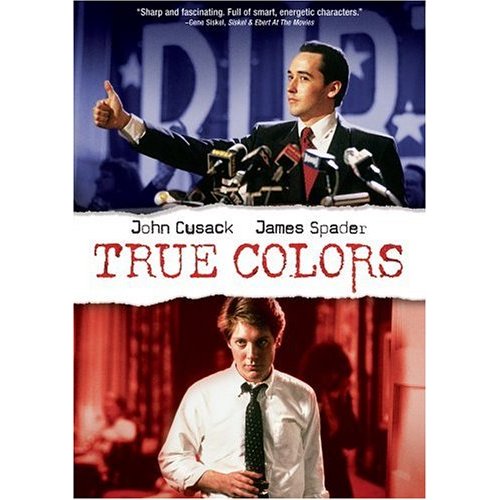
True Colors tells the story of two ambitious law students.  Tim Gerritty (James Spader) is a wealthy idealist who wants to work at the Justice Department so he can uncover and prosecute political corruption.  His roommate and eventual best friend is Peter Burton (John Cusack).  Although Peter initially lies about his background, it’s eventually revealed that he comes from a poor family and the result of growing up in poverty has left Peter with an obsessive desire for revenge on everyone who has ever looked down on him.  And how is Peter planning on getting that revenge?  By marrying the daughter of Sen. James Stiles (Richard Widmark) and eventually running for a seat in the U.S. House.  Despite the fact that Tim happens to be in love with Sen. Stiles’s daughter as well, he still supports his friend Peter and even agrees to be his best man.  However, as Peter gets closer and closer to achieving his goals, Tim starts to reconsider their friendship….

There’s a scene about halfway through True Colors, in which Peter Burton attempts to blackmail Sen. Stiles into supporting his political career.  Stiles agrees but then angrily adds, “God help you when the people find out.  They always do, you know.”  I was naturally waiting for Peter to come up with a properly sarcastic response but instead, Peter simply looks down at the ground, properly chastened.  It’s a jarringly false note and, unfortunately, everything that comes after this scene feels equally false.  The film, which starts out as such a strong portrait of what happens with friendship comes into conflict with ambition, ends up turning into a painfully predictable political diatribe, the type of thing that makes the portrait of politics in The Adjustment Bureau seem subtle and nuanced by comparison.  When Tim decided to betray Peter, it should be a moment full of moral ambiguity.  Instead, we’re expected to ignore their long friendship and just be happy that Tim is willing to do the right thing and protect the integrity of the American political process.

And, who knows?  Maybe that’s the way people viewed politics back in the early 90s.  But for audiences today, it all feels really naive and simplistic.

But, if you can manage to look past the film’s weak’s script, you can enjoy the acting.  John Cusack is wonderfully intense as Peter, making the character compelling even when the screenplay lets him down.  Watching him in True Colors is like watching the performance that he should have given in The Butler.  James Spader is sympathetic as Tim and, like Cusack, his performance almost allows him to overcome a script that doesn’t seem to realize that Tim is essentially a self-righteous jerk.  And finally, there’s Mandy Patikin who has a lot of fun playing the local crime boss who sponsors Peter’s career and who, in one memorable (if out-of-place ) scene beats up a shark that’s jumped up on the desk of his yacht.

Much like High Stakes, True Colors is one of those obscure films that occasionally pops up on cable, usually late at night and usually serving as filler between showings of better-known films.  Keep an eye out for it, if just for the chance to enjoy the performances.

A Death-Defying Quickie With Lisa Marie: Rollercoaster (dir by James Goldstone)


Recently, despite my longstanding fear of heights and my refusal to ever ride one in real life, I watched a film called Rollercoaster.  First released in 1977, Rollercoaster recently made its debut on TCM.  I was hesitant about watching it but then Robert Osborne assured me that it was an entertaining film and, seriously, who can say no to Robert Osborne?

An unnamed bomber (Timothy Bottoms) is going from amusement park to amusement park and blowing up roller coasters.  He wants money and, even more importantly, he wants the money to be delivered to him by safety inspector Harry Caulder (George Segal).  Will the FBI back off long enough for Harry to deal with the bomber?  Will the bomber ever smile?  Finally, will Harry be able to save the day while, at the same time, trying to quit smoking and bond with his daughter?

Roller Coaster is about 30 minutes too long and it’s never quite as exciting as it should be.  My mind kept wandering during the climax, which is not a good thing when the film is supposed to be a race against time.  However, at the same time, when taken on its own dated terms, Roller Coaster is a lot of fun.  Even if director James Goldstone (who also directed the far more surreal Brother John) struggles a bit with keeping the action moving at a steady pace, he still directs with a good eye for detail and gets good performances out of the majority of the film’s cast.

Since I best know George Segal for playing cantankerous father figures on about a thousand different sitcoms, it took me a few minutes to get used to the idea that he was the main character here.  While Segal does have several funny lines in Rollercoaster, he is also totally convincing and likable as the film’s hero.  Timothy Bottoms is equally convincing as the unnamed bomber.  The fact that we learn little about the bomber’s motivations or background just serve to make Bottoms’s cold performance all the more chilling.

As for the supporting cast, Henry Fonda is the biggest distraction, snarling his way through his role as Segal’s jerk of a boss.  Oddly enough, Fonda showed up in a lot of disaster films in the 70s, usually playing authority figures and usually only appearing in two or three scenes.  Whenever Henry Fonda shows up in a film like this, overacting and looking somewhat humiliated, it’s best just to close your eyes and think of 12 Angry Men and then realize that even great actors sometimes just needed a paycheck.  Richard Widmark is far more convincing, playing the stuffy FBI agent who doesn’t have much use for George Segal.  Finally, for those of you who enjoy spotting future Oscar nominees in unlikely roles, 13 year-old Helen Hunt makes her film debut here as Segal’s daughter, who just wants to ride the rollercoaster one time.

Ultimately, the best recommendation that I can give to Rollercoaster is to say that it’s a quintessentially 70s films and hence, it’s a piece of history.  Not only is the film full of 70s fashion, 70s hair, and 70s stereotypes (just check out the long-haired teenagers joking about getting high while unknowingly sitting on top of a bomb) but the film also features a performance from a band called Sparks that is so 70s that the cast of Dazed and Confused might as well have been watching them in the audience and going, “Alright, alright, alright…”

(I have to admit that I had never heard of Sparks before I saw this film.  I looked them up on Wikipedia and I discovered that not only is the band still performing but that the lead singer claims that appearing in Rollercoaster was the band’s biggest regret.  Personally, I think he’s being too hard on both the band and the film.  Sure, they seem painfully out-of-place but I dare anyone to get the borderline annoying sound of “Big Boy” out of their head.)

For those of us who were born a few decades too late to experience it firsthand, Rollercoaster is our chance to spend two hours living in the 70s.

44 Days of Paranoia #23: Pickup On South Street (dir by Samuel Fuller)


For today’s entry in the 44 Days of Paranoia, let’s take a look at Sam Fuller’s 1953 film noir, Pickup on South Street.

Pickup On South Street opens with Candy (Jean Peters) on a subway.  In her purse, she’s carrying an envelope that’s been given to her by her boyfriend, the rather shady Joey (Richard Kiley).  Candy is delivering the envelope to friends of Joey.  What Candy doesn’t know is that Joey and his friends are communists and that the envelope contains top secret micro-film.  She also doesn’t know that she’s being followed by both the FBI and Skip Martin (Richard Widmark), a professional pickpocket.

Skip picks Candy’s purse and, without realizing it, steals the microfilm that everyone wants.  With the help of professional informant Moe (Thelma Ritter, a great character actress who gives a great performance here), both Candy and the police track down Skip and try to get him to return the microfilm.  Skip, however, has figured out what he’s stolen and announces that he’ll give the microfilm to whichever group is the first to pay him $25,000.  When the FBI make the mistake of trying to appeal to his patriotism, Skip merely smirks and asks, “Are you waving the flag at me?”

In his introduction to Sam Fuller’s autobiography A Third Face: My Tale of Writing, Fighting, and Filmmaking, Martin Scorsese writes, “(I)f you don’t like the films of Sam Fuller, then you just don’t like cinema.”  Now, I really can’t say whether that’s true or not because, while I love cinema, I’ve only seen three of the films that Sam Fuller directed over the course of his long career: The Naked Kiss, Shock Corridor, and now Pickup On South Street.  However, I can say that I loved all three of those films.  The Naked Kiss I loved because I happen to love old films that expose the secrets of small town America.  As Arleigh can tell you, I fell in love with Shock Corridor the minute that the film’s hero said, “NYMPHOS!”  As for Pickup On South Street, I love it because it’s truly a great film and one of the best B-movie ever made.

And make no mistake about it — Pickup On South Street is a B-movie, a melodramatic, wonderfully sordid, and terrifically entertaining B-movie.  It’s a thriller that both embraces and subverts the conventions of the genre and, as a result, it tells a story that manages to be both over-the-top and subtle at the same time.  By focusing on those on the margins of society, the Skips and the Moes of the world, Fuller also forces us to confront just how little the ideology of a government means to those of us who live on the margins of society.

This is certainly made clear by Thelma Ritter’s poignant performance as Moe, one of the weary inhabitants of the margins who has been reduced to just hoping that she’ll have enough money when she dies to be buried in a decent plot.  One watches Pickup on South Street and realizes that, regardless of which side ultimately end up with the microfilm, people like Moe are still most likely going to end up getting buried in an pauper’s grave.

Watching Pickup On South Street, it’s easy to see why Martin Scorsese had such high praise for Fuller.  Fuller’s camera literally never stops moving, nervously darting through the urban landscape and occasionally zooming in for a close-up of either a desperate face or Richard Widmark’s smirk.  And make no doubt about it — Richard Widmark’s charming but infuriating smirk tells you everything that you need to know about both the character Skip McCoy and Pickup On South Street as a film.  It’s a smirk that lets us know that both the character and the film are a lot more intelligent than they initially let on.

Pickup on South Street is a film that every lover of cinema must see.  And, after you’ve seen it, why not get a copy of Fuller’s autobiography?  It’s an interesting read.

Other Entries In The 44 Days of Paranoia 

  1. Clonus
  2. Executive Action
  3. Winter Kills
  4. Interview With The Assassin
  5. The Trial of Lee Harvey Oswald
  6. JFK
  7. Beyond The Doors
  8. Three Days of the Condor
  9. They Saved Hitler’s Brain
  10. The Intruder
  11. Police, Adjective
  12. Burn After Reading
  13. Quiz Show
  14. Flying Blind
  15. God Told Me To
  16. Wag the Dog
  17. Cheaters
  18. Scream and Scream Again
  19. Capricorn One
  20. Seven Days In May
  21. Broken City
  22. Suddenly

Film Review: Judgment At Nuremberg (dir by Stanley Kramer)


I previously posted a review of the 1967 best picture nominee Guess Who’s Coming To Dinner that was somewhat critical of Stanley Kramer as a filmmaker.  In retrospect, I feel like I may have been a bit too dismissive of Stanley Kramer.  When one looks over the list of every film that has ever been nominated for best picture, one comes across the name Stanley Kramer (as a producer, a director, or both) far too many times to just blindly dismiss him for the sin of being old-fashioned.  While Kramer made his share of well-intentioned misfires like Guess Who’s Coming To Dinner, he was also responsible for some films that remain important and watchable today.  Judgment at Nuremberg is one of those films.

Judgment at Nuremberg opens in 1947, with one car being driven through the ruins of Nuremberg, Germany.  Inside the car is Dan Haywood (Spencer Tracy), a judge from Maine who has been appointed chief of a military tribunal that will be passing judgment on four German judges who are accused of crimes against humanity for their legal rulings during the Nazi regime.  As Haywood quickly learns,  many people don’t feel that the Nazi judges should be held as accountable for their actions as men like Hitler, Goebbles, and Goering should have been.  It’s up to Haywood to determine whether the accused were simply doing their job or if they had a responsibility to defy the laws that they had sworn to uphold.

Judgment at Nuremberg almost feels like two films.  The first film is a courtroom drama, where the Nazi judges (the main one of which is played by Burt Lancaster) are prosecuted by the fiery Col. Tad Lawson (Richard Widmark) and defended by the idealistic Hans Rolfe (Maximilian Schell).  While Lawson approaches the case and regards the defendants with righteous anger, Rolfe takes a more cerebral approach to defending the undefensible.  Rolfe argues that the judges were following the laws of Germany and that if the tribunal finds them guilty than it will be finding the entire nation of Germany guilty.  (In a rather clever twist, director Kramer and screenwriter Abby Mann initially make the German defense attorney a far more likable character than the American prosecutor.)  During the trial, we also hear heart-wrenching testimony from two people (played by Montgomery Clift and Judy Garland) who were victimized by the Nazi regime and the judges who gave legal legitimacy to the regime’s crimes.

The second film deals with Haywood adjusting to working in Germany and trying to understand how the Nazis could have come to power in the first place.   Haywood asks several Germans to tell him about life under the Nazis and every time, he is met with bland excuses.  (“We were not political,” he is told more than once.)  The film’s strongest scenes are the ones where Haywood simply walks alone through the ruins of Nuremberg.  Spencer Tracy was a uniquely American actor and, much as he did in Guess Who’s Coming To Dinner, Tracy here stood in for every American who was struggling to make sense of a changing world.

In his book Pictures At A Revolution, Mark Harris correctly points out that Stanley Kramer started out as a producer and, even after he started directing, he still approached filmmaking like a producer.  While that approach led to many uninspiring films, it was also the right approach for Judgment at Nuremberg.  Perhaps realizing that Judgment at Nuremberg was a long and talky movie about a disturbing subject manner, Kramer made the very producer-like decision to fill Judgment at Nuremberg with recognizable faces.  While this approach has proven disastrous for many films, it works quite well in Judgment at Nuremberg.

This is one of the most perfectly cast films of all time, with all of the actors bringing both their characters and the issues that they’re confronting to vivid life.  As the main defendant, Burt Lancaster brings a combination of intelligence and self-loathing to his role, playing him in such a way to reveal that even he can’t believe the evil he upheld as a judge.  Meanwhile, Spencer Tracy is perfectly cast as a world-weary man who is simply trying to figure out what justice means in the post-war world.  Maximilian Schell plays his role with so much passion that it’s impossible not to listen to him even when you despise the argument he’s making.  Marlene Dietrich has an extended cameo where she plays the widow of Nazi general who befriends Judge Haywood but still refuses to admit that she knew anything about what Adolf Hitler was doing.  Even William Shatner shows up, playing a small role as Haywood’s chief military aide and yes, he does deliver his lines in that Shatner way of his.

First released in 1962, Judgment at Nuremberg won Oscars for Best Actor (Maximilian Schell) and Best Adapted Screenplay (Abby Mann) and was nominated for 9 more: Best Picture, Best Director, Best Actor (Spencer Tracy), Best Supporting Actor (Montgomery Clift), Best Supporting Actress (Judy Garland), Best Black-and-White Art Direction, Best Black-and-White Cinematography, Best Black-and-White Costume Design, and Best Film Editing. While it’s hard to argue with the victory of West Side Story in that year’s Oscar race, Judgment at Nuremberg remains a watchable and thought-provoking film.

Lisa’s Thoughts On 10 Best Picture Nominees That She’s Recently Seen: The Alamo, Becket, Elmer Gantry, Gaslight, Gladiator, Kramer Vs. Kramer,Marty, Of Mice and Men, Out of Africa, and Wilson


Since it’s Oscar weekend, I’ve been watching past and present Best Picture nominees like crazy.  Here are my thoughts on ten of them.

The Alamo (1960, directed by John Wayne, lost to The Apartment) — I’m a Texan which means that I’m legally required to watch both this film and the 2004 remake whenever they show up on television.  Both films are way too long and feature way too many characters speaking speeches as opposed to dialogue but, if I had to choose, I would have to go with the 1960 version of the story.  The original Alamo might be heavy-handed, poorly paced, and awkwardly acted but at least it’s sincere in its convictions.  I always cry when Richard Widmark dies.

Becket (1964, directed by Peter Glenville, lost to My Fair Lady) — This one is a personal favorite of mine.  The film is about the friendship and the eventual rivalry of King Henry II (Peter O’Toole) and Thomas Becket (Richard Burton).  Becket and Henry II start out the film drinking and whoring but eventually, Henry makes Becket Archbishop of Canterbury.  Becket, however, rediscovers his conscience and soon, Henry is famously asking, “Who will rid me of this troublesome priest?”  Becket is an exciting historical drama and Peter O’Toole is at his absolute best as the flamboyantly decadent Henry.

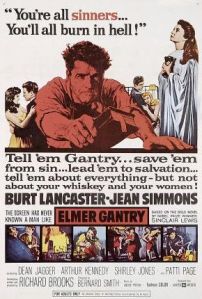
Elmer Gantry (1960, directed by Richard Brooks, lost to The Apartment) — Burt Lancaster plays Elmer Gantry, a traveling salesman and con artist who ends up falling in love with a saintly evangelist (played by Jean Simmons).  Gantry soon starts preaching himself and soon has an army of loyal followers.  However, Gantry’s new career is threatened when an ex-girlfriend-turned-prostitute (Shirley Jones) pops up and starts telling people how Gantry “rammed the fear of God into” her.  With its unapologetically corrupt lead character and its looks at how commerce and religion are often intertwined, Elmer Gantry makes a perfect companion piece to Paul Thomas Anderson’s There Will Be Blood.  Lancaster won an Oscar for his powerful and intense performance in the title role.

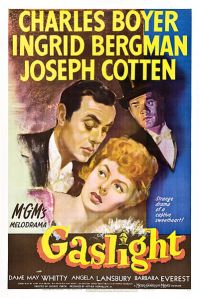
Gaslight (1944, directed by George Cukor, lost to Going My Way) — Evil Charles Boyer marries Ingrid Bergman and then attempts to drive her crazy.  Luckily, Inspector Joseph Cotten is on the case.  Gaslight is, in many ways, an old-fashioned melodrama but it’s still a lot of fun to watch.  Boyer is a suave devil and Joseph Cotten (one of my favorite of the old film actors) is a dashing hero.

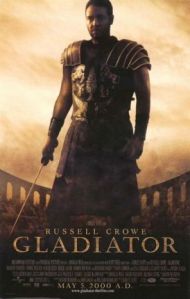
Gladiator (2ooo, directed by Ridley Scott, won best picture) — One thing that I’ve recently discovered is that men love Gladiator.  Seriously, they obsess over this film and hold Russell Crowe’s surly gladiator up as some sort of mystical ideal and if you dare to say a word against it in their presence, be ready for big and long argument.  So, I won’t criticize Gladiator too much other than to say that the film has always struck me as being kinda overlong, that the CGI is occasionally cartoonish, and that, despite his fearsome reputation, Russell Crowe is a lot more interesting as an actor when he plays a thinker as opposed to a fighter.  Joaquin Phoenix, playing the Emperor Commodus, is a lot of fun to watch.

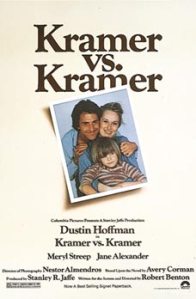
Kramer Vs. Kramer (1979, directed by Robert Benton, won best picture) — Dustin Hoffman plays a workaholic New York advertising executive who, after his wife Meryl Streep leaves him, ends up as a single father.  Kramer Vs. Kramer won best picture in 1979 but I have to admit that I didn’t care much for it.  Then again, I don’t think that I was the intended audience.  Instead, Kramer vs. Kramer appears to have been made to appeal to men frustrated with women wanting to have a life outside of being a domestic servant.  The film is well-acted though Hoffman’s character becomes insufferably smug once he gets comfortable with being a single father.

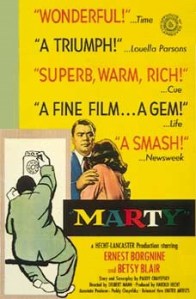
Marty (1955, directd by Delbert Mann, won best picture) — Lonely butcher Marty (Ernest Borgnine) romantically pursues a shy school teacher named Clara (Betsy Blair).  However, Marty’s friends and his family don’t like Clara and Marty soon finds himself having to choose between them.  Marty is a bit of an anomaly when it comes to best picture winners.  It’s not an epic, it doesn’t claim to solve any of the world’s problems, and it’s based on a tv show.  However, it’s also a sincerely sweet and heartfelt  film and also features excellent performances from Borgnine and Blair.

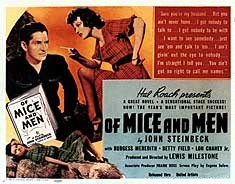
Of Mice and Men (1939, directed by Lewis Milestone, lost to Gone With The Wind) — “Tell me about the rabbits, George.”  Yes, it’s that film.  Smart and little George (Burgess Meredith) and big but simple Lenny (Lon Chaney, Jr.) are migrant farm workers who get a job working at ranch where Lenny ends up accidentally killing the rancher’s daughter-in-law.  Despite the fact that we all now tend to naturally smirk when we hear anyone say “Tell me about the rabbits, George,” Of Mice and Men remains an effective tear-jerker and both Meredith and Chaney give strong performances.

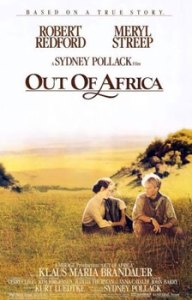
Out of Africa (1985, directed by Sydney Pollack, won best picture) — I recently sat down to watch this film because 1) my aunts love this film and get excited whenever they see that it’s going to be on TV and 2) Out of Africa was named the best film of the year I was born.  So, I sat down and watched it and then three or five hours later, I realized that the film was nearly over.  Anyway, the film is about a Danish baroness (Meryl Streep) who moves to a plantation in Africa and ends up having an affair with a British big game hunter.  The hunter is played by Robert Redford, who refuses to even try to sound British. (USA! USA! USA!)  Anyway, the film is pretty in that generic way that most best picture winners are but the film ultimately suffers because its difficult to care about any of the characters.  Streep acts the Hell out of her Danish accent but she and Redford (who seems to be bored with her) have absolutely no chemistry. I saw one review online that dismissed Out of Africa as a “big budget Lifetime movie” but Lifetime movies are a lot more fun.

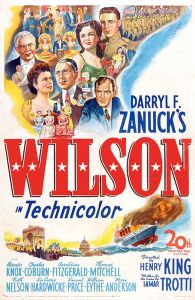
Wilson (1944, directed by Henry King, lost to Going My Way) — Wilson is a two-and-a-half biopic about Woodrow Wilson and his presidential administration.  Wilson is well-played by Alexander Knox, who later showed up in countless exploitation films.  Wilson shows up on cable occasionally and every time I’ve seen it, I’ve had mixed feelings about it.  The critical part of me tends to be dismissive of this film because it’s way too long, extremely stagey, and it glosses over the fact that Wilson was a virulent racist who idolized the Ku Klux Klan.  However, as a secret history nerd, I can’t help but enjoy seeing a film where Vincent Price plays the Secretary of the Treasury.

Lisa Marie Has Returned With 6 More Trailers


 When last I posted, I was snowed in and I was still dealing with the trauma of seeing the Super Bowl half-time show.  Well, a week has passed.  The snow has melted, the half-time show has faded from memory, and I’m ready to start posting again.  And what better way to prove it than with a new edition of Lisa Marie’s Favorite Grindhouse and Exploitation Trailers?

1) The Streetfighter

Earlier today, when I was talking about which trailers I was thinking of including in this edition, Jeff asked me if I had included any Sonny Chiba trailers.  The way he asked the question seemed to indicate that it was the most important thing he had ever asked so, understandably, I was a little nervous when I answered, “N-no, I don’t think so.”

Well, apparently, that wasn’t the right answer because Jeff’s eyes just about popped out of his head and he’s lucky that he’s s0 cute because I might otherwise have taken his reaction personally.  Instead of taking offense, I’m going to start this edition off with Sonny Chiba in The Streetfighter.

2) House of Whipcord

This one is from one of the great, unacknowledged directors of British cinema, Peter Walker.  I think it’s always strange for Americans to hear grindhouse dialogue being delivered in an English accent.

3) Witchery

This is a trailer for an Italian film that is also known as “House 4,” “Witchcraft,” “Ghost House,” and “Demons 5.”  In Italy, it was promoted as a sequel to Sam Raimi’s Evil Dead 2. For all I know, they may have tried to sell this as an installment in the Zombi series as well.  I saw this film a few years ago when I was first starting to explore the world of Italian horror and oh my God, it gave me nightmares.  Seriously, don’t let the presence of David Hasselhoff fool you.  This is a disturbing movie that was produced (and some day actually directed) by the infamous Joe D’Amato.

Apparently, the trailer is disturbing as well as I tried to show it to my sister Erin earlier and she asked me stop it around the time the gentleman with the weird mouth showed up. 

4) Fighting Mad

“Even a peaceful man…can get fighting mad!”  Peter Fonda looked good playing archer.  This is an early film from Jonathan Demme who directed one of my favorite films ever, Rachel Getting Married.

5) Rollercoaster

I’m scared to death of rollercoasters so I probably won’t be seeing this film anytime soon.  Still this film has a surprisingly good cast — George Segal, Richard Widmark, Henry Fonda — for a movie about a rollercoaster.

6) Big Bad Mama

Not to be confused with Crazy Mama or Bloody Mama, Big Bad Mama features Angie Dickinson, Tom Skerritt, William Shatner, and a lot of tommy guns.  It’s not a great film but it is a lot more fun than Public Enemies.