Horror on TV: Twilight Zone 3.76 “Still Valley”


TheTwilightZoneLogo


In this episode of The Twilight Zone, a Confederate soldier (Gary Merrill) meets an old man (Vaughn Taylor) who claims that, through magic, he can help the Confederacy win the Civil War. However, as often happens when it comes to weird old men and magic, there’s a price that must be paid.


I like this episode, largely because I’m obsessed with three things: history, the Civil War, and magic. And this one has all three!


It originally aired on November 24th, 1961.


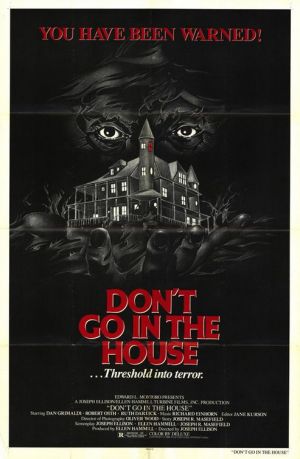
TSL’s Daily Horror Grindhouse: Don’t Go In The House (dir by Joseph Ellison)


Don't_Go_in_the_House_FilmPoster

1980’s Don’t Go In The House is one of the many “Don’t” films to come out in the 70s and 80s.  These films all had titles that warned viewers not to do something.  Don’t Answer The Phone!  Don’t Stand Near The Window!  Don’t Go To Sleep!  Don’t Go Into The Woods…Alone!  Don’t Go In The House!

And I have to admit that whenever I come across one of these titles, my initial response is to get a little offended because I don’t like being told what to do.  A grindhouse movie about me would be called Don’t Give Lisa Orders.  Seriously, you’re going to tell me not to go into the house?  I’m going not only going to go into the house but I’m also going to stay for however long I feel like staying.  If you don’t like it, buy a new house.

But, that being said, these Don’t titles do make it very easy for a lazy reviewer.  A title like Don’t Go In The House practically invites a critic to be snarky.  “Don’t go in the house?  How about don’t watch the fucking movie?”

Seriously, it’s fun!

But, at the same time, that’s a bit unfair to Don’t Go In The House.  As far as crazed serial killer films go, Don’t Go In The House is one of the most disturbingly effective entries in the genre.  Dan Grimaldi (who later played Patsy Parisi on The Sopranos) stars as Donny Kohler.  Shy and awkward, Donny lives in a dilapidated mansion with his mother.  When Donny was a child, his mother’s favorite punishment was to burn him and, as a result, Donny has grown up both fearing and loving fire.

Though Donny is obviously disturbed from the first minute we see him, it’s not until his mother dies that the true extent of Donny’s madness becomes apparent.  Now living alone in that huge house, Donny starts to hear whispering voices.  The voices tell him to “master the flame.”  Soon, Donny is luring victims into his house, where he chains them up in a specially made room and uses a flame thrower to set them on fire…

AGCK!

Seriously, this movie is soooooooo disturbing!  Not only is the film full of ominous atmosphere but Dan Grimaldi gives an all-too realistic performance in the role of Donny.  Much like Nicholas Worth in Don’t Answer The Phone, Grimaldi turns Donny into an all too familiar monster.  The fact of the matter is that we’ve all known a potential Donny.  Don’t get paranoid?  Well, that’s next to impossible after you watch a movie like Don’t Go In The House.

I also have to say that I have never actually seen anyone burned alive, though, when I was nine, I did see my Dad accidentally set himself on fire.  (Before anyone freaks out, he did that whole drop and roll thing or whatever it is and he was absolutely fine.)  That said, the immolation scenes in Don’t Go In The House felt totally and completely authentic.  They were pure nightmare fuel, truly some of the most disturbing scenes that I have ever seen.

Am I recommending Don’t Go In The House?  I don’t know.  It’s thoroughly unpleasant but, at the same time, it’s a very well-made film and surprisingly well-acted film.  And, despite being about a serial killer and featuring very graphic violence, the film itself is always on the side of the victims.  No attempt is made to make Donny into some sort of Hannibal Lecterish antihero (from the minute we first meet him until the film’s final scene, Donny is presented as being a total loser) and, as a result, Don’t Go In The House emerges as a grindhouse film that has a stronger moral center than most mainstream features.

But my God, is it ever disturbing!  I saw the film once and that was more than enough for me.  If you’re a fan of grindhouse and exploitation films, Don’t Go In The House is a film that you’re going to have to see eventually.  If you’re like me, you’ll probably end up watching it through your fingers.

Seriously, don’t underestimate the disturbing experience of watching Don’t Go In The House.

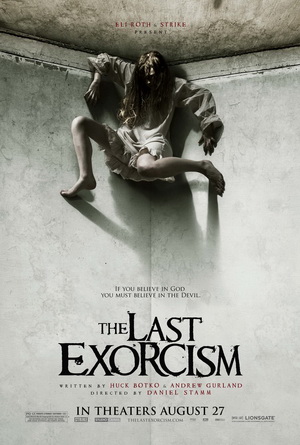
Horror Film Review: The Last Exorcism (dir by Daniel Stamm)


The_Last_Exorcism_Poster

First released in 2010, The Last Exorcism is one of the best films of the past 5 years.

I know that a lot of people are going to disagree with that statement.  When The Last Exorcism was released, a lot of people were so angered by the way the film ended that they dismissed the entire movie.  Add to that, The Last Exorcism is yet another found footage horror film and that genre has produced a lot of truly terrible movies.  Whether fairly or not, a lot of people have judged The Last Exorcism on the basis of the sins committed by films like The Devil Inside.  With all that taken into consideration, it’s perhaps not surprising that The Last Exorcism only has a rating of 5.6 on the IMDb.

However, those who casually dismiss The Last Exorcism are making a mistake.  The Last Exorcism is a hundred times better than it has any right to be.  If nothing else, it’s probably one of the best found footage horror films ever made.

Produced by Eli Roth and directed by Daniel Stamm, the film opens with footage of the Rev. Cotton Marcus (Patrick Fabian) leading a revival meeting.  We quickly see that Marcus is a showman, a born actor who knows how to manipulate and control an audience.  In interviews with a mostly unseen film crew, Rev. Marcus also explains that he’s both a highly successful exorcist and a complete fraud.  As he explains it, he has lost his faith and is participating in a documentary to reveal how he and other evangelical exorcists con and exploit their followers.  He’s agreed to perform one last exorcism, specifically so he can reveal just how much of a fraud that he really is.

One of the more interesting aspect of this setup is that it’s based on an actual documentary.  Released in 1972, Marjoe followed a former child evangelist named Marjoe Gortner as he conducted his last revival tour.  Talking directly to the camera, Marjoe would explain the tricks that he and other preachers would use to cheat the faithful out of their money.  The documentary, which won an Oscar for Best Documentary Feature in 1973, painted an intriguing picture of a con artist and The Last Exorcism does the same thing.

Marcus and the documentary film crew go out to a small rural community where farmer Louis Sweetzer (Louis Herthum) claims that his daughter, Nell (Ashley Bell) has been possessed by a demon.  Nell’s brother, Caleb (Caleb Landry Jones)  is openly hostile to both Marcus and the documentary film crew.  Marcus, meanwhile, is convinced that Nell is faking.

However, as both the film and the exorcism progress, we are given reasons to suspect that Nell might actually be possessed.  While a good deal of the film’s scares will be familiar to anyone who has ever seen a found footage horror film (there’s the usual loud noises in isolated parts of the house and the menacing shadows glimpsed in the corners), the question of whether or not Nell is possessed is given extra importance by what the answer means to Cotton Marcus.  If Nell is faking, then Marcus’s own loss of faith will be justified.  However, if it turns out that Nell actually is possessed than it will mean that Marcus hasn’t merely been a con artist for his entire life.  If Nell actually is possessed, it’ll prove the existence of a God that Marcus claims to no longer believe in.

Indeed, it’s the character of Cotton Marcus who elevates The Last Exorcism over other entries in the found footage horror genre.  Much like Father Karras (as played by Jason Miller) in the original Exorcist, Marcus is a conflicted protagonist, a former man of faith who isn’t quite as ready to give up on his belief as he originally seems.  As played by Patrick Fabian, Cotton Marcus is an intriguingly ambiguous hero.  At the beginning of the film, Fabian is spell-binding and believable as a fire-and-brimstone evangelist.  (In perhaps his best scene, he impishly sneaks a recipe for banana bread into his sermon.)  As the film progresses, Cotton Marcus goes from being an arrogant charlatan to being a very vulnerable and scared man and Fabian is both believable and compelling throughout the entire film.  Patrick Fabian elevates The Last Exorcism from being just an average (if effectively atmospheric) horror film to being a truly intriguing piece of pulp art.

As for the film’s ending, I may be in a minority but I think it works.  The most common complaint about the film’s final 15 minutes is that they tend to contradict everything that came before them.  I’m not sure that’s necessarily true.  You have to remember that we’ve only seen the film’s events through the perspective of the documentarians and we’ve only heard Marcus’s admittedly biased interpretation of what’s going on.  Perhaps the worst possible thing that you can really say about the ending is that it reveals that Marcus wasn’t as clever as we previously assumed him to be.

The Last Exorcism was followed by a far less successful sequel, which I reviewed here.

What Lisa Watched Last Night #141: Reluctant Witness (dir by Monika Mitchell)


Last night, I finally found the time to sit down and watch Reluctant Witness.  Of course, if you know me, you know that I can only sit still for 15 minutes at a time.  So, I spent a good deal of the movie standing up and cleaning the living room but, no matter what else I was doing, I still continued to watch the movie.

rw

Why Was I Watching It?

Reluctant Witness actually premiered last Sunday.  That was the same day that I got back from my vacation and I was way too busy unpacking and cleaning the house to watch it.  So, I set the DVR to record it because you never know when an unexpectedly brilliant movie might suddenly show up on Lifetime.  Last night, I finally remembered that Reluctant Witness was on the DVR so I decided to watch it and see if it was another classic, like Confessions of Go Go Girl.  (It turned out not to be a classic but it was Canadian and that’s almost as good!)

What Was It About?

Melissa (Mia Kirshner) was married to a Chicago gangster named Jimmy (James Kirk).  Jimmy was an abusive psychopath, the type of goes out his way to give the city of Chicago an even worse reputation than it already has.  So, Melissa goes to the FBI and offers to testify against Jimmy but only if they agree to help her and her daughter start a new life somewhere else.  Of course, the FBI says yes.

So, Jimmy goes to prison.  And then, a decade later, he gets paroled and he uses all of his gangster money to have plastic surgery.  And the plastic surgery is so amazingly good that he comes out of it looking like a totally different person!  (It helps that post-surgery Jimmy is played by a totally different actor named Paul McGillion.)  Jimmy fakes his own death and then goes searching for his wife.

Melissa has a totally new life, with new friends and a new boyfriend and a daughter who only sorta resents her.  Not only that but she also has a brand new name!  Melissa is now named Erin!  Everything appears to be perfect until the mysterious Warren shows up.  Warren reminds Erin of Jimmy.  Is Erin correct or is she just paranoid?

(Of course, we already know that Warren is actually Paul.  There wouldn’t be much of a movie otherwise…)

What Worked?

Mia Kirshner kicked ass in the role of Melissa/Erin!  I loved the fact that she the same reaction to all of this that I would probably have — which is to say that she was really annoyed and kinda wished that everyone would just go away.

What Did Not Work?

Despite having a somewhat interesting plot, the film just failed to hold my interest.  Maybe it’s because I was busy obsessively cleaning the living room but I found my mind wandering through the entire film.  It has all the elements for a good Lifetime film but they never quite came together.

“Oh my God!  Just like me!” Moments

I have a sister named Melissa and a sister named Erin!  Okay, so technically, that’s not really a “just like me” moment but I love my sisters.

Lessons Learned

Chicago is full of gangsters.

Horror on the Lens: Attack of the Crab Monsters (dir by Roger Corman)


For today’s horror on the lens, we have the 1957 science fiction film, Attack of the Crab Monsters!

About a month ago, I watched this film along with Patrick Smith and all of our friends in the late night movie gang.   To be honest, everyone else seemed to enjoy it a lot more than I did.  It was a fun little movie but … well, maybe I was just having a bad night.

Here’s why you should take 62 minutes out of your Saturday and watch Attack of the Crab Monsters on the Shattered Lens.  First off, it’s a Roger Corman film and anything directed by Roger Corman automatically needs to be watched.  Secondly, it’s about giant crabs that communicate through telepathy.  And when was the last time you saw that!?

(“Last night,” someone in the audience shouts, “as the sun went down over the crab-covered beaches of Denmark!”  I pretend not to hear.)

Anyway!  Here, for your viewing pleasure, is Attack of the Crab Monsters!

Horror on TV: The Twilight Zone 1.28 “A Nice Place To Visit”


TheTwilightZoneLogo


In this episode of The Twilight Zone, a thief is shot by the police and finds himself in the afterlife. After a life of struggle and crime, the thief finally finds himself with the opportunity to have everything that he’s ever wanted. Even if you’ve never seen this episode before, you’ll probably be able to guess the twist after a minute or two. But it’s still a pretty good episode, featuring good performances from Larry Blyden and Sebastian Cabot and an typically fun script from Charles Beaumont.


A Nice Place To Visit originally aired on April 15th, 1960.


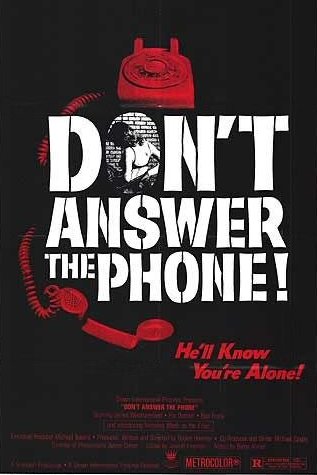
The TSL’s Daily Horror Grindhouse: Don’t Answer The Phone (dir by Robert Hammer)


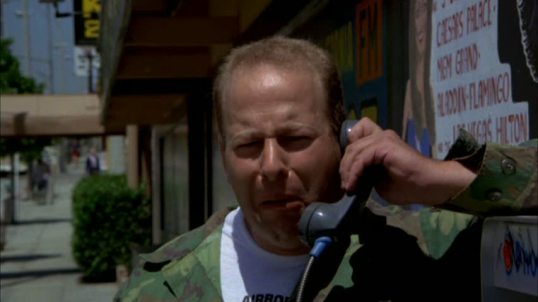
Nicholas Worth in Don't Answer The Phone

Nicholas Worth in Don’t Answer The Phone

AGCK!

As a self-described lover of grindhouse and exploitation films, I have seen my share of truly icky films.  But Don’t Answer The Phone, a 1980 mix of police procedural and serial killer horror, is in a class all by itself.  It is not only exceptionally icky but it’s distressingly effective as well.

After I watched Don’t Answer The Phone, I actually checked to make sure all the doors were locked.  Before I got into bed, I searched all the closets to make sure there wasn’t anyone hiding in there.  And, as I fell asleep, I found myself thinking that maybe I should follow the advise of both Arleigh and my sister.  Maybe it was time for me to finally get a gun of my own and learn how to use it.

Seriously, Bowman, I thought as I waited for sleep to come, you live in Texas.  It’s totally legal to carry a gun down here so you need to take advantage of the law and make you’re ready to blow any pervert losers away!  Even if you shot the wrong person, you’re cute.  The jury would never convict…

That’s the type of effect that Don’t Answer The Phone had on me.  It’s not necessarily a good film.  With one notable (and important) exception, most of the acting is terrible.  The film’s few attempts at intentional humor largely fall flat.  Even with a running time of only 94 minutes, Don’t Answer The Phone feels overlong and full of unneeded padding.  And yet, this is a very effective film.  It did freak me out, largely because it was so crude and heartless.  It strikes at the most primal fears of the viewer, that feeling that — even within the security of our own home — we may not truly be safe.

As Don’t Answer The Phone opens, Los Angeles is a city being stalked by a madman.  That, in itself, is not surprising.  Just taking a quick look at Wikipedia will reveal that Los Angeles has been home to a large number of serial killers.  In fact, if there is anything shocking about Don’t Answer The Phone, it’s the suggestion that Kirk Smith (played by Nicholas Worth) is the only serial killer in town.

Who is Kirk Smith?  He’s an overweight, bald photographer who always wears an army jacket and is obsessed with candles, body building, and strangulation.  He also enjoys calling up a local talk show host, Dr. Linsday Gale (Flo Gerrish).  (One wonders if Dr. Gale’s name was specifically meant to make the viewer think of The Wizard of Oz.)  “Hello,” he says in an outrageously fake accent, “this Ramon!”  He tells Dr. Gale that he has frequent headaches and bad urges.  When he’s not pretending to be Ramon, Kirk can usually be found staring at himself in a mirror and yelling, “Do I measure up, Dad!?”

Kirk is killing women across Los Angeles and it looks like he might never be caught because Don’t Answer The Phone features some of the most incompetent cops ever!  These are the type of cops who smirk at the victims and shoot anyone who doesn’t get on the ground fast enough.  These are the type of cops who open fire and then say, “Adios, creep.”  Civil liberties!?  BLEH, THESE COPS DON’T HAVE TIME FOR YOUR RIGHTS!  Of course, they do end up shooting and killing the only witness who can identify Kirk Smith as the murderer.  Whoops!

If there’s anything that sets Don’t Answer The Phone apart from all the other serial killer films, it’s the performance of Nicholas Worth.  Far more than the slick and erudite serial killers who dominate contemporary thrillers, Nicholas Worth is a frighteningly believable lunatic.  He’s scary because we’ve all seen his type wandering the streets.  We’ve all felt his stare linger for a few seconds too long and we’ve all had the same feeling of dread when we saw him approaching us.  Reportedly, Worth did a lot of research on actual serial killers before taking on the role of Kirk Smith and his performance is terrifying because it is so real.

It’s icky to watch but, at the same time, it do serve to remind us that there are real life Kirk Smiths out there.

Agck!  Seriously, it makes me shake just thinking about it.

I’m getting a gun…
DAtP

Horror Film Review: Zoltan, Hound of Dracula (dir by Albert Band)


Were you aware that Dracula owned a dog?  And that dog was a vampire?  And that dog’s name was Zoltan?

It’s true!  Or, at least, it’s true according to a low-budget 1977 film called Zoltan, the Hound of Dracula.

Zoltan opens with a bunch of Russians unearthing an underground tomb that, we’re told, once housed Dracula.  Inside the tomb, they find two coffins.  One contains a man with a stake in his chest.  The other contains the body of a dog that has a stake in its chest.  Foolishly, the Russians remove the stakes and bring back to life both Zoltan and Veidt Smit (played by a very creepy-looking actor named Reggie Nalder, who also played the vampire in the made-for-tv adaptation of Stephen King’s Salem’s Lot).  Veidt is a former servant of Dracula who can walk around in the daylight.  As for Zoltan — well, he’s Dracula’s dog.  His eyes glow.  He has gigantic fangs.  He’s a vampire dog!

It turns out that, in order to survive, Veidt and Zoltan have to find the last human descendant of Dracula and turn him into a vampire.  So, Veidt and Zoltan had to Los Angeles and start to stalk family man Michael Drake (Michael Pataki).  Drake (and yes, his last name was shortened from Dracula) has little knowledge of his heritage.  Oddly enough, we’re told repeatedly that he’s the last member of the Dracula bloodline but he has two kids so it seems like they would actually be the last descendants of Dracula and…

Oh, who cares!?  Why are we worrying about logic when it comes to reviewing a film called Zoltan, the Hound of Dracula?

Michael and his family leave Los Angeles so that they can spend the weekend at a campground and, needless to say, they are followed by Zoltan and Veidt.  Soon, Zoltan is turning every other dog in California into a vampire and chasing Michael and his family.

Fortunately, a vampire hunter (played by Jose Ferrer) shows up and offers to help Michael survive.  But will his help be enough?

Okay, so Zoltan, the Hound of Dracula is technically a pretty bad film.  The budget is very low.  Director Albert Band doesn’t really bother much with things like subtext or suspense.  With the exception of the genuinely intimidating Reggie Nadler, the actors pretty much just go through the motions.  But, with all that in mind — how can you not love a film called Zoltan, the Hound of Dracula?  It’s fun because the film is just so ludicrous.  Criticizing a film like this for being bad ultimately feels like being way too much of a scold.

Add to that, there’s a vampire puppy!  And yes, he is just adorable!

I have to say that I am very disappointed that Zoltan did not make an appearance in last year’s Dracula Untold.  Hopefully, any future Dracula movies will make room for Zoltan. He may have been a vampire but seriously, Zoltan was a good dog!


Horror on The Lens: Don’t Go To Sleep (dir by Richard Lang)


For today’s horror on the lens, we present Don’t Go To Sleep!

In this TV movie from 1982, a little girl is killed in a horrific car crash.  Her family blames themselves for her death and they really should.  The father (Dennis Weaver) was drunk.  The mother (Valerie Harper) didn’t keep her drunk husband from driving.  Finally, the girl’s brother (Oliver Robins) and sister (Robin Ignico) were playing a prank on her when the car crashed.  By tying her shoe laces together, they made it impossible for her to get out of the car.

However, they’re not the only ones who blame themselves.  The dead girl blames them as well.  When the family moves out to the country and attempts to heal, the girl’s ghost goes with them.  And soon, she is encouraging her sister to kill the other members of the family.

And that’s just what happens.

Seriously, this movie took me by surprise.  For a movie that made for network television in 1982, it’s a surprisingly dark film that doesn’t shy away from graphically killing off most of the cast.  It’s a surprisingly effective little film and you can watch it below!

(Thank you to my wonderful cousin, Toni Posados, for recommending this film!)

Horror on TV: The Twilight Zone 1.17 “The Fever”


For tonight’s horror on TV, we have an episode of The Twilight Zone entitled The Fever. In this one, Franklin (Everett Sloane) and his wife Flora (Vivi Janiss) visit Las Vegas. Franklin detests gambling but, once he finds himself in Vegas, he finds himself being pursued by a slot machine that, literally, calls his name.


This episode was written by Rod Serling and directed by Robert Florey. (Reportedly, Serling wrote it after losing a good deal of money in Vegas.) It originally aired on January 29th, 1960.


I like this episode. Everett Sloane, who played the beloved Mr. Bernstein in Citizen Kane, gives a great performance and the taunting slot machine starts out as slightly ludicrous but then becomes genuinely menacing as the episode reaches its conclusion.