The Things You Find on Netflix: The Serpent (dir by Tom Shankland and Hans Herbots)


Some shows require a bit of patience on the part of the viewer and that’s certainly the case with The Serpent, an uneven but ultimately rewarding 8-episode British miniseries that can currently be viewed on Netflix.

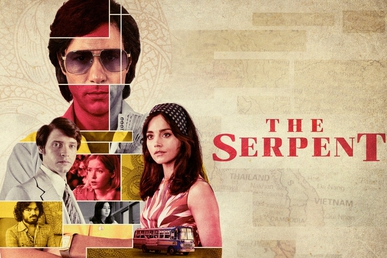
The Serpent tells the true story of Charles Sobhraj (played by Tahar Rahim), a career criminal who spent the 70s smuggling diamonds and killing hippies. Living in Bangkok, Sobhraj and his two associates — his French-Canadian lover, Marie-Andree LeClerc (Jenna Coleman) and his henchman, Ajay (Amesh Edireweera) — preyed on travelers who had come to Asia in search of adventure and sometimes enlightenment. Using the name Alain, Sobhraj would befriend his victims and then drug them. When they were violently ill, he would nurse them back to health. He would also steal their money, use their passports, and he ultimately killed a huge number of them. Sobhraj was a serial killer but, unlike other serial killers, he didn’t kill for pleasure as much as he just killed because it was a part of his business. Sobhraj was also frequently described as being charming and witty, a sort of real-life Bond villain. When he was captured, he would inevitably find a way to escape. When he had finished serving his sentences, he would go to the media and give self-promoting interviews. Indeed, his need for notoriety would ultimately be his downfall.

It’s an interesting tale but it’s also not an easy one to break down into a collection of easy story beats. Sobhraj committed so many crimes and victimized so many different people in so many different countries that it’s hard to know where to ever start with him. The Serpent focuses on the time Sobhraj spent in Bangkok and the efforts of a Dutch diplomat named Herman (Billy Howle) and his wife, Angela (Ellie Bamber), to prove Sobhraj’s guilt and to bring some justice to his countless victims. Working with Herman and Angela are a cynical Belgian named Paul Seimons (Tim McInnerny) and, ultimately, Sorbhaj’s French neighbors, Nadine (Mathilde Warnier) and Remi (Grégoire Isvarine). Throughout the film, we get to know not only Sobhraj’s gang and the people investigating him but also Sobhraj’s victims, the majority of whom were just happy to see a seemingly helpful and friendly face in an unknown land.

As I said, The Serpent requires some patience. The show makes heavy use of flashbacks, continually going back and forth from Sobhraj first meeting his associates and his victims and Herman and Angela investigating his crimes months later. Especially during the first two episodes, it’s difficult to keep track of what’s happening in the past and what’s happening in the show’s present. As the series progresses it becomes easier to follow the plot and the show’s flashback structure actually starts to pay off. You find yourself watching the same scene a second or a third (or even a fourth time) but this time, you have new information and what once seemed odd or obscure suddenly makes terrifying sense. The show’s third episode — which deals with a French tourist (Fabien Frankel, giving a harrowing performance) who finds himself practically a prisoner of Sobhraj and his associates — is especially powerful and suspenseful. It’s the type of thing that will make you wonder about every time a stranger has ever offered to help you out. At its best, The Serpent is a hell of a paranoia generator.

The show divides it’s attention between Sobhraj and Herman. That Herman becomes obsessed with capturing Sobhraj and understanding his crimes is not surprising. That often happens to amateur sleuths. (Michelle McNamara’s self-destructive obsession with the Golden State Killer comes to mind.) Unfortunately, as played by Billy Howle, Herman comes across as being slightly unhinged before he even starts investigating the murders and, as such, we’re kind of left wondering whether it’s his obsession that’s destroying his career or just his own self-righteous personality. As for Tahar Rahim, it took me a few episodes to really appreciate his performance. At first, Rahim’s performance seemed almost too restrained for a character who was charismatic enough to fool an untold number of victims into trusting him. But, as the series progressed, I came to see that Rahim was essentially playing Sobhraj as being an empty but attractive vessel, someone upon whom his eventual victims could project their desires. For those who wanted a lover, Sobhraj projected charm and sensuality. For those who wanted a friend, Sobhraj projected compassion. But, ultimately, it was all projection because there was nothing going on underneath the surface. Sobhraj knew how to manipulate humans but he didn’t know to actually be one.

For me, the series was pretty much stolen by Jenna Coleman, Ellie Bamber, and Mathilde Warnier. Coleman, especially, does a good job of playing Marie-Andree. It’s easy to just say that Marie-Andree was brainwashed by Sobhraj but Coleman suggests that Marie-Andree knew exactly who and what Sobhraj was but chose to pretend otherwise because the glamorous fantasy of their life was preferable to the drab reality of her life back in Quebec. Mathilde Warnier is the story’s often unacknowledged hero, as she repeatedly puts her life in danger to find and photograph evidence of Sobhraj’s crimes. She’s at the center of the majority of The Serpent‘s most suspenseful moments. Ellie Bamber, meanwhile, brings Angela to likable life despite the fact that the script often seems to be trying to sabotage her by giving her some of the show’s worst lines. (In real life, Angela played as active a role in investigating Sobhraj as her husband. In the show, though, Angela is often just portrayed as being wearily supportive even as she worries about Herman’s growing obsession.)

That said, the heart of the show is with Sobhraj’s victims, all of whom are portrayed with more compassion and respect than one typically expects from a true crime series. All of them, from the American girl looking for one night of fun before becoming a nun to the Danish tourists who make the mistake of trusting Sobhraj and Marie-Andree, are portrayed with compassion. Your heart breaks for them and also for what their deaths represent. All of them are too trusting. All of them are, in the beginning, too naïve. All of them are looking for something more than what they had in the boring safety of their old lives. In the end, their murders represent the death of innocence.

As I said, The Serpent requires some patience but it’s ultimately more than worth watching.

Music Video of the Day: Easy Sleazy by Mick Jagger with Dave Grohl (2021, editing concept by Matt Clifford)


Are you sick of the lockdowns? Are you tired of hearing about the Coronavrius? Do you really want to just get back to living your life and doing what you want without having to worry all the time?

Well, Mick Jagger and Dave Grohl feel the same way! They’ve written a song about it and made a video. Let’s listen and take a look, shall we?

Hell yeah!

Now, there’s some people on twitter (yes, I know) who are convinced that Mick is being serious when he says that the vaccine is going to allow Bill Gates to enter a person’s blood stream. Myself, I think it’s pretty clear that Mick is being sarcastic. I would say that this song speaks for all of us who are equally sick of both the scolds and the conspiracy theorists. Mostly this song is just about wanting to get on with one’s life and for the pandemic to just become a bad memory. Who can’t relate to that?

Enjoy!

Lisa Reviews An Oscar Nominee: The Citadel (dir by King Vidor)


The 1938 Best Picture nominee, The Citadel, is about a doctor who briefly loses his way but — don’t worry! — he eventually finds it again.

The film opens with the following title card:

This motion picture is a story of individual characterizations and is in no way intended as a reflection on the great medical profession which has done so much towards beating back those forces of nature that retard the physical progress of the human race.

Having gotten that out of the way, it goes on to tell the story of Dr. Andrew Manson (Robert Donat), an idealistic British doctor who serves his apprenticeship in rural England and who eventually ends up in Wales, trying to figure out why all of the miners seem to developing a mysterious cough. Along the way, he marries the always supportive Christine (Rosalind Russell, doing a lot with an underwritten role). Unfortunately, Dr. Manson discovers that being a doctor is not always an easy life. He’s frequently underpaid and underappreciated. His patients are often suspicious and argumentative and the medical establishment is hesitant to accept change. When the frustrated Dr. Manson returns to London, he discovers that he can make a fortune by working as a doctor for the type of wealthy people who are always willing to spend a little extra money on the latest fad treatment. With the encouragement of the decadent Dr. Lawford (Rex Harrison), Manson abandons his old ways and he’s finally able to make some money off of patients who will basically do anything that he tells them to do. However, a personal tragedy forces Manson to reexamine his life and consider why he became a doctor in the first place.

The Citadel is a coming-of-age film, one the follows Dr. Manson from the time when he’s a young doctor in need of a mentor until he himself is the one who is doing the mentoring. It gets off to a bit of a slow start. To be honest, I found Manson’s early apprenticeship to be almost as tedious as Dr. Manson found it to be. Things pick up a bit once Manson is on his own, fighting for the rights of miners or trying to find some sort of ethical justification for only treating the rich. If Robert Donat seems oddly hesitant during the first half of the film, he’s undeniably compelling during the second half. Though Dr. Manson has many scenes in which he rails against ignorance and injustice, Donat wisely resists the temptation to go overboard while portraying his indignation and, as a result, The Citadel never slips into melodrama. Donat doesn’t play Manson as being a crusader but instead as just being an often frustrated professional who knows that he’s being prevented from doing his best work. Director King Vidor, who made several films about thwartded visionaries, was never a particularly subtle director but Donat’s performance goes a long way towards making Vidor’s messianic tendencies tolerable.

Donat gets good support from the rest of the cast, especially Ralph Richardson in the role of his sometimes mentor. That said, Donat is still definitely the main reason to watch The Citadel, which is an uneven thought ultimately worthwhile film. The Citadel is very much a film of 1938 and it’s slow pace, earnest seriousness, and dialogue-heavy style will undoubtedly be an issue for some people watching the film in 2021. Watching a film like The Citadel today requires a willingness to adjust to the aesthetics of a past age. This is a film that will definitely be best-appreciated by those who aren’t unfamiliar with spending an entire weekend watching TCM. But you know what? It’s good to watch old movies. You can’t understand the present or prepare for the future if you’re not willing to look at the past.

The Academy nominated The Citadel for Best Picture. It was one of the first British films to be so honored (though not the first, that honor went to The Private Life of Henry VIII). However, it lost to Frank Capra’s You Can’t Take It With You. Though Robert Donat lost the Oscar for Best Actor to Spencer Tracy in Boys Town, he would be rewarded the very next year for his performance in Goodbye Mr. Chips. Among those who Donat defeated was Clark Gable, nominated for playing Rhett Butler in Gone With The Wind, a characters that Margaret Mitchell always said she envisioned as being played by Robert Donat.

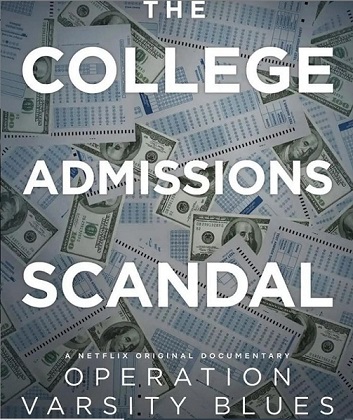
Film Review: Operation Varsity Blues: The College Admissions Scandal (dir by Chris Smith)


In Operation Varsity Blues, Matthew Modine plays Rick Singer, the real-life “college admissions consultant” who was one of the many people involved in the 2019 College Admissions scandal.

Singer was the former basketball coach who helped the rich and famous get their children into the right Ivy League schools. As the film shows (and as you probably already know), he did this by faking test scores, faking athletic activities, and often arranging for money to exchange hands. The film not only features Modine and others actors acting out the actual conversations that Singer was taped as having with his wealthy clients, it also features interviews with a few of Singer’s acquaintances and with the various journalists who covered the scandal. It’s a documentary with dramatic recreations.

And that’s fine. Modine does a good enough job portraying Rick Singer, playing him as essentially being a sleazy salesman who knew exactly what to say to the parents who were desperate to get their child into a prestigious university. (The film reveals that Singer would often lie to his clients, brainwashing them into believing that there was no way their children would be able to get into USC or Harvard without his help.) Unfortunately, with his gray hair and, his nervous smile, Matthew Modine as Rick Singer bares an odd but definite resemblance to the great Eric Roberts and, as I watched Operation Varsity Blues, I found myself thinking about how great it would be to see a film in which Eric Roberts did play Rick Singer. (I mean, seriously, Singer just seems like a perfect Eric Roberts role.) That may sound like a petty complaint but it does get at a bigger issue. Operation Varsity Blues is 100 minutes long but, despite its slightly different narrative format, it still doesn’t tell us anything that we couldn’t have learned from all of the other documentaries and dramatic adaptations based on the college admissions scandal. Even with the reenactments and the chance to hear Singer’s own words, Operation Varsity Blues still doesn’t tell us anything new about the scandal or why it happened. If nothing else, Eric Roberts and his neurotic screen presence would have put a new spin on a now-familiar story,

To be honest, the hybrid, docudrama format actually works against the film. On the one hand, you’ve got the real people telling their story in talking head interviews. But every time you start to get into their stories, the film cuts away to a reenactment and the film goes from being a documentary to being a low-budget Matthew Modine film. The film would have worked better if it had chosen to be either a documentary or a drama. By trying to be both, the end result is a movie that often seems disjointed and leaves you still feeling as if you haven’t actually gotten the entire story.

Finally, Lori Loughlin and her husband are featured in the documentary, though only in news footage. At one point, it’s revealed that after their daughter was accepted to USC, her high school guidance counselor called the college to tell them that Olivia Jade was never on her school’s rowing team, regardless of what her application said. Apparently, Lori and her husband got very angry about the counselor doing this and you know what? They had every right to be pissed off. Why is a guidance counselor trying to keep one of his students from getting into a good college? I mean, how was it really any of his business to begin with? That’s something that I would have liked to have seen explored in a bit more detail. Instead, the film just hurries along to another reenactment of Rick Singer explaining how to cheat on the ACT. (I’m still amazed that people spent that much money to do something as easy as cheat on a standardized test. I mean, it’s not that difficult.)

Unfortunately, the entire film is like that. It raises some interesting points but it ultimately leaves you frustrated by its refusal to do anything more than scratch the surface.

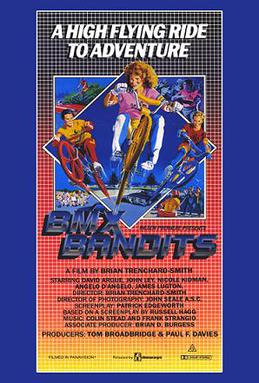
Film Review: BMX Bandits (dir by Brian Trenchard-Smith)


Bicyclists!

Oh, don’t even get me started on people who ride bicycles. Don’t get me wrong. I own a bicycle. I like to ride my bicycle occasionally, though only in the park and never in the street. They’re good exercise. They’re good for the environment, I guess. They don’t kill as many people as cars do, I assume. That said, professional bicyclists — and by that, I mean the ones who don’t even own a car — drive me crazy.

Don’t even pretend that you don’t know what I mean. You’re trying to drive to work or the grocery store or maybe you’re just taking a nice drive to clear your head. You’re tapping on the accelerator. You’re going over 60 mile per hour because there aren’t any cops around. Everything’s just fine and then suddenly …. you get stuck behind some jerk on a bicycle. He’s got his helmet on. He’s got his tight little bicycle shorts and his fluorescent shirt. He’s peddling along, all hunched over and with his ass up in the air, like that doesn’t make him look like a total idiot.

And then, you have to slow down. You’re have to be careful that you don’t accidentally run him over. You have to watch his arms because his stupid little bicycle doesn’t have a goddamn turn signal or a brake light. When you reach a red light, he sits there on his bike with one hand on his hips and the other hand holding up his little water bottle, from which he drinks as if he’s spent the past week in a desert. And you’re left to wonder why this guy is even here, riding his bicycle down a busy street that doesn’t even have a bicycle lane. The worst part of it is the smug look of satisfaction on his face as he looks back at your car and thinks, “I may be inconveniencing everyone but at least I’m making a difference.”

Considering my anti-bicyclist feelings, I may not have been the ideal audience for the 1983 Australian film, BMX Bandits. Fortunately, though, the teenager bikers in this film were all extremely fast and very stunt-orientated. These bikers weren’t interested in using their bikes as a symbol of moral superiority. Instead, they were more about using them to jump over shopping carts and to ride across the beaches of Sydney. One of the bikers was played by a 16 year-old Nicole Kidman and she managed to bring at least a hint of reality to even the most absurd pieces of dialogue.

That’s a good thing because BMX Bandits is, even by the standards of a bicycle film from the early 80s, is a thoroughly absurd film. A group of bank robbers lose a box of walkie talkies. Three BMX bike enthusiasts find the box. This leads to a long chase through Sydney, as well as a sort of bizarre counter attack launched by hundreds of teenage BMX bike owners. The bank robbers don’t stand a chance! That said, I’m not really sure why, since the movie opened with them successfully robbing a bank, they couldn’t have just purchased a new box of walkie talkies. Interestingly enough, the police also spend a lot of time listening to walkie talkies, which can only lead me to believe that walkie talkies were a really huge deal back in 1983. This film is fascinated by them, to the extent that a more appropriate title for the film might have been Law & Order: Walkie Talkie Squad.

Anyway, what can you really say about something like BMX Bandits? It’s such a silly film that it’s almost impossible to review because to take it seriously is to miss the point. The villains are buffoons. The plot makes no sense. Nicole Kidman’s good, though you still only really notice her because you know what audiences in 1983 did not know, that she’s future Oscar winner Nicole Kidman. At the same time, the scenery is lovely and there’s an extended scene that takes place in a cemetery that has some nice atmosphere even if it does go on a bit too long. There’s not really a lot to be said about BMX Bandits but at least it won’t slow down traffic.

Lisa’s Week In Television: 3/28/21 — 4/3/21


Twonky

Welcome to the first ever edition of Lisa’s Week In Television!  Because of the holiday weekend, there’s a lot of streaming shows that I haven’t gotten a chance to watch yet.  And I will also admit that I watched a lot of old TV shows over the previous few days.  Then again, I always end up watching a lot of old shows, if just because I always enjoy seeing how people dressed and spoke in the past.

American Idol

American Idol (Sunday and Monday Night, ABC)

I was recently trying to remember when the last time was that I was emotionally invested in American Idol and I think it was way back in 2007.  That would be the sixth season.  I thought Blake Lewis was totally adorable and I was actually really upset when he lost to Jordin Sparks.  That’s nothing against Jordin.  At the time, I just had a weakness for beat boxers.

Ever since then, American Idol has mostly been background noise to me.  It’s one of those things that I watch out of habit and it’s rare that I ever pay that much attention to it while it’s on.  When the show started, it was always interesting to see how brutally frank Simon Cowell could be but, after Simon left, no one was willing to play the villain and the show’s gotten rather bland as a result.

Anyway, on Sunday and Monday’s episodes, the judges announced the top 24 singers.  I have no idea who any of these people are.  I just know that none of them will ever win my heart quite like Blake Lewis performing Time of the Season.

Baywatch

Baywatch (Weekday Evenings, H&I)

Yes, the show about lifeguards is now airing on H&I.  Hopefully, Baywatch Nights will eventually follow.  There’s always been a lot of debate about whether or not David Hasselhoff is self-aware in the style of William Shatner or if he actually took Baywatch seriously.  Having watched a few episodes of the show, I still have no idea.  On the one hand, Hasselhoff certainly seemed to be taking thing very seriously.  On the other hand, how could anyone actually take a show like Baywatch seriously?  I mean, you would have to have somewhat of a satricial spirit to just be involved with the show, wouldn’t you?

Speaking of taking Baywatch seriously, Tuesday’s episode featured Danny Trejo as the father of a gang member.  Trejo wanted his son to stay in the gang and was upset when Billy Warlock tried to recruit him into a lifeguard program instead.  However, when Trejo subsequently fell in the ocean just to be saved by his own son, everyone learned an important lesson.

City Confidential

City Confidential (Sunday Afternoon, CI)

This show, which originally aired on A&E 20 years ago, is actually two shows in one.  The first half of every episode always deals with the history and culture of an American city.  The 2nd half always deals with some crime that happened in that city and which, we’re told, changed that city forever.  Each episode was narrated by actor Paul Winfield, who always sounded somewhat amused no matter how heinous a crime he was describing.

I watched two episodes, one about Milwaukee and one about Carlsbad, New Mexico.  My family briefly lived in Carlsbad when I was growing up so I found that episode to be interesting.  What can I say?  I have a weakness for true crime shows hosted by sardonic narrators.
Distirct

The District (Weekday Mornings, H&I)

The District is a fairly predictable cop show that aired for four seasons at the start of the century.  I had totally forgotten about it until I stumbled across it on H&I during a bout of insomnia.  It’s about Jack Mannion (Craig T. Nelson), the hyperactive police commissioner for Washington D.C.  Pretty much the only interesting thing about the show was Craig T. Nelson’s frequently bizarre lead performance.  Nelson’s not exactly a low-key actor to begin with and The District cast him as a frequently married, show tune loving cop who enjoyed yelling at people.  The show’s producers basically gave Nelson a license to overact and he took full advantage of it.  With each episode, you think that Nelson can’t possibly go more over-the-top and, with each episode, he proves you wrong.

Tuesday’s episode featured him crashing a meeting of the Washington D.C, city council and, when he felt they weren’t paying attention to him, climbing up on a desk so that he could better yell at them.  Later, when Mannion had to interrogate a young child who had witnessed a crime, he got her to answer his question by having a tea party with her.  That’s Jack Mannion for ya!

Hell's Kitchen

Hell’s Kitchen (Thursday night, FOX)

Even though I’m not really a huge fan of yelling at or insulting people, I’ve always liked Hell’s Kitchen.  Some of it is because of those moments (which usually happens towards the end of the season) when Gordon Ramsey reveals that he’s not quite as fearsome as he pretends to be.  (He actually does seem to get emotionally invested once there’s only 6 or 5 chefs left.)  Plus, since I can’t cook, I guess I find it interesting to watch people who actually can.  This latest season, which is drawing to a close, has been one of the better seasons.  Myself, I’m totally cheering on Mary Lou!  Go, Mary Lou!  You got this!

King of the HIll

King of the Hill (Hulu)

This is still the best and most authentic TV show ever made about Texas.  Watching it today, it’s also a nice alternative to the more mean-spirited programming of Seth MacFarlane.  Let it never be forgotten the Fox cancelled King of the Hill to make room for The Cleveland Show, of all thing.  Fortunately, King of the Hill can currently be watched at any time on Hulu.

Saturday morning, my sisters and I watched three episodes while we were preparing for the day — the episodes where Hank goes down Aisle 8A, where Hank goes to New Orleans, and where Dale thinks he’s rabid.  We agreed that Boomhauer is one of the greatest characters of all time.

law & Order

Law & Order: Organized Crime (Thursday Night, NBC)

I reviewed the first episode of Law & Order: Organized Crime here.

Law & Order: SVU (Thursday Night, NBC)

I used to watch SVU religiously when I was in high school and college.  However, as I got older, I kind of lost interest. That said, I did watch it this week because Elliott Stabler (played by Chris Meloni) was making his first appearance on the show since leaving 8 seasons ago.  Thursday’s episode also served as a backdoor pilot, of sorts, for Law & Order: Organized Crime.

The episode was …. okay.  The mob stuff was predictable but it was nice to see that Chris Meloni and Mariska Hargitay still had their old chemistry.  That said, Stabler seemed to be even more tightly wound than he did during his time as a regular on SVU and that’s really saying something as Stabler always seemed like the cop mostly likely to beat a suspect to death during interrogation.  (Of course, Stabler’s wife was injured by a car bomb and later died during the episode so Stabler had good reason for being wound up.)

A lot of people on twitter freaked out over the fact that no one on the show was wearing a mask.  Calm down, people, it’s a TV show.

Love Boat

The Love Boat (Weekday Evenings, Decades TV)

Ah, The Love Boat.  If there’s any show from the 70s and 80s that deserves a revival, it’s probably this one.  Movie and television veterans play the passengers of a weekly cruise, falling in love and taking part in other hi-jinks.  Every episode that I’ve ever seen of The Love Boat has been charmingly silly and, quite frankly, I think that’s what we need more of in the world.  Add to that, the cruise ship industry took a hit with the pandemic.  A Love Boat revival might help revive it.

Monday’s episode featured Zsa Zsa Gabor and a bunch of people who I didn’t recognize but who all appeared to be having a great time on the boat.  Zsa Zsa was determined to win back her ex, even though he was planning on marrying someone else.  The other stories dealt with a kleptomaniac who kept accidentally stealing stuff and a TV actor who feared that he would never be able to live up to his heroic image.  In the end, for all the passengers and crew, love won.

Wednesday’s episode was a Christmas episode from 1980.  Dorothy Lamour was one of the passengers.  Father and son entertainers ran into each on the boat after having not spoken to each other for years.  A stowaway pretended to be the child of a wannabe womanizer.  In the end, for all the passengers and crew, love won.

My Evil Sister

My Evil Sister (Sunday Afternnon, CI)

I watched this on Crime and Investigation on Sunday morning.  As the youngest of four sisters, it’s hard for me not to be intrigued by the fact that there’s so many evil sisters out there that they could actually produce an entire TV series about them.  The episode I saw featured two stories, one about a sister who killed her lazy sister and then tried to frame local drug dealers and the other about a girl who shot her adopted sister because she felt her sister was keeping her from being popular in high school.  Scary stuff!  I’m glad my family likes me!  (I say this as I nervously glance over my shoulder.)

The Office

The Office (Comedy Central)

I watched a few episodes of The Office on Thursday and Friday.  I always feel like I’m taking a risk whenever I watch The Office on Comedy Central because there’s always a chance that they’ll be showing episodes from Seasons 8 or 9.  Fortunately, on Thursday and Friday, they were showing episodes from Season 5.  Jim and Pam hadn’t gotten unbearably smug yet.  Andy and Angela weren’t quite as cartoonish as they would later become.  Best of all, Michael was still on the show so I got to watch him once again fall in love with Holly Flax.  Though The Office was pretty uneven after the third season, the few episodes of season 5 were all gems.

parking_wars

Parking Wars (Monday Morning on A&E)

I wrote about this annoyingly addictive show a few years ago.  I watched two episodes of the show on Monday morning, as I was getting ready for my day.  Even though I mostly had it on for background noise, I still couldn’t help but think about how this show, which aired its last original episode nearly ten years ago, feels like the perfect show for the current era.  A bunch of self-righteous bureaucrats make life difficult for their fellow citizens and, whenever they’re challenged on it, they respond with a bunch of “If you had followed the rules” bullshit.  Watching this show always makes me want to park in front of an expired meter and then rip up the ticket.

The Rookies

The Rookies (Sunday Morning, H&I)

The Rookies is a cop show that aired from 1972 to 1976.  H&I just recently started showing the show.  It airs on Sunday morning at 2 in the morning.  I decided to set the DVR to record the show, just because it was a show that I’d never heard of.  I’m like a cat when it comes to being curious about stuff.

Anyway, The Rookies is about three cops who are …. can you guess it? …. rookies!  One is black.  Two are white.  One has a wife, the other two single.  Whenever they drive their car around the city, 70s wah wah music plays in the background.  From what I’ve seen so far, it’s pretty much a standard cop show.  One of the cops is played by Michael Ontkean, so it’s possible to view the show as being a prequel to Twin Peaks, if you’re so inclined.

I watched Sunday’s episode off of the DVR.  The first episode featured a criminal turning into an informant and putting his life at risk.  In the 2nd episode, Ontkean was shot in the back and had to undergo an experimental surgery to regain the ability to walk.  The stories were, in no way, surprising but it was a chance to experience how people talked and dressed in 1972.

Rome Chariot

Rome’s Chariot Superstar (Monday Morning, Smithsonian Channel)

This docuseries took a look at the ancient Roman chariot races.  It was actually pretty entertaining.  I enjoyed the descriptions of life in ancient Rome and, even better, they showed how to build and steer a chariot!  As I’ve said many times on the site, I’m a history nerd.  I love stuff like this.

sbtb

Saved By The Bell (Sunday Morning, MeTV)

Ah, Saved By The Bell, the oddly popular and incredibly dated high school sitcom from the early 90s.  Don’t ask me to explain why Saved By The Bell remains so watchable, despite being terrible in almost every way.  It’s just a part of the culture and, perhaps more importantly, there’s never been an extended period of time when it hasn’t been on TV somewhere.  One of the many places where it can currently be found is as a part of MeTV’s Sunday morning lineup.  I always seem to end up watching it, even though the show makes me cringe in so many ways.

For instance, on Sunday morning, I watched three separate episodes.  First off, I watched the infamous Running Zack.  This is the incredibly problematic episode where the blonde, blue-eyed, and very pale Zack Morris discovers that he’s a direct descendant of the Native American Chief Joseph and he responds to this news by putting on an elaborate headdress and then giving a speech to his class.  It’s really …. not good.  Zack, however, does subsequently win the big track meet.  If I remember correct, his Native American heritage was never again mentioned on the show.

Running Zack was followed by a far more entertaining episode, Jessie’s Song.  This is the “I’m so excited, I’m so excited, I’m so scared” episode, in which Jessie gets hooked on caffeine pills.  Everyone always laughs about the scene where Jessie freaks out but I think the extremely 80s music video is even more memorably weird.

Jessie’s Song was followed by The Fabulous Belding Boys, in which Mr. Belding’s supercool brother, Rod, showed up as a new substitute teacher at Bayside.  After getting all of his students excited about going rafting for the senior class trip, Rod ditched them all for two stewardesses.  Fortunately, Mr. Belding stepped up and took Rod’s place, showing Zack what being a hero is all about.  This is actually one of the few episodes of Saved By The Bell that actually works as something more than camp, with the normally underappreciated Dennis Haskins getting a chance to show what he could actually do with some halfway decent dialogue.

YesMinister

Yes, Minister (Monday Morning on PBS)

This is a BBC series, which originally aired back in the 80s.  It’s about a government minister named Jim Hacker (Paul Eddington) and two civil servants, Sir Humphrey (Nigel Hawthorne) and Bernard (Derek Fowlds), and their efforts to help Hacker run his department while also making sure that Hacker doesn’t actually accomplish anything.  It’s a hilarious show, one that Jeff recently introduced me to.  Even though the show is very British and 40+ years old, it’s still easy to see parallels between the show’s portrayal of the British government and the realities of Washington, D.C.  I guess bureaucracy is universal.

This show airs on Monday, usually at midnight.  I always set the DVR for it, though I’ve lately been staying up to watch it just because PBS is so inconsistent about keeping to their posted start and stop times.  Back in February, when Texas got hit by that winter storm, an episode of Yes, Minister was the last thing that I watched before the rolling blackouts began.

This week’s episode found Jim Hacker going to a farm for a photo op and essentially screwing everything up.  The show is at its best when it pokes fun at Hacker’s self-righteousness by revealing him to be just another clueless politician and this episode did just that.  (In all fairness, though, Hacker also consistently means well and, occasional pompousness aside, actually is the type of person you would want in office.)  Though the show may be an old one, it’s kind of what we need right now in the Age of Big Government.

Watched But Not Reviewed:

  1. ‘Allo ‘Allo (Sunday Night on PBS)
  2. America’s Most Wanted (Monday Night on Fox)
  3. Fear Thy Neighbor (Saturday Afternoon on ID)
  4. Hill Street Blues (Weekend Morning on H&I)
  5. The Killer Beside Me (Saturday afternoon on ID)
  6. The Masked Singer (Tuesday and Wednesday on Fox)
  7. Open All Hours (Sunday Night on PBS)
  8. Temptation Island (Tuesday Night on USA)
  9. Tough as Nails (Wednesday Night on CBS)
  10. The Voice (Monday Night on NBC)
  11. Your Worst Nightmare (Saturday afternoon on ID)
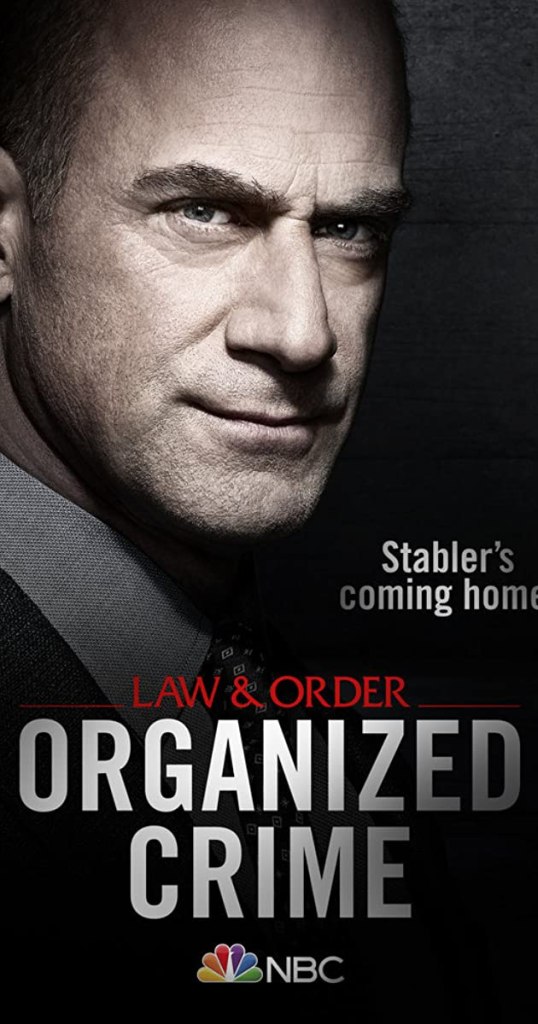
TV Mini-Review: Law & Order: Organized Crime 1.1 “What Happens In Puglia”


I used to watch Law & Order: SVU religiously. I thought Benson and Stabler were obviously in love, though I also knew that there was no way that Stabler would ever cheat on his wife. I enjoyed listening to Munch’s conspiracy theories and his weird little trivia factoids. I loved Finn’s way with a quip and even boring old Captain Cragen didn’t bother me too much. I enjoyed the show, even if I did occasionally call it Law & Order: SUV by accident. Eventually, though, the show’s relentlessly grim atmosphere and subject matter started to get to me and, a few years ago, I stopped regularly watching.

However, I did make it a point to watch this week’s episode of SVU because Elliott Stabler (Chris Meloni) was returning for the first time since both the character and the actor left the show at the end of its 12th season. Stabler returned in order to investigate who was responsible for the explosion that killed his wife. He not only reunited with Benson (and it was nice to see that Meloni and Mariska Hargitay still had their old chemistry) but he also attempted to redeem himself and his reputation. Stabler previously left the NYPD under a cloud of suspicion. Having committed six shootings in the line of duty, he could either submit himself to a full psychological analysis and take an anger management class or he could quit. He chose to quit. Anyone who thinks that it’s extreme to quit your job rather than learn to control your anger obviously never saw Elliott Stabler in action. Stabler was basically fueled by nonstop anger.

When Stabler was on Law & Order: SVU, he was the epitome of the cop who took every case personally. On the one hand, you liked him because Meloni gave a good performance and you could tell that he was trying to control his demons. On the other hand, you always knew that there was a decent chance that he was going to end up beating a suspect to death during an interrogation. It sometimes made him a bit frightening. At times, Stabler’s eyes would narrow and he would get that look on his face and you knew that anyone who cut him off in traffic was probably going to get intentionally rear-ended. He was a road rage incident waiting to happen. Tonight, when Stabler returned to SVU, it quickly became apparent that years of retirement hadn’t done much to calm him down. Admittedly, he had every reason to take this particular case personally but you still got the feeling that, even if his wife hadn’t been murdered, Stabler would still have been looking for an excuse to shoot someone.

I imagine he’ll probably get that excuse soon enough because Thursday’s episode of SVU served as a crossover with the first episode of Law & Order: Organized Crime. Organized Crime is the sixth entry in the Law & Order franchise (the seventh if you count that strange True Crime show) and it’s the first new one since Law and Order: Los Angeles came and went in 2010. This latest entry follows Stabler, who is now once again a detective with the NYPD and who is working with the Organized Crime task force. The first episode found Stabler launching an investigation into Richard Wheatley, a mob heir-turned-businessman who was played by Dylan McDermott. Since McDermott was listed in the opening credits, I assume the entire first season is going to be about Stabler investigating him and trying to take him down.

The first episode of Law & Order: Organized Crime was flawed but watchable. The scenes with Stabler, whether he was comforting his children or investigating a crime or trying to convince his boss that he wasn’t a loose cannon, were all strong. From the minute Meloni showed up, I was reminded of how compelling he was on SVU. Meloni brings a tough authenticity to even the most clichéd of dialogue and, even though he’s obviously quite a bit older now than he was a regular on SVU, Meloni hasn’t lost a step when it comes to portraying Elliott Stabler. The show acknowledged that Stabler, with his “I am the law” attitude, is a bit out-of-place in today’s culture. Stabler, like the Law & Order franchise itself, is going to have to figure out how to adjust to the times.

I was a bit less enthusiastic about both the character of Richard Wheatley and Dylan McDermott’s performance in the role. If Wheatley’s going to be a season-long villain, he’s going to need to develop a few more quirks and nuances beyond loving his children and killing his father. McDermott seemed almost bored with the role, suggesting none of the charisma that one would expect from someone who can convince that world that he’s a legitimate businessman while, at the same time, controlling the New York drug trade. Whealtey seemed like just a generic bad guy and he’s going to have to be more than that if he’s going to be a truly worthy opponent for Elliott Stabler. Hopefully, Wheatley will become more interesting as the show progresses.

That said, the first episode worked well-enough. It was well-directed by Fred Berner and it had more visual flair than I was expecting from a Law & Order spin-off. The scene where Stabler goes to a deserted amusement park to meet with an informant was especially well-done and atmospheric, with the lights of the boardwalk providing a perfectly spooky compliment to what Stabler discovered.

I’ll set the DVR. The first episode wasn’t perfect but I’m still intrigued enough by Meloni’s return to see where this 6-episode series goes.

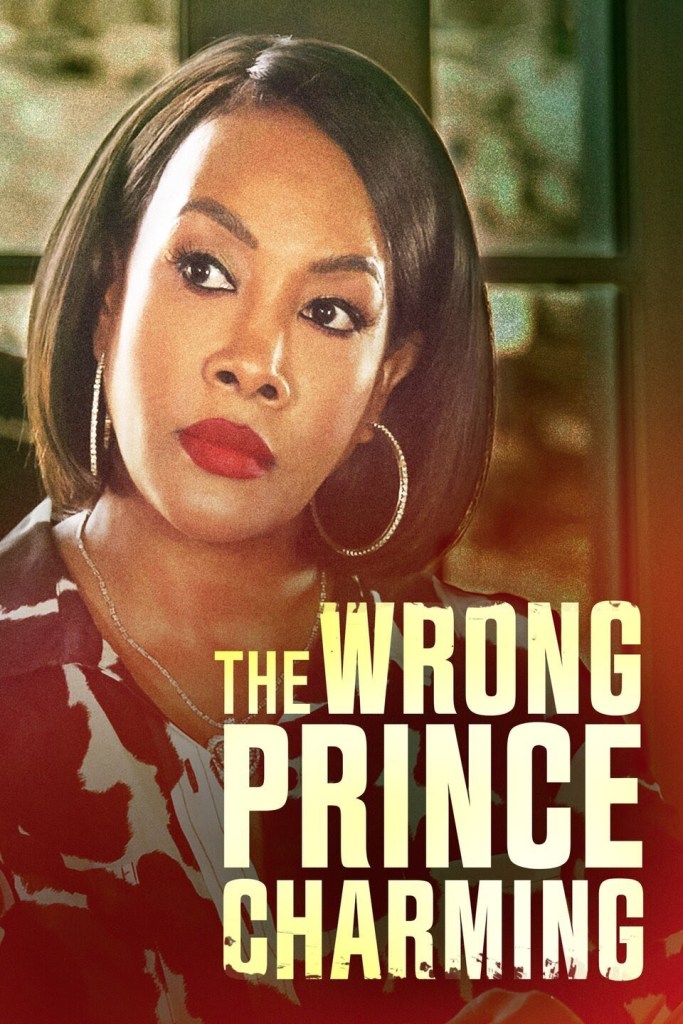
Lifetime Film Review: The Wrong Prince Charming (dir by David DeCoteau)


“It looks like you found the wrong prince charming!” Vivica A. Fox says towards the end of The Wrong Prince Charming.

I’ll admit that I cheered a little when Vivica said the line. If you know anything about Lifetime’s “Wrong” franchise, you know that Vivica A. Fox always plays a sympathetic authority figure who, at some point, says something along the lines of “Looks like he was the Wrong Poolboy” or “He messed with The Wrong Administrative Assistant.” One of the main reasons why people like me look forward to seeing the latest “Wrong” films is to see just how exactly the title is going to be worked into Vivica’s dialogue.

Make no doubt about it, there’s been a lot of “Wrong” films. We’ve had wrong blind dates, wrong tutors, wrong cheerleader coaches, wrong teachers, wrong real estate agents, wrong motel owners, wrong boyfriends, wrong girlfriends, and wrong houseguests. It only makes sense that we would eventually have a wrong Prince Charming.

The title character would be Prince Edward (James Nitti), who claims to be royalty but who, we learn fairly early on, is actually just a con artist who works with his assistant Liam (Jonathan Stoddard) to defraud people and corporations out of their money. Edward may be a charmer but he’s also a charlatan who is not above murdering anyone who he feels might be getting too close to the truth. That’s what greed does to people. That’s bad news for Anna (Cristine Prosperi), who is Edward’s latest target. Anna is an attorney. Among her clients is Bridget (Vivica A. Fox). After watching enough of the “Wrong” films, you really do find yourself wondering if maybe Vivica A. Fox is supposed to be playing the same character in every one of them. Maybe she just changes her name frequently as she travels across Canada and gets involved in thwarting the schemes of the wrong people. It would certainly explain a lot about the Wrong Cinematic Universe.

The thing with Lifetime’s “Wrong” films is that you either get them or you don’t. On the one hand, they’re pure melodrama. On the other hand, they’re also self-aware enough to poke fun at themselves. They’re not meant to be taken seriously, Instead, they’re diverting treats that are designed to keep the audience amused while they wait to hear Vivica pronounce someone to be “the wrong whatever.” They’re designed to be fun and usually, they are. The Wrong Prince Charming, for instance, has fun with the fact that everyone in the audience knows that anyone who claims to be a member of a royal family is probably lying to you. I’ve seen enough emails from enough financially burdened royals to know better than to trust anyone who claims to be a prince. When it comes to The Wrong Prince Charming, a good deal of the fun is to be found in catching all of Edward’s mistakes, all of the little moments when he accidentally lets his cover slip and reveals that he’s just some random commoner with a nice smile.

This is Cristine Prosperi’s 3rd wrong film She was also in The Wrong Cheerleader (“He messed with the wrong cheerleader!”) and The Wrong Neighbor. She’s also appeared in a handful of other recent Lifetime films, including Killer Competition and Murdered At 17. Before that, she played Imogen, the quirky stalker, on the final few seasons of Degrassi. Prosperi always does a good job in these films and the same is true here. She’s a sympathetic lead, even though it’s obvious from the start that she’s picked the wrong prince charming.

The Wrong Prince Charming is silly and fun, the type of movie that’s pretty much made to be watched with a snarky friend. I’m definitely looking forward to the next wrong film!

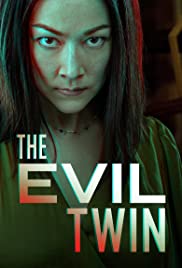
Lifetime Film Review: The Evil Twin (dir by Max McGuire)


If there’s anything I’ve learned from watching Lifetime films, it’s that anyone can afford a gigantic, three-story house with a basement, an attic, an Olympic-size swimming pool, and a guesthouse. Seriously, I don’t know why everyone always says it’s so difficult to get that first house because there are unemployed people in Lifetime films who live in mansions.

The other thing that I’ve learned from watching Lifetime films is that you’re screwed if you’ve got a twin. Seriously, your twin is always going to be evil. Your twin is always going to pretend to be you so that she can sleep with your boyfriend and murder your coworkers. Your twin is going to use her own DNA to frame you and then, once you’re imprisoned, she’s going to sell your identity to the Russian mob and then you’ll never get it back. Twins are bad news, or at least that’s the way it goes in the Lifetime Cinematic Universe. I’ve lost track of how many psycho twin films I’ve seen on Lifetime.

The most recent psycho twin film is named, appropriately enough, Evil Twin. Emily Piggford plays Emily, who flees from an abusive relationship and returns to her small hometown. She’s staying with her friend Lenah (Cory Lee, who also played Miss Oh on Degrassi) and she’s trying to get her life back together. Unfortunately, this prove difficult because random people keep walking up to Emily and yelling at her before telling her to stay out of their lives. Emily doesn’t know any of these people and is left to wonder why so many strangers suddenly hate her.

Emily also discovers that she has a twin sister named Charlotte! Charlotte, who lives in a beautiful house and who has longer hair than Emily, at first seems to be thrilled to have found her twin. She even asks Emily to turn her head so that Charlotte can see what the back of their earlobes look like. (That may sound like a strange request but I’d probably ask the same thing if I ever met my twin. Ears are fascinating things.) However, it soon turns out that …. well, you can probably guess. I mean, the movie is called Evil Twin, after all. Soon, Charlotte is pretending to be Emily and she’s attacking people left and right. You know how these things go.

Evil Twin is a bit more moody than the average Lifetime film. The fact that Emily is escaping from abuse and still dealing with the emotional trauma of her previous relationship gives the film a few more layers than the average Lifetime film and Emily Piggford does a good job playing both Emily and her twin sister. The film actually does manage to keep you guessing as to which twin is onscreen at any particular moment and, with Charlotte being considerably more clever and ruthless than the average Lifetime villain, the film manages to generate some suspense as Charlotte kills and maims her way through the people in Emily’s life. Evil Twin may not be the first Lifetime psycho twin movie and it definitely won’t be the last but it is one of the better ones.

Film Review: Robocop 3 (dir by Fred Dekker)


“Oh wow, Robocop can fly!”

An odd film, Robocop 3. Released in 1993, this was the third and final film in the original Robocop franchise. While the action is still set in Detroit and Robocop is back (albeit now played by Robert John Burke) and Nancy Allen shows up long enough to get killed off, Robocop 3 feels strangely separate from the previous two Robocop films. If the first two Robocop films were dark, satirical, and over-the-top in their violence, the third film is a family friendly adventure film that reimagines Robocop as being some sort of fair housing activist.

And, on top of all that, Robocop can fly now. Admittedly, that’s because Robocop gets fitted for a jetpack that he didn’t have in the previous films but he still looks incredibly ludicrous flying through the streets of Detroit. Since the Robocop armor has always looked very bulky and very heavy, it’s hard to believe that he could fly as quickly and as smoothly as he does in this film.

There’s a new set of villains too. Rip Torn has replaced Dan O’Herilhy as the CEO. And listen, I like Rip Torn. He will always be a hero to me because he bit Norman Mailer’s ear off. But Torn is far too obviously evil in the role of the CEO. O’Herlihy smartly played the Old Man as being avuncular and amoral. You could look at him and understand how he rose to his position of prominence. Torn’s performance is a bit more cartoonish but then again, Robocop 3 is the most cartoonish of the series.

The CEO wants to tear down Old Detroit so the residents of Old Detroit are fighting back. Leading the CEO’s forces — called the Rehabbers — is Paul McDagget (John Castle), who is a complete and total madman but who, at the same time, is never quite as memorable as Kurtwood Smith or Tom Noonan. He’s really just another generic militaristic bad guy. Normally, you would expect Robocop to be on the side of the company and the police but he’s been reprogrammed by an 8 year-old hacker named Nikko (Remy Ryan). Robocop is now working with the rebels. One of the rebels is played by Stephen Root, proving once again that you never know where Stephen Root might pop up.

Robocop 3 has none of the satiric bite of the first two movies. Instead of being a symbol of authoritarianism gone beserk, Robocop becomes a generic do-gooder. The violence is toned down and, with the addition of a kid sidekick, it’s obvious that this Robocop was meant to be a safer version of the character. Unfortunately, a safe Robocop equals a boring Robocop. You watch this movie and you wonder what happened to the Robocop who shot Ronny Cox out of a window.

“My friend’s call me Murphy,” he says towards the end of the film, “You can call me Robocop.” That seemed to indicate that Robocop had quite a future ahead of him of doing the right thing and standing up to big evil corporations but Robocop 3 was such a bomb at the box office that Robocop’s further adventures would only be seen on TV. The franchise was rebooted back in 2014, in a film that my friend Mark called “Rubber Cop.” After Rubber Cop fell flat, it was announced that Robocop would be rebooted for a second time, this time with a movie that would serve as a direct sequel to the first Robocop and which would ignore the sequels and the first reboot. Personally, I think it might be time to let Robocop retire. He had a good run.