Retro Television Review: Fantasy Island 5.3 “Cyrano/The Magician”


Welcome to Retro Television Reviews, a feature where we review some of our favorite and least favorite shows of the past!  On Tuesdays, I will be reviewing the original Fantasy Island, which ran on ABC from 1977 to 1984.  Almost the entire show is currently streaming on Daily Motion, YouTube, Plex, and a host of other sites.
This week …. someone’s missing!

Episode 5.3 “Cyrano/The Magician”

(Dir by Dan Chaffey, originally aired on October 24th, 1981)

Hey, where’s Tattoo!?

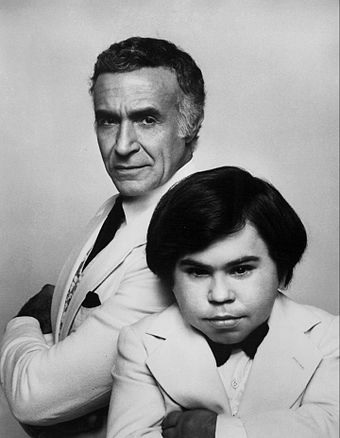
Technically, Tattoo does appear in this episode but it’s only in the stock footage that appeared at the start of every episode.  Tattoo rings the bell and announces, “Da plane …. da plane!” but that’s it.  He does not meet Mr. Roarke outside of the bungalow.  He is not present to greet the guests.  He’s not present to say goodbye to the guests.  Tattoo is nowhere to be seen and, somewhat disconcertingly, no mention is made of why he’s missing.  Instead, Mr. Roarke and Julie handle the fantasies in this episode.

If I had to guess, I’d say that Herve Villechaize was having a salary dispute with the producers.  It seems obvious that Julie was brought in as a way to tell Villechaize that he was replaceable.  However, Tattoo’s absence is felt so strongly in this episode that it seems likely that all the producers did was prove Villechaize’s point about why he deserved more money.  Wendy Schaal is a likable performer but she had close to no real chemistry with Ricardo Montalban and Julie was such a blandly-written character that there was no way she could replace the enigmatic and rather cynical Tattoo.

Sad to say, one of this episode’s fantasies feels as if it would have been perfect for Tattoo’s commentary.  Marjorie Denton (Carol Lynley) is a bus driver who wants to go back to a time when men were at their most chivalrous.  She finds herself back in 17th century France, a time when men were chivalrous but woman had absolutely no rights.  At first, she is thrilled to be the subject of the attentions of both the handsome Gaston (Simon MacCorkindale) and the poetic Cyrano de Bergerac (John Saxon).  She is less thrilled to catch the eye of the Marquis de Sade (Lloyd Bochner).  It’s not a bad fantasy, though Cyrano and De Sade were not quite contemporaries.  But it’s hard not to think about how Villechaize was always at his best when dealing with wounded romanticism.  Since Cyrano himself turned out to be a guest having a fantasy, it’s hard not to regret that Tattoo was not around to encourage him.

As for the other fantasy, it’s one of those silly and kind of boring comedic fantasies that was obviously included for the kids.  (“Mommy, who is the Marquis De Sade?”)  Timothy Potter (Bart Braverman), no relation to Harry, is a bad magician who wants to be a great magician.  Mr. Roarke gives him a collection of old spell books and an assistant named Suva (Judy Landers), whom Timothy proceeds to fall in love with.  Unfortunately, Timothy doesn’t bother to study the books like Roarke told him to and he accidentally makes Suva disappear.  In the end, though, Roarke assures Timothy that he just sent her to Cleveland, which just happens to be his hometown.  There’s a chimpanzee in this fantasy and the chimp gives the most compelling performance.  The only thing that could have saved this fantasy would have been some snarky Tattoo commentary.

Is it possible to have Fantasy Island without Tattoo?  Based on this episode, the answer would be no.  Let’s hope he returns next week.
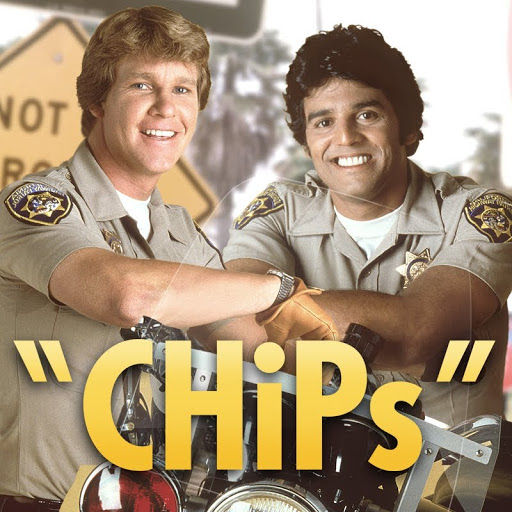
Late Night Retro Television Review: CHiPs 2.6 “Trick or Treat”


Welcome to Late Night Retro Television Reviews, a feature where we review some of our favorite and least favorite shows of the past!  On Mondays, I will be reviewing CHiPs, which ran on NBC from 1977 to 1983.  The entire show is currently streaming on Freevee!

It’s a Halloween episode!

Episode 2.6 “Trick or Treat”

(Dir by Phil Bondelli, originally aired on October 21st, 1978)

It’s Halloween in Los Angeles!  That means that people will be asking for treats and playing tricks and getting into all sorts of trouble.  But, for the California Highway Patrol, it’s just another day and night of trying to keep everyone safe.

Ponch’s day gets off to a bad start when he and Baker chase a van onto a movie lot.  The van’s driver, it turns out, was speeding because he was transporting thirteen black cats to a film set.  When Ponch and Baker finally pull over the van, the cats get loose and all 13 of them march past Ponch.  Later, at headquarters, Ponch is forced by a narrow hallway to walk under a ladder.  *GASP*  Ponch insists that he’s not superstitious but he also won’t stop talking about his encounter with the black cats.

Ponch is in for some bad luck and it shows up in the form of an 8 year-old named Tommy who squirts Ponch with perfume while Ponch is patrolling the neighborhood.  Ponch tells Tommy that playing tricks like that could lead to him getting arrested and hauled off to jail.  Tommy panics and runs away from home.  Guess who gets the blame for that?

That’s not all that’s going on this Halloween night.  (Since this episode aired in 1978, it’s also the night that He came home.)  Eddie (Bobby Van) and his girlfriend, Susan (Elaine Joyce), are holding up convenience stores.  (Susan distracts the cashiers by wearing a translucent ghost costume.)  An older woman (Fran Ryan) is stealing bags of candy from young trick-or-treaters.  Paula (Barbara Leigh) and Karen (Jenny Sherman) are stealing speed limit signs as part of a superfun scavenger hunt.  And Sgt. Getraer is determined to figure out the identity of the Hobgoblin, a member of the highway patrol who reads macabre poetry over the police radio throughout the night.

Fear not, though …. everything works out in the end.  Tommy is not only found hiding out in an abandoned house but Ponch is the one who finds and rescues him.  Eddie and Susan get chased and arrested after trying to pull one robbery too many.  (Their van crashes as a result of two teenagers throwing eggs on the windshield.  Some tricks are good, apparently.)  The old woman turns out to be a distraught suburbanite who lost her engagement ring and who thinks that she may have tossed it in some kid’s trick-or-treat bag.  (Fortunately, the ring is found in her candy bowl and no one presses charges.)  Paula and Karen lose the scavenger hunt but they win future dates with Ponch and Baker.  And Getraer figures out that Artie Grossman is the Hobgoblin.  In the end, everyone smiles and laugh and that’s the important thing.

For a Halloween episode, Trick or Treat was rather low-key but that’s okay.  I liked the day-in-the-life approach that the episode took and it was fun to see that even the members of the fearsome highway patrol were capable of enjoying the holiday.  We should have as good a Halloween as Ponch and Baker.

Retro Television Review: Miami Vice 2.16 “Little Miss Dangerous”


Welcome to Retro Television Reviews, a feature where we review some of our favorite and least favorite shows of the past!  On Mondays, I will be reviewing Miami Vice, which ran on NBC from 1984 to 1989.  The entire show can be purchased on Prime!

The power has returned, my mood is better, and my wrist has healed.  It’s time to get back to the reviews!

Episode 2.16 “Little Miss Dangerous”

(Dir by Leon Ichaso, originally aired on January 31st, 1986)

There’s a serial killer stalking the red light district of Miami, haunting cheap motels, dark alleys, and neon-lit sex clubs.  Men are turning up dead all over the place, brutally stabbed and then set on fire.  Occasionally, a crude drawing is left behind.  Castillo announces that every member of the Squad will be working a 12-hour shift until the killer is brought to justice.  He says that they may be looking for a pimp or a prostitute who is looking for revenge.

Of course, every prostitute knows and likes Sonny Crockett.  And again, this leads to the question of how exactly Sonny is able to work undercover when everyone in Miami knows who he is.  For that matter, all of the prostitutes also seem to know that Gina and Trudy are working Vice as well, despite the fact that Gina and Trudy’s regular gig to go undercover as high-priced escorts.  How do these people ever succeed at going undercover?  Everyone knows them!  I guess that’s to be expected, though, when you’ve only got 6 detectives working Vice in a city as big as Miami.

Tubbs meets a Jackie (played by singer Fiona), a young runaway who swears that she’s 18 and who says that she’s happy working as a prostitute because her body is just a commodity.  Tubbs becomes obsessed with protecting the spacey but seemingly innocent Jackie, especially after he becomes convinced that Jackie’s pimp, Cat (Larry Joshua), is the murderer.  Except, of course, Cat isn’t the killer.  Jackie is!  When Tubbs takes Jackie to a safehouse (which, of course, is also an art deco mansion), she snaps.  As Crockett tries to break down the locked front door and Cat crashes into the house on his motorcycle, Jackie starts a fire and approaches Tubbs.  But, instead of killing the only man who hasn’t tried to use her body, Jackie instead holds a gun to her head.  This is another episode that ends with an off-screen gunshot.  Interestingly, we never see Crockett actually get into the safehouse to rescue Tubbs from the fire.  Instead, the ending is abrupt and the viewer, while having no doubt that Tubbs will escape the fire, knows that Tubbs will now carry Jackie’s scars as his own.

What an unsettling episode.  This was Miami Vice at its most surreal and dream-like, with almost all of the action taking place at night and both Fiona and Larry Joshua giving edgy performances as two self-destructive people who live in the shadows of a wealthy American city.  For once, the entire Vice Squad gets in on the action, though Tubbs is clearly the one at the center of the story.  This episode reminds us that Tubbs is not quite as cynical and emotionally closed-off as Crockett but maybe, for the sake of his sanity, he should be.  Little Miss Dangerous is a journey into the heart of Miami darkness.

Retro Television Review: If Tomorrow Comes (dir by George McCowan)


Welcome to Retro Television Reviews, a feature where we review some of our favorite and least favorite shows of the past!  On Sundays, I will be reviewing the made-for-television movies that used to be a primetime mainstay.  Today’s film is 1971’s If Tomorrow Comes!  It  can be viewed on YouTube.

If Tomorrow Comes tells the story of a forbidden marriage.

In 1941, Eileen Phillips (Patty Duke) meets David Tayanaka (Frank Liu) and the two of them quickly fall in love.  David asks Eileen to marry him and Eileen says yes, even though they both know that it won’t be easy.  Eileen’s father (James Whitmore) and her brother, Harlan (Michael McGreevey), are both prejudiced against the Japanese and David’s parents (played by Mako and Buelah Quo) would both rather than David marry someone of Japanese descent.  Eileen and David decide to elope first and tell their parents afterwards.

On December 7th, Eileen sneaks out of the house and joins David at his church.  They are married by Father Miller (John McLiam), who agrees to keep their secret.  Eileen and David then drive over to the church attended by Eileen’s family but no sooner have they arrived than the local sheriff (Pat Hingle) pulls up and announces that the Japanese have bombed Pearl Harbor.  The sheriff instructs everyone to return home and to listen to their radios.  David slips his wedding ring off his finger.  Telling the parents will have to wait.

Eileen’s father and brother are convinced that every Japanese person in town, even though the majority of them were born in America and have never even been to Japan, is a subversive.  David and his family are harassed by government agents like the oily Coslow (Bert Remsen).  One morning, they discover that all of their farm animals have been killed and someone has written “REMEMBER PEARL HARBOR” with their blood.  When Franklin D. Roosevelt orders the internment of the Japanese, David’s father is among those taken away.  When Harlan continues to harass David, it eventually leads to not just one but two tragedies.

If Tomorrow Comes is a real tear-jerker, one that features a great performance from Frank Liu and a good one from Patty Duke.  Though it may seem a tad implausible that David and Eileen would get married just an hour before Japan attacked Pearl Harbor (and considering the attack occurred on a Sunday morning, I’m a little curious how they found a priest who was free to secretly marry them), the film does a good job of showing how fear can lead to otherwise good people doing terrible things.  One of the film’s strongest moments comes as David’s father is taken away to an internment camp and the Japanese prisoners try to prove their loyalty by spontaneously singing America, The Beautiful.  It’s a moment that reminds us of the danger of letting our fear destroy our humanity.

It’s a film that still feels relevant today, with its portrayal of heavy-handed government agents searching for subversives and ignoring the Constitution in order to save it.  When David visited his father at the internment camp, I thought about how, at the heigh of the COVID pandemic, it was not unusual to see people demanding that the unmasked and the unvaccinated by interned away from the rest of the world.  If Tomorrow Comes is a love story and a melodrama and tear-jerker but, above all else, it’s a warning about the destructive power of fear and prejudice.

Retro Television Review: The Glass House (dir by Tom Gries)


Welcome to Retro Television Reviews, a feature where we review some of our favorite and least favorite shows of the past!  On Sundays, I will be reviewing the made-for-television movies that used to be a primetime mainstay.  Today’s film is 1972’s The Glass House!  It  can be viewed on YouTube.

The Glass House starts with three men arriving at a location that will define the next few months of their lives.

Brian Courtland (Clu Gulager) is a veteran of the Vietnam War.  He spent part of his service working as a guard in the brig.  Now that he’s back in the United States and in need of a regular paycheck, he has gotten a job working as a prison guard.  Courtland is not naive about where he’s going to be working or who he is going to be working with.  But he is an idealist, one who tries to treat everyone fairly and who hopes that he will be able to do some sort of good in his new position.

Alan (Kristoffer Tabori) is a young man who has been arrested for selling marijuana.  He is quiet and just hoping to serve his time and then get on with his life.  His fellow prisoners have different plans for him.

Finally, Jonathan Paige (Alan Alda) is a liberal professor who, in a moment of rage, accidentally killed a man in a fight.  Convicted of manslaughter, Paige enters the prison in a daze and cannot stop flashing back to the one moment that changed his life forever.  Paige is assigned to work in the pharmacy, where he meets a prisoner-turned-activist named Lennox (Billy Dee Williams).  Paige struggles to retain his humanity despite the harsh conditions.

All three of the men find themselves having to deal with the attentions of Hugo Slocum (Vic Morrow), the predatory “king” of the prison.  Slocum expects Paige to help him run drugs though the the pharmacy.  Slocum preys on Alan and sends his gang to punish him when Alan refuses Slocum’s advances.  And Slocum expects that Courtland will just be another corrupt guard who agrees to look the other way when it comes to Slocum’s activities.  Courtland, however, turns out to have more integrity than anyone was expecting.

The Glass House opens with a title card, informing the viewer that the film was shot at an actual prison and that the majority of the people in the film were actual prisoners.  Not surprisingly, The Glass House does feel authentic in a way that a lot of other films about incarceration does not.  The prison is claustrophobic and dirty, with every crack in the wall reminding the prisoners and the viewer that no one cares about what happens there.  The extras have the blank look of men who understand that showing any emotion will be taken a sign of a weakness.  Made in 1972, at a time when America was still struggling to integrate, The Glass House takes place in an almost totally segregated world.  The black prisoners stick together.  The white prisoners stick together.  Everyone understands that’s the way that it will always be and, as we see by the end of the film, that’s the way the guards and the warden (Dean Jagger) prefer it because that means almost any incident can be written off as a being “a race riot.”

The real actors amongst the population do a good job of blending into the surroundings.  Alda, Williams, and Tabori all give good performance while Vic Morrow is truly menacing in the role of the vicious Slocum.  Slocum may not be particularly bright but, because he has no conscience, he is uniquely suited to thrive in a world with no morality.  The film’s best performance comes from Clu Gulager, who does a great job of portraying Courtland’s growing disgust with how the system works.

Though it’s over 50 years old, The Glass House is a still a powerful look at life on the fringes.  Society, for the most part, doesn’t really care much about what happens to the incarcerated.  This film makes a strong case that we probably should.  One is left with little doubt that, even if relatively harmless prisoners like Paige and Campbell survive being locked up with men like Slocum, they’ll still be incapable of returning to the “real world” afterwards.  The viewer, like Brian Courtland, is left to wonder how much corruption can be tolerated before enough is enough.

Retro Television Review: Getting Away From It All (dir by Lee Philips)


Welcome to Retro Television Reviews, a feature where we review some of our favorite and least favorite shows of the past!  On Sundays, I will be reviewing the made-for-television movies that used to be a primetime mainstay.  Today’s film is 1972’s Getting Away From It All!  It  can be viewed on YouTube.

For Fred Clark (Larry Hagman) and Mark Selby (Gary Collins), life is New York City just isn’t that much fun anymore.  The weather is terrible.  The traffic cannot be navigated.  The only people ruder than the cabbies are the doormen.  Fred and Mark have come up with the perfect plan.  They’ve decided to move to a small country town and purchase a house on a small island.  In fact, they’re going to buy the entire island!  It’s surprisingly cheap.  Fred and Mark don’t ever really stop to wonder why the island is available for so little money.  Seriously, if you’re buying an island, you should probably ask yourself those questions.

Mark’s wife, Alice (E.J. Peaker), is enthusiastic about the idea.  Less excited is Fred’s wife, Helen (Barbara Feldon).  Helen enjoys living in the city and having a nice job in an office building.  She gets along with her boss (played by Jim Backus, one of many veteran actors to show up in a small role in this film).  Perhaps hoping that Fred will change his mind once he’s confronted with the reality of actually living in the country, Helen finally gives in.

It does turn out that the island is not quite the paradise that Fred and Mark were expecting.  The only way to get out to the island is in a leaky rowboat.  The house is falling apart and, as Helen is disgusted to learn, it also doesn’t have indoor plumbing.  There’s no electricity either but fortunately, the local handyman is working on it.  His name is Herbie and he’s played by a very young and thin Randy Quaid.  If you’ve ever wanted to hear Randy Quaid speak with an exaggerated New England accent, this is the film for you.  There’s nothing convincing about Quaid’s accent but it still seems only fair, considering all of the Yankee actors who have butchered the Southern accent over the years.

Just when it looks like Fred and Mark have managed to make the Island livable, they get a disturbing letter.  As the new owners of the Island, they owe 20 years worth of back taxes.  As Fred puts it, the tax bill is more than either of them can afford.  If they can’t raise the money, the town will take back the Island.   Fred and Mark consider trying to get jobs but it turns out that neither one of them knows much about being fisherman.  They then decide to charm the town into nullifying the tax bill.  That turns out to be more difficult than either man imagines.

Getting Away From It All is a comedy that deals with a universal theme, the desire to escape from the harshness of everyday life and find a perfect place to which to escape.  That said, the film’s main reason for existing is a parade of comedic cameos.  Jim Backus, Vivian Vance, Joe E. Ross, Burgess Meredith, Paul Hartman, and J. Pat O’Malley all appear in small roles, appearing just long enough for 1972 viewers to say, “Hey, I recognize that person!”  The end result is a rather shallow film that has a few chuckle-worthy moments.  (Again, Randy Quaid pretending to be from Maine has to be worth something.)

In the end, for all of the film’s celebration of getting away from it all, it’s hard not to feel that Gary, Mark, Alice, and Helen will all end up back in Manhattan sooner than later.  Some people are just city folks.

Retro Television Reviews Will Return On Sunday, June 2nd


Hi, everyone!

Because of my sprained wrist, I’m going to take a few days off from doing my retro television reviews.  (My wrist is definitely healing but it still hurts a bit to type.)  So, this feature will return at the end of the week, on Sunday, June 2nd!

Thank you for your patience! — LMB

Retro Television Review: Indict & Convict (dir by Boris Sagal)


Welcome to Retro Television Reviews, a feature where we review some of our favorite and least favorite shows of the past!  On Sundays, I will be reviewing the made-for-television movies that used to be a primetime mainstay.  Today’s film is 1974’s Indict & Convict!  It  can be viewed on YouTube.

There’s been a murder!

The wife of Assistant District Attorney Sam Belden (William Shatner) has been found, shot to death.  Making things especially awkward is that the body of her lover is found next to her.  Though Belden is the obvious suspect, he has an alibi for the time of the murders.  He claims that he was in Las Vegas, attending a convention.  Two gas station attendants remember seeing him filling up his car with gas at around the same time that his wife and her lover was being shot.

Attorney General Timothy Fitzgerald (Ed Flanders) is not so sure that Belden is innocent.  He instructs two of his top prosecutors to check out Belden’s story and to see if there’s enough evidence to not only indict but also to convict.  Bob Matthews (George Grizzard) is a veteran prosecutor and he’s the one who narrates the story for us.  Assisting him is Mike Belano, who is played by the always likable Reni Santoni.  Just three years before this movie aired, Santoni played Harry Callahan’s partner in Dirty Harry.  There was just something about Santoni’s friendly but determined demeanor that made him perfect the role of the supportive partner or assistant.

The film is very much a legal procedural, with the emphasis on not only the investigation but also on the strategies and the techniques that are used in the courtroom by Matthews and defense attorney DeWitt Foster (Eli Wallach).  In many ways, it feels like a forerunner to Law & Order.  Usually, I love court procedurals but Indict & Convict was a bit too slow and high-minded for its own good.  Maybe it’s because I’ve been spoiled by all of the legal shows that I’ve seen but I have to admit that I spent a good deal of Indict & Convict wanting the prosecutors to get on with it.  Flanders, Grizzard, Santoni, and Wallach were all ideally cast but the film itself sometimes got bogged down with all the debate about the best way to win a conviction.  It’s a shame because the story itself is an intriguing one and I actually enjoyed the movie’s use of spinning newspaper headlines to let us know what had happened in between scenes.  Also, as a classic film fan, I enjoyed seeing Myrna Loy as the judge.  She didn’t get to do much other than say, “Sustained” and “Overruled,” but still …. Myrna Loy!

Most people who watch this film will probably do so out of the hope of seeing some trademark Shatner overacting.  William Shatner doesn’t actually get to say much in this film.  He spends most of the running time sitting silently at the defense table.  Towards the end, he does finally get a chance to deliver a brief speech and it’s everything you could hope for.  Shatner takes dramatic pauses.  Shatner emphasizes random words.  Every line is delivered with the subtext of, “Pay attention, Emmy voters!”  Eventually, Shatner would learn the value of laughing at oneself but apparently, that lesson had not yet been learned when he did Indict & Convict.

Mini Late Night Retro Television Review: Check It Out! 2.8 “Homewrecker Howard”


Welcome to Late Night Retro Television Reviews, a feature where we review some of our favorite and least favorite shows of the past!  On Saturdays, I will be reviewing the Canadian sitcom, Check it Out, which ran in syndication from 1985 to 1988.  The entire show is currently streaming on Tubi!

I sprained my wrist earlier this week and, as a result, typing is a bit painful.  So, for this week and this week only, I’m doing quick, mini-reviews that will hopefully get my point across without requiring too much discomfort on my part.  Luckily, this is a format that works just fine when one is discussing a show like Check It Out!

Episode 2.8 “Homewrecker Howard”

(Dir by Alan Erlich, originally aired on November 21st, 1986)

This was just dumb.

Jack Christian is dating a woman (Randall Carpenter) who he met at the store.  He’s also lying to her, telling her that he’s the store manager.  The woman happens to be married and she’s also a friend of Edna’s.  After the woman tells Edna that she’s getting back at her unfaithful husband by having an affair with the manager of the store, Edna assumes that Howard is cheating on her.

I’ve often said that I hate idiot plots.  An idiot plot is any story where every complication could be prevented by the characters 1) not being complete idiots and 2) actually asking each other detailed questions and getting an answer before jumping to conclusions.  This episode was a classic example of the idiot plot.  Edna doesn’t tell Howard why she’s mad at him and Howard doesn’t bother to ask.  Things don’t get straightened out until the woman’s husband (Tom Butler) shows up at the store and announces that he wants to beat up the manager.

Will this show ever figure out who Howard Bannister is supposed to be?  Sometimes, he’s a great manager who cares about his employees.  In this episode, he’s a pompous windbag who puts a cardboard cut-out of himself on the salesfloor.  Sometimes, Howard is the world’s best and most romantic boyfriend.  In this episode, he’s so clueless that he barely notices that Edna is angry at him and Edna, it must be said, has no problem believing that he would be unfaithful.  Edna both lives and works with Howard so when exactly is he ever out of her sight long enough to have the wild affair that the woman describes herself as having?

As I said …. IDIOT PLOT!

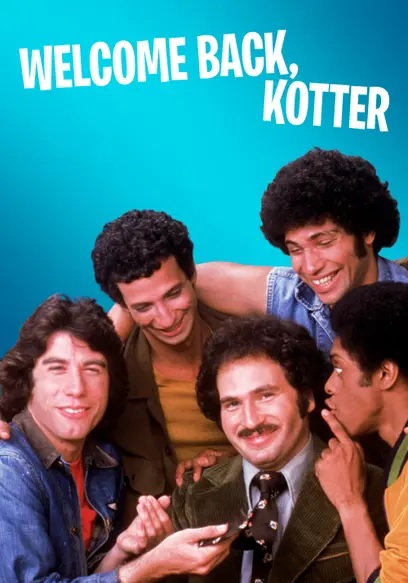
Mini Retro Television Review: Welcome Back Kotter 3.23 “Goodbye, Mr. Kripps”


Welcome to Retro Television Reviews, a feature where we review some of our favorite and least favorite shows of the past!  On Saturdays, I will be reviewing Welcome Back Kotter, which ran on ABC  from 1975 to 1979.  The entire show is currently streaming on Tubi!

As I mentioned yesterday, I’ve got a sprained wrist so typing is kind of painful.  For that reason, today’s review is going to be a quick one.  You might even call it a …. MINI REVIEW!

Episode 3.23 “Goodbye, Mr. Kripps”

(Dir by Bob Claver, originally aired on February 16th, 1978)

Shop teacher Mr. Kripps (Jack Fletcher) is famous for being cranky and for not liking the Sweathogs.  Even when Gabe was a student at the school, Mr. Kripps was a teacher known for his bad temper.  When Mr. Kripps drops dead of a heart attack, only Barbarino is shocked.  Barbarino also feels guilty because Mr. Kripps was yelling at him when he died.

Woodman, Gabe, and the Sweathogs attends the funeral and then all return to Gabe’s apartment.  I get that the Sweathogs are in a co-dependent relationship with Gabe but why is Woodman at the apartment?  Gabe and the Sweathogs are depressed.  Woodman talks about how July is the best month for a funeral.  “August is too hot!”

Barbarino turns himself into the police for murder.  Awwwww, poor Barbarino!  Seriously, this is an unbelievably dumb thing to do but John Travolta is so crestfallen and child-like as Babarino that your heart still breaks for him.  No-nonsense Lt. Eddie Lasky (Norman Alden) comes down to the school to investigate Mr. Kripps’s death.  Gabe and Lasky help Barbarino to understand that it’s not his fault that Mr. Kripps had anger problems.  And again, it’s kind of dumb but Gabe Kaplan and Norman Alden play off of each other really well and Travolta’s puppy-dog earnestness just makes you want to hug him.

Woodman gets upset when he sees that Lasky parked in his spot.  Woodman vandalizes Lasky’s car and gets taken to jail.  When he returns to the school, Gabe cheers him up with a joke about Uncle Willie, who was sentenced to a 99-year sentence.

This was a good episode.  It felt like a throwback to the humane and sweet-natured episodes of the first season.  Travolta once again shows why he’s the Sweathog who ended up with the Oscar nominations.