12 Oscar Snubs From the 1950s


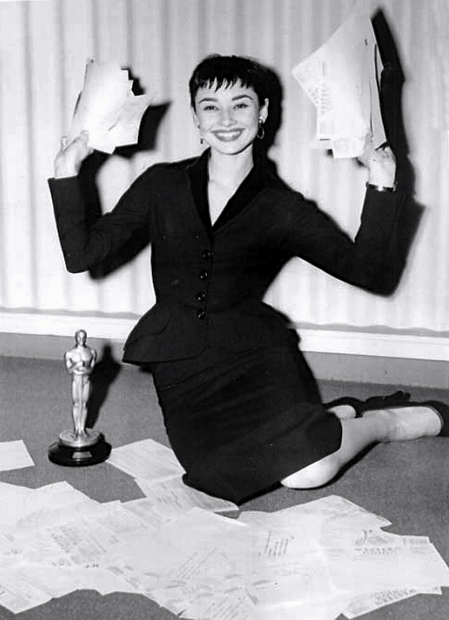
Audrey Hepburn and her Oscar.  At least the Academy didn’t snub her!

Continuing our look at the Oscar snubs of the past, it’s now time to enter the 50s!

World War II was over. Eisenhower was President. Everyone was worried about communist spies. And the Hollywood studios still reigned supreme, even while actors like Marlon Brando and James Dean challenged the establishment.  There were a lot great film released in the 50s.  There were also some glaring snubs on the part of the Academy.  Here’s twelve of them.
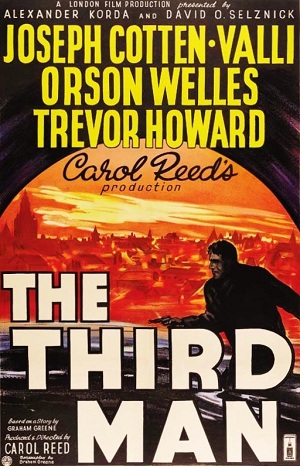
1950: The Third Man Is Not Nominated For Best Picture

….and Orson Welles was not nominated for Best Supporting Actor!  The Third Man received three Oscar nominations, for Director, Cinematography, and Editing.  The fact that Welles, Joseph Cotten, Alida Valli, and the film’s score were not nominated (and that King Solomon’s Mines was nominated for Best Picture instead of The Third Man) remains one of the more surprising snubs in Oscar history.

1952: Singin’ In The Rain Is Not Nominated For Best Picture

What the Heck, Academy!?  This was the year that The Greatest Show On Earth won the Best Picture Oscar.  Personally, I don’t think The Greatest Show On Earth is as bad as its reputation but still, Singin’ In The Rain is a hundred times better.

1953: Alan Ladd Is Not Nominated For Best Actor For Shane

How could Shane score a nomination for Best Picture without Shane himself receiving a nomination?

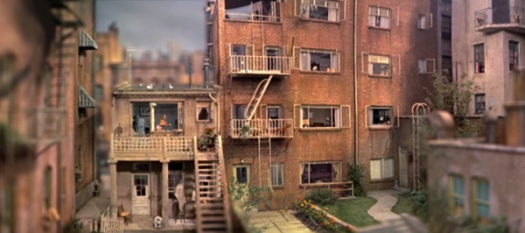
1954: Rear Window Is Not Nominated For Best Picture

Rear Window was not totally ignored by the Academy.  Alfred Hitchcock received a nomination for directing.  It also received nominations for Best Adapted Screenplay, Cinematography, and Sound.  However, Rear Window was not nominated for Best Picture and James Stewart, Grace Kelly, Raymond Burr, and Thelma Ritter all went unnominated as well.  Today, Rear Window is definitely better-remembered than the majority of 1954’s Best Picture nominees.  Certainly, it deserved a nomination more than Seven Brides For Seven Brothers and Three Coins in The Fountain.

1955: Ralph Meeker Is Not Nominated For Best Actor For Kiss Me Deadly

I guess I shouldn’t be surprised.  If the Academy wasn’t going to nominate Rear Window for Best Picture, there was no way that they would have nominated Ralph Meeker for playing a sociopathic private detective who, even if inadvetedly, helps to bring about the end of the world.

1955: Rebel Without A Cause Is Not Nominated For Best Picture or Best Actor

The 1955 Best Picture lineup was a remarkably weak one.  The eventual winner was Marty, a likeable film that never quite escapes its TV roots.  Picnic has that great dance scene but is otherwise flawed.  Mister Roberts was overlong.  Love Is A Many-Splendored Thing and The Rose Tattoo are really only remembered by those of us who have occasionally come across them on TCM.  Perhaps the best-remembered film of 1955, Rebel Without A Cause, received quite a few nominations but it was not nominated for Best Picture.  And while the Rebel himself, James Dean, was nominated for Best Actor, it was for his performance in East of Eden.  1955 was a strange year.

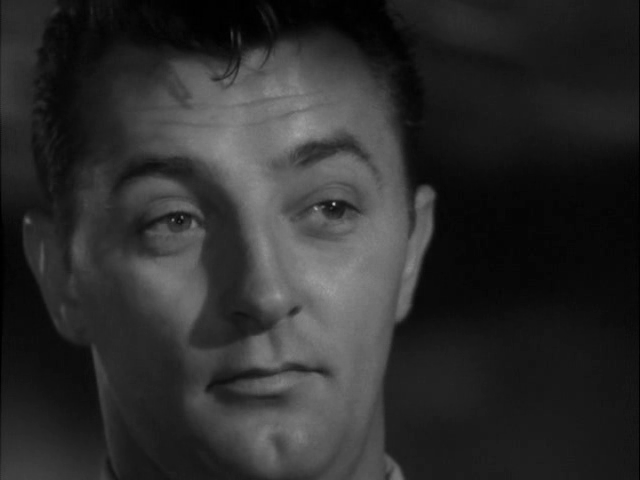
1955: Robert Mitchum Is Not Nominated For Best Actor For The Night of the Hunter

Robert Mitchum only received one Oscar nomination over the course of his entire career, for 1945’s The Story of G.I. Joe.  He deserved several more.  His performance as the villainous preacher in The Night of Hunter made Reverend Harry Powell into one of the most iconic film characters of all time.
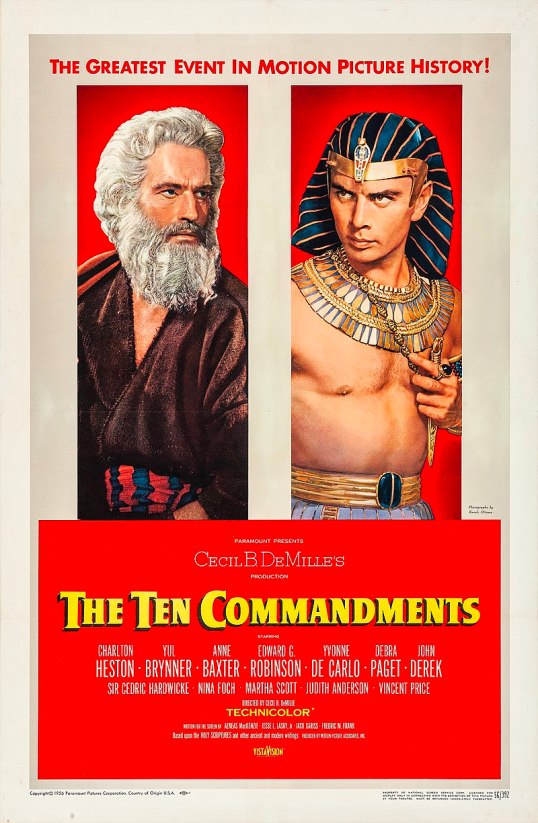
1956: Cecil B. DeMille Is Not Nominated For Best Director For The Ten Commandments

Cecil B. DeMille was only nominated once for Best Director, for 1952’s The Greatest Show On Earth.  DeMille, however, deserved to be nominated for The Ten Commandments.  As campy as DeMille’s films can seem today, he was an expert storyteller and that’s certainly evident when one watches The Ten Commandments, a film that holds the viewer’s attention for nearly four hours.  DeMille deserved a nomination for the Angel of Death scene alone.  The screams in the night are haunting.

1957: Henry Fonda Is Not Nominated For Best Actor For 12 Angry Men

With 12 Angry Men, Fonda did something that very few actors can.  He made human decency compelling.  One gets the feeling that, much like Tom Hanks in Captain Phillips, Fonda made it look so easy that the Academy took him for granted.

1958: Touch Of Evil Is Totally Ignored

Anyone who had researched the history of the Academy knows that there was no way that the 1950s membership would have ever honored Orson Welles’s pulp masterpiece, Touch of Evil.  That said, it still would have been nice if they had.  Touch of Evil has certainly go on to have a greater legacy than Gigi, the film that won Best Picture that year.

1958: Vertigo Is Almost Totally Ignored

Vertigo did receive nominations for Art Direction and Sound but Alfred Hitchcock, James Stewart, and the film itself were snubbed.

1959: Some Like It Hot Is Not Nominated For Best Picture or Best Actress

Some Like It Hot received 6 Oscar nominations, including nominations for Best Director, Best Actor, and Best Adapted Screenplay.  It did not receive a nomination for Best Picture and, sadly, Marilyn Monroe did not receive a nomination for Best Actress.  Much as with Henry Fonda in 12 Angry Men, one gets the feeling that the Academy took Monroe for granted.  It’s sad to realize that, while two actresses have been nominated for playing Marilyn Monroe, Monroe herself would never be nominated.

Agree?  Disagree?  Do you have an Oscar snub that you think is even worse than the 12 listed here?  Let us know in the comments!

Up next: Things get wild with the 6os!
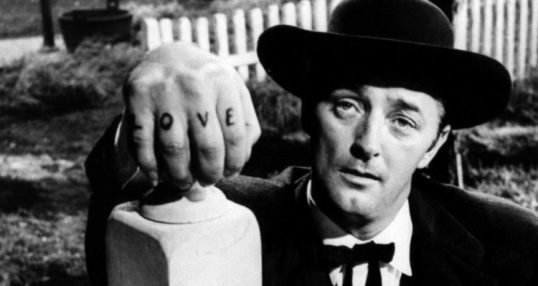
Night of the Hunter (United Artists 1955; D: Charles Laughton)
Horror on the Lens: Bride of the Gorilla (dir by Curt Siodmak)


In the 1951 film, Bride of the Gorilla, Raymond Burr plays a plantation manager who commits a murder.  Unfortunately, for him, the murder is observed by a witch who promptly puts a curse of Burr.  Now, every time the sun goes down, Burr transforms into a gorilla and goes wild in the jungle.

Basically, it’s kind of like The Wolf Man, just with a less sympathetic protagonist and a gorilla instead of a werewolf. Just in case we missed the similarities, Lon Chaney, Jr. plays the film’s nominal hero, a police commissioner who suspects that something weird might be happening with Burr.  Apparently, the plan was originally for Chaney to play the gorilla and for Burr to play the policeman but, because Chaney was dealing with a serious alcohol problem at the time, the roles were reversed.

Also in the cast, playing the role of Dina, is Barbara Payton, the tragic actress who is best known for being at the center of a love triangle involving actors Tom Neal and Franchot Tone.  In 195000, Neal attacked Tone and beat him so severely that Tone spent 18 hours in a coma.  Tone was notably shaky onscreen for the rest of his film career while Neal spent a few years in prison.  After the incident between Tone and Neal, Payton could only get roles in B-movies like this one.  Tragically, she would pass away, in 1967, of heart and live failure.  She was only 39 years old.

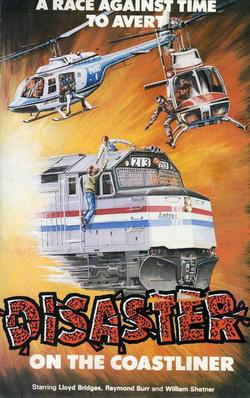
Disaster on the Coastliner (1980, directed by Richard C. Sarafian)


A completely computerized passenger train is traveling across the country, with the Vice President’s wife as one of the passengers.  When Jim Waterman (Paul L. Smith), a man who blames the railroad for the death of his family, manages to hijack the train he plans to ram into a locomotive until his demands a met.  He wants railroad president Estes Hill (Raymond Burr) to take responsibility for the crash that killed his wife and children.  With Waterman determined to crash the two trains, it falls to dispatchers Al Mitchell (Lloyd Bridges) and Roy Snyder (E.G. Marshall) to try to figure out a way to stop the collision.  Helping them out on the train is a con artist named Stuart Peters (William Shatner!) who may be wanted by the police but who is still willing to do whatever it takes to save his fellow passengers.

Disaster on the Coastliner is an above-average made-for-TV disaster movie.  Even though it was obviously made for a low-budget and that the majority of the money was probably spent on securing the B-list cast, there are enough shots of the train careening on the tracks to bring happiness to the hearts of most disaster movie fans.  The cast is full of the type of people who you would typically expect to find in a movie like this, people like Raymond Burr, Lloyd Bridges, and William Shatner.  Bridges, interestingly enough, gives the same performance here that he gave in Airplane! and when he starts ranting about how everything’s computerized, he sounds like he could be reciting dialogue from that film.  The only difference is that Airplane! was a comedy while Disaster On The Coastliner is meant to be a drama.  Raymond Burr also does a good job hamming it up as the president of the railroad.  He spends most of the movie sitting behind his desk and looking annoyed, which was pretty typical of Burr in the years after Perry Mason and Ironside. 

For a lot of people, the main appeal of this film will be seeing what William Shatner was doing in between Star Trek movies.  This is a typical early 80s Shatner performance, when he was still trying too hard to win that first Emmy but also when he had just starting to develop the self-awareness necessary to poke fun at his own image.  Shatner really digs into the role of a conman with a heart of gold.  He delivers his lines in his trademark overdramatic style but, in scenes like the one where he sheepishly discovers that a door that he’s been pounding on was unlocked all the time, Shatner actually seems to be in on the joke.  Shatner also did his own stunts in this film, including one where he had stand on top of a speeding train.  In his autobiography, Shatner wrote that he wasn’t even wearing a safety harness in the scene so give it up for Bill Shatner.  That took guts!

Fast-paced and agreeably unpretentious, Disaster On The Coastliner is an enjoyable runaway train movie.


Horror on the Lens: Bride of the Gorilla (dir by Curt Siodmak)


In the 1951 film, Bride of the Gorilla, Raymond Burr plays a plantation manager who commits a murder.  Unfortunately, for him, the murder is observed by a witch who promptly puts a curse of Burr.  Now, every time the sun goes down, Burr transforms into a gorilla and goes wild in the jungle.

Basically, it’s kind of like The Wolf Man, just with a less sympathetic protagonist and a gorilla instead of a werewolf. Just in case we missed the similarities, Lon Chaney, Jr. plays the film’s nominal hero, a police commissioner who suspects that something weird might be happening with Burr.  Apparently, the plan was originally for Chaney to play the gorilla and for Burr to play the policeman but, because Chaney was dealing with a serious alcohol problem at the time, the roles were reversed.

Also in the cast, playing the role of Dina, is Barbara Payton, the tragic actress who is best known for being at the center of a love triangle involving actors Tom Neal and Franchot Tone.  In 195000, Neal attacked Tone and beat him so severely that Tone spent 18 hours in a coma.  Tone was notably shaky onscreen for the rest of his film career while Neal spent a few years in prison.  After the incident between Tone and Neal, Payton could only get roles in B-movies like this one.  Tragically, she would pass away, in 1967, of heart and live failure.  She was only 39 years old.

6 Good Films That Were Not Nominated For Best Pictures: The 1950s


The Governor’s Ball, 1958

Continuing our look at good films that were not nominated for best picture, here are 6 films from the 1950s.

The Third Man (1950, dir by Carol Reed)

Now, it should be noted that The Third Man was not ignored by the Academy.  It won the Oscar for Best Cinematography and it was nominated for both editing and Carol Reed’s direction.  But, even with that in mind, it’s somewhat amazing to consider all of the nominations that it didn’t get.  The screenplay went unnominated.  So did the famous zither score.  No nominations for Joseph Cotten, Alida Valli, Trevor Howard, or even Orson Welles!  And finally, no Best Picture nomination.  1950 was a good year for the movies so competition was tight but still, it’s hard to believe that the Academy found room to nominate King Solomon’s Mines but not The Third Man.

Rear Window (1954, dir by Alfred Hitchcock)

Alfred Hitchcock directed some of his best films in the 50s, though few of them really got the recognition that they deserved upon their initial release.  Vertigo is often described as being Hitchcock’s masterpiece but, to be honest, I actually prefer Rear Window.  This film finds the master of suspense at his most playful and, at the same time, at his most subversive.  Casting Jimmy Stewart as a voyeur was a brilliant decision.  This film features one of my favorite Grace Kelly performances.  Meanwhile, Raymond Burr is the perfect schlubby murderer.  Like The Third Man, Rear Window was not ignored by the academy.  Hitchcock was nominated and the film also picked up nods for its screenplay, cinematography, and sound design.  However, it was not nominated for best picture.

Rebel Without A Cause (1955, dir by Nicholas Ray)

Nicholas Ray’s classic film changed the way that teenagers were portrayed on film and it still remains influential today.  James Dean is still pretty much the standard to which most young, male actors are held.  Dean was not nominated for his performance here.  (He was, however, nominated for East of Eden that same year.)  Instead, nominations went to Sal Mineo, Natalie Wood, and the film’s screenplay.  Amazingly, in the same year that the forgettable Love Is A Many-Splendored Thing was nominated for best picture, this popular and influential film was not.

Kiss Me Deadly (1955, dir by Robert Aldrich)

It’s unfortunate but not surprising that Kiss Me Deadly was totally ignored by the Academy.  In the mid-to-late 50s, the Academy tended to embrace big productions.  There was no way they were going to nominate a satirical film noir that featured a psychotic hero and ended with the end of the world.  That’s a shame, of course, because Kiss Me Deadly has proven itself to be more memorable and influential than many of the films that were nominated in its place.

Touch of Evil (1958, dir by Orson Welles)

Speaking of underappreciated film noirs, Orson Welles’s Touch of Evil is one of the craftiest and most brilliant films ever made.  So, of course, no one appreciated it when it was originally released.  This cheerfully sordid film features Welles at his best.  Starting with a memorable (and oft-imitated) tracking shot, the film proceeds to take the audience into the darkest and most eccentric corners of a small border town.  Everyone in the cast, from the stars to the bit players, is memorably odd.  Even the much mocked casting of Charlton Heston as a Mexican pays off wonderfully in the end.

The 400 Blows (1959, dir by Francois Truffaut)

Francois Truffaut’s autobiographical directorial debut was released in the United States in 1959 and it was Oscar-eligible.  Unfortunately, it only picked up a screenplay nomination.  Of course, in the late 50s, the last thing that the Academy was going to embrace was a French art film from a leftist director.  However, The 400 Blows didn’t need a best picture nomination to inspire a generation of new filmmakers.

Up next, in an hour or so, we continue on to the 60s!


Look At Me Look At You: Alfred Hitchcock’s REAR WINDOW (Paramount 1954)


gary loggins's avatarcracked rear viewer

When you go out to the neighborhood cinema, you’re indulging in a voyeuristic experience, watching the lives of people unfold before you on the screen. The theme of viewer as voyeur, peeping in on the privacy of total strangers, has never been done better than in Alfred Hitchcock’s REAR WINDOW, nor more entertainingly. Like James Stewart’s protagonist L.B. Jeffries, we the audience are the voyeurs in the shadows watching from afar, stumbling onto things not meant for our eyes, and powerless to stop them without outside assistance. Hitchcock is not only the Master of Suspense, but a master of audience manipulation, and this dazzling piece of moviemaking is not only a hell of a thrill ride but a technical marvel as well.

The world of globetrotting photojournalist Jeffries has been boiled down to the view of the courtyard outside his apartment window, just as the audience’s world is now focused on…

View original post 856 more words

Halloween Havoc!: GODZILLA, KING OF THE MONSTERS (Toho/TransWorld 1956)


gary loggins's avatarcracked rear viewer

“History shows again and again, how nature points out the folly of man”-

“Godzilla” by Blue Oyster Cult

godz1

Let’s kick off this year’s “Halloween Havoc” with the Grandaddy of kaiju eiga, GODZILLA, KING OF THE MONSTERS. The Big G first hit Japanese movie screens in 1954, and made its way to American shores two years later in a reedited version with new narrative footage. I’ve only seen the Americanized interpretation, so I can’t comment on Inoshiro Honda’s original vision, but I do enjoy this film a lot more than the endless, silly sequels that ensued. I’d go as far as saying GODZILLA, KING OF THE MONSTERS is one of the best sci-fi flicks of the 50’s, one that’s influence looms like Big G’s shadow even today.

godz2

We start with a familiar sight: Tokyo in ruins, “a smoldering memorial to the unknown”! American reporter Steve Martin (played by Raymond Burr, not the “wild and…

View original post 363 more words

Cleaning Out the DVR Pt 9: Film Noir Festival Redux


gary loggins's avatarcracked rear viewer

prev

Welcome back to the decadently dark world of film noir, where crime, corruption, lust, and murder await. Let’s step out of the light and deep into the shadows with these five fateful tales:

redux1

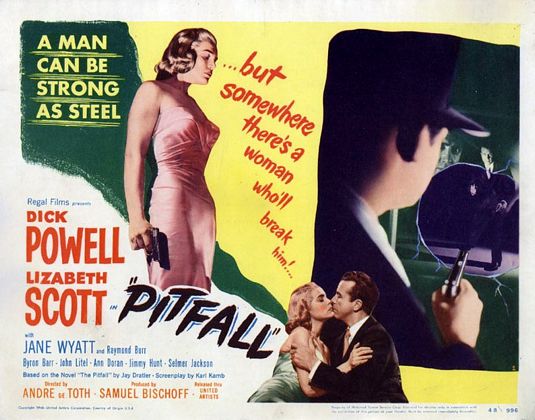
PITFALL (United Artists 1948, D: Andre DeToth) Dick Powell is an insurance man who feels he’s stuck in a rut, living in safe suburbia with his wife and kid (Jane Wyatt, Jimmy Hunt). Then he meets hot model Lizabeth Scott on a case and falls into a web of lies, deceit, and ultimately murder. Raymond Burr  costars as a creepy PI who has designs on Scott himself. A good cast in a good (not great) drama with a disappointing ending. Fun Fact: The part of Scott’s embezzler boyfriend is played by one Byron Barr, who is not the Byron Barr that later changed his name to Gig Young.  

redux2

THE BRIBE (MGM 1949, D:Robert Z. Leonard) Despite an…

View original post 759 more words

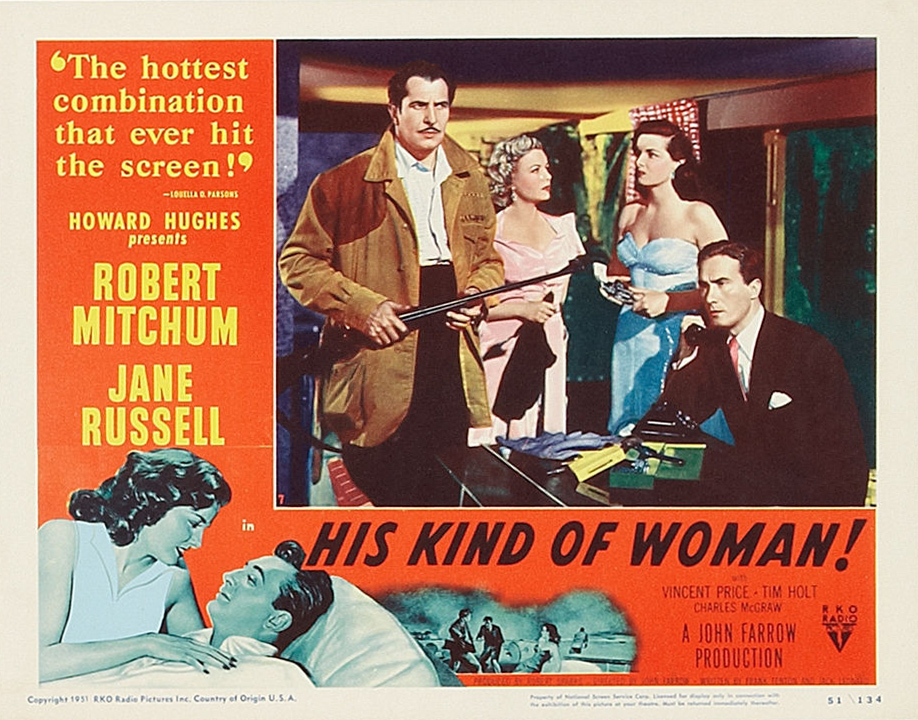
Pounded to Death by Gorillas: HIS KIND OF WOMAN (RKO 1951)


gary loggins's avatarcracked rear viewer

hiskind1

People don’t go to the movies to see how miserable the world is; they go there to eat popcorn, be happy“- Wynton (Jim Backus) in HIS KIND OF WOMAN

Right you are, Mr. Howell, err Backus. There’s an abundance of fun to be had in HIS KIND OF WOMAN, the quintessential RKO/Robert Mitchum movie. Big Bob costars with sexy Jane Russell in a convoluted tale that’s part film noir, part Monty Python, with an outstanding all-star cast led by Vincent Price serving up big slices of ham as a self-obsessed movie star. And the backstory behind HIS KIND OF WOMAN is as entertaining as the picture itself!

hiskind2

But we’ll go behind the scenes later. First, let’s look at the movie’s plot. We meet down on his luck gambler Dan Milner (Mitchum) in a bar…. drinking milk! Dan just got done doing a 30 day stretch in a Palm Springs jail…

View original post 691 more words

Cleaning Out the DVR Pt 7: Film Noir Festival


Now that Lisa’s finished cleaning out her DVR, it’s time once again for me to clean mine, featuring five fabulous films noir:

gary loggins's avatarcracked rear viewer

prev

I first got my DVR service from DirecTV just in time for last year’s TCM Summer of Darkness series, and there’s still a ton of films I haven’t gotten around to viewing… until now! So without further ado, let’s dive right into the fog-shrouded world of film noir:

dvr7.1

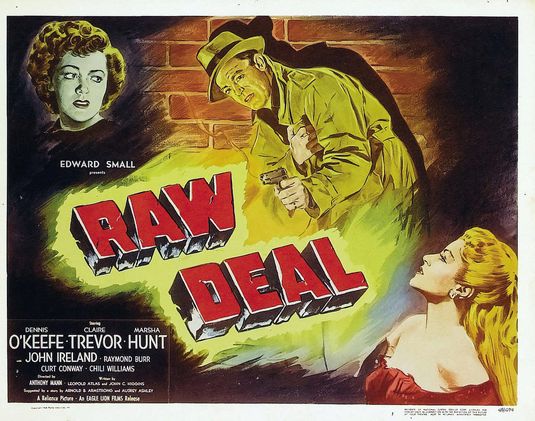
RAW DEAL (Eagle-Lion 1948, D: Anthony Mann)

This tough-talking film seems to cram every film noir trope in the book into its 79 minutes. Gangster Dennis O’Keefe busts out of prison with the help of his moll ( Claire Trevor ), kidnaps social worker Marsha Hunt, and goes after the sadistic crime boss (Raymond Burr) who owes him fifty grand. Director Mann and DP John Alton make this flawed but effective ultra-low budget film work, with help from a great cast. Burr’s nasty, fire-obsessed kingpin is scary, and John Ireland as his torpedo has a great fight scene with O’Keefe. The flaming finale is well staged…

View original post 614 more words