Horror On TV: The Dead Don’t Die (dir by Curtis Harrington)


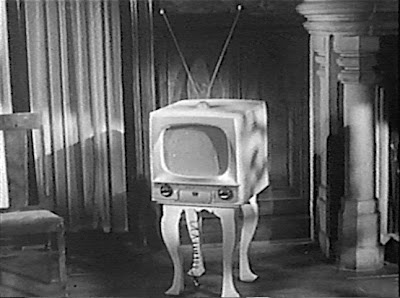
For today’s horror on television, we have a 1975 made-for-television movie called The Dead Don’t Die!

The Dead Don’t Die takes place in Chicago during the 1930s.  George Hamilton is a sailor who comes home just in time to witness his brother being executed for a crime that he swears he didn’t commit.  Hamilton is convinced that his brother was innocent so he decides to launch an investigation of his own.  This eventually leads to Hamilton not only being attacked by dead people but also discovering a plot involving a mysterious voodoo priest!

Featuring atmospheric direction for Curtis Harrington and a witty script by Robert Bloch, The Dead Don’t Die is an enjoyable horror mystery.  Along with George Hamilton, the cast includes such luminaries of “old” Hollywood as Ray Milland, Ralph Meeker, Reggie Nalder, and Joan Blondell.  (Admittedly, George Hamilton is not the most convincing sailor to ever appear in a movie but even his miscasting seems to work in a strange way.)

And you can watch it below!

Enjoy!

Icarus File No. 23: The Last Tycoon (dir by Elia Kazan)


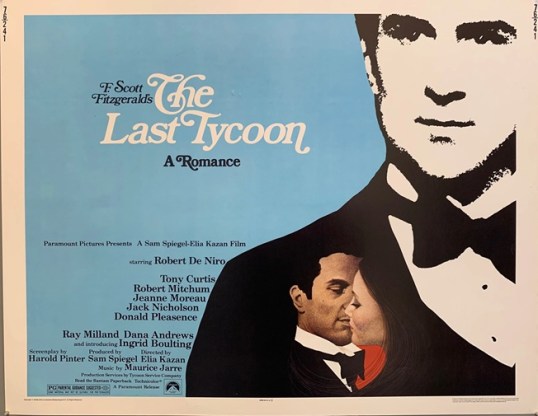
Based on the final (and unfinished) novel by F. Scott Fitzgerald, 1976’s The Last Tycoon tells the story of Monroe Stahr (Robert De Niro).

Monroe Stahr is the head of production at a film studio during the early days of Hollywood.  Stahr is an unemotional and seemingly repressed man who only shows enthusiasm when he’s talking about movies.  He may not be able to deal with real people but he instinctively knows what they want to see on the big screen.  Stahr is a genius but he’s working himself to death, ignoring his health concerns while trying to create the perfect world through film.  He’s haunted by a lost love and when he meets Kathleen Moore (Ingrid Boulting, giving a remarkably dull performance), he tries to find love with her but, naturally, he doesn’t succeed.  Meanwhile, he has to deal with his boss (Robert Mitchum), his boss’s daughter (Theresa Russell), a neurotic screenwriter (Donald Pleasence), an impotent actor (Tony Curtis), and a lowdown dirty communist labor organizer (Jack Nicholson)!  Sadly, for Stahr, McCarthyism is still a few decades away.

There’s a lot of talented people in The Last Tycoon and it’s undeniably interesting to see old school stars — like Mitchum, Curtis, Dana Andrews, Ray Milland — acting opposite a Method-driven, 30-something Robert De Niro.  This is one of those films where even the minor roles are filled with name actors.  John Carradine plays a tour guide.  Jeff Corey plays a doctor.  This is a film about Golden Age Hollywood that is full of Golden Age survivors.  It’s a shame that most of them don’t get much to do.  The Last Tycoon is a very episodic film as Stahr goes from one crisis to another.  Characters show up and then just kind of disappear and we’re never quite sure how Stahr feels about any of them or how their existence really shapes Stahr’s worldview.  Robert De Niro may be a great actor but, as portrayed in this film, Monroe Stahr is a boring character and De Niro’s trademark tight-lipped intensity just makes Stahr seem like someone who doesn’t have much to offer beyond employment.  This is one of De Niro’s least interesting performances, mostly because he’s playing a not-particularly interesting person.  Mitchum, Pleasence, and the old guard all make an impression because they’re willing to coast by on their bigger-than-life personalities.  De Niro is trapped by the Method and a total lack of chemistry with co-star Ingrid Boulting.

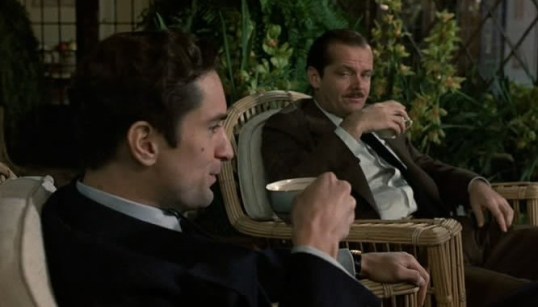
Still, this is the only film to feature both De Niro and Jack Nicholson.  (The Departed was originally conceived as a chance to bring De Niro and Nicholson together, with De Niro being the original choice for the role eventually played by Martin Sheen.)  Nicholson’s role is small and he doesn’t show up until the film is nearly over.  He and De Niro have an intense table tennis match.  Nicholson doesn’t really dig deep into Brimmer’s character.  Instead, he flashes his grin and let’s the natural sarcasm of his voice carry the scene.  It’s nowhere close to being as emotionally satisfying as the De Niro/Pacino meeting in Heat.  That said, Jack Nicholson at least appears to be enjoying himself.  His natural charisma makes his role seem bigger than it actually is.

Why was The Last Tycoon such a disappointment?  Though unfinished, the book still featured some of Fitzgerald’s best work and there’s a huge amount of talent involved in this film.  The blame mostly falls on Elia Kazan, who came out of retirement to direct the film after original director Mike Nichols left the project.  (Nichols reportedly objected to casting De Niro as Stahr.  While it’s tempting to think that Nichols realized that De Niro’s intense style wouldn’t be right for the role, it actually appears that Nichols and De Niro sincerely disliked each other as Nichols also abandoned the next film he was hired to direct when he was told that De Niro wanted the lead role.  Nichols choice for Monroe Stahr was Dustin Hoffman, which actually would have worked.  If nothing else, it would have provided a Graduate reunion.)  Kazan later said that he did the film solely for the money and it’s obvious that he didn’t really care much about the film’s story.  The film has some good scenes but, overall, it feels disjointed and uneven.  Kazan doesn’t really seem to care about Monroe Stahr and, as a result, the entire film falls flat.

Previous Icarus Files:

  1. Cloud Atlas
  2. Maximum Overdrive
  3. Glass
  4. Captive State
  5. Mother!
  6. The Man Who Killed Don Quixote
  7. Last Days
  8. Plan 9 From Outer Space
  9. The Last Movie
  10. 88
  11. The Bonfire of the Vanities
  12. Birdemic
  13. Birdemic 2: The Resurrection 
  14. Last Exit To Brooklyn
  15. Glen or Glenda
  16. The Assassination of Trotsky
  17. Che!
  18. Brewster McCloud
  19. American Traitor: The Trial of Axis Sally
  20. Tough Guys Don’t Dance
  21. Reach Me
  22. Revolution

Horror Film Review: Premature Burial (by Roger Corman)


Poor Guy Carrell (Ray Milland!)

The character at the center of the 1962 Edgar Allan Poe adaptation, The Premature Burial, Guy spends his days terrified of being buried alive.  Like his father before him, Guy suffers from a disease that can make him appear to be dead despite actually being alive.  Guy is convinced that his father was buried alive and swears that he could even hear his father crying for help inside of his tomb.  Though his fiancée, Emily (Hazel Court), insists that Guy is driving himself mad with his fears, Guy continue to spend his time trying to invent a coffin from which one can easily escape.  Even after Emily and Guy are married, Guy continues to obsess.

Finally, faced with the prospect of opening his father’s tomb to discover whether or not his father truly was buried alive, Guy appears to drop dead of a heart attack.  But is he really dead or is he about to be buried alive!?  And who is responsible for the series of mysterious events that apparently drove Guy to collapse of fright?  Watch the film to find out!  Or read the Edgar Allan Poe short story.

This was the third of Roger Corman’s Edgar Allan Poe adaptations and it’s the first one to not feature Vincent Price as the lead character.  For the most part, the members of the small cast all do a good job with their roles.  Ray Milland is both sympathetic and a little frightening as the obsessed Guy.  Heather Angel is properly enigmatic as Guy’s overprotective sister and Hazel Court will keep you guessing as far as her character’s motivations are concerned.  Dick Miller has a small but key role as a grave digger who seems to take just a little bit too much enjoyment from his work.  The film’s atmosphere is properly gothic and, if the film isn’t as visually audacious as the first two Poe films, Corman still finds time to include a creepy and psychedelic dream sequence.

That said, Vincent Price is still very much missed.  Corman reportedly wanted to use Price but, because Corman produced and financed the film  himself, Corman’s former business partners at American International Pictures would not allow Price to appear in the film.  (Price was under exclusive contract to AIP.)  By the time Corman and AIP worked out their disagreements and again joined forces, Ray Milland had already been cast in the lead role.

While the actors all do a good job, it’s hard to deny that Guy Correll would have been an ideal role for Vincent Price, even if it would have meant essentially re-doing his performance from The Pit and the Pendulum.  It’s not just that the film misses Price’s theatrical acting style.  The film also misses the energy that Price brought to the previous two Poe films.  The Premature Burial moves at a stately pace and, in the end, it’s a bit too slow and respectable for its own good.  Price would have jazzed things up and made a decent film into a truly memorable one.  Fortunately, Price would return for the later Poe adaptations.

Horror Film Review: X: The Man With X-Ray Eyes (dir by Roger Corman)


X: The Man With The X-Ray Eyes (1963, dir by Roger Corman, DP: Floyd Crosby)

Eyes.  They’re one of the most important parts of our body but they’re also frightening easy to damage. Unlike the heart or the liver or the brain, they don’t have a protective covering of skin and bone.  They sit exposed and  are easily injured.  They can be ripped out of one’s head, which is a scary thought.  As well, they tend to grow weaker over time.  I love my multi-colored eyes and I think they’re one of my best features but I still spend a lot of time wishing that they weren’t quite as vulnerable as they are.  I often say that I’m blind without my contacts or my glasses.  That’s not quite true, of course.  I can see enough to get by if I forget to put in my contacts but I still have to do a lot of squinting, enough so that most people can take one look at me and say, “You forgot to put in your contacts, didn’t you?”  In my case, my eyesight has definitely gotten even worse over the past few years.  I’ve been told that’s normal but it still freaks me out.  I worry about waking up one day and not being able to see anything at all.

Director Lucio Fulci, a diabetic who was slowly going blind during the final years of his life, was infamous for including scenes of eyes being either pierced or gouged out in his films.  The New York Ripper even featured one scene where an eye was slit in half with a razor blade.  (This occurred in a close-up, no less!)  In Joe D’Amato’s Beyond the Darkness, there’s a scene where a mad taxidermist replaces the eyes of his dead fiancée with glass and for me, that’s one of most disturbing elements of the film.  Horror directors understand the vulnerability of the eyes and the sadness when life is extinguished from those eyes.  Eyes are said to be the windows to soul and when those eyes are lifeless, it’s a reminder that a living soul is a fleeting thing.

Perhaps that’s why 1963’s X: The Man With The X-Ray Eyes is such an effective work of art.  Directed by Roger Corman, the film tells the story of Dr. James Xavier (Ray Milland), a doctor who has developed eye drops that, when taken, allow one to have x-ray vision.  Dr. Xavier claims that the eye drops will allow doctors to more easily diagnose their patients and certainly, he has a point there.  His friend, Dr. Sam Brant (Harold J. Stone), points out that the eyes are directly connected to the brain and that using experimental eye drops on them could potentially drive a person mad.  Dr. Xavier proves Dr. Brant’s point by losing his tempter and accidentally pushing him out of a window.

Ah, x-ray vision.  It all starts out fun.  Dr. Xavier is performing miracle surgeries and seeing what everyone looks like naked.  (The swinging jazz party scene is a classic example of how 60s B-movies teased audiences while never quite showing everything.) But once he’s forced to go on the run from the police, Xavier finds himself making a living as a carnival psychic while still trying to refine his eyedrops.  Xavier’s sleazy manager (Don Rickles) tries to turn Xavier into a faith healer but, with Xavier’s x-ray vision growing more erratic and more intense, Xavier ends up running off to Vegas with a former colleague, Dr. Diane Fairfax (Diana Van der Vils).

And again, it’s all fun and games as Xavier uses his powers to cheat at cards.  But then the megalomania kicks in and, after Xavier basically announces that he’s cheating, he finds himself being chased through the desert by a police helicopter and freaking out as more and more of the universe is revealed to him.  Much like a Lovecraftian protagonist who has been driven mad by the sight of the Great Old Ones, Xavier finds himself overwhelmed by the center of the universe.  At a tent revival, a preacher shouts, “If thine eye offends thee, pluck it out!”

The film’s final image is a shocking one and it stays with you.  (There were rumors that the film originally ended with Xavier shouting, “I can still see!” but Corman himself said that never happened.)  Even without that final image, this would be one of Corman’s best films, a surprisingly intelligent and rather sad story about a man who, in trying to see what is usually hidden, was driven mad by what he discovered.  Ray Milland was well-cast as Dr. Xavier and watching him go from being a somewhat stiff but good-hearted scientist to a raving madman at a revival is quite an experience, a testament to the vulnerability that all humans share.  In the name of science, Xavier goes from being a respected researcher to being chased through the desert by a helicopter.  The man who wanted to be able to see everything finds himself wishing to be forever blinded.  Sometimes, the film suggests, it’s best not to be able to see everything around us.  Sometime, the mysteries of the universe should remain mysteries and the rest of us should respect our own vulnerabilities.

Horror Film Review: Frogs (dir by George McGowan)


1972’s Frogs opens with Pickett Smith (played by a youngish Sam Elliott) canoeing through the bayou, taking pictures of all of the local sights.  Pickett is a nature photographer and someone who is very concerned about what pollution is doing to the local wildlife.  Eventually, Pickett ends up meeting the Crocketts, the wealthy family that owns and lives on an isolated island.  Wheelchair-bound family patriarch Jason Crockett (Ray Milland) is looking forward to celebrating the 4th of July.  It’s a tradition and he goes all out, decorating the mansion with American flags and listening to patriotic music.  The Crockett family always celebrates with Jason, though it quickly becomes apparent that Jason would be just as comfortable celebrating without any of them.

The last thing that Jason Crockett wants is some preachy environmentalist showing up at his mansion and ruining the 4th of July with a bunch of complaints about the pesticides that he’s been using to keep away the island’s wildlife.  The only thing worse than having to deal with an environmentalist would be having to deal with an invasion of alligators, snakes, and frogs.  Unfortunately, Jason is going to have to spend his holiday dealing with all of those things.  Soon, the mansion is surrounded by frogs and servants and family members are showing up dead all over the place.

I’ve seen Frogs a handful of times.  It’s one of those films that many of my friends seem to like much more than I do.  I have to admit that, for whatever reason, I always find myself struggling to focus on the film.  Some of that is because there are more than a few slow spots.  But the main problem is that frogs really aren’t that menacing.  Frogs are cute and kind of goofy-looking, much like Sam Elliott without his mustache.  The alligators are certainly scary.  And there’s an attack by a cottonmouth that makes me go, “Agck!” every time that I see it.  But frogs just look cute when they start hopping around.  Our cat gets excited whenever he sees a frog because he knows that he can put his paw on their back and make them jump. Frogs aren’t threatening but I suspect that’s probably the point of the film.  Frogs is not a film that is meant to be taken too seriously and all of the close-ups of the frogs staring at Ray Milland, Sam Elliott, Joan Van Ark, and Adam Roarke are obviously meant to be more humorous than scary.  By the end of the film, the frogs are hopping over American flags, like a group of rebellious amphibians that have decided to stage their own 1968 Democratic Convention.

The majority of the cast is adequate if not exactly outstanding, with most of them doing what they can to try to look terrified of a bunch of frogs.  That said, the only one who really makes a strong impression is Ray Milland, who appears to relish the opportunity to play someone who dislikes literally everyone that he sees.  As played by Milland, Jason is so honest about being a miserable old man that it’s hard not to like him.  He doesn’t like humanity and he’s not going to pretend otherwise.  One gets the feeling that, when this film was released, he was meant to represent the same establishment that got America into Vietnam.  When viewed today, he comes across like the one person who would be smart enough to never get on social media.

Reportedly, this was one of Andy Warhol’s favorite films.  I’m glad he enjoyed it.

Retro Television Reviews: The Love Boat 3.1 and 3.2 “The Alaskan Wedding Cruise: Carol and Doug’s Story/Peter and Alicia’s Story/Julie’s Story/Buddy and Portia’s Story”


Welcome to Retro Television Reviews, a feature where we review some of our favorite and least favorite shows of the past!  On Wednesdays, I will be reviewing the original Love Boat, which aired on ABC from 1977 to 1986!  The series can be streamed on Paramount Plus!

The Love Boat sets sail for season 3!

Episode 3.1 and 3.2 “The Alaskan Wedding Cruise: Carol and Doug’s Story/Peter and Alicia’s Story/Julie’s Story/Buddy and Portia’s Story”

(Dir by Roger Duchowny, originally aired on September 15th, 1979)

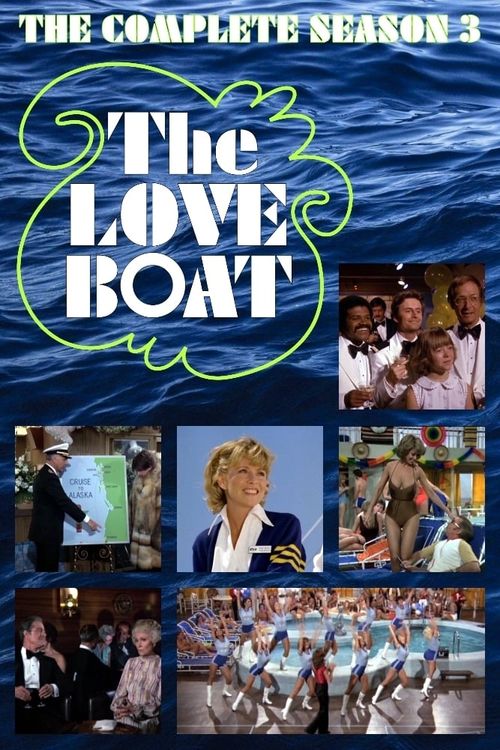
The third season of The Love Boat starts with a special voyage to Alaska and a two-hour running time.  It’s double the guest stars, double the melodrama, double the goofiness, and double the romance!  The opening also features new clips for Doc, Gopher, and Julie.  Whereas the first two seasons introduced Doc listening to his own heartbeat, the third season opening features him laughing while leaning against a railing.  Gopher’s new opening credit features him looking wistfully out at the ocean and it’s a much more mature look for him.  As for Julie, she’s still smiling and perky but she’s let her hair grow out.  If the first two seasons of The Love Boat featured Julie looking like the star of the high school drama department, she looks more like the most popular cheerleader now.  As for the Captain, he continues to salute the camera and Isaac continues to do his signature pointing.

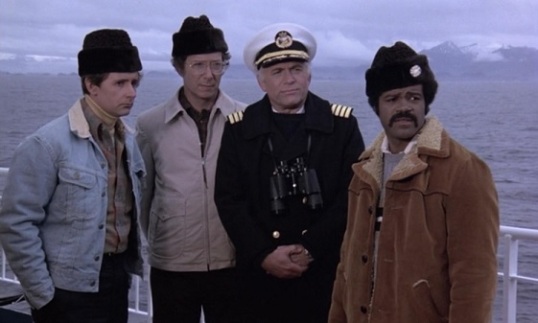
The episode opens in Canada. The boat is docked in Vancouver, where it has been rented out by a huge and wealthy wedding party.  The boat will be sailing to Alaska.  Isaac has been reading everything that he can find about Alaska and he spends most of the episode sharing trivia about the state’s history.  Gopher, preparing for Alaska’s cold weather, buys a gigantic coat.  Meanwhile, Doc Bricker makes jokes about his ex-wives and Capt. Stubing tries to keep everything professional.  (“You’re not going to the North Pole!” he snaps at Gopher when he sees the size of his new fur coat.)

As for Julie, her mind is elsewhere.  Alaska is where Jack (Tony Roberts) lives.  Who is Jack?  During the second season, he was a passenger who fell in love with Julie and who asked Julie to marry him.  She knows that she’s going to see Jack in Alaska and she’s going to give him an answer as far as his proposal is concerned.  (If you don’t remember Jack asking Julie to marry him, don’t feel bad.  I had forgotten about it, too.  Fortunately, the first hour of this episode is full of flashbacks to Jack’s previous episode.)  Is Julie ready to settle down?  While Julie tries to make up her mind, she also has to deal with the romantic intentions of the wedding party’s dorky best man (Donny Most).

As for the wedding party, Carol (Lisa Hartman) and Doug (Mark Harmon, sporting a truly unfortunate haircut) are looking forward to getting married, even though Doug’s ex-girlfriend (Caren Kaye) is also on the boat and determined to win Doug back.  If that means jumping out a cake while wearing a bikini, she’ll do it.  Doug is more concerned about the fact that his estranged, alcoholic father, Peter (Ray Milland) had turned up on the cruise despite having not been invited to or even informed about the wedding.  Peter has stopped drinking and is trying to make peace with his son and his ex-wife, Alicia (Eleanor Parker).  What Doug and Alicia do not know is that Peter is terminally ill.  And what neither Doug nor Peter knows is that Alicia is on the verge of filing for bankruptcy.

Meanwhile, Carol’s plain-spoken grandfather (Lorne Greene) feels uncomfortable with all of the rich folks but then he meets Doug’s equally plain-spoken aunt (Audra Lindley).  Could we be heading for a double wedding?  It is The Love Boat, after all!

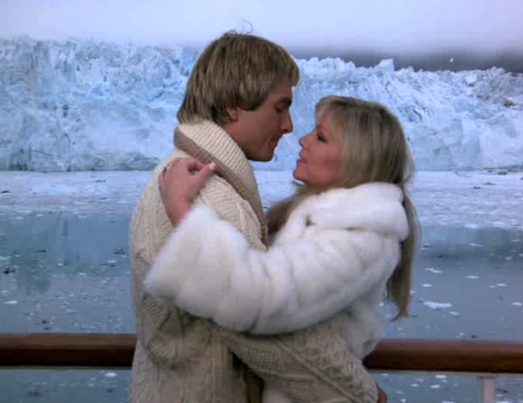
There aren’t really any big surprises on this episode but it’s likable nonetheless.  For this episode, the crew and the cast actually sailed to Alaska and all the action was filmed during an actual cruise.  The scenery is gorgeous, even if it’s obvious that the cast was frequently freezing while filming their scenes.  By this point, the show’s regulars had their chemistry down perfectly and all of the 3rd season premiere’s guest stars are well-selected.  I especially liked the performances of Lorne Greene, Audra Lindley, the great Ray Milland, and Tony Roberts.  Julie and Jack’s reunion was far more touching that I think anyone would expect from a show like The Love Boat, with Tony Roberts playing the role of Jack so well that the viewer really did believe that, under different circumstances, he and Julie truly would have had a wonderful life together.  This was a great way to start the third season.

Live Tweet Alert: Watch Frogs with #ScarySocial


As some of our regular readers undoubtedly know, I am involved in a few weekly live tweets on twitter.  I host #FridayNightFlix every Friday, I co-host #ScarySocial on Saturday, and I am one of the five hosts of #MondayActionMovie!  Every week, we get together.  We watch a movie.  We tweet our way through it.

Tonight, for #ScarySocial, Deanna Dawn will be hosting 1972’s Frogs, starring Sam Elliott and Ray Milland!

If you want to join us on Saturday night, just hop onto twitter, start the film at 9 pm et, and use the #ScarySocial hashtag!  The film is available on Prime and YouTube.  I’ll probably be there and I imagine some other members of the TSL Crew will be there as well.  It’s a friendly group and welcoming of newcomers so don’t be shy.

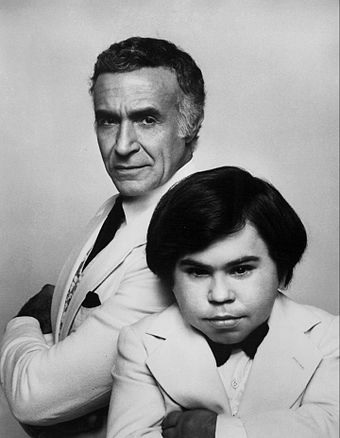
Retro Television Reviews: Fantasy Island 2.7 “Let the Good Times Roll/Nightmare/The Tiger”


Welcome to Retro Television Reviews, a feature where we review some of our favorite and least favorite shows of the past!  On Tuesdays, I will be reviewing the original Fantasy Island, which ran on ABC from 1977 to 1986.  The entire show is currently streaming on Tubi!
This week, we’ve got a special, 90-minute episode of Fantasy Island!

Episode 2.7 “Let the Good Times Roll/Nightmare/The Tiger”

(Dir by George McCowan, originally aired on November 4th, 1978)

This week’s supersized episode of Fantasy Island begins with Tattoo revealing that he’s come up with a new way to annoy Mr. Roarke.

Mr, Roarke rolls his eyes and dramatically sighs, especially when Tattoo makes the mistake of assuming that Roarke is a Pisces.  (“I am a Sagittarius!” Roarke snaps.)  For once, Mr. Roarke is right to be annoyed.  There’s no time for this foolishness this week!  We’ve got three fantasies to deal with!

For instance, Duke Manducci (Paul Sand) and Ernie “Smooth” Kowalski (Peter Isacksen) want to go back to the 1960s and relive their youth.  Duke was once known as the King of the Strip because he could outrace anyone.  Now, years later, Duke is just a guy working in a garage.  Roarke leads them to an exact recreation of the Strip.  The Strip is so perfectly recreated that even Donny Bonaduce shows up to make trouble.

Uh-oh, it turns out that Mr. Roarke has also invited all of Duke’s old friends to come take part in Duke’s fantasy.  Except, of course, none of them know that Duke is still working at the same gas station that he worked at as a teenager.  Duke ends up telling a lot of lies in order to convince them that he’s made a success of himself.   But when he falls for Sheila Crane (Mary Ann Mobley), he realizes that it’s time to be honest.  And when Bonaduce challenges him to a race, Duke eventually realizes that his racing days are over and it’s time for him to be a grown-up.  Duke not only learns an important lesson but he’s also offered a job working on a NASCAR pit crew.  Yay!

Meanwhile, Janine Sanford (Pamela Franklin) is haunted by a recurring nightmare.  She always has the dream at midnight and she’s never made it to the end of the dream without waking up.  She travels to Fantasy Island with her husband (Brett Halsey, who later starred in Fulci’s Touch of Death) and her father (Ray Milland).  Her fantasy is see how her nightmare ends.  Mr. Roarke takes her to what he calls the Nightmare House.

And, oh my God, this nightmare is seriously freaky!  We see it twice.  It involves Janine watching as all of her childhood toys catch on fire.  There’s even a clown that comes to life and go crazy at one point.

Janine’s father is convinced that the dream is linked to some sort of past trauma and he fears that Janine will be hurt if she relives it. 

It turns out the joke’s on him!  Janine’s nightmare is not about the past but the future.  It turns out that it was warning her that her father was going to be trapped in a fire.  When her father is indeed trapped in a fire, Janine is able to rescue him.  Yay!  What a great fantasy and I love a happy ending.  This fantasy is handled so well that it takes a while to realize that the show just kind of dropped the whole idea of Janine suffering from past trauma, despite the fact that her father seemed really worried about what she might end up remembering.  

Finally, for our third fantasy, Victor Duncan (Darren McGavin) is a Hemingwayesque writer who wants to go to India so he can hunt a legendary tiger.  How do you think that works out for him?

Yep, the tiger kills him.

Fear not, though!  Mr. Roarke explains to Tattoo that Victor was actually terminally ill and his fantasy was to die on Fantasy Island.  So, I guess that’s a happy ending.

I actually liked this episode, if just because it was throwback to season one when all of the fantasies were linked by a common theme.  Here the link is aging and growing up.  Duke and Victor both have to deal with the fact that they’re no longer young men.  Janine manages to put her nightmare behind her and move on.  These three fantasies all seemed to belong together, so there were none of the strange tonal shifts that I’ve noticed in some of the other episodes.  All in all, this was a good trip to Fantasy Island.
Horror On The Lens: The Dead Don’t Die (dir by Curtis Harrington)


For today’s horror on the lens, we have a 1975 made-for-television movie called The Dead Don’t Die!

The Dead Don’t Die takes place in Chicago during the 1930s.  George Hamilton is a sailor who comes home just in time to witness his brother being executed for a crime that he swears he didn’t commit.  Hamilton is convinced that his brother was innocent so he decides to launch an investigation of his own.  This eventually leads to Hamilton not only being attacked by dead people but also discovering a plot involving a mysterious voodoo priest!

Featuring atmospheric direction for Curtis Harrington and a witty script by Robert Bloch, The Dead Don’t Die is an enjoyable horror mystery.  Along with George Hamilton, the cast includes such luminaries of “old” Hollywood as Ray Milland, Ralph Meeker, Reggie Nalder, and Joan Blondell.  (Admittedly, George Hamilton is not the most convincing sailor to ever appear in a movie but even his miscasting seems to work in a strange way.)

And you can watch it below!

Enjoy!

Cave-In! (1983, directed by Georg Fenady)


Sen. Kate Lassiter (Susan Sullivan) is visiting a cave in order to determine whether it’s safe to leave it open to the public.  Giving the senator and her group the grand tour is Gene Pearson (Dennis Cole), who is not only a park ranger but who is also Kate’s ex-boyfriend.  The question as to whether or not the cave is safe for the general public is answered by a sudden cave-in, which leaves Kate, Gene, and the others trapped.  Now, Gene has to lead the group across often dangerous terrain to safety.

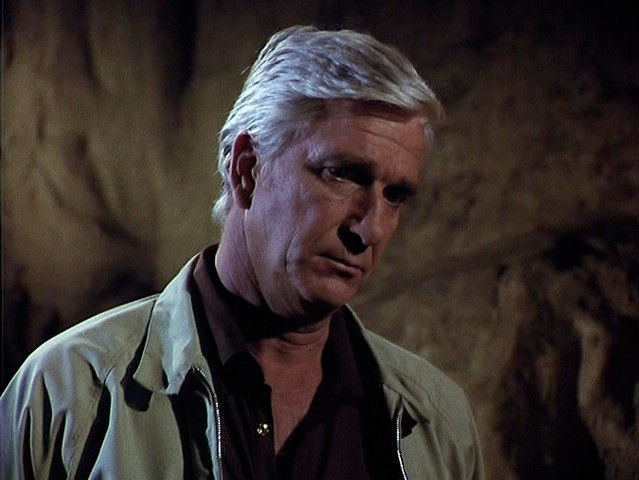
Along with Kate, the group includes a bitter cop named Joe Johnson (Leslie Nielsen!), his wife Liz (Julie Sommars), arrogant Prof. Harrison Soames (Ray Milland), and the professor’s shy daughter, Ann (Sheila Larkin).  Joe and Liz are struggling to keep their marriage together.  Prof. Soames refuses to allow his daughter to have a life of her own.  The six of them are going to have to somehow work together if they’re going to survive this cave-in!  Of course, they’re not alone.  There’s a seventh person in the cave.  Tom Arlen (James Olson) is a dangerous convict who was in the cave hiding out from the police.  Now, he’s trapped along with everyone else.

Cave-In is a pretty standard disaster movie.  Produced by Irwin Allen, it was originally filmed in 1979 but it didn’t air on NBC until 1983.  By that time, Airplane! had pretty much reduced the disaster genre to a joke.  Ironically, Leslie Nielsen himself has a starring role in Cave-In, playing exactly the type of character that he parodied in both Airplane! and Police Squad.  At the time he filmed Cave-In, Neilsen was still a dramatic actor but by the time the movie aired, his deadpan style was firmly associated with comedy.  Even when his dialogue is serious, the natural instinct is to laugh.

Cave-In gets bogged down by flashbacks.  Even though everyone should be concentrating on making their way to safety, it instead seems that they’re too busy obsessing on their backstory.  Since no one’s backstory is that interesting, the flashbacks don’t do much to liven up the film and, unfortunately, a cave-in just isn’t as compelling as a fire in skyscraper or an upside down boat.

On the plus side, every disaster movie needs an arrogant bastard who makes escape unnecessarily difficult and, in the 70s, no one played a better arrogant bastard Ray Milland.  Otherwise, Cave-In is a forgettable entry from the final days of the disaster genre.