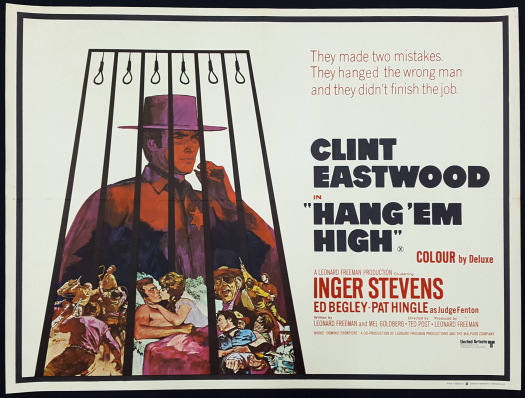
Clint Eastwood returned to America after his amazing success in Sergio Leone’s Man With No Name Trilogy as a star to be reckoned with, forming his own production company (Malpaso) and filming HANG ‘EM HIGH, a Spaghetti-flavored Western in theme and construction. Clint was taking no chances here, surrounding himself with an all-star cast of character actors and a director he trusted, and the result was box office gold, cementing his status as a top star.
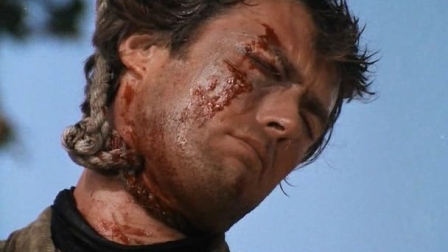
Clint plays ex-lawman Jed Cooper, who we meet driving a herd of cattle he just purchased (reminding us of his days on TV’s RAWHIDE). A posse of nine men ride up on him and accuse him of rustling and murder, appointing themselves judge, jury, and executioner, and hang him. He’s left for dead, until Marshal Dave Bliss comes along and cuts him down, taking Jed prisoner and transporting him to nearby Ft. Grant. Evidence…
Back in 2014 and 2015, I did a series of reviews that I called Embracing the Melodrama, in which I reviewed some of the best (and worst) melodramas ever made. All together, I reviewed 186 films as a part of Embracing the Melodrama, everything from Sunrise to Reefer Madness to The Towering Inferno to Cocaine: One Man’s Seduction. I had so much fun doing it that I’ve decided to do it again.
No, don’t worry. I’m not going to attempt to review 186 films this time. Instead, for Embracing The Melodrama Part III, I am going to limit myself to reviewing 8 films. I’ll be posting one Embracing the Melodrama review a day, from now until next Sunday.
Let’s kick things off with 1957’s No Down Payment, a film about life in … THE SUBURBS!
(cue dramatic music)
The suburbs!
Is there any place in America that’s more dramatic? Is it any wonder that, since the early 50s, films have regularly been using the suburbs as an example of everything that’s apparently wrong with America? Every year sees at least one major film about how terrible life is in the suburbs. Last year, for instance, George Clooney directed a film called Suburbicon, which was regularly cited as a possible Oscar contender before it was released and everyone was reminded of the fact that George Clooney is a terrible director. That said, I can understand why filmmakers continue to be drawn to the suburbs. Secret affairs. Dangerous drugs. Duplicitous children. Fractured families. Barbecuing alcoholics. Undercover occultists. You can find them all in the suburbs!
No Down Payment opens with David (Jeffrey Hunter) and Jean Martin (Patricia Owens) driving down a California highway and looking at the billboards that dot the landscape. Every billboard advertises a new community, inviting people to make a new and better life away from the crowded city. David and Jean smile, amused by how blatant all of the ads are. That’s when they see the billboard that’s advertising their new home:
Sunrise Hill Estates
A Better Place For Better Living
Soon, David and Jean are moving into their new home and meeting their new neighbors. It turns out that most of the houses in Sunrise Hill Estates are available for “no down payment” and the majority of the residents are struggling financially. Though David may look at all of his neighbors and say, “Looks like everybody here is living a wonderful life,” the truth is something far different.
(If David’s line sound a bit too on the nose and obvious, that’s because almost all of the dialogue in No Down Payment was too on the nose and obvious. As a side note, “on the nose” is an extremely strange expression.)
David’s neighbors include:
Herm Kreitzer (Pat Hingle) and his wife, Betty (Barbara Rush). Herm owns an appliance store and sits on the town council. Herm is gruff but likable. He’s the leader of his neighborhood and he welcomes the Martins with a backyard party. Herm’s employee, Iko (Aki Aleong), wants to move to Sunrise Hill but no one is willing to give him a reference because he’s not white.
Troy Boone (Cameron Mitchell) and his wife, Leola (Joanne Woodward). We know that Troy is going to be trouble because he’s played by Cameron Mitchell. We know that we’re going to like Leola because she’s played by Joanne Woodward. Troy’s an auto mechanic and a veteran. He wants to be appointed the chief of police but the town is reluctant to hire him because he doesn’t have a college education. Leola wants to have a child but Troy says that they can’t even think about that until he has a good job.
And then there’s Jerry Flagg (Tony Randall) and his wife, Isabelle (Sheree North). Jerry is a used car salesman and he’s also a drunk. Jerry spends most of the movie hitting on other women and embarrassing Isabelle. Jerry has no impulse control and, as a result, he’s heavily in debt. His only hope is that he can convince a family to buy an expensive car that they really don’t need. When last I checked, that’s what a used car salesman is supposed to do.
The film deals with a lot of issues — prejudice, sexism, economic insecurity — that are still relevant today. Unfortunately, the film itself is a bit slow and what was shocking in the 50s seems rather jejune today. Watching the film, you get the feeling that, as with many films of the 50s, all of the interesting stuff is happening off-screen. That said, the film has an interesting cast. Jeffrey Hunter and Patricia Owens are a bit dull as the Martins but then you’ve got their neighbors! Any film that features Cameron Mitchell glowering can’t be all bad but the best performance comes from Tony Randall, who is memorably sleazy and desperate as Jerry Flagg. For a fun experiment, watch this film right before watching Will Success Spoil Rock Hunter?
Tomorrow, we’ll continue to embrace the melodrama with 1961’s Common Law Wife!
(First off, feast your eyes on the incredibly cool Frank Frazetta poster! Then read on… )
Clint Eastwood’s directorial credits include some impressive films: THE OUTLAW JOSEY WALES, PALE RIDER, UNFORGIVEN, MYSTIC RIVER, MILLION DOLLAR BABY. While 1977’s THE GAUNTLET may not belong on that list, I feel it’s a very underrated movie deserving a second look. Clint and his lady love at the time Sondra Locke star in this character study of two damaged people disguised as an action comedy, essentially a chase film loaded with dark humor.
Clint plays Ben Shockley, an alcoholic Phoenix cop sent to Las Vegas to extradite Gus Mally, “a nothing witness in a nothing trial”. Gus turns out to be a woman, a hooker in fact, set to testify against a Phoenix mobster. Ben’s suspicions are roused when he learns Vegas oddsmakers are giving 50-1 they don’t make it to Phoenix alive, confirmed…
(Lisa is currently in the process of cleaning out her DVR! She has got over 170 movies on the DVR to watch and she’s trying to get it done before the start of the new year! Can she get it done? Probably not, but she’s going to try! 1972’s The Carey Treatment was recorded off of TCM on July 23rd.)
Dr. Peter Carey (James Coburn) is the epitome of 1970s cool. He’s got hair long enough to cover the top half of ears. He’s got a fast car. He’s got a rebellious attitude and a girlfriend (Jennifer O’Neill) who rarely questions his decisions. Though you don’t see it in the movie, Dr. Carey probably smokes weed when he’s back at his fashionably decorated apartment. How do I know this? Well, he’s played by James Coburn. Even if some of them are nearly 50 years old, you can still get a contact high from watching any movie featuring James Coburn.
Anyway, what the Hell is The Carey Treatment about? Dr. Carey has just recently moved to Boston, where he’s taken a job at a stodgy old hospital. The hospital’s chief doctor, J.D. Randall (Dan O’Herlihy, of Halloween III: Season of The Witch fame), might want Dr. Carey to tone down his free-livin’, free-lovin’ California ways but no one tells Peter Carey what to do. In fact, the entire city of Boston might be too stodgy and conventional for Dr. Carey. You see, Dr. Carey not only heals people. He also beats up people who try to stand in his way. Peter Carey is a doctor who cares but he’s also a doctor who can kick ass.
And he’s going to have to kick a lot of ass because Dr. Randall’s daughter has just turned up dead. The police say that she died as the result of a botched abortion and they’ve arrested Carey’s best friend, Dr. David Tao (James Hong). (The Carey Treatment, it should be noted, was filmed before Roe v. Wade legalized abortion.) The Boston establishment is determined to use Dr. Tao as a scapegoat but Dr. Carey is convinced that his friend is innocent. In fact, he doesn’t think that the death was the result of an abortion at all. Carey sets out to solve the case … HIS WAY!
If it seems like I’m going a little bit overboard with my emphasis on the Dr. Peter Carey character, that’s because this entire movie feels more like a pilot for a weekly Dr. Carey television series as opposed to an actual feature film. It’s easy to image that each week, James Coburn would drive from hospital to hospital, solving medical mysteries and debating social issues with stuffy members of the Boston establishment. Henry Mancini would provide the theme music and Don Murray would guest star as Dr. Carey’s brother, a priest who encourages the young men in his parish to burn their draft cards.
It might have eventually become an interesting TV show but it falls pretty flat as a movie. James Coburn is in nearly every scene, which would usually be a good thing. But in The Carey Treatment, he gives an incredibly indifferent performance. He seems to be bored by the whole thing and, as a result, Dr. Peter Carey is less a cool rebel and more of a narcissistic jerk. The mystery itself is handled rather haphazardly. On the positive side, Michael Blodgett gives a wonderfully creepy performance as a duplicitous masseur but otherwise, The Carey Treatment is nothing special.
(Lisa is currently in the process of trying to clean out her DVR by watching and reviewing all 40 of the movies that she recorded from the start of March to the end of June. She’s trying to get it all done by July 11th! Will she make it!? Keep visiting the site to find out!)
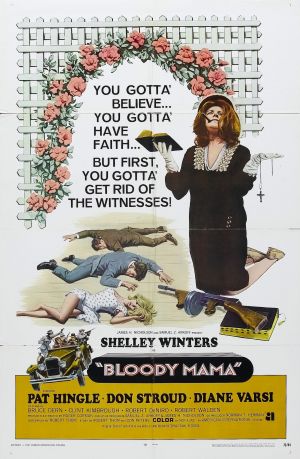
The 24th film on my DVR was the 1970 Roger Corman-directed gangster film, Bloody Mama. I recorded it off of TCM on May 27th.
Bloody Mama opens with a cheerful song that goes, “Maaaaaama…Bloody maaaaama….” and it’s such an unapolegetically over the top song that it perfectly sets the tone for what’s to follow. Bloody Mama is violent, occasionally perverse, and totally unashamed. It doesn’t pretend to be anything that it isn’t. It’s bloody and it’s about a mother and, in the best Corman tradition, it makes no apologies!
The film tells the heavily fictionalized story of the Barkers, a group of brothers who robbed banks and killed people in the 1920s and 30s. The majority of them were killed in a gunfight with the FBI. Also killed in the gunfight was their mother, Kate Barker. Always aware of the danger of bad publicity, the director of the FBI, J. Edgar Hoover, announced that Ma Barker was actually the mastermind of the Barker gang and that she was even more dangerous than her sons. Ever since, historians have debated whether Ma Barker was the criminal mastermind described by Hoover or if she was just the innocent woman described by … well, by everyone who actually knew her.
Bloody Mama, of course, leaves no doubt. From the minute that we discover that Shelley Winters will be playing Ma Barker, we know that she’s the most dangerous woman alive. As played by Winters, Ma Barker is a ruthless bank robber, one who has no fear of gunning down innocent bystanders and who never lets her love for her sons get in the way of ordering them to kill a witness. As opposed to a lot of gangster films made in the late 60s and early 70s, the film never attempts to portray its title character as being a heroic or particularly sympathetic character. Instead, what makes the character compelling is just how thoroughly Winters commits to the role. It doesn’t matter what Ma Barker is doing or saying, Shelley Winters totally sells it. When the gang is cornered by the police and one associate makes the mistake of yelling that he’s not a Barker, Ma reacts by gunning him down herself and you can’t help but appreciate the lengths that Ma will go to defend her family’s name.
As for her sons, they are an interesting group of perverts and drug addicts and they’re played some of the best character actors of the 1970s.
Herman Barker (Don Stroud) is a sadist but he’s also one of Ma’s favorites. He travels with a prostitute (played by Diane Varsi), who quickly tires of the Barkers’s violent way of life.
Arthur Barker (Clint Kimbrough) is the most practical of the Barkers and therefore, he’s also the least interesting.
Fred Barker (Robert Walden) is bisexual, which is a fact that the film handles with all the sensitivity that we’ve come to expect from a film made in 1970 (which is to say, not much at all). Fortunately, Fred’s lover is Kevin and Kevin is played by Bruce Dern and Bruce Dern is always a lot of fun to watch, especially when he’s appearing in a Corman film.
And then there’s Lloyd who sniffs glue and shoots heroin and who is played by an obscure young actor named Robert De Niro and … wait, Robert De Niro! That’s right! One of the pleasures of Bloody Mama is getting to see De Niro at the start of his career. Unfortunately, he doesn’t really get to do much, though he does occasionally flash the same unhinged smile that would later show up in Taxi Driver.
Roger Corman has repeatedly cited Bloody Mama as being one of his favorites of the many movies that he directed over the course of his long career. I don’t blame him. It’s a thoroughly shameless and totally entertaining film!
Keep an eye out for Bloody Mama!
Just remember, the real-life Ma Barker was probably innocent.
There is exactly one effective sequence to be found in Maximum Overdrive, a horror film from 1986 that attempts to show us what would happen if all of Earth’s machines decided to destroy humanity.
It takes place at the end of a little league game. The coach, happy that his team has won, declares soda for everyone! He walks over to the soft drink machine and puts in his coins and…nothing happens. The coach stares at the machine perplexed. His team gathers around him.
Suddenly, a can flies out of the machine and hits the coach in the groin. Coach falls to his knees, just to get another can driven straight into his skull, leaving him with a big bloody hole in his head. As the coach twitches, his teams starts to run away. Suddenly, the machine is shooting cans out at them. Some of the kids escape but quite a few don’t.
Suddenly, as the kids flee, a driverless steamroller crashes through a fence and drives across the field, graphically flattening one of the players…
It’s over-the-top, it’s kind of scary, it’s fun in a naughty sort of way, and it’s exciting to watch. It’s totally absurd and yet it’s effective at the same time. It’s a really brilliant scene, one that hints at what Maximum Overdrive could have been. It hints that Maximum Overdrive‘s first-time director did have some potential and watching it, one is tempted to feel a pang of regret over the fact that he never directed another film after this one.
However, then you watch the rest of Maximum Overdrive and you realize that one effective scene was a total fluke. To your horror, you realize that this film’s director (and screenwriter) has decided to set nearly the entire film in the ugliest and most disgusting truck stop in the world. You realize that the director has no idea how to maintain suspense and that his idea of horror appears to be having a lot of trucks constantly circling the truck stop. And then, worst of all, you realize that the unlikable caricatures inside the truck stop are meant to be our heroes!
And you find yourself wondering if things could possibly get any worse. Well, believe me — they can.
First off, a guy named Camp Loman (Christopher Murney) shows up and reveals himself to be a total lech and then starts trying to sell bibles and really, what do you expect from someone named Camp Loman? And, what’s annoying, is that the film’s director seems to think that he’s blowing our mind by presenting us with an hypocritical bible salesman. I mean, seriously — the amount of time devoted to Camp Loman will make you nostalgic for scenes of a steamroller crushing a child.
And then Emilio Estevez shows up as our hero but he scowls through the entire movie and delivers all of his lines through gritted teeth, as if he’s pissed off about appearing in Maximum Overdrive and really, who can blame him? That said, it doesn’t really make for an enjoyable performance.
But hey — Emilio’s not the only person in the truck stop. There’s also Pat Hingle, playing the owner of the truck stop. He’s overweight, wears a tie, smokes a cigar, and speaks with a vaguely Southern accent. Hmmmmm, do you think he’s going to be a bad guy?
Oh! And let’s not forget the waitress played by Ellen McElduff. “WE MADE YOU!” she shouts at the machines and then she shouts it again and again and again and again and it’s almost as if the film is being directed by a guy so in love with his own dialogue that he doesn’t realize how annoying the same line gets when it’s screeched over and over again.
And I haven’t even gotten to the helium-voiced newlyweds yet…
When I recently watched Maximum Overdrive on Encore, there were a lot of things that annoyed me, such as the bad pacing, the bad acting, the bad dialogue, the bad special effects, the bad cinematography, and the bad everything else. But what really got to me was just how inconsistent this movie was. Some machines turned into killers but oddly, others did not. At one point, a machine gun starts shooting at the people in the truck stop but the weapons that Pat Hingle keeps in the truck stop never turn on their human masters. Seriously, if you’re going to make a terrible movie, at least be consistent.
So, you may be asking, why is this an Icarus File? Well, it was directed by Stephen King, the writer who is routinely called the “master of horror.” King may be a great writer but, judging from this movie, he was a really crappy director. I imagine, when the film was in pre-production, the logic was that if King could write a scary book then he could definitely direct a scary movie.
Nope.
It turns out that, just as Icarus should never have gotten so close to the sun, Stephen King should never have directed a movie.
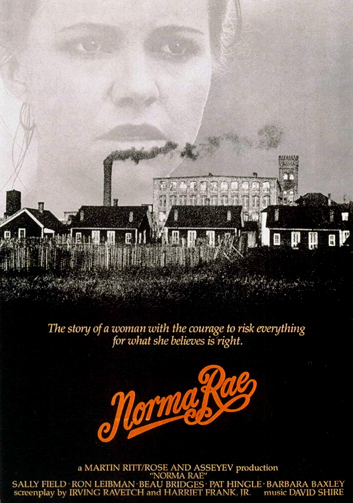
Earlier, in honor of Labor Day, I reviewed one of the most anti-labor union films ever made, the 1954 Oscar winner On The Waterfront. In the interest of fairness, it only seems right to now take a look at one of the most pro-union films ever made, the 1979 best picture nominee Norma Rae.
Norma Rae takes place in one of those small Southern towns that is defined by just one industry. In this case, almost everyone in town works for minimum wage at the local textile mill. Conditions are terrible, with the employees working long and brutal shifts in a hot and poorly ventilated factory. The overwhelming roar of the machines have left the majority of the workers deaf to reality, both figuratively and literally. The mill is run by the usual collection of slow-talking, tie-wearing rednecks who always seem to show up in movies like this.
One day, a union organizer from New York shows up in town. Brash and cocky, Ruben Warshowsky (Ron Leibman) is determined to unionize the mill but, at first, he struggles. Nobody wants to risk their job by being seen with him and his Yankee manners rub many of the townspeople the wrong way.
Eventually, Ruben does find one ally. Norma Rae (Sally Field) has worked at the mill her entire life. She’s tough and determined but she’s also regularly shunned because of her past. A widow who has three children (“She’s had a child out of wedlock!” a judgmental union organizer tells Ruben in a near panic), Norma channels her frustration into drinking too much and having an affair with a married (and abusive) salesman.
Two things happen that give Norma Rae a new purpose in life. First off, she meets and marries the well-meaning but chauvinistic Sonny (Beau Bridges). Secondly, she helps Ruben in his efforts to unionize the plant, even at the risk of going to jail and losing her job. With the mill’s management spreading untrue rumors about Norma’s relationship with Ruben, her dedication to the union soon starts to threaten her marriage to Sonny.
I have to admit that I have mixed feelings about Norma Rae. In many ways, Ruben is an annoying character. He’s so brash and so smugly out-of-place that I actually found it difficult to consider any of the points that he was making. I suppose that was partly intentional. Ruben can’t accomplish anything until he gets Norma Rae on his side. But, at the same time, there was something very condescending about Ruben as a character. Much like the villainous rednecks in charge of the mill, Ruben felt like a stock character. He was Super Yankee, bravely venturing below the Mason-Dixon Line to bring the truth to all of us stupid Southerners. Whenever Ruben smirked and started to complain about how dumb everyone else was, I was reminded of why I never wanted much to do with the whole Occupy Movement.
As well, Norma Rae is one of those films that technically takes place in the South but it’s the South of the Northern imagination. The accents were inconsistent and the dialogue often tried way too hard to sound “authentic.” Ultimately, Norma Rae lacked the artistry necessary to disguise its more heavy-handed moments.
And yet, I still liked Norma Rae. It had nothing to do with the film’s political message and everything to do with the character of Norma Rae. Sally Field gives such a good performance as Norma, making her both strong and vulnerable. The film’s best moments are the ones where Norma stands up for herself and does what she feels is right, despite the opposition from the mill’s management, Sonny, and her father (Pat Hingle). Towards the end of the film, there’s a simply incredible scene where Norma finally tells her children about her past and, at that moment, Norma Rae reveals itself to be a great and heartfelt tribute to the strength and resilience of women everywhere. At that moment, Norma’s strength reminded me of the greatest woman that I’ve ever known, my mom. It made me appreciate the struggles that my mom went through as she raised four strong-willed daughters on her own, while working crappy jobs and dealing with a society that is always threatened by and cruelly judges a woman who refuses to settle. Personally, I think Norma could have done better than Sonny and that Ruben should have been called out for constantly talking to down to her but what’s important, in the end, is that Norma never stopped standing up for what she believed. By the end of the film, Norma is standing in for every woman who has ever been underestimated or judged or told that her opinions didn’t matter. Norma is standing up for all of us.
Sally Field won an Oscar for her role in Norma Rae. Off the top of my head, I have no idea who she defeated for the award. (Yes, I know that I could just look it up on wikipedia but that’s not the point.) But, regardless of her competition, it’s an honor that she definitely deserved.
Nowadays, that can be a dangerous thing to admit. On The Waterfront won the Oscar for Best Picture of 1954 and Marlon Brando’s lead performance as boxer-turned-dockworker Terry Malloy is still regularly cited as one of the best of all time. The scene where he tells his brother (played by Rod Steiger) that he “could have been a contender” is so iconic that other films still continue to either parody or pay homage to it. On The Waterfront is one of those films that regularly shows up on TCM and on lists of the greatest films ever made.
And yet, despite all that, it’s become fashionable to criticize On The Waterfront or to cite it as an unworthy Oscar winner.Certain film bloggers wear their disdain for On The Waterfront like a badge of honor. Ask them and they’ll spend hours telling you exactly why they dislike On The Waterfront and, not surprisingly, it all gets tedious pretty quickly.
Like all tedious things, the answer ultimately comes down to politics. In the early 50s, as the House UnAmerican Affairs Committee conducted its search for communists in Hollywood, hundreds of actors, writers, and directors were called before the committee. They were asked if they were currently or ever had been a member of the Communist Party. It was demanded that they name names. Refusing to take part was career suicide and yet, many witnesses did just that. They refused to testify, apologize, or name names.
And then there was the case of Elia Kazan. When he was called in front of HUAC, he not only testified about his communist past but he named names as well. Many of his past associates felt that Kazan had betrayed them in order to protect his own career. On The Waterfront was Kazan’s answer to his critics.
In On The Waterfront, Terry Malloy’s dilemma is whether or not to voluntarily testify before a commission that is investigating union corruption on the waterfront. Encouraging him to testify is the crusading priest, Father Barry (Karl Malden), and Edie (Eva Marie Saint), the saintly girl who Terry loves. Discouraging Terry from testifying is literally every one else on the waterfront, including Terry’s brother, Charlie (Rod Steiger). Charlie is the right-hand man of gangster Johnny Friendly (a crudely intimidating Lee J. Cobb), who is the same man who earlier ordered Terry to throw a big fight.
At first, Terry is content to follow the waterfront of code of playing “D and D” (deaf and dumb) when it comes to union corruption. However, when Johnny uses Terry to lure Edie’s brother into an ambush, Terry is forced to reconsider his previous apathy. As Terry gets closer and closer to deciding to testify, Johnny order Charlie to kill his brother…
The issue that many contemporary critics have with On The Waterfront is that they view it as being essentially a “pro-snitch” film. It’s easy to see that Elia Kazan viewed himself as being the damaged but noble Terry Malloy while Johnny Friendly was meant to be a stand-in for Hollywood communism. They see the film as being both anti-union and Kazan’s attempt to defend naming names.
And maybe they’re right.
But, ultimately, that doesn’t make the film any less effective. Judging On The Waterfront solely by its backstory ignores just how well-made, well-acted, well-photographed, well-directed, and well-written this film truly is. Elia Kazan may (or may not) have been a lousy human being but, watching this film, you can’t deny his skill as a director. There’s a thrilling grittiness to the film’s style that allows it to feel authentic even when it’s being totally heavy-handed.
And the performances hold up amazingly well. Marlon Brando’s performance as Terry Malloy gets so much attention that it’s easy to forget that the entire cast is just as great. Rod Steiger makes Charlie’s regret and guilt poignantly real. Karl Malden, who gets stuck with the film’s more pedantic dialogue, is the perfect crusader. Eva Marie Saint is beautiful and saintly. And then you’ve got Lee J. Cobb, playing one of the great screen villains.
The motives behind On The Waterfront may not be the best. But, occasionally, a great film does emerge from less than pure motives. (Just as often, truly good intentions lead to truly bad cinema.) Regardless of what one thinks of Elia Kazan, On The Waterfront is a great work of cinema and it’s on that basis that it should be judged.
I recently saw the 1970 film WUSA on Movies TV. After I watched it, I looked Joanne Woodward up on Wikipedia specifically to see where she was born. I was surprised to discover that she was born and raised in Georgia and that she attended college in Louisiana.
Why was I so shocked? Because WUSA was set in New Orleans and it featured Joanne Woodward speaking in one of the most worst Southern accents that I had ever heard. A little over an hour into the film, Woodward’s character says, “What’s all the rhubarb?” And while “What’s all the rhu…” sounds properly Southern, the “…barb” was pronounced with the type of harshly unpleasant overemphasis on “ar” that has given away many Northern actors trying to sound Southern. Hence, I was shocked to discover that Joanne Woodward actually was Southern.
That said, her pronunciation of the word rhubarb pretty much summed up every problem that I had with WUSA. Actually, the real problem was that she said “rhubarb” in the first place. It came across as being the type of thing that a Northerner who has never actually been down South would think was regularly uttered down here. And I will admit that WUSA was made 16 years before I was born and so, it’s entirely possible that maybe — way back then — people down South regularly did use the word rhubarb. But, for some reason, I doubt it. I know plenty of old Southern people and I’ve never heard a single one of them say anything about rhubarb.
As for WUSA, it’s a long and slow film. A drifter named Reinhardt (Paul Newman) drifts into New Orleans and, with the help of an old friend who is now pretending to be a priest (Laurence Harvey), Reinhardt gets a job as an announcer at a right-wing radio station. He reads extremist editorials that he doesn’t agree with and whenever anyone challenges him, he explains that he’s just doing his job and nothing matters anyway.
Reinhardt also gets himself an apartment and spends most of his time smoking weed with long-haired musician types, the exact same people that WUSA regularly denounces as being a threat to the American way. Living in the same complex is Geraldine (Joanne Woodward), a former prostitute who has a scar on her face and who says stuff like, “What’s all the rhubarb?” She falls in love with Reinhardt but finds it difficult to ignore what he does for a living.
Meanwhile, Geraldine has another admirer. Rainey (Anthony Perkins) is an idealistic and neurotic social worker who is regularly frustrated by his efforts to do good in the world. Reinhardt makes fun of him. The local crime boss (Moses Gunn) manipulates him. And WUSA infuriates him. When Rainey realizes that WUSA is a part of a plot to elect an extremist governor, Rainey dresses up like a priest and starts carrying around a rifle.
Meanwhile, Reinhardt has been assigned to serve as emcee at a huge patriotic rally. With Geraldine watching from the audience and Rainey wandering around the rafters with his rifle, Reinhardt is finally forced to take a stand about the people that he works for.
Or maybe he isn’t.
To be honest, WUSA is such a mess of a film that, even after the end credits roll, it’s difficult to figure out whether Reinhardt took a stand or not.
Anyway, WUSA is not a lost masterpiece and I really wouldn’t recommend it to anyone. The film’s too long, there’s too many scenes of characters repeating the same thing over and over again, and neither Newman nor Woodward are particularly memorable. (You know a movie is boring when even Paul Newman seems like a dullard.) On the plus side, Anthony Perkins gives such a good performance that I didn’t once think about the Psycho shower scene while watching him.
As boring as WUSA is, I have to admit that I’m a little bit surprised that it hasn’t been rediscovered. Considering that it’s about a right-wing radio station, I’m surprised that there haven’t been hundreds of pretentious think pieces trying to make the connection between WUSA and Fox News. But, honestly, even if those think pieces were out there, it probably wouldn’t do much for WUSA‘s repuation. According to the film’s Wikipedia page, Paul Newman called it, “the most significant film I’ve ever made and the best.” Paul Newman’s opinion aside, WUSA is pretty dire.
Today, we continue our look at the Dirty Harry film series by considering the fourth installment in the franchise, 1983’s Sudden Impact.
“Go ahead. Make my day…”
Yes, this is the film where Police Inspector “Dirty” Harry Callahan (played, as always, by Clint Eastwood) delivers that classic one liner. In this case, he says it to a man holding a gun to a waitress’ head. The implication, I guess, is that the gunman would make Harry’s day by killing the innocent woman that he’s holding hostage and therefore, giving Harry an excuse to shoot him in the head. That line really does get to the heart of one of the main themes that runs through all of the Dirty Harry movies in general and Sudden Impact in specific. Harry’s life would be a lot of easier if people would simply stop getting in the way and just let him shoot anyone that he wants to.
At the start of Sudden Impact ,we discover that Harry Callahan is still on the San Francisco police force and Captain McKay (Bradford Dillman) is still his antagonistic boss. Eight years have passed since the end of the Enforcer and Harry is a bit grayer and definitely grumpier. Whereas the previous three films in the franchise made a (minimal) effort to humanize him, the Harry of Sudden Impact is a snarling, forehead vein-throbbing killing machine. After years of dealing with sleazy criminals and weak-willed liberals, Harry now appears to wake up each morning and ask himself, “How many people can I find an excuse to kill today?”
Not surprisingly, all those years of shooting people have apparently made Harry the most targeted man in San Francisco. Within the first 20 minutes of the film, three separate and unconnected groups of criminals attempt to kill Harry. His superiors demand that Harry take a vacation before the entire city of San Francisco is destroyed. Harry snarls in response so his bosses do the next best thing and order him to go to the coastal town of San Paulo to help with an unsolved murder.
San Paulo has a problem. Local lowlifes are turning up dead, shot once in the head and once in the genitals. Along with the gruesome way that they die, all of them seem to be acquainted with a frightening woman named Rae (played by Audrey J. Neenan). The chief of police (Pat Hingle) doesn’t seem to be trying too hard to solve the crimes and he openly resents Harry’s attempts to help. (He’s even less happy about the fact that the mobsters who were trying to kill Harry in San Francisco have followed him out to San Paulo.) Harry, however, is determined to solve the crime even while dealing with the unwanted gift of a rather ugly bulldog (given to him by his latest partner, who is played by series regular Albert Poppwell) and romancing an artist (a rather unconvincing Sondra Locke) who has some very strong thoughts of her own on both the sorry state of the criminal justice system and what should be done to improve it.
Sudden Impact was the only one of the Dirty Harry films to officially be directed by Clint Eastwood. Even if his name wasn’t listed in the opening credits, you would probably be able to guess that Eastwood directed this. From the film’s opening nighttime scene, during which time the screen is almost totally black except for the occasional flash of a gun being aimed, the film features Eastwood’s signature noir-influenced visual style but it doesn’t contain any of the thematic ambiguity that typifies Eastwood’s better films.
Sudden Impact is an entertaining and well-made action film but it’s also my least favorite of the Dirty Harry series. Whereas the first three installments at least tried to play around with figuring out what made Harry tick (and, occasionally, even allowing Harry’s methods to be questioned by sympathetic characters like Chico in Dirty Harry or Kate Moore in The Enforcer), Sudden Impact is content to just to let Harry kill some of the most cardboard villains in the franchise’s history. The end results are crudely effective but ultimately rather forgettable, with none of the eccentric touches that occasionally distinguished the next film in the series, The Dead Pool. There’s a reason why Sudden Impact is best remembered for a one-liner that’s uttered during the film’s first 10 minutes and which doesn’t really have anything to do with anything else that happens in the movie.
Speaking of The Dead Pool, that’s the film we will be looking at tomorrow as we conclude this series on the Dirty Harry franchise.






 Through the Shattered Lens