Hi! Lisa here, with today’s music video of the day!
Life as a ghost isn’t all that it’s cracked up to be and if you needed proof, just check out this otherworldly music video. The video mixes spirits with a good beat, so you know there’s no way that I’d be able to resist it.
This one was filmed in Toronto and it was directed by Colin O’Toole.
In 1994, Tim Burton released Ed Wood, a film that I consider to be his best. (In fact, it’s one of the few Tim Burton films that I feel actually improves with repeat viewings. Don’t start yelling at me about Beetlejuice.) The score, which so evocative of Wood’s style of filmmaking, was composed by Howard Shore. This video features the actress Lisa Marie (who played Vampira in Ed Wood) dancing to Shore’s theme music.
Before anyone says it, I did not pick this video just because it features a dancer named Lisa Marie. I’m not the egocentric … well, actually, I am. In fact, I’m so egocentric that I’m shocked that I have yet to dedicate an entire post to just listing words that rhyme with Lisa. (Sadly, there’s not many. Visa is a good one.) But still, I did have other reasons for picking this video than just the fact that I am also named Lisa Marie and I also enjoy dancing in cemeteries. Those reasons will hopefully become obvious as the day develops here on the Shattered Lens.
Anyway, both Tim Burton and Toni Basil are credited with directing this video. I’m going to assume that Burton’s directorial credit is largely due to all of the scene of Ed Wood that are spliced into the footage of Lisa Marie dancing. Toni Basil, who also did the choreographed this video, is one of our favorite people here at the Shattered Lens. Just check out my review of Head and Val’s review of Slaughterhouse Rock.
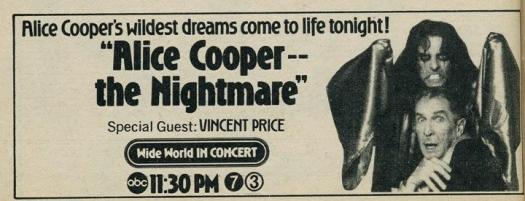
This past August, I got to see Alice Cooper perform live in concert (on a triple bill with classic rockers Deep Purple and Edgar Winter!). The Coop’s Grand Giugnol antics, complete with a ten-foot Frankenstein, a murderous danse macabre with a ballerina, the famous guillotine routine, loads of pyro, and the incredible shredding of guitar goddess Nita Strauss, stole the show. Alice has always been the most theatrical of rockers, and the man’s still got it!
In 1975, Alice released his first solo LP without his longtime backing band, “Welcome to My Nightmare”, featuring Cooper classics like “Cold Ethyl”, “Black Widow”, “Only Women Bleed”, and the title track. A videotaped TV special was made to coincide with the album, and horror icon Vincent Price was brought in to play ‘The Curator of The Nightmare’ (Price did narration for ‘Black Widow’ on the record, predating Michael Jackson’s “Thriller”). If you’ve got…
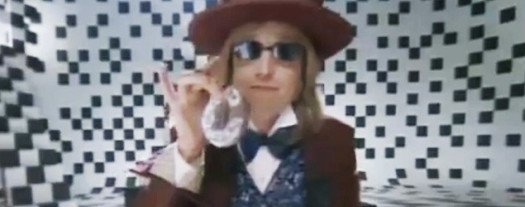
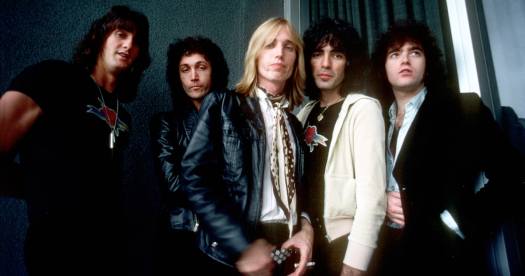
In an era of throbbing disco beats, ponderous prog rock, and angry loud punk, Tom Petty’s rootsy, guitar-jangling sound was like a breath of fresh air blowing through the late 70’s radio airwaves. Petty was a Southern boy, but didn’t fit the ‘Southern Rock’ mode of the Allman Brothers or Marshall Tucker. Instead, he and his band The Heartbreakers were influenced by the stylings of The Beatles and The Byrds, crafting tight-knit pop tunes for the ages.
The Florida-born Petty was an artsy type of kid, an outsider in a world of machismo. He met his idol Elvis Presley when The King was making the 1961 film FOLLOW THAT DREAM on location, and three years later, when The Beatles appeared on Ed Sullivan, Tom knew what he wanted to do with his life. By age 17, he’d dropped out of high school, and three years later started Mudcrutch, a…
Hi! Lisa here, with today’s music video of the day. The Rat is the latest video from Blanck Mass, the solo project of Fuck Buttons’s Benjamin John Power.
In this video, Benjamin John Power stares straight at the camera while riding through the It’s A Small World ride in Disneyland. He never blinks. He never betrays any emotion whatsoever. Around the 3:24 mark, there’s suddenly a brief shot of a bunch of maggots. All in all, it’s rather disconcerting but I really wouldn’t expect anything less from Blanck Mass.
I want to quote two possible interpretations that I’ve come across for this video. The first comes from Power himself. In a press release, Power stated:
“The video itself is a bit of fun and was filmed on a family vacation, but somehow I feel it represents discontent within a capitalist regime and a world full of sugar-coated shit.”
Meanwhile, on YouTube, Crimewaveddd offered up this reading of the video:
Hi! Lisa here, filling in for Val, with today’s music video of the day!
On Saturday night, fans of both film and horror were saddened to learn of the death of Tobe Hooper. Tobe Hooper was a Texas original, a fiercely iconoclastic director who totally changed the face of horror when he directed a low-budget shocker called The Texas Chainsaw Massacre.
When it came time to pick today’s music video of the day, I decided to see if Tobe Hooper had ever directed a music video. It turned out that he directed exactly one and here it is:
According to almost everyone online, Dancing With Myself is a song about masturbation. However, Idol himself says that the song’s lyrics are actually meant to be quite literal. The song actually is about dancing with yourself. Here’s how it’s explained over on Songfacts:
“This song is commonly thought to be about masturbation, but it’s really more about dancing by yourself. Billy got the idea after watching Japanese kids at a Tokyo disco “dancing with themselves” in a nightclub. The kids would dance in a pogo style up and down, and there were mirrors in the club so they could watch themselves doing it… This song is about more than just dancing. Idol told Rolling Stone: “The song really is about people being in a disenfranchised world where they’re left bereft, dancing with their own reflections.”
As for how Tobe Hooper came to direct the video … well, I have no idea. I imagine he was hired because of his fame as the director of The Texas Chainsaw Massacre. This video came out a year after the original Poltergeist, a film that Hooper is credited with directing but which many people believed was actually directed by producer Steven Spielberg. (Poltergeist was a huge hit but the rumors of Hooper being a director-in-name-only permanently and unfairly damaged Hooper’s reputation.) As far as I know, this is the only music video that Tobe Hooper directed.
As for the video, it features neither masturbation nor Japanese nightclubs. Instead, it appears to be taking place in a post-apocalyptic setting. The beginning of the video reminds me a bit of Hooper’s underrated slasher film, The Funhouse.
Hi, everyone! Lisa here with today’s music video of the day!
I’ve heard a lot of different opinions as to what exactly is being portrayed in the video for Calvin Harris’s Slow Acid. Some people think that the woman in the video has been passed out in an alley and this video is supposed to represent her dream (or nightmare, depending on how you feel about holding up convenience stores). Some people think that the blueish tint of the woman’s skin is meant to indicate that she’s on drugs or she’s had too much to drink. (Personally, I find the tint to be more silvery than blueish.) There’s a lot of debate as to whether she’s dead or just asleep at the end of the video. The first time I ever saw this video, I assumed she was supposed to be a robot.
Then again, “she was supposed to be a robot” is pretty much my automatic go-to interpretation for almost everything. You’d be surprised how often I turn out to be right.
Anyway, I really don’t care what the exact meaning is. I just like Calvin Harris and this song. You can dance to it. People sometimes forget how important that is.
Anyway, this was directed by Emil Nava, who has worked on a lot of videos since 2009.
Hi! Lisa here, filling in for Val, with today’s music video of the day!
Before anyone asks, my selection of this music video has absolutely nothing to do with the current situation between the U.S. and North Korea. To be honest, when I picked this video, I didn’t even know that was going on. The fact that I picked Atomic at a time when everyone is freaking out about nuclear war is just one of those coincidences that helps to keep life interesting!
No, the reason I picked this video was because I’m getting ready to finally watch T2 Trainspotting but, before I watch T2, I have to rewatch the original Trainspotting. Sleeper’s cover of Atomic is prominently featured in Trainspotting and I have to admit that I’ve always liked that chorus of “Your hair is beautiful.” I’ve always loved my hair.
(My boyfriend got excited when I told him I would be featuring this song because apparently, he used to listen to it while running down pedestrians in Grand Theft Auto. And, actually, I can imagine this would be a pretty good driving music.)
Anyway, I did some research to see if I could explain just what exactly this song is actually about. It turns out that the song is actually about nothing. Courtesy of Songfacts, here is Blondie’s lead singer, Debbie Harry, on how Atomic came to be:
“He (Blondie Keyboardist Jimmy Destri) was trying to do something like ‘Heart Of Glass,’ and then somehow or another we gave it the spaghetti western treatment. Before that it was just lying there like a lox. The lyrics, well, a lot of the time I would write while the band were just playing the song and trying to figure it out. I would just be scatting along with them and I would just start going, ‘Ooooooh, your hair is beautiful.'”
While the video takes place in a post-apocalyptic world (and features artist Jean-Michel Basquiat as the man who takes away the horse at the beginning), the song actually has nothing to do with nuclear war. It’s actually not about anything. It’s just a good song!
ain’t no rest for the wicked/money don’t grow on trees
Hi everyone! Lisa here, filling in for our resident music video expert, Valerie.
Now, there’s a variety different reasons why Val or I might pick a video for music video of the day. Sometimes, the choice is made as a way to honor an artist who has recently passed away. Sometimes, it’s done to commemorate a historical event. And sometimes, especially in my case, it’s just because the song’s chorus has gotten stuck in my head.
For instance, take today’s music video of the day. Sunday morning, I was driving to the store and I turned on the radio and, just by chance, this was the song that was playing. Ever since, I’ve had Ain’t No Rest For The Wicked, Money Don’t Grow On Trees stuck in my head.
And really, the song has a point. Money doesn’t grow on trees.
Anyway, this video was directed by D.A.R.Y.L., which is the creative moniker of directors James Hall and Edward Lovelace.
Hi, everyone! Lisa here with today’s music video of the day!
July 14th is Bastille Day in France so it only seems appropriate to share a video from my two favorite French musical artistes, Daft Punk. That’s right — the robots are French!
Instant Crush was the fourth single to be released off of Daft Punk’s Grammy-winning fourth album, Random Access Memories. It’s a collaboration between the robots and Julian Casablancas. The video was directed by veteran music video director Warren Fu and it brings tears to my eyes every time.