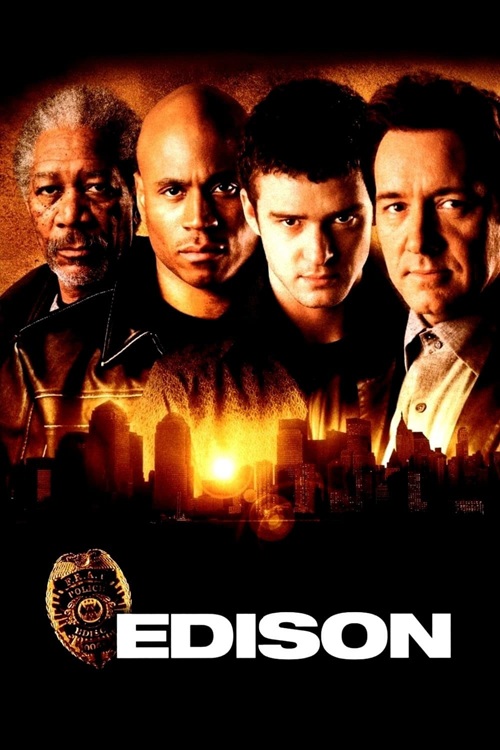
In the town of Edison, a reporter named Pollack (Justin Timberlake) is convinced that he’s uncovered evidence of massive police corruption. His editor, Moses Ashford (Morgan Freeman), responds by firing Pollack but then rehires him on the condition that he actually do the work and interview everyone involved. Pollack is confused until he sees that Ashford has a Pulitzer Prize in his Edison bachelor pad.
FRAT stands for First Response Assault and Tactical. Led by Captian Tilman (John Heard) and protected by duplicitous politician Jack Reigert (Cary Elwes), FRAT has made Edison safe but at what cost? The constitution is regularly trampled. Drug dealers are summarily executed. Sgt. Lazaerov (Dylan McDermott) confiscates and uses the drugs himself while the newest recruit, Detective Deeds (LL Cool J), worries that he’ll be executed when he declines to lie in court. Deeds has reason to be worried because he witnesses the attempted assassination of both Pollack and his girlfriend (Piper Perabo).
Teaming up with Detective Leon Wallace (Kevin Spacey), Pollack and Ashford try to get Deeds to turn on FRAT and expose the trouble in Edison.
First released in 2005, Edison was produced by Randall Emmett, who is today best-known for producing (and occasionally directing) Bruce Willis’s final films. Emmett specializes in getting name actors to play small roles in what are otherwise B-movies. In an Emmett film, De Niro, Stallone, Travolta, or Nicolas Cage might get top billing but usually, they only have a few minutes of screentime. Edison is unique in that Morgan Freeman and Kevin Spacey (who was still considered to be a big name back in 2005) both actually have fairly large roles. Though LL Cool J and Justin Timberlake are the stars of the film, it still appears that it probably took Freeman and Spacey longer than a day to shoot their scenes and that truly does set this film apart from other Emmett productions. I should also note that Spacey wears an incredibly tacky hairpiece while Freeman gets an extended dance scene set to Time Has Come Today by The Chambers Brothers.
Is the film itself any good? Eh, not really. It’s a bit disjointed. John Heard was a good actor but this movie was made when he was at the height of his “9-11 was an inside job” nuttiness and he gives a cartoonish performance as the main bad guy. Cary Elwes is entertaining as the crooked politician but it’s hard not to feel that the film would have been more interesting if he and Kevin Spacey had switched roles. LL Cool J is not particularly convincing as a cop so naive that he’s shocked to discover that there’s corruption on the force. As for Justin Timberlake, this was actually his debut as an actor. Timberlake is always at his best playing morally shady characters, like in Alpha Dog or The Social Network. In this film, he has to play earnest and outraged and he’s never particularly convincing. If anything, he comes across as being a little whiny.
That said, the idea behind Edison is at least interesting. FRAT — like countless other special police units in the country — has become untouchable by actually doing its job. The streets are safer, as long as you don’t get on FRAT’s bad side. Who watches the watchmen? Edison asked this now common question in 2005, when America was still embracing the survelliance state. Flaws and all, Edison was ahead of its time.
“We are not enemies, but friends. We must not be enemies. Though passion may have strained, it must not break our bonds of affection.” — Abraham Lincoln
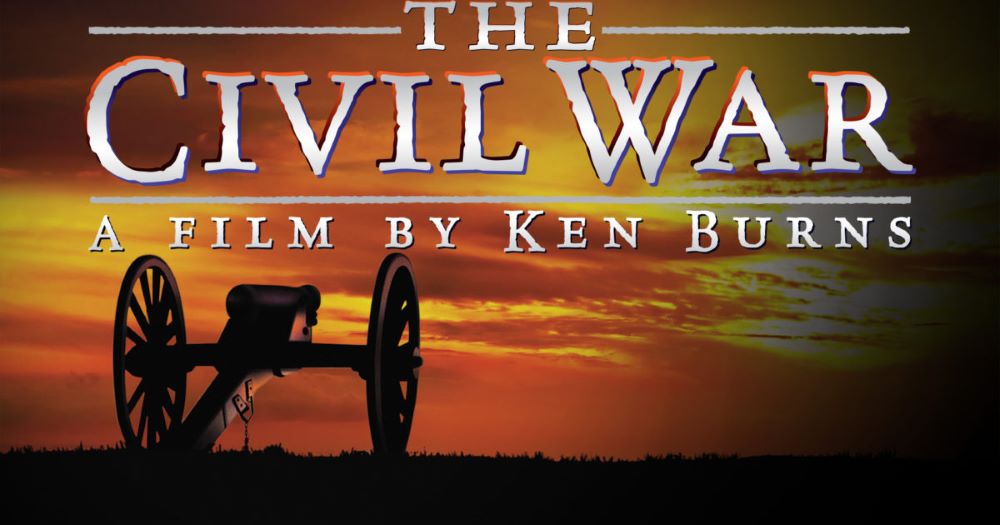
Ken Burns’ The Civil War stands as one of those rare documentaries that completely reshapes how people think about both history and the craft of documentary filmmaking. Released in 1990, it’s been over three decades since it first aired, yet it still feels monumental in its reach and emotional resonance. Instead of serving as a dry classroom recounting of battles and dates, it’s an experience that makes you feel the war’s human dimension—the people who fought it, lived through it, and were changed forever by its violence and ideals. Burns manages to take America’s bloodiest conflict and give it a pulse, telling the story not only through historians and statistics but through letters, diaries, and voices that make you feel connected to the 1860s as if it all just happened yesterday.
One of the most defining parts of The Civil War is its look and rhythm. Burns’ now-famous visual style—those slow pans and zooms across black-and-white photographs—became such a signature technique that it’s now built into editing software as “the Ken Burns effect.” It might sound simple, but the way he moves those still images feels like breathing life into ghosts. Every slow zoom on a soldier’s uncertain face, every fade over an empty battlefield, has meaning. Before Burns, most historical documentaries presented facts through re-enactments or stiff academic interviews. Burns dared to make photographs speak on their own. The pacing he uses is hypnotic—deliberate, unwavering, and emotionally tuned to each shot. It’s a visual rhythm that invites reflection instead of speed. The whole thing feels like time itself has slowed down so history can whisper its fullest story.
The narration, provided by David McCullough, ties the sprawling story together with a sense of calm authority. His voice is warm, measured, and almost timeless, acting less like a narrator and more like an old friend who knows the past intimately but never overstates it. McCullough’s presence builds trust—no hype, no theatrics, just thoughtful storytelling. Burns pairs that voice with readings from letters, diaries, and contemporary accounts, delivered by a lineup of talented voice actors like Jason Robards, Sam Waterston, and Morgan Freeman. Their readings never feel like performances; they feel lived in, restrained, and sincere. This combination of voice and image creates a tone that is both haunting and beautiful, one that makes history feel alive but not romanticized.
A huge part of why the series feels so moving is Jay Ungar’s “Ashokan Farewell.” Oddly enough, it’s not a Civil War-era tune at all—it was written in the 1980s—but it fits so organically with the documentary’s mood that it’s impossible to think about the series without hearing it. The plaintive fiddle melody has a mournful warmth, evoking the loss and longing that defines the entire project. Burns and his team used it in just the right measure: when the music plays, it deepens emotion rather than dictating it. Combined with other period-appropriate folk songs, banjo pieces, and hymns, the soundtrack acts as the emotional current guiding the story through landscapes of death, courage, and change.
The structure of The Civil War is deceptively simple but brilliantly executed. Spanning nine episodes and over eleven hours in total, it charts the war from its earliest, uneasy beginnings in the political debates over slavery and statehood through to its catastrophic conclusion and fragile aftermath. Burns understood that history isn’t static; it’s emotional and cumulative. The early episodes almost feel optimistic—the tone of youthful bravado and national pride fills the air as both sides believe the conflict will end quickly. As the series progresses, though, the optimism curdles into fatigue, despair, and grief. By the time the war drags into its later years, the imagery, narration, and music all carry the weight of shared tragedy. You begin to see how idealism eroded into acceptance of horror. The careful pacing of each episode allows viewers to feel that arc not just intellectually but emotionally.
Among the many creative decisions Burns made, choosing to anchor the series around personal letters was perhaps the most effective. Through these letters, anonymous soldiers, wives, and family members speak across time. Their words carry more power than any historian’s commentary could. One of the most unforgettable moments comes from Union officer Sullivan Ballou’s letter to his wife, written shortly before he was killed. His words are devastating in their tenderness and resignation, summing up both love and mortality in a way that feels timeless. Burns threads similar letters throughout the series—from soldiers on both sides, from civilians caught in the middle, and from the enslaved people whose freedom hung in the balance. Their voices form the emotional backbone of the documentary, constantly reminding us that this was not just a war of strategy but a catastrophe of human consequence.
Alongside these voices, there’s a chorus of historians offering perspective and context. Shelby Foote, with his Southern drawl and gift for anecdote, became one of the documentary’s most recognizable figures. His storytelling bridges the gap between scholarship and folklore, even if some critics later accused him of romanticizing the Confederate perspective. Counterbalancing that, historian Barbara Fields provides some of the series’ most profound reflections, particularly regarding race and memory. Her insistence that the war’s legacy continues to shape American identity feels just as relevant now as it did in 1990. Their alternating viewpoints give the documentary balance—emotion on one side, intellect and conscience on the other.
Burns’ handling of tone is one of the most striking things on a rewatch. It’s both deeply romantic in its love of storytelling and brutally realistic in its depiction of suffering. It doesn’t sanitize the war, but it doesn’t exploit it either. You’re never shown battle reenactments, explosions, or gore. Instead, Burns conveys the violence and despair through letters, photos, and silence. He trusts the audience to fill in the horror. That’s uncommon in modern documentary work, where there’s often pressure to explain or dramatize everything. In The Civil War, silence becomes a storytelling device. The pauses between sentences, the long holds on a tattered flag or a battlefield grave, carry meaning. The documentary refuses to rush toward catharsis; it lingers in grief.
In today’s media landscape—where documentaries tend to move fast and fight for attention—Burns’ slower, more contemplative approach stands out. Back in 1990, it riveted viewers. An estimated 40 million people watched it on PBS, an unbelievable number for a historical series on public television. For many Americans, it became their most vivid introduction to their own national history. It made people talk about Gettysburg, Lincoln, emancipation, and the moral aftermath of the war in living rooms across the country. It even sparked renewed interest in Civil War books, memorials, and battlefield preservation. Burns had tapped into something rare: a collective need to understand who Americans are by understanding what nearly destroyed them.
Even decades later, The Civil War holds up both artistically and historically. Watching it now, its moral clarity about slavery as the war’s central cause feels vital, especially in a time when debates over monuments and racial politics remain heated. Burns never let the series fall into the “states’ rights” trap that muddied so many earlier narratives. He continually foregrounded the human cost of defending or destroying the institution of slavery. Still, modern viewers might wish for even more emphasis on the experiences of Black Americans, beyond the selected diaries and Douglass excerpts. The documentary touched these stories with respect but within the limits of its early-1990s format. Later historians have expanded upon what Burns began, but his foundation remains solid.
Technically, the documentary’s aged well. Restored versions bring new clarity to the old photographs, and the audio’s crisp enough to make the letters feel freshly read. The storytelling, slow-moving as it is, rewards patience. It’s not content to skim across major events; it expects you to sit with sorrow, fatigue, and loss. Watching all eleven hours feels like reading an epic novel: it’s best done gradually, letting each episode resonate before starting the next. The cumulative effect isn’t just historical understanding—it’s emotional exhaustion tempered by awe.
The Civil War remains one of the greatest nonfiction works ever broadcast. It’s not simply about battles or leaders but about the psychology of a country divided by ideals and identity. It asks questions rather than delivering verdicts—questions about sacrifice, belief, morality, and what it means to be American. Few documentaries manage to tell old stories in ways that still feel alive, but Burns achieved that through patience, empathy, and an unshakable faith in the power of storytelling. Even now, it’s hard to watch without feeling the echo of those voices—some hopeful, some broken—that seem to reach out from still photographs and faded ink. Burns didn’t just document history; he let history speak for itself. That’s why The Civil War endures.
Perhaps it’s even more important now than when it first aired. In a time when historical revisionism has begun to creep from the fringes into mainstream discourse and when the nation feels dangerously forgetful of its own moral and political lessons, Burns’ documentary serves as both a warning and a reminder. It shows what happens when ideology overtakes humanity and when a country forgets the cost of its own divisions. Watching The Civil War today feels less like revisiting the past and more like confronting the present—proof that the ghosts of that conflict remain, quietly urging us not to repeat what we once swore to never forget.
Just when I thought I was through with Clint Eastwood, they pull me back in!
Actually, Clint Eastwood may have directed Invictus but that’s not why I’m writing about it today. I’m writing about it because today is Morgan Freeman’s 88th birthday. Everyone knows Morgan Freeman, of course, He’s the man with the amazing voice. If you ever want to hear someone narrate your life, you want that narrator to Morgan Freeman. Freeman is also one of our greatest actors and, for my money, Invictus is his best and more important performance.
Morgan Freeman plays the role of Nelson Mandela in Invictus. Taking place in 1994 and 1995, Invictus centers around the early days of the former political prisoner’s presidency of South Africa and how he used the 1995 Rugy World Cup to bring the tension-filled country together. While Afrikaner Francois Pinneaur (Matt Damon) unexpectedly leads South Africa to the finals of the World Cup, Mandela tries to guide South Africa into the post-Apartheid era.
Playing a role like Nelson Mandela would have to intimidate even the most confident of actors but Freeman gives a warm, humorous, and believable performance of a man who became a living icon. Freeman captures both Mandela’s humanity and his canny political instincts and he never allow the performance to become a caricature. Freeman projects the wisdom that comes from a lifetime of refusing to be broken or defeated, despite the best efforts of both the Apartheid regime and the activists who think that, as president, Mandela is too much of a moderate and too quick to forgive. Freeman (and Matt Damon) give performances that help the film get over a few spots where it falls into the typical clichés of the sports genre. Invictus is a good tribute to both Mandela and the way competition can bring people together.
One final note: Invictus was filmed on location in South Africa. When Matt Damon’s character is shown the cell were Mandela spent 27 years of his life, Eastwood shows us the actual cell and it’s a reminder of the strength of Mandela that he not only survived but that he went on to lead his country.
In honor of Director Frank Darabont’s 66th birthday, I’m sharing a scene from his masterpiece, THE SHAWSHANK REDEMPTION. One of the best things about this movie is how much humor is found behind those prison walls, often coming from seemingly unexpected places. In this scene, the humor is found when the characters take on the mundane task of cataloging the prison library. Enjoy!
I recently reviewed THE SHAWSHANK REDEMPTION on my son’s birthday.
The 1992 Best Picture winner, Unforgiven, begins as a story of frontier justice.
In Kansas, a young and cocky cowboy who calls himself the Schofield Kid (Jaimz Woolvett) rides up to an isolated hog farm. He’s looking for Will Munny (Clint Eastwood), a notorious outlaw with a reputation for being a ruthless killer. Instead, he just finds a broken down, elderly widower who is trying to raise two young children and who can barely even manage to climb on a horse. Will Munny, the murderer, has become Will Munny the farmer. He gave up his former life when he got married.
The Schofield Kid claims to be an experienced gunfighter who has killed a countless number of men. He explains that a group of sex workers in Wyoming have put a $1,000 bounty on two men, Quick Mike (David Mucci) and his friend, Davey Bunting (Rob Campbell). Quick Mike cut up one of the women when she laughed at how unimpressively endowed he was. While Davey didn’t take part in the crime, he was present when it happened and he didn’t do anything to stop it. The local sheriff, a man named Little Bill Daggett (Gene Hackman), had Davey give the woman’s employer several horses as compensation. The Kid wants Munny to help him collect the bounty.
At first, Munny refuses to help the Kid. But, when he realizes that he’s on the verge of losing his farm, Munny changes his mind. He and his former partner, Ned Logan (Morgan Freeman), join with the Kid and the three of them head to Wyoming. Along the way, they discover that the Kid is severely nearsighted and can hardly handle a pistol.
Meanwhile, in the town of Big Whiskey, Wyoming, Little Bill ruthlessly enforces the peace. He’s a charismatic man who is building a house and bringing what many would consider to be civilization to the Old West. When we first meet Little Bill, he seems like a likable guy. The town trusts him. His deputies worship him. He has a quick smile but he’s willing to stand his ground. But it soon becomes apparent that, underneath that smile and friendly manner, Bill is a tyrant and a petty authoritarian who treats the town as his own personal kingdom. Little Bill has a strict rule. No one outside of law enforcement is allowed to carry a gun in his town. When another bounty hunter, English Bob (Richard Harris), comes to town to kill the two cowboys, Little Bill humiliates him and sends him on his way but not before recruiting Bob’s traveling companion, writer W.W. Beauchamp (Saul Rubinek), to write Bill’s life story. Bill’s not that much different from the outlaws that he claims to disdain. Like them, Bill understands that value of publicity.
Unforgiven starts as a traditional western but it soon becomes something else all together. As the Schofield Kid discovers, there’s a big difference between talking about killing a man and actually doing it. Piece-by-piece, Unforgiven deconstructs the legends of the old west. Gunfights are messy. Gunfighters are not noble. Davey Bunting is the only man in town to feel guilty about what happened but, because he’s included in the bounty, he still dies an agonizing death. Quick Mike is killed not in the town square during a duel but while sitting in an outhouse. Ned and Munny struggle with the prospect of going back to their old ways, with Munny having to return to drinking before he can once again become the fearsome killer that he was in the past. And Little Bill, the man who says that he’s all about taming the west and bringing civilization to a lawless land, turns out to be just as ruthless a killer as the rest. A lot of people are dead by the end of Unforgiven. Some of them were truly bad. Some of them were good. Most of them were in the wrong place at the wrong time. Everyone’s got it coming, to paraphrase Will Munny.
With its violent storyline, deliberate pacing, and its shots of the desolate yet beautiful western landscape, Clint Eastwood’s film feels like a natural continuation of the Spaghetti westerns that he made with Sergio Leone. (Unforgiven is dedicated to both Leone and Don Seigel.) Unforgiven was the first of Eastwood’s directorial efforts to be nominated for Best Picture and also the first to win. It’s brutal meditation on violence and the truth behind the legends of the American frontier. Eastwood gives one of his best and ultimately most frightening performances as Will Munny. Gene Hackman won his second Oscar for playing Little Bill Daggett.
Unforgiven holds up well today. Hackman’s Little Bill Dagget feels like the 19th century version of many of today’s politicians and unelected bureaucrats, authoritarians who claims that their only concern is the greater good but whose main interest is really just increasing their own power. Unforgiven remains one Clint Eastwood’s best films and one of the best westerns ever made. Leone would have been proud.
I sent our son a text the other day and asked him if he had an answer for the question “What’s your favorite movie?” I thought I knew the answer but it turns out I was only half right. I expected his answer to be THE HATEFUL EIGHT. Rather, the answer I received back was “The Hateful Eight or Shawshank Redemption!” Since I recently wrote about the time that he and I attended THE HATEFUL EIGHT roadshow in Dallas, I decided I would write about THE SHAWSHANK REDEMPTION this time around. It doesn’t hurt that it’s one of my favorite movies as well. It also doesn’t hurt that it’s the very top rated film on the Internet Movie Database.
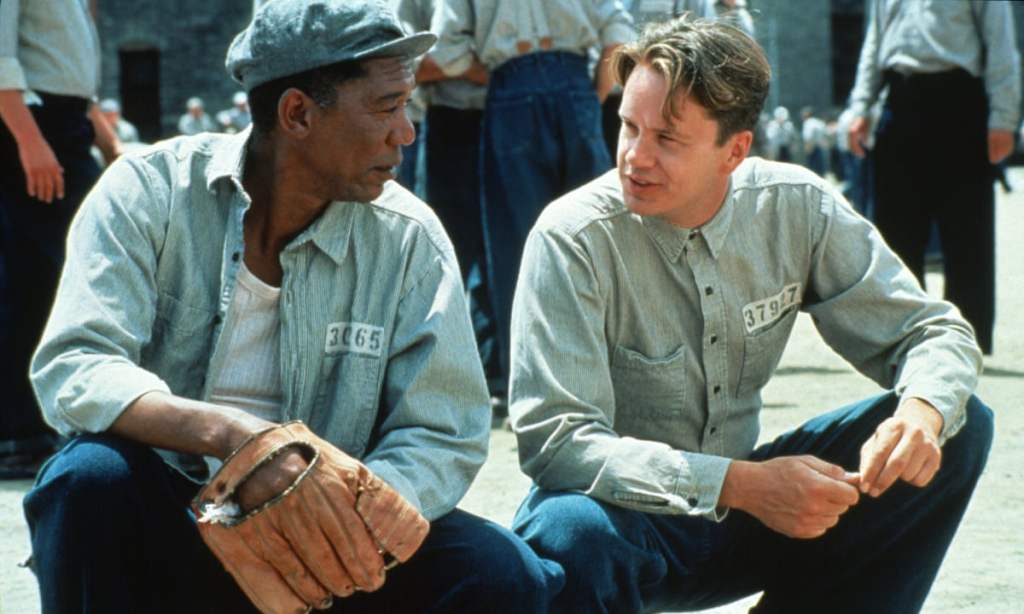
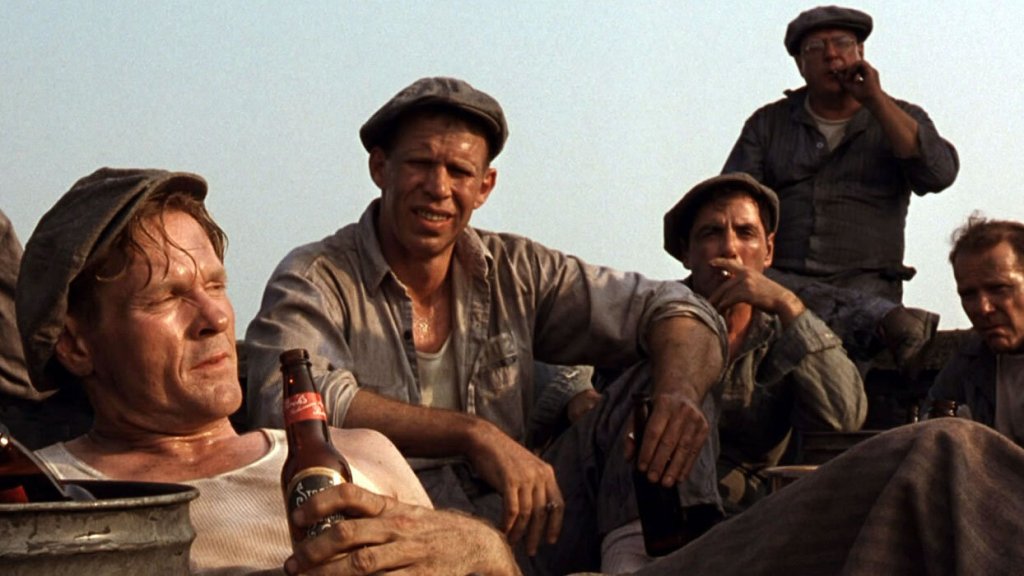
Based on Stephen King’s “Rita Hayworth and Shawshank Redemption,” the story is well known… hot shot banker Andy Dufresne (Tim Robbins) is convicted of the murder of his wife and her lover, and gets sentenced to life at the Shawshank prison. Once on the inside, we meet a variety of characters that you expect in a prison movie. We meet Warden Norton (Bob Gunton), the hypocrite who speaks of the Bible while hiding a corrupt, evil spirit. We meet Captain Hadley (Clancy Brown), the brutal chief prison guard, who rules over the inmates with intimidation and a real willingness to inflict violence and pain on anyone who shows the least bit of independence. We meet Red (Morgan Freeman), the long-time inmate who has the ability and connections to get you anything you need. We meet other inmates like Heywood (William Sadler), the inmate who seems like a jerk when you first meet him but turns out to be a pretty good fella; Tommy (Gil Bellows), the young guy who comes into prison and may know something that proves Andy’s innocence; Brooks (James Whitmore), the old man who gets released after almost a lifetime in prison, and doesn’t know how to adjust to life on the outside; and Bogs (Mark Rolston), the sadistic prisoner who wants to force himself on Andy, and is willing to kill to get what he wants. Life isn’t easy at all in Shawshank, but Andy’s intelligence and ability to prove himself useful to Warden Norton and Captain Hadley allows him to finds ways to make life more bearable for him and his friends. After nineteen years in prison, even though he maintains his innocence, it appears that Andy is content to live out his remaining years in prison. Or is he??
I’ll never forget the first time I saw the movie THE SHAWSHANK REDEMPTION. I didn’t see it until a year or two after its initial release in 1994. I was one of those guys who figured a movie that praised by the critics was probably not something that I would like that much. Plus, at the time, the title of the movie just seemed kind of weird. But I kept hearing about how great it was, so I finally decided to give it a viewing. I agree with my son, I think THE SHAWSHANK REDEMPTION is one of the most emotionally uplifting movies ever made. Why is that you might ask? My answer would be because there’s something profoundly satisfying about people who persevere through the worst times imaginable and continue to find hope where most of us would be hopeless. Prison life is shown as horrific. One prisoner is literally beaten to death by Captain Hadley on his first night in prison for crying. Andy fights off the sadistic Bogs as much as he can, but he is unable to completely fight off his advances. But no matter what he goes through, Andy Dufresne is able keep moving forward, and he does not allow the prison life to completely crush his spirit. He keeps finding ways to persevere. Andy’s actions and endurance turn simple acts like listening to Mozart or having a beer into overwhelming emotional highs for us as the audience. The film also maintains a realistic sense of humor, which might seem difficult under the circumstances. This sense of humor is found in such mundane tasks as creating a prison library, providing tax prep services for the guards, or attending multiple parole hearings over the years. These comedic moments are earned by the way the movie takes it’s time letting us really get to the know the characters and then laugh with them as the individual moments occur. And the friendship between Andy and Red is something that deeply resonates with me. I think we all would like to have that kind of friendship. These kinds of friendships aren’t built overnight, and often they require a level of shared experience that is almost impossible to find. But they find it behind Shawshank’s prison walls, and it connects them for life. In my opinion, the friendship between these two characters leads to one of the most emotionally satisfying endings to any film, ever.
Director Frank Darabont was able to obtain some of career-defining performances from his cast. As good as Tim Robbins is as an actor, in my opinion, he has never been better than he was as Andy Dufresne. And I say this knowing full well he won an Oscar for MYSTIC RIVER. He maintains his dignity against all odds and only appears to break down a time or two. Morgan Freeman is great as always as Red, but his character is so important because we see him go from a hopeless skeptic, to a man who truly has hope thanks to his friendship with Andy. Freeman seems to handle this transition effortlessly. I’m going to give a shoutout to James Whitmore as well. With a career going all the way back to the 1940’s, his performance as Brooks Hatlen is one of the more touching and heartbreaking performances of the film. I haven’t seen all of his work, but I have never seen him better than he was in THE SHAWSHANK REDEMPTION. Each additional cast member, from Bob Gunton, Clancy Brown and Mark Rolston, to Willam Sadler and Gil Bellows all have powerful moments that add to the overall effect of the film.
Looking back now, it’s hard to believe that THE SHAWSHANK REDEMPTION did not win the Academy Award for best film. It lost to FORREST GUMP when the awards were handed out in 1995. It’s even harder to believe that the film did not win a single Academy Award even though it received seven nominations. But at the end of the day, that doesn’t really matter to me. I just know that it’s a great film, and it reaches emotional heights that very few movies, if any, have ever reached before. That’s a pretty damn good legacy.
In 2021, I finally saw the infamous film, The Bonfire of the Vanities.
I saw it when it premiered on TCM. Now, I have to say that there were quite a few TCM fans who were not happy about The Bonfire of the Vanities showing up on TCM, feeling that the film had no place on a station that was supposed to be devoted to classic films. While it’s true that TCM has shown “bad” films before, they were usually films that, at the very least, had a cult reputation. And it is also true that TCM has frequently shown films that originally failed with audiences or critics or both. However, those films had almost all been subsequently rediscovered by new audiences and often reevaluated by new critics. The Bonfire of the Vanities is not a cult film. It’s not a film about which one can claim that it’s “so bad that it’s good.” As for the film being reevaluated, I’ll just say that there is no one more willing than me to embrace a film that was rejected by mainstream critics. But, as I watched The Bonfire of the Vanities, I saw that everything negative that I had previously read about the film was true.
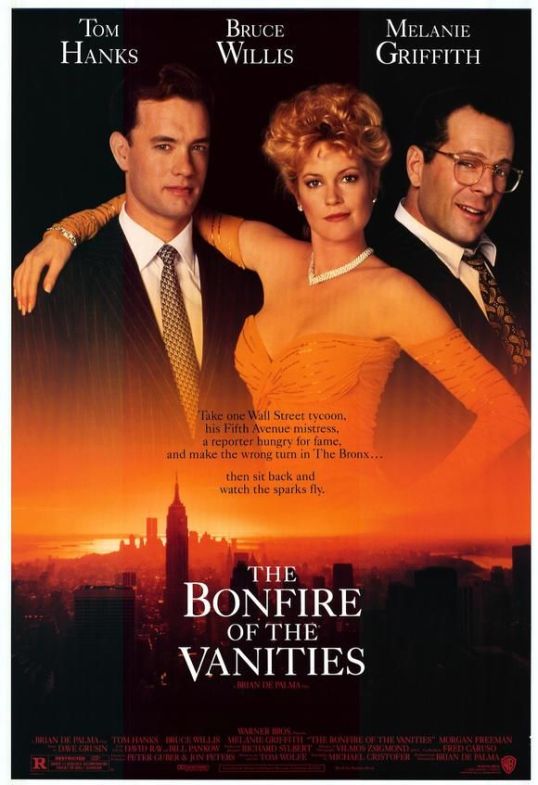
Released in 1990 and based on a novel by Tom Wolfe, Bonfire of the Vanities stars Tom Hanks as Sherman McCoy, a superficial Wall Street trader who has the perfect penthouse and a painfully thin, status-obsessed wife (Kim Cattrall). Sherman also has a greedy mistress named Maria (Melanie Griffith). It’s while driving with Maria that Sherman takes a wrong turn and ends up in the South Bronx. When Sherman gets out of the car to move a tire that’s in the middle of the street, two black teenagers approach him. Maria panics and, after Sherman jumps back in the car, she runs over one of the teens. Maria talks Sherman into not calling the police. The police, however, figure out that Sherman’s car was the one who ran over the teen. Sherman is arrested and finds himself being prosecuted by a power-hungry district attorney (F. Murray Abraham). The trial becomes the center of all of New York City’s racial and economic strife, with Sherman becoming “the great white defendant,” upon whom blame for all of New York’s problems can be placed. Bruce Willis plays an alcoholic journalist who was British in the novel. Morgan Freeman plays the judge, who was Jewish in the novel. As well, in the novel, the judge was very much a New York character, profanely keeping order in the court and spitting at a criminal who spit at him first. In the movie, the judge delivers a speech ordering everyone to “be decent to each other” like their mothers taught them to be.
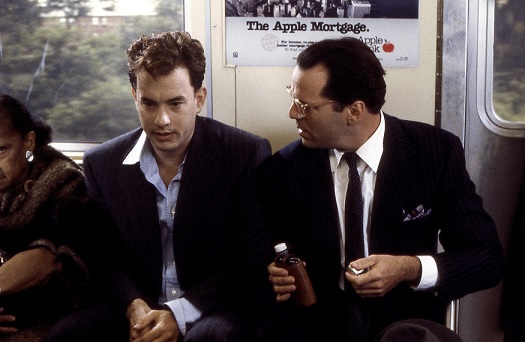
Having read Wolfe’s very novel before watching the film, I knew that there was no way that the adaptation would be able to remain a 100% faithful to Wolfe’s lacerating satire. Because the main character of Wolfe’s book was New York City, he was free to make almost all of the human characters as unlikable as possible. In the book, Peter Fallow is a perpetually soused opportunist who doesn’t worry about who he hurts with his inflammatory articles. Sherman McCoy is a haughty and out-of-touch WASP who never loses his elitist attitude. In the film, Bruce Willis smirks in his wiseguy manner and mocks the other reporters for being so eager to destroy Sherman. Hanks, meanwhile, attempts to play Sherman as an everyman who just happens to live in a luxury penthouse and spend his days on Wall Street. Hanks is so miscast and so clueless as how to play a character like this that Sherman actually comes across as if he’s suffering from some sort of brain damage. He feels less like a stockbroker and more like Forrest Gump without the Southern accent. There’s a scene, written specifically for the film, in which Fallow and Sherman ride the subway together and it literally feels like a parody of one of those sentimental buddy films where a cynic ends up having to take a road trip with someone who has been left innocent and naïve as result of spending the first half of their life locked in basement or a bomb shelter. It’s one thing to present Sherman as being wealthy and uncomfortable among those who are poor. It’s another thing to leave us wondering how he’s ever been able to successfully cross a street in New York City without getting run over by an angry cab driver.
Because the film can’t duplicate Wolfe’s unique prose, it instead resorts to mixing cartoonish comedy and overwrought melodrama. It doesn’t add up too much. At one point, Sherman ends a dinner party by firing a rifle in his apartment but, after it happens, the incident is never mentioned again. I mean, surely someone else in the apartment would have called the cops about someone firing a rifle in the building. Someone in the press would undoubtedly want to write a story about Sherman McCoy, the center of the city’s trial of the century, firing a rifle in his own apartment. If the novel ended with Sherman resigned to the fact that his legal problems are never going to end, the film ends with Sherman getting revenge on everyone who has persecuted him and he does so with a smirk that does not at all feel earned. After two hours of being an idiot, Sherman suddenly outthinks everyone else. Why? Because the film needed the happy ending that the book refused to offer up.
Of course, the film’s biggest sin is that it’s just boring. It’s a dull film, full of good actors who don’t really seem to care about the dialogue that they are reciting. Director Brian De Palma tries to give the film a certain visual flair, resorting to his usual collection of odd camera angles and split screens, none of which feel at all necessary to the story. In the end, De Palma is not at all the right director for the material. Perhaps Sidney Lumet could have done something with it, though he would have still had to deal with the less than impressive script. De Palma’s over-the-top, set piece-obsessed sensibilities just add to the film’s cartoonish feel.
The film flopped at the box office. De Palma’s career never recovered. Tom Hanks’s career as a leading man was momentarily derailed. Bruce Willis would have to wait a few more years to establish himself as a serious actor. Even the normally magnanimous Morgan Freeman has openly talked about how much he hated being involved with The Bonfire of the Vanities. That said, the film lives on because De Palma allowed journalist Julie Salomon to hang out on the set and the book she wrote about the production, The Devil’s Candy, is a classic of Hollywood non-fiction. (TCM adapted the book into a podcast, which is how The Bonfire of the Vanities came to be featured on the station.) Thanks to Salomon’s book, The Bonfire of the Vanities has gone to become the epitome of a certain type of flop, the literary adaptation that is fatally compromised by executives who don’t read.
As some of our regular readers undoubtedly know, I am involved in hosting a few weekly live tweets on twitter. I host #FridayNightFlix every Friday, I co-host #ScarySocial on Saturday, and I am one of the five hosts of #MondayActionMovie! Every week, we get together. We watch a movie. We tweet our way through it.
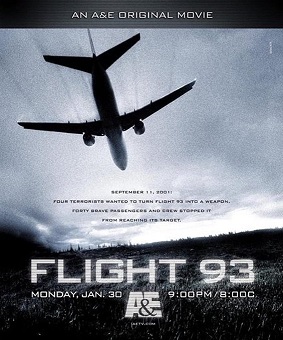
Tonight, for #MondayActionMovie, the film will be 2006’s Flight 93! Selected and hosted by @Titus88Titus, Flight 93 is a docudrama about one of the planes that was hijacked on September 11th, 2001 and the heroic passengers who bravely fought back. The movie starts at 8 pm et and it is available on YouTube.
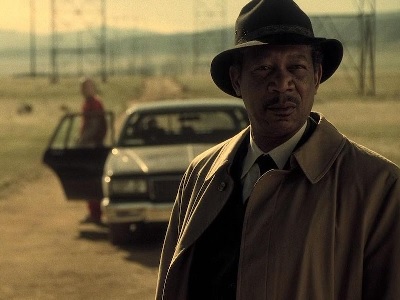
Following #MondayActionMovie, Brad and Sierra will be hosting the #MondayMuggers live tweet. We will be watching 1995’s Seven, the trend-setting and still disturbing horror film that established David Fincher as a director and which starred Morgan Freeman, Brad Pitt, Kevin Spacey, Gwyneth Paltrow, and Richard Roundtree. (Yes, Shaft is in the movie.) The film is available on Netflix. It starts at 10 pm et.
It should make for a night of intense viewing and I invite all of you to join in. If you want to join the live tweets, just hop onto twitter, start Flight 93 at 8 pm et, and use the #MondayActionMovie hashtag! Then, at 10 pm et, start Seven and use the #MondayMuggers hashtag! The live tweet community is a friendly group and welcoming of newcomers so don’t be shy. And reviews of these films will probably end up on this site at some point over the next few weeks.
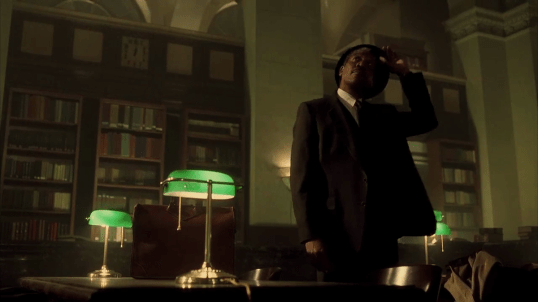
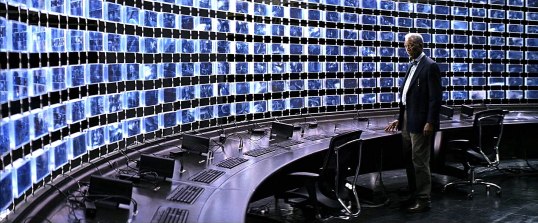
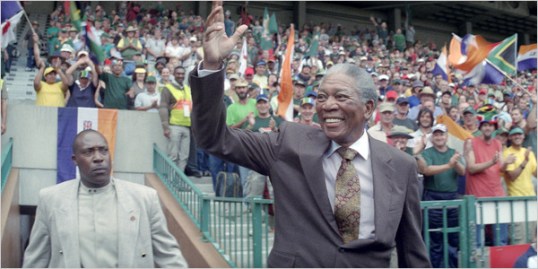
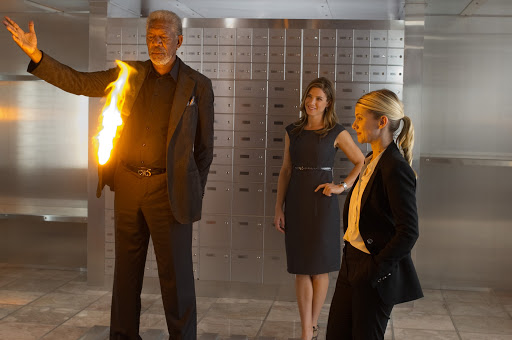
4 Shots From 4 Films is just what it says it is, 4 shots from 4 of our favorite films. As opposed to the reviews and recaps that we usually post, 4 Shots From 4 Films lets the visuals do the talking!
Today is Morgan Freeman’s 83rd birthday!
Morgan Freeman is one of my favorite actors but then again, I think he’s one of everyone’s favorite actors. He’s an icon, not just for that famous voice but also because he’s a damn good actor. Though he seems to get cast in a lot of mentor roles, he’s shown that he’s capable of playing a wide variety of roles, from heroes to villains to Gods.
(I have to admit that I would be so intimidated if I ever met Morgan Freeman, if just because I know that if I accidentally said something stupid, he’d probably give me a look of such utter disappointment that it would probably haunt me for the rest of my life.)
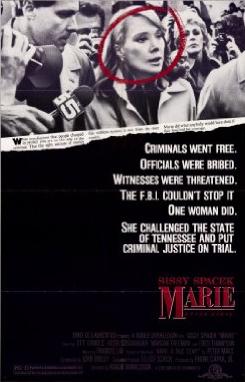
(In fact, the film’s official title is Marie: A True Story, just in case there was any doubt.)
The film opens in Tennessee, in the early 70s. Marie Ragghianati (Sissy Spacek) has left her alcoholic and abusive husband and is now living with her mother and trying to raise three children, one of whom is chronically ill, on her own. Though she manages to win a scholarship to Vanderbilt University, she quickly discovers that having a degree does not necessarily translate into getting a job. However, while Marie was a student, she became acquainted with Eddie Sisk (Jeff Daniels), a seemingly friendly lawyer who now has a job as the counsel for the newly elected governor of Tennessee, Ray Blanton (Don Hood). Marie goes to see Eddie and she soon finds herself working in the governor’s office.
With Eddie’s support, Marie rises up through the ranks. Of course, he does get a little bit annoyed whenever Marie asks him why the governor is so eager to offer clemency to certain criminals. At first, Eddie claims that it’s because the governor is against the death penalty and he doesn’t want to send anyone to die in “Old Sparky.” Later, Eddie claims that it’s because the state has been ordered to do something about prison overcrowding. And finally, Eddie admits that, on occasion, it’s done as a political favor. It appears that some of the children of Tennessee’s wealthiest families have a really bad habit of getting arrested for some very serious crimes.
Eventually, there’s an opening on the state parole board and Eddie recommends that Marie be appointed the board’s new chairperson. As Eddie explains it, the governor wants to put a Democrat on the board and he wants to appoint a woman. (Despite the governor’s insistence that he wants to bring more women into state government, the film makes it clear that the Blanton administration was essentially a boys club.) Marie agrees and soon, she’s making over a hundred dollars a day! (That was apparently an unusual thing in the 70s.)
No sooner has Marie moved into her new position than she is informed that some of the governor’s aides have been selling pardons. When Marie goes to Eddie about the situation, his charming facade disappears as he gets angry with her and accuses her of trying to ruin his career. When rumors get out that she may have gone to the FBI, Marie becomes a pariah. The governor demands her resignation, which she refuses to give. She finds herself being followed by strange cars and harassed by the police. (At one point, she is arrested for drunk driving despite being sober.) Meanwhile, people start to show up dead.
When Blanton fires Marie on trumped-up corruption charges, she decides to take the governor to court. Fortunately, Marie is friendly with a lawyer named Fred Thompson. The future U.S. Senator and presidential candidate plays himself in this film and he gives such an authoritative performance that he went on to have a busy career as a character actor whenever he wasn’t running for or serving in office.
Marie is a strangely disjointed film. On the one hand, you’ve got Sissy Spacek, Fred Thompson, and Jeff Daniels all giving excellent performances and you’ve also got an inspiring true story. On the other hand, the film attempts to combine so many different genres that it sometimes feels as if you’re watching multiple films at once. The film starts out as the story of a single mom trying to restart her life and then it becomes a workplace drama as Marie has to deal with gossip about her relationship with Eddie and hostile co-workers like fellow board member Charles Traughber (Morgan Freeman, in a small role that would probably be forgettable if it was filled by anyone other than Morgan Freeman). Then it becomes a courtroom drama, with Fred Thompson cross-examining witnesses and giving final arguments. Meanwhile, at the same time, it’s also a political thriller in which two men are brutally murdered before they can testify against the governor. And then finally, it’s also a crime drama as detectives try to track down a career criminal who has friends in the governor’s office. It’s a film of many good parts but those parts don’t always seem to easily fit together and the end result is somewhat awkward whole.
(Interestingly enough, some of the film’s moments that seem as if they’re most likely to be fictionalized are actually based on fact. For instance, two men who could have brought down Blanton were mysteriously murdered at the same time that Marie was suing the state.)
In the end, Marie doesn’t really come together but it has a good cast and a good lesson: Never trust a politician.


 Through the Shattered Lens