Horror Film Review: Alligator (dir by Lewis Teague)


1980’s Alligator begins in 1968.  While on vacation in Florida, a teenage girl named Marisa Kendall purchases a baby alligator named Ramon.  When she returns home to Chicago, her jerk of a father flushes Ramon down the toilet.

12 years pass.  Marisa (Robin Riker) becomes a herpetologist.  As for Ramon, he actually survives being flushed down the toilet and thrives in the sewer.  He eats the carcasses of animals that had been a part of an experiment involving a growth serum.  The serum had the desired effect of making the animals bigger but it also increased their metabolism to the extent that they became aggressive and had to eat constantly.  Evil industrialist Slade (Dean Jagger) is convinced that, by tossing the carcasses in the sewer, he’s ensured that no one will ever find out about the experiments.  Instead, he’s turned Ramon into a giant alligator who is always hungry.  Soon, the super-intelligent alligator is ambushing and eating sewer workers.

Burned-out Detective Dave Madison (Robert Forster) teams up with Marisa to solve the mystery of why so many body parts are turning up in the sewers.  It’s not easy.  No one wants to admit that there might be a giant alligator living under the city.  Everyone wants to believe that’s just an urban legend.  But, after a tabloid reporter (Bart Braverman) manages to snap a few photographs of Ramon before being devoured, the police are forced to deal with the fact that they’ve got an alligator on their hands.  As Slade continues to try to cover up his involvement, big game hunter Colonel Brock (Henry Silva) comes to town and announces that he will be capturing the alligator.

Directed by Lewis Teague and written by John Sayles, Alligator is a dark comedy disguised as a horror film.  While numerous people get eaten and the film ends on a properly ominous note, Alligator is obviously not meant to be taken seriously.  The cast is full of good actors who send up their own images.  That’s especially true in the case of Henry Silva, who appears to be having a blast as the hyper macho Colonel Brock.  Robert Forster, meanwhile, delivers his lines with a self-aware weariness that seems a bit more appropriate for a noir hero than a film about a detective investigating a giant alligator.  One reason why the film works is because Forster, Silva, and the rest of the cast understood exactly what type of film they were appearing in and they delivered their overheated lines with just enough wit to let the viewer know that the film was in on the joke.  The big and somewhat stiff-looking alligator may not look entirely real and it may move somewhat awkwardly but ultimately, it’s the most likable character in the movie.  It just wants to relax in the sewers but, every few minutes, someone else is bugging him.

When first released, Alligator struggled at the box office but it has since gone on to become a cult favorite.  Quentin Tarantino is a self-described fan and he had said he was inspired to cast Robert Forster as Max Cherry in Jackie Brown after seeing him as Dave Madison in this film.  That’s not bad for a movie about a giant alligator!
Retro Television Review: Fantasy Island 6.22 “Love Island/The Sisters”


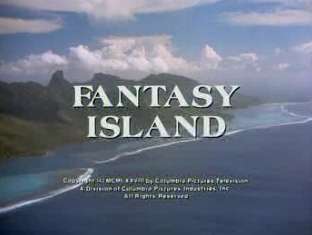
Welcome to Retro Television Reviews, a feature where we review some of our favorite and least favorite shows of the past!  On Tuesdays, I will be reviewing the original Fantasy Island, which ran on ABC from 1977 to 1984.  Unfortunately, the show has been removed from most streaming sites.  Fortunately, I’ve got nearly every episode on my DVR.

Today, the sixth season of Fantasy Island comes to a close and so does Tattoo’s time on the show.

Episode 6.22 “Love Island/The Sisters”

(Dir by Philip Leacock, originally aired on May 14th, 1983)

This is it.  This is not only the finale of season 6 but it’s also the final episode to feature Tattoo as Mr. Roarke’s assistant.

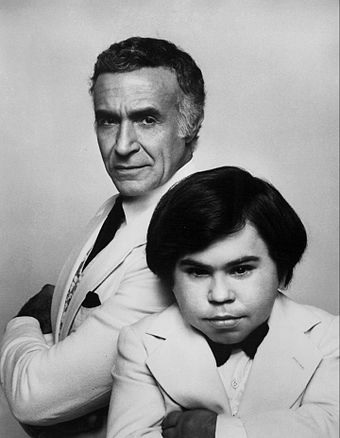
Why did Herve Villechaize leave Fantasy Island after the end of the sixth season?  The story that you always hear is that Villechaize wanted more money to continue working on the show.  He felt that he deserved to be paid as much as Ricardo Montalban.  The show’s producers disagreed.  To them, Montalban was not only the star of the show but also someone who has just appeared in a hit movie, Star Trek II: The Wrath of Kahn.  They felt that they could keep the show going without Villechaize and …. well, it turns out they were totally and completely wrong about that.

I have not seen much of the seventh season, in which Villechaize was replaced by Christopher Hewett.  And, due to the vagaries of my DVR, there’s a lot of season 7 that I won’t be able to review.  What I do know is that the show went from being #39 to bring ranked #47 in the ratings after Villechaize left.  Obviously, being the 39th ranked show was nothing to brag about but it was still a helluva lot better than #47.  Villechaize left and a lot of the audience left with him.

I’ve made a lot of jokes about Roarke and Tattoo’s relationship.  Especially during the early seasons, Roarke and Tattoo sometimes did seem to be friendly rivals.  (That was when Roarke was a far more enigmatic fellow and Tattoo always seemed to be trying to figure out a way to make some extra money on Fantasy Island.)  Remember when Tattoo ran against Mr. Roarke in an Island election?  That said, Roarke and Tattoo’s relationship really was the heart of the series.  The fantasies themselves were often forgettable.  How many times can you get excited about seeing a member of the Brady Bunch as a guest star?  The thing that people really remember about Fantasy Island is the relationship between Roarke and Tattoo.  Regardless of what went on behind the scenes, Montalban and Villechazie had a good on-camera chemistry.  It was fun to watch them interact.  I always enjoyed the episodes that allowed Villechaize to reveal Tattoo’s sensitive side.  (In real life, Villechaize was an advocate for abused children, often taking the time to personally visit with children who had been rescued from abusive households.)

This is all my long-winded way of saying that they should have just agreed to pay Herve Villechaize more money.

At the very least, they should have given him a proper goodbye episode.  The sixth season ends with a rather basic episode, with no mention made of Tattoo leaving or even thinking of leaving.  Instead, we get Maureen McCormick going to a mysterious mansion to rescue her old sister (Britt Ekland) from an abusive man (played by Peter Mark Richman).  And then we get Bob Denver and Paul Kreppel as two wannabe womanizers who end up in prehistoric times, trying to romance a cavewoman while dealing with dinosaurs.  The dinosaur effects were cheap but likable but they were also the only thing that really made either of their fantasies stand-out.

And so, season 6 ends, not with a bang but a whimper.  Tattoo waves goodbye one last time.  I’m going to miss him.

Dick Tracy (1990, directed by Warren Beatty)


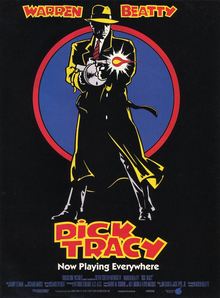
The year is 1937 and “Big Boy” Caprice (Al Pacino) and his gang of flamboyant and often disfigured criminals are trying to take over the rackets.  Standing in their way is ace detective Dick Tracy (Warren Beatty), the yellow trench-wearing defender of the law.  Tracy is not only looking to take down Caprice but he and Tess Trueheart (Glenne Headly) are currently the guardians of The Kid (Charlie Korsmo), a young street kid who witnessed one of Caprice’s worst crimes.  Tracy’s investigation leads him through a rogue’s gallery of criminals and also involves Breathless Mahoney (Madonna), who has witnessed many of Caprice’s crimes but who also wants to steal Tracy’s heart from Tess.

Based on the long-running comic strip, Dick Tracy was a labor of love on the part of Warren Beatty.  Not only starring but also directing, Tracy made a film that stayed true to the look and the feel of the original comic strip (the film’s visual palette was limited to just seven colors) while also including an all-star cast the featured Madonna is an attempt to appeal to a younger audience who had probably never even heard of Dick Tracy.  When Dick Tracy was released, the majority of the publicity centered around Madonna’s participation in the film and the fact that she was dating Beatty at the time.  Madonna is actually probably the weakest element of the film.  More of a personality than an actress, Madonna is always Madonna no matter who she is playing and, in a film full of famous actors managing to be convincing as the members of Dick Tracy’s rogue gallery, Madonna feels out of place.  Michelle Pfeiffer would have been the ideal Breathless Mahoney.

It doesn’t matter, though, because the rest of the film is great.  It’s one of the few comic book films of the 90s to really hold up, mostly due to Beatty’s obvious enthusiasm for the material and the performances of everyone in the supporting cast who was not named Madonna.  Al Pacino received an Oscar nomination for playing Big Boy Caprice but equally good are Dustin Hoffman as Mumbles, William Forsythe as Flaptop, R.G. Armstong as Pruneface, and Henry Silva as Influence.  These actors all create memorable characters, even while acting under a ton of very convincing makeup.  I also liked Dick Van Dyke as the corrupt District Attorney.  Beatty knew audience would be shocked to see Van Dyke not playing a hero and both he and Van Dyke play it up for all its worth.  Beatty embraces the comic strip’s campiness while still remaining respectful to its style and the combination of Danny Elfman’s music and Stephen Sondheim’s songs provide just the right score for Dick Tracy’s adventures.  The film can be surprisingly violent at times but the same was often said about the Dick Tracy comic strip.  It wasn’t two-way wrist radios and trips to the Moon.  Dick Tracy also dealt with the most ruthless and bloodthirsty gangsters his city had to offer.

Dick Tracy was considered to be a box office disappointment when it was originally released.  (Again, you have to wonder if Beatty overestimated how many fans Dick Tracy had in 1990.)  But it holds up well and is still more entertaining than several of the more recent comic book movies that have been released.

Retro Television Review: Fantasy Island 6.9 “Naughty Marietta/The Winning Ticket”


Welcome to Retro Television Reviews, a feature where we review some of our favorite and least favorite shows of the past!  On Tuesdays, I will be reviewing the original Fantasy Island, which ran on ABC from 1977 to 1984.  Unfortunately, the show has been removed from most streaming sites.  Fortunately, I’ve got nearly every episode on my DVR.

This week, Tattoo’s rich!

Episode 6.9 “Naughty Marietta/The Winning Ticket”

(Dir by Don Weis, originally aired January 8th, 1983)

Let’s get the boring storyline out of the way first.

Overbearing Beatrice Solomon (Jayne Meadows) wants her daughter, Alison (Dorothy Hamill) to become an actress.  Beatrice’s husband (David Doyle) wishes that Beatrice would just back off.  Mr. Roarke sends Alison into the past, where Alison finds herself transformed into Marietta, the subject of the operetta Naughty Marietta.  Lorenzo Lamas plays Captain Richard Warrington, who is trying to track down a notorious pirate on behalf of the Governor of Louisiana (James Doohan).  There’s a lot of singing and the costumes are nice but it’s also kind of boring because ice skater Dorothy Hamill was a terrible actress and she has next to no chemistry with Lorenzo Lamas.  The fantasy ends with everyone brought back to the present, including Lamas who, it turns out, was actually just a guest having a fantasy of his own.  It’s nothing we haven’t seen before and I don’t want to talk to much about it because the other story is …. A TATTOO STORY!

After years of being the sidekick and Mr. Roarke’s enigmatic frenemy, Tattoo finally gets a story of his own.  When Margaret Stanton (Hope Lange) comes to the Island to award a check to an employee who won the Irish Sweepstakes, Roarke is saddened to inform her that the man, a groundskeeper named Ambrose, passed away shortly after winning.  Roarke assigns Tattoo to find out who Ambrose’s closest friend was on the Island.  Tattoo takes his job seriously.  Afterall, Tattoo was one of the few people who regularly checked on the curmudgeonly old man, always stopping by to talk and to make sure that he was feeling okay.  As a matter of fact, you could even say that Tattoo was a true friend to the old man.  In the end, he was truly the old man’s best friend….

OH MY GOD, TATTOO’S RICH!

After reading the deceased man’s diary, Roarke and Tattoo realize that Ambrose would have wanted Tattoo to have the money.  Tattoo now has a million dollars and Roarke decides that this means that Tattoo is now a guest at Fantasy Island.  Tattoo moves into the most spectacular guest bungalow.  Tattoo orders a fancy meal and leaves a huge tip.  Tattoo is having a wonderful time until Mr. Roarke informs him that guests are not allowed to live on the Island….

WAIT, WHAT!?

Okay, first off, it wasn’t Tattoo’s idea to be a guest.  It was Roarke’s idea.  Roarke also mentions that Tattoo is the one who came up with the idea of not allowing guests to live on the Island but, over the past few seasons, we’ve seen many guests decide to never leave the Island and Roarke has never had a problem with it!  Seriously, I thought Tattoo and Mr. Roarke were finally getting along.  Suddenly, it seems like Mr. Roarke has decided to kick him out.  “I will miss you,” Mr. Roarke says.  Well, then don’t make him leave!  Can’t Mr. Roarke do whatever he feels like doing?

Tattoo, for his part, says that he will miss being on the Island.  He’ll miss Mr. Roarke.  He’ll miss the rest of the staff.  He’ll miss everything.  Tattoo decides that rather than leave the Island, he’ll donate the money to build a retirement home in England.  And that’s nice and all but I still don’t understand why Tattoo would have had to leave in the first place.  Maybe Mr. Roarke just wanted to teach Tattoo about generosity but Tattoo is already extremely generous.

As the show ends, Mr. Roarke mentions that Tattoo still needs to pay for his stay in the bungalow and for all the food he ordered.  DON’T START, MR. ROARKE!

This was a weird episode but it was still nice to see Tattoo get his moment in the spotlight.  I still think he should have allowed to keep the money and stay on the Island.  I mean, seriously, this Island is full of eccentric rich people living in haunted mansions.  Why should Tattoo miss out on all the fun?

Cleaning Out The DVR #5: Around The World In 80 Days (dir by Michael Anderson)


Last night, as a part of my effort to clean out my DVR by watching and reviewing 38 movies in 10 days, I watched the 1956 Best Picture winner, Around The World In 80 Days.

Based on a novel by Jules Verne, Around The World In 80 Days announces, from the start, that it’s going to be a spectacle.  Before it even begins telling its story, it gives us a lengthy prologue in which Edward R. Murrow discusses the importance of the movies and Jules Verne.  He also shows and narrates footage from Georges Méliès’s A Trip To The Moon.  Seen today, the most interesting thing about the prologue (outside of A Trip To The Moon) is the fact that Edward R. Murrow comes across as being such a pompous windbag.  Take that, Goodnight and Good Luck.

Once we finally get done with Murrow assuring us that we’re about to see something incredibly important, we get down to the actual film.  In 1872, an English gentleman named Phileas Fogg (played by David Niven) goes to London’s Reform Club and announces that he can circumnavigate the globe in 80 days.  Four other members of the club bet him 20,000 pounds that he cannot.  Fogg takes them up on their wager and soon, he and his valet, Passepartout (Cantinflas) are racing across the world.

Around The World in 80 Days is basically a travelogue, following Fogg and Passepartout as they stop in various countries and have various Technicolor adventures.  If you’re looking for a serious examination of different cultures, this is not the film to watch.  Despite the pompousness of Murrow’s introduction, this is a pure adventure film and not meant to be taken as much more than pure entertainment.  When Fogg and Passepartout land in Spain, it means flamenco dancing and bullfighting.  When they travel to the U.S., it means cowboys and Indians.  When they stop off in India, it means that they have to rescue Princess Aouda (Shirley MacClaine!!!) from being sacrificed.  Aouda ends up joining them for the rest of their journey.

Also following them is Insepctor Fix (Robert Newton), who is convinced that Fogg is a bank robber.  Fix follows them across the world, just waiting for his chance to arrest Fogg and disrupt his race across the globe.

But it’s not just Inspector Fix who is on the look out for the world travelers.  Around The World In 80 Days is full of cameos, with every valet, sailor, policeman, and innocent bystander played by a celebrity.  (If the movie were made today, Kim Kardashian and Chelsea Handler would show up at the bullfight.)  I watch a lot of old movies so I recognized some of the star cameos.  For instance, it was impossible not to notice Marlene Dietrich hanging out in the old west saloon, Frank Sinatra playing piano or Peter Lorre wandering around the cruise ship.  But I have to admit that I missed quite a few of the cameos, much as how a viewer 60 years in the future probably wouldn’t recognize Kim K or Chelsea Handler in our hypothetical 2016 remake.  However, I could tell whenever someone famous showed up on screen because the camera would often linger on them and the celeb would often look straight at the audience with a “It’s me!” look on their face.

Around The World in 80 Days is usually dismissed as one of the lesser best picture winners and it’s true that it is an extremely long movie, one which doesn’t necessarily add up to much beyond David Niven, Cantinflas, and the celeb cameos.  But, while it may not be Oscar worthy, it is a likable movie.  David Niven is always fun to watch and he and Cantinflas have a nice rapport.  Shirley MacClaine is not exactly believable as an Indian princess but it’s still interesting to see her when she was young and just starting her film career.

Add to that, Around The World In 80 Days features Jose Greco in this scene:

Around The World In 80 Days may not rank with the greatest films ever made but it’s still an entertaining artifact of its time.  Whenever you sit through one of today’s multi-billion dollar cinematic spectacles, remember that you’re watching one of the descendants of Around The World In 80 Days.