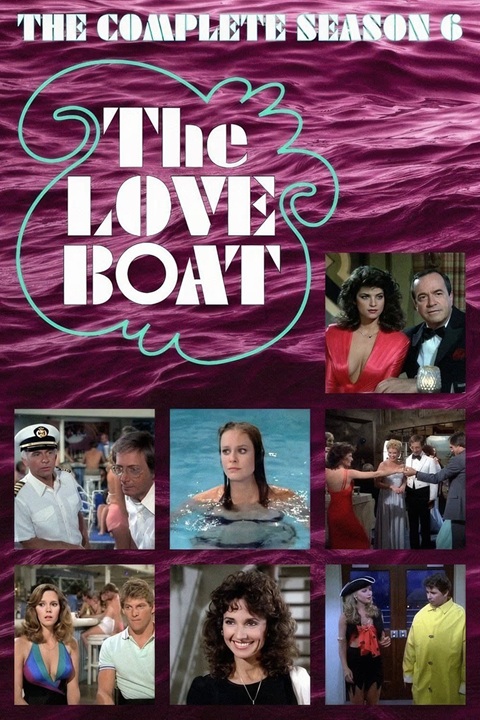
Retro Television Review: The Love Boat 6.24 “So Help Me Hannah/The Maid Cleans Up/CPR IOU”


Welcome to Retro Television Reviews, a feature where we review some of our favorite and least favorite shows of the past!  On Wednesdays, I will be reviewing the original Love Boat, which aired on ABC from 1977 to 1986!  The series can be streamed on Paramount Plus!
Love …. exciting and new!

Episode 6.24 “So Help Me Hannah/The Maid Cleans Up/C.P.R, I.O.U.”

(Dir by Kim Friedman, originally aired on March 12th, 1983)

This episode features Gopher bringing a CPR dummy on board.  No one is that interested in learning how to perform CPR, at least not until one of the passengers, Dwaine Fenley (Steven Keats), has a heart attack.  Fortunately, because of his CPR training, Gopher is able to save Dwaine’s life.  Not only does this lead to Dwaine forging a stronger relationship with his father (Milton Berle) but it also leads to Gopher getting promoted to Head Purser.

(Erin doesn’t like to brag so I’ll brag for her and say that she is not only CPR-certified but she also saved someone’s life a few years ago.  CRP is a good thing to learn!)

While Gopher is trying to get everyone to learn CPR, there are other things happening on the boat and, to be honest, they’re all kind of annoying.  For instance, Hannah (Mary Martin) boards the boat and she’s immediately giving everyone advice and singing Cole Porter tunes.  I kind of knew that this story was going to be annoying from the minute Hannah first boarded the ship and the camera zoomed in for a close-up, which was usually a sign that a guest star was going to spend the entire cruise overacting.  That’s the case here, with Mary Martin delivering every line and playing every emotion as if she’s on Broadway as opposed to a television soundstage.  Hannah meets an ex-boyfriend named Jarvis (Max Showalter) and they sing It’s De-Lovely while standing against the ship’s railing and, for me, it was De-Cringey.  Maybe if I was of Mary Martin’s generation, it would have been less cringey.  But I have to admit that I listen to most of those old songs and I think to myself, “De-lovely is not a word.”  Hannah encourages Jarvis to allow his son (Timothy Patrick Murphy) to play piano instead of becoming a real estate agent.

Finally, a maid (Judy Landers) boards the boat because she knows that her employer (Caren Kaye) is cheating on her boyfriend (Ben Murphy).  It’s actually a bit of a complex storyline, at least by the typical standards of The Love Boat.  Personally, I like Judy Landers and Ben Murphy was appropriately rugged and handsome.  Unfortunately, Landers and Murphy didn’t have much chemistry.

A mixed review for this episode, I’d say.  I appreciated the CPR subplot because that was The Love Boat at its most well-intentioned.  The whole thing with Mary Martin singing old songs was cringe city.  And the maid subplot was just kind of boring.  This was not a great cruise but it wasn’t a terrible one either.  At least, after six seasons, Gopher finally got his promotion.
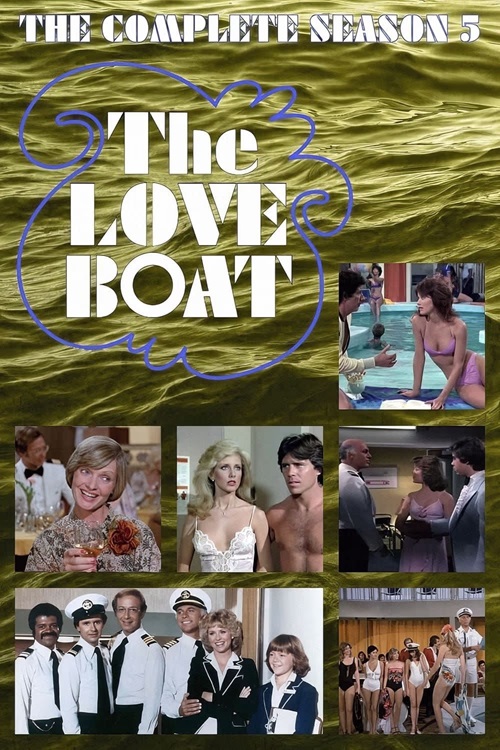


Retro Television Review: The Love Boat 5.27 “April in Boston/Saving Grace/Breaks of Life”


Welcome to Retro Television Reviews, a feature where we review some of our favorite and least favorite shows of the past!  On Wednesdays, I will be reviewing the original Love Boat, which aired on ABC from 1977 to 1986!  The series can be streamed on Paramount Plus!

This week, Charo’s back!

Episode 5.27 “April in Boston/Saving Grace/Breaks of Life”

(Dir by Richard Kinon, originally aired on May 1st, 1982)

April Lopez (Charo) is back!  This time, she has given up show business and is now working as a Spanish tutor for stuffy private school headmaster Bradford York (David Hedison).  She is falling for Bradford but she knows that he would never accept her as an entertainer.  Or would he?  We’re about to find out because the entertainment that Julie booked, probably while in a cocaine-fueled haze, fails to show up.  Would April be willing to perform?

April sings “Let’s get physical, physical,” in the ship’s lounge but when Bradford stops by to get a drink, April covers her face with a mask.  “If I sang like that,” Bradford says, “I’d wear a mask too….”

And that really gets to the main problem with this story.  Bradford York is jerk!  Seriously, I know why some people find Charo to be annoying and I do think The Love Boat tended to overuse the character but she deserves a lot better than Bradford York!  Eventually, of course, Bradford leans that April is the singer and he tells her that he loves her in Spanish.  (He has to ask April how to say it first.)  So, I guess it’s a happy ending  but we all know that April’s going to be single again once the sixth season starts.

As for the other storylines, Gwen (Jayne Meadows) and George Finley (Gene Rayburn) are a divorced couple who end up in the ship’s infirmary together.  We’ve never seen the infirmary before and I assume we’ll never see it again.  The two of them fall in love all over again.  It tuns out Gwen was just faking her injury so she could be with George.  It seems like Doc Bricker should have noticed that.

Finally, Grace Bostwick (Jane Powell) is a widow who is prevented from jumping overboard by Gabriel (Hugh O’Brian).  Gabriel says he’s angel, sent from Heaven to help Grace move on from her grief.  It turns out that he’s not.  He’s just someone who knew Grace was suicidal and figured he would have to come up with something dramatic to keep her from plunging into the ocean.  Everyone on the boat acts as if this makes total sense.  Grace is very forgiving.  Never has one lie been responsible for so much love.

What a weird episode.  A man pretended to be an angel, Charo performed while wearing a mask, and the ship has an infirmary!  Weird as it was, the episode kept me entertained.  I’ve always liked Charo’s mix of sincerity and flamboyance.  That said, she deserves better than Bradford York.  The angel storyline was problematic for all sorts of reasons but at least Jane Powell and Hugh O’Brian gave good performances.  They almost sold it.  Almost.

Days of Paranoia: The Anderson Tapes (by Sidney Lumet)


In 1971’s The Anderson Tapes, Sean Connery stars as Duke Anderson.

Duke is a career criminal, a safecracker who has just spent ten years in prison.  He’s released, alongside Pops (Stan Gottlieb), who spent so much time behind bars that he missed two wars and the Great Depression, and the quirky Kid (Christopher Walken, making his film debut).  Duke immediately hooks up with his former girlfriend, Ingrid (Dyan Cannon), and decides to rob the luxury apartment building where Ingrid is now living.

Of course, Duke will have to put together a crew.  It’s not a heist film without a quirky crew, is it?  Duke recruits the Kid and Pops.  (The Kid is happy to be in the game but he’s not a fan of violence.  Pops, meanwhile, has none of the skills necessary for living in the “modern” world and would much rather return to prison.)  Duke also brings in the flamboyant Tommy Haskins (an overacting Martin Balsam) and driver Edward Spencer (Dick Anthony Williams).  Duke goes to the mob for backing and Pat Angelo (Alan King) gives it to him on the condition that he take along a sociopathic racist named Socks (Val Avery) and that Duke kills Socks at some point.  Duke reluctantly agrees.

So far, this probably sounds like a conventional heist film.  Director Sidney Lumet mixes comedy and drama with uneven results but, overall, he does a good job of ratcheting up the tension and The Anderson Tapes is a good example of one of my favorite mini-genres, the “New Yorkers will be rude to anyone” genre.  At first glance, Sean Connery seems to be playing yet another super smooth operator, a confident criminal with a plan that cannot fail.  Duke seems like a criminal version of James Bond,  However, as the film progresses, we start to suspect that things might be getting away from Duke.  When Duke has to go the Mafia for support and is told that killing Socks is now a part of the job, we see that Duke isn’t as in-control of the situation as we originally assumed.  This is the rare Sean Connery film where he has someone pushing him around.

(Apparently, Connery took this role as a part of his effort to escape being typecast as Bond.  Perhaps that explains why Duke seems like almost a deconstruction of the James Bond archetype.)

Of course, what really lets us know that Duke isn’t as in-charge as he assumes is the fact that four different law enforcement agencies are following his every move.  From the minute he gets out of prison, Duke is being watched.  The apartment is bugged.  Security cameras records his every move.  Once the heist begins, we’re treated to flash forwards of breathless news reports.  The Anderson Tapes is less a heist film and more a portrait of the early days of the modern Surveillance State.  Of course, none of the agencies make any moves to stop Duke because doing so would reveal their own existence.  The film really does become a portrait of a government that has gotten so big and intrusive that it’s also lost the ability to actually do anything.

The Anderson Tapes is entertaining, even if it’s not really one of Lumet’s best.  Connery is, as always, a fascinating screen presence and it’s always entertaining to see a young Christopher Walken, showing early sings of the quirkiness that would become his signature style.  The Anderson Tapes is a portrait of a world where you never know who might be listening.

Horror on the Lens: Indestructible Man (dir by Jack Pollexfen)


Today’s horror on the lens is the surprisingly brutal 1956 B-movie, Indestructible Man!

I reviewed this movie back in 2013.  It was definitely made on a low-budget and it features one of the most sexist endings in cinematic history and yet it’s also occasionally effective.  The film’s biggest strength is that the Indestructible Man is played by Lon Chaney, Jr.  Though Chaney was clearly dealing with his personal demons at the time this film was made, his surly manner and ravaged face make him very effective in the role of Charles “Butcher” Benson.

Enjoy!


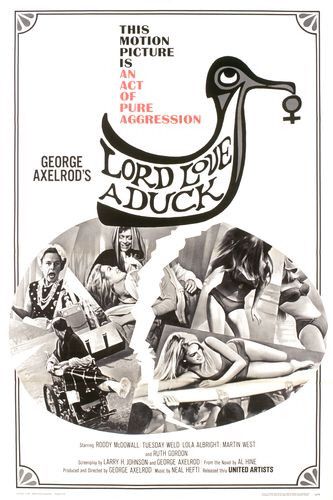
Back To School Part II #3: Lord Love A Duck (dir by George Axelrod)


Lordloveaduck

For my third Back to School review, I watched the 1966 satire, Lord Love A Duck!

Hey hey hey!

I have to admit that, because I’m writing this review in a hurry and because the D and the F key are located right next to each other, I keep accidentally calling this film Lord Love A Fuck.  Somehow, that seems appropriate because Lord Love A Duck is a very odd and subversive little movie that deals with people who are largely motivated by lust and I’m pretty sure that, at one point, Roddy McDowall is seen saying, “Fuck off!” but, of course, we don’t actually hear him say it.  But seriously, Lord Love A Duck is a weird movie.

Hey hey hey!

Roddy McDowall plays Alan Musgrave, a student at a “progressive” high school in California.  Roddy was about 37 years old when he played a high school senior and he doesn’t look like a teenager at all but somehow, it’s appropriate.  After all, Alan is no ordinary teenager!  He’s smarter than everyone else.  He’s wittier than everyone else.  He’s more clever than everyone else.  He’s also totally obsessive and willing to do just about anything to get what he wants.  And you can be sure of one thing: whenever Alan does something borderline insane, you’ll hear a group of singers harmonizing, “Hey hey hey!” in the background.

Hey hey hey!

See, it’s happening already.  It doesn’t matter what Alan’s doing.  He could be kicking a skateboard in the way of a romantic rival.  He could be interrupting the graduation ceremony with a tractor.  He could be going to prison for life.  No matter what it is, it will always be accompanied by:

Hey hey hey!

Anyway, Alan is in love with the innocent, sweet, and constantly flirtatious Barbara Anne Greene (Tuesday Weld).  In fact, almost everyone in the film is in love with (or, at the very least, turned on by) Barbara.  The only person who doesn’t seem to be in love with Barbara is her mother (Lola Albright), a former-beauty-turned-cocktail-waitress whose world-weary cynicism seems to offer a depressing hint of what’s in store for Barbara once she gets older.

Hey hey hey!

But everyone else loves Barbara.  Especially Alan!  In fact, Alan is so in love with her that he swears that he’s going to make sure that she gets everything that she wants.  When she needs 12 cashmere sweaters so that she can join an exclusive girl’s club, Alan helps her to convince her father (Max Showalter) to pay for them.  When Barbara needs a job after dropping out of school, Alan helps her get one as a secretary for the high school’s progressive principal (Harvey Korman).  When Barbara decides she wants to marry the boring but respectable Christian youth leader, Bob (Martin West), Alan keeps Bob’s mother (Ruth Gordon) so drunk that she doesn’t get a chance to reprimand her son for falling in love with a girl from a divorced family.  (As Bob’s mother explains it, she doesn’t believe in divorce.  “We don’t leave our husbands.  We bury them.”)  Eventually, a movie producer decides that he wants Barbara to star in his beach films but Bob says no.  No wife of his is going to be a movie star!  So, of course, Alan decides to murder Bob so that Barbara can again have what she wants…

Hey hey hey!

Lord Love A Duck is a manic comedy that satirizes everything that mainstream audiences in 1966 would have held sacred.  Teenagers, conservatives, liberals, love, hate, murder, justice, marriage, divorce, morality, sex, religion, television, movies — it’s all thoroughly ridiculed in this film.  (It’s not surprising that the film’s director also wrote the script for The Manchurian Candidate, a satire disguised as a thriller.)  To be honest, it’s probably a little bit too manic for its own good.  At times, the film run the risk of becoming exhausting.  But then there’s even more times when the film is absolutely brilliant.

Hey hey hey!

Speaking of absolutely brilliant, Lord Love A Duck makes brilliant use of Roddy McDowall’s eccentric screen presence but, even better, it features one of Tuesday Weld’s best performances.  Weld was a talented actress whose performances often revealed that a fragile soul is often the price that is payed for great beauty.  (There’s no greater insecurity than wondering whether people are responding to who you are or to how you look.  Would you still care if I was ugly is not a question we’re supposed to ask but it’s one that we’ve all wondered.)  It would have been far too easy to make Barbara either totally innocent or totally manipulative.  Wisely, the film does neither.  Barbara may occasionally be manipulative but she always means well.  It’s not her fault that everyone around her is either idiotic or insane.

Hey hey hey!

Though Lord Love A Duck is obviously a time capsule of the culture of mid-60s, it’s also a film that remains relevant even today.  Culturally, we’re still obsessed with fame, youth, and beauty.  In many ways, the satire of Lord Love A Duck still feels more extreme that anything that any contemporary filmmaker would dare to attempt.  I can only imagine what audiences in 1966 thought as they watched this subversive teen film.

Hey hey hey!

Horror on TV: The Twilight Zone 3.8 “It’s A Good Life”


TheTwilightZoneLogo

Don’t think bad thoughts or Anthony Freemont will turn you into a giant jack in the box!

That’s lesson to be learned from tonight’s example of televised horror. In this classic episode of The Twilight Zone, the citizens of Peaksville always have to be happy or else they’ll be punished by the cruel monster that lives among them. The big twist, of course, is that the monster is just a little boy and sometimes, it’s difficult to predict what exactly is going to upset him.

It’s A Good Life was originally broadcast on November 3rd, 1961.

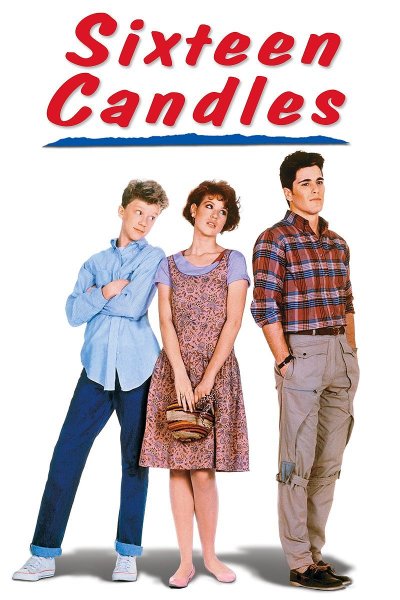
Back to School #35: Sixteen Candles (dir by John Hughes)


11171951_800

The 80s are often considered to be the golden age of teen films and that’s largely due to the work of one man, John Hughes. A  former advertising copywriter and a contributor to National Lampoon, Hughes went on to direct and write some of the most influential films of all time.  By deftly mixing comedy with themes of alienation, rebellion, and youthful disillusionment, Hughes changed the way that teenagers were portrayed onscreen and his influence is still felt today, in everything from Juno to Superbad to Easy A to … well, just about any other recent film starring Michael Cera.

(Okay, I know Michael Cera was not in Easy A but it really seems like he should have been…)

Hughes made his directorial debut in 1984 with Sixteen Candles, a comedy about love, birthdays, and weddings set in an upper class suburb of Chicago.  (I have to admit that, much like with My Tutor, one reason that I like this film is because I like seeing where everyone lives.)  As the film opens, Samantha Baker (Molly Ringwald) is not having a particularly good time.  For one thing, everyone is so wrapped up in her older sister’s wedding that they’ve forgotten about Sam’s sixteenth birthday.  Her house is full of wacky grandparents (and one foreign exchange student named Long Duk Dong).  At school, Sam is in the unenviable position of being neither popular enough nor unpopular enough to actually be noticed by anyone.  Instead, she’s just there.  She has a crush on Jake Ryan (Michael Schoeffling) but is convinced that Jake doesn’t even know that she’s alive.  (Of course, she’s wrong.)  She’s also being pursued by a character who is occasionally referred to as being “Farmer Ted” but is listed in the end credits as simply being “The Geek.”  (I’m going to refer to him as “The Geek” because Farmer Ted makes him sound like he should be killing people in a SyFy original movie.)  As played by Anthony Michael Hall, The Geek isn’t your typical high movie nerd.  Instead, he’s the outspoken and confident king of the nerds and he’s proud of it.  The Geek is madly pursuing Sam and has made a bet with his friends (including John Cusack) that he’ll not only have sex with her but he’ll prove it by bringing them her panties.  (BAD GEEK! — but fortunately, Anthony Michael Hall gives such an energetic and likable performance that you can forgive him.)

There are parts of Sixteen Candles that have not aged well.  And, by that, I’m mostly referring to the character of Long Duk Dong, who is so well-played by Gedde Watanabe that it’s tempting to ignore just how racist the portrayal of his character really is.  As well, I know that a lot of my more erudite friends would probably only briefly look away from their copy of Thomas Piketty’s Capital In The 21st Century, just long enough to pronounce that Sixteen Candles is essentially a film about “first world problems.”

Well, maybe it is.  But I don’t care.  I like it.  John Hughes’s script is full of classic lines and funny characters, Anthony Michael Hall is likable as the Geek, and, as played by Michael Schoeffling, Jake Ryan is the epitome of the perfect guy.  If your heart doesn’t melt a little when he says that he’s looking for true love, it can only be because you don’t have a heart.  And finally, Sam remains a character that we can all relate to.  As played by Molly Ringwald, she’s the perfect sullen everygirl.

Of course, an undeniable part of the charm of Sixteen Candles comes from the fact that it really is a film that could not be made today.  Sixteen Candles may take place in an entirely different world from films like The Pom Pom Girls and Suburbia, but it’s still just as much of a time capsule.

First off, there’s about a thousand apps out there that will make sure that you never forget anyone’s birthday.  If the film was made today, Sam’s parents would have checked their e-mail and found a message from Facebook telling them that “Samantha Baker has a birthday this week!”  They could have just written “Happy birthday to a wonderful daughter!” on her wall and half of Sam’s problems would have been solved.

Secondly, it’s doubtful that, if the film was made today, the Geek would be able to get away with just showing everyone’s Sam’s panties.  Instead, they would have demanded nude pics, which would have then been posted on the internet for the entire world to see.  And let’s be honest: “Can I send my friends naked pics of you?” doesn’t quite have the same ring to it as “Can I borrow your underpants for ten minutes?”

hero_EB19840101REVIEWS401010384AR

—–

*And, no, I haven’t read Piketty’s tome.  I have a life to live and movies to see.


It Came From The Public Domain: Indestructible Man (dir by Jack Pollexfen)


(SPOILERS BELOW)

First released in 1956, Indestructible Man is a low-budget B-movie that, as a result of being in the public domain, has been released on DVD by several different companies and seems to be included in just about every other compilation box set released by the folks at Mill Creek.  Perhaps because it stars Lon Chaney, Jr., it also seems to turn up on TCM fairly regularly.  That’s how I first saw it.

Whenever anyone mentions the film Indestructible Man to me, I always think about … well, actually no one ever mentions Indestructible Man to me.  But if they did, I would probably always remember one scene in particular.  It comes towards the end of the film.  Detective Dick Chasen (Max Showalter) has managed to solve the mystery of the Indestructible Man.  He celebrates by going out with his new girlfriend, a burlesque dancer played by Marian Carr.  Sitting there in the car, illuminated by the romantic glow of the moon, Detective Chasen informs her that he’s gotten her fired from her job because she’s going to be way too busy being his wife to have a career.  “Even if I wanted to, I couldn’t say no!” his girlfriend responds.

Don’t believe me?  Watch for yourself.  From Indestructible Man, here’s one of the most sexist scenes in film history…

Up until that ending, Indestructible Man tells the story of Charles “Butcher” Benson (Lon Chaney, Jr).   As you might guess from his nickname, Butcher isn’t a nice guy.  In fact, he’s a career criminal who is sitting on death row in California.  He’s been double-crossed by his criminal partners (who include both a lawyer and a guy named Squeamy, so you know they’re bad) and, from his prison cell, he swears that he will have his revenge.

And then he’s promptly executed.

However, his body is donated to science.  Scientist Robert Shaye is investigating whether or not massive electrical shock can be utilized to cure cancer.  When he and his assistant (Joe Flynn) shock the Butcher’s corpse, the Butcher comes back to life and starts to wander around the laboratory.  Shaye attempts to give him a shot but the hypodermic needle snaps when pressed against the Butcher’s skin.  The Butcher proceeds to strangle both the scientist and his assistant…

What’s going on?  Well, fortunately, this film is narrated by Detective Dick Chasen (and yes, that is the character’s name and that’s all I’m going to say about it).  Dick Chasen explains to us that 1) the electrical shock fried Butcher’s vocal chords and rendered him mute and that 2) the shock caused Butcher’s cells to multiply at such a rate that he is now …. INDESTRUCTIBLE!

Anyway, Butcher proceeds to spend the rest of the movie tracking down and murdering his former criminal associates.  Even before you reach the most sexist ending in the history of American cinema, it’s all rather silly.  It’s also rather slow.  The film lasts 70 minutes and I would say that 20 of those minutes consist of pure padding.

However, as often happened with B-movies, the low budget occasionally works to the film’s advantage.  The flat black-and-white and the stark sets may have been an unintentional consequence of economic reality but, at the same time, they give the film a much needed edge.

Much as the low budget accidentally worked to the film’s advantage, so to did the personal demons of Lon Chaney, Jr. contribute to making him into a surprisingly effective and disturbingly believable killer.  Though he’s best remembered for playing the handsome and soulful Larry Talbot in the original Wolf Man, by the time Lon Chaney, Jr. made Indestructible Man, years of drinking, smoking, and self-destructive behavior had caught up with the former matinée idol.  Chaney’s ravaged face, marked by deep lines and sporting a permanently grim expression, makes him perfect for this role.  The highest praise that I can pay to Chaney’s performance is that you look at him and you truly believe that his character would be nicknamed Butcher.

As I stated at the start of this review, Indestructible Man is in the public domain and it’s fairly easy to track down.  For that matter, you can always watch it below.

And just remember … you’re not supposed to say no to a detective…