Embracing the Melodrama #53: Crash (dir by Paul Haggis)


crash-2004-poster

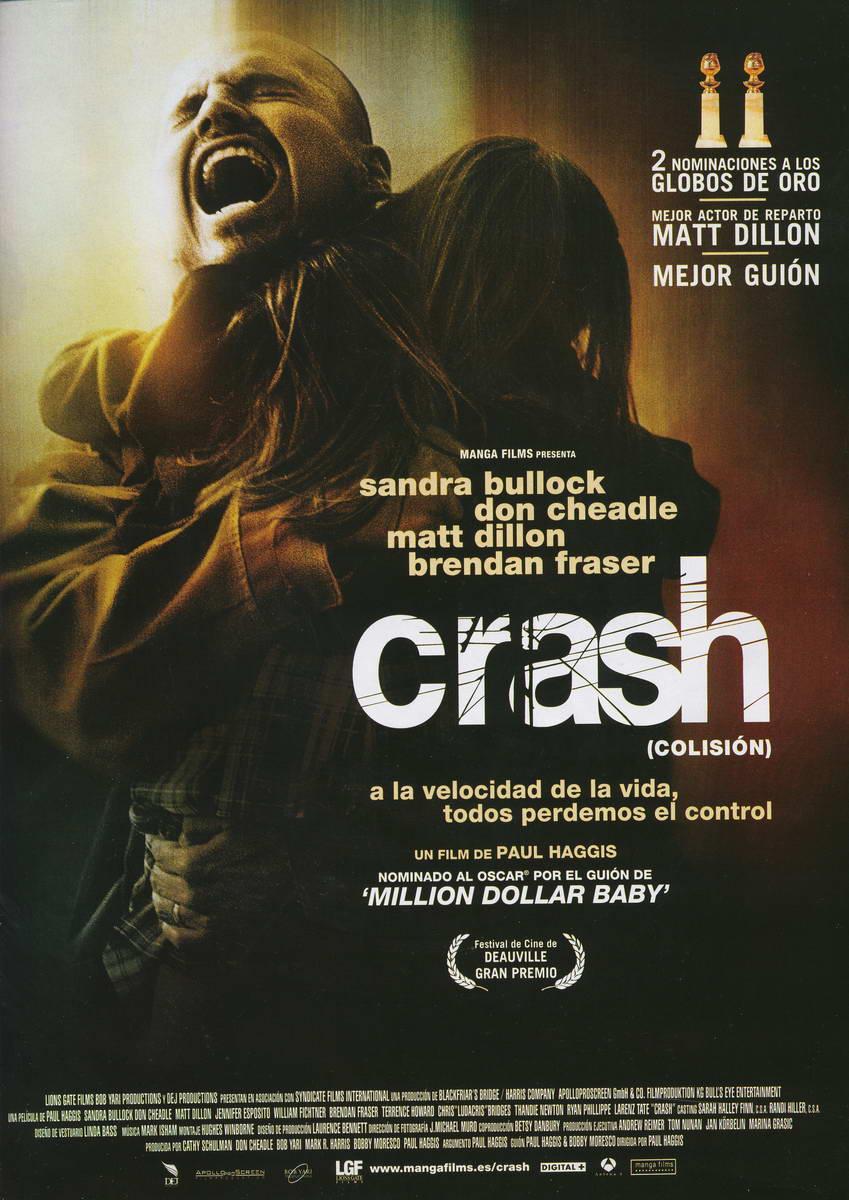
For the past two weeks, I’ve been reviewing, in chronological order, some of the most and least memorable melodramas ever filmed.   We started way back in 1916 and now, after 52 reviews, we’ve finally reached the year 2004.  And that can only mean that it is time to review the worst film to ever win an Oscar for best picture of the year.  I am, of course, talking about Crash.

Crash is an ensemble piece that follows a multi-racial cast of characters as they deal with issues of race, crime, and — well, that’s about it.  In Crash, everyone’s life revolves around race and crime.  Well, I take that back,  There is at least one character whose life revolves around being a good maid to the white woman who employs her.  But otherwise, it’s all about race and crime.  The film is set in Los Angeles which, from what I’ve read, is actually a pretty big city but you really wouldn’t know that from watching Crash.  All of the characters in Crash are constantly and randomly running into each other.  I think director/screenwriter Paul Haggis is trying to make a statement about the power that coincidence plays in the world but, often times, it just feels like lazy plotting.

Anyway, here are the characters who are meant to bring Los Angeles to vivid cinematic life:

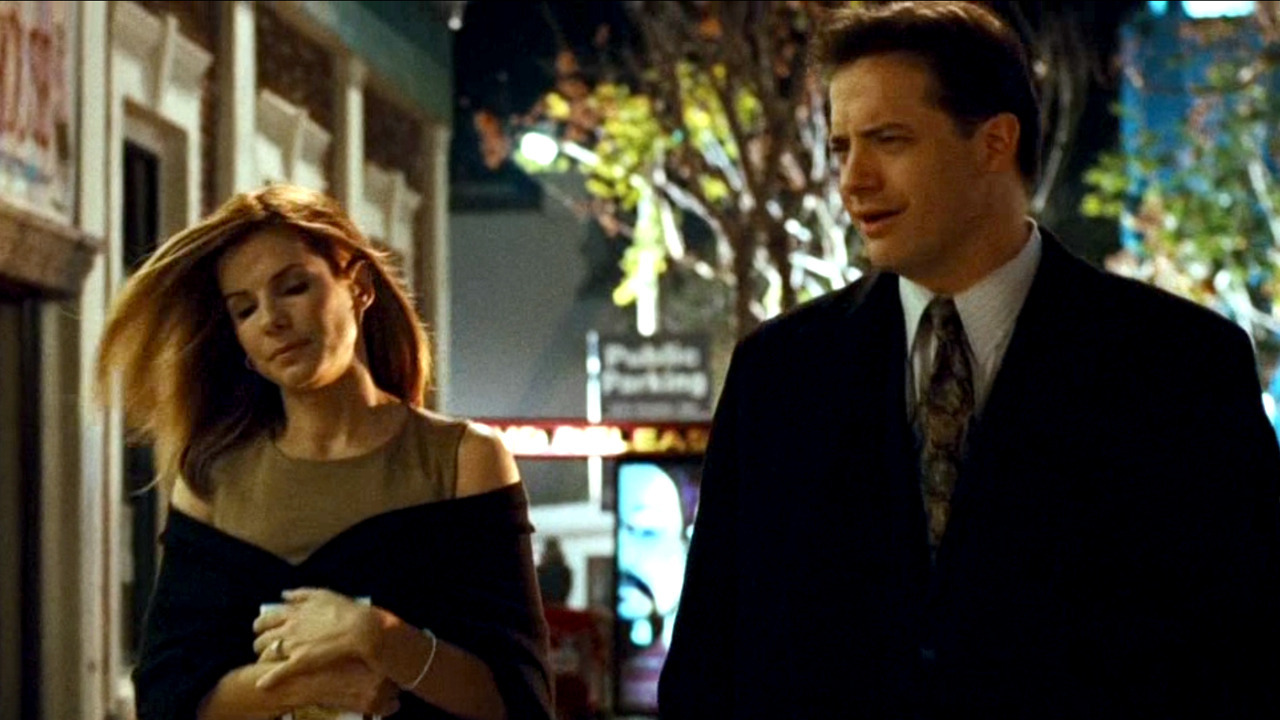
Brendan Fraser and Sandra Bullock play rich white people Rick and Jean Cabot.  Rick Cabot has just been elected District Attorney of Los Angeles County.  (Because when I think of a successful urban politician, I automatically think of Brendan Fraser…)  Jean is his materialistic wife.  At the start of the film, they’re carjacked by two young black men, which leads to Jean suspecting that every non-white she sees is secretly a gang member.  Later, Jean falls down a flight of stairs but she’s helped by her maid, who happens to be — surprise, surprise — not white!  Apparently, this teaches Jean an important lesson about tolerance.  The message, I guess, is that white people can be redeemed by interacting with their minority servants.

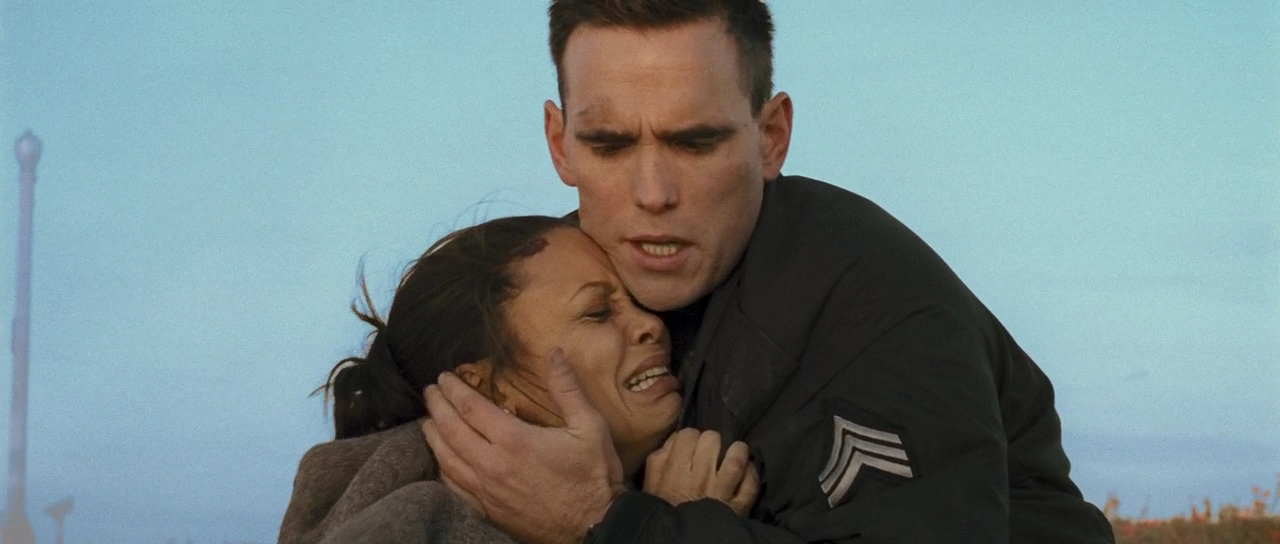
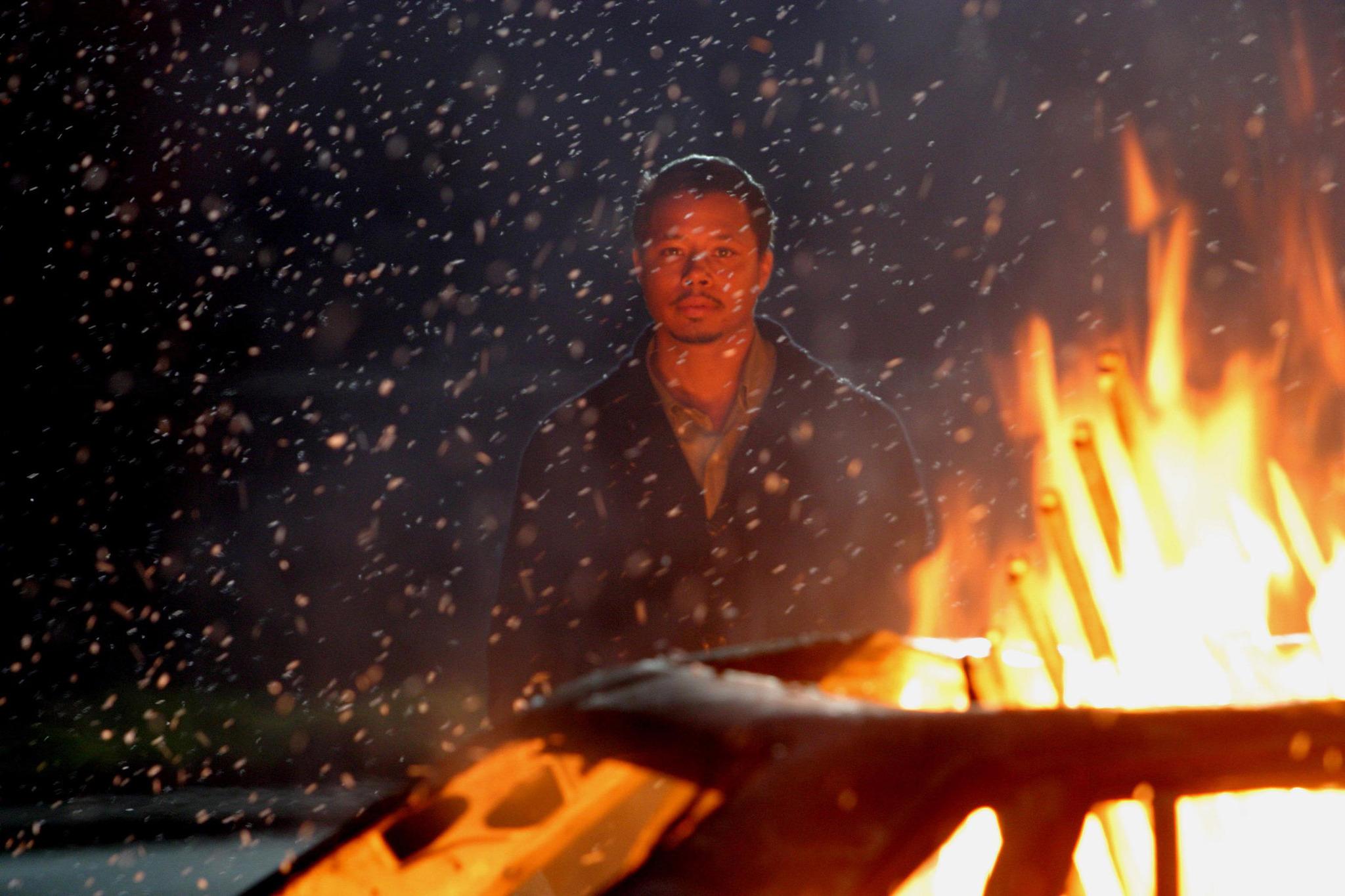
And then there’s Cameron (Terrence Howard) and his wife Christine (Thandie Newton) who are upper class and black.  Cameron directs sitcoms for a living and, at work, he has to deal with Fred (Tony Danza) constantly double guessing him and demanding that he reshoot scenes.  One night, as they leave an awards ceremony, Cameron and Christine are pulled over by two white cops — the racist Ryan (Matt Dillon) and his idealistic partner Hansen (Ryan Phillippe).  Ryan proceeds to molest Christine while giving her a pat down.  The next day, Christine is involved in a car accident on the freeway and is pulled from the burning car by none other than Officer Ryan.  The point here, I suppose, is that the same pervert who finger rapes you one night is just as likely to be the same guy who comes across your overturned car on the freeway.  For that scene alone, Crash deserves the title of worst best picture winner ever.
crash-2004 4

But that’s not all!

There’s also Detective Graham Waters (Don Cheadle), who has been assigned to investigate a police corruption case that would not be out of place in an episode of … well, just insert your own generic cop show title here.  Graham also visits his mentally unstable mother who demands that Graham find his younger brother.  Now, of course, as soon as we hear this, we know that Graham’s brother is going to have to turn out to be one of the other characters in the film.  Since there are only three other black males in this film (and since Cameron appears to be the same age as Graham), it’s not difficult to figure out who it’s going to be.

It’s either going to be Anthony (Ludacris) or Peter (Larenz Tate), who also happen to be the same two men who carjacked the Cabots’ car at the start of the film.  Larenz Tate probably gives the best performance in this whole sorry mess of a film, even if his role is ultimately a thankless one.

There’s also a locksmith named Daniel (Michael Pena), who finds himself being stalked by an angry Middle Eastern man.  Daniel’s story contains a hint of magic realism, presumably because Paul Haggis was reading something by Gabriel Garcia Marquez while writing the script.
Crash

You can fault Crash for many things but you also can’t deny that it’s far more ambitious than the typical bad film.  In the space of 112 minutes, Paul Haggis attempts to say everything that needs to be said about race and class in America.  Unfortunately, while watching the film, it quickly becomes obvious that Haggis really doesn’t know much about race and class in America.  Hence, the film becomes a collection of scenes that think they mean something while actually meaning nothing.  Crash is less about race in America and more about how other movies have traditionally portrayed race in America.  Unfortunately, director Haggis does not have the self-awareness to truly bring the subtext of screenwriter Haggis’s script to life.

The main theme of Crash seems to be that everyone has a good side and a bad side and that you can the hero of one story while being the villain of another.  That’s not a bad theme, it’s just an incredibly mundane one.  The film illustrates this theme by continually having a character say something racially offensive just to then have him do something heroic in the very next scene.  As a result, the characters don’t come across as being so much complex as just incredibly inconsistent.  Crash is never as deep as it thinks it is.

Reportedly, Crash was inspired by Paul Haggis’s own experience of getting carjacked.  Haggis has said that being a victim of crime led to some intense soul searching on his part.  Hopefully, Haggis got something better than just Crash out of the whole experience.
still-of-terrence-howard-in-crash-(2004)-large-picture

Embracing the Melodrama #46: Wild Things (dir by John McNaughton)


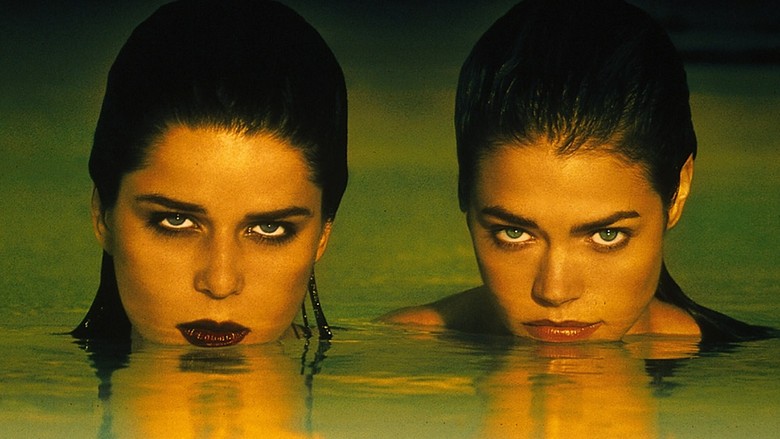
The 1998 film Wild Things starts out like a standard B-movie.  It take place in Florida so, of course, we get a lot of shots of the sun setting on the bayous and crocodiles staring at the camera as if to ask, “What are you looking for?”  Boats skim the water.  High school guidance counselor Sam Lombardo (Matt Dillon) walks across campus while all of the toned and tanned students stop to admire him.  Local rich girl Kelly Von Ryan (Denise Richards) smirks and says something snarky.  Detective Ray Duquette (Kevin Bacon) shows up in the background and stares at the world from behind dark glasses and a serious expression.  Meanwhile, local poor girl Suzie (Neve Campbell) goes back to her home, which happens to be located right behind an alligator farm.

Judging from the first few minutes, Wild Things could just as easily be an episode of CSI Miami.

But then Bill Murray shows up as Kenneth Bowden, a hilariously sleazy attorney who spends most of the movie wearing a neck brace, just in case the insurance company is watching him.

And then Theresa Russell shows up Kelly’s mother, standing on a balcony in a gold bikini and hitting on every passing man like the world’s most hyperactive cougar.

And then Carrie Snodgress shows up as Suzie’s mother, complete with an over-the-top white trash accent.

By the time that Robert Wagner shows up and literally growls at Matt Dillon: “You’re finished, Lombardo!  Finished!,” you realize that Wild Things is probably the most self-aware B-movie ever made and it’s all the better for it.

As for the plot — well, let’s see if I can keep track.  Suzie and Kelly both accuse Sam of rape.  Sam claims to be innocent but nobody in town believes him.  Sam is forced to hire the disreputable Kenneth Bowden to defend him.  During the trial, Kenneth is able to prove that Kelly blamed Sam for the suicide of her father while Suzie is angry that Sam once refused to bail her out of jail on a drug charge.  To get revenge, Kelly and Suzie decided to frame Sam.  Sam is acquitted and, again with Bowden’s help, is able to negotiate an 8 million dollar settlement for defamation.  True, Sam does lose his job but at least he’s a rich man now…

But wait a minute.

The movie still has a little over an hour to go.

Could it be that there’s more to this story?

Well, of course, there is.  It turns out that Sam, Kelly, and Suzie have been working together all the time.  The accusations, the trial, the defamation suit — it was all a part of a grand scheme to get the money.  Sam, Kelly, and Suzie celebrate their success with champagne and a threesome.

While everyone else in town seems to be ready to move on from the entire scandal, Detective Ray Duquette is telling anyone who will listen that he thinks that Sam, Kelly, and Suzie were all in on it together.  Even when Ray is ordered by his superiors to back off, Ray continues to investigate the case.

And why?

Because Ray Duquette is a cop who gets results!

Well, maybe.

Actually, it doesn’t take long to realize that there’s something off about Ray.  For one thing, his obsession with Sam really does seem to be a personal thing.  On top of that, Ray has a past connection with Suzie…

Wild Things has everything that you could hope for from a good exploitation film: a script that is full of double and triple crosses, unapologetically pulpy dialogue, over-the-top performances, and lots of sex.  Yesterday, I reviewed Normal Life and praised John McNaughton’s decision to play up the banality of the film’s characters and locations.  With Wild Things, McNaughton takes the exact opposite approach, playing up every sordid and tawdry detail to such an extent that the film itself eventually transcends such mundane concepts as good and bad.

Wild Things is a lot of fun and it’s also one of the best films of the 1990s.

Wild Things

Lisa’s Homestate Reviews: Colorado and Over the Edge


From August of 1994 to July of 96, my family lived in Longmont, Colorado.  Whenever I think back to living in Colorado or the times that I’ve visited it since, there’s always two things that I remember.  First off, Colorado had the cleanest air that I’ve ever breathed and, for someone like me who grew up with severe asthma, that’s a big deal.  Secondly, Longmont had some great dance teachers.  I may have taken my first dance classes in Texas but I’ve always liked to think that Colorado is where I first truly fell in love with dancing.

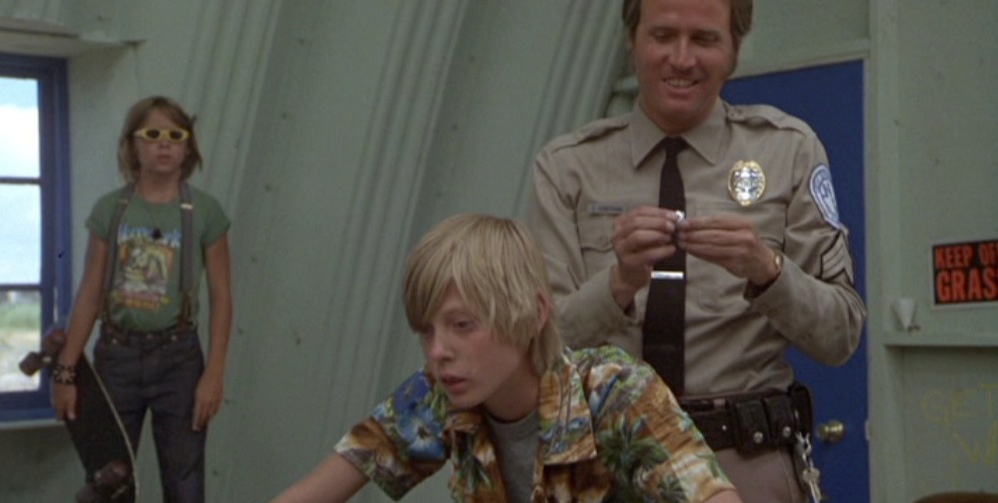
Fortuantely, my family and I lived in Longmont and not New Granada, the setting of the Colorado-shot 1979 film Over the Edge.  New Granada is a planned community, a collection of identical houses and sterile buildings that sit out in the middle of the desert.  The majority of town’s adult population views New Granada as less a home and more of a business opportunity.  When their children misbehave, they worry less about why and more about how that’s going to effect the effort to get a visiting businessman to invest in their town.  The streets of New Granada are patrolled by a fearsome cop with the very appropriate name of Doberman (Harry Northup).  Doberman may claim to be maintaining the peace but, as quickly becomes apparent, he’s just a bully with a uniform.

Is it any wonder then that the teenagers of New Granada are out-of-control?  Between living in a town where there is literally nothing to do other than skip school, smoke weed, and hang out at a dilapidated rec center and having to deal with parents who don’t really seem to want them around, the youth of New Granada are angry and Over the Edge suggests that they have every right to be.

When Mark (Vincent Spano) uses his BB gun to shoot a hole in Doberman’s windshield, Doberman reacts by blaming and harassing Carl (Michael Kramer) and his friend Richie (a very young Matt Dillon).  When Doberman demands that Richie tell him who shot the BB gun, Richie replies, “I only got one law.  Any kid who tells on another kid is a dead kid.”

Things escalate.  When a Texas businessman visits the town, the rec center is closed in an attempt to keep any of the kids from being seen.  Doberman arrests Claude (Tom Fergus) for possessing a gram of hash, which leads to Richie realizing that one of the kids has turned into a snitch.  Doberman’s obsession with finding out who shot the BB gun leads to the death of one of New Granada’s teens. Eventually, the adults of New Granada attend an emergency PTA meeting down at the high school, just to find themselves locked into the building by their children, the majority of whom proceed to riot and destroy the town outside.

Directed by Jonathan Kaplan and based on a true story, Over the Edge is one of the best youth-in-revolt films ever made.  Not only is it well-acted (with Matt Dillion in particular showing a lot of rebellious charisma as Richie) but it’s also unique in that it is totally on the side of the young people.  While Over the Edge does not necessarily endorse the violence that dominates the film’s finale, it also suggests that acting out was perhaps the only option left to the teenagers of New Granada.  That Over the Edge was made in the 70s is obvious as soon as you hear the soundtrack and see the clothes and hairstyles.  However, with its portrayal of both youthful alienation and out-of-control authority, it’s still very relevant today.

It’s a great film with an absolutely hear-breaking ending and it’s one that you should see if you haven’t yet.

The Face of Fascism In Over The Edge

The Face of Fascism In Over The Edge


6 Trailers For An Out Of Control Youth


For this week’s edition of Lisa Marie’s Favorite Grindhouse and Exploitaiton Trailers, we actually have a loose theme as opposed to just me tossing up random stuff.  That theme: Out Of Control Youth. (Cue dramatic DAH-DAH-DAAAAAH music)

Normally, I try to avoid doing “theme” trailer posts because they require way too much concentration on my part.  However, this week, as I selected the trailers I wanted to feature, I slowly realized that I was doing just that and I was actually being a pretty good job at it. 

Take heart, Out of Control Youths.  This post is dedicated to you.

1) Black Mama, White Mama (1972)

I may be wrong but just judging from the trailer, I think this film might be about “women in chains.”  Pam Grier, of course, everyone knows.  The white mama was played by Margaret Markov, who later married exploitation film producer Mark Damon.

2) Over the Edge (1979)

This one shows up on cable a lot and it’s actually pretty good.  Check out the hair on Matt Dillon.

3) Suburbia (1984)

Eventually, I guess the kids from Over the Edge grew up to be the kids from Suburbia.  I’ve got this one on DVD but every time I’ve tried to watch it, I’ve ended up falling asleep.  Not necessarily because the film is bad.  I just always end up trying to watch it at 4 in the morning for some reason.

4) Certain Fury (1985)

I just love that the credits at the end of the trailer announce that this film features a “special appearance” from Peter Fonda.

5) Mission Hill (1982)

“Mission Hill: A Neighborhood where anything can happen…”  This is the type of film that I often fantasize about appearing in.  Naturally, I would be the girl singing.  I can’t really sing but that’s what post-production dubbing is for, right?

6) Devil Times Five (1974)

This is another one that I have on DVD but I haven’t found the time to watch yet.  This appears to be a film in which psycho children kill … well, everything.  All I know is that if I’m ever taking a bath and some little child comes wandering in with a bunch of fish, I’m jumping up and running.  I don’t care how wet and naked I am.