Horror On The Lens: Satan’s School For Girls (dir by David Lowell Rich)


For today’s horror on the lens, we have a 1973 made-for-TV movie called Satan’s School For Girls.

After her sister turns up dead, Elizabeth (Pamela Franklin) refuses to accept that official conclusion that it was a suicide.  Instead, Elizabeth is convinced that it was murder and that it has something to do with the exclusive school that her sister attended, the Salem Academy for Women.

Well, honestly, the Salem part is a dead giveaway.  I think we can all agree on that.

Anyway, this movie features a Satanic cult, an old school clique, and plenty of early of 70s fashion choices.  It may be silly but it’s also definitely entertaining.


The TSL Horror Grindhouse: The Dunwich Horror (dir by Daniel Haller)


Look at me/I’m Sandra Dee….

First released in the groovy and psychedelic year of 1970, The Dunwich Horror stars Sandra Dee as Nancy, an somewhat innocent grad student at Massachusetts’s Miskatonic University.  When the mysterious Wilbur Wheatley (Dean Stockwell) comes to the university and asks to take a look at a very rare book called The Necronomicon, Nancy agrees.  She does so even though there’s only one edition of The Necronomicon in existence and it’s supposed to be protected at all costs.  Maybe it’s Wilbur’s hypnotic eyes that convince Nancy to allow him to see and manhandle the book.  Prof. Henry Armitage (Ed Begley) is not happy to see Wilbur reading the book and he warns Nancy that the Wheatleys are no good.

Nancy still agrees to give Wilbur a ride back to his hometown of Dunwich.  She finds herself enchanted by the mysterious Wilbur and she’s intrigued as to why so many people in the town seem to hate Wilbur and his father (Sam Jaffe).  Soon, she is staying at Wilbur’s mansion and has apparently forgotten about actually returning to Miskatonic.  She has fallen under Wilbur’s spell and it soon becomes clear that Wilbur has sinister plans of his own.  It’s time to start chanting about the Old Ones and the eldritch powers while naked cultists run along the beach and Nancy writhes on an altar.  We are in Lovecraft county!

Actually, it’s tempting to wonder just how exactly H.P. Lovecraft would have felt about this adaptation of his short story.  On the one hand, it captures the chilly New England atmosphere of Lovecraft’s work and it features references to such Lovecraft mainstays as Miskatonic University, the Necronomicon, and the Old Ones.  As was often the case with Lovecraft’s stories, the main characters are students and academics.  At the same time, this is very much a film of the late 60s/early 70s.  That means that there are random naked hippies, odd camera angles, and frequent use of the zoom lens.  The film makes frequent use of solarization and other psychedelic effects that were all the rage in 1970.  Lovecraft may have been an unconventional thinker but I’m still not sure he would have appreciated seeing his fearsome cult transformed into a bunch of body-painting hippies.

Really, the true pleasure of The Dunwich Horror is watching a very earnest Sandra Dee act opposite a very stoned Dean Stockwell.  Stockwell was a charter member of the Hollywood counterculture, a friend of Dennis Hopper’s who had gone from being a top Hollywood child actor to playing hippie gurus in numerous AIP films.  As for Sandra Dee, one gets the feeling that this film was an attempt to change her square image.  When Wilbur tells Nancy that her nightmares sound like they’re sexual in origin and then explores her feelings about sex, Nancy replies, “I like sex,” and it’s obviously meant to be a moment that will make the audience say, “Hey, she’s one of us!”  But Sandra Dee delivers the line so hesitantly that it actually has the opposite effect.  Stockwell rather smoothely slips into the role of the eccentric Wilbur.  Wilbur is meant to be an outsider and one gets the feeling that’s how Stockwell viewed himself in 1970.  Sandra Dee, meanwhile, seems to be trying really hard to convince the viewer that she’s not the same actress who played Gidget and starred in A Summer Place, even though she clearly is.  It creates an oddly fascinating chemistry between the two of them.  Evil Wilbur actually comes across as being more honest than virtuous Nancy.

Executive produced by Roger Corman, The Dunwich Horror is an undeniably campy film but, if you’re a fan of the early 70s grindhouse and drive-in scene, it’s just silly enough to be entertaining.  Even when the film itself descends into nonsense, Stockwell’s bizarre charisma keeps things watchable and there are a few memorable supporting performances.  (Talia Shire has a small but memorable roll as a nurse.)  It’s a film that stays true to the spirit of Lovecraft, despite all of the hippies.

Retro Television Review: Fantasy Island 7.13 “Ladies Choice/Skin Deep”


Welcome to Retro Television Reviews, a feature where we review some of our favorite and least favorite shows of the past!  On Tuesdays, I will be reviewing the original Fantasy Island, which ran on ABC from 1977 to 1984.  The show is once again on Tubi!

Smiles, everyone, smiles!

Episode 7.13 “Ladies Choice/Skin Deep”

(Dir by Don Weis, originally aired on January 28th, 1984)

The highlight of this week’s episode is Mr. Roarke beating someone up.

The person on the other end of the beating is John McDowell (Lloyd Bochner), who owns a winery on the Island and who, for reasons that aren’t particularly clear, hates Mr. Roarke.  When McDowell discovers that Fancy Summerfield (Kim Lankford), who grew up at the winery when it was owned by her father, is in love with Mr. Roarke, McDowell decides to manipulate her to hurt Roarke.  Fancy, who is upset that Mr. Roarke doesn’t return her romantic feelings, allows herself to fall for McDowell but then realizes that McDowell is a jerk.

A party at McDowell’s mansion leads to a fist fight between Roarke and McDowell.  McDowell starts it but Roarke ends it.  He beats up McDowell with such ease that McDowell surrenders.  Fancy realizes that McDowell is not the man for her and she also realizes that Roarke does care about her, even if he’s not in love with her.  (This episode implies that Roarke does not allow himself to fall in love with mortal women.  It’s understandable when you consider what happened when he got married.)

And let’s give credit where credit is due.  Ricardo Montalban looked good beating up Lloyd Bochner.  Admittedly, it was obvious that the majority of the fight was filmed using stunt doubles but, in those rare occasions where we saw Roarke’s face as he threw a punch, Montalban looked like he knew what he doing.

(Lawrence, needless to say, did not come to Mr. Roarke’s aid during the fight.  In fact, Lawrence was barely in this episode.)

As for the other fantasy, it was pretty stupid.  Joe (Michael Lembeck) comes to the Island with his loudmouth buddy, Vinnie (Fred Travalena).  They are attending a sports expo.  Vinnie is all about hitting on the models but Joe falls for Paula Santino (Donna Pescow), who is pretty but definitely not glamorous.  The main problem with this fantasy was that both Joe and Paula were neurotic quip machines so listening to them have a conversation made me want to rupture my ear drums.  Vinnie, for his part, said some pretty bad things about Paula.  Roarke was too busy beating up John McDowell to do anything about it.

This episode was …. actually, not quite as bad as some of the other season seven episodes that I’ve recently watched.  The second fantasy got old pretty quickly but the first fantasy featured Roarke beating someone up and there’s something to be said for that.  The main problem with this episode is that none of the Island guests were particularly likable but I still appreciated that Roarke was willing to go to all of that trouble for them.

Then again, without Tattoo around, Roarke really doesn’t have any choice but to take on all the trouble himself.  What else is he going to do?  Depend on Lawrence?

Horror On The Lens: Mazes and Monsters (dir by Steven Hilliard Stern)


Hi there and welcome to October!  This is our favorite time of the year here at the Shattered Lens because October is our annual horrorthon!  For the past several years (seriously, we’ve been doing this for a while), we have celebrated every October by reviewing and showing some of our favorite horror movies, shows, books, and music.  That’s a tradition that I’m looking forward to helping to continue this year!

Let’s get things started with 1982’s Mazes and Monsters!

Based on a best-seller by Rona Jaffe, Mazes and Monsters tell the story of some college students who enjoy playing a game called Mazes and Monsters.  Now, I realize that Mazes and Monsters may sound a lot like Dungeons and Dragons but they are actually two separate games.  One game takes place in a dungeon.  The other takes place in maze, got it?

When the players decide to play the game in some nearby caves, it causes the newest member of the group (Tom Hanks — yes, Tom Hanks) to snap and become his character.  Convinced that he’s living in a world full of monsters and wizard, Hanks runs away to New York.  How does that go?  During a moment of clarity, Hanks calls his friends and wails, “There’s blood on my knife!”

It’s all fairly silly.  There was a moral panic going on about role playing games when this film was made and this film definitely leans into the panic.  But, in its own over-the-top way, it works.  If you’ve ever wanted to see Tom Hanks battle a big green lizard, this is the film for you.  And I defy anyone not to tear up a little during the final scene!

From 1982, here is Mazes and Monsters!  Happy Horrorthon!

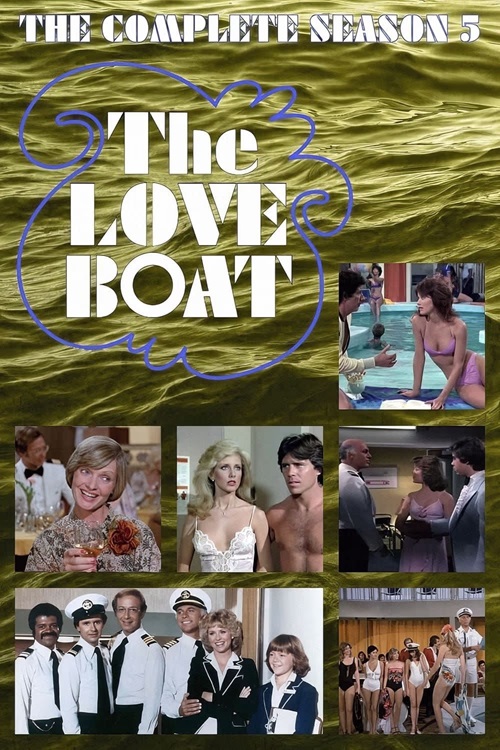
Retro Television Review: The Love Boat 5.26 “Pal-I-Mony-O-Mine/Does Father Know Best?/An ‘A’ for Gopher”


Welcome to Retro Television Reviews, a feature where we review some of our favorite and least favorite shows of the past!  On Wednesdays, I will be reviewing the original Love Boat, which aired on ABC from 1977 to 1986!  The series can be streamed on Paramount Plus!

This week, Ted Lange presents three stories of cruise ship love.

Episode 5.26 “Pal-I-Mony-O-Mine/Does Father Know Best?/An ‘A’ for Gopher”

(Dir by Ted Lange, originally aired on April 10th, 1982)

Dr. John Hanson (Ben Vereen) boards the ship with his new girlfriend, attorney Jenny Brooks (Denise Nicholas).  John is shocked to discover that his former girlfriend, Ellen (Lynne Moody), is also on the cruise.  Jenny befriends Ellen and, after listening to all the details of how Jenny supported John while he was going through medical school, she suggests that Ellen should sue John for palimony.  Jenny even offers to help Ellen and John figure out how much John owes her.  John agrees.  As he and Ellen itemize their former relationship, they come to realize that they’re still in love.  Sorry, Jenny!  Jenny leaves the boat alone.  John and Ellen leave the boat engaged.  (Jenny does give them a bill for her legal services.  John and Ellen have a good laugh.)

WOW!  That’s not the type of story that you regularly see on The Love Boat.  It’s rare for a passenger to leave as angry as Jenny did.  What’s surprising is that neither Ellen nor John seemed to feel that bad about Jenny getting her heart broken.  Then again, what was Jenny thinking when she invited Ellen back into their lives to begin with?  This is why you’re never friendly with your significant other’s exes.  I don’t care how nice they seem or act.  They’re all potential enemies!  I don’t care how polite they are when they approach you outside the Dallas Museum of Art and start speaking in their fakeass British accent, don’t trust them …. well, anyway, let’s move on.

Gopher is super-excited when his junior high English teacher, Susan Wilkham (Susan Strasberg), boards the ship.  Gopher explains that he’s always had a crush on her and, now that Gopher is an adult, Susan appears to also now have a crush on him.  (Don’t freak out, she doesn’t even realize he was a former student until he specifically mentions that he was in her class.)  Except …. oh no!  Captain Stubing has a crush on her as well!  Well, don’t worry.  Things work out for Gopher.  While Vicki does not get a stepmother, Gopher gets a girlfriend who we will probably never hear about again.  Fred Grandy and Susan Strasberg made for a surprisingly cute couple.  (It helped that they both appeared to be the same age, despite the show’s effort to cast her as being “the older woman.”)  Good for Gopher, it’s about time something good happened to him.

Finally, a father (Lloyd Bochner) encourages his nerdy son (Kevin Brophy) to hit on a beautiful but snobbish blonde (Kristina Wayborn).  The son prefers the blonde’s shy best friend (Patty Freedman).  On every episode of The Love Boat, there’s one story that doesn’t amount too much and that what this story was.

Hey, this episode was directed by Isaac Washington himself, Mr. Ted Lange!  Obviously, The Love Boat isn’t really a show that demands or even allows an auteurist approach but I will say that this was one of the better acted episodes that I’ve seen.  Vereen and Moody, Grandy and Strasberg, they all had plenty of chemistry.  This was a truly pleasant cruise, despite Jenny’s anger.


Retro Television Review: Fantasy Island 6.12 “The Tallowed Image/Room and Bard”


Welcome to Retro Television Reviews, a feature where we review some of our favorite and least favorite shows of the past!  On Tuesdays, I will be reviewing the original Fantasy Island, which ran on ABC from 1977 to 1984.  Unfortunately, the show has been removed from most streaming sites.  Fortunately, I’ve got nearly every episode on my DVR.
This week, William Shakespeare comes to the Island!  Smiles, everyone, smile!

Episode 6.12 “The Tallowed Image/Room and Bard”

(Dir by Carl Kugel, originally aired on January 29th, 1983)

This week, we have another two fantasies and, interestingly enough, they both involve time travel.

Movie star Angela Marckham (Laraine Stephens) wants to be taken seriously as an actress.  She asks Roarke to send her back in time so that she can appear in one of Shakespeare’s plays.  However. something goes wrong when Roarke attempts to open up the time travel portal and instead, Shakespeare (Robert Reed) ends up in the modern era.

“Be this Heaven or Hell?” Shakespeare demands.

“This is Fantasy Island,” Tattoo replies.

Shakespeare is happy to have escaped England because he was on the verge of being killed by the Earl of Norfolk (Lloyd Bochner).  Angela puts Shakespeare to work writing a scene for her but Shakespeare announces that he cannot use a “word processor” and needs a quill pen.  Luckily, quills can be bought at the Fantasy Island gift shop!  Shakespeare then gets writers block.  Angela really should just demand a refund.  Her fantasy is a bust.  No traveling to the past.  No play.  Shakespeare is kind of a jerk.  But then the Earl of Norfolk shows up on Fantasy Island and, with his life now in danger, Shakespeare discovers that can write again.  Hooray!

This fantasy felt familiar but, then again, the same can be said for many of the episodes of Fantasy Island that I’ve recently watched.  After six seasons, any show would start to repeat itself.  In this case, neither Angela nor Shakespeare are particularly sympathetic.  Roarke has the patience of the saint.

Meanwhile, Andy Durant (Ray Buktenica) goes back to Victorian-era London so that he can meet a model whose picture fascinates him.  Andy meets Pamela Gentry (Angela Landers) but is shocked to discover that she is about to fall victim to the mad owner of a wax museum.  Frederick Kragan (Cesar Romero) kills his models and then disguises them as wax figures.  (If this sounds familiar, it’s because it’s basically a remake of House of Wax.)  Kragan’s assistant, Otto, is played by Sid Haig!  Can Andy save Pamela’s life and expose Kragan’s crimes?

This was a fairly entertaining episode.  I actually kind of liked the idea of Shakespeare being a cranky jerk, even if there was nothing particularly British about Robert Reed’s performance.  Then again, there’s also nothing British about the performances of Audrey Landers, Cesar Romero, or Sid Haig.  This was an odd episode but the House of Wax fantasy had a lot of old school Hammer film atmosphere to it.  And, for those who enjoy Roarke/Tattoo comedy, this episode had a bit more than usual.  Between Tattoo trying to help Shakespeare and Roarke laughing off Angela’s very justified anger over her fantasy not being fulfilled, this was a very good Roarke/Tattoo episode.

Overall, this was a good trip to the Island.
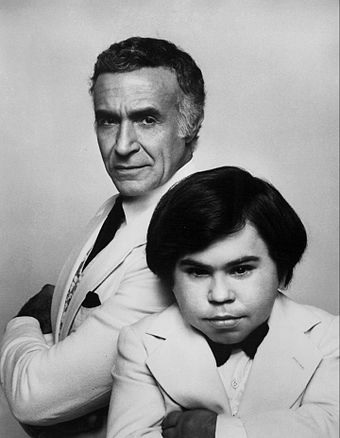
Scalplock (1966, directed by James Goldstone)


In this comedic western, gambler Benjamin Calhoun (Dale Robertson) wins big in a poker game.  Not only does he walk away with several thousand dollars but he also now owns his own railroad, the BP;S&D.  Calhoun celebrates the biggest win of his career by tossing ten dollar bills at the townspeople, recruiting a worshipful young assistant (Bob Random), and commandeering a private railcar that belongs to wealthy Burton Standish (John Anderson).  In the car, he finds Marta Grenier (Diana Hyland), a “working woman,” who has been hired to provide company for Standish.

Calhoun and Marta ride off to check out Calhoun’s new railroad.  What he discovers is that the railroad that he won is not only not completed but the workers are striking because they haven’t been paid in two weeks.  The quick-thinking Calhoun offers to make all of the workers part-owners of the railroad.  With construction once again starting, Calhoun tries to figure out how to keep his new business open.  He also meets a strong-headed storekeeper named Joanna Royce (Sandra Smith).

When Standish finally shows up, it turns out that he was originally planning on buying the BP;S&D.  Will Calhoun hold onto the railroad and honor the promise he made to the workers or will he sell out to Standish?

For all the talk about completing the railroad, Scalplock ends with most of the work undone.  That’s because Scalplock was a pilot for The Iron Horse, a television series that lasted for two seasons in the 60s.  Scalplock (and The Iron Horse) is mostly a showcase for Dale Robertson, a low-key but always convincing actor who specialized in westerns.  Usually, Robertson was cast as an upstanding citizen and law enforcement agent.  In Scalplock, he’s playing the type of genial rogue that James Garner played on Maverick and later in The Rockford Files.  Robertson is likable in Scalplock and even convinces us that Calhoun would choose his workers over a quick payday.  Fan of the genre will enjoy Scalplock, as long as they don’t get too invested in witnessing that last track of rail laid into the ground.

Dale Robertson, who started his career in the 40s, continued to act through the 90s, though usually as a guest star instead of a series lead.  Robertson eventually retired to Oklahoma where he owned a ranch that was home to over 200 horses.  He passed away in 2013 at the age of 89.

Retro Television Review: Fantasy Island 5.3 “Cyrano/The Magician”


Welcome to Retro Television Reviews, a feature where we review some of our favorite and least favorite shows of the past!  On Tuesdays, I will be reviewing the original Fantasy Island, which ran on ABC from 1977 to 1984.  Almost the entire show is currently streaming on Daily Motion, YouTube, Plex, and a host of other sites.

This week …. someone’s missing!

Episode 5.3 “Cyrano/The Magician”

(Dir by Dan Chaffey, originally aired on October 24th, 1981)

Hey, where’s Tattoo!?

Technically, Tattoo does appear in this episode but it’s only in the stock footage that appeared at the start of every episode.  Tattoo rings the bell and announces, “Da plane …. da plane!” but that’s it.  He does not meet Mr. Roarke outside of the bungalow.  He is not present to greet the guests.  He’s not present to say goodbye to the guests.  Tattoo is nowhere to be seen and, somewhat disconcertingly, no mention is made of why he’s missing.  Instead, Mr. Roarke and Julie handle the fantasies in this episode.

If I had to guess, I’d say that Herve Villechaize was having a salary dispute with the producers.  It seems obvious that Julie was brought in as a way to tell Villechaize that he was replaceable.  However, Tattoo’s absence is felt so strongly in this episode that it seems likely that all the producers did was prove Villechaize’s point about why he deserved more money.  Wendy Schaal is a likable performer but she had close to no real chemistry with Ricardo Montalban and Julie was such a blandly-written character that there was no way she could replace the enigmatic and rather cynical Tattoo.

Sad to say, one of this episode’s fantasies feels as if it would have been perfect for Tattoo’s commentary.  Marjorie Denton (Carol Lynley) is a bus driver who wants to go back to a time when men were at their most chivalrous.  She finds herself back in 17th century France, a time when men were chivalrous but woman had absolutely no rights.  At first, she is thrilled to be the subject of the attentions of both the handsome Gaston (Simon MacCorkindale) and the poetic Cyrano de Bergerac (John Saxon).  She is less thrilled to catch the eye of the Marquis de Sade (Lloyd Bochner).  It’s not a bad fantasy, though Cyrano and De Sade were not quite contemporaries.  But it’s hard not to think about how Villechaize was always at his best when dealing with wounded romanticism.  Since Cyrano himself turned out to be a guest having a fantasy, it’s hard not to regret that Tattoo was not around to encourage him.

As for the other fantasy, it’s one of those silly and kind of boring comedic fantasies that was obviously included for the kids.  (“Mommy, who is the Marquis De Sade?”)  Timothy Potter (Bart Braverman), no relation to Harry, is a bad magician who wants to be a great magician.  Mr. Roarke gives him a collection of old spell books and an assistant named Suva (Judy Landers), whom Timothy proceeds to fall in love with.  Unfortunately, Timothy doesn’t bother to study the books like Roarke told him to and he accidentally makes Suva disappear.  In the end, though, Roarke assures Timothy that he just sent her to Cleveland, which just happens to be his hometown.  There’s a chimpanzee in this fantasy and the chimp gives the most compelling performance.  The only thing that could have saved this fantasy would have been some snarky Tattoo commentary.

Is it possible to have Fantasy Island without Tattoo?  Based on this episode, the answer would be no.  Let’s hope he returns next week.

Film Review: The Man In The Glass Booth (dir by Arthur Hiller)


Who is Arthur Goldman?

That’s the question at the heart of the 1975 film, The Man In The Glass Booth.

When we first meet Arthur Goldman (Maximilian Schell), he is a wealthy businessman who lives in a Manhattan high-rise and who appears to rarely leave the safety of his penthouse.  He is waited on by two assistants, Jack (Henry Brown) and Charlie (Lawrence Pressman), both of whom he talks to and treats as if they are members of his own family.  His most frequent visitor is his psychiatrist, Dr. Weissburger (Robert H. Harris), who frequently stops by and asks Arthur if he’s been taking his medication.

Arthur Goldman is a man who loves to talk.  Indeed, the first hour of the film feels almost like a nonstop monologue on the part of Goldman, with just occasional interjections from the other characters.  Goldman was born in Germany.  He talks about how, when he was young, he and his family were sent to a concentration camp and it was there that he witnessed the murder of his father by the camp’s sadistic commandant, Dorff.  Dorff is one of the many Nazis who disappeared to South America at the end of the war.

When Goldman spots a car that always seems to be parked across the street from his building, he becomes paranoid.  He says that he’s being watched and even suggests that Dorff has come to capture him.  Instead, it turns out that Mossad come for him.  As the agents explain it to Charlie, dental records prove that Arthur Goldman is actually Commandant Dorff.  Goldman/Dorff is taken back to Israel to stand trial for his crimes.

Are Arthur Goldman and Dorff the same man?  Once in Israel, Goldman tells anyone who will listen that he is Dorff and that he feels no guilt for his actions.  He insists on being allowed to wear his SS uniform during the trial.  Because of threats to his safety, a booth made of bullet-proof glass has been placed in the courtroom.  As the trial commences, The Man in the Glass Booth continues to rant and rave and declare his guilt.  However, the prosecutor (Lois Nettleton) comes to doubt that the man is who he says he is.

The Man In The Glass Booth is based on a novel and play by Robert Shaw.  (The same year that The Man In The Glass Booth was released, Shaw played Quint in Jaws.)  The film was produced as a part of an experiment called American Film Theatre, in which well-known plays would be adapted to film and then would be shown at 500 participating movie theaters in America.  Each production would only be shown four times at each theater and subscriptions were sold for an entire “season” of films.  It sounds like an interesting experiment and the type of thing that I would have enjoyed if I had been around back then.  Today, of course, these productions would have just premiered on a streaming service.

The Man In The Glass Booth is a film that very much feels like a filmed play.  There are only three locations — Goldman’s penthouse, his cell, and the courtroom where he is put on trial.  The three act structure is very easy to spot.  Maximilian Schell’s performance is also very theatrical.  In fact, it’s so theatrical that, for the first hour or so, I found myself wishing that he would just stop talking for a few second or two.  He was so dramatic and so flamboyant and so intentionally over-the-top that he became somewhat exhausting.  But, during the second hour, I came to see that all of that “overacting” was actually setting up the film’s final act.  Schell talks so much that, when he finally does find himself unable to explain himself, it’s a shocking moment and one that perfectly captures not just the evil of the Nazis and the Holocaust but also how the legacy of that evil lives on after the fall of the Third Reich and the deaths of the majority of the Holocaust’s perpetrators.  At that moment, I realized that The Man In The Glass Booth never stopped speaking because silence would force him to confront the horrors of the past and the trauma, guilt, and uncertainty lurking in his subconscious.  Maximilian Schell was nominated for an Oscar for his performance here and, by the end of the film, I totally understood why.

The Man In The Glass Booth requires some patience.  Actually, it requires a lot of patience.  However, those who stick with it will discover an intelligent and thought-provoking film about not only the horror of the past but also how those in the present deal with and rationalize those horrors.  Though the film is a bit too stagey for its own good, it’s also one that sticks with you even after the curtain falls and the end credits roll.

Scenes That I Love: Lee Marvin on Point Blank


100 years ago today, Lee Marvin was born in New York City.  One of the great screen tough guys, Lee Marvin played stoic and determined men who you didn’t want to upset.

That was certainly true of his role as Walker in 1967’s Point Blank.  A thief who was double crossed by his partner and the organization to which his partner was in debt, Walker is determined to get back the money that he stole from someone else.  Relentlessly, Walker moves from one mob boss to another and repeatedly, those bosses make the mistake of thinking that they can double cross him again.

Point Blank (1967, directed by John Boorman)

In this scene, which was reportedly considered to be shockingly violent by 1967 standards, Carter (Lloyd Bochner) attempts to fool Walker, just to discover that Walker is smarter and far more ruthless than anyone realizes.