Someone is stalking soap opera star, Kristin (Catherine Oxenberg). She is receiving frightening notes and her coworkers are dying. Who is after her and what does it have to do with a tragic fire at a birthday party? Is it one of her jealous co-stars? Is it her duplicitous boyfriend (David Naughton)? Is it the stranger (William Bumiller) that she’s having an affair with? Or is it the obsessed fan (Karen Black)? Detective Morrison (Larry Brand) is on the case!
The return of Detective Morrison (played, again, by the film’s director) makes Overexposed a sequel to The Drifter. (Both films were directed by Brand and executive produced by Roger Corman). Morrison has much more to do in Overexposed than he did in The Drifter so maybe the plan was to launch a low-budget franchise of Detective Morrison movies. It didn’t happen, because Overexposed is much less interesting than The Drifter. The spoiled and rich Kristin is never a likable character and the movie’s real star was Oxenberg’s busy body double, Shelley Michelle.
Overexposed does have a few good scenes, including death-by-acidic-facial-cream. The best thing about movie is Karen Black, who brilliantly delivered a monologue about why she loves television. It doesn’t have much to do with the rest of the movie but Karen Black knocked it out of the park. The monologue ends with Karen Black paying homage to The Mod Squad by shouting out, “Solid!”
Francis Ford Coppola was still a UCLA film student when he made YOU’RE A BIG BOY NOW, the 1966 coming of age comedy he used as his MFA thesis. The young Coppola was 27, and had gained experience working for Roger Corman ; indeed, Corman gave him his first break when he hired Coppola to write and direct the horror quickie DEMENTIA 13. But YOU’RE A BIG BOY NOW was his first major studio release, and put him on the map as a talent to keep an eye on.
Bernard Chanticleer is a 19 year old nerd with a way-overprotective mother and disinterested, authoritarian father. He works for Dad at a New York City library, and is constantly goofing up on the job. Dad thinks it’s time for Bernard to spread his wings and move on his own, much to Mom’s displeasure. She finds him a room at a house owned by Miss Thing, who’s tenants include conservative…
Halloween has come and gone, though most people have plenty of leftovers on hand, including your Cracked Rear Viewer. Here are some treats (and a few tricks) that didn’t quite make the cut this year:
ISLE OF THE DEAD (RKO 1945, D: Mark Robson)
Typically atmospheric Val Lewton production stars Boris Karloff as a Greek general trapped on a plague-ridden island along with a young girl (Ellen Drew) who may or may not be a vorvolaka (vampire-like spirit). This film features one of Lewton’s patented tropes, as Drew wanders through the woods alone, with the howling wind and ominous sounds of the creatures of the night. Very creepy, with another excellent Karloff performance and strong support from Lewton regulars Alan Napier, Jason Robards Sr, and Skelton Knaggs. Fun Fact: Like BEDLAM , this was inspired by a painting, Arnold Bocklin’s “Isle of the Dead”.
THE BOWERY BOYS MEET THE MONSTERS (Allied Artists 1954, D: Edward…
“Oh we must be doin’ somethin right to last 200 years…”
— Haven Hamilton (Henry Gibson) in Nashville (1975)
The 1975 Best Picture nominee Nashville is the epitome of an ensemble film. It follows 24 characters as they spend five days wandering around Nashville, Tennessee. Some of them are country music superstars, some of them are groupies, some of them are singers looking for a first break, and at least one of them is an assassin. The one thing that they all have in common is that they’re lost in America. Released barely a year after the resignation of Richard Nixon and at a time when Americans were still struggling to come to terms with the turmoil of the 60s, Nashville is a film that asks whether or not America’s best days are behind it and seems to be saying that they may very well be. (That’s a question that’s still being asked today in 2015.) It’s appropriate, therefore, that Nashville both takes place in and is named after a city that everyone associates with perhaps the most stereotypically American genre of music that there is.
Nashville follows 24 characters, some of whom are more interesting than others. For five days, these characters wander around town, occasionally noticing each other but far more often failing to make any sort of connection.
Haven Hamilton (Henry Gibson) is a veteran star, a somewhat comical character who sings vapid songs about home and family and who smiles for the public while privately revealing himself to be petty and vain. His son, Bud (Dave Peel), is a Harvard graduate who acts as his father’s business manager. Oddly enough, Haven is an unlikable character until the end of the film when he suddenly reveals himself to be one of the few characters strong enough to keep Nashville for descending into chaos. Meanwhile, Bud seems to be a nice and modest guy until he takes part in humiliating another character.
Haven’s lover is Lady Pearl (Barbara Baxley), who owns a nightclub and spends most of the film drinking. Much like Haven, she starts out as a vaguely comical character until she finally gets a chance to reveal her true self. In Pearl’s case, it comes when she delivers a bitter monologue about volunteering for Bobby Kennedy’s presidential campaign.
Haven’s lawyer is Delbert Reece (Ned Beatty), an obsequies good old boy who is married to gospel singer Linnea (Lily Tomlin). They have two deaf children. Linnea has learned sign language. Delbert has not. Over the course of the film, both Delbert and Linnea will be tempted to cheat. Only one of them actually will.
And then there’s Barbara Jean (Ronee Blakley), a mentally unstable singer who has come to Nashville with her manipulative husband/manager, Barnett (Allen Garfield). Almost every character in the film wants something from Barbara Jean. A mostly silent Vietnam veteran named Kelly (Scott Glenn) claims that his mother knows Barbara Jean. A nerdy guy named Kenny (David Hayward) comes to Nashville just to see her perform.
Both Kelly and Kenny end up getting to know Mr. Green (Keenan Wynn), a rare Nashville resident who doesn’t seem to care about music. However, Mr. Green’s spacey niece, L.A. Joan (Shelly Duvall), is obsessed with having sex with as many musicians as possible.
Among those being targeted by L.A. Joan is Tom Frank (Keith Carradine), one-third of the folk trio Bill, Mary, and Tom. Unknown to Bill (Allan F. Nicholls), Tom is sleeping with Bill’s wife, Mary (Cristina Raines). Unknown to Mary, Tom is sleeping with almost every other woman in Nashville as well. When Tom takes to the stage at Pearl’s nightclub and sings a song called I’m Easy, the audience is full of women who think that he’s specifically singing to them.
Another one of Tom’s songs, the appropriately titled “It Don’t Worry Me,” is frequently sung by Albuquerque (Barbara Harris), who spend the entire film trying to get discovered while hiding out from her much older husband, Star (Bert Remsen).
Another aspiring star is Sulleen Grey (Gwen Welles), who is a tone deaf waitress who suffers the film’s greatest humiliation when she agrees to perform at a political fund raiser without understanding that she’s expected to strip while singing. Trying to look after Sulleen is Wade (Robert DoQui), who has just been released from prison.
And then there’s the loners, the characters who tend to pop up almost randomly. Norman (David Arkin) is a limo driver who, like everyone else in Nashville, wants to be a star. The hilariously bitchy Connie White (Karen Black) and the bland Tommy Brown (Timothy Brown) already are stars. (The character of Tommy Brown is one of Nashville’s oddities. He’s listed, in the credits, as being a major character but he only appears in a few scenes and never really gets a storyline of his own.) There’s the Tricycle Man (Jeff Goldblum), a silent magician who mysteriously appears and disappears throughout the film.
And, finally, there’s Opal (Geraldine Chaplin), an apparently crazed woman who is wandering around Nashville and pretending to be a reporter for the BBC. (It’s never specifically stated that Opal is a fake but it’s fairly obvious that she is.) How you feel about the character of Opal will probably determine how you feel about Nashville as a whole. If you find Opal to be a heavy-handed caricature, you’ll probably feel the same way about the rest of the film. If you find the character of Opal to be genuinely amusing with her increasingly pretentious musings, you’ll probably enjoy Nashville.
There is one more very important character in Nashville. He’s the character who literally holds the film together. He’s also the reason why I’m including Nashville in this series of reviews about political films. That character is named Hal Phillip Walker and, though he’s never actually seen in the film, he’s still the driving force behind most of what happens. Walker is a third-party presidential candidate, a man who seems to be universally admired despite the fact that his campaign appears to just be a collection of vapid platitudes. Walker’s campaign manager, John Triplette (Michael Murphy), comes to Nashville and sets up the Walker For President rally. That’s where Nashville reaches its violent and not-all-together optimistic climax.
Reportedly, Nashville is a favorite film of Paul Thomas Anderson’s and you can see the influence of Nashville in many of Anderson’s films, from the large ensemble to the moments of bizarre humor to the refusal to pass judgement on any of the characters to the inevitable violence that ends the film. Also, much like Anderson’s films, Nashville seems to be a film that was specifically made to divide audiences. You’re either going to think that Nashville is a brilliantly satirical piece of Americana or you’re going to think it’s a self-indulgent and self-important mess.
As for me, I think it’s great and I think that, after you watch it, you should track down and read Jan Stuart’s The Nashville Chronicles: The Making of Robert Altman’s Masterpiece. It’s the perfect companion for a great film.
To be honest, I really don’t like Burnt Offerings, a 1976 film about what happens when an odd family moves into an even odder house. I find it to be slow and predictable and, to be honest, the only part that really works are the flashback scenes that feature a skeletal Anthony James playing a sinister chauffeur.
However, I’ve discovered that there’s a lot of people online who disagree with me and who consider this to be one of the best haunted house movies ever! So, in the spirit of agreeing to disagree, here is Burnt Offerings…
(If nothing else, the film is worth it for the chance to see Oliver Reed, Karen Black, Bette Davis, Anthony James, and Burgess Meredith all in one film together.)
Last night, the temperature plunged here in Texas. When I woke up this morning, I was confronted with a world that was literally frozen. Needless to say, nobody in Dallas went to work today. Instead, we all sat in our houses and tried to keep ourselves entertained. I kept myself occupied by watching a film that was initially released way back in 1978 and which takes place in my home state.
The name of that film was Capricorn One and it’s the latest entry in the 44 Days of Paranoia.
Capricorn One begins with three astronauts preparing to take the fist manned space flight to Mars. James Brolin is the stoic leader. Sam Waterston is the guy who has a joke for every occasion. And O.J. Simpson is … well, O.J. really doesn’t have much of a personality. He’s pretty much just along for the ride.
However, it turns out that there really isn’t going to be a ride. Just as the countdown begins, the astronauts are ordered to leave the capsule. They are then transported to secret base in the Texas desert. It’s here that they have a meeting with the Head of NASA, who is played by Hal Holbrook. (It’s simply not a 70s conspiracy film if Hal Holbrook isn’t somehow involved). Holbrook proceeds to deliver a stirring monologue where he talks about how he and Brolin have always dreamed of sending a manned flight to Mars. However, as Holbrook explains, the life support system on the crew’s ship was faulty. If Holbrook had allowed them to be launched, they would have died as soon as they left the Earth’s atmosphere. However, if the mission had been canceled then there was a chance that the President would use that cancellation as an excuse to cut NASA’s funding.
So, as Holbrook explains, an empty spaceship has been launched into space. As far as the American public is concerned, the three astronauts are currently on their way to Mars. Now, in order to save the space program, they are going to have to fake the mission. In a studio, a fake alien landscape has been set up and it’s from that studio that Brolin, Waterston, and Simpson will pretend to explore Mars.
Brolin, Waterston, and Simpson reluctantly agree to cooperate with the plan. However, after doing the first fake broadcast, Brolin starts to have second thoughts. Realizing that he can’t trust the three astronauts to keep a secret, Holbrook announces that the capsule’s heat shields failed during re-entry and that the crew of Capricorn One is now dead. Now, all he has to do is have the three of them killed for real.
Meanwhile, a NASA technician (Robert Walden) stumbles onto evidence of the deception. He subsequently vanishes but not before he tells reporter Elliott Gould about his suspicions. While the three astronauts try to escape from Holbrook’s agents, Gould tries to find out what really happened to Capricorn One.
It’s probably half-an-hour too long, the plot is full of holes (the least of which being why Holbrook waited until after he had announced the fake deaths to order the real deaths), and director Peter Hyams allows a few scenes to run on and on while others seem to end with a jarring abruptness. However, for the most part, Capricorn One is a well-acted and solidly entertaining film. However, there are two things that make Capricorn One especially memorable.
First off, Capricorn One features one of the most exciting action sequences that I have ever seen. It occurs while Gould is investigating Walden’s disappearance. After visiting Walden’s apartment and discovering that it’s inhabited by a woman who claims to have never heard of his friend, Gould is driving away when he discovers that his brakes have been disabled. The car then starts to accelerate and Gould finds himself desperately trying to regain control as the car careens through the streets of Houston. The scene is shot almost entirely from Gould’s point-of-view and, for five minutes, we watch as everything from other cars to unlucky pedestrians come hurtling towards the car. For those few minutes, when the viewer and Gould become one, Capricorn One is not only exciting but it feels genuinely dangerous as well.
Secondly, Capricorn One features some of the oddest dialogue imaginable. Peter Hyams not only directed the film but he also wrote the screenplay as well. Watching the film, one gets the feelings that Hyams was so in love with his dialogue and with all of his quirky characters that he simply could not bring himself to cut anything or anyone. As a result, the film is full of lengthy monologues. When the characters speak to each other, they don’t have conversations as much as they trade quips. Characters like Gould’s ex-wife (played by Karen Black) and his editor (David Doyle) show up for a scene or two, deliver monologues that are only tangibly related to the film’s plot, and then vanish. Sam Waterston ends up telling the world’s longest joke while he climbs a mountain in the desert. Towards the end of the film, Telly Savalas (who was in my favorite Mario Bava film, Lisa and the Devil) shows up as a foul-tempered crop duster and engages in a long argument with Gould who, despite being a reporter, never bothers to question why Savalas would have a crop dusting business in the middle of the desert.
But here’s the thing — it works. As odd as some of the dialogue may be and as superfluous as some of the action is to the overall plot, it still all works to the film’s benefit. The constant quirkiness works to keep the audience off-balance and to give Capricorn One its own unique rhythm.
Capricorn One — see it now before Michael Bay remakes it.
Sometimes, you have to be careful which films you choose to watch over the course of the day.
Such as, last Friday night, I heard the news that Jill Clayburgh had died and I ended up watching An Unmarried Woman. This, along with the fact that I also watched the Black Swan trailer, led to me dancing around the house in my underwear, en pointe in bare feet, and doing a half-assed pirouette in the living room. And I felt pretty proud of myself until I woke up Saturday morning and my ankle (which I don’t think has ever properly healed from the day, seven years ago, that I fell down a flight of stairs and broke it in two places) literally felt like it was on fire. That was my body’s way of saying, “You ain’t living in a movie, bitch. Deal with it.”
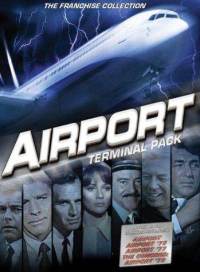
So, come Sunday, I decided to play it safe by watching something that I was sure wouldn’t lead to any imitative behavior on my part. Since I had previously reviewed Earthquake on this site, I decided that I would devote some time to the movies that started the entire 1970s disaster movie genre — Airport. Watching Airport led to me watching Airport’s three sequels.
I was able to do this largely because I own the Airport Terminal Pack, a two-disk DVD collection that contains all four of the Airport films and nothing else. There’s no special features or commentary tracks. That’s probably a good thing because these films are so extremely mainstream that I doubt the commentary tracks would be all that interesting except to people who love “Me and Jennings Lang had the same lawyer…” style stories.
The movies are a mixed bag of ’70s sexism, mainstream greed, and casts that were described as being “all-star” despite the fact that they featured very few stars. They’re all worth watching as time capsules of a past time. Some of them are just more worthy than others.
Below are my thoughts on each individual film in the collection…
Airport (directed by George Seaton)
First released in 1970, Airport was nominated for 10 Academy Awards (including best picture), broke box office records, and started the whole 70s disaster movie trend. It also has to be one of the most boring, borderline unwatchable movies ever made. The fact that I managed to sit through the whole thing should be taken as proof that I’m either truly dedicated to watching movies or I’m just insane. Take your pick.
Anyway, the film is painstakingly detailed account of the every day operations of an airport. Yeah, sounds like a lot of fun, doesn’t it? Burt Lancaster runs the airport. His brother-in-law Dean Martin flies airplanes. Both of them have mistresses but we’re told that’s okay because Lancaster’s wife expects him to talk to her and Martin’s wife is cool with him fucking around as long as he comes home at night. I would be tempted to say that this is a result of the film having been made in 1969 and released in 1970 but actually, it’s just an introduction to the sexual politics of the typical disaster film. Men save the day while women get in the way. And if you think things have changed, I’d suggest you watch a little film calledf 2012…
The only interesting thing about the film is that Lancaster’s mistress is played by Jean Seberg who, ten years earlier, had helped change film history by co-starring in Jean-Luc Godard’s classic film Breathless. Nine years later, after years of being hounded by the American press and the FBI for her radical politics, Seberg committed suicide.
Airport 1975 (directed by Jack Smight)
As opposed to its predecessor, Airport 1975 is actually a lot of fun in its campy, silly way. This is the one where a small private plane (flown by Dana Andrews, the star of the wonderful film noir Laura) collides with a commercial airliner. The entire flight crew is taken out and head stewardess Karen Black has to pilot the plane despite the fact that she’s obviously cross-eyed. Luckily, since Black is a stewardess, she has a pilot boyfriend who is played by Charlton Heston. Heston talks her through the entire flight despite the fact that she was earlier seen trying to pressure him into not treating her like an idiot. Anyway, Heston does his usual clench-jaw thing and if you need a drinking game to go with your bad movie, just take a shot every time Heston calls Black “honey.” You’ll be drunk before the plane lands.
There’s some other stuff going on in this movie (for instance, Gloria Swanson appears as “herself” and doesn’t mention Sunset Boulevard or Joseph Kennedy once!) but really, all you need to know is that this is the film where Karen Black acts up a storm and random characters keep saying, “The stewardess is flying the plane!?”
Odd trivia fact: Airport 1975 was released in 1974.
Airport ’77 (directed by Jerry Jameson)
In Airport ’77, a group of art thieves attempt to hijack an airplane which, of course, leads to the airplane crashing into the ocean and somehow sinking down to the ocean’s floor without splitting apart. The crash survivors have to try to figure out how to get to the surface of the water before they run out of oxygen.
In this case, our resident sexist pilot is Jack Lemmon who has a really ugly mustache. He wants to marry head stewardess Brenda Vaccarro. Vaccarro doesn’t understand why they have to get married to which Lemmon responds, “Because I want a wife and kids!” The film also gives us Lee Grant as a woman who is married to Christopher Lee but who is having an affair with another man. She also drinks a lot and dares to get angry when she realizes that the airplane is underwater. While this sort of behavior is acceptable from Dean Martin, Charlton Heston, and Jack Lemmon, the film punishes Lee Grant by drowning her in the final minutes.
Technically, Airport ’77 is probably the best of the Airport films. The cast does a pretty good job with all the melodrama, the film doesn’t drag, and a few of the scenes manage to generate something resembling human emotion. (For instance, when the blind piano player died, I had a tear in one of my freaky, mismatched eyes.) Unfortunately, the movie’s almost too good. It’s not a lot of fun. Everyone plays their roles straight so the silly plot never quite descends into camp and the key to a good disaster film is always camp. This film also has the largest body count of the series, with most of the cast dead by the end of the movie. (And, incidentally, this film did nothing to help me with my fear of water…)
The Concorde: Airport ’79 (directed by David Lowell Rich)
The last Airport movie is also the strangest. Some people have claimed that this film was meant to be a satire of the previous Airport films. I can understand the argument because you look at film like Concorde and you say, “This must be a joke!” However, the problem with this theory is that there are moments of obvious “intentional” humor in this film (i.e., J.J. from Good Times smokes weed in the plane’s bathroom, another passenger has to go to the bathroom whenever she gets nervous) and none of them show any evidence of the type of wit and outlook necessary to come up with anything this silly on purpose. Add to that, the film’s story is credited to Jennings Lang, a studio executive. Studio execs do not take chances. (Plus, the actual script was written by Eric Roth, who went on to write the amazingly humorless The Curious Case of Benjamin Button).
No, this film is meant to be taken seriously and oh my God, where do I start?
Our pilots are George Kennedy and Alain Delon. The head stewardess (and naturally, Delon’s girlfiend) is played by Sylvia “Emanuelle” Kristel who, at one point, says, “You pilots are such men!” “Hey, they don’t call it a cockpit for nothing, honey,” Kennedy replies.
Meanwhile, Robert Wagner is trying to destroy the Concorde because one of the passengers is his girlfriend who has proof that Wagner has been selling weapons to America’s enemies. So, he attempts to blow the plane up with a guided missile and when that fails, he sends a couple of fighter planes after them. Kennedy responds by opening up the cockpit window — while breaking the sound barrier mind you — and firing a flare gun at their pursuers.
After this, there’s stop over in Paris where Delon arranges for Kennedy to sleep with a prostitute who assures Kennedy that he made love “just like a happy fish.”
The next day, everyone returns to the exact same Concorde — despite the fact that just a day earlier they’d nearly been blown up by a squadron of fighter planes — and take off on the second leg of the flight. Let me repeat that just to make sure that we all understand what this film is asking us to believe. After nearly getting blown up by a mysterious squad of fighter planes, everybody shows up the next morning to get on the exact same plane.
Oh, and it never occurs to Wagner’s ex-girlfriend that Wagner might have something to do with all of this.
Now sad to say, Concorde is the one of those films that’s a lot more fun to talk about than to actually watch. It should be a lot more fun in its badness than it actually is. Still, the movie has just enough camp appeal to make it fun in a “what the fuck…” sorta way.
And that’s how the Airport series comes to an end.
It seems like I’m always taking a chance when I listen to a DVD commentary track. Occasionally, a commentary track will make a bad film good and a good film even better. Far too often, however, listening to a bad or boring commentary track will so totally ruin the experience of watching one of my favorite movies that I’ll never be able to enjoy that movie in the same way again. I’ve learned to almost always involve any commentary track that involves anyone credited as being an “executive producer.” They always want to tell you every single detail of what they had to do to raise the money to make the film. Seriously, executive producers suck.
However, there are more than a few commentary tracks that I could listen to over and over again. Listed below are a few of them.
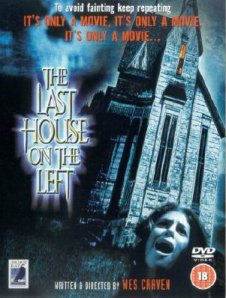
10) Last House On The Left (The Original) — Apparently, there’s a DVD of this film that features a commentary track in which stars David Hess and Fred Lincoln nearly come to blows while debating whether or not this movie should have been made. The DVD I own doesn’t feature that commentary but it does feature a track featuring writer/director Wes Craven and producer Sean S. Cunningham. The thing that I love about their commentary is that they both just come across as such nice, kinda nerdy guys. You look at the disturbing images onscreen and then you hear Cunningham saying, “We shot this scene in my mom’s backyard. There’s her swimming pool…” Both Craven and Cunningham are remarkably honest about the film’s shortcomings (at one point, Craven listens to some of his more awkward dialogue and then says, “Apparently, I was obsessed with breasts…”) while, at the same time, putting the film’s controversy into the proper historical context.
9) Burnt Offerings— When Burnt Offerings, which is an occasionally interesting haunted house movie from 1976, was released on DVD, it came with a commentary track featuring director Dan Curtis, star Karen Black, and the guy who wrote the movie. This commentary track holds a strange fascination for me because it, literally, is so mind-numbingly bad that I’m not convinced that it wasn’t meant to be some sort of parody of a bad commentary track. It’s the commentary track equivalent of a car crash. Curtis dominates the track which is a problem because he comes across like the type of grouchy old man that Ed Asner voiced in Up before his house floated away. The screenwriter, whose name I cannot bring myself to look up, bravely insists that there’s a lot of nuance to his painfully simple-minded script. Karen Black, meanwhile, tries to keep things positive. The high point of the commentary comes when Black points out that one actor playing a menacing chauffeur is giving a good performance (which he is, the performance is the best part of the movie). She asks who the actor is. Curtis snaps back that he doesn’t know and then gets testy when Black continues to praise the performance. Finally, Curtis snaps that the actor’s just some guy they found at an audition. Actually, the actor is a veteran character actor named Anthony James who has accumulated nearly 100 credits and had a prominent supporting role in two best picture winners (In the Heat of the Night and Unforgiven).
8 ) Cannibal Ferox — This is a good example of a really unwatchable movie that’s made watchable by an entertaining commentary track. The track is actually made up of two different tracks, one with co-star Giovanni Lombardo Radice and one with director Umberto Lenzi. Lenzi loves the film and, speaking in broken English, happily defends every frame of it and goes so far as to compare the movie to a John Ford western. The wonderfully erudite Radice, on the other hand, hates the movie and spends his entire track alternatively apologizing for the movie and wondering why anyone would possibly want to watch it. My favorite moment comes when Radice, watching the characters onscreen move closer and closer to their bloody doom, says, “They’re all quite stupid, aren’t they?”
7) Race With The Devil— Race with the Devil is an obscure but enjoyable drive-in movie from the 70s. The DVD commentary is provided by costar Lara Parker who, along with providing a lot of behind-the-scenes information, also gets memorably catty when talking about some of her costars. And, let’s be honest, that’s what most of us want to hear during a DVD commentary.
6) Anything featuring Tim Lucas — Tim Lucas is the world’s foremost authority on one of the greatest directors ever, Mario Bava. Anchor Bay wisely recruited Lucas to provide commentary for all the Bava films they’ve released on DVD and, even when it comes to some of Bava’s lesser films, Lucas is always informative and insightful. Perhaps even more importantly, Lucas obviously enjoys watching these movies as much as the rest of us. Treat yourself and order the Mario Bava Collection Volume 1 and Volume 2.
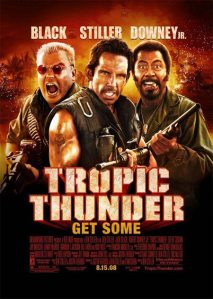
5) Tropic Thunder— The commentary track here is provided by the film’s co-stars, Jack Black, Ben Stiller, and Robert Downey, Jr. What makes it great is that Downey provides his commentary in character as Sgt. Osiris and spends almost the entire track beating up on Jack Black. This is a rare case of a great movie that has an even greater commentary track.
4) Strange Behavior— This wonderfully offbeat slasher film from 1981 is one of the best movies that nobody seems to have heard of. For that reason alone, you need to get the DVD and watch it. Now. As an added bonus, the DVD comes with a lively commentary track featuring co-stars Dan Shor and Dey Young and the film’s screenwriter, Bill Condon (who is now the director that Rob Marshall wishes he could be). Along with providing a lot of fascinating behind-the-scenes trivia, the three of them also discuss how Young ended up getting seduced by the film’s star (Michael Murphy, who was several decades older), how shocked Condon was that nobody on the set seemed to realize that he’s gay, and why American actors have so much trouble speaking in any accent other than their own. Most memorable is Young remembering the experience of sitting in a theater, seeing herself getting beaten up onscreen, and then listening as the people sitting around her cheered.
3) Imaginationland — As anyone who has ever listened to their South Park commentaries knows, Matt Stone and Trey Parker usually only offer up about five minutes of commentary per episode before falling silent. Fortunately, those five minutes are usually hilarious and insightful. Not only are Parker and Stone remarkably candid when talking about the strengths and weaknesses of their work but they also obviously enjoy hanging out with each other. With the DVD release of South Park’s Imaginationland trilogy, Matt and Trey attempted to record a “full” 90-minute commentary track. For the record, they manage to talk for 60 minutes before losing interest and ending the commentary. However, that track is the funniest, most insightful 60 minutes that one could hope for.
2) Donnie Darko — The original DVD release of Donnie Darko came with 2 wonderful commentary tracks. The first one features Richard Kelley and Jack Gyllenhaal, talking about the very metaphysical issues that the film addresses. Having listened to the track, I’m still convinced that Kelley pretty much just made up the film as he went along but its still fascinating to the hear everything that was going on his mind while he was making the film. However, as good as that first track is, I absolutely love and adore the second one because it features literally the entire cast of the movie. Seriously, everyone from Drew Barrymore to Jena Malone to Holmes Osborne to the guy who played Frank the Bunny is featured on this track. They watch the film, everyone comments on random things, and it’s difficult to keep track of who is saying what. And that’s part of the fun. It’s like watching the film at a party full of people who are a lot more interesting, funny, and likable than your own actual friends.
1) The Beyond — This movie, one of the greatest ever made, had one of the best casts in the history of Italian horror and the commentary here features two key members of that cast — Catriona MacColl and the late (and wonderful) David Warbeck. The commentary, which I believe was actually recorded for a laserdisc edition of the film (though, to be honest, I’ve never actually seen a “laserdisc” and I have my doubts as to whether or not they actually ever existed), was recorded in 1997, shortly after the death of director Lucio Fulci and at a time when Warbeck himself was dying from cancer. (Warbeck would pass away two weeks after recording this commentary). This makes this commentary especially poignant. Warbeck was, in many ways, the human face of Italian exploitation, a talented actor who probably deserved to be a bigger star but who was never ashamed of the films he ended up making. This commentary — in which MacColl and Warbeck quite cheerfully recall discuss making this underrated movie — is as much a tribute to Warbeck as it is to Fulci. Highpoint: MacColl pointing out all the scenes in which Warbeck nearly made her break out laughing. My personal favorite is the scene (which made it into the final film) where Warbeck attempts to load a gun by shoving bullets down the barrel. The wonderful thing about this track is that Warbeck and MacColl enjoy watching it too.
 Someone is stalking soap opera star, Kristin (Catherine Oxenberg). She is receiving frightening notes and her coworkers are dying. Who is after her and what does it have to do with a tragic fire at a birthday party? Is it one of her jealous co-stars? Is it her duplicitous boyfriend (David Naughton)? Is it the stranger (William Bumiller) that she’s having an affair with? Or is it the obsessed fan (Karen Black)? Detective Morrison (Larry Brand) is on the case!



 Through the Shattered Lens