In this scene from Robert Altman’s 1975 masterpiece, Nashville, Julie Christie plays herself as a famous visitor to the city for which the film is named. She is introduced to Haven Hamilton (Henry Gibson), Haven’s lawyer, Delbert Reese (Ned Beatty), political advance man John Triplette (Michael Murphy), and country music star Connie White (Karen Black). Julie Christie may be a star in Hollywood but Connie is the star of Nashville.
Karen Black improvised her dismissive line about Julie Christine not even being able to comb her hair. It was a moment that reportedly shocked the rest of the cast and the crew but it was also a line that perfectly summed up both Connie as a character and Altman’s version of Nashville.
First released in 1971, McCabe & Mrs. Miller takes place in the town of Presbyterian Church at the turn of the 19th Century.
Presbyterian Church is a mining town in Washington State. When we first see the town, there’s not much to it. The town is actually named after its only substantial building and the residents refer to the various parts of the town as either being on the right side or the left side of the church. The rest of the town is half-constructed and appears to be covered in a permanent layer of grime. This is perhaps the least romantic town to ever appear in a western and it is populated largely by lazy and bored men who pass the time gambling and waiting for something better to come along.
When a gambler who says that he is named McCabe (Warren Beatty) rides into town, it causes a flurry of excitement. The man is well-dressed and well-spoken and it’s assumed that he must be someone important. Soon a rumor spreads that McCabe is an infamous gunfighter named Pudgy McCabe. Pudgy McCabe is famous for having used a derringer to shoot a man named Atwater. No one is really sure who Atwater was or why he was shot but everyone agrees that it was impressive.
McCabe proves himself to be an entrepreneur. He settles down in Presbyterian Church and establishes himself as the town’s pimp. Soon, he is joined by a cockney madam names Mrs. Miller (Julie Christie). The two of them go into business together and soon, Presbyterian Church has its own very popular bordello. Sex sells and Presbyterian Church becomes a boomtown. It attracts enough attention that two agents of a robber baron approach McCabe and offer to buy him out. McCabe refuses, thinking that he’ll get more money if he holds out. Mrs. Miller informs him that the men that he’s dealing with don’t offer to pay more money. Instead, they just kill anyone who refuses their initial offer.
Three gunmen do eventually show up at Presbyterian Church and we do eventually get an answer to the question of whether or not McCabe killed Atwater or if he’s just someone who has borrowed someone else’s legend. The final gunfight occurs as snow falls on the town and the townspeople desperately try to put out a fire at the church. No one really notices the fact that McCabe is fighting for his life at the time and, as befits a revisionist western, there’s nothing romantic or dignified about the film’s violence. McCabe is not above shooting a man in the back. The killers are not above tricking an innocent cowboy (poor Keith Carradine) into reaching for his gun so that they’ll have an excuse so gun him down. McCabe may be responsible for making Presbyterian Church into a boomtown but no one is willing to come to his aid. The lawyer (William Devane) that McCabe approaches is more interested in promoting his political career than actually getting personally involved in the situation. Mrs. Miller, a businesswoman first, smokes in an opium den with an air of detachment while the snow falls outside.
It’s a dark story with moments of sardonic humor. It’s also one of director Robert Altman’s best. The story of McCabe and Mrs. Miller and the three gunmen is far less important than the film’s portrayal of community growing and changing. Featuring an ensemble cast and Altman’s trademark overlapping dialogue, McCabe & Mrs. Miller puts the viewer right in the heart of Presbyterian Church. There are usually several stories playing out at once and it’s often up to the viewer to decide which one that they want to follow. Yes, the film is about Warren Beatty’s slick but somewhat befuddled McCabe and Julie Christie’s cynical Mrs. Miller. But it’s just as much about Keith Carradine’s Cowboy and Rene Auberjonois’s innkeeper. Corey Fischer, Michael Murphy, John Schuck, Shelley Duvall, Bert Remsen, and a host of other Altman mainstays all have roles as the people who briefly come into the orbit of either McCabe or Mrs. Miller. Every character has a life and a story of their own. McCabe & Mrs. Miller is a film that feels as if it is truly alive.
As with many of Altman’s films, McCabe & Mrs. Miller was not fully appreciated when initially released. The intentionally muddy look and the overlapping dialogue left some critics confused and the film’s status as a western that refused to play by the rules of the genre presented a challenge to audience members who may have just wanted to see Warren Beatty fall in love with Julie Christie and save the town. But the film has endured and is now recognized as one of the best of the 70s.
In this scene from Robert Altman’s 1975 masterpiece, Nashville, Julie Christie plays herself as a famous visitor to the city for which the film is named. She is introduced to Haven Hamilton (Henry Gibson), Haven’s lawyer, Delbert Reese (Ned Beatty), political advance man John Triplette (Michael Murphy), and country music star Connie White (Karen Black). Julie Christie may be a star in Hollywood but Connie is the star of Nashville.
Karen Black, who was born on this date in 1939, improvised her dismissive line about Julie Christine not even being able to comb her hair. It was a moment that reportedly shocked the rest of the cast and the crew but it was also a line that perfectly summed up both Connie as a character and Altman’s version of Nashville.
Ah, the 60s. Both the studio system and the production code collapsed as Hollywood struggled to remain relevant during a time of great social upheaval. The Academy alternated between nominating films that took chances and nominating films that cost a lot of money. It led to some odd best picture lineups and some notable snubs!
1960: Psycho Is Not Nominated For Best Picture and Anthony Perkins Is Not Nominated For Best Actor
To be honest, considering that the Academy has never really embraced horror as a genre and spent most of the 60s nominating big budget prestige pictures, it’s a bit surprising that Psycho was actually nominated for four Oscars. Along with being nominated for its production design and its cinematography, Psycho also won nominations for Alfred Hitchcock and Janet Leigh. However, Anthony Perkins was not nominated for Best Actor, despite giving one of the most memorable performances of all time. The film literally would not work without Perkins’s performance and, considering that Perkins pretty much spent the rest of his career in the shadow of Norman Bates, it’s a shame that he didn’t at least get a nomination for his trouble. Psycho was also not nominated for Best Picture, despite being better remembered and certainly more influential than most of the films that were.
1962: The Man Who Shot Liberty Valance Is Almost Totally Snubbed
The Man Who Shot Liberty Valance was not totally snubbed by the Academy. It received a nomination for Best Costume Design. But still, it deserved so much more! John Ford, James Stewart, John Wayne, Lee Marvin, Vera Miles, and the picture itself were all worthy of nominations. Admittedly, 1962 was a year full of great American films and there was a lot of competition when it came to the Oscars. Still, The Man Who Shot Liberty Valance definitely deserved a best picture nomination over the bloated remake of Mutiny on the Bounty. Today, if the first Mutiny on the Bounty remake is known for anything, it’s for Marlon Brando being difficult on the set. But The Man Who Shot Liberty Valance is still remembered for telling us to always print the legend.
1964: From Russia With Love Is Totally Snubbed
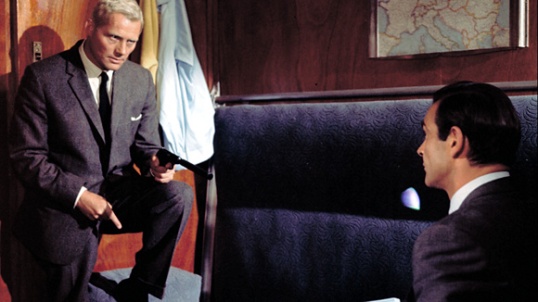
The same year that the Academy honored George Cukor’s creaky adaptation of My Fair Lady, it totally ignored my favorite James Bond film. From Russia With Love is a Bond film that works wonderfully as both a love story and a thriller. Sean Connery, Lotte Lenya, Robert Shaw, and Terence Young all deserved some award consideration. From Russia With Love was released in the UK in 1963. In a perfect world, it would have also been released concurrently in the U.S., allowing From Russia With Love to be the film that gave the the Academy the chance to recognize the British invasion. Instead, Tom Jones was named the Best Picture of 1963 and From Russia With Love had to wait until 1964 to premiere in the U.S. It was snubbed in favor of one of old Hollywood’s last grasps at relevance.
1964: Slim Pickens Is Not Nominated For Best Supporting Actor
Playing three separate roles, Peter Sellers dominates Dr. Strangelove: Or How I Learned To Stop Worrying And Love The Bomb. But, as good as Sellers is, the film’s most memorable image is definitely Slim Pickens whooping it up as he rides the bomb down to Earth. George C. Scott and Sterling Hyaden also undoubtedly deserved some award consideration but, in the end, Pickens is the one who brings the film to life even as he helps to bring society to an end.
1967: In Cold Blood Is Not Nominated For Best Picture
In Cold Blood, though not a perfect film, certainly deserved a nomination over Dr. Doolittle.In Cold Blood is a film that still has the power to disturb and haunt viewers today. Dr. Doolittle was a box office debacle that was nominated in an attempt to help 20th Century Fox make back some of their money.
1967: Sidney Poitier Is Not Nominated For Best Actor For In The Heat Of The Night
In 1967, Sidney Poitier starred in two of the films that were nominated for Best Picture but somehow, he did not pick up a nomination himself. His restrained but fiercely intelligent performance in In The Heat Of The Night provided a powerful contrast to Rod Steiger’s more blustery turn. That Poitier was not nominated for his performance as Virgil Tibbs truly is one of the stranger snubs in Academy history. (If I had to guess, I’d say that the Actors Branch was split on whether to honor him for In The Heat of the Night or Guess Who’s Coming To Dinner or even for To Sir With Love and, as a result, he ended up getting nominated for none of them.)
1968: 2001: A Space Odyssey and Planet of the Apes Are Not Nominated For Best Picture
Neither one of these classic science fiction films were nominated for Best Picture, despite the fact that both of them are far superior and far more influential than Oliver!, the film that won that year.
Not even Ennio Morricone’s score received a nomination!
1968: Petulia Is Totally Snubbed
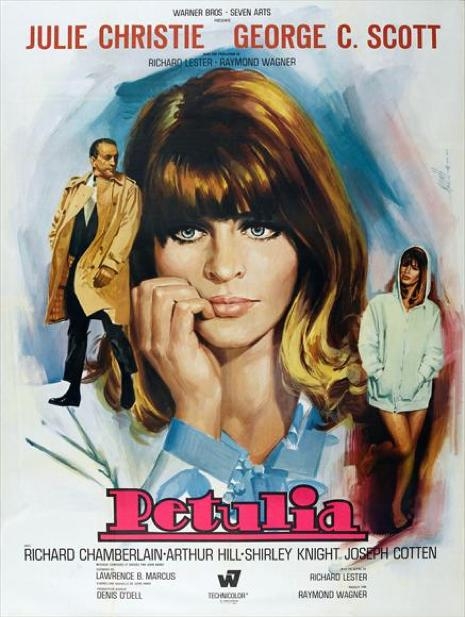
Seriously, I don’t know what was going on with the Academy in 1968 but it seems they went out of their way to ignore the best films of the year. Richard Lester’s Petulia is usually cited as one of the definitive films of the 60s but it received not a single Oscar nomination. Not only did the film fail to receive a nomination for Best Picture but Richard Lester, George C. Scott, Julie Christie, Shirley Knight, Richard Chamberlain, and the film’s screenwriters were snubbed as well.
1969: Easy Rider Is Not Nominated For Best Picture
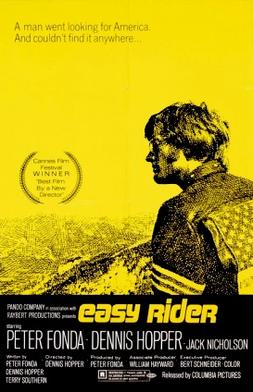
Yes, I know. Easy Rider is a flawed film and there are certain moments that are just incredibly pretentious. That said, Easy Rider defined an era and it also presented a portrait of everything that was and is good, bad, and timeless about America. The film may have been produced, directed, and acted in a drug-razed haze but it’s also an important historical document and it was also a film whose success permanently changed Hollywood. Certainly, Easy Rider’s legacy is superior to that of Hello, Dolly!
Agree? Disagree? Do you have an Oscar snub that you think is even worse than the 10 listed here? Let us know in the comments!
Who, you may be asking yourself, could have brought George C. Scott, Julie Christie, and the Grateful Dead all together in one movie?
The answer to that question is Richard Lester, who today celebrates his 91st birthday! Though Lester is best-known for his work with the Beatles and with the Superman films, I think his best film was undoubtedly 1968’s Petulia. A sharp social satire, Petulia took a look at what happened when the counter culture and the establishment collided in San Francisco. And there’s perhaps no better symbol of that collision than George C. Scott, wearing a turtleneck and smoking cigarette while attending a Grateful Dead show.
While the band plays Viola Lee Blues, Scott wanders through 1960s San Francisco.
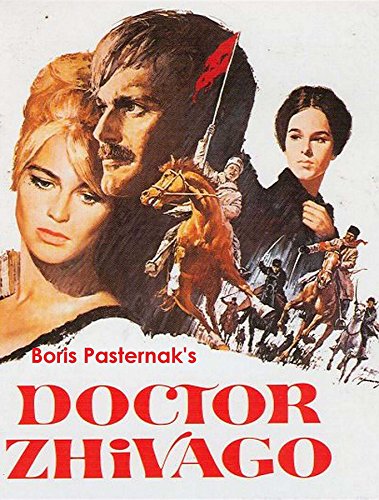
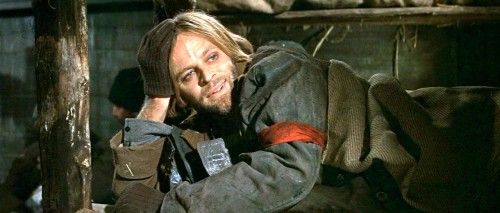
Klaus Kinski is the main reason to watch the 1965 film, Doctor Zhivago.
The legendarily difficult and erratic Mr. Kinski shows up about halfway through this 3-and-a-half hour film. He plays a cynical and unstable prisoner on a train. The train is full of passengers who are escaping from Moscow and heading for what they hope will be a better and more stable life in the Ural Mountains. (The film takes place during the Communist revolution and the subsequent purges.) That Kinski taunts everyone on the train is not a surprise. Both Werner Herzog and David Schmoeller (who directed Kinski in Crawlspace) have made documentaries in which they both talked about how difficult it was to work with Kinski and how several film crews apparently came close to murdering Klaus Kinski several times throughout his career.
Instead, what’s surprising about Kinski’s performance is that he’s even there to begin with. Doctor Zhivago is an extremely long and extremely stately film. It’s one of those films where almost every actor gives a somewhat restrained performance. It’s a film where almost every shot is tastefully composed and where the action often slows down to a crawl so that we can better appreciate the scenery. It’s a film that stops for an intermission and which opens with a lengthy musical overture. In short, this is a film of old school craftsmanship and it’s the last place you would expect to find Klaus Kinski luring about.
When he does show up, you’re happy to see him. Even though he’s only onscreen for about five minute, Kinski gives the film a jolt of much-needed energy. After hours of watching indecisive characters talk and talk and talk, Kinski pops up and basically, “Screw this, I hate everything.” And it’s exciting because it’s one of the few time that Doctor Zhivago feels unpredictable. It’s one of the few times that it feels like a living work of art instead of just a very pretty but slightly stuffy composition.
Just from reading all that, you may think that I don’t like Doctor Zhivago but that’s actually not the case. It’s a heavily flawed film and you have to be willing to make a joke or two if you’re going to try to watch the whole thing in just one sitting but it’s still an interesting throwback to a very specific time in film history. Doctor Zhivago was designed to not only be a spectacle but to also convince audiences that 1) TV was worthless and that 2) Hollywood craftsmanship was still preferable to the art films that were coming out of Europe. At a time when television and independent European cinema was viewed as being a real threat to the future of the film industry, Doctor Zhivago was a film that was meant to say, “You can’t get this on your black-and-white TV! You can only get this from Hollywood where, dammit, people still appreciate a good establishing shot and treat the production code with respect!” Even today, some of the spectacle is still impressive. The beautiful shots of the countryside are still often breath-taking. The scenes of two lovers living in an ice filled house are still incredibly lovely to look at. The musical score is still sweepingly romantic and impressive.
It’s the story where the film gets in trouble. Omar Sharif plays Yuri Zhivago, a doctor and a poet who falls in love with Lara (Julie Christie) while Russia descends into chaos. The Czar is overthown. The communists come to power and prove themselves to be just as hypocritical as the Romanovs. The revolutionary Pasha (Tom Courtenay, bearing a distracting resemblance to Roddy McDowall) is in love with Lara and helps to bring about the revolution but is then declared an enemy of the people during the subsequent purges. The craven Komarovsky (Rod Steiger) also wants to possess Lara and he’s so corrupt that he manages to thrive under both the Czar and the communists. Alec Guinness plays Yuri’s half-brother and is the most British Russian imaginable. Doctor Zhivago is based on a Russian novel so there’s a lot of characters running around and they’re all played by a distinguished cast of international thespians. However, none of them are as interesting as the scenery.
As for the two main actors, Omar Sharif and Julie Christie convince you that they’re in love but not much else. Sharif is never convincing as a poet and he feels miscast as a man who spends most of his time thinking. Reportedly, Lean’s first choice for the role was Peter O’Toole and it’s easy to imagine O’Toole in the part. But O’Toole had already done Lawrence of Arabia with Lean and didn’t feel like subjecting himself to another year of Lean’s notoriously prickly direction. So, the role went to O’Toole co-star, Sharif. Julie Christie turned down Thunderball to do both this film and Darling, for which she would subsequently win an Oscar.
(Speaking of the Oscars, Doctor Zhivago was nominated for Best Picture and, though it won five other Oscars, it lost the big prize to The Sound of Music, of all things. 1965 really wasn’t a great year for the Oscars. The only 1965 Best Picture nominee that still feels like it really deserved to be nominated is Darling. Of the other nominees, Ship of Fools is ponderous and A Thousand Clowns is almost unbearably annoying. And The Sound of Music …. well, I prefer the Carrie Underwood version.)
Doctor Zhivago is a big, long, epic film. It’s lovely to look at and it has a few nice scenes mixed in with a bunch of scenes that seem to go on forever. In the conflict between the state and the individual, it comes down firmly on the side of the individual and that’s a good thing. (The communist government attempts to suppress Yuri’s love poems because they celebrate the individual instead of society. And though the government might be able to destroy Yuri’s life, they can’t destroy his spirit. Again, it’s a message that would have worked better with a more thoughtful lead actor but still, it’s a good message.) It’s a flawed film but watch it for the spectacle. Watch it for Klaus Kinski.
Donald Sutherland and Julie Christie in Don’t Look Now (1973)
I have to admit that I’m actually a bit embarrassed to say that Venice is my favorite city in Italy.
I mean, it’s such a cliché, isn’t it? Tourists always fall in love with Venice, even though the majority of us really don’t know much about the city beyond the canals and the gondolas. I spent a summer in Italy and Venice was definitely the city that had the most American visitors. Sadly, the majority of them didn’t do a very good job representing the U.S. in Europe. I’ll never forget the drunk frat boys who approached me one night, all wearing University of Texas t-shirts. One of them asked, “Are you from Texas?”
“No,” I lied.
“You sound like you’re from Texas!” his friend said.
“No, ah’m not from Texas,” I said, “Sorry, y’all.”
I mean, that’s not something that would have happened in Florence or even Naples! In Rome, handsome men on motor scooters gave me flowers. In Venice, on the other hand, I had to deal with the same assholes that I dealt with back home!
That said, I still fell in love with Venice. And yes, it did happen while riding in a gondola. At that moment, I felt like I was living in a work of art. I can still remember looking over the side of the gondola and watching as a small crab ran across someone’s front porch. That’s when I realize that, by its very existence, Venice proved that anything was possible.
I’ve often heard that Venice is slowly sinking. That Venice has a reputation as being a dying city would probably have come to a surprise to the drunk Americans who were just looking for a girl from Texas that summer. And yet, Venice has always been associated with death. Just consider Thomas Mann’s Death in Venice and the subsequent film adaptation from Luchino Visconti. Consider the controversial Giallo in Venice. And, of course, you can’t forget about the 1973 film, Don’t Look Now.
Oh my God, Don’t Look Now is a creepy movie. It’s probably best known for two things: the lengthy sex scene between Julie Christie and Donald Sutherland (which was apparently quite controversial back in 1973 but which seems rather tame when viewed today) and the film’s shock ending. It’s one of the best and most disturbing endings in the history of horror and I’m not going to spoil it in this review. The first time I saw the movie, the ending caught me totally off guard and gave me nightmares. Admittedly, it’s not hard to give me nightmares but what’s remarkable is that, upon subsequent viewings, the ending is still just as frightening and disturbing. In fact, knowing what’s going to happen makes the film even more chilling.
The film’s story is actually a rather simple one. After their daughter, Christine, accidentally drowns, John (Donald Sutherland) and Laura Baxter (Julie Christie) take a trip to Venice. Though they’re in Venice so that John can restore an ancient church, both John and Laura are mostly trying to escape their grief. Laura meets a blind woman, Heather (Hilary Mason), who claims to not only be a psychic but who also says that she can see Christine in the afterlife. Laura believes Heather and is concerned when Heather says that Christine wants them to leave Venice. John, on the other hand, believes that Heather is a fake.
When the Baxters get a phone call informing them that their son has taken ill, Laura flies back to the UK. Or does she? One day, John spots his wife riding on a boat with Heather and her sister. Has Heather abducted or brainwashed his wife? When John goes to the police, they are as skeptical of him as he was of Heather. In fact, they start to suspect that John may have something to do with a recent rash of murders.
Confused, John searches Venice for his wife but, instead of finding her, he spots a figure in the distance. It appears to be a young child, one who is wearing the same red coat that Christine was wearing when she drowned….
It’s a simple story but it’s told in a very complex fashion. Director Nicolas Roeg is best known for his fragmented narrative style. Roeg often mashes together scenes from the past, present, and future and leaves it up to the viewer to put it all together. (For instance, in Don’t Look Now, scenes of John and Laura making love are intercut with scenes of them getting dressed afterward.) Roeg’s style that can often come across as being pretentious but, in Don’t Look Now, it works perfectly. The audience is kept off-balance and is always aware that that’s more than one possible interpretation for everything that is seen. Is Laura in the UK or is she on a boat in Venice? Is Heather seeing Christine or is she just trying to con a grieving mother? Is John chasing the figure in the red coat or is she actually the one pursuing him? Is John chasing the figure because he believes that she’s his daughter or because he wants to prove, once and for all, that Christine is gone and never coming back? Roeg keeps you guessing.
Death seems to permeate every frame of Don’t Look Now, whether it’s Heather’s cheery descriptions of the afterlife or the sight of a bloated corpse being pulled out of the canal. Even when John is working in the church, he still nearly slips off a scaffolding. While John restores ancient buildings to the vibrant glories of the past, the present seems to grow more and more ominous and menacing. John and Laura may have traveled to Venice to escape their grief but their grief follows them. How they deal with that grief — both as a couple and as individuals — is what determines their fate. For a film that is full of mysteries, none is as enigmatic as Julie Christie’s smile when she’s on the boat.
I’m probably making Don’t Look Now sound like an incredibly grim film and, to a certain extent, it is. After all, early 70s cinema is not known for its happy endings. And yet, as dark and disturbing as this film may be, it’s impossible to look away from. Roeg does a fantastic job capturing both the beauty and the decay of Venice while Donald Sutherland and Julie Christie are so sympathetic as John and Laura that you find yourself rewatching and hoping that somehow, they don’t end up making the same mistakes that they made the last time that you watched.
Don’t Look Now is an essential horror film and one that’s as timeless as the sight of a crab running across someone’s front porch.
Tonight, HBO will be premiering a film version of Ray Bradbury’s Fahrenheit 451. This version will star Michael B. Jordan as “fireman” Guy Montag and Michael Shannon as Montag’s boss, Captain Beatty. It’s one of the more eagerly anticipated films of the current television season but it’s not the first version of Fahrenheit 451 to be filmed.
The first version was released, by Universal Pictures, in 1966. It was the first (as well as only) English langauge film to be directed by the great French filmmaker, Francois Truffaut. (It was also Traffaut’s first color film, allowing the flames to burn in bright yellow and red.) Unfortunately, Truffaut would later describe the film as being his “saddest and most difficult” film making experience.
Though there are a few noticeable differences, the film sticks closely to the plot of Bradbury’s novel. Guy Montag (Oskar Werner) is a “fireman” in the near future. Montag lives in a society where books have been banned and the populace is kept to docile through a combination of pharmaceuticals and mindless television programming. Montag’s wife, Linda (Julie Christie), is content to live life without questioning anything. However, when Montag meets a school teacher named Clarisse (also played by Christie), all of his previous assumptions are challenged. What if the government isn’t always right? What if ignorance isn’t bliss? What would happen if, instead of burning books, Montag actually read one? After witnessing a woman choosing to self-immolate herself so that she can die with all of her books, Montag is finally ready to quit being a fireman. But his captain (Cyril Cusack) tells Montag that he needs to go on one more call, this one to Montag’s own house.
Truffaut’s film leaves out most of the overly sci-fi elements of Bradbury’s original novel. For instance, in the novel, Montag is terrified of the robots dogs that the firemen use but the dogs never appear in Truffaut’s film. As well, Traffaut totally eliminates the character of Faber, the former English professor who uses a portable communicator to keep in contact with Montag. (Today, of course, that hardly seems like science fiction.) In Truffaut’s film, the setting is designed to appear as contemporary and familiar as possible, a reminder that the story may have been sent in the future but that the issues it dealt with were relevant to the present. With this film, Truffaut asked the audience, “How different is the world today from the world of Bradbury’s novel?”
Truffaut’s other big departure from Bradbury’s text was to cast Julie Christie as both Clarisse and Linda. In the book, Montag’s wife was named Mildred and Bradbury went of out of his way to establish her as being the exact opposite of Clarisse. In Truffaut’s film, the double casting of Christie seems to suggest that Clarisse and Linda are two sides of the same character. Montag loves them both, though each appeals to a different part of Montag’s psyche. Linda appeals to the side of Montag that wants to just accept things the were they are and be happy. Clarisse, meanwhile, represents the part of Montag that wants to be free to feel everything, even if it means occasionally being unhappy or uncertain. When Montag finally meets the Book People, he discovers that they are just as fanatical about memorizing and reciting books as Linda was about watching her television shows. Was this intentional on Truffaut’s part, a suggestion that both the government and the rebels are, like Clarisse and Linda, two sides of the same coin?
It’s an intriguing but uneven movie. Truffaut apparently didn’t have a great working relationship with Oskar Werner and, at times, Werner doesn’t seem to be particularly invested in the role of Montag. (Interestingly enough, it’s also been suggested that Jacqueline Bisset’s character in Day For Night was inspired by Truffaut’s experiences working with Julie Christie in this film.) When the characters interact, the dialogue sometimes feel stiff and dull, as if Truffaut never got over his discomfort with having to direct a film in something other than his native French. At the same time, the film is full of hauntingly beautiful images, from the defiant woman standing in the middle of her burning books to the Book People walking through the snow. Truffaut makes brilliant use of color and the visuals are often strong enough to overcome even Oskar Werner at his most sullen.
Fahrenheit 451 is an imperfect movie but one worth seeing. Will the new HBO version be able to match it? We’ll find out soon enough.
“Oh we must be doin’ somethin right to last 200 years…”
— Haven Hamilton (Henry Gibson) in Nashville (1975)
The 1975 Best Picture nominee Nashville is the epitome of an ensemble film. It follows 24 characters as they spend five days wandering around Nashville, Tennessee. Some of them are country music superstars, some of them are groupies, some of them are singers looking for a first break, and at least one of them is an assassin. The one thing that they all have in common is that they’re lost in America. Released barely a year after the resignation of Richard Nixon and at a time when Americans were still struggling to come to terms with the turmoil of the 60s, Nashville is a film that asks whether or not America’s best days are behind it and seems to be saying that they may very well be. (That’s a question that’s still being asked today in 2015.) It’s appropriate, therefore, that Nashville both takes place in and is named after a city that everyone associates with perhaps the most stereotypically American genre of music that there is.
Nashville follows 24 characters, some of whom are more interesting than others. For five days, these characters wander around town, occasionally noticing each other but far more often failing to make any sort of connection.
Haven Hamilton (Henry Gibson) is a veteran star, a somewhat comical character who sings vapid songs about home and family and who smiles for the public while privately revealing himself to be petty and vain. His son, Bud (Dave Peel), is a Harvard graduate who acts as his father’s business manager. Oddly enough, Haven is an unlikable character until the end of the film when he suddenly reveals himself to be one of the few characters strong enough to keep Nashville for descending into chaos. Meanwhile, Bud seems to be a nice and modest guy until he takes part in humiliating another character.
Haven’s lover is Lady Pearl (Barbara Baxley), who owns a nightclub and spends most of the film drinking. Much like Haven, she starts out as a vaguely comical character until she finally gets a chance to reveal her true self. In Pearl’s case, it comes when she delivers a bitter monologue about volunteering for Bobby Kennedy’s presidential campaign.
Haven’s lawyer is Delbert Reece (Ned Beatty), an obsequies good old boy who is married to gospel singer Linnea (Lily Tomlin). They have two deaf children. Linnea has learned sign language. Delbert has not. Over the course of the film, both Delbert and Linnea will be tempted to cheat. Only one of them actually will.
And then there’s Barbara Jean (Ronee Blakley), a mentally unstable singer who has come to Nashville with her manipulative husband/manager, Barnett (Allen Garfield). Almost every character in the film wants something from Barbara Jean. A mostly silent Vietnam veteran named Kelly (Scott Glenn) claims that his mother knows Barbara Jean. A nerdy guy named Kenny (David Hayward) comes to Nashville just to see her perform.
Both Kelly and Kenny end up getting to know Mr. Green (Keenan Wynn), a rare Nashville resident who doesn’t seem to care about music. However, Mr. Green’s spacey niece, L.A. Joan (Shelly Duvall), is obsessed with having sex with as many musicians as possible.
Among those being targeted by L.A. Joan is Tom Frank (Keith Carradine), one-third of the folk trio Bill, Mary, and Tom. Unknown to Bill (Allan F. Nicholls), Tom is sleeping with Bill’s wife, Mary (Cristina Raines). Unknown to Mary, Tom is sleeping with almost every other woman in Nashville as well. When Tom takes to the stage at Pearl’s nightclub and sings a song called I’m Easy, the audience is full of women who think that he’s specifically singing to them.
Another one of Tom’s songs, the appropriately titled “It Don’t Worry Me,” is frequently sung by Albuquerque (Barbara Harris), who spend the entire film trying to get discovered while hiding out from her much older husband, Star (Bert Remsen).
Another aspiring star is Sulleen Grey (Gwen Welles), who is a tone deaf waitress who suffers the film’s greatest humiliation when she agrees to perform at a political fund raiser without understanding that she’s expected to strip while singing. Trying to look after Sulleen is Wade (Robert DoQui), who has just been released from prison.
And then there’s the loners, the characters who tend to pop up almost randomly. Norman (David Arkin) is a limo driver who, like everyone else in Nashville, wants to be a star. The hilariously bitchy Connie White (Karen Black) and the bland Tommy Brown (Timothy Brown) already are stars. (The character of Tommy Brown is one of Nashville’s oddities. He’s listed, in the credits, as being a major character but he only appears in a few scenes and never really gets a storyline of his own.) There’s the Tricycle Man (Jeff Goldblum), a silent magician who mysteriously appears and disappears throughout the film.
And, finally, there’s Opal (Geraldine Chaplin), an apparently crazed woman who is wandering around Nashville and pretending to be a reporter for the BBC. (It’s never specifically stated that Opal is a fake but it’s fairly obvious that she is.) How you feel about the character of Opal will probably determine how you feel about Nashville as a whole. If you find Opal to be a heavy-handed caricature, you’ll probably feel the same way about the rest of the film. If you find the character of Opal to be genuinely amusing with her increasingly pretentious musings, you’ll probably enjoy Nashville.
There is one more very important character in Nashville. He’s the character who literally holds the film together. He’s also the reason why I’m including Nashville in this series of reviews about political films. That character is named Hal Phillip Walker and, though he’s never actually seen in the film, he’s still the driving force behind most of what happens. Walker is a third-party presidential candidate, a man who seems to be universally admired despite the fact that his campaign appears to just be a collection of vapid platitudes. Walker’s campaign manager, John Triplette (Michael Murphy), comes to Nashville and sets up the Walker For President rally. That’s where Nashville reaches its violent and not-all-together optimistic climax.
Reportedly, Nashville is a favorite film of Paul Thomas Anderson’s and you can see the influence of Nashville in many of Anderson’s films, from the large ensemble to the moments of bizarre humor to the refusal to pass judgement on any of the characters to the inevitable violence that ends the film. Also, much like Anderson’s films, Nashville seems to be a film that was specifically made to divide audiences. You’re either going to think that Nashville is a brilliantly satirical piece of Americana or you’re going to think it’s a self-indulgent and self-important mess.
As for me, I think it’s great and I think that, after you watch it, you should track down and read Jan Stuart’s The Nashville Chronicles: The Making of Robert Altman’s Masterpiece. It’s the perfect companion for a great film.
In my previous post, I talked about Ship of Fools, a film that was nominated for best picture of 1965. As I pointed out in that post, when watched today, it’s difficult to imagine Ship of Fools as being worthy of that honor. However, there was another melodrama nominated for best picture in 1965. It not only clearly deserved that nomination but it probably should have won as well. That movie is a personal favorite of mine, the brilliant British film, Darling.
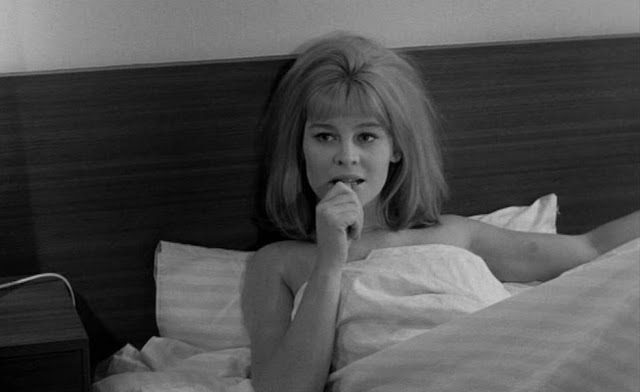
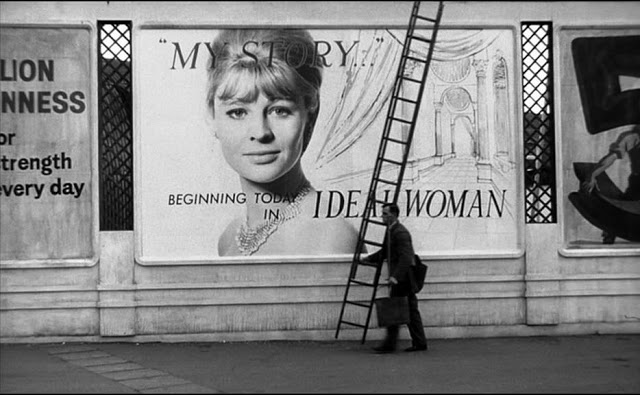
In Darling, the beautiful and glamorous Diana Scott (played, in an Oscar-winning performance, by Julie Christie) tells us her life story, with the events on screen occasionally standing in contrast to the tone of her narration. We learn how Diana went from being a somewhat successful model to being one of the most famous women in the world, a woman whose life is lived and obsessed over in three separate countries.
In England, Diana leaves her first husband for Robert Gold (Dirk Bogarde), a writer who also abandons his family so that he can be with Diana. They live in a dreary apartment and, over the course of one brilliant montage, we watch as Diana becomes increasingly disillusioned by Robert’s secluded lifestyle and Robert grows progressively annoyed with Diana’s hyperactivity. Even being chosen to be the face of a world hunger charity organization fails to relieve Diana’s boredom. (It does, however, give the film a chance to include a sharply satiric scene in which a bunch of rich white people socialize underneath pictures of starving African children.) Diana soon starts to find excuses to leave the apartment and pursue an affair with the hedonistic advertising executive Miles Brand (Laurence Harvey). In one of the film’s best scenes, Schlesinger shows us how long Diana and Miles have spent in a hotel room by focusing his camera not on the two of them but instead on the expiring parking meter outside.
In France, Diana and Miles take part in wild parties that involve lots of cross-dressing, stripping, mind games, and predatory members of the social and media elite. Diana is initially uneasy with this group of friends and it’s obvious that they have little respect for her. However, that starts to change when Diana takes advantage of one of the party games to mock Miles for being unable to truly love anyone but himself. Despite this, Miles still arranges for the disillusioned Diana to be selected as “The Happiness Girl” for the advertising campaign for a chocolate company.
In Italy, Diana’s best friend is Malcolm (Roland Curram) who is both her photographer and, as a gay man, is one of the few people in her life that Diana feels that she can trust. It’s also in Italy that Diana meets a charming nobleman named Prince Cesare (Jose Luis de Vilallonga), who offers Diana a chance to become none other than Princess Diana, on the condition that Diana convert to Catholicism and that she help raise his nine children, the oldest of whom is the same age as Diana.
To be honest, it’s difficult for me to provide a rational or balanced review of Darling because I simply love this film so much! I love it for the glamour, I love it for the melodrama, and I especially love it for its sharply satiric (and still very relevant) look at what it means to be famous for merely living. I suppose that it would only be natural to compare Darling to the world’s current obsession with the Khardashians but that’s not really fair to Darling. The Khardashians may be the natural end result of a world that obsesses over Diana Scott but, as played by Julie Christie, Diana Scott is everything — intelligent, witty, interesting, and, if not quite sympathetic, at least compelling — that a Khardashian could never hope to be.
In 1965, the Sound of Music won the award for best picture of the year but Darling is truly the movie that still has something to say about the way that we’re living today.




 Through the Shattered Lens