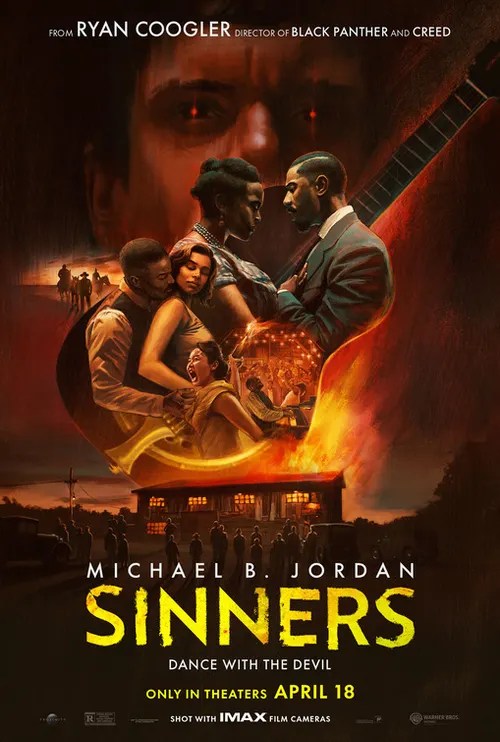
The Michigan Movie Critics Guild has announced it picks for the best of 2025. The winners are listed in bold!
Best Picture
Frankenstein
Hamnet
Marty Supreme
One Battle After Another Sinners
Best Director
Paul Thomas Anderson – One Battle After Another Ryan Coogler – Sinners
Guillermo del Toro – Frankenstein
Josh Safdie – Marty Supreme
Chloé Zhao – Hamnet
Best Actor
Timothée Chalamet – Marty Supreme
Joel Edgerton – Train Dreams
Leonardo DiCaprio – One Battle After Another
Brendan Fraser – Rental Family Michael B. Jordan – Sinners
Best Actress
Rose Byrne – If I Had Legs I’d Kick You
Chase Infiniti – One Battle After Another
Cynthia Erivo – Wicked: For Good Jessie Buckley – Hamnet
Emma Stone – Bugonia
Best Supporting Actor Miles Caton – Sinners
Jacob Elordi – Frankenstein
Benicio del Toro – One Battle After Another
Paul Mescal – Hamnet
Sean Penn – One Battle After Another
Best Supporting Actress
Ariana Grande – Wicked: For Good
Inga Ibsdotter Lilleaas – Sentimental Value Wunmi Mosaku – Sinners
Hailee Steinfeld – Sinners
Teyana Taylor – One Battle After Another
Best Animated Film
Arco
Dog Man K-Pop Demon Hunters
Little Amélie or the Character of Rain
Zootopia 2
Best Documentary
Orwell: 2+2=5
Pee-Wee as Himself
Put Your Soul on Your Hand and Walk The Perfect Neighbor
The Tale of Silyan
Best Ensemble
Avatar: Fire And Ash
Marty Supreme
One Battle After Another Sinners
Wake Up Dead Man
Wicked: For Good
Best Screenplay
Hamnet
Marty Supreme One Battle After Another
Sorry, Baby
Sinners
Best Cinematography
Avatar: Fire And Ash
Frankenstein
One Battle After Another Sinners
Train Dreams
Breakthrough Miles Caton – (Actor) Sinners
Chase Infiniti – (Actress) One Battle After Another
Jacob Elordi – (Actor) Frankenstein
Jacobi Jupe – (Actor) Hamnet
Eva Victor – (Writer, Director, Actor) Sorry, Baby
Best Stunts
Avatar: Fire And Ash
Ballerina Mission: Impossible – The Final Reckoning
Nobody 2
One Battle After Another
The MMCG Award for Film Excellence
Paul Feig – (Director) The Housemaid / Another Simple Favor Judy Greer – (Actress) The Long Walk
Paul Walter Hauser – (Actor) The Naked Gun / Fantastic Four: First Steps
Tim Robinson – (Actor/Writer) Friendship
J.K. Simmons – (Actor) The Accountant 2
The 2025 nominations of the Michigan Movie Critics Guild were announced on Friday. And here they are:
Best Picture Frankenstein Hamnet Marty Supreme One Battle After Another Sinners
Best Director Paul Thomas Anderson – One Battle After Another Ryan Coogler – Sinners Guillermo del Toro – Frankenstein Josh Safdie – Marty Supreme Chloé Zhao – Hamnet
Best Actor Timothée Chalamet – Marty Supreme Joel Edgerton – Train Dreams Leonardo DiCaprio – One Battle After Another Brendan Fraser – Rental Family Michael B. Jordan – Sinners
Best Actress Rose Byrne – If I Had Legs I’d Kick You Chase Infiniti – One Battle After Another Cynthia Erivo – Wicked: For Good Jessie Buckley – Hamnet Emma Stone – Bugonia
Best Supporting Actor Miles Caton – Sinners Jacob Elordi – Frankenstein Benicio del Toro – One Battle After Another Paul Mescal – Hamnet Sean Penn – One Battle After Another
Best Supporting Actress Ariana Grande – Wicked: For Good Inga Ibsdotter Lilleaas – Sentimental Value Wunmi Mosaku – Sinners Hailee Steinfeld – Sinners Teyana Taylor – One Battle After Another
Best Animated Film Arco Dog Man K-Pop Demon Hunters Little Amélie or the Character of Rain Zootopia 2
Best Documentary Orwell: 2+2=5 Pee-Wee as Himself Put Your Soul on Your Hand and Walk The Perfect Neighbor The Tale of Silyan
Best Ensemble Avatar: Fire And Ash Marty Supreme One Battle After Another Sinners Wake Up Dead Man Wicked: For Good
Best Screenplay Hamnet
Marty Supreme One Battle After Another Sorry, Baby Sinners
Best Cinematography Avatar: Fire And Ash Frankenstein One Battle After Another Sinners Train Dreams
Breakthrough Miles Caton – (Actor) Sinners Chase Infiniti – (Actress) One Battle After Another Jacob Elordi – (Actor) Frankenstein Jacobi Jupe – (Actor) Hamnet Eva Victor – (Writer, Director, Actor) Sorry, Baby
Best Stunts Avatar: Fire And Ash Ballerina Mission: Impossible – The Final Reckoning Nobody 2 One Battle After Another
The MMCG Award for Film Excellence Paul Feig – (Director) The Housemaid / Another Simple Favor Judy Greer – (Actress) The Long Walk Paul Walter Hauser – (Actor) The Naked Gun / Fantastic Four: First Steps Tim Robinson – (Actor/Writer) Friendship J.K. Simmons – (Actor) The Accountant 2
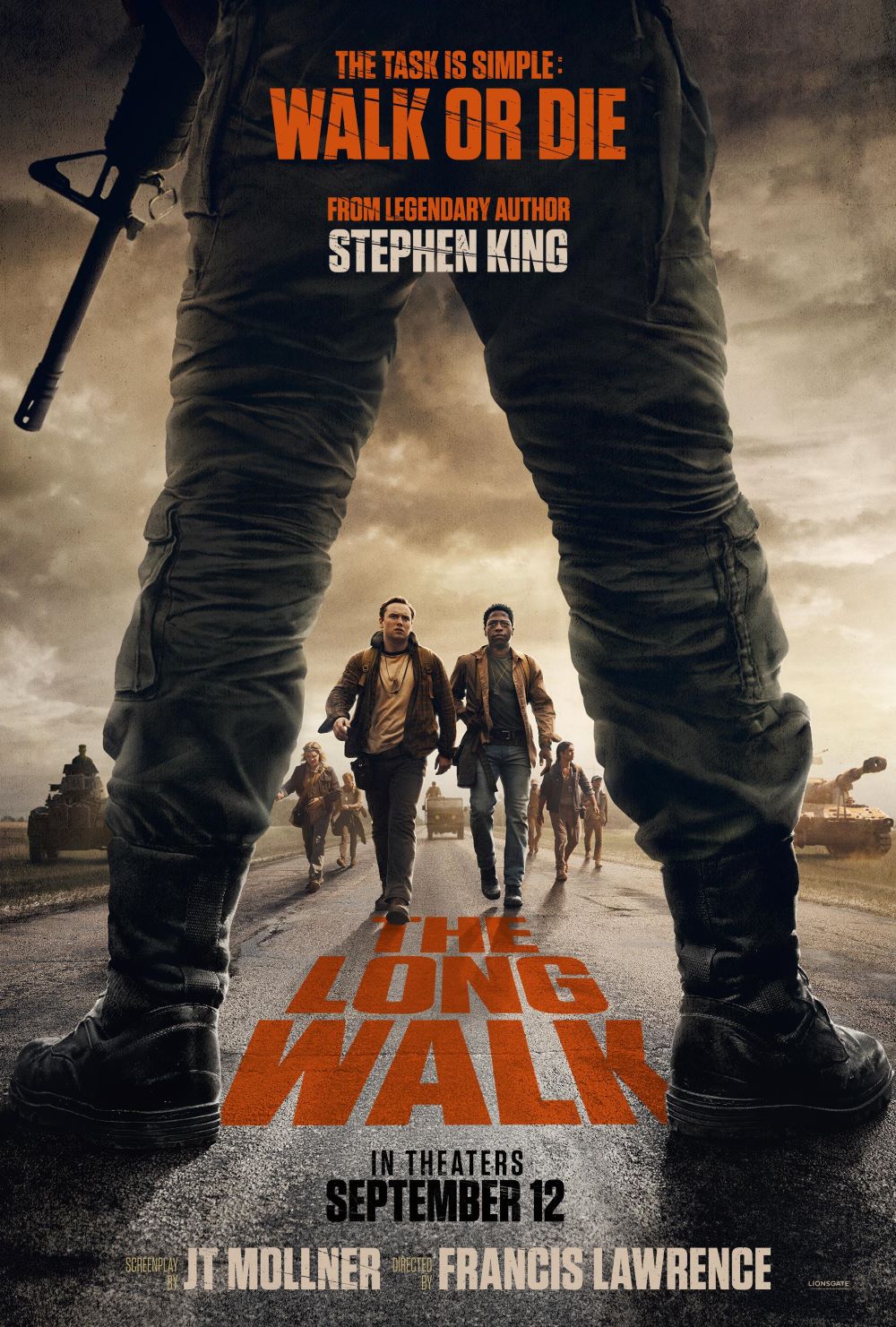
“In this Walk, it’s not about winning. It’s about refusing to be forgotten while the world watches us fade away.” — Peter McVries
Francis Lawrence’s The Long Walk (2025) delivers a relentlessly brutal and unyielding vision of dystopian horror that explores survival, authoritarian control, and the devastating loss of innocence. The film immerses viewers in a grim spectacle: fifty teenage boys forced to participate in an annual, televised event known as the Long Walk. To survive, each participant must maintain a constant pace, never falling below a minimum speed, or else face immediate execution.
At the heart of this bleak narrative is Raymond Garraty, played with earnest vulnerability by Cooper Hoffman. Garraty’s backstory, marked by the tragic execution of his father for political dissent, sets a somber tone from the outset. As the Walk drags on, Garraty forges fragile bonds with fellow contestants, particularly Peter McVries (David Jonsson), whose camaraderie and quiet resilience inject moments of hope and humanity into the harrowing journey. These relationships become the emotional core, grounding the film’s relentless physical and psychological torment in deeply human experiences.
The setting enhances this oppressive atmosphere. The time and place remain deliberately ambiguous, with evident signs that the United States has recently suffered a second Civil War. The aftermath is a landscape ruled by a harsh, authoritarian military regime overseeing a nation economically and politically in decline. Though visual cues evoke a retro, 1970s aesthetic—reflected in military hardware and daily life—the film resists pinning itself to an exact year. This timelessness amplifies its allegorical power, emphasizing ongoing societal collapse and authoritarianism without tying the story to one era specifically. The dystopian backdrop is populated by broken communities and a pervasive sense of hopelessness that mirrors the characters’ internal struggles.
Visually, The Long Walk employs stark, gritty cinematography that traps viewers in the monotonous expanse of endless roads and bleak environments. Lawrence’s direction is unflinching and unrelenting, echoing the merciless march to death and the broader commentary on institutionalized brutality. The atmospheric score complements this oppressive tone, underscoring the emotional and physical exhaustion pacing the narrative.
Performances elevate the film’s emotional stakes significantly. Hoffman’s portrayal of Garraty captures the youth’s evolving vulnerability and determination, while Jonsson’s McVries adds a poignant emotional depth with his steady, hopeful presence. Supporting actors such as Garrett Wareing’s enigmatic Billy Stebbins and Charlie Plummer’s self-destructive Barkovitch bring vital complexity and urgency. Stebbins remains a figure whose allegiance is ambiguous, adding layered mystery to the group dynamics. Judy Greer’s limited screentime as Ginny Garraty, Ray’s mother, stands out powerfully despite its brevity. Each of her appearances is heartbreaking, bringing a wrenching emotional weight to the film. Her panicked, anguished attempts to hold onto her son before he embarks on the deadly Walk amplify the human cost of the dystopian spectacle, leaving a lasting impression of maternal agony amid the surrounding brutality.
Mark Hamill’s role as The Major is a significant supporting presence, embodying the authoritarian face of the regime. The Major oversees the brutal enforcement of the Walk’s rules, commanding lethal squads who execute those who falter. Hamill brings a grim and chilling force to the character, whose cold charisma and unwavering commitment to the ruthless system make him a menacing figure. Despite relatively limited screen time compared to the young participants, The Major’s presence looms large over the story, symbolizing the chilling machinery of power and control that governs the dystopian world.
Yet, the film is stark in its depiction of violence. The executions and suffering are raw and often grotesquely explicit, serving as a damning critique of authoritarian cruelty and the voyeuristic nature of state violence televised as entertainment. This unfiltered brutality can, however, become numbing and exhausting as it piles on relentlessly, occasionally undercutting emotional resonance. The narrative embraces nihilism fully, underscoring the dehumanization and futility within the dystopian world it portrays.
The film’s overall pacing and structure reflect this bleakness but at times suffer from monotony. The heavy focus on walking and survival mechanics leads to a lack of narrative variation, testing the audience’s endurance much like the characters’. There is likewise a noticeable stretch of physical realism—the contestants endure near-impossible physical feats without adequate signs of weariness or injury, which can strain believability.
Character development is another area where the film falters slightly. While Garraty and McVries are well-drawn and immunize emotional investment, other characters tend toward archetypical roles—bullies, outsiders, or generic competitors—diminishing the impact of many deaths or interactions. Similarly, the repetitiveness of the setting and cinematography, relying mostly on basic shots following the walkers, misses opportunities for more creative visual storytelling that might heighten tension or spotlight key emotional beats.
The film’s conclusion, stark and abrupt, offers no real catharsis or closure, reinforcing the overarching theme of unyielding despair. While this resonates with the film’s nihilistic motif, it may alienate those seeking narrative resolution or hope. The visceral shock and bleak tone permeate to the end, leaving the viewer with a lasting impression of relentless suffering and sacrifice.
This demanding yet visually striking and emotionally intense film challenges viewers with its unrelenting bleakness and brutal thematic content. It critiques societal violence, media spectacle, and authoritarianism through starkly powerful performances and an oppressive, immersive atmosphere. Though it excels in evoking emotional rawness in key moments and maintaining thematic consistency, it struggles with pacing, character depth beyond the leads, and occasional narrative monotony. Its ambiguous setting in a post-second Civil War America ruled by a declining authoritarian regime adds a timeless, allegorical layer to its exploration of human endurance and societal collapse.
Ultimately, this film is best suited for viewers prepared for an uncompromising, intense vision of dystopia. It stands as a compelling, if bleak, meditation on youth, survival, and the human spirit under extreme duress, showcasing Francis Lawrence’s aptitude for crafting thought-provoking, provocative horror.
Somehow, I missed that a film version of The Long Walk is on the verge of being released.
The Long Walk is one of Stephen King’s best novels, even if it is one that he wrote under the name of Richard Bachman. In a dystopian future, a group of young men enter an annual walking contest. They have to walk a certain number of miles an hour (four in the book but apparently three in the film) and, if they fall behind or stop, they are executed by the soldiers following them. The Walk continues until there is only one survivor. The Long Walk feels like a distant cousin to The Running Man (the book, not necessarily the film adaptation).
The film version of The Long Walk was directed by Francis Lawrence, who previous directed The Hunger Games sequels, and has a cast that includes Cooper Hoffman, Charlie Plummer, Judy Greer, and Mark Hamill as the main bad guy. Who knows if the film will do justice to the book’s bleak tone. The trailer offers some hints. The film will be released on September 12th.
Emma Thompson and Judy Greer aren’t the first names that come to mind when you think of survival horror but maybe (?) that will change after the release of Dead of Winter. The trailer finds Thompson alone in a frozen Minnesota landscape, apparently trying to escape her grief. As you can see in the trailer, she’s not alone for long.
Mike Klein (David Duchovny) is a scriptwriter who suffers from chronic backpain and whose wife (Justine Bateman) is pregnant. Mike has developed an autobiographical TV dramedy about a young man trying to come to terms with the suicide of his brother. He’s sold it to one of the networks but, when he tries to shoot the pilot, he watches as his original concept is continually compromised and diluted by Lenny (Sigourney Weaver), the president of the network. After rejecting Mike’s choice for the lead role because the actor had a beard, Lenny forces him to cast Zack Harper (Fran Kranz), a mugging young actor who lets pre-stardom go to his head. Lenny continues to change Mike’s concept until he can barely even recognize his pilot. Will Mike be able to retain his vision or will network TV continue to be dominated by shows like Slut Wars?
Occasionally, you’ll see a film that was obviously made by a writer/director who was obviously looking to settle some old scores with the studio execs that he had to deal with in the past. Christopher Guest’s first film as a director was The Big Picture, a sharp and clever satire with Kevin Bacon as a film student who discovers there’s little he won’t compromise on to get his film made. Before Guest’s film, Blake Edwards lost a fortune making a film called S.O.B. because he wanted to get back at the people who he blamed for ruining Darling Lili. Continuing the tradition of those films but moving the action to the networks, The TV Set was directed by Jake Kasdan, the son of Lawrence Kasdan. Jake worked on a number of TV shows with Judd Apatow (most famously, Freaks and Geeks) and The TV Set feels like his chance to get revenge on any number of real-life studio execs. It’s an insider’s view of what’s wrong with television but sometimes it becomes such an insider’s view that it becomes hard to relate to Mike and or really care about his show, which sounded pretty bad even before the network suits got involved. Too often, it feels like the movie itself is more about settling personal grudges than saying anything about the state of television.
The TV Set has got a large cast, some of whom manage to create an interesting character despite Kasdan’s overstuffed script. I especially liked Judy Greer, who played Mike’s always-positive agent. I got the feeling that we were supposed to be as annoyed with Greer’s character as Mike often was but Greer gives such an energetic performance that it’s impossible to dislike her, no matter how far she went in her attempts to always put a positive spin on the bad news coming from the set of Mike’s pilot. I also like Fran Kranz and Lindsay Sloane, who played the two actors forced on Mike by the studio. Indeed, probably one of the film’s biggest problems is that all of the characters that we’re supposed to find annoying are played such likable actors that it’s hard to really sympathize with Mike when he starts complaining about them. David Duchovny sleepwalks through the role of Mike but he’s not helped by a script that can never seem to decide if Mike’s supposed to be a visionary or just a hopeless naïve victim of the industry.
The TV Set, which was made a few years before the start of the streaming revolution, ends with a warning that television will soon be full of shows like Slut Wars and there won’t be any room for artists like Mike Klein. The TV Set wasn’t wrong but what it failed to predict was that there would soon be other platforms on which the Mike Kleins of the word could broadcast their shows.
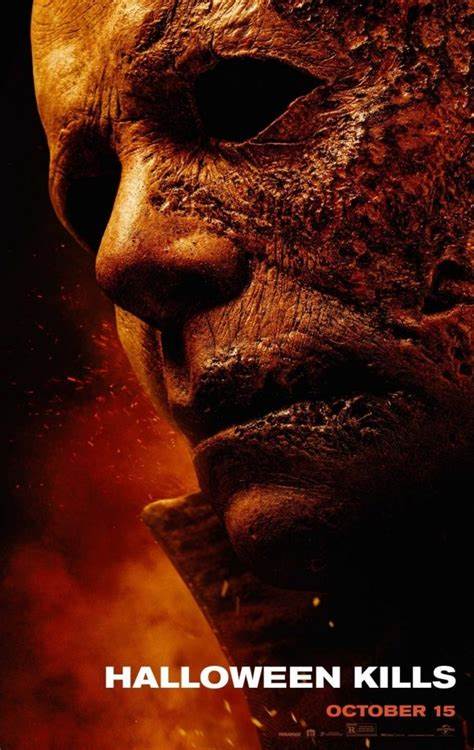
You have to appreciate a movie that does what it’s poster claims.
Halloween Kills might not be the best film in a 40 year old franchise that branched off into 3 separate storylines, a remake (with a sequel) and an Anthology entry in the middle. Still, it’s so much better than 1995’s Halloween 6: The Curse of Michael Myers and Halloween: Resurrection. It brings the carnage in quick, and despite some missteps, it tries to do some good. However, there’s only so much you can bring to the table with a story that’s gone on for this long. I didn’t outright hate it, but I didn’t see myself returning to it in the way I did with Malignant or Dune, even though it’s available to watch on NBC/Universal’s Peacock streaming service.
Much like 1981’s Halloween II, Halloween Kills takes place just a few minutes right after 2018’s Halloween, with the Strode house burning and Michael believed to be stuck in the basement. Laurie Strode (Jamie Lee Curtis) is injured and on her way to the hospital with her daughter Karen (Judy Greer) and granddaughter (Andi Matichak). The town of Haddonfield is attempting to recover from yet another Myers incident. You’d think that after 40 years of all this, they’d have an entire Myers Assault Force or something, but we’re not quite there yet. After all, in this continuity change, Haddonfield only has Michael’s childhood incident and the 1978 one. Despite this, the town has finally had enough of Michael’s antics and band together (with Tommy in the lead) to finish him. To quote Laurie, “Evil Dies Tonight!”
They’re so doomed.
Mind you, this isn’t the first time that Haddonfield’s tried to turn the tables on Myers, though it is a first for this particular universe. They tried back in Halloween 4, but it didn’t quite work out. Halloween Kills poses a quiet question of who is worse: The single killer on the loose, or the angry mob that’s after him?
I’ll admit that I enjoyed the return of some familiar faces in Pamela Susan Shoop (the nurse who was with Loomis when Michael stole their station wagon) and Kyle Richards (Lindsay, the little girl who Laurie was babysitting). Tommy Doyle is there as well, but the adult version of him is played by Anthony Michael Hall (The Dark Knight). They even managed to bring back Charles Cyphers as the former Haddonfield Sheriff. I’ll give this version kudos for delivering some fan service with those cameos. By far, the best addition to the cast was a cameo by The Wolf of Snow Hollow‘s Jim Cummings as one of the Haddonfield Police. Having played a cop in both of his previous films, it was a perfect fit here.The film also weaves a bit of Saw-like magic by expanding on the 1978 Halloween Night. While it’s not a perfect fit to the original events, it adds a somewhat fresh coat of paint to the new storyline that’s in effect here. It’s one of the places where the movie actually shines. They can weave a whole new backstory for Michael, and I’m here for it.
The gore levels in Halloween are your typical fare, as this version of Michael is much more vicious than his earlier counterparts. We can chalk that up to the changing times, I imagine. Like every Halloween, there are a few unnecessary kills – random families that are taken out just to up the body count while you may wonder what these individuals have to do with anything. If you don’t have any problems with that, then the film’s definitely worth a watch. At least in Halloween & Halloween II, the murders were connections to Laurie (her friends) or obstacles in Michael’s way (the Hospital Staff). With Halloween Kills, Michael just executes anyone who’s in his vicinity, which was the same problem I had with the film before it.
The other issue is that Laurie sits this fight out for most the film. With her injuries being pretty extensive, she instead takes on the role of harbinger, reminding her children and her Sheriff friend (played by Will Patton) that Michael is coming and has to be stopped. She’s the new Loomis, for the most part. Anyone walking into this film expecting a face off between Laurie and Michael will probably want to hold out for the next installment.
The Carpenters (Cody and his dad, John) do a good job, musically. There’s no complaints there. I also have to admit that the sound quality is also pretty good in this film. Overall, Halloween Kills is a fun film if you’re not expecting too much and you need something to close your night with. With a runtime of about an hour and 50 minutes, it doesn’t lag too much, though it stumbles a little through the town revenge plot. It’s definitely worth it to get to the last 15 minutes or so.
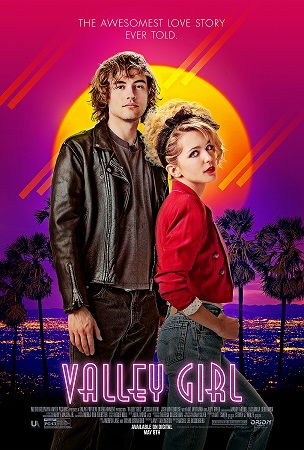
Valley Girl is a remake of the 1983 film of the same name. The original Valley Girl was a sweet but occasionally edgy comedy that starred Deborah Foreman and, in one of his first starring roles, Nicolas Cage. Foreman played a popular rich girl who fell in love with a quirky punk rocker (Cage, of course). Full of interesting characters and very much attuned to what it’s like to be a teenager in love, the original Valley Girl was fun and funny but it also had a serious subtext and the film, as whole, holds up surprisingly well.
The remake of Valley Girl tells basically the same story. Jessica Rothe plays Julie Richman. Josh Whitehouse plays Randy. They meet. They fall in love. They both have to deal with the fact that they’re from different parts of Los Angeles. Their friends say that they don’t belong together. The story still has potential but the remake falls flat.
A huge part of the problem is that the Valley Girl remake is a jukebox musical. In the style of Rock of Ages, it features characters expressing themselves by singing songs from the 80s. Like many jukebox musicals, Valley Girl picks the most obvious songs and then deploys them in the most literal way possible. For instance, Julie’s jock boyfriend is named Mickey, just so the cheerleaders can perform Mickey during a pep rally. When Randy and his punk friends show up for the first time, it’s time to sing Bad Reputation. When it appears that his relationship with Julie is doomed, it’s time for Randy to offer up a rather wan version of Boys Don’t Cry. When Julie and her friends go to the beach and start to talk about how they want have to fun …. well, can you guess what song they start singing? The film does make good use of Kids In America but, for the most part, the song choices are too predictable and the cast performs them with a notable lack of enthusiasm.
As for the cast, Jessica Rothe has a few good moments and she at least bring some playful energy to her role. Unfortunately, Josh Whitehouse is perhaps the least convincing punk rocker that I have ever seen. There’s nothing quirky, angry, or dangerous about Whitehouse’s Randy. Instead, he’s a nice young man who has some eccentric friends. He’s the punk who you can take home to meet your parents. He’s like the one jock who hangs out with the nerds and, as a result, everyone’s decided that he must be deeper than he actually is.
Speaking of jocks, Julie’s boyfriend — named Mickey, of course — is played by Logan Paul. Yes, that Logan Paul. Yes, he’s terrible in the role. Josh Whitehouse may have not been a convincing punk rocker but Logan Paul gives a performance that’s so bad that he’s not even a convincing human being. He comes across like an animatronic Disneyland character. He should be in the Hall of Presidents, standing next to George Washington and stiffly nodding whenever Lincoln starts talking. Logan Paul is a huge reason why the film doesn’t work. He’s also a huge reason why Valley Girl sat on the shelf for about three years before finally being released, as Paul’s YouTube controversies led the studio to be weary about releasing a film featuring him.
I guess one reason why I got so annoyed with Valley Girl is that I wanted to like it. Jessica Rothe was great in the Death Day films. I love 80s music. I wanted this to be a good film but it’s just not. Like, sorry.
As we all know, October is the month when we usually ignore everything but the horror genre here at the Shattered Lens. However, I’m going to briefly interrupt our horrorthon to say a few words about The 15:17 to Paris.
Directed by Clint Eastwood, The 15:17 to Paris is a film about the 2015 Thalys train attack. This was when a terrorist named Ayoub El Khazzani opened fire on a train that was heading from Amsterdam to Paris. He wounded three passengers and probably would have killed countless more (there were over 500 people on the train) if he had not been subdued by three American friends, one British passenger, and a French train driver. The 15:17 to Paris focuses on the three Americans, Spencer Stone, Anthony Sadler, and Alex Skarlatos.
When the film was released on February 9th, it got middling reviews and was considered to be a box office disappointment. Myself, I saw it the first week of March, just a few days before Jeff and I left for a two-week stay in the UK. I meant to review it when we returned to America but I just never got around to it. However, about a week ago the film made its cable debut and seeing as how Clint Eastwood has a second film coming out this year that might be the Oscar contender that his first film probably won’t be, I figured now is as good a time as any to defend The 15:17 To Paris.
Now, don’t get me wrong. The 15:17 to Paris is not a great film by any stretch of the imagination. In fact, the film’s first line of dialogue — in which Anthony Sadler, in voice over, says that he knows we’re probably wondering why “a brother like me” is hanging out with two white guys — made me cringe so hard that I was worried I might sink into my seat and never be able to escape. Sadler, Spencer Stone, and Alex Skarlatos all play themselves in the movie and none of them comes across as being a natural actor. They may be heroes but they aren’t movie stars.
And yet, the fact that none of them are stars is also the film’s greatest strength. Throughout the film, Eastwood emphasizes how totally and completely average Sadler, Skarlatos, and Stone are. None of them really get the type of “hero shots” that one normally expects to see in a film like this. Instead, Eastwood continually reminds us that they’re just three friends who happened to be on the train when the shooting started. They put their own lives at risk to take the shooter down and they also provided first aid to a man who had been shot. Whether they have movie star charisma or not, they still saved countless lives. The film’s point is that you don’t have to be Chris Pratt or Chris Evans to be a hero. You can just be Chris from across the street. You just have to be someone willing to do the right thing at the right time. It’s a sincere and heartfelt message and it’s one that comes across specifically because Eastwood cast three nonprofessionals.
The film starts with a lengthy sequence that depicts the childhoods of the three lifelong friends. It’s kind of a strange sequence, largely because almost all of the supporting roles are filled by talented actors who are best known for their comedic work on television. Thomas Lennon plays a high school principal while Tony Hale shows up as a coach. Even Jaleel White (!) has a role as a teacher who gives the boys advice on self-defense. When the childhood scenes work, it’s largely due to the performances of Jenna Fischer and Judy Greer, who plays the mothers of Alex and Spencer. But whenever Fischer and Greer aren’t around, the childhood scenes are a bit too slow and awkward.
However, once Sadler, Skarlatos, and Stone are on that train, the film definitely picks up. Whatever awkwardness that the three nonprofessionals may have exhibited earlier in the movie disappears as they spring to action and they recreate their responses to the attack on the train. It’s here that Eastwood’s no-nonsense approach to storytelling definitely pays off, as he recreates the train attack without any of the showy tricks that you might expect from other directors. Instead, Eastwood allows things to play-out naturally. Like the passengers on that train, all we can do is watched as the three men rush the gunman.
The 15:17 to Paris may not be one of Eastwood’s best films but it’s hardly the disaster that it was made out to be. Instead, it’s a sincere and unapologetically old-fashioned celebration of heroism and doing the right thing.
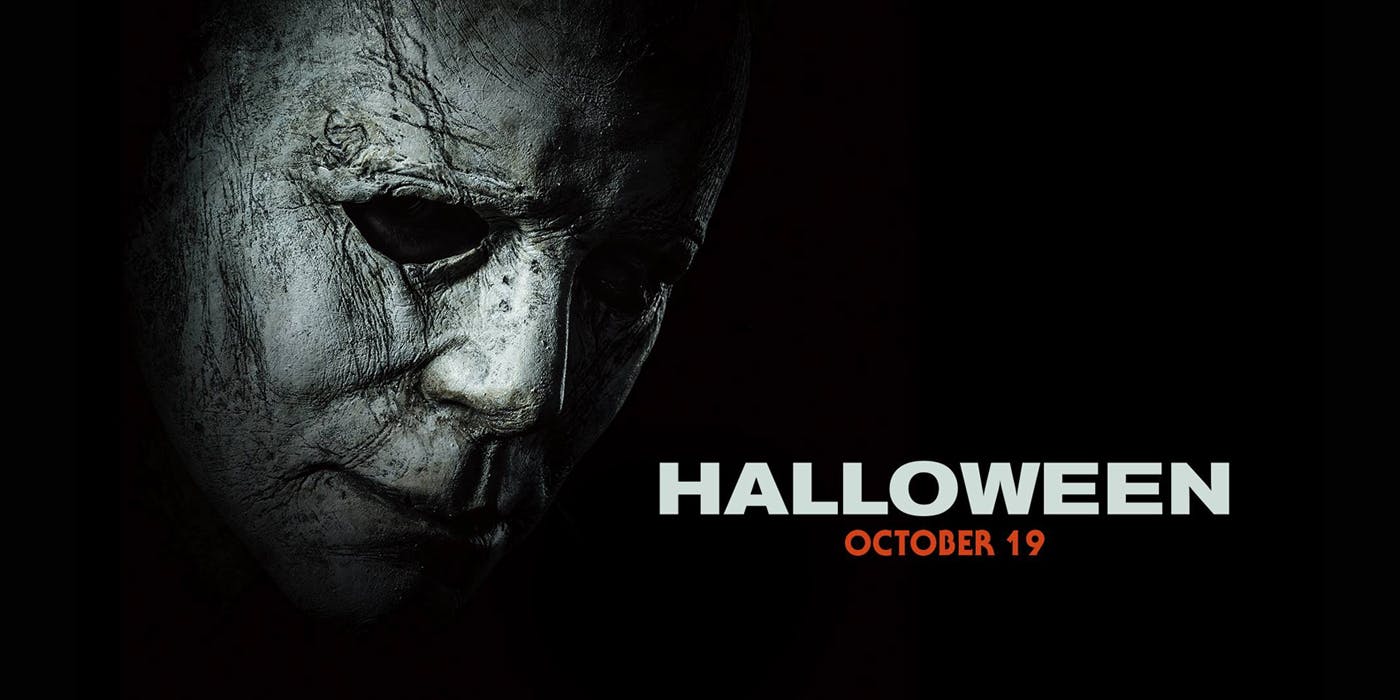
It’s the date for the latest entry to the Halloween franchise. It’s to be a sequel to the original film. It will also discard every other Halloween sequel ever made. So, for those who are so anti-remake/reboot this should alleviate any of those triggers.
David Gordon Green (who co-wrote this sequel with Danny McBride and Jeff Fradley) directs this sequel as a continuation of the events which happened with the original film. A follow-up that’s 40 years in the making, literally.
So, once again, remember October 19th and make sure to check this film out. I have a sneaking suspicion that it’ll be the true sequel to Carpenter’s classic.


 Through the Shattered Lens