How many westerns do you know that open with a graduation ceremony at Harvard? I can only think of Michael Cimino’s Heaven’s Gate.
Today’s scene that I love comes from the controversial 1981 epic western. Some people feel that Heaven’s Gate is a secret masterpiece. I’m not quite one of those people but I do think the Harvard graduation scene was a great way to launch Cimino’s idiosyncratic vision of the Old West.
Airport ’77 is the one where the plane ends up underwater.
If the first two Airport movies emphasized the competence of the the crew in both the airplane and the airport, Airport ’77 takes the opposite approach. The first of the Airport films to be released after Watergate, Airport ’77 is a cynical film where no one seems to be particularly good at his or her job. Viewers should be concerned the minute they see that Jack Lemmon is playing Captain Don Gallagher, the pilot of the soon-to-be-submerged airplane. As opposed to Charlton Heston or even the first film’s Dean Martin, Jack Lemmon was always a very emotional actor. He excelled at playing characters who were frustrated with modern life. Just as with Heston and Martin, Lennon plays a pilot who is having an affair with a flight attendant. The big difference is that, this time, the pilot is the one who desperately wants to get married while the flight attendant (played by Brenda Vacarro) is the one who doesn’t want to get tied down. As an actor, Lemmon didn’t have the arrogance of a Heston or the unflappability of Dean Martin. Instead, Jack Lemmon was the epitome of midlife ennui. He’s disillusioned and he’s beaten down. He’s America at the tail end of the 70s.
Another sign that Airport ’77 is a product of the post-Watergate era is the character of co-pilot Bob Chambers (Robert Foxworth). Chambers might seem like a nice and friendly professional but actually, he’s the one who comes up with the plan to knock out all of the passengers with sleeping gas and fly the plane into the Bermuda Triangle so that his partners-in-crime can steal the valuable art works in the cargo hold. Chambers plans is to land the plane on an unchartered isle so that he and Banker (Monte Markham) can make their escape before the rest of the people on the plane even wake up. Instead, Chambers turns out to be as incompetent a pilot as he is a criminal. He crashes the plane into the ocean, where it promptly sinks to the bottom. The impact wakes up the passengers, all of whom can only watch in horror as the ocean envelopes their plane. With the water pressure threatening to crush the plane, Captain Gallagher and engineer Stan Buchek (Darren McGavin) try to figure out how to get everyone to the surface.
As usual, the passengers are played by a collection of familiar faces. Olivia de Havilland and Joseph Cotten play former lovers who are reunited on the flight. Christopher Lee is a businessman who is unhappily married to alcoholic Lee Grant. Grant is having an affair with Lee’s business partner, Gil Gerard. A young Kathleen Quinlan plays the girlfriend of blind pianist Tom Sullivan. Robert Hooks is the bartender who ends up with a severely broken leg. As the veterinarian who is called to doctor’s duty, M. Emmet Walsh gives the best performance in the film, if just because he’s one of the few characters who really gets to surprise us. Actors like George Furth, Michael Pataki, and Tom Rosqui all wander around in the background, though I dare anyone watching to actually remember the names of the characters that they’re playing. Airport ’77 has the largest number of fatalities of any of the Airport films, largely because even the good guys aren’t really sure about how to reach the surface.
George Kennedy returns as Joe Patroni, though his role is considerably smaller in this film than it was in the first two. He shares most of his scenes with James Stewart, who plays the owner of the plane. Fortunately, neither Stewart nor Kennedy were on the plane when it crashed. Instead, they spend most of the movie in a control room, getting updates about the search. They don’t get to do much in the film but it’s impossible not to smile whenever Jimmy Stewart is onscreen, even if he is noticeably frail.
Airport ’77 is the best-made of all of the Airport films. The crash is well-directed and the scenes of water dripping into the plane are properly ominous. There’s not much depth to the characters but Jack Lemmon and Darren McGavin are likable as the two main heroes and Christopher Lee seems to be enjoying himself in a change-of-pace role. Olivia de Havilland and Joseph Cotten, two old pros, are wonderful together. That said, Airport ’77 is never as much fun as the first two films. Even with the plane underwater, it can’t match the spectacle of Karen Black having to fly a plane until Charlton Heston can be lowered into the cockpit.
Some movies are merely good. Some movies are undeniably great. And then, a handful movies are so amazingly brilliant that, every time you watch, you’re reminded why you fell in love with cinema in the first place.
The Third Man is one of those brilliant films.
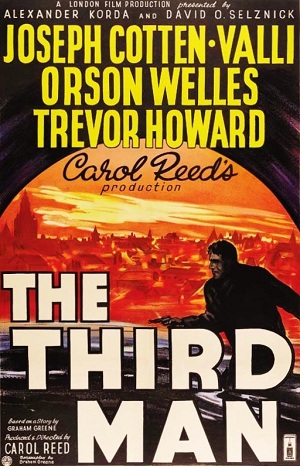
Directed by Carol Reed and scripted by novelist Graham Greene, The Third Man takes place in the years immediately following the end of World War II. Pulp novelist Holly Martins (Joseph Cotten) comes to Vienna to search for his old friend Harry Lime (Orson Welles). Upon arriving, Holly is shocked to learn that Harry makes his living selling diluted penicillin on the black market.
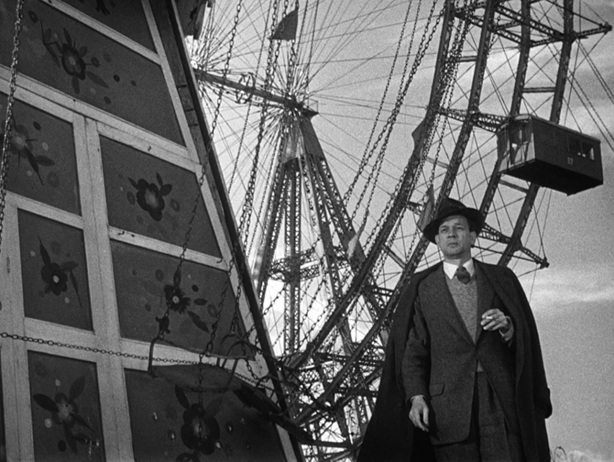
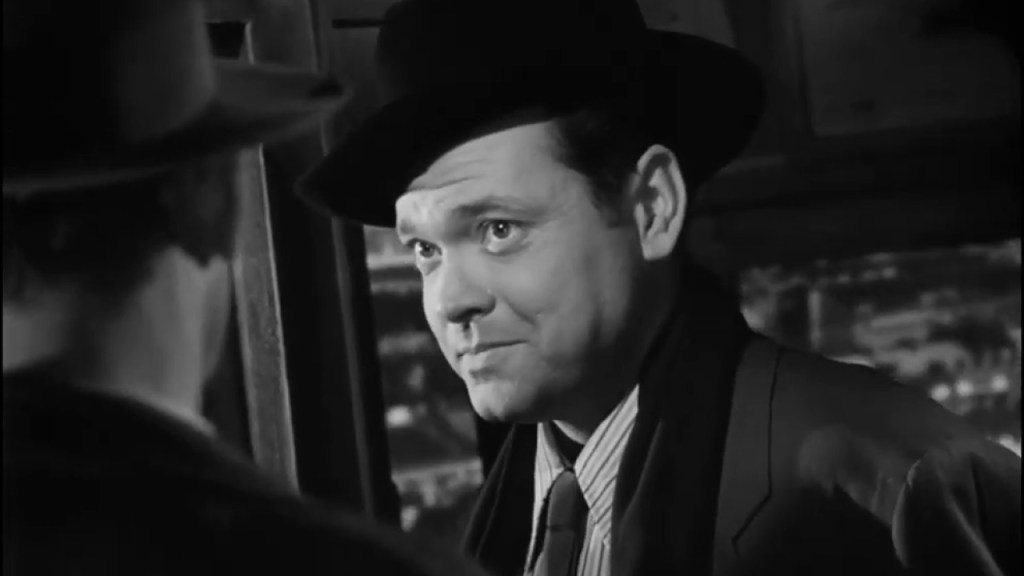
In the classic scene below, Harry and Holly have a clandestine meeting in a Ferris wheel and Harry justifies both his actions and the lives that have been lost as a result of them.
While Orson Welles’ performance is (rightfully) celebrated, I’ve always felt that Joseph Cotten’s work was even more important to the film’s success. While Welles made Harry Lime into a charismatic and compelling villain, it was Cotten who provided the film with a heart.
4 Or More Shots From 4 Or More Films is just what it says it is, 4 shots from 4 of our favorite films. As opposed to the reviews and recaps that we usually post, 4 Shots From 4 Films lets the visuals do the talking!
One of the all-time great directors in the history of cinema, Alfred Hitchcock, was born on this day in 1899. Today, I celebrate this master filmmaker with some images from some of his best films. Enjoy!
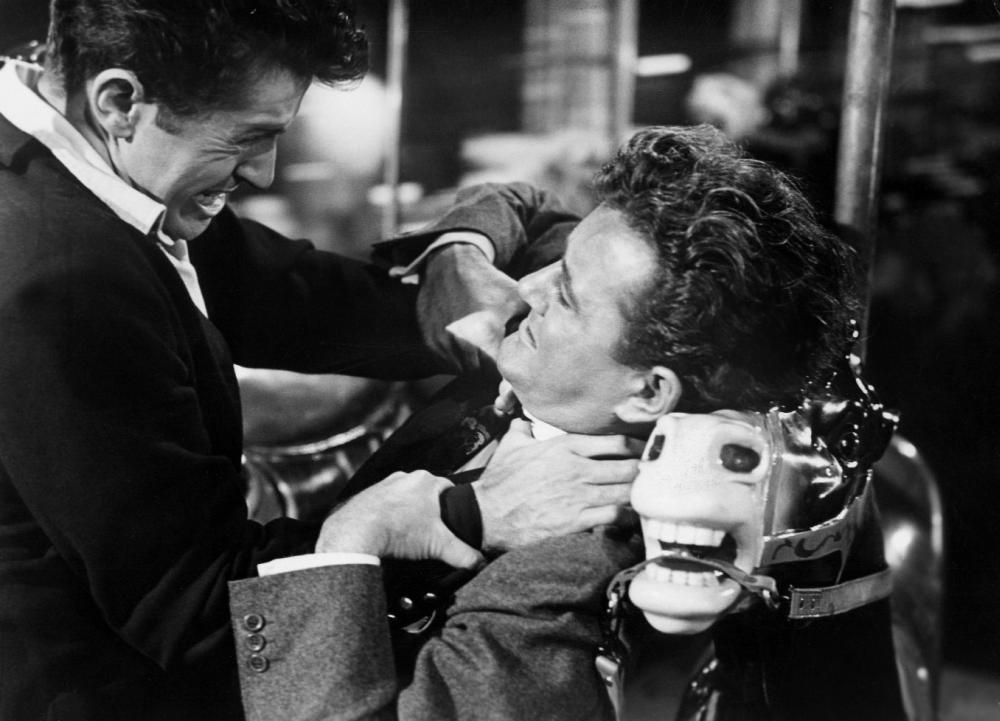
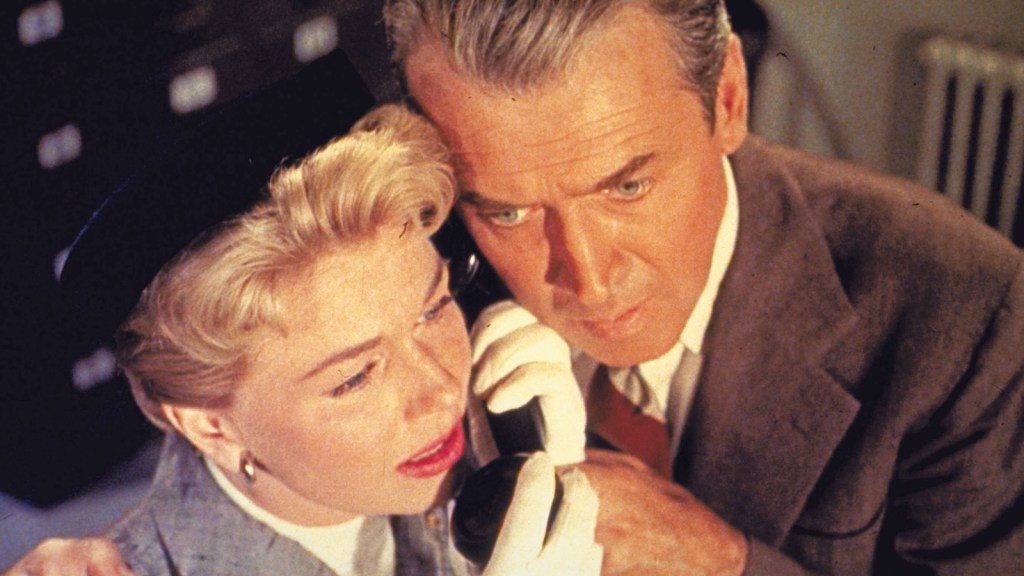
Shadow of a Doubt (1943)Strangers on a Train (1951)The Man Who Knew Too Much (1956)Frenzy (1972)
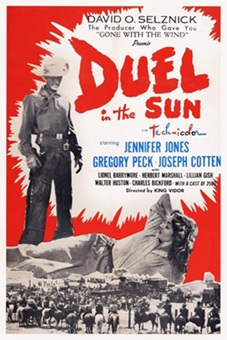
After her father is executed for killing her mother and her mother’s lover, “half-breed” Pearl Chavez (Jennifer Jones) is sent to live with her father’s second cousin, Laura Beth McCanles (Lillian Gish). Laura is the wife of rancher, politician, and all-around racist Senator Jackson McCanles (Lionel Barrymore). Worried that Pearl’s beauty and uninhibited manner will get her into trouble, Laura arranges for Pearl to meet with a minister known as The Sinkller (Walter Huston) who instructs Pearl on how to be a “good” girl.
Wanting to make Pearl bad and his, Lewton “Lewt” McCanles (Gregory Peck) becomes obsessed with Pearl and is soon forcing himself on her on a regular basis. When the good McCanles brother, Jesse (Joseph Cotten), leaves the ranch despite being in love with Pearl, Pearl tries to find a good husband in the form of Sam Pierce (Charles Bickford). Lewt responds by gunning Sam down and then goes on the run. It all leads to an overwrought duel in the sun as the two doomed lovers take aim at each other.
DuelInTheSun is credited to veteran director King Vidor and there are a few shots of the western landscape that do feel typical of Vidor’s work. However, DuelIn TheSun’s true auteur was its producer, David O. Selznick. Still looking to recapture his earlier success with GoneWithTheWind and eager to make his future wife, Jennifer Jones, into an even bigger star than she was, Selznick obsessed over every detail of DuelInTheSun, pushing Vidor and a host of other directors (including Josef von Sternberg, William Dieterle, William Cameron Menzies, Otto Brower, and Sidney Franklin) to make the film more steamy, more melodramatic, more violent, and more visually epic. Reportedly, while Video was trying to shoot the film’s titular duel, he had to call cut several times when Selznick ran into the scene with a water bottle to spray more “sweat” onto Jones and Peck. Today, the stiff Peck seems miscast as the black sheep of the family, the reserved Jones is even more miscast as a mestiza, and the plot is clearly too simplistic to carry the film’s epic ambitions. A few impressive shots aside, DuelInTheSun is just boring, In the 40s, though, the film’s relative openness about sex generated enough controversy to make DuelInTheSun into a box office hit. It was one of the two top-grossing westerns of the 40s, beating out Red River, My Darling Clementine, Fort Apache, The Ox-Bow Incident, and several other films that were actually good.
Unlike Jones, Peck, and even usually reliable stalwart like Lionel Barrymore and Walter Huston, Joseph Cotten at least emerges from this film with his dignity intact. Playing the good brother, Cotten gets to underplay while everyone else is overplaying and it turns out to be the right approach for him. Surviving DuelInTheSun was no easy feat but Cotten pulled it off.
Imagine being Holly Martins. You’re in Vienna, investigating the death of your best friend, getting chased by an angry mob and threatened by British intelligence, and suddenly you’re reminded that you, an author of dime-store novels, agreed to give a lecture on post-war literature.
That’s what happens in this scene that I love (featuring Joseph Cotten as Holly Martins) from TheThirdMan.
4 Shots From 4 Films is just what it says it is, 4 shots from 4 of our favorite films. As opposed to the reviews and recaps that we usually post, 4 Shots From 4 Films lets the visuals do the talking!
As you can probably guess from my pen name and my profile pic, Joseph Cotten is one of my favorite actors. Cotten may be best known for his association with Orson Welles but he worked with several great directors over the years. Along with playing Jedediah Leland in Welles’s Citizen Kane, he starred in Hitchcock’s Shadow of a Doubt and Carol Reed’s The Third Man. Even while his film career was flourishing, Cotten continued to appear on the Broadway stage and, during the early days of television, he frequently appeared on anthology series, the majority of which were broadcast live.
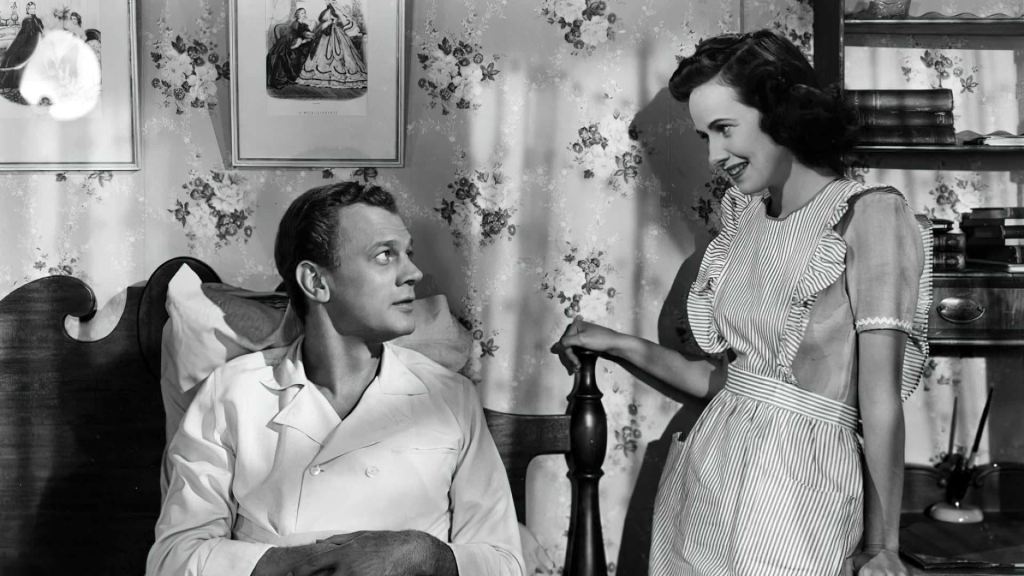
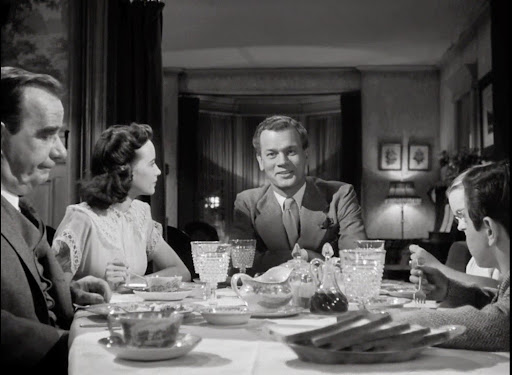
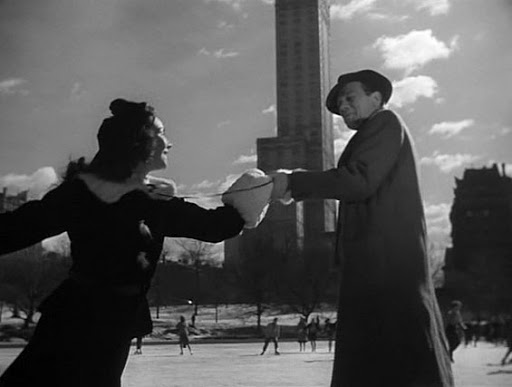
In honor of Cotten’s birthday, here are four shots from four of his best films.
4 Shots From 4 Films
The Magnificent Ambersons (1942, directed by Orson Welles)
Shadow of a Doubt (1943, directed by Alfred Hitchcock)
Portrait of Jennie (1948, directed by William Dieterle)
“Holly, I’d like to cut you in, old man. There’s nobody left in Vienna I can really trust, and we’ve always done everything together. When you make up your mind, send me a message – I’ll meet you any place, any time, and when we do meet old man, it’s you I want to see, not the police. Remember that, won’t ya? Don’t be so gloomy.
After all it’s not that awful. You know what the fellow said – in Italy, for thirty years under the Borgias, they had warfare, terror, murder and bloodshed, but they produced Michelangelo, Leonardo da Vinci and the Renaissance. In Switzerland, they had brotherly love, they had five hundred years of democracy and peace – and what did that produce? The cuckoo clock. So long Holly.”
Orson Welles has been a giant of the film industry since he first stepped foot in it with his masterpiece Citizen Kane. He has been lauded as one of the greatest filmmakers and his innovation in the techniques of filmmaking continues to influence past, present and future filmmakers.
Yet, he wasn’t just a great director but a great writer and producer. He was also a great actor both on-screen, and previously, on stage where he honed his craft. He has had some memorable moments in all the films he’s acted in (even his final film which was the cult classic animated film feature Transformers: The Movie, where he was the voice of a planet-devouring transforming robot planetoid).
It is his brief but great monologue past the halfway mark of the classic noir film The Third Man that is my choice for Scenes I Love and another entry in the “Great Film and TV Monologues” series.
Welles plays the amoral Harry Lime who meets up with his childhood friend Holly Martins. As they ride the famous Wiener Riesenrad in Vienna, Welles waxes poetic about the insignificance of people, in general. How, from the the heights of the Riesenrad, people looked like little dots and would one dot or a group of them be missed if they suddenly stopped moving.
Yet, it is when Lime and Martins exit the ride that Welles’ as Harry Lime performs what is considered one of the greatest monologues ever put on film and, most likely, one of the briefest. It is a philosophical observation on the cynics take on the violent nature of man and how it affects society.
The monologue itself wasn’t written by the film’s writer, Graham Greene, but was inserted in the script by Orson Welles himself. The Third Man was one of the greatest films ever produced even without Welles’ contribution as a writer, but we should be all glad that he decided to add this brief monologue which helps explains the character of Harry Lime and the meaning of the “third man”.
Today’s song of the day is the haunting zither theme of The Third Man. Whenever I hear this music, I immediately think of Orson Welles, emerging from the shadows with that charming smile on his face. I also think about poor Holly Martins (Joseph Cotten), being chased through Vienna by that little kid who wouldn’t stop yelling at him. And, of course, there’s that famous final shot….
Though the Academy of Motion Picture Arts and Sciences claim that the Oscars honor the best of the year, we all know that there are always worthy films and performances that end up getting overlooked. Sometimes, it’s because the competition too fierce. Sometimes, it’s because the film itself was too controversial. Often, it’s just a case of a film’s quality not being fully recognized until years after its initial released. This series of reviews takes a look at the films and performances that should have been nominated but were, for whatever reason, overlooked. These are the Unnominated.
I come here to defend Charlton Heston.
1994’s Ed Wood is a great film that has one unfortunate line. Towards the end of the film, director Ed Wood (Johnny Depp) meets his hero, Orson Welles (Vincent D’Onoforio), in a bar. They talk about the difficulties of directing a film. Wood talks about the trouble that he’s having with Plan 9 From Outer Space. Welles says that he can understand what Wood is going through because the studio is forcing him to cast Charlton Heston as a Mexican in his next movie.
And look, I get it. It is true that Charlton Heston does play a Mexican prosecutor named Mike Vargas in Welles’s 1958 film, Touch of Evil. And it is true that Heston is not the most convincing Mexican to ever appear in a film. And I understand that there are people who enjoy taking cheap shots at Charlton Heston because he did have a tendency to come across as being a bit full of himself and he was a conservative in a industry dominated by Leftists. There are people who actually think Michael Moore doesn’t come across like a self-righteous prick when he confronts Heaton in Bowling for Columbine. I get the joke.
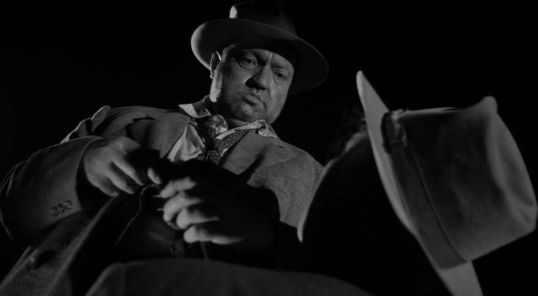
But it’s not true and it’s not fair. When Touch of Evil was first put into production by Universal, Welles was not hired to direct. He was hired to play Hank Quinlan, the formerly honest cop with a habit of planting evidence on those who he believed to be guilty. When Charlton Heston was offered the role of Vargas, he asked who had been hired to direct. When he was told that a director hadn’t been selected, Heston was the one who suggested Welles be given the job. When, as often happened with Welles’s film, the studio decided to take the film out of Welles’s hands, Heston argued for Welles’s vision while Welles was off trying to set up his long-dreamed of film of Don Quixote. Say what you will about Charlton Heston’s career, he fought for Orson Welles, just as he later fought for Sam Peckinpah during the making of Major Dundee. Heston may not have agreed with either Welles or Peckinpah politically but he fought for them when few people were willing to do so.
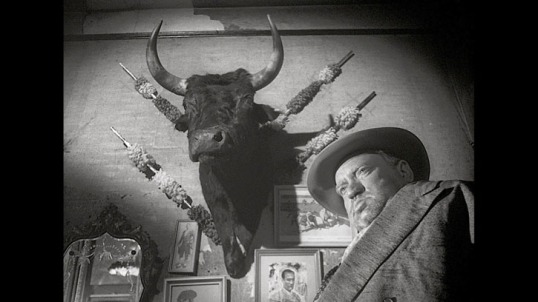
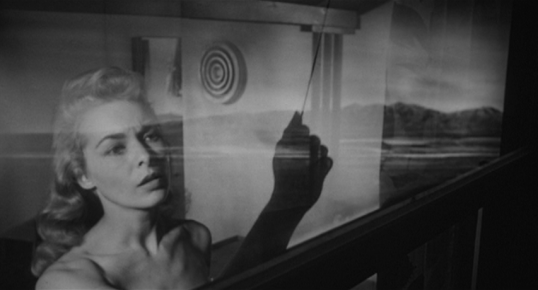
That Touch of Evil is a brilliant film is pretty much entirely due to Welles’s directorial vision. The story is pure pulp. While investigating the murder of an American businessman in Mexico, Vargas comes to believe that Quinlan is attempting to frame a young Mexican for the crime. While Vargas watches Quinlan, his wife Susie (Janet Leigh) is menaced by the crime lord Joe Grandi (Akim Tamiroff), who has his own issues with both Vargas and Quinlan. The plot may be the stuff of a B-programmer but, as directed by Welles, Touch of Evil plays out like a surreal nightmare, a journey into the heart of darkness that is full of eccentric characters, shadowy images, memorably askew camera angles, and lively dialogue. Welles and cinematographer Russell Metty create a world that feels alien despite being familiar. Just as he did with Gregg Toland in CitizenKane, Welles shapes a film that shows us what’s happening in the shadows that most people try to ignore.
There’s really not a boring character to be found in Touch of Evil and the cast is full of old colleagues and friends of Welles. Marlene Dietrich shows up as Quinlan’s former lover. Mercedes McCambridge plays a leather-clad gang leader. Dennis Weaver is the creepy owner of a remote motel. (Two years before Psycho, Touch of Evil featured Janet Leigh being menaced in a motel. Mort Mills, who played Psycho’s frightening highway patrolman, plays a member of law enforcement here as well.) Zsa Zsa Gabor shows up for a few brief seconds and it makes a strange sort of sense. Why shouldn’t she be here? Everyone else is. Joseph Cotten plays a coroner. Ray Collins plays a local official. In the film’s skewered world, Charlton Heston as Mike Vargas works. His upright performance grounds this film and keeps it from getting buried in its own idiosyncrasies. Big personalites are everywhere and yet the film is stolen by Joseph Calleia, playing Quinlan’s quiet but observant partner. Calleia’s performance is the heart of the film.
TouchofEvil was not nominated for a single Oscar and that’s not surprising. It’s not really the type of film that was noticed by the Academy in the 50s. It was too pulpy and surreal and, with its story of a crooked cop framing someone who might very well be guilty anyway, it was probably too subversive for the Academy of the 1950s. It would take a while for TouchofEvil to be recognized for being the noir masterpiece that it is. In a perfect world, Welles would have been nominated for directing and for his larger-than-life performance as Quinlan. Joseph Calleia would have been nominated for Supporting Actor and perhaps both Janet Leigh and Marlene Dietrtich would have been mentioned for Supporting Actress. That didn’t happen but it would have been nice if it had.
 Through the Shattered Lens