After finding a portly man with a big white beard passed out in a snowbank, small town Sheriff Scott Hanson (Dean Cain) brings him to the hospital. When the man wakes up, he says that his name is Kris Kringle (Bill Lewis) but you can call him Santa Claus. Kris uses his powers to give the children in the hospital what they want. (He creates a miniature pony for one girl.) District Attorney Robert Nielson (Gary Hudson) thinks that Kris is a public danger and wants to have him put in the mental ward. Public defender Sarah Walker (Jud Taylor) defends Kris and falls back in love with her ex-boyfriend, Scott. Santa Claus spreads his magic across town. He detoxifies the town drunk but not even Santa can save the life of a dying child. That scene was very sad.
Have you ever wanted to see Santa Claus play football with Dean Cain and Full House‘s Jodie Sweetin? This is the movie for you! Santa Claus plays in the park and even does a front flip. Go Santa Claus Go! But then old St. Nick also uses his powers to cause another player’s pants to fall down during a key play, which allows Dean Cain’s team to win the game. That’s cheating, which I was always told put you on the naughty list.
Speaking of being on the naughty list, it doesn’t ever make sense that the district attorney is so obsessed with putting Kris Kringle. Santa Claus never hurt anyone. Trying to put Santa Claus in jail before Christmas is definitely worth a lump of coal in your stocking! Defending Santa is an okay Hallmark Christmas movie but don’t spend too much time trying to make it make sense.
This 1979 true crime drama opens in Los Angeles in 1963.
Rookie Detective Karl Hettinger (John Savage) has just joined the Felony Squad and met his new partner, Ian Campbell (Ted Danson, making his film debut). Ian is a tall, somewhat eccentric detective, the type who practices playing the bagpipes in the basement and who takes Hettinger under his wing.
Meanwhile, Jimmy Smith (Franklyn Seales) has just been released from prison. The nervous and easily-led Jimmy almost immediately runs into Gregory Powell (James Woods), a small-time hood with delusions of grandeur. Powell is the type who talks a big game but who really isn’t even that good of a thief. Smith and Powell form an uneasy criminal partnership. They are easily annoyed with each other but they also share an instant bond. Though the film doesn’t actually come out and say what most viewers will be thinking, there’s a lot of subtext to a brief scene where Powell appears to caress Smith’s shoulder.
One night, Hettinger and Campbell are kidnapped by Smith and Powell. Smith and Powell drive them out to an onion field. Because he’s misinterpreted the Federal Kidnapping Act and incorrectly believes that he and Smith are already eligible for the death penalty because they kidnapped two police officers, Powell shoots and kills Campbell. (The close-up image of Campbell falling dead is a disturbing one, not the least because he’s played by the instantly likable Ted Danson.) Hettinger runs and manages to escape. He saves his life but he’s now haunted by the feeling that he abandoned his partner.
The rest of the film deals with the years that follow that one terrible moment in the onion field. Treated as a pariah by his fellow cops, Hettinger sinks into alcoholism and eventually becomes a compulsive shoplifter. Smith and Powell, meanwhile, use a variety of tricks to continually escape the death penalty and to keep their case moving through the California justice system. Powell, for instance, defends himself and then later complains that he had incompetent counsel. Smith, meanwhile, is defended by the infamous Irving Karanek, a legendary California attorney who specialized in filing nuisances motions. (Later Karanek found a measure of fame as Charles Manson’s attorney. Eventually, he had a nervous breakdown in 1989, lived in his car, and was briefly suspended by practicing law.) While Smith and especially Powell quickly adjust to being imprisoned, Hettinger spends the next decade trapped in a mental prison of guilty and bitterness.
Based on a non-fiction book by Joseph Wambaugh, The Onion Field is a compelling look at a true crime case that continue to resonate today. The film can be a bit heavy-handed in its comparisons between the two partnerships that define the story. Both Hettinger and Smith are young and neurotic men who find themselves working with a more confident mentor. The difference is that Hettinger’s mentor is the cool, composed, and compassionate Ian Campbell while Smith’s sad fate is to be forever linked to the erratic Gregory Powell. While the film may have the flat look of something that was made for television, it’s elevated by the performances of its lead actors. James Woods give an especially strong performance as the cocky Powell, a loser in the streets who becomes a winner behind bars. Over the course of the film, he goes from being a joke to being the prisoner that others come to for legal advice. John Savage, meanwhile, poignantly captures Hettinger’s descent as the trauma from that night leaves him as shell of the man that he once was.
The film’s supporting cast is full of familiar faces. Christopher Lloyd and William Sanderson show up as prisoners. Ronny Cox plays the detective in charge of the onion field investigation. David Huffman plays a district attorney who is pushed to his breaking point by the obstructive tactics of Smith’s attorney. Priscilla Pointer play Ian Campbell’s haunted mother. All of them do their part to bring this sad story to life.
The Onion Field is a chillingly effective true crime drama and a look at a murder that was inspired by one man’s inability to understand federal law.
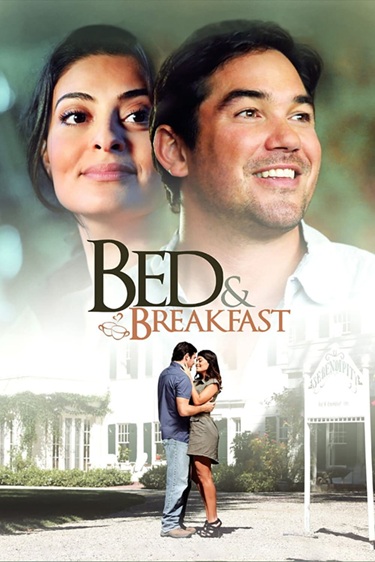
2010’s Bed & Breakfast is one of those Hallmark-y films that takes place at a B&B in a quaint little town.
Having recently been left by his actress wife, Jake (Dean Cain) is trying to open up a bed and breakfast, using a house that was left to him by a former employer. Helping Jake out is his brother, Peter (Jake Engvall), a member of law enforcement who not only enjoys drinking beer but also enjoys talking about beer as well. Juliana Paes plays Ana, the niece of the original owner of the house. Ana is from Brazil and she wants to sell the house because her brother is in debt to some local mobsters. But then Ana meets the handsome and single Jake and …. well, you already know what’s going to happen. This is one of those films where the familiarity is the point. You watch it because you know that Jake and Ana are going to fall in love and you know exactly how long it’s going to take for that to happen. Dean Cain is rugged. Juliana Paes is pretty. The town is lovely. It’s a sweet little film that you’ll forget about a few minutes after it ends.
Of course, these films always require a cameo or two. John Savage and Julia Duffy show up as a couple who stay at the B&B and who share a dance at the end of the film. Ted Lange is the judge who settles the issue of who actually owns the house. Eric Roberts shows up as a reviewer who stays at the B&B and decides that it’s a wonderful place that more than deserves a good review. Yay! I will say that it’s always interesting to see Roberts playing someone who is just a nice, polite guy. He doesn’t get to do it all that often. Eric Roberts doesn’t have much screentime in this film but he gets to be pleasant the entire time. It’s a nice change of pace.
Previous Eric Roberts Films That We Have Reviewed:
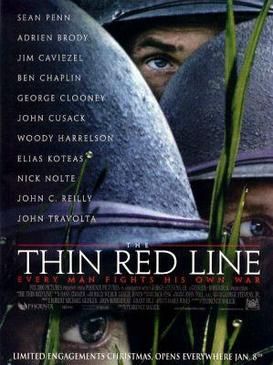
Based on a novel by James Jones (and technically, a sequel of sorts to From Here To Eternity), 1998’s The Thin Red Line is one of those Best Picture nominees that people seem to either love or hate.
Those who love it point out that the film is visually stunning and that director Terrence Malick takes a unique approach to portraying both the Battle of Guadalcanal and war in general. Whereas Steven Spielberg’s Saving Private Ryan told a rather traditional story about the tragedy of war (albeit with much more blood than previous World War II films), The Thin Red Line used the war as a way to consider the innocence of nature and the corrupting influence of mankind. “It’s all about property,” one shell-shocked soldier shouts in the middle of a battle and later, as soldiers die in the tall green grass of the film’s island setting, a baby bird hatches out of an egg. Malick’s film may have been an adaptation of James Jones’s novel but its concerns were all pure Malick, right down to the philosophical voice-overs that were heard throughout the film.
Those who dislike the film point out that it moves at a very deliberate pace and that we don’t really learn much about the characters that the film follows. In fact, with everyone wearing helmets and running through the overgrown grass, it’s often difficult to tell who is who. (One gets the feeling that deliberate on Malick’s point.) They complain that the story is difficult to follow. They point out that the parade of star cameos can be distracting. And they also complain that infantrymen who are constantly having to look out for enemy snipers would not necessarily be having an inner debate about the spirituality of nature.
I will agree that the cameos can be distracting. John Cusack, for example, pops up out of nowhere, plays a major role for a few minutes, and then vanishes from the film. The sight of John Travolta playing an admiral is also a bit distracting, if just because Travolta’s mustache makes him look a bit goofy. George Clooney appears towards the end of the film and delivers a somewhat patronizing lecture to the men under his command. Though his role was apparently meant to be much larger, Adrien Brody ends up two lines of dialogue and eleven minutes of screentime in the film’s final cut.
That said, The Thin Red Line works for me. The film is not meant to be a traditional war film and it’s not necessarily meant to be a realistic recreation of the Battle of Guadalcanal. Instead, it’s a film that plays out like a dream and, when viewed a dream, the philosophical voice overs and the scenes of eerie beauty all make sense. Like the majority of Malick’s films, The Thin Red Line is ultimately a visual poem. The plot is far less important than how the film is put together. It’s a film that immerses you in its world. Even the seeming randomness of the film’s battles and deaths fits together in a definite patten. It’s a Malick film. It’s not for everyone but those who are attuned to Malick’s wavelength will appreciate it even if they don’t understand it.
And while Malick does definitely put an emphasis on the visuals, he still gets some good performances out of his cast. Nick Nolte is chilling as the frustrated officer who has no hesitation about ordering his men to go on a suicide mission. Elias Koteas is genuinely moving as the captain whose military career is ultimately sabotaged by his kind nature. Sean Penn is surprisingly convincing as a cynical sergeant while Jim Caviezel (playing the closest thing the film has to a main character) gets a head start on humanizing messianic characters by playing the most philosophical of the soldiers. Ben Chaplin spends most of his time worrying about his wife back home and his fantasies give us a glimpse of what’s going on in America while its soldiers fight and die overseas.
The Thin Red Line was the first of Terrence Malick’s films to be nominated for Best Picture and it was one of three World War II films to be nominated that year. However, it lost to Shakespeare In Love.
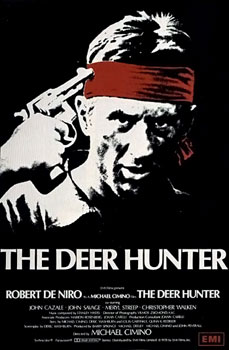
The Deer Hunter, which won the 1978 Oscar for Best Picture Of The Year, opens in a Pennsylvania steel mill.
Mike (Robert De Niro), Steve (John Savage), Nick (Chistopher Walken), Stan (John Cazale), and Axel (Chuck Aspegren, a real-life steel worker who was cast in this film after De Niro met him while doing research for his role) leave work and head straight to the local bar, where they are greeted by the bartender, John (George Dzundza). It’s obvious that these men have been friends for their entire lives. They’re like family. Everyone gives Stan a hard time but deep down, they love him. Axel is the prankster who keeps everyone in a good mood. Nick is the sensitive one who settles disputes. Steve is perhaps the most innocent, henpecked by his mother (Shirley Stoler) and engaged to marry the pregnant Angela (Rutanya Alda), even though Steve knows that he’s not actually the father. And Mike is their leader, a charismatic if sometimes overbearing father figure who lives his life by his own code of honor. The men are held together by their traditions. They hunt nearly every weekend. Mike says that it’s important to only use one shot to kill a deer. Nick, at one point, confesses that he doesn’t really understand why that’s important to Mike.
Steve and Angela get married at a raucous ceremony that is attended by the entire population of their small town. The community is proud that Nick, Steve, and Mike will all soon be shipping out to Vietnam. Nick asks his girlfriend, Linda (Meryl Streep), to marry him when he “gets back.” At the reception, Mike gets into a fight with a recently returned soldier who refuses to speak about his experiences overseas. Mike ends up running naked down a street while Nick chases him.
The Deer Hunter is a three-hour film, with the entirety of the first hour taken up with introducing us to the men and the tight-knit community that produced them. At times, that first hour can seem almost plotless. As much time is spent with those who aren’t going to Vietnam as with those who are. But, as the film progresses, we start to understand why the film’s director, Michael Cimino, spent so much time immersing the viewer in that community of steel workers. To understand who Nick, Mike, and Steve are going to become, it’s important to know where they came from. Only by spending time with that community can we understand what it’s like to lose the security of knowing where you belong.
If the first hour of the film plays out in an almost cinema verité manner, the next two hours feel like an increasingly surreal nightmare. (Indeed, there was a part of me that suspected that everything that happened after the wedding was just Michael’s drunken dream as he lay passed out in the middle of the street.) The film abruptly cuts from the beautiful mountains of Pennsylvania to the violent horror of Vietnam. A Viet Cong soldier blows up a group of hiding women and children. Michael appears out of nowhere to set the man on fire with a flame thrower. An army helicopter lands and, in a coincidence that strains credibility, Nick and Steve just happen to get out. Somehow, the three friends randomly meet each other again in Vietnam. Unfortunately, they are soon captured by the VC.
They are held prisoner in submerged bamboo cages. Occasionally, they are released and forced to play Russian Roulette. Mike once again becomes the leader, telling Steve and Nick to stay strong. Eventually, the three men do manage to escape but Steve loses his leg in the process and a traumatized Nick disappears in Saigon. Only Mike returns home.
The community seems to have changed in Mike’s absence. The once boisterous town is now quiet and cold. The banner reading “Welcome Home, Mike” almost seems to be mocking the fact that Mike no longer feels at home in his old world. Stan, Axel, and John try to pretend like nothing has changed. Mike falls in love with Linda while continuing to feel guilty for having abandoned Nick in Saigon. Steve, meanwhile, struggles to come to terms with being in a wheelchair and Nick is still playing Russian Roulette in seedy nightclubs. Crowds love to watch the blank-faced Nick risk his life.
Eventually, Mike realizes that Nick is still alive. Somehow, Mike ends up back in Saigon, just as the government is falling. Oddly, we don’t learn how Mike was able to return to Saigon. He’s just suddenly there. It’s the type of dream logic that dominates The Deer Hunter but somehow, it works. Mike searches for Nick but will he be able to save his friend?
The Deer Hunter was one of the first major films to take place in Vietnam. Among the pictures that The Deer Hunter defeated for Bet Picture was Coming Home, which was also about Vietnam but which took a far more conventional approach to its story than The Deer Hunter. Indeed, while Coming Home is rather predictable in its anti-war posture, The DeerHunter largely ignores the politics of Vietnam. Mike, Nick, and Steve are all traumatized by what they see in Vietnam. Mike is destroyed emotionally, Steve is destroyed physically, and Nick is destroyed mentally. At the same time, the VC are portrayed as being so cruel and sadistic that it’s hard not to feel that the film is suggesting that, even if we did ultimately lose the war, the Americans were on the correct side and trying to do the right thing. (Many critics of The Deer Hunter have pointed out that there are no records of American POWs being forced to play Russian Roulette. That’s true. There are however records of American POWs being forced to undergo savage torture that was just as potentially life-threatening. Regardless of what one thinks of America’s involvement in Vietnam, there’s no need to idealize the VC.) Released just a few years after the Fall of Saigon, The Deer Hunter was a controversial film and winner. (Of course, in retrospect, the film is actually quite brilliant in the way it appeals to both anti-war and pro-war viewers without actually taking a firm position itself.)
In the end, though, The Deer Hunter isn’t really about the reality of the war or the politics behind it. Instead, it’s a film about discovering that the world is far more complicated that you originally believed it to be. De Niro is a bit too old to be playing such a naive character but still, he does a good job of portraying Mike’s newfound sense of alienation from his former home. In Vietnam, everything he believed in was challenged and he returns home unsure of where he stands. While John, Axel, and Stan can continue to hunt as if nothing happened, Mike finds that he can no longer buy into his own philosophical BS about the importance of only using one shot. Everything that he once believed no longer seems important.
It’s a good film and a worthy winner, even if it does sometimes feel more like a happy accident than an actual cohesive work of art. The plot is often implausible but then again, the film takes place in a world gone mad so even the plot holes feel appropriate to the story being told. Christopher Walken won an Oscar for his haunting performance as Nick and John Savage should have been nominated alongside of him. This was Meryl Streep’s first major role and she gives a surprisingly naturalistic performance. During filming, Streep was living with John Cazale and she largely did the film to be near him. Cazale was dying of lung cancer and he is noticeably frail in this film. (I cringed whenever Mike hit Stan because Cazale was obviously not well in those scenes.) Cazale, one of the great character actors of the 70s, died shortly after filming wrapped. Cazale only appeared in five films and all of them were nominated for Best Picture. Three of them — The first two Godfathers and The Deer Hunter — won.
The Deer Hunter is a long, exhausting, overwhelming, and ultimately very moving film. Whatever flaws it may have, it earns its emotional finale. Though one can argue that some of the best films of 1978 were not even nominated (Days of Heaven comes to mind, as do more populist-minded films like Superman and Animal House), The Deer Hunter deserved its Oscar.
First released in 1999, Summer of Sam is Spike Lee’s sprawling, frustrating, flawed, occasionally compelling, and ultimately rather intriguing film about the summer of 1977 in New York City.
As one can guess from the title, it was a summer that was dominated by the reign of terror of the serial killer known as the Son of Sam. While New York suffered one of the hottest summers on record, the Son of Sam shot couples while they sat in their cars. Because all of his victims had been women with long, dark hair, women across the city wore blonde wigs. While the police searched for the killer, the city was also caught up in the World Series. Club 57 was the hottest club in New York but a growing number of rebels, inspired by the news that was coming out of the UK, eschewed the glitz of disco for the gritty and deliberately ugly aesthetic of punk and the Mud Club.
Though the film is centered around the murders of the Son of Sam, he remains a largely shadowy figure in the film. Played by Michael Badalucco, David Berkowitz spends most of his time in his filthy home, yelling at the dog across the street and writing cryptic messages on the walls. He only gets a few minutes of screen time because the film is ultimately less about the Son of Sam’s crimes and more about how one Italian-American neighborhood in New York deals with the atmosphere of fear and paranoia created by those crimes. It’s a neighborhood that’s ruled over by the ruthless but benevolent Luigi (Ben Gazzara). When the two detectives (Anthony LaPaglia and Roger Guevener Smith) come to the neighborhood in search of information, they know that Luigi is the man to see.
Vinny (John Leguizamo) is one of the neighborhood’s citizens, a hairdresser who hasn’t let his marriage to Dionna (Mira Sorvino) stand in the way of his compulsive womanizing. Vinny is the type who cheats on his wife and then goes to Confession to get forgiveness. He’s the type who gets angry whenever Dionna wants to have sex with the lights on or do anything other than a quick three minutes in the missionary position. When he realizes that the Son of Sam was watching him while he was having sex in a car with Dionna’s cousin and that he could have been one of his victims, Vinny starts to spin out of control. Vinny’s childhood friend is Ritchie (Adrien Brody), who shocks everyone when he spikes his hair, puts on a Union Jack t-shirt, and starts speaking with a fake British accent. Ritchie and his girlfriend, Ruby (Jennifer Esposito), embrace the punk lifestyle and even put one the Son of Sam’s letters to music when they perform at the Mud Club.
It’s an ambitious film but it’s also an overlong film, one where the slow spots can truly test the viewer’s patience. With a 142-minute running time, Summer of Sam finds the time to touch on almost every trope of the late 70s. Vinny and Dionna hit the clubs, where the usually quiet Dionna truly comes to life as she dances. (Vinny’s moves are far less impressive. Tony Manero would have laughed at him.) Ritchie not only embraces punk rock but he also makes his money by performing in live sex shows. When a mysterious man offers to give Vinny and Dionna a ride in his limo, it’s hard not to smile when it’s revealed that he’s taking them to the infamous sex club, Plato’s Retreat. One can respect Lee’s ambition while still finding the film itself to be a bit too self-indulgent for it’s own good.
Spike Lee, for all of his other talents, has never been a particularly subtle director. Vinny and his friends spend a lot of time hanging out at the end of street, strategically placed in front of a sign that loudly proclaims, “DEAD END.” At one point, Vinny is inspired to run to his window and start screaming insults at the Son of Sam and Leguizamo’s histrionic delivery of the lines make it impossible to take his anguish seriously. At the same time, there are moments that work brilliantly. I particularly liked the scenes that took place during the blackout of 1977. Luigi automatically knows how to keep control in his neighborhood and he sends his men out with baseball bats, channeling their aggression into a search for the phantom serial killer. For every scene that doesn’t work, there’s a scene like the Baba O’Riley montage or Vinny, Dionna, Ritchie, and Ruby having a candlelit dinner.
“We really dig your vibe.”
John Leguizamo is shrill and miscast as Vinny, though I’m not sure if anyone could have made much of such a one-dimensional characters. I preferred the performances of Mira Sorvino, Adrien Brody, and Jennifer Esposito, who all brought their characters to authentic life. (I especially liked how Brody switched from being tough to being a wounded child at the drop of a hat.) As is so often the case with Lee’s films, it’s the supporting actors who make the strongest impression. I loved Mike Starr’s earthy performance as Ritchie’s father and Ben Gazzara’s sly turn as the neighborhood mobster. Bebe Neuwirth is underused but memorable as Vinny’s boss.
The film is overstuffed and overlong but it effectively portrays a community in the grips of paranoia and anger. In the end, the film is epitomized by a scene in which the neighbor’s dog enter David Berkowtiz’s living room and starts yelling at him in the voice of John Turturro. It’s a scene that’s so ludicrous that it somehow becomes effective. It’s a scene that most directors would have left on the editing room floor but Spike Lee included it. It takes courage to write, film, and keep a scene like that. Summer of Sam is a wreck of a film but it’s also ultimately a compelling portrait of a community coming apart. In the end, just as in real life, Berkowitz is brought to justice and a community is left wondering what to do now.
Summer of Sam features some of Spike Lee’s best work and also some of his worst. The film opens with columnist Jimmy Breslin describing New York as being the city that he both loves and hates and that’s the way that I feel about this film. For all of its flaws, there’s enough strengths to make up for them. It’s a New York story and, appropriately, it’s just as messy as the city that it is about.
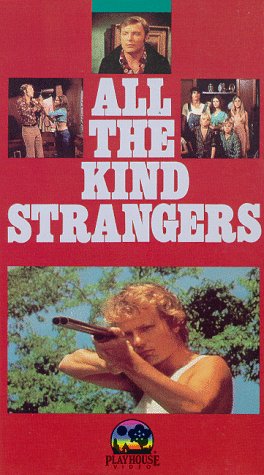
This 1974 made-for-television movie opens with photojournalist Jimmy Wheeler (Stacy Keach) driving down an isolated country road. He’s driving across America, heading towards California. However, when he sees a young child walking on the side of the road and struggling to carry two bags of groceries, Jimmy pulls over and offers the child a ride.
That’s a big mistake. As Jimmy soon discovers, the child lives on an isolated farmhouse in the middle of nowhere. He resides with his six brothers and sisters. The family is led by Peter (John Savage), the oldest sibling. Jimmy discover that there’s only one other adult on the farm. The children refer to her as being their mom and Carol Ann (Samantha Eggar) certainly does seem to be busy, cooking dinner and keeping the house clean. It’s only when the children leave the kitchen that Carol Ann finally tells Jimmy the truth. She’s not related to the children. Instead, she is someone who made the same mistake that Jimmy did. She gave one of the kids a ride home and she’s never been allowed to leave.
It turns out that the children’s parents died a few years ago but, because the family lives so far away from town, no one has ever noticed. Peter has been in charge of the family but he’s reaching the point where he no longer wants to spend his entire life on the farm. He wants to experience Mardi Gras and then visit California. So, Peter has been sending out the children to tempt random adults to come to the house, where Peter auditions them to see if they would be good parents. Peter has decided that Carol Ann can be the mother. Now, he just needs to find someone to serve as the father.
Jimmy seems like a good candidates, except for the fact that he doesn’t want to spend the rest of his life in the middle of nowhere and raising a bunch of odd children. Unfortunately, Jimmy soon discovers that it won’t be easy to escape. The farm is guarded by a pack of dogs and Peter has a way of taking care of all the kind strangers who fail their audition….
Even though it’s only 75 minutes long, All The Kind Strangers is a bit of a slow film and often, it seems like it can’t decide whether it wants to be a straight horror film or a family melodrama. Add to that, one of the kids is played Robby Benson, who showed up in a lot of 70s films, always playing awkward teenagers. Benson gives such a bizarrely over the top performance that it’s hard to take him or any situation in which he’s involved seriously. (Benson also sings the film’s easy listening theme song.) That said, the film still manages to create and maintain an effectively creepy atmosphere and Stacy Keach, Samantha Eggar, and John Savage all give good performances. The fact that the kids aren’t evil as much as they’re incapable of understanding the consequences of their actions actually serves to make them even creepier than the typical demented children who appear in films like this.
All The Kind Strangers has its moments, even if it doesn’t make a huge impression.
This 2000 straight-to-video film opens with a shocking and effectively violent scene in which an innocent girl scout is yanked into a dilapidated house and bludgeoned to death. There’s even a slow-motion shot of crushed cookies falling to the floor. It’s excessive, tasteless, and so ludicrous that it actually makes you think that Christina’s House could actually be, if nothing else, an enjoyably self-aware exploitation film.
Unfortunately, everything pretty much goes downhill after that scene. The rest of the film deals with Christina (Allison Lange), a teenage girl with an annoying father named James (John Savage), an annoying brother named Bobby (Lorne Stewart), an annoying boyfriend named Eddy (Brendan Fehr), and an annoying admirer named Howie (Brad Rowe). That may sound like a lot of annoying people for one person to deal with but Christina actually manages to be even more annoying than all of them. Absolutely no one in this film comes across as being someone with whom you would want to be trapped in a murder house.
Anyway, Christina’s mom has been institutionalized in a Washington mental hospital so James, has rented out a nearby house. (Naturally, it’s the same house where that girl scout was previously killed.) James appears to be almost absurdly overprotective of and strict with Christina but it’s also possible that he might just be an asshole in general. He’s certainly not happy that she’s dating Eddy, who is the local bad boy and who does stuff like hang out on the roof at night. James would probably be happier if Christina was dating Howie, who has been hired to help fix up the house. Howie’s so respectful and such a hard worker. He’s a man who really knows how to handle a hammer.
Christina, however, has other things on her mind. For one thing, young women are being murdered and the creepy sheriff (Jerry Wasserman) keeps coming by the house and asking strange questions. Add to that, Christina sometimes thinks that she can hear someone or something in the attic. Of course, every time that she tries to investigate, her father comes out of his bedroom and yells at her.
(It could just be that James doesn’t want his daughter spending her nights wandering around in her underwear and searching for a vicious killer, in which case James probably has a point. Still, he’s kind of a jerk about it.)
Who is the murderer? Is it Eddie, Bobby, or Howie? Or could it maybe be James? What if the sheriff’s somehow involved? Well, don’t worry! The identity of the murderer is revealed about an hour into this 90-minute film and it’s exactly who you think it’s going to be.
If not for the extremely odd performance of John Savage, this film would be totally forgettable. Savage was the film’s “prestige” actor, a performer who previously appeared in films like The Deer Hunter, the third Godfather,Do The Right Thing, and The Thin Red Line before finding himself in Christina’s House. John Savage attacks the role of James with all of the ferocity of an actor who has gone from co-starring with Robert De Niro and Christopher Walken to playing second fiddle to Allison Lange and Brendan Fehr. Savage yells every line and glares at his co-stars with the fury of a man on a mission of vengeance. As a result, both the actor and the character that he’s playing come across as if they’re always just one annoyance away from putting his fist through a wall. James may be written as an overprotective father but Savage plays him as being a borderline sociopath. It’s such a totally inappropriate and misjudged performance that it becomes oddly fascinating to watch. It takes a great actor to give as entertainingly bad a performance as the one given by John Savage in Christina’s House.
With the exception of Savage’s over-the-top theatrics and Jerry Wasserman’s memorably creepy turn, the rest of the cast is largely forgettable. The problem is that, as written, most of the characters are fairly unlikable and you really don’t care whether they die or not. When the killer eventually trapped Christina and Bobby in their new home, I found myself more worried about the house than either of them.
Christina’s House is available on YouTube and sometimes, it shows up on late night television. (I saw it on This TV.) It’s pretty dumb but if you’re fan of good actors bellowing in rage, you might want to watch it.
An hour ago, I told you about the only Oscar nomination that was ever received by Crown International Pictures, one of the most prolific B-movie distributors of the 70s and 80s. That nomination was for Best Original Song for Crown’s 1972 film, The Stepmother.
Here are 6 more films from Crown International Pictures that I think deserved some Oscar consideration:
“She corrupted the youthful morality of the entire school!” the poster screamed but actually, The Teacher was a surprisingly sensitive coming-of-age story about a relationship between a younger man and an older woman. Jay North and Angel Tompkins both give excellent performances and Anthony James shows why he was one of the busiest character actors of the 70s.
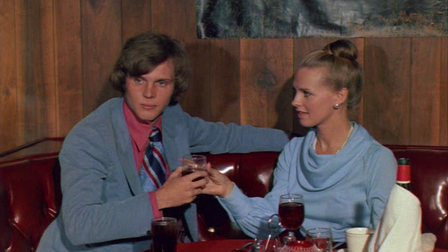
John Savage has been acting for several decades. He’s appeared in a number of acclaimed films but he’s never received an Oscar nomination. One of his best performances was in this melancholy look at love, betrayal, and ennui in the early 70s.
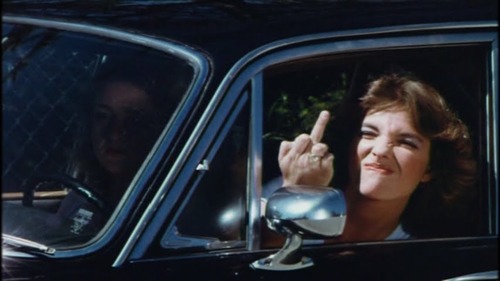
One of the strangest films ever released by Crown International, Best Friends is also one of the best. A road trip between two old friends goes terribly wrong when one of the friends turns out to be a total psycho. This well-acted and rather sad film definitely deserves to be better-known than it is.
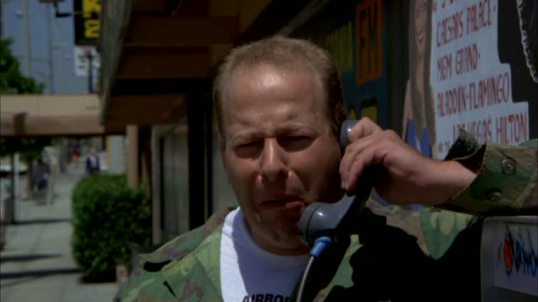
Don’t Answer The Phone is not a particularly good movie but it certainly is effective. It made me want to go out and get a derringer or some other cute little gun that I could carry in my purse. That’s largely because of the performance of Nicholas Worth. Worth plays one of the most perverse and frightening murderers of all time and Worth throws himself into the role. It’s one of the best psycho performances of all time and certainly worthy of a Best Supporting Actor nomination.
(Hi there! So, as you may know because I’ve been talking about it on this site all year, I have got way too much stuff on my DVR. Seriously, I currently have 178 things recorded! I’ve decided that, on February 1st, I am going to erase everything on the DVR, regardless of whether I’ve watched it or not. So, that means that I’ve now have only have a month to clean out the DVR! Will I make it? Keep checking this site to find out! I recorded Empire of the Sharks, off of SyFy on August 5th, 2017!)
Welcome to the future! It’s very wet.
That’s to be expected, of course. In fact, now that 98% of the world is underwater, we should probably be surprised that the future isn’t more wet than it actually is. What survives of humanity now lives on floating, makeshift communities. Some of them are doing better than others, of course.
A warlord floats out there. His name is Ian Fien (John Savage). With the help of his main henchman, Mason Scrimm (Jonathan Pienaar), Fien has several communities under his grip. Everyone is required to pay Fien his tribute. Failing to do so means getting attacked by the sharks that Scrimm has under his control.
(Once 98% of your planet is underwater, you learn not to laugh at the possibility of being eaten by a shark.)
However, Fien has finally gone too far. He’s kidnapped Willow (Ashley de Lange), the daughter of a shark caller who may have inherited her family’s ability to control the sharks. Her boyfriend, Timor (Jack Armstrong), sets out to rescue Willow but it quickly turns out that he’s not going to be able to do it alone. Fien is simply too powerful and his fortress too well-defended by both men and sharks. Timor is going to have to travel to a floating bar and recruit a team of misfits to help him both rescue Willow and free his people from Fien’s tyranny.
If the plot of Empire of the Sharks sounds familiar, that’s because it’s a prequel to 2016’s Planet of the Sharks. It’s also an Asylum film. Of course, The Asylum is best-known for the Sharknado franchise but I think that, if they don’t also develop a Planet of the Sharks franchise, they’ll be missing out on a huge opportunity. One of the things that I liked about both Planet and Empire was the amount of effort that was put into creating the future. Each floating community is its own little world and full of details that will reward sharp-eyed viewers.
(I know that some people online complained that everyone looked too good, considering that they were living in a post-apocalypse wasteland. That may be true but here’s something to consider. Do you really want to spend 90 minutes watching ugly people?)
Anyway, I enjoyed Empire of the Sharks. The movie is pure fun. (Just the fact that the main villains are named Fein and Scrimm should tell you a lot about the film’s sense of humor.) It’s a cheerfully crazy movie, featuring CGI sharks and a nicely demented performance from John Savage. Hopefully, during this year’s shark week, we’ll get a third installment in the Planet of the Sharks franchise.










 Through the Shattered Lens