Retro Television Review: Homicide: Life On The Street 4.16 “Stakeout”


Welcome to Retro Television Reviews, a feature where we review some of our favorite and least favorite shows of the past!  On Sundays, I will be reviewing Homicide: Life On The Street, which aired from 1993 to 1999, on NBC!  It  can be viewed on Peacock.
This week, the detectives take over someone else’s house.

Episode 4.16 “Stakeout”

(Dir by John McNaughton, originally aired on March 15th, 1996)

When a young man confesses to helping an older man carry out a series of murders, the Homicide Squad stakes out the older man’s house.  Jim True-Frost and Kate Walsh play the owners of the home that the squad takes over.  The husband is out of work.  The wife has a habit of oversharing.  While they try to adjust to having cops hanging out in their living room, the detectives adjust to the idea that Bayliss may be leaving them.

Once again, Bayliss is thinking about leaving Homicide.  This has been a recurring theme with Bayliss, ever since he failed to close the Adena Watson case.  (In this episode, he mentions that his number one suspect — Risley Tucker — has recently died.)  Bayliss’s complaint is that he still feels like he barely knows the other detectives.  He mentions that he’s never even been to Pembleton’s house.  Pembleton asks if Bayliss is really that surprised that Pembleton might want time to himself when he’s not on the clock.  Bayliss talks about how the Vice Squad regularly has barbecues.  He talks about the comradery that he felt when he was on the Governor’s security detail.  But Homicide tends to attract the misanthropes and the eccentrics.

Of course, Bayliss doesn’t leave Homicide.  At the end of the episode, he takes one look at the board and sees that he still has one open case.  “I can’t leave until the Lambert case is closed,” Bayliss says while Pembleton smiles.

Giardello, meanwhile, is struggling with the knowledge that his daughter is getting married to a man that he’s never even met.  Giardello has been invited to the wedding in San Francisco but he keeps finding excuses not to go.  Pembleton finally convinces Giardello that he needs to go to his daughter’s wedding.  Unfortunately, when Giardello arrives at the airport, he’s told that all flights have been grounded due to the weather.  So, Giardello misses the wedding regardless.

Eventually, the killer returns to his home.  He’s a stout man who looks like he should be selling insurance.  Bayliss and Pembleton arrest him and the stakeout ends.  The husband, who has been out looking for a job, pulls up just as Bayliss and Pembleton are leaving.  Life goes on for everyone but the dead.

This episode was okay.  I appreciated that it was a return to the character-driven drama of the earlier seasons.  The snowy imagery brought a lot of atmosphere to the episode and director John McNaughton (of Henry: Portrait of a Serial Killer fame) did a good job framing scenes that could have come across as being excessively talky in lesser hands.  That said, the husband and the wife were not that interesting and I never really bought the idea that they would pour out all of their marital woes to a bunch of strangers in their living room.

This is my final Homicide review for 2025.  Retro Television Reviews is taking a break for the holidays!  Homicide will return on January 11th, 2026.

4 Shots From 4 Horror Films: The 1990s Part One


This October, I’m going to be doing something a little bit different with my contribution to 4 Shots From 4 Films.  I’m going to be taking a little chronological tour of the history of horror cinema, moving from decade to decade.

Today, we start the 90s!

4 Shots From 4 Films

Henry: Portrait of a Serial Killer (1990, dir by John McNaughton)

Henry: Portrait of a Serial Killer (1990, dir by John McNaughton)

Candyman (1992, dir by Bernard Rose)

Candyman (1992, dir by Bernard Rose)

Buffy the Vampire Slayer (1992, dir by Fran Rubel Kuzui)

Buffy the Vampire Slayer (1992, dir by Fran Rubel Kuzui)

Cronos (1993, dir by Guillermo del Toro)

Cronos (1993, dir by Guillermo del Toro)

Retro Television Review: Homicide: Life On The Street 3.16 “Law & Disorder”


Welcome to Retro Television Reviews, a feature where we review some of our favorite and least favorite shows of the past!  On Sundays, I will be reviewing Homicide: Life On The Street, which aired from 1993 to 1999, on NBC!  It  can be viewed on Peacock.

This week, Munch gets away with murder.

Episode 3.16 “Law & Disorder”

(Dir by John McNaughton, originally aired on February 24th, 1995)

This week’s episode of Homicide gets off to a strange start, with a cameo from Chris Noth as Law & Order‘s Detective Mike Logan.  (Logan appeared early in the history of Law & Order, before North became known as the ill-fated Mr. Big on Sex And The City.)  Logan is transporting a prisoner to Baltimore and that prisoner is played by none other than John Waters!  Meeting Pembleton at the Amtrak station, Logan proceeds to bitch about Baltimore.  Pembleton bitches about New York.  Waters comments that Edgar Allan Poe hated New York.  When Pembleton says that Waters will be heading to prison but at least it will be a Baltimore prison, Waters says that’s why he didn’t fight extradition.  It’s a cute scene, though, as I watched it, I was struck by just how better of an actor Andre Braugher was than Chris Noth.  Noth delivered all of his line like a TV actor.  Braughter delivered his dialogue like a poet.

As for the rest of the show, we get several plotlines.  Bayliss is investigating the death of Gordon Pratt but, because Pratt shot Bolander, Felton, and Howard, none of his fellow detectives are that concerned about solving his murder.  Bayliss comes to suspect that it was a homicide detective who shot Pratt.  He asks Pembleton, Lewis, and Munch for their alibis and none of them really have a good one.  Myself, I think it’s pretty obvious that Much shot Pratt.  Munch’s hero-worship of Bolander, his anger after Pratt walked out of the station, all of it pretty much makes him the main suspect.  Lewis, who is still struggling to come to terms with Crosetti’s suicide, seems like he would be more likely to deal with his anger by drinking.  Even if he doesn’t want to admit it, Pembleton is too much of a wannabe Jesuit to do the eye for an eye thing.  Munch, though …. yeah, there’s no way Munch didn’t kill Gordon Pratt.  John Munch is a murderer.  (Okay, to be clear, the show leaves it ambiguous and never outright states that Munch was the killer but it’s still kind of obvious.)

And he gets away with it.  Bayliss tells Giardello that he’s followed-up every lead and that the Pratt case is just going to have remain open and go cold.  “Won’t help your clearance level,” Giardello shrugs.  It’s a decision that’s going to haunt Bayliss but the show suggests that Bayliss sees it as a sort of cosmic justice.  Before announcing that the case is going to go cold, Bayliss has a conversation with Pembleton and, of course, Bayliss brings up the Adena Watson case.  The Arabist got away with killing Adena Watson so Bayliss is going to let someone — Munch, let’s be honest — get away with killing Gordon Pratt.

Munch isn’t just a murder suspect in this episode.  He’s also a laughing-stock as a nude photo of him from his hippie days is the centerpiece of a photography exhibition that’s being put on by an ex-girlfriend (Valerie Perrine).  It was kind of strange, watching the episode go from Much being a suspected murderer to Munch being the comedic relief.  Still, I always enjoy it when the show remembers that Munch is basically a drug-addled survivor of the 60s.

Felton returns to the squad room, cleared for light duty.  He insists on going out to a crime scene with Giardello, leading to Felton stumbling around, making a fool of himself, and then throwing up afterwards.  Giardello informs Felton that he’s not a good detective in his current state but then again, Giardello adds, Felton has never been a good detective.  Ouch!  That’s harsh.  Of course, it’s also true.  As I’ve said before, I would not want sweaty, racist, borderline illiterate Beau Felton investigating the murder of anyone close to me.

Finally, Pembleton and Lewis investigated an apparently random shooting.  Pembleton thought the gunshot came from the projects.  Lewis insisted that the gunshot came from the white side of the neighborhood.  It turned out Lewis was right but Pembleton was unapologetic, saying he would investigate the case the exact same way if he had to do it all over again.  Watching this storyline, I found myself thinking about how black characters on television often feel interchangeable and they rarely have much of a personality beyond being a white person’s idea of what their black best friend might be like.  Homicide featured three prominent black characters — Lewis, Pembleton, and Giardello — and all three of them are portrayed as being unique individuals with their own different ways of viewing the world, the job, and each other.  Even today, when every television show is desperate to make sure everyone knows how “committed to diversity” they are, it’s rare to see a network show like Homicide, where black characters are portrayed as being individuals as opposed to just stereotypes.  This is something for which Homicide definitely deserves a bit more credit.

This was a good episode.  It appears the murder of Gordon Pratt will never be solved.  Of course, we all know Much did it.
Retro Television Review: Homicide: Life On The Street 3.12 “Partners”


Welcome to Retro Television Reviews, a feature where we review some of our favorite and least favorite shows of the past!  On Sundays, I will be reviewing Homicide: Life On The Street, which aired from 1993 to 1999, on NBC!  It  can be viewed on Peacock.

This week, the bar finally opens!

Episode 3.12 “Partners”

(Dir by John McNaughton, Originally aired January 20th, 1995)

As you can tell by the title, this episode was all about partners.

For instance, Megan Russert realized that her former partner from narcotics, Douglas Jones (Robert Clohessy, with his Bronx accent), has been beating up his wife, Natalie (Lily Knight).  He regularly puts her in the hospital, though Natalie always insists that she either fell down the stairs or walked into a door.  Jones, who is now working homicide during the night shift and under Russert’s command, insists that he would never hurt his wife.  When Russert asks Jones’s former boss if Jones had been having any trouble while working narcotics, he refuses to give her specifics.  It’s a boys club and the boys protect each other.  Eventually, Natalie ends up shooting Jones with his own gun, probably killing him.  (We’re told that he’s barely holding on.)  This storyline was well-acted and well-written but watching it, I was reminded of just how awkwardly this show tends to use Russert.  Because she commands a different shift, she doesn’t really get much interaction with the other main characters.  Her affair with Beau Felton has never really made sense.  From what I understand, Russert was created by NBC demanded more personal drama and some glamour.  Isabella Hofman does about as good a job as anyone could with her often underwritten character but there’s really just not much for her to do.

Meanwhile, with Pembleton under suspension and threatening to quit, Bayliss doesn’t have a regular partner.  His attempt to partner up with Lewis ends in disaster when Lewis’s bad (albeit hilarious) driving leads to Bayliss getting a minor concussion.  Fortunately, Pembleton does return to the Homicide Department, though not before nearly burning down his kitchen while trying to make dinner.  Unfortunately, before Pembleton can return to his job, he has to take the fall for offering to drop the investigation into Congressman Wade’s false kidnapping report.  Andre Braugher perfectly plays the scene in which Pambleton testifies in court.  It’s easy to see the emotional and mental pain that Pembleton feels as he essentially commits perjury, taking the blame and letting Commissioner Harris of the hook.  Pembleton is forced to compromise and it eats away at his soul.  At the same time, he also gets to return to doing what he does best.  Early on in the episode, Giardello acknowledges that he and Pembleton are not friends.  “I’ve never been to your house, I’ve never met you’re wife …. I am not your friend ….” but Giardello explains that Pembleton is a good detective.  He turns “red names black” and that’s why he wants and needs Pembleton to return.

Bayliss, Lewis, and Munch finally open their bar and, at the end of the episode, it looks like the entire city of Baltimore has turned out.  Bolander even looks like he’s having a good time!  Munch raises a glass in a toast to the best partners that anyone could hope for and I got tears in mismatched eyes.  Seriously, I was so happy to finally see that bar open!  It was also nice to see everyone else happy for once.  That doesn’t often happen on Homicide.

6 Shots From 6 Films: Special 1996 Edition


6 Shots From 6 Films is just what it says it is, 6 shots from 6 of our favorite films. As opposed to the reviews and recaps that we usually post, 6 Shots From 6 Films lets the visuals do the talking!

Today, we take a look at a classic cinematic year.  It’s time for….

6 Shots From 6 1996 Films

Breaking the Waves (1996, dir by Lars Von Trier, DP: Robby Muller)

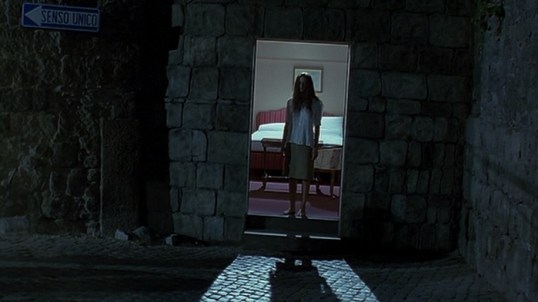
The Stendhal Syndrome (1996, dir by Dario Argento, DP: Giuseppe Rotunno)

Fargo (1996, dir by the Coen Brothers, DP: Roger Deakins)

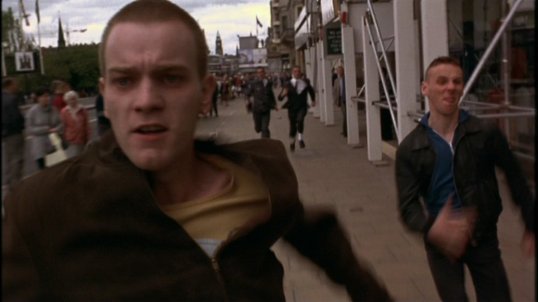
Trainspotting (1996, dir by Danny Boyle, DP: Brian Tufano)

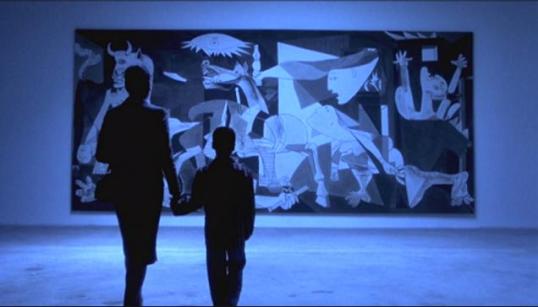
Basquiat (1996, dir by Julian Schnabel, DP: Ron Fortunato)

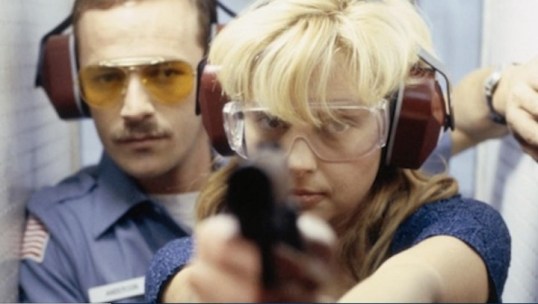
Normal Life (1996, dir by John McNaughton, DP: Jean de Segonzac)

Retro Television Review: Homicide: Life On The Street 3.6 “A Model Citizen”


Welcome to Retro Television Reviews, a feature where we review some of our favorite and least favorite shows of the past!  On Sundays, I will be reviewing Homicide: Life On The Street, which aired from 1993 to 1999, on NBC!  It  can be viewed on Peacock.

No one’s happy this week.

Episode 3.6 “A Model Citizen”

(Dir by John McNaughton, originally aired on November 11th, 1994)

Welcome to Baltimore, where everyone is depressed.  Consider this week’s episode of Homicide: Life On The Street.

  1. The episode opens with Munch, Bolander, Howard, and Felton in a morgue, waiting for the results of an autopsy.  They start talking about the shows that they watched as children and how many of them had their origins right in Baltimore.  Of course, none of those shows are on the air anymore.  Munch mentions his favorite childhood shows and is ridiculed for liking things when he was a kid.
  2. Emma Zoole (Lauren Tom), an artist who makes models of crime scenes for use in criminal court, stops by the department.  She’s looking for Steve Crosetti, to get his input on a recreation.  Meldrick Lewis tells her that Crosetti’s dead but he offers to help.  Lewis has a crush.  However, Emma likes Bayliss and Bayliss likes Emma.  Bayliss is even turned on by the fact that Emma sleeps in a coffin.  However, when Bayliss sees how upset Lewis is over his relationship with Emma, Bayliss tries to break up with her.  They end up having sex in the coffin instead.
  3. That’s it!, Lewis declares.  He cannot go into the bar business with Tim Bayliss.  Then again, there might not be a bar business anyway because Munch got kicked out of the state-required alcohol awareness class.  Munch, for whatever reason, decided to argue about whether or not a bartender could really be held responsible for getting someone drunk.
  4. Pembleton, Russert, and the city of Baltimore are all being sued by serial killer Pamela Wilgis.  Wilgis claims that Pembleton violated her civil rights when he interrogated her.  Pembleton’s entire interrogation style is put on trial.  He feels like he’s being attacked on all sides.  Finally, Pembleton gets depressed enough to reenter a church, even though he earlier claimed to no longer have any use for religion.
  5. Munch and Howard investigate the accidental shooting of a child by his older brother.  Much gets extremely upset while searching for the gun, taking Howard totally be surprise.  Howard comes to realize that Much actually cares about protecting children from violence and Munch realizes that the world is a terrible place.
  6. Beau Felton returns to his house and discovers that both his wife and his son have left and they’ve taken all the furniture with them.  Goodbye is scrawled, in lipstick, on the bathroom mirror.
  7. Much ends up sitting outside, staring at the ground while Lewis and then Howard both talk to him about how much life sucks.
  8. No one wants to end up like Steve Crosetti, Howard says at one point.  Good luck!  This job is depressing!

This was a good episode, one that really captured the emotional turmoil of seeing the worse that humanity has to offer while, at the same time, acknowledging that depressed people often use humor to deal with their feelings.  A few of Munch’s and Lewis’s line made me laugh out loud but seriously, I felt so bad for both of them!

Hopefully, everyone will have cheered up by next week.

Retro Television Review: Homicide: Life On The Street 2.4 “A Many Splendored Thing”


Welcome to Retro Television Reviews, a feature where we review some of our favorite and least favorite shows of the past!  On Sundays, I will be reviewing Homicide: Life On The Street, which aired from 1993 to 1999, on NBC!  It  can be viewed on Peacock.

This week, season 2 of Homicide comes to a close with an episode directed by John McNaughton, of Henry: Portrait of A Serial Killer fame.

Episode 2.4 “A Many Splendored Thing”

(Dir by John McNaughton, originally aired on January 27th, 1994)

The second season finale of Homicide opens with Bolander in a good mood and Munch feeling that life is pretty much pointless.  It’s a reversal from what we’ve seen over the last few episodes of Homicide and, as annoyed as I got with all the storylines about Bolander’s private life, I was still happy to see Bolander happy in this episode.  As an actor, Ned Beatty’s performance is a lot interesting when Bolander is looking forward to the future.  By that same token, Richard Belzer always seemed to be trying to hard whenever it came to playing Munch’s happiness.  Belzer was born to play a cynic and, in this episode, he delivers his lines with a bitterness that is both funny and authentic.

Bolander is dating Linda and I have to admit that, despite my initial weariness, I really like Ned Beatty and Julianna Margulies as a couple.  Bolander and Linda go on a double date with Kay and Danvers.  Awwww, two couples in love and having dinner together!  How sweet!  Uh-oh, here comes Munch….

While Munch is ruining Bolander’s date, Bayliss is getting in touch with his own dark side.  An investigation into the S&M-related death of a young woman leads to Bayliss and Pembleton arresting a man who killed her during rough (but consensual) sex.  Bayliss and Pembleton spend their investigation in Baltimore’s red light district.  Bayliss claims to be disgusted by the whole scene, leading to Pembleton calling him out for being judgmental.  Pembleton tells Bayliss that he can’t be a good detective unless he’s really in touch with every aspect of his existence.  After the murder is solved, the woman’s co-worker, Tanya, gives Bayliss the gift of a leather jacket.  Tanya is played, in a very good performance, by the actress Adrienne Shelley.  Tragically, Shelley herself would, 12 years later, be murdered in her New York apartment.  And while it’s tempting to write about the irony of Shelley appearing on a show like Homicide, I’d rather recommend that everyone see Waitress instead.  It was the second feature film that Shelley directed and it is very good.

Finally, Lewis investigates a man who committed murder because he felt someone had taken his favorite pen.  Lewis searches for a deeper motive but in the end, it really was all about a pen.  Lewis, I’ve noticed, always seems to get the cases that show just how random life and death can truly be.

The second season of Homicide ends with Lewis giving Felton a pen, Bayliss putting on his new leather jacket and walking the streets of Baltimore, and Munch, Bolander, and Linda watching fireworks explode over the harbor.  It’s a good way to end a season.  As dark as the show was (and as dark as this particular episode was), the season ends on a note of hope.  There is happiness out there for those willing to look for it.


4 Shots From 4 Film: Special John McNaughton Edition


4 Shots From 4 Films is just what it says it is, 4 shots from 4 of our favorite films. As opposed to the reviews and recaps that we usually post, 4 Shots From 4 Films is all about letting the visuals do the talking.

Today is the birthday of director John McNaughton!  It’s time for….

4 Shots From 4 John McNaughton Films

Henry: Portrait of a Serial Killer (1986, dir by John McNaughton, DP: Charles Lieberman)

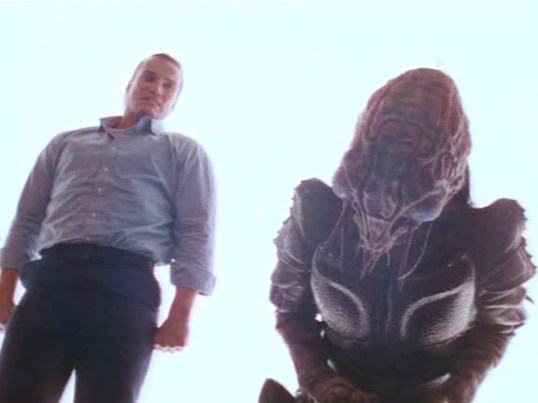
The Borrower (1991, dir by John McNaughton, DP: Julio Mucat and Robert C. New)

Normal Life (1996, dir by John McNaughton, DP: Jean de Segonzac)

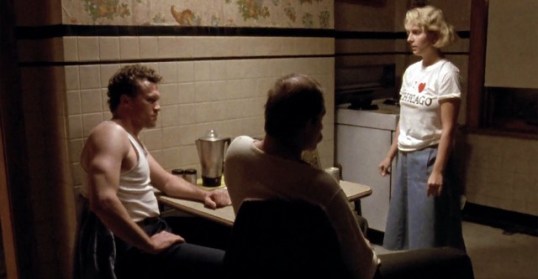
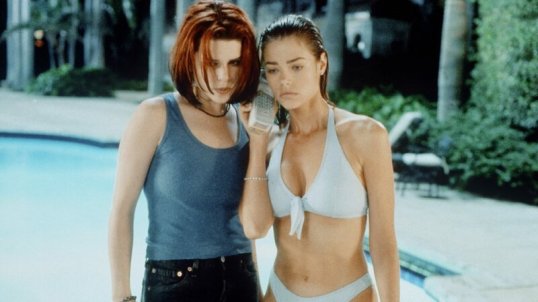
Wild Things (1998, dir by John McNaughton, DP: Jeffrey L. Kimball)

4 Shots From 4 Film: Special John McNaughton Edition


4 Shots From 4 Films is just what it says it is, 4 shots from 4 of our favorite films. As opposed to the reviews and recaps that we usually post, 4 Shots From 4 Films is all about letting the visuals do the talking.

Today is the birthday of director John McNaughton!  It’s time for….

4 Shots From 4 John McNaughton Films

Henry: Portrait of a Serial Killer (1986, dir by John McNaughton, DP: Charles Lieberman)

The Borrower (1991, dir by John McNaughton, DP: Julio Mucat and Robert C. New)

Normal Life (1996, dir by John McNaughton, DP: Jean de Segonzac)

Wild Things (1998, dir by John McNaughton, DP: Jeffrey L. Kimball)

4 Shots From 4 Films: Dr. No, Fast Times At Ridgemont High, Wild Things, Spring Breakers


Today is National Bikini Day!

According to the good people at Checkiday, the proper way to celebrate National Bikini Day is to put on a bikini and head to the beach!  Unfortunately, I don’t live anywhere near the beach so instead, I’ve just been cleaning the house and taking out a wasp nest while wearing a bikini, which is an experience that’s both frightening and empowering at the same time.

(Seriously, we had a huge wasp nest that showed up overnight over the front door.  I went outside and sprayed the nest, which resulted in the porch getting covered with dying and angry wasps.  Of course, that’s when I realized that, because of the whole bikini thing, I had put on a t-shirt but I’d forgotten to put on shoes so I was barefoot, the backdoor was locked, and I didn’t have my keys on me, again because of the whole bikini thing.  Rather than walking in bare feet across a porch covered by angry wasps, I literally crawled through a window to get back in the house, at which point I put on my shoes, went outside, and swept up all the wasps and the nest.  It’s been quite a day!)

Anyway, as we often do here at the Shattered Lens, we’re going to recognize both this holiday and four of our favorite movies!  Here, in honor of National Bikini Day, are….

4 Shots From 4 Films