Trailer: Snowpiercer (Red Band)


Bong Joon-ho is a name that genre fans know well. He has made a name for himself in his home country of South Korea with such critically-acclaimed films as Memories of Murder, The Host and Mother. In 2013, Bong co-wrote and directed the adaptation of the French graphic novel Le Transperceneige. The film is his first English-language film and it has garnered much acclaim when it was released in South Korea in 2013.

Snowpiercer as the film has been titled will now make it’s North American premiere this year and with months of buzz following it’s Asian release many genre fans have been awaiting its arrival. It’s premise is simple enough and involves a train that never stops moving that circles the globe that’s going through a new Ice Age that has killed off most of the planet’s population save those riding on the global train.

It’s a film that explores that ever-popular subject of the “have’s versus the have not’s”. It’ll be interesting to see what new idea Bong Joon-ho brings to an old idea.

Snowpiercer is set for a US release on June 27, 2014.

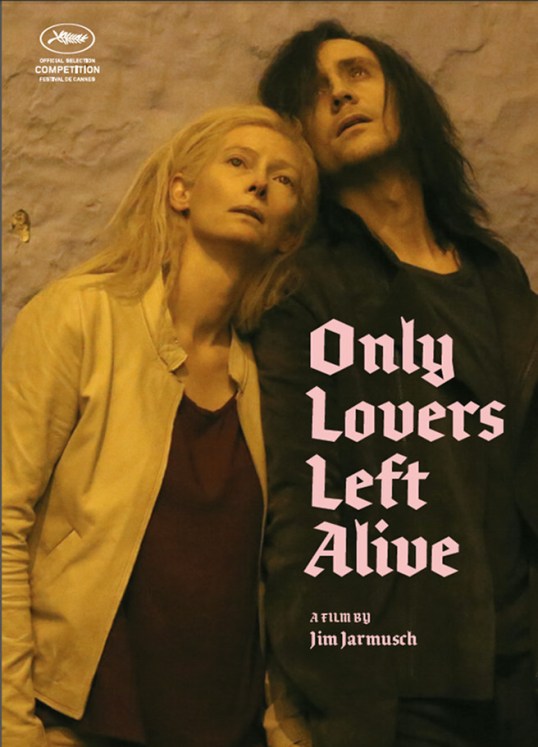
Film Review: Only Lovers Left Alive (dir by Jim Jarmusch)


Is it possible that the iconic American independent filmmaker Jim Jarmusch is a fan of the late and beloved French film director Jean Rollin?

I ask this question because Jarmusch’s latest film, Only Lovers Left Alive, is one of the most Rollinesque films to have ever been made by a director other than Jean Rollin.

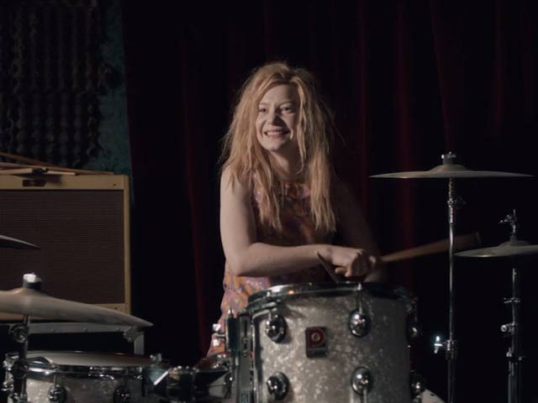
The most obvious similarity between Jarmusch’s film and much of Rollin’s work is that they both deal with vampires.  Rollin was the visual poet of vampire cinema and, if nothing else, Only Lovers Left Alive is a very poetic film.  The film tells the story of three vampires — ennui-stricken Adam (Tom Hiddleston), Adam’s wife Eve (Tilda Swinton), and Eve’s hedonist sister Ava (Mia Wasikowska), all of whom would be perfectly at home in any of Rollin’s vampire films.

But, to be honest, the horror genre has reached the point where ennui-stricken and decadent vampires are hardly unique. What distinguished both Only Lovers Left Alive and the best films of Jean Rollin is the way that they both use and defy the conventions of the vampire genre to explore issues of sexuality, religion, politics, and artistic expression.  Much like Rollin, Jarmusch understands what the audience expects from a vampire film and he makes his larger points by manipulating, defying, and occasionally even confirming those expectations.

In other words, Only Lovers Left Alive is no Twilight and we’re all better off for it.

DAY1-0217.CR2

There are other similarities between Only Lovers Left Alive and the best films of Jean Rollin.  Much like Rollin, Jarmusch tells his story through a collection of sensual and increasingly dream-like images.  Even Rollin’s trademark lingering shots of empty beaches and ancient castles are duplicated, in Only Lovers Left Alive, with haunting shots of the empty streets in Detroit and Tangiers.  When, towards the end of the film, two hungry vampires find themselves searching for blood in an ancient city, it was impossible for me not to think of a similar scene in Jean Rollin’s Two Orphan Vampires.

Now, I’m sure that some of you are probably saying, “That’s great, Lisa, but can you just tell me whether the film is worth watching or not?”

To answer your question, it is.  It’s not a flawless film.  There’s a few comedic scenes involving a doctor played by Jeffrey Wright that aren’t quite as entertaining as they could be.  And while it’s an interesting idea to have Christopher Marlowe show up as a vampire, John Hurt’s performance did not quite work for me.  But, whenever the film concentrates on the chemistry between Hiddleston, Swinton, Wasikowska, and Anton Yelchin (who plays a hilariously naïve human), it works brilliantly.

So yes, definitely — see Only Lovers Left Alive.

968full-only-lovers-left-alive-screenshot

See it for the scenes in which Adam and Eva drive through the ruins of Detroit, looking for Jack White’s house (“Oh!  I love Jack White!” Eve exclaims) and discussing Adam’s belief that the “zombies” (his term for the rest of us) are on the verge of destroying themselves.  Adam serves as the film’s philosophical and political mouthpiece and often times, his dialogue runs the risk of being a bit too on-the-nose perfect but Tom Hiddleston is such a charismatic performer that it doesn’t matter.  Wisely, Hiddleston delivers his most portentous lines with just a hint of self-mockery, as if to let us know that even Adam knows he’s being overdramatic.

See it for the amazing sequence in which Adam plays music in Detroit while Eve dances to it in Tangiers.  If Katharine Hepburn had been turned into a vampire, she would have been a lot like Tilda Swinton’s Eve.

See the film for Mia Wasikowska’s hilarious turn as a petulant and immature brat who just happens to be vampire.  The scenes in which she goes out of her way to annoy the dour Adam left me convinced that, if I ever become a vampire, I’ll probably be a lot like Ava.

See it because the White Hills appear as themselves, playing in a club and absolutely killing it.

See it because it’s one of the few vampire films to strike a perfect balance between humor and drama.

Most of all, see it because it’s a good and unique movie and, so far this year, we’ve had a bit of a shortage where those are concerned.

As for me, if I ever meet Jim Jarmusch, I’m going to ask him for the title of his favorite Jean Rollin film.

If nothing else, it should be an interesting conversation.

only-lovers-left-alive-poster


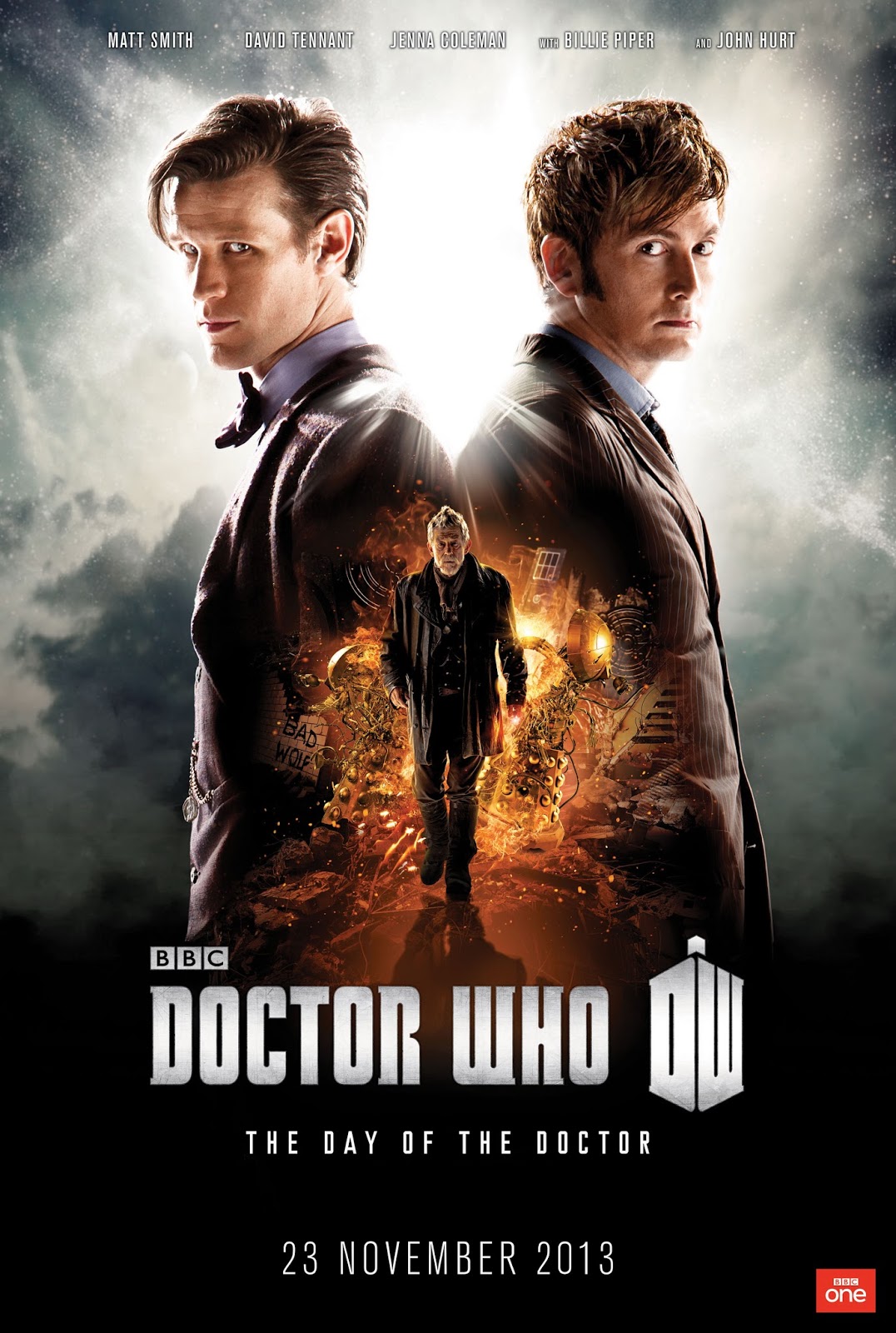
Trash TV Guru : “The Day Of The Doctor” — The “Doctor Who” 50th Anniversary Special


4753398-high-doctor-who


First off, a couple of disclaimers : this is one of those reviews that’s going to pre-suppose a fair amount of knowledge about the BBC’s Doctor Who  from the outset, so if you’re not at the very least a casual viewer of the show, you’re going to feel pretty lost right from the word go. So, ya know — newbies beware. Secondly, it’s well-nigh impossible, at this point, to discuss The Day Of The Doctor without indulging in some pretty serious “spoiler talk,” so if you’re part of the legion of “spoiler police” that apparently have nothing better to do than troll around the internet looking to play seagull (fly in, make a lot of noise, shit all over everything, and fly back out) with any review that gives away any plot points whatsoever, now would be a good time fuck directly off. Major “spoilers” do, in fact,  abound here, so — you’ve been warned.

Now, with all that out of the way —

For those of us who have been “Whovians” for a long time, the 50th anniversary really has been something of a “pinch me, I gotta be dreaming” type of year, hasn’t it? Especially for us sad souls who stuck with fandom during the so-called “wilderness years” between 1989 and 2005, when the 30th anniversary gave us the debacle that was Dimensions In Time, the 35th anniversary gave us — well, nothing, I guess — and the 40th anniversary essentially went unnoticed, even by us, because we were all too busy speculating about what the  just-announced-at-the-time new series would end up looking, feeling, and being like.

Our only frames of reference, then, for how the BBC would celebrate a major anniversary with the show as a going concern were the 10th, 20th, and 25th anniversaries. For the tenth, there wasn’t much by way of hoopla and tie-in merchandising and the like, but we did get The Three Doctors (why I’m saying “we” here I have no idea, as I was barely two years old at the time and had never, to my knowledge at least, seen the show — but whatever), which was not only the first big “reunion story,”  but a pretty cracking good adventure, as well, that introduced the now-legendary figure of Omega into the Who mythos.

For the 20th, it has to be said that the Beeb pulled out all the stops. For one splendid year there they seemed to be willing to acknowledge that this creaky little cheap show that they tried their best to keep out of the public eye really was a genuine global phenomenon despite their best efforts to make it anything but, and we got a slew of anniversary-themed books, toys, magazines, posters — you name it.

And there was Longleat. Ah, yes, Longleat. Fandom’s own Woodstock. The biggest single Doctor Who-related event ever, tales of it still abound — and, like fish stories, grow with each re-telling — to this day. I wasn’t there. I was a 12-year-old kid in the US. But  we heard about it,  even without the benefit of instantaneous online communication. It sounded great then. It sounds even better now. Memories, real or imagined, of Longleat frankly eclipse anything else as far as the 20th anniversary is concerned, especially since the special 90-minute “reunion story” we all got to see, The Five Doctors, was a rather tepid affair at best.

I’ll tell you what, though — warts and all, The Five Doctors was a key moment for American fans for one simple reason : we got to see it first. That’s’ right, us poor yanks, who had yet to see William Hartnell, Patrick Troughton, or, in most cases, even Jon Pertwee reruns — we sad former colonists who had been subsisting on a diet of the same Tom Baker and Peter Davison stories over and over again ad infinitum — we got the anniversary special a matter of hours before it was shown on its own native soil. There was a quiet message being sent here — try as the suits at the BBC might to present an image on the home front as a broadcasting organization that specialized in period costume dramas and in-depth news (remember when there was such a thing?), internationally, they knew which side their bread was buttered on. Doctor Who was their number one worldwide property, and the booming American fan market was where the action was. Let’s just not tell the folks back in the UK, shall we?

Following on from that, though, something curious happened — more or less immediately after admitting that an international breakthrough was taking place, with a Doctor Who  convention going on, quite literally, every weekend in one major American city or other, Auntie Beeb suddenly remembered that the show was an embarrassment. At the very same moment that an ever-hungrier North American fan base was clamoring for more Who, the powers that be decided to give us less. In these days before mass-released DVD or even VHS, a famished fan can only subsist on the same set of re-runs over and over again for so long, and the BBC effectively killed its own golden goose by putting the show “on hiatus” for 18 months — then giving us drastically shortened seasons when it did, in fact, quietly return.

As a result, the 25th anniversary was a complete disaster, both at home and abroad. Very little recognition was given to the occasion from official quarters, and the “special story” broadcast to commemorate what should have been a proud milestone instead was a limp little Cybermen three-parter called Silver Nemesis that essentially followed the exact same plotline as the recently-concluded (and far superior) Remembrance Of The Daleks, only with different villains.

All in all, it was an anniversary well worth forgetting.

Fast forward a quarter century and things couldn’t be more different. Doctor Who is the shit, as far as the BBC is concerned. This is is a new iteration of Who, of course, broadcast by a new BBC that, for good or ill,  has its eye more on its balance sheets than its purported reputation.  Fans around the world are lapping it up, Who-themed merchandise is ubiquitous, and the money machine is rolling. Of course the 50th anniversary is going to be the biggest multi-media juggernaut the BBC has ever undertaken, what do you think they are — stupid?

Full disclosure — I’m something of a curmudgeon when it comes to Doctor Who. I miss the days when the cracks showed and the creaks could be heard. I loved the inventiveness that the Philip Hinchcliffes and Robert Holmeses and Barry Lettses and Malcolm Hulkes (among too many others to mention) were forced to either find or fall back on to make silk purses out of sow’s ears. I loved the first season of the new series, to be sure, but it’s been leaving me feeling increasingly unimpressed ever since. Under Russell T. Davies’ stewardship, I felt it became bland and formulaic. Under Steven Moffat’s.  it’s become bland, formulaic, and overly impressed with itself.

But never once did I consider throwing in the towel and walking away. No sir (or madam). You always keep hope alive for the home team.

And so here we all are — November 23rd, 2013, exactly 50 years to the day from the broadcast of An Unearthly Child, and all of us, everywhere around the world, get to see The Day Of The Doctor, the culmination of an entire year of set-to-overdrive mass-marketing, at exactly the same time.

But was it any good?  And, furthermore, are we all still a bit too giddy to even care?

Well, having watched it twice now, I feel the time has come to give it at least something  of a fair-minded analysis, even if the glow of the occasion hasn’t faded entirely just yet.

day-of-the-doctor-batch-b-6


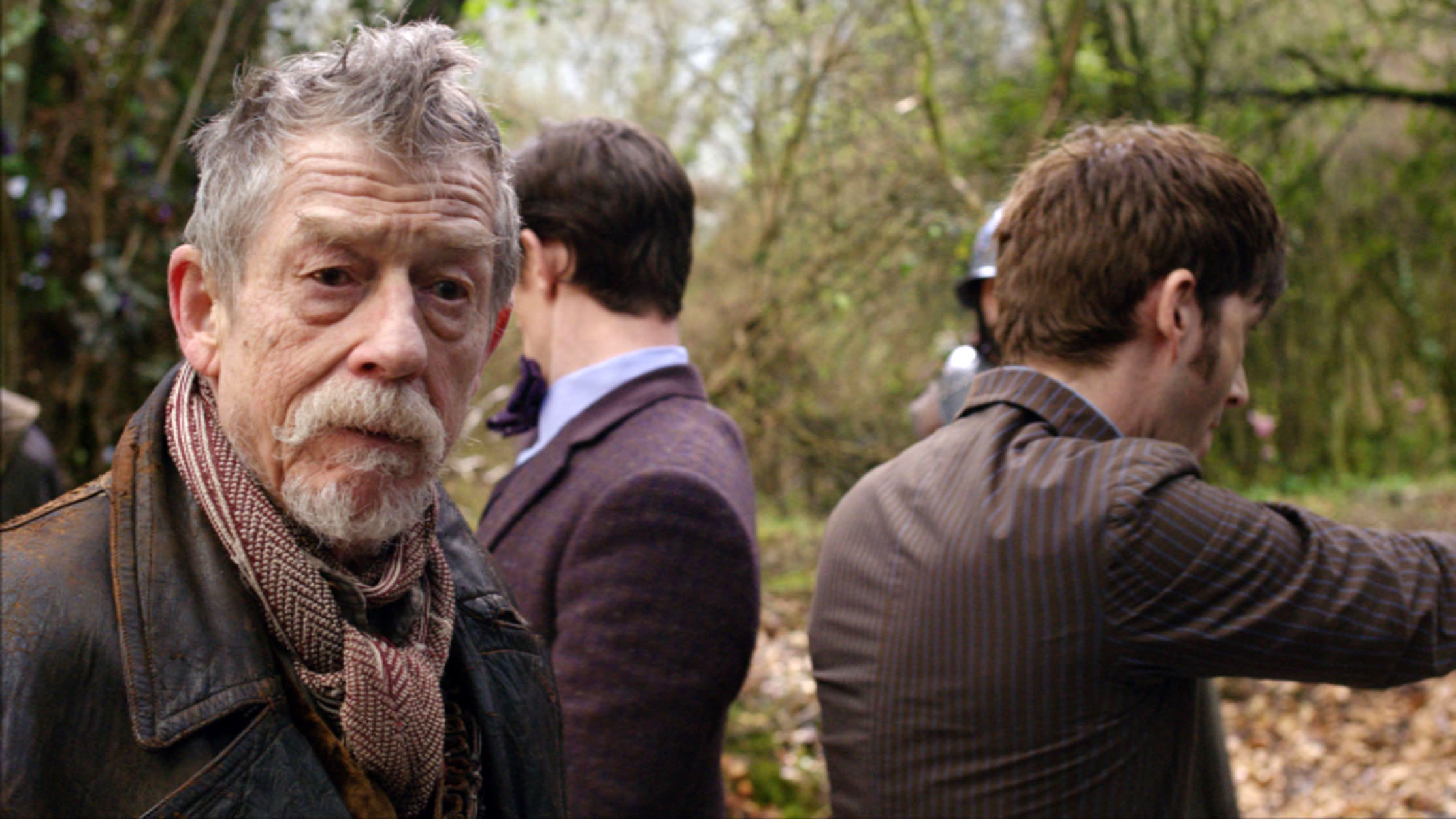
Indications were that we would probably very well be in for a monumental-type story that would shake the foundations of everything we knew and shake up the Etch-A-Sketch all over again. After intense months of speculation, the Night Of The Doctor mini-“webisode” (and thank you thank you for bringing  back Paul McGann !) confirmed that John Hurt was, indeed, a “missing Doctor” that none of us had known about before — furthermore, he was no ordinary Doctor, he was “The War Doctor,” whatever that means. We figured there would be Daleks. We knew David Tennant and Billie Piper were returning. We assumed we’d be plunged back into the Time War — and, once it was announced that Eleventh Doctor Matt Smith would be departing come the Christmas special, we guessed that we might finally get some inkling as to what his (far too heavy-handedly) forthcoming demise at a place called Trenzalore was all about.

We got some of that. And something else that we probably weren’t expecting, as well — an accessible, “stand-alone” story featuring the return of fan- favorite monsters the Zygons. For a time, at any rate.

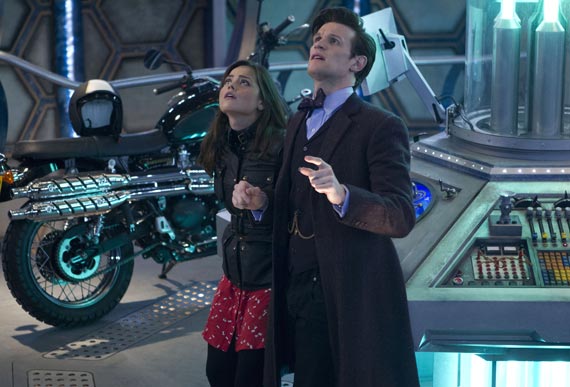
There’s some rather bland set-up material (that once again bastardizes the memory of U.N.I.T., this time doubling the insult by throwing The Brigadier’s daughter into the mix) with Smith and current companion Clara (played by Jenna Coleman) at the outset, then we do, in fact, go back into the Time War with John Hurt’s War Doctor, then we get re-introduced to Billie Piper (not, mind you, as Rose Tyler — in fact, she seems to still think she’s working on The Secret Diary Of A Call Girl here), and then, after cribbing much of the basic multi-Doctor story set-up idea from both The Thee Doctors and The Five Doctors, writer/head honcho Steven Moffat takes a turn and gives us a somewhat nifty standard-issue Zygon -invasion story that pretty much works, even if he did rip the core idea straight from Grant Morrison’s old Doom Patrol story “The Painting That Ate Paris.” No real harm in that, mind you — Doctor Who has often been at its best when liberally “borrowing” from other works.

Then, though, things do go a bit pear-shaped (again). After lots of fairly successful three-Doctor banter, some good, old-fashioned breaking out of jail cells (that were never locked, but that’s another story), some running around in corridors (yes!), and some nifty little doppleganging that should adequately thrill n’ chill the kiddies in the audience (and ,okay, some of us grown-ups, as well), Moffat does something — I dunno. Curious, I guess, if you’re being generous, and stupid and/or lazy if you’re not.

After spending over 40 minutes bringing the human/Zygon confrontation to a head, getting them all in a room, and employing a very nifty conceit to flat-out force them to negotiate, he drops the whole story. We never find out how it ends. And we’re back in Time War territory again. Only this time with a bigger Deus Ex Machina at the center of it than even anything RTD ever gave us — a big Hellraiser-box-on-steroids with a gleaming red button that the Doctor can push to just end everything.

And he does. Or did. But he doesn’t anymore.

Doctor Who – 50th Anniversary Special - The Day of the Doctor


Look, we all know that this show has strayed pretty far from its roots. “You can’t change history, Barbara! Not one line!” has given way to a new “philosophy” of “time can be re-written.” But this, well — let’s just say that the very events that gave birth to the Ninth (or I guess that should now be Tenth) Doctor, Christopher Eccelston, and in turn his successors in the role — well, they’re just no more. The past seven seasons of the show? Well, I guess they still happened — but now, apparently, not the way we saw them. At least not anymore. And the Doctor is most certainly no longer the “Last Of The Time Lords.”

So — what does it all mean? Shit, I dunno. Gallifrey still exists. In a painting.  It never stopped existing (except, ya know, when it did). And whereas the entire history of Doctor Who is based on the concept of a Time Lord running away from home (even though that mythology was developed nearly a decade after the show first aired) — a point that was re-emphasized in The Five Doctors with Fifth Doctor Peter Davison”s famous “Why not? That’s how it all started!” line — now we’re told that the Doctor is going “where I’ve always been going — back home.”

So, ya know, all that Trenzalore stuff we’ve been building up to? Forget all that. It’s Gallifrey or bust now, folks!

I guess all this should be exciting — and maybe, on paper, it is. I like being thrust into unknown waters as far as Doctor Who goes. Even though I’m a bit of a self-admitted sad old traditionalist, as stated earlier. In the days when all we had going were the Eighth Doctor BBC novels, Lawrence Miles’ much-maligned Interference, which basically set all of Who continuity on its ear (for a time, at any rate) excited me. And all this could well do the same — if I had more confidence in the current show-running regime to get things right. Which I don’t. Buuuuuuttttt —

They did get some things here right, unquestionably. The “old school” opening shots in  black and white, complete with vintage theme music, were marvelous. The direction by Nick Hurran was energetic, pacy, and cinematic (in a good way) throughout. The Three Doctors redux portion of the story, with John Hurt functioning as a William Hartnell stand-in, was a joy to watch. Clara seems to be coming along nicely as a companion and was essential to the proceedings here without overshadowing them — as Davies had a tendency to do with Rose, in particular.  And as for that ending —

doctor-who-day-of-the-doctor-nov-17-13


Okay, it was about as subtle as a neo-Nazi march through downtown Tel Aviv in broad daylight, I’ll grant you — Clara : The curator wants to see you. The Doctor (sitting, as Clara exits) : Okay. A curator. I’d like to be a curator. I’d be a good curator. Curators are cool. I should retire one day. Maybe I’ll be a curator when I retire. Yes, that’s it, I’ll retire and be a curator. In fact, I bet in some “timey-wimey” way I’ve already done that. And this curator guy who’s about to talk to me, shit, who are we kidding? It’s me. Or another of me, at any rate. It’s Tom Baker. He’s here. In the building.  That’s Tom Baker standing right behind me — but still : it was. Tom Baker. Standing right behind him. And yes,  the dialogue was trying too hard to be mysterious and momentous and came off instead as clumsy, but cone on, people. There he was. The Doctor. My Doctor. And I deserve to smile for the rest of the day for that reason alone. And so do you.

So who knows? Maybe a partial changing of the guard is all that’s in order here. Maybe Moffat just needs to scrap all the baggage that’s hanging on Matt Smith — baggage that, okay, “The Moff” himself put there, but let’s not nitpick here — and start fresh with Thirteenth (did I get that right?) Doctor Peter Capaldi, who actually makes his brief debut in this story in another very cool (if, yeah, very gimmicky) moment. Maybe a re-write of the last seven-plus seasons is just what — sorry! — the Doctor ordered. Maybe it’ll be good for him to go home again. If — and only if — once that’s all over,  he follows the best advice his Ninth (excuse me, I guess that’s Tenth) persona ever gave : “run for your life!”

I’ve been waiting a good few years now for Doctor Who to relieve itself of the burden of its own excesses and get back to the strength — and dare I say beauty — of its core premise, as so splendidly told in Mark Gatiss’ awe-inspring TV movie (and the real highlight of the 50th anniversary so far) An Adventure In Time And Space — a mysterious traveler making his way through the the past, the present, and the future of the whole,  entire universe in a rickety old blue police box that’s bigger on the inside than it is on the outside. That, right there, is all we’ve ever needed.

The Day Of The Doctor did enough , glaring flaws notwithstanding, to make most any fan — including this one — feel more than just a little bit giddy throughout, and I’m reasonably thankful for that,  but it came up short in terms of re-setting the table in the kind of fundamental fashion I’m still hoping to see. It rattled the cupboards, and that’s a good first step, but we’ll have to see where and how the pieces fall after the Christmas special, which has rather stolen its thunder as the big “event” piece of Doctor Who for the year. We seem to be heading straight into the heart of Who mythology and continuity for one last (I hope, at any rate) big blow-out. So, yeah — let him go home again. If that’s what he needs to do to run away.

After all, that’s how it all started.


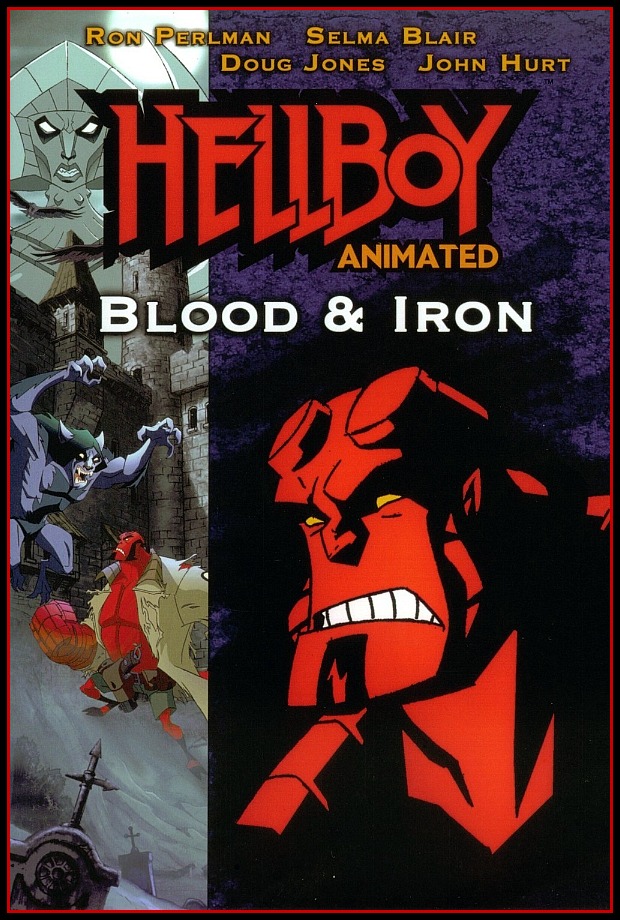
Quickie Review: Hellboy: Blood and Iron


Guillermo Del Toro will forever be one of the heroes of comic book fans everywhere due to his bringing Mike Mignola’s Hellboy comic book franchise from the printed page to the silver screen. He first brought the Big Red Guy with the 2004 film adaptation of the same name. The film was a modest success and brought the titular character to a whole new group of fans. In 2008, Del Toro came out with the bigger and more epic sequel, Hellboy II: The Golden Army. What some fans of the character sometimes forget or didn’t even realize was that in-between these two films were two direct-to-dvd releases of the animated variety. The first to come out was Hellboy: Sword of Storms in 2006. While I enjoyed that animated film it would be the follow-up dvd release, Hellboy: Blood and Iron which truly captured the essence of the comic books even moreso than the two live-action films.

Hellboy: Blood and Iron would combine parallel storylines about Hellboy and his surrogate father’s, Trevor Bruttenholm, encounter with one Erzsebet Ondrushko also known in occult circles as Elizabeth Bathory the Blood Countess. According to the film, Erzsebet would bathe in the blood of innocent, young girls. The film also makes Erzsebet a follower and disciple of the Mediterranean goddess of witchcraft and sorcery, Hecate.

One storyline would play out in reverse chronological order and take place in 1939 as a much younger Trevor Bruttenholm travels to Eastern Europe to investigate a series of murders that locals have attributed to the return of the Blood Countess. The other storyline moves to the present as Hellboy and his teammates from the B.P.R.D. (Bureau for Paranormal Research and Defense) investigate the supposed hauntings of the estate of a wealthy businessman. This would be an estate that would be the center piece of a sort of haunted amusement park with the Blood Countess and the legends surrounding her as the main attraction.

Hellboy: Blood and Iron does a great job of mixing action, horror and the occult without one or the other overshadowing the rest. The film takes some of it’s ideas from Mike Mignola’s (creator of the Hellboy franchise) Hellboy graphic novel, Wake the Devil, and screenwriter Kevin Hopps does a good job of taking those ideas and creating something new yet similar as well. The film also benefited from the return of the cast of the live-action Hellboy films to voice their respective characters in this animated film. There’s Ron Perlman in his gruff and sardonic best as the title character. Selma Blair returns to voice Hellboy’s closest friend in the redheaded pyrokine Liz Sherman with Doug Jones and John Hurt rounding it out as Abe Sapien and Trevor Bruttenholm.

The animation is not the highest level but for a direct-to-dvd affair it more than holds up and really captures the look and feel of the comic books it was based on. Yet, while an animated film this one wouldn’t be appropriate for little kids to watch. For a “cartoon” it’s quite violent with themes of witchcraft, vampirism and blood sacrifice prevalent from beginning to end. It’s actually quite scary in certain sections especially whenever the resurrected Erzsebet appeared. I don’t think most animated films ever involved a sequence of a tub full of fresh, hot blood waiting to be used as bathwater.

For those willing to learn more and understand the appeal of the Hellboy comic books to legions of fans this animated film was a good example. Hellboy: Blood and Iron was great from beginning to end especially how it interwove not just the vampiric and pagan legends surrounding Erzebet Ondrushko, but also little tidbits of information and character development which added to the backstory of not just Hellboy but those closest to him. Plus, this animated film had two character’s whose names were variants of the name Lisa.

A Quickie With Lisa Marie: Brighton Rock (dir. by Rowan Joffe)


Brighton Rock is a British film noir that’s currently both playing in limited release and which is also available via video-on-demand.  Based on a novel by Graham Greene, Brighton Rock is the story of Pinkie (Sam Riley), a sociopathic gangster who murders a gambler.  The chase leading up to the murder is witnessed by a mousey waitress named Rose (Andrea Riseborough) who doesn’t realize what she’s actually seen.  In order to keep her quiet, Pinkie marries Rose.  Rose, however, works for Ida (Helen Mirren) and Ida just happens to have been friends with the murdered gangster.  Realizing that Rose is in danger, Ida takes it upon herself to expose Pinkie for the murderer he is.

Brighton Rock is a visually striking film and it has a handful of good performances but it never quite comes together.  Before making his feature film directing debut here, Rowan Joffe wrote the script for last year’s The American and, much like The American, Brighton Rock has an abundance of style and is full of references to the classic crime films of the 60s and 70s.  Also, much like The American, the style — too often — seems to exist separately from any larger vision.  As a result, the film ultimately feels like several disconnected — if pretty scenes — strung together by convenience.  The film has an intriguing-enough plot but the narrative lacks any sort of forward momentum.  Interestingly enough, Greene used the story of Pinkie, Rose, and Ida to examine larger theological issues within the Catholic church.  With the exception of a scene where Pinkie prays, an over-the-top sequence featuring a judgmental nun, and a few inserts of crucifixes artfully hanging on grimy walls, Joffe pretty much jettisons the story’s religious angle but without it, Pinkie and Rose’s actions make a lot less sense. 

Joffe’s decision to cast Sam Riley, whom I’ve had a crush on ever since I first saw Control, in the lead role of Pinkie is problematic.  It’s not that Riley gives a bad performance because he doesn’t.  He makes a convincing psychopath and if he’s never quite charming enough to be a true anti-hero, he’s still makes Pinkie into a compelling figure.  Unfortunately, Riley is still totally miscast in the film.  In Graham Greene’s original novel, Pinkie was only 17 years old.  Sam Riley is 31 and looks even older.  Unfortunately, all of the other characters in the film continually refer to him as “the kid.”  John Hurt, at one point, gives a monologue in which he wonders how someone so young could be so evil.  But Riley isn’t young and as a result, I found myself wondering just how old someone had to be before they were considered to be an adult in 1960s England.

Still, if nothing else, Joffe gets some good performances from his supporting cast.  Andrea Riseborough manages to be both poignant and annoying as Rose while Andy Serkis appears to be having a lot of fun playing a slightly ludicrous gangster.  Not surprisingly, Helen Mirren commands every scene she appears in and she and John Hurt have got a great chemistry.  Regardless of how you might feel about the film as whole, it’s impossible not to enjoy their scenes together.  They’re final scene together made me squeal with delight and, in the end, that has to count for something.

Review: V for Vendetta (dir. by James McTeigue)


“Remember, remember the fifth of November, the gunpowder treason and plot. I know of no reason why the gunpowder treason should ever be forgot.”

Alan Moore’s decision to want his name off the final credits for the film adaptation of V for Vendetta now makes sense. Moore has had a hate/hate relationship with Hollywood and the film industry in general. They’ve taken two of his other works in The League of Extraordinary Gentlemen and From Hell. and bollocks’d them up (to borrow a term used quite a bit in V for Vendetta). Outside of Watchmen, Alan Moore sees V for Vendetta as one of his more personal works and after reading the screenplay adaptation of the graphic novel by The Wachowski Brothers his decision afterwards was to demand his name be removed from the film if it was ever made. Part of this was his hatred of the film industry for their past mistakes and another being his wish for a perfect adaptation or none at all. Well, V for Vendettaby James McTeigue and The Wachowski Brothers is not a perfect film adaptation. What it turns out to be is a film that stays true to the spirit of Moore’s graphic novel and given a modern, up-to-the-current news retelling of the world’s state of affairs.

V for Vendetta starts off with abit of a prologue to explain the relevance of the Guy Fawkes mask worn by V throughout the film and the significance of the date of the 5th of November. I think this change in the story from the source material may be for the benefit of audiences who didn’t grow up in the UK and have no idea of who Guy Fawkes was and what his Gunpowder Plot was all about. The sequence is short but informative. From then on we move on to the start of the main story and here the film adheres close enough to the source material with a few changes to the Evey character (played by Natalie Portman) but not enough to ruin the character. Caught after curfew and accosted by the ruling government’s secret police called Fingermen, Evey soon encounters V who saves her not just from imprisonment but rape from these so-called Fingermen.

Right from the start the one thing McTeigue and The Wachowski Brothers got dead-on was casting Hugo Weaving as the title character. Voice silky, velvety and sonorous, Weaving infuses V with an otherworldly, theatrical personality. Whether V was speaking phrases from Shakespeare, philosophers or pop culture icons, the voice gave a character who doesn’t show his face from behind the enternally-smiling Guy Fawkes mask real life. I’d forgiven the makers of this films for some of the changes they made to the story and some of the characters for keeping V as close to how Moore wrote him. Once V and Evey are thrown in together by the happenstance of that nightly encounter their fates became intertwined. Portman plays the reluctant witness to V’s acts of terrorism, murders and destruction in the beginning, but a poignant and emotionally powerful sequence to start the second half of the film soon brings Evey’s character not much towards V’s way of doing things, but to understanding just why he’s doing them. This sequence became the emotional punch of the whole film and is literally lifted word for word from the graphic novel. This is the sequence in the film which should resonate the loudest for most people whether they buy into the rest of the film or not.

The rest of the cast seemed like a who’s who of the British acting community. From Stephen Rea’s stubborn and dogged Chief Inspector Finch whose quest to find V leads him to finding clues about his government’s past actions that he’d rather not have found. Then there’s Stephen Fry’s flamboyant TV show host who becomes Evey’s only other ally whose secret longings have been forbidden by the government, but who’s awakened by V’s actions to go through with his own form of rebellion. Then there’s John Hurt as High Chancellor Adam Sutler who’s seen chewing up the scenery with his Hitler-like performance through Big Brother video conferences (an ironic bit of casting since John Hurt also played Winston Smith in the film adaptation of the Orwell classic 1984). I really couldn’t find any of the supporting players as having done a bad job in their performances. Even Hurt’s Sutler might have seemed over-the-top to some but his performance just showed how much of a hatemonger Sutler and, in the end, his Norsefire party really were in order to stay in power.

The story itself, as I mentioned earlier, had had some changes made to it. Some of these changes angered Moore and probably continues to anger his more die-hard fans. I count myself as one of these die-hards, but I know how film adaptations of classic literary works must and need to trim some of the fat from the main body and theme of the story to fully translate onto the silver screen. The Wachowski Brother’s screenplay did just that. They trimmed some of the side stories and tertiary characters from the story and concentrated on V, Evey and Inspector Finch’s pursuit of both the truth of V and his own journey in finding that truth. This adaptation wa much closer to how Peter Jackson adapted The Lord of the Rings. As a fan of Moore I understood why he was unhappy with the changes, but then Moore was and still is an avowed perfectionist and only a perfect adaptation would do.

Critics on both sides of the aisle have called V for Vendetta revolutionary, subversive, daring to irresponsible and propagandist. All because the film dares to ask serious questions about the nature and role of violence as a form of dissent. But the granddaddy question the film brings up that has people talking is the question: terrorist or freedom fighter? Is V one or the other or is he both? Make no mistake about it, V for all intents and purposes is a terrorist if one was to use the definition of what a terrorist is. The makers of this film goes to great lenghts to describe throughout the film just how Sutler and his Norsefire (with its iconic Nazi-like imagery and extreme fundamentalist Christian idealogy) party rose to power in the UK. Partly due to what seemed like the failed US foreign policy and its subsequent and destructive decline as a superpower and the worldwide panic and fear it caused as a result. V for Vendetta also ask just who was to blame for allowing such individuals to rule over them. V has his reasons for killing these powers-that-be, but he also points out that people really should just look in the mirror if they need to know who really was to blame. For it was the population — whose desire to remain safe and have a semblance of peace — gave up more and more of their basic liberties and rights for a return to order. If one was to look at the past 100 years they would see that it’s happened before. There was the regime of Pol Pot in Cambodia, Milosevic’s Greater Serbia, and the king of the hill of them all being Adolf Hitler and his Nazi Inner Circle.

Another thing about V for Vendetta that will surely talked about alot will be the images used in the film. Not just images and symbols looking so much like Nazi icons, but images from the events of the past decade which have become symbols of oppression and censorship. The film shows people bound and hooded like prisoners from Abu Ghraib. The reason of the war on terror used time and time again by Sutler to justify why England and its people need him and his group to protect them by any means necessary. V for Vendetta seems like a timely film for our current times. Even with the conclusion of the film finally accomplishing what Guy Fawkes failed to do that night of November 5th some 400 plus years ago, V for Vendetta doesn’t give all the answers to all the questions it raises. I’m sure this would be something that’ll frustrate them some audiences. So much of people who go to watch thought-provoking films want their questions answered as clearly as possible and all of them. V for Vendetta doesn’t answer them but gives the audience enough information to try and work it out themselves.

In final analysis, V for Vendetta accomplishes in bringing the main themes of Alan Moore’s graphic novel to life and even does it well despite some of the changes made. It is a film that is sure to polarize the extreme left and right of the political pundits and commentators. But as a piece of thought-provoking and even as a politically subversive film, V for Vendetta does it job well. It is not a perfect film by any respect, but the story and message it tries to convey in addition to its value as a piece of entertainment mor than makes up for its flaws. Alan Moore and his followers might not love and approve of this film, but it doesn’t mean the film in and of itself wasn’t a good one. Sometimes calls for literal adaptations of beloved works or no adaptation at all also becomes a form of creative oppression and censorship.

Film Review: Harry Potter and the Deathly Hallows — Part 2 (dir. by David Yates)


Well, we all knew it would have to end someday and now, it’s over.  The Harry Potter film series, which began way back in 2001, is concluding right now in a theater near you.  On Friday night, me, Jeff, my sister Erin, and our friend Evelyn went down to the AMC Valley View and we saw Harry Potter and the Deathly Hallows, Part 2. 

The cinematic story of Harry Potter is over and yes, I did cry as I watched it end.  I didn’t just cry because of the movie, though the movie itself is one of the best of the year and it has one of those wonderful endings that just makes it impossible to remain dry-eyed.  No, I cried because — with this film — an era of my life is truly over.  

When the first Harry Potter film came out, I was only 16 and still trying to deal with the fact that I had been diagnosed as being bipolar just a few weeks earlier.  I felt alone and broken and destined to spend the rest of my life on the outside looking in.  The three hours that I spent watching Harry Potter and the Sorcerer’s Stone were three hours when I didn’t have to worry about suddenly bursting into tears and having everyone around me worrying about whether or not I was actually taking my hated medication.  For three hours, I could escape to another world where those who were different were celebrated precisely because they were different.  For three hours, I could imagine that just maybe I had a special purpose for existing too and maybe I had benevolent wizards and witches looking out for me too.  And I’m sorry if all that sounds trite in retrospect but, when you’re 16 and you think you’re too damaged to love, anything that gives you hope and pleasure in the present is a precious treasure.

Over the years, I eventually came to realize that being bipolar was hardly a curse and, as I matured and grew up and discovered new things, there was always a Harry Potter film either playing or about to come out.  Whether I was escaping high school, graduating college, or dealing with just every good or bad thing that makes up life, Harry Potter — this character who I first met (in book form) when I was 13 — was always there.  So, at the risk of sounding overdramatic, the end of Harry Potter is the end of a chapter of my life.

One final personal note: As I watched Harry Potter and the Deathly Hallows, Part Two, I had three dolls (or action figures, as boys insist on calling them) in my purse.  These dolls — Harry, Hermione, and Ron — came out around the same time as the second Harry Potter film and my mom (who collected dolls) ordered them off of Ebay three years ago, shortly before she entered the hospital for the final time.  Now, my mom was not a huge fan of the Harry Potter series but she knew that I loved it and that’s why she made those dolls her final gift to me.

And those are some of the reasons why I found myself crying as I watched the finale of Harry Potter.  However, there’s another reason why I cried and that’s that this is just a great film and the perfect conclusion to the series.

Essentially, Harry Potter and the Deathly Hallows, Part Two starts up immediately after the conclusion of Part One.  Dobby is dead, Lord Voldemort (a wonderfully neurotic Ralph Fiennes) and the Death Eaters are intent on destroying everything, and Severus Snape (Alan Rickman, wonderful as always) is in charge of Hogwarts.  After spending the first part of Deathly Hallows as fugitives, Harry Potter, Ron Weasley, and Hermione Granger (Daniel Radcliffe, Rupert Grint, and Emma Watson) return to Hogwarts to take a final stand against Voldemort.  Things end in a surprisingly bloody battle (this film is not for children) that leaves several characters dead and ultimately reveals that one wizard wasn’t the saint we always assumed he was while another is revealed to be the secret hero of the entire series.

Let’s get one question out of the way right now: will non-Harry Potter fans be able to follow this film?  Uhmmm…no.  Sorry.  Then again, why would a non-Harry Potter fan be at a film called Harry Potter and The Deathly Hallows Part Two anyway?  I mean, seriously, if you’re just going to film because everyone else is doing it than who are you to bitch anyway?  This is what you non-Harry Potter fans need to do.  Stop reading this review.  Go watch the previous Harry Potter films.  Watch them in order.  Take your time because Deathly Hallows is going to be in theaters for a while.  And then, once you’ve become immersed in the story, go see how it all concludes.  And then come back here and read rest of this review.

Okay, so is everybody up to date?

Cool.

One of the more interesting features of the Harry Potter series is that so many different directors (each with his own definite, individual style) have been involved in bringing these films to the screen.  Among Harry Potter fans, hours can literally be spent debating the merits (and weaknesses) of Chris Columbus, Alfonso Cuaron, Mike Newell, and David Yates.  My own theory is that each director was perfectly suited for each film he directed.  The audience-friendly vision of Chris Columbus was what the first two films needed, just as Prisoner of Azkaban needed Cuaron’s far darker vision and Mike Newell’s attention to character made Goblet of Fire one of the best of the Harry Potter films.  And while David Yates may not be as well-known (or critically acclaimed) as Newell or Cuaron, he brings exactly the right tone to Harry Potter and the Deathly Hallows, a perfect combination of spectacle and humanity.  It is to Yates’ credit that the scenes in which the characters simply talk to each other are just as compelling as the dramatic sequences where Voldemort and the Death Eaters attack Hogwarts.  Yates understands that this material could easily come across as silly or childish and to his credit, he never allows the audience to simply dismiss this film as a lot of blathering about wands and CGI magic.  As opposed to other directors who have given us summer blockbusters, Yates takes his film seriously.

And, fortunately, so does his cast.

One of the great pleasures of the Harry Potter series is that it’s given American audiences the chance to discover (and rediscover) some of the great British character actors and a lot of them show up (some for only a matter of minutes) here in the finale.  Maggie Smith, Jim Broadbent, Julie Walters, Robbie Coltrane, Gary Oldman, John Hurt, David Thewlis, Emma Thompson, and Jason Isaacs all put in appearances.  Kelly MacDonald has a great scene playing a ghost, Helena Bonham Carter is perfect as the evil Bellatrix Lestrange, and Alan Rickman is brilliantly ambiguous as Severus Snape.  (And yes, Snape’s actions are explained in this film and yes, I did cry.)

Ralph Fiennes plays so many villains that I now find myself expecting him to show up killing people in every movie I see.  He’s like a British Christopher Walken.  Still, it’s easy to take an actor like Fiennes for granted.  For the entire Harry Potter series to work, Lord Voldemort can’t just be an ordinary villain.  He’s got to be the sum total of all things evil and deadly.  You’ve got to believe that people would be scared to speak his name.  Great heroes need a great villain and Fiennes’ Voldermort is a great villain.

Ultimately, however, the true credit for the success of the Harry Potter series belongs to three actors who have literally grown up on the movie screen — Daniel Radcliffe, Rupert Grint, and Emma Watson.  The producers are fortunate indeed that the cute kids that they cast over a decade ago have all grown up to be talented, attractive, and likable actors.  If the first part of Harry Potter and the Deathly Hallows seemed to showcase both Grint and Watson (almost to Radcliffe’s expense), part 2 is most definitely centered on Harry Potter.  That doesn’t mean that Watson and Grint aren’t good in this film.  They are and they get to share one of the best movie kisses of 2011.  (As well, for those who keep count, Grint says “Bloody Hell,” three times in the film.)  But, for obvious reasons, this film is all about Harry and Radcliffe’s performance as Harry.  It’s a challenge for Radcliffe and it’s a challenge that he more than succeeds at conquering.  As the film ended, I realized that I was sad to know that the adventures of Harry Potter were done but I was excited to see what the future will hold for Radcliffe, Grint, and Watson. 

Incidentally, Harry Potter and the Deathly Hallows Part 2 has been released in both 3-D and 2-D.  We saw the 3-D version and if you have any knowledge of how I feel about 3-D (and how motion sick I tend to get while watching 3-D films) then that should show you just much I love the Harry Potter series.  I loved it so much that I was even willing to overlook my hatred of 3-D.  The 3-D here (which was added after the film has already been filmed) doesn’t really add much to the movie.  There were a few cool moments where I was all like, “Look, I can reach out and grab a piece of Voldemort,” but otherwise, the 3-D was a negligible factor as far as the overall film was concerned.

Still, there was one interesting thing about the 3-D.  The theater we saw the movie in was half-way empty.  At the same time, the neighboring theater — in which the 2-D version was playing — had a line of people waiting to get in.  They were not only waiting to see the 2-D version, they were waiting to see a showing that wouldn’t even begin until a full 90 minutes after the 3-D version started.  I mention this because, in the wake of Avatar, so many people have taken it for granted that 3-D is the future of movies and soon, as long as a film is in 3-D, we won’t have to worry about the difficult stuff like an interesting plot or compelling characters.  However, 3-D has become an overexposed gimmick.  For every film like Cave of Dreams that uses 3-D to craft an actual artistic statement, there’s a 1,000 films like Priest which use 3-D just because it’s an easy way to trick sucks into spending an extra dollars to see a crappy film. 

What so many filmmakers seem to forget is that the majority of film goers are not looking for 3-D.  We’re just looking for a good film.  And sometimes — like with Harry Potter and the Deathly Hallows — we get lucky and we find a great film.

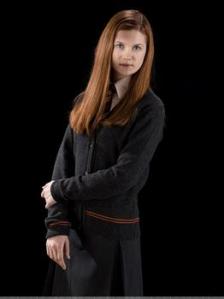
(Oh, and one last thing: I know everyone always expects me to claim to be just like Hermione but actually, I’ve always related more to Ginny Weasley.  Like her, I’m the youngest of four siblings, I’ve got red hair, and I always get my man, in the end.)

Review: The Proposition (dir. by John Hillcoat)


When I first saw John Hillcoat’s film The Proposition I was literally shocked and dumbstruck with what I had just witnessed. As a long-time aficionado of the horror genre I could say that part of me has become desensitized to onscreen violence and nothing really shocks me. Even though I’ve seen films with more violence throughout its running time, The Proposition just had a heavy sense of despair, moral ambiguity, and a Miltonian feel throughout. The film felt like how it would be if one accepted an offer from one of the damned to stroll down to the Nine Circles of Hell. As much as I didn’t want to accept that offer the curiosity of what I might see won out. That’s how I was able to sit through the entirety of Hillcoat’s ultra-violent and nihilistic tale of lawless and amoral individuals in the untamed wilderness of 1880’s Australian Outback.

I must agree with several critics who have said The Proposition seemed to mirror another dark and violent tale. Hillcoat’s film shares so much the same themes and tone as Cormac McCarthy’s brutal novel, Blood Meridian, that one almost wondered if the film was adapted from McCarthy’s great novel. But similarities aside, Hillcoat and Nick Cave’s (director and writer respectively) film can clearly stand on its own two bloody legs.

The film begins with a bloody siege and shootout and we’re soon introduced to two of the three Burns’ brothers. We soon find out that both brothers, Charlie (played by Guy Pearce) and Mikey (played by Richard Wilson), are outlaws wanted for a multitude of heinous crimes with a recent one the senseless rape and murder of the Hopkins family. One Capt. Stanley (Ray Winstone) who acts as law in this particular area of the Outback also happens to be friends of the unfortunate Hopkins clan. When he finally apprehends the two brothers after the siege gives older brother Charlie a proposition. He’ll spare the younger brother’s life from the hangman’s noose if Charlie finds their older brother Arthur (played with Kurtz-like menace by Danny Huston) and kills the outlaw leader. The quest is set as Charlie accepts and sets out to find his elder brother. Whether Charlie will go through with killing his older brother Arthur is one thing the audience won’t find out until the final minutes of the film. Even though there’s no love-lost between Charlie and Arthur, there’s still the traditional bond of family that makes Charlie’s quest a complex one.

We realize early on that Charlie is very protective of his simpler, younger brother Mikey and would do anything to save his life. Guy Pearce does a great performance as the conflicted and brooding Charlie Burns. There’s a quiet intensity in Pearce’s performance. He’s pretty quiet through most of the film, but one could feel the palpable rage just roiling beneath his brooding countenance. Pearce’s Charlie is one who is only a trigger away from exploding into outright violence. Charlie is definitely a child and creation of the lawless Outback the film is set in.

Arthur Burns on the other hand comes in introduced as an almost warrior-poet (though in this story it would be more like a charismatic-sociopath) who would watch the sun set and spout poetry as easily as gun down an innocent or slice a man’s throat without missing beat. Danny Huston does a bravura performance as the charismatic and wholly amoral Arthur. His performance easily matches that of Pearce’s scene for scene. Another performance that I must point out as being very strong in the film is Ray Winstone as Capt. Stanley, the Ahab of the tale with his obsession to bring civilization to the lawless Outback and to bring Arthur Burns to ultimate justice even if it means dealing with the lesser evil that is Charlie Burns.

The Proposition will be talked about alot for its unflinching look at violence onscreen. Though there’s been films that have more violence per hour than Hillcoat’s film, but the extreme brutality of the killings, maimings and rape in The Proposition has such an air of realism to it that one cringes at every gunshot wound and knife slashing. Like Aronofsky’s Requiem for a Dream, this film’s scenes of violence makes one want to rush into the shower and cleanse off the dirt, grime and stink of the film. It’s in this unflinching and realistic portrayal of death and violence that the film shares alot with McCarthy’s Blood Meridian. The images are difficult to watch, but our curiosity makes us look through squinted eyes to see the full breadth of the violence. In time, just through the audiences acceptance of the oncreen violence do we soon become complicit in whats going on the screen.

It is a shame that The Proposition had such a limited release in the US. Even since it’s release on video it’s a film that still seems to be underappreciated. I think this film would’ve done as well as Eastwood’s Unforgiven in giving the audience a different, darker side of the Old West mythology (though its really the Australian Old West). John Hillcoat has crafted himself a brutal and nihilistic film that’s very hard to watch but also difficult to ignore. The Proposition is a film I highly recommend as it is the type of film that helps redefine a whole genre.