John Carpenter’s contribution and influence in horror and genre filmmaking could never be disputed. This man’s films, especially his work from the 70’s and early 80’s have made him one of the undisputed masters of horror (joined by such contemporaries as Wes Craven and George A. Romero). While his worked had become so-so at the tail-end of the 1990’s and quite sparse during the 2000’s his name still evokes excitement whenever something new comes out where he’s intimately involved in it’s creation (these days a series of synth-electronic albums).
It was during the mid-1990’s that we saw a John Carpenter already tiring of constantly fighting the Hollywood system, yet still game enough to come up with some very underrated and underappreciated horror and genre films. One such film was 1995’s In the Mouth of Madness. This was a film that didn’t so well in the box office yet has become a cult horror classic since. Part of his unofficial Apocalypse Trilogy (The Thing and Prince of Darkness the other two), In the Mouth of Madness combined Lovecraftian eldritch horror with the horror of the mundane that made Stephen King so popular with the masses.
This scene early in the film just showcases not just Carpenter’s masterful camera and editing work, but was ahead of its time in exploring the toxic nature of fandoms and groupthink. In 1995 such a concept might have been relegated to B-movie horror, but in 2016 it’s become synonymous with such everyday occurrences and topics as Gamergate, Tea Party and Trump supporters to SJW crusaders, Marvel vs. DC and Democrats and Republicans. Everyone believes their group to be the only righteous in whatever argument they happen to be part of and everyone else must be silenced (and in the scene below silenced equates to death).
John Carpenter might have turned into that old and cantankerous, albeit cool, dude who couldn’t care less what you thought of him, but it seems that he saw what was happening today as far back as the 1990’s.
4 Shots From 4 Films is just what it says it is, 4 shots from 4 of our favorite films. As opposed to the reviews and recaps that we usually post, 4 Shots From 4 Films is all about letting the visuals do the talking.
With just minutes left til the end of the day I thought it was time to wish one of my favorite a happy birthday.
I pretty much spent my junior high and high school years reading everything that Stephen King had written and published up to that point. The habit followed me after high school graduation and I’ve picked up on other authors since.
While Stephen King has slowed down some when it comes to the amount of novels he has released in the last decade or so, he is still one of the few authors whose books I will buy without even knowing what it’s about.
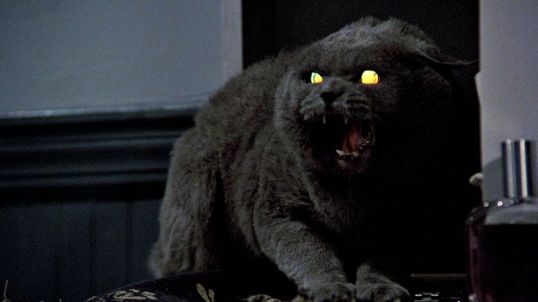
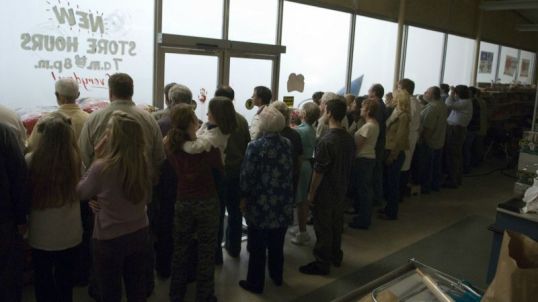
Here are just four films adapted from his stories that I consider favorites of mine. They’re just stories about a boy’s first car, a man waking up from a long sleep, a cat named Church and a grocery store full of people.
Another childhood hero has passed on undertake the last great journey. Rowdy Roddy Piper might have played the greatest of heels when he was in WWF (now WWE) as I grew up during the 80’s, but he was also a favorite wrestler and character. He seemed genuine in both attitude and charisma where I thought Hulk Hogan was all bluster and fake.
I’m sure I won’t be the only one to miss the Hot Rod. I pay tribute to the Man and the Legend in my own way by sharing one of the best moments of Roddy Piper’s career. It’s the greatest fight scene ever put on celluloid.
Anyone who says differently gets a boot to the face.
It’s difficult to try and celebrate Halloween without at least remembering the classic John Carpenter film of the same name which help give birth to the slasher horror genre. Halloween has become a staple in my horror watching lists. It joins such other classic horror as the Romero’s Night of the Living Dead, Hooper’s Texas Chainsaw Massacre and Craven’s The Serpent and The Rainbow.
Filmed on a tiny budget of $325,000 and released in 1978, Halloween would introduce to the film world one of it’s most iconic horror figures in the Michale Myers. The film’s opening would become famous in it’s own right as it didn’t just give us a look into Michael Myers backstory, but make the film audience become almost active participant in the murder that introduced us to our killer.
This extended introduction scene let’s the audience see through Michael Myers’ eyes as he stalks through the house towards his sister’s room where he commits his first murder. This point of view through the eye holes of Michael’s mask would be repeated several times throughout the film.
It’s that time of year again for the gang here at Through the Shattered Lens. October has become a sort of official month for the site with much of the posts and articles being related in some manner to all things horror (or close enough to it).
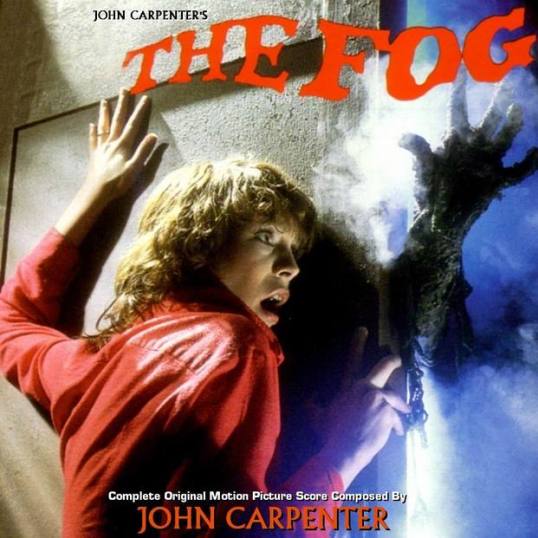
To start off 2014’s Horror Month here at Through the Shattered Lens I’ve chosen a wonderful and creepy piece of horror film music courtesy of the Master himself, John Carpenter.
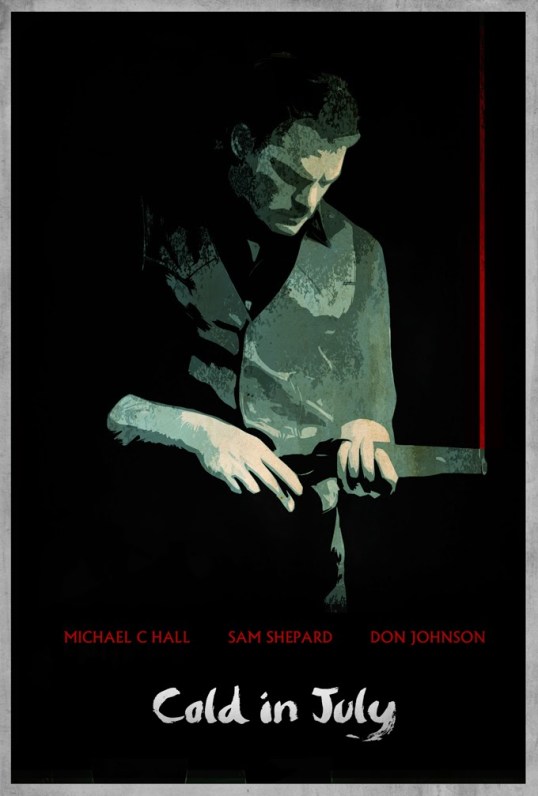
It’s a great piece of atmospheric music that more than adds to the encroaching horror that is the film’s title. John Carpenter has done most of the soundtracks to his films and his use of electronic keyboards and synthesizers have become such a unique signature in all his films. The last couple years have seen a sort of revival for Carpenter’s type of electronic/synthesizer compositions. One recent film which made great use of this particular style was Jim Mickle’s Cold In July.
The theme to The Fog remains a favorite of horror fans and its influence on filmmakers today is a nice testament to well-earned classic status.
Yesterday, Lisa Marie reviewed one of the film’s that I’ve been waiting to see in the theaters when I first saw the trailer for it a couple months ago. Lisa’s review of Cold In July has more than whetted my appetite to see this film. I mean it’s the latest from Jim Mickle who is starting to become one of my favorite genre filmmakers in the last ten years. It’s a film based on the novel of the same name by Joe R. Lansdale which is just a reason on top of the others reasons to go see this film.
While I haven’t seen the film yet I already have fallen in love with it’s soundtrack. One of the songs in the Cold In July soundtrack actually makes it into the trailer and it’s “Cosmo Black” by Dynatron. It’s a tune that evokes memories of 1980’s John Carpenter soundtracks with it’s heavy reliance on synthesizers and electronic keyboard. Any soundtrack that can make one reminisce about those classic 80’s Carpenter film scores must be doing something right.
So, until I get a chance to see the film for myself I might as well get a headstart and enjoy listening to the score to Cold In July.
I suppose if I asked most people what music they identified with horror, John Carpenter’s “Halloween Theme” and Mike Oldfield’s “Tubular Bells” (The Exorcist) would come up first. After that, you’d get a lot of Rob Zombie and Glenn Danzig. So right off the bat, you’re looking at an enormous variety of sounds and styles connected mainly by association. While John Carpenter’s work was intentionally composed for the film in which it appeared, “Tubular Bells” was originally a 50 minute progressive rock opus that was anything but sinister or foreboding in its full form. Misfits was a goth punk band that happened to favor horror themes. White Zombie’s horror imagery was more a matter of crudeness and vulgarity in the spirit of GWAR; their sound was a frontrunner in the emergence of industrial groove metal, and the greatest “horror” associated with Rob was the countless terrible nu metal spinoffs. A couple of “top ten horror songs” lists I stumbled upon even list Bobby Boris Pickett’s “Monster Mash” and Richard O’Brien’s “Time Warp”. I mean, “Monster Mash” is a fun Halloween song, sure, but horror? Really? And the Rocky Horror Picture Show does make me want to vomit, but we have to draw the line somewhere.
Suffice to say, “horror” music is not a genre at all. Simply associating a song with a scene or theme is enough to relate them; Huey Lewis and the News will probably make me smile and think of Christian Bale chopping people to bits in his apartment for the rest of my life. But there are definitely certain musical attributes that conjure in us a less glitzy feeling of dread than Hellbilly Deluxe. That skittering cockroach beat in the background of Halloween is completely unnerving; Carnival music is way creepier than Stephen King’s It; Black Sabbath’s appreciation for diabolus in musica virtually invented heavy metal; and it took a firm dose of the blues in 1988 for Danzig to capture a sense of the sinister that Misfits could never convey.
I don’t believe that any particular musical formula is the coalescence of evil. The music we find most haunting is derived from association too, but it connects in more subtle ways than say, the fact that a particular song appears in a horror film or mentions witches in the chorus. The real deal distorts what comforts us, denies our sense of order, and pries upon our innocence. Through a musical medium as through any other, horror focuses on shattering the lens through which we perceive reality as an ordered, logical construct. It reminds us of the real nightmares in life while nullifying our means to counteract them. It takes us to the world of the child, where emotional extremes enhance our senses of comfort and terror alike.
The carnival tune and music box are prime targets, conjuring in our minds a time when fear was more potent. The brief piano loop, the simple hum, the monotone drone–these bring us to solitude and isolation through minimalism. Effective horror themes offer no comforting symphony or rock ensemble to encase us in a nuanced world. They surround us with something singular and far from warm, or with nothing at all. The wind chimes warn of a storm; when none is coming, the darkness is all the more unnatural. The cathedral bell, a sign of fellowship on a Sunday morning, also tolls for death. A twitch, a buzz, a repeated knocking, a bit of static–things that would otherwise annoy us–exploit the close connection between discomfort and tension.
Or else we can completely overwhelm the senses with noise that strips away the familiarity which typically diminishes extreme music’s effect, leaving us a nervous wreck. When Blut Aus Nord chose to employ programmed, industrial blast beats in their 777 trilogy, they effectively eliminated the one element of the music that would have sounded too familiar to disturb. Instead, the epileptic guitar finds companionship in a persistent, unnatural clatter designed to place us permanently on edge.
Other bands have found other means to the same end. Peste Noire’s unique “black ‘n’ roll” sound enlivens a standard formula for “evil” music with a pep and a grin, giving the brutalizer a human face in the spirit of medieval sadism. Sunn O))) are inclined to drone on for ages, developing a false sense of comfort before infusing their deep buzz with a caterwaul of shrill pitches and clattering chimes. (I actually had a guy start freaking out on me at work one day when “Cry For The Weeper”, which he didn’t even notice playing, hit the 3:55 mark.)
And lastly, we can’t forget the power of lyrics to render a song gruesome. The stereotypical lines of a black metal song–nonsense about necromoonyetis and an appeal to Satanism far less disturbing than the average Christian commentator on Fox News–are pure cheese, and they entertain us in a manner similar to your typical zombie flick. But when you first heard Smashing Pumpkin’s “x.y.u.”, you probably got a feeling more akin to Henry: Portrait of a Serial Killer.
Horror in lyrics is something a bit the opposite of horror in sound; it strikes us most deeply when we can be convinced that there is absolutely nothing supernatural about it. There are certainly a few exceptions–Townes Van Zandt’s tall tale in “Our Mother the Mountain” chills me to the bone–but generally speaking, the real atrocities committed throughout human history far exceed the limits of our imaginations. Vlad Tepes was worse than any vampire, and from Elizabeth Bathory and Ariel Castro to Hernando Cortes and Adolf Hitler, we are flooded by examples of direct personal cruelty and dehumanized mass slaughter. When a song manages to make us think of these individuals and events beyond the safety blanket of historical narrative, an authentic feeling or horror is hard to deny.
Last night, I watched Halloween II. No, I’m not referring to the rather disturbing Rob Zombie movie that came out in 2009. Instead, this Halloween II was the original sequel to the original Halloween. This version was written by John Carpenter and Debra Hill. It was released in 1981 and I saw it in 2012, via Cinemax.
Why Was I Watching It?
Because it’s October, of course! It’s horror month and Halloween is one of the great horror movies. Would Halloween II turn out to be another great horror movie? Well, to be honest, I figured it probably wouldn’t but I decided to watch it anyway.
What Was It About?
Halloween II picks up exactly from where the first Halloween ended. The sole surviving babysitter, Laurie Strode (Jamie Lee Curtis), is being rushed to the hospital by two paramedics, one nice (Lance Guest) and one kinda crude and pervy (Leo Rossi). Two guesses which one of our two paramedics eventually ends up dead. Meanwhile, Michael Myers has apparently survived being shot six times and falling out of a second story window and he’s still wandering around Haddonfield, Indiana. Best of all, Dr. Sam Loomis (Donald Pleasence) is still running around all over the place, telling anyone who will listen that it wasn’t his idea to allow Michael to be released. (In one of the film’s best running jokes, everyone responds to Loomis’ protestations by saying stuff like, “Damn you for letting him out!” “Uhmm, I didn’t…” Dr. Loomis mutters at one point.) It quickly becomes apparent that Michael’s rampage wasn’t quite as random as it seemed in the first film. He’s after Laurie and, once he breaks into the local hospital, it seems like he might very well get her. Why? Because, for the most part, it appears that every single citizen of Haddonfield is a total and complete moron.
What Worked?
Halloween II is actually one the better of the slasher sequels of the early 80s. While it can’t compare to the first Halloween, it’s still a fairly suspenseful little film and Michael Myers is just as frightening as ever. However, what truly makes this film memorable, is Donald Pleasence’s unhinged performance as Dr. Loomis. Whereas in the first film, Pleasence played Loomis as just being somewhat testy and annoyed, his performance here suggests that, in the minute or so between shooting Michael and then looking out the window at the end of the first film, Loomis has managed to totally lose his mind. Pleasence gives one of the most mannered, over the top performances in film history in Halloween II and it works perfectly. Whenever the film starts to drag, Pleasence shows up and injects a nice bit of crazy into the proceedings. My favorite moment comes when Loomis suddenly yells at a policeman, “What is it you guys you usually do? FIRE A WARNING SHOT!?”
Lance Guest, who plays the nice paramedic, was really quite likable. I know there’s some debate as to the ultimate fate of his character but I chose to believe that he survived.
The Halloween theme music is still probably one of the most effective horror soundtracks to have not been composed by Goblin or Riz Ortolani. When it came on the TV last night, our cat Doc actually got scared and ran out of the room.
What Didn’t Work?
It’s not the first Halloween.
While the film nominally stars Jamie Lee Curtis, Laurie spends most of the film catatonic and she never really gets to do much other than run from Michael. Say what you will about how Laurie kept dropping her weapons at the end of the first Halloween, she still at least fought back. In Halloween II, Laurie is reduced to being a stereotypical victim.
“Oh my God! Just like me!” Moments
I have to admit that I kinda related to the three nurses who were on call at the hospital. I related to Karen (Pamela Susan Shoop) because, like her, I have, in the past, shown a weakness for bad boys who insist on making out in a hot tub even while there’s a merciless serial killer wandering about. I related to Jill (Tawny Moyer) because, like her, I tend to look at my nails whenever I get bored at work. Most of all, I related to Janet (Ana Alicia), because she couldn’t figure out how to use a walkie talkie. (And, seriously, what type of name is walkie-talkie anyway? It sounds like a cutesy robot.)
So, as opposed to most other slasher films, I was able to find instant empathy with not one but three characters! Unfortunately, all three of those nurses were dead by the end of the film so, seriously … agck!





 Through the Shattered Lens