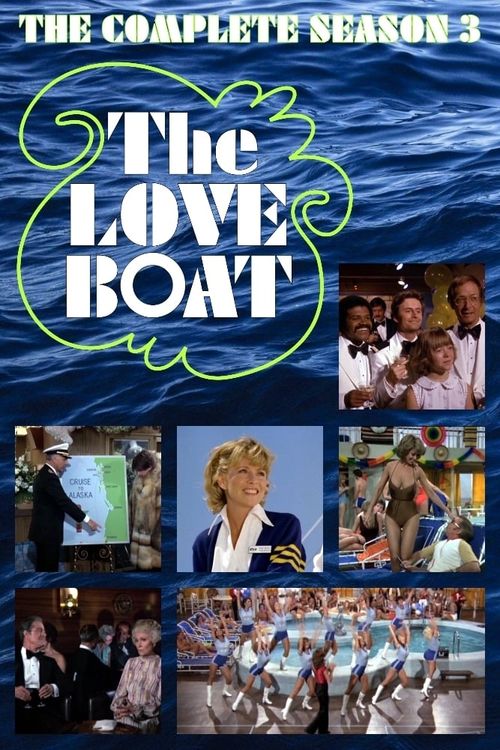
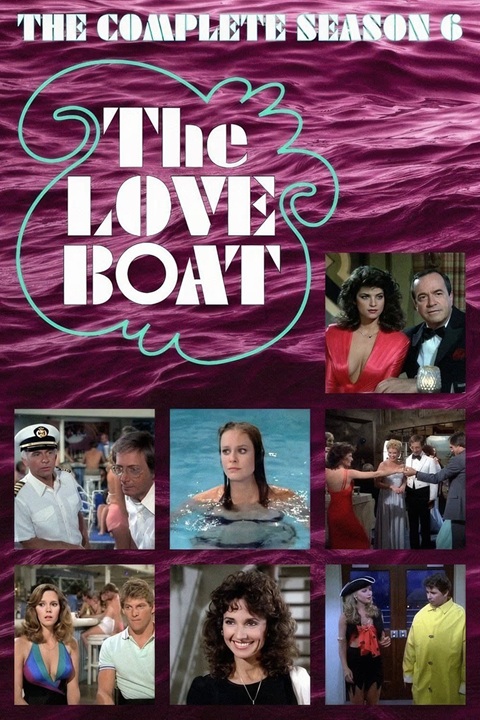
Retro Television Review: The Love Boat 6.15 “The Captain’s Replacement/Sly As A Fox/Here Comes The Bride …. Maybe”


Welcome to Retro Television Reviews, a feature where we review some of our favorite and least favorite shows of the past!  On Wednesdays, I will be reviewing the original Love Boat, which aired on ABC from 1977 to 1986!  The series can be streamed on Paramount Plus!
Come aboard!  We’re expecting you….

Episode 6.15 “The Captain’s Replacement/Sly As A Fox/Here Comes The Bride …. Maybe”

(Dir by Bob Sweeney, originally aired on January 15th, 1983)

First off, before I do anything else, I want to thank Case for covering the last three episodes of The Love Boat for me.  The previous month was not an easy one for me or my family and having Case, Brad, and Jeff helping me out with my television reviews really helped out.  Thanks, guys.  You all did a wonderful job!

As far as this episode goes, I know there’s one question that is on everyone’s mind:

Julie appeared to be moderately coked-up in this episode, though not as much as usual.  I’d say on the How Coked Up Was Julie Scale, this episode was right in the middle.  Five out of ten.

Julie actually had a bit to do during this episode.  Captain Donahue (McLean Stevenson) was on the ship, technically so that he could watch and learn from Captain Stubing.  Gopher, however, suspected that Donahue was planning on replacing Stubing as the captain of the Pacific Princess.  Gopher, Julie, Doc, Isaac, and Vicki all decided to pretend to be crazy in order to convince Donahue to stay away from the Pacific Princess.  Julie, for instance, started to obsessively practice her “welcome aboard” greeting.  I’m not sure what was so crazy about that.  As far as I can tell, Julie’s entire job consists of greeting people when they board the ship.  It seems like it would be a good idea to get some practice in.  Still, Donahue is freaked out enough that he backs off from trying to steal Stubing’s position.  Captain Stubing is relieved and so is the rest of the crew.  Maybe they came across an episode of Hello, Larry and realized what was in store for them if McLean Stevenson became the new captain.

Julie also served as an advisor to Mary Frances Bellflower (Shelley Fabares), who boarded the ship with two suitors.  Ben Phillips (Frank Bonner) and Henry Greg (Arte Johnson) spent the cruise bickering over who would make the best husband for Mary Frances.  Mary Frances assumed that the two men only cared about her because she was rich and she owned a valuable foxhound.  However, by the end of the cruise, Mary Frances realized that both of the men sincerely loved her.  She promised Julie that she would return to the ship in the future with the man she had chosen.  Julia, her nose red, suggested that Mary Frances give bigamy a try.  Everyone had a good laugh.

Finally, Doc arranged for his old friend, Erica Dupont (Jenilee Harrison), to get a job serving drinks on the cruise.  Erica, the daughter of an autoworker, needed the job so that she could help pay for her wedding to Robert Wallingford (Stephen Shortridge).  Erica confessed that Robert and his parents both thought she was rich because her last name was Dupont.  Erica immediately got to work serving drinks but — oh no! — Robert’s snooty parents (William Windom and Jane Wyatt) just happened to be on the cruise!  Erica tried to avoid them but eventually, they saw Erica sharing a friendly dance with Doc and they got the wrong idea.  They called Robert, who flew down to Mexico to meet the boat.  Erica finally confessed that, while her last name was Dupont, that did not make her a Du Pont.  The Wallingfords were disappointed to learn that Erica was not related to future murderer John du Pont.  Still, Robert forgave Erica and I guess they got married after the cruise.  Who knows?  I would think that starting an engagement with a lie would be a problem for most people but whatever.

This cruise was mildly enjoyable.  Jenilee Harrison and Bernie Kopell had a likable chemistry and it was hard not to feel that Erica should have just dumped Robert and declared her love for Doc.  As for everyone acting crazy to fool McLean Stevenson, you could tell that the regulars were having fun.  The storyline about Mary Frances and her two suitors was fairly weak but the other two stories made up for it.

I’m glad that I came aboard.
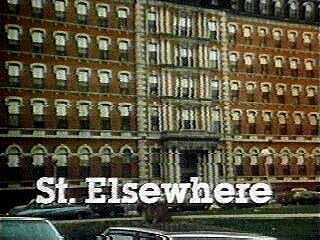
Retro Television Review: St. Elsewhere 2.5 “A Wing and A Prayer”


Welcome to Retro Television Reviews, a feature where we review some of our favorite and least favorite shows of the past! On Fridays, I will be reviewing St. Elsewhere, a medical show which ran on NBC from 1982 to 1988.  The show can be found on Hulu and, for purchase, on Prime!

This week, St. Elsewhere observes a holiday.

Episode 2.5 “A Wing and a Prayer”

(Dir by Bruce Paltrow, originally aired on November 23rd, 1983)

It’s Thanksgiving in Boston!  While everyone else is watching the Patriots and celebrating with family, 15 residents are stuck at St. Eligius, working during the holiday.  To make it even worse for them, Dr. Craig puts himself on the schedule to teach them a lesson about what it means to be a doctor.  (It’s also subtly suggested that Craig is looking for an excuse to get out of visiting his in-laws.)  When Craig learns that Ehrlich is planning on make a “California-style” turkey, Craig insists on making a turkey of his own.

Meanwhile, Dr. Auschlander is reading a book on “dying with dignity.”  It’s a British book, one that makes the case for euthanasia.  (Anglicans are so pessimistic!)  Auschlander is convinced that this will be his last Thanksgiving.  He becomes obsessed with the case of Joe Dempsey (Cory Yothers), a little boy who might have Hepatitis or who could just as easily be suffering from Leukemia.  Neither option is great but Joe can recover from Hepatitis.  Death-obsessed Auschlander spends the entire episode convincing himself that Joe is going to die.  Fortunately, Auschlander is wrong.  When the test results come back, it turns out that Joe does have Hepatitis.  Auschlander’s hope is renewed.  He tosses away his assisted suicide book.  He tells his wife he’s looking forward to next Thanksgiving.  It’s kind of predictable but Norman Lloyd’s performance sells it.

Did I cry during this episode?  Yes, I did.  Last year, at this time, I was fighting with an insurance company to keep my dad from getting kicked out of his rehab center.  I knew, deep in my heart, that if he was sent home, he would die.  The insurance company wanted to kick him out on the 4th of July.  I successfully appealed their decision, just as I would appeal several more of their decisions.  I won countless battles and I felt pretty proud of myself but ultimately, I lost the war.  My Dad was eventually evicted from the rehab center and, as I feared would happen, he died a few weeks later.  Every holiday since August of last year has been my first without my Dad.  So, yeah, when I watched an episode of a hospital drama with Dr. Asuchlander obsessing on death while Dr. Morrison experienced his first holiday since the passing of his wife …. you better believe I cried.

Can I fairly judge this episode, all things considered?  Probably not.  Watching it, I could tell that this episode was shamelessly manipulative and there were a few moments that were a bit overwritten.  There wasn’t much subtlety to be found.  But, dammit, it got to me.  The emotions got to me.  It earned my tears and, to be honest, I felt a little better after I cried.  Joe Dempsey’s going to live.  Yay!

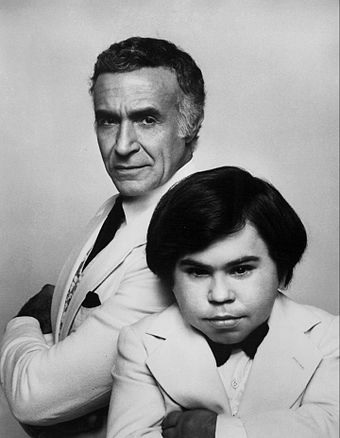
Retro Television Review: Fantasy Island 6.13 “Midnight Waltz/Let Them Eat Cake”


Welcome to Retro Television Reviews, a feature where we review some of our favorite and least favorite shows of the past!  On Tuesdays, I will be reviewing the original Fantasy Island, which ran on ABC from 1977 to 1984.  Unfortunately, the show has been removed from most streaming sites.  Fortunately, I’ve got nearly every episode on my DVR.

This week, Roarke is in the director’s chair!

Episode 6.13 “Midnight Waltz/Let Them Eat Cake”

(Dir by Ricardo Montalban, originally aired on February 12th, 1983)

Adele Anthony (Adrienne Barbeau) is a hard-working waitress whose fantasy is to be a queen for the weekend.  Mr. Roarke asks her if there’s a country that she would like to rule over.  Adele shrugs and says that she’s always liked France.  Mr. Roarke has her shoot an arrow and suddenly, Adele Anthony is …. MARIE ANTOINETTE!

Yes, the same Marie Antoinette who was beheaded during the French Revolution.

Like, seriously, Mr. Roarke ….. she couldn’t have been any other queen?  I’m not really sure why Mr. Roarke decided to do this to Adele, who is probably about a saintly a guest as has ever visited Fantasy Island.  Occasionally, Roarke will use the fantasies to teach someone a lesson but Adele really hasn’t done anything to justify being beheaded.

Fortunately, Adele isn’t beheaded.  It turns out that Marie Antoinette was saved from the guillotine by Francois (Patrick Wayne), a leader of the revolution who was shocked to discover that the Queen was not as heartless as he had been led to believe and that she had actually been framed by her husband, Louis (James Coco) and Louis’s mistress, Baroness La Rue (Cathryn Damon).  Indeed, all Marie Antoinette did was suggest that the cake that the royals were going to have for desert should be given to the citizens, along with a lot of other food.  Louis spread the story that Marie Antoinette had said, “Let them eat cake.”

So, Marie Antoinette (and Adele) survives!  Meanwhile, Louis is dragged off to be beheaded.  Except, it turns out that Louis was just having a fantasy as well.  Louis is actually Mr. Willaker, who runs the Fantasy Island car towing service.  In lieu of paying him for his services, Roarke gave him a fantasy in which he was beheaded.  The episode ends with Willaker towing away Tattoo’s car.

Meanwhile, John Cook (Lew Ayres) is a widower who wants to have one last dance with his wife, Carol (played, in ghost form, by Rosemary DeCamp).  However, John meets and falls in love with Martha Wilson (Jane Wyatt) and instead dances with her.  Carol approves, saying that she doesn’t want John to spend the rest of his days in mourning.  It’s a pretty simple fantasy but you know what?  It still brought tears to my eyes and I still smiled at the end of it.  A lot of that is due to the Lew Ayres, one of the great actors of Golden Age Hollywood.  Ayres gives such a sincere and downright sweet performance that it’s impossible not to get swept up in his fantasy.

This was a good episode.  I’m still not sure that Adele needed to become Marie Antoinette but the last dance fantasy made up for a lot.  It was just so sweet!  This was the second (and last) episode of the series to be directed by Ricardo Montalban and he did a great job.

Retro Television Reviews: The Love Boat 3.7 “The Reunion/Haven’t I Seen You?/Crew Confessions”


Welcome to Retro Television Reviews, a feature where we review some of our favorite and least favorite shows of the past!  On Wednesdays, I will be reviewing the original Love Boat, which aired on ABC from 1977 to 1986!  The series can be streamed on Paramount Plus!

This week is all about mistaken identity!

Episode 3.7 “The Reunion/Haven’t I Seen You?/Crew Confessions”

(Dir by George Tyne, originally aired on October 20th, 1979)

After discovering that a guy that he went to high school with in Oakland is now a published author, Isaac decides that maybe he should spend the cruise writing a novel of his own.  The other members of the crew encourage him to try his hand at being a literary genius because, seriously, how hard can it be?  (Gopher suggests that anyone can be a writer!  Okay, Gopher….)  Isaac attempts to write a western, just to discover that he can’t get past the first two sentences.  He then tries to write a romance and can’t get past the first two sentences.  Finally, he attempts to do a science fiction novel and can’t get past …. well, you get the idea.

Finally, Isaac realizes that his mistake is that he’s not writing about what he knows.  Instead, he starts writing a book about life on a cruise ship!  (There’s a bit of an inside joke here as The Love Boat itself was inspired by a “non-fiction” book written by a former cruise director.)  Unfortunately, the rest of the crew soon recognizes themselves in Isaac’s writing.  Doc is offended at being portrayed as a sex-crazed womanizer who rarely practices medicine.  Gopher is upset to discover that the fiction ship’s purser is a klutz named Muskrat.  Julie is upset at the character of the “perky” cruise director.  Only Captain Stubing seems to be truly supportive of Isaac.  Upset that his friends are upset, Isaac rips his book in half.  Guilt-stricken, the rest of the crew decides to support Isaac and they start giving him ideas for his novel.  For instance, Doc Bricker tells Isaac that he served in the U.S Navy after medical school, adding yet another piece of the puzzle to the enigma of Adam Bricker.

The novel-writing storyline, I liked.  I could relate to it because I’ve noticed that people are always willing to support your literary ambitions until they realize that you’re writing about them.  I kind of hope that Isaac will keep writing.  Knowing The Love Boat, though, I know this is probably one of those things that will be forgotten by the next episode.

As for the other storylines this week, they were okay if slight.  Don Knotts plays a shoe salesman named Herb Groebeck who looks just like a television start named Devon King.  At first, Herb keeps correcting everyone about his identity but, when he’s approached by Marla (Julie Newmar), he decides to pretend to be Devon for a while.  Marla reveals that she has a baby and she says that Devon is the father, the result of a one-night stand in Las Vegas.  Herb, having fallen in love with Marla, asks her to marry him.  Marla suddenly reveals that she’s never actually met Devon and that she was lying about him being the father because she wanted a husband who could take care of her baby.  Herb says that’s okay because he’s not even Devon King.  Marla and Herb share a good laugh and leave the cruise as an engaged couple which …. I mean, is this really a relationship that’s really going to last?  It’s pretty much built on lies.

Speaking of lies, Laurette Ferot (Jane Wyatt) has boarded the boat so she can be reunited with her long-missing husband, Gilbert (Jean-Pierre Aumont).  Laurette and Gilbert were married in 1939 but the Nazi invasion of France tore them apart.  Laurette was taken off to Denmark.  Gilbert vanished and was presumed dead.  Laurette has spent the last 40 years looking for Gilbert.  Unfortunately, the man who shows up on the cruise is not her Gilbert.  Instead, he’s a former member of the French Resistance who befriended the real Gilbert in a concentration camp and who fell in love with Laurette as a result of listening to the real Gilbert talk about her.  When the real Gilbert died in the camp, the fake Gilbert assumed his identity.  Having survived the war, the fake Gilbert came to America and made millions as a lock manufacturer while also looking for Laurette.  Laurette is surprisingly forgiving of Fake Gilbert and even goes through with the ceremony to “renew” their vows on the ship.  Laurette marries Fake Gilbert and they leave the ship together.  Jane Wyatt and Jean-Pierre Aumont both gave heartfelt performances but this storyline, involving concentration camps and Nazi cruelty, felt a bit out-of-place when partnered up with stories about Isaac writing a salacious book and Don Knotts pretending to be an action star.  It was a bit too serious for The Love Boat format.

Overall, this episode was uneven but genuinely well-acted.  Just as last week’s episode gave Fred Grandy a chance to show off the fact that he actually could act, this episode gives the spotlight to Ted Lange and Lange, again, proves himself to be capable of more than just making drinks and pointing.  I hope his book was best seller.

Retro Television Reviews: Fantasy Island 1.12 “King For A Day/Instant Family”


Welcome to Retro Television Reviews, a feature where we review some of our favorite and least favorite shows of the past!  On Tuesdays, I will be reviewing the original Fantasy Island, which ran on ABC from 1977 to 1986.  The entire show is currently streaming on Tubi!

This week, Mr. Roarke proves himself to be the expert at granting fantasies and teaching lessons.  One group of visitors deals with international diplomacy.  The other group deals with taking care of children.  It’s time for …. FANTASY ISLAND!

Episode 1.12 “King For A Day/Instant Family”

(Directed by George McGowan, originally aired on May 6th, 1978)

There are a lot fantasies in this episode.

For instance, Ernie Miller (David Doyle) is a plumber who wants to be treated like a king.  When he arrives on Fantasy Island, he is informed that he is now the King of Carpathia and that he is married to Queen Auroroa (Diane Baker).  What Ernie doesn’t realize is that there actually is a country called Carpathia and that he just happens to look exactly like the nation’s recently deceased king.  It turns out that Aurora is not just an actress hired to pretend to be the Queen.  Instead, she actually is the Queen!  Aurora had a fantasy of her own.  She wanted the king to come back to life so that he could prevent the country by being taken over by the sinister Ambassador Soro (Theodore Bikel).

Roarke combines their two fantasies into one.  Ernie gets to become king, on the condition that he abandon his former life and identity.  (That’s something that Ernie has no problem with and, quite frankly, actor David Doyle wasn’t exactly the most convincing plumber that I’ve ever seen.  Some actors were just meant to play men who wore suits to the office and David Doyle was one of them.)  Aurora gets her husband back, except of course it’s not actually her husband.  It’s just someone who looks like him.  But Aurora is cool with that.  This is kind of a weird fantasy.  One has to wonder what would have happened in Ambassador Soro had announced that his fantasy was  to conquer Carpathia.  WHAT THEN, MR. ROARKE!?

As for the other fantasy, it involves a woman named Gail Grayson (Melinda Naud), whose fantasy is to get a job working for the world’s number one expert on how to raise children.  Gail, it turns out, has written a thesis about how housewives are unnecessary and how being a mother isn’t as difficult as everyone says.  (It’s hard for me to imagine any woman actually writing something like that but whatever.  We’ll just go with it.)  Gail gets to put her thesis to the test when she discovers that she’s been hired to act as a babysitter!  It turns out that the world’s number one expert on raising children has several unruly children of his own.

Accompanying Gail is her mother, Mildred Grayson (Jane Wyatt).  It turns out that Mildred didn’t appreciate Gail’s thesis (and really, who can blame her?) and her fantasy is for Gail to discover firsthand just how difficult it is to take care of a house and several bratty children.  Again, Mr. Roarke decided to combine everyone’s fantasies.  Gail gets to work for her mentor and Jane gets to watch as Gail is humiliated by the children.  Eventually, Mildred comes to feel guilty about wishing so much trouble on her own daughter but everything work out in the end.  Gail gets her dream job and Mildred gets to say, “I told you so.”

Yay!  Everything works out for everyone!

This is one of those episodes where you really have to wonder if Mr. Roarke actually had a plan or if he was just making it all up as he was going along.  If Ernie hadn’t agreed to become the king in real life, Carpathia would have been conquered by the communists.  If Gail hadn’t realized her thesis was wrong, one of the children could have died on the island.  Sometimes, I just think that there are better ways to teach people a lesson than taking them to a mystical island that is ruled in a somewhat arbitrary manner by a friendly but occasionally condescending host.  That said, I would totally go to Fantasy Island if it did exist.  I imagine the same was true of the majority of the people who watched the show when it first aired.

After all, who doesn’t have a fantasy or two?

Lisa Reviews An Oscar Winner: Gentleman’s Agreement (dir by Elia Kazan)


Earlier today, as I was watching the 1947 film, Gentleman’s Agreement, I found myself thinking about a conversation that I had in 2006.

This was when I was in college.  I was having lunch with some friends from one of my classes.  As we were eating, the conversation turned to the war in Iraq.  That, in itself, was not surprising because, in 2006, it seemed like every conversation somehow turned to what was happening in the Middle East.

One of the people with whom I was having lunch was Olivia, self-styled intellectual who fancied herself as the most knowledgeable person on campus.  To be honest, I can’t think of anyone who liked her that much but she had a skill for subtly weaseling her way into almost every conversation.  She was one of those incredibly pretentious types who started every sentence with “Actually….” and who had embraced Marxism with the shallow vapidness of someone who had grown up in Highland Park and who would never have to struggle to pay a bill.

On that day, Olivia announced to us all that the only reason we were in Iraq was because we were doing the bidding of Israeli lobbyists and then she went on to talk about how 9-11 was an inside job.  She repeated the old lie about Jews calling in sick on 9-11 and claimed that five MOSSAD agents were arrested in New York for celebrating after the collapse of the Twin Towers.

After Olivia said this, there was the briefest silence as everyone else tried to figure out how to react.  Finally, someone tried to change the subject by making a joke about our professor.  Realizing the no one was going to openly disagree with Olivia and risk an argument, I said, “That’s not true.”

“What’s not true?” Olivia asked.

“About Jewish people calling in sick on 9-11 and celebrating after the Towers fell.  That’s not true.”

Olivia looked a little bit surprised that she was being openly challenged.  Finally, she said, in a surprisingly sincere tone of voice, “I’m sorry.  I didn’t realize you were Jewish.”

I’m not Jewish.  I’m Irish-Italian-Spanish and pretty much all of my immediate ancestors were Catholic.  But, as far as Olivia was concerned, I had to be Jewish because why else would I object to her repeating an anti-Semitic conspiracy theory?  When she apologized (and, make no mistake, there was not a hint of sarcasm in her tone when she said she was sorry), it wasn’t for being a bigot.  Instead, it was for being a bigot in front of the “wrong” person.  It didn’t occur to her that I was upset because what she said was bullshit.

Anyway, I wish I could say that I threw a drink in Olivia’s face or that I stood up on the table and delivered an impassioned speech but, once again, the other people at the table hastily changed the subject.  Anything to avoid a conflict, I suppose.  That was the last time I ever had a conversation with Olivia.  For the rest of the semester, I ignored her and I felt pretty proud of myself for shunning her.  It’s only been recently that I realized that Olivia also didn’t really make any effort to really talk to me after that conversation.  I shunned her because of her bigotry and I can only assume that she shunned me because of her misconception about my ancestry.

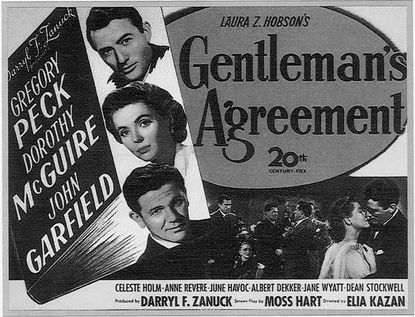
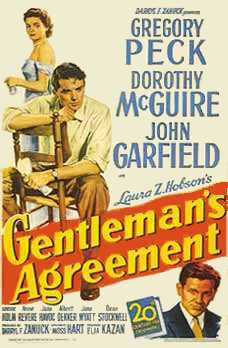
Gentleman’s Agreement is about a Gentile reporter named Phillip Green (Gregory Peck) who, while researching a story about anti-Semitism, poses as a Jew and discovers that the world is full of people like Olivia.  His own fiancee, a self-declared liberal named Kathy (Dorothy McGuire), reacts to Phil’s plan by asking him, “But you’re not really Jewish …. are you?”  By the simple act of telling everyone that his last name is actually “Greenberg,” Phil discovers that he suddenly can’t get a hotel reservation.  People stop returning his calls.  When he and Kathy have an engagement party in a wealthy community in Connecticut, many of Kathy’s friends stay away.  (Kathy, meanwhile, begs Phil to let her tell her family that she’s not actually engaged to a Jew.)  When Phil’s son, Tommy (Dean Stockwell), is harassed at school, Phil is shocked to hear Kathy tell Tommy that he shouldn’t listen to the bullies not because they’re a bunch of bigots but because “you’re not actually Jewish.”

Meanwhile, Phil’s friend, Dave Goldman (John Garfield), has returned from serving in World War II, just to discover that he can’t even rent a home for his family because many landlords refuse to rent to Jews.  When Phil learns that Katy owns a vacant cottage, he suggests that she rent it out to Dave.  Despite her sympathy for Dave, Kathy is shocked at the suggestion.  What will the neighbors think?

Gentleman’s Agreement was produced by Darryl F. Zanuck, who took on the project after he was refused membership in the Los Angeles Country Club because the membership committee assumed that Zanuck was Jewish.  It was considered to be quite a controversial film in 1947, as it not only dealt with American prejudice but it also called out two prominent elected anti-Semites — Sen. Theodore Bilbo and Rep. John E. Rankin — by name.  Zanuck often claimed that the other studio moguls asked him to abandon the project, saying that a film would only inspire more of what it was trying to condemn.  Still, Zanuck stuck with the project and it was not only a box office hit but it also won the Oscar for Best Picture.

Seen today, Gentleman’s Agreement has its flaws.  In the lead role, Gregory Peck is a bit of a stiff and Elia Kazan’s directs in an efficient but bland manner.  Because this film was made in 1947 and a happy ending was a must, Kathy is given a rather convenient opportunity at redemption.  The film’s most compelling performers — John Garfield, Celeste Holm, and June Havoc (playing Phil’s Jewish secretary, who had to change her last name before anyone would even consider hiring her) — are often underused.

And yet, with all that in mind, Gentleman’s Agreement is still a very effective film.  Gentleman’s Agreement understand that there’s more to prejudice than just the morons who go to rallies or the degenerates who shout slurs across the street.  Gentleman’s Agreement understands that, for prejudice to thrive, it also needs people like Kathy or Olivia, people who have that prejudice so ingrained in their system that they don’t even think twice about it and Dorothy McGuire does a very good job of playing a self-satisfied liberal who is blind to her own prejudice.  Gentleman’s Agreement understands that bigotry isn’t just about the openly hateful.  It’s also about the people who silently tolerate it and who refuse to stand up against it.  It’s about the people who respond to prejudice not with outrage but who instead attempt to change the subject.

In the UK, one of the two major political parties has basically surrendered itself to anti-Semitism.  Here in the US, Congress can’t even bring itself to condemn the frequently anti-Semitic comments of two of its members.  Elected leaders and pundits only offer up the weakest of condemnation when Jewish people are viciously attacked in the streets.  When a man attacked a group of Jews on Hanukkah, many excused the man’s attack by trying to say that he was just upset about  gentrification.  For many reasons, Gentleman’s Agreement is still relevant and important today.

Midnight Snack: THE MAN WHO CHEATED HIMSELF (2Oth Century-Fox 1950)


gary loggins's avatarcracked rear viewer

THE MAN WHO CHEATED HIMSELF made it’s TCM debut last Saturday night on Noir Alley, hosted by “The Czar of Noir” Eddie Muller. This is a ‘B’ film I’d never heard of before, and since you all know how much I love discovering new/old ‘B’ movies, I stayed up past the midnight hour to give it a watch (which I usually do on Saturday nights anyway, being a Noir Alley fan!).

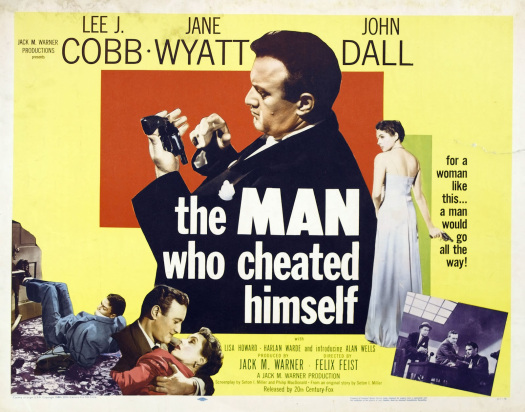
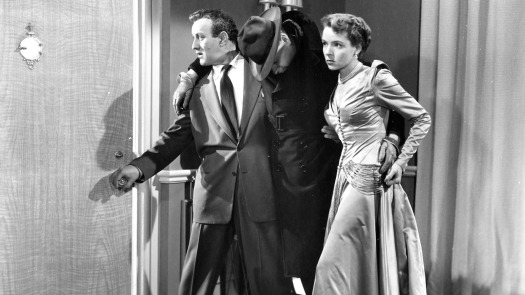
The film doesn’t waste any time, quickly introducing the main characters and getting right into the story. Thinking her husband is planning to murder her, rich San Francisco socialite Lois Frazer guns him down in cold blood directly in front of her lover, Homicide Lt. Ed Cullen. Ed dumps the body at the airport to make it look like a robbery/murder, tossing the murder weapon off the Golden Gate Bridge. Then he takes the lead in the investigation, along…

View original post 320 more words

Lisa Reviews An Oscar Nominee: Lost Horizon (dir by Frank Capra)


Long before there was Lost, there was Lost Horizon!

Much like the famous television show, the 1937 film Lost Horizon begins with a group of strangers on an airplane.  They’re people from all walks of life, all with their separate hopes and dreams.  When the plane crashes, they find themselves stranded in an uncharted land and, much like the Lost castaways, they are shocked to discover that they are not alone.  Instead, they’ve found a semi-legendary place that is ruled over by a man who has lived for centuries.  Much as in Lost, some want to return to civilization while others want to remain in their new home.  Both Lost and Lost Horizon even feature a terminally ill woman who starts to recover her health after becoming stranded.

Of course, in Lost, everyone was just flying from Australia to America.  In Lost Horizon, everyone is trying to escape the Chinese revolution.  Among the passengers on the plane: diplomat Robert Conway (Ronald Colman), his irresponsible brother, George (John Howard), a con artist named Henry (Thomas Mitchell), a paleontologist (Edward Everett Horton), and the very ill Gloria (Isabel Jewell).

While Lost featured a plane crash on a tropical island, Lost Horizon features a plane crash in the Himalayas.  In Lost, the sinister Others sent spies to infiltrate the survivors.  In Lost Horizon, the mysterious Chang (H.B. Warner) appears and leads the survivors to a place called Shangri-La.

Shangi-La is a lush and idyllic valley that has somehow flourished in one of the most inhospitable places on Earth.  The happy inhabitants inform the survivors that they never get sick and they never fight.  They’re led by the High Lama (Sam Jaffe), a philosopher who explains that he is several hundred years old.  The valley is full of magic and the Lama tells the survivors that Shangri-La is their new home.

Now, I’ve seen enough horror movies that I spent most of Lost Horizon waiting for the Lama to suddenly reveal that he was a vampire or an alien or something.  Whenever anyone in a movie seems to be too good to be true, that usually means that he’s going to end up killing someone about an hour into the story.  But that didn’t happen in Lost Horizon.  Instead, the Lama is just as wise and benevolent as he claims to be and Shangri-La is as much of a paradise as everyone assumes.  I guess we’re just naturally more cynical in 2018 than people were in 1937.

Of course, the Lama isn’t immortal.  Not even the magic of Shangri-La can prevent the inevitably of death.  The Lama is looking for a successor.  Could one of the survivors be that successor?  Perhaps.  For instance, Robert absolutely loves Shangri-La.  Of course, his brother George is determined to return to the real world.  He has fallen in love with one of the inhabitants of Shagri-La and plans to take her with him, despite the Lama’s warning about trying to leave…

Frank Capra was a huge fan of James Hilton’s book, Lost Horizon, and he spent three years trying to bring it to the big screen.  Based on Capra’s previous box office successes, Colombia’s Harry Cohn gave Capra a budget of $1.25 million to bring his vision of Shangri-La to life.  That may not sound like much today but, at the time, that made Lost Horizon the most expensive movie ever made.  The production was a notoriously difficult one.  (The original actor cast as the elderly Lama was so excited to learn he had been selected that he dropped dead of a heart attack.)  As a result of both its ornate sets and Capra’s perfectionism, the film soon went overbudget.  When Capra finally delivered a first cut, it was over 6 hours long.  Capra eventually managed to edit it down to 210 minutes, just to then have Harry Cohn order another hour taken out of the film.  When Lost Horizon was finally released, it had a running time of 132 minutes.

Seen today, Lost Horizon is definitely an uneven work.  With all the cutting and editing that went on, it’s hard to guess what Capra’s original vision may have been but, in the final version, much more time is devoted to the characters discussing the philosophy of Shangri-La than to the characters themselves.  (It’s always good to see Thomas Mitchell but he really doesn’t get much to do.)  Since you never really feel like you know what any of these characters were like outside of Shangi-La, it’s hard to see how being in Shagri-La has changed them.  You just have to take their word for it.  That said, it’s a visually stunning film.  Capra may have gone over budget creating the look of Shangri-La but it was money well-spent.  If I ever find myself in a magic village, I hope it looks half as nice as the one in Lost Horizon.

Despite all of the drama that went on behind the scenes and a rather anemic box office reception, Lost Horizon was nominated for best picture.  However, it lost to The Life of Emile Zola.