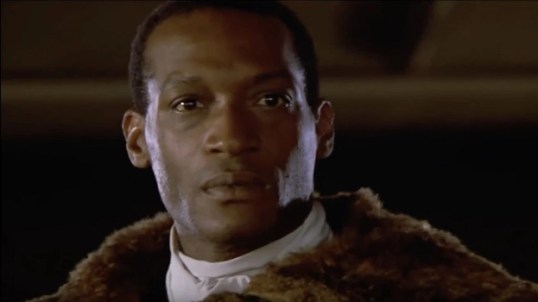
For our final Horror Scene that I Love for our 2023’s horrorthon, we honor the great actor Tony Todd with this scene from 1992’s Candyman.
For our final Horror Scene that I Love for our 2023’s horrorthon, we honor the great actor Tony Todd with this scene from 1992’s Candyman.
Never go camping!
Seriously, if there’s any lesson to be learned from the nearly 600 posts that showed up on the site through the month of October in 2023, do not go camping. If you take nothing else away from Horrorthon, I hope you’ll take away a strong disdain for camping in general and summer camp in specific. Seriously, the wilderness is full of monsters and summer camps seem to breed madmen.
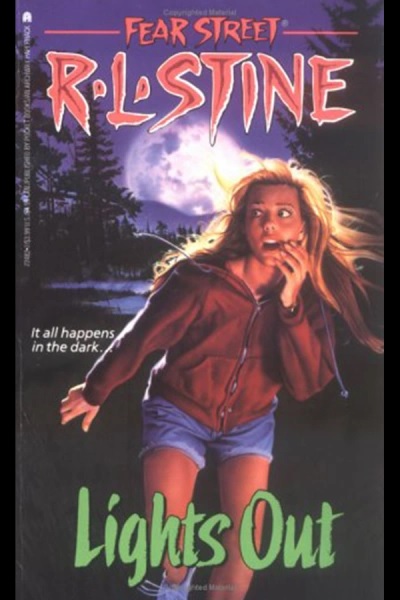
Just consider R.L. Stine’s 1991 novel, Lights Out.
In Lights Out, Holly is spending the summer working as a counselor at her uncle’s summer camp and it absolutely sucks! Not only does the summer camp have a long history of weird events and tragedy but no one seems to be happy about Holly being there. Holly doesn’t like the outdoors and she doesn’t like bugs and she certainly doesn’t like snakes, even if they’re just made out of rubber. The other counselors, rather than trying to help Holly out, spend the entire time bullying her and then threatening her to keep her quiet. At one point, they even throw leeches at her! Seriously, who does that!? Who not only collects leeches but also throws them at someone!?
Why is everyone being so mean to Holly? Well, a lot of it because the two resident mean girls think that Holly is going to steal the attention of the male counselors. But Holly feels that there’s something even more sinister happening at the camp. Someone appears to be vandalizing the camp and trying to force her uncle to shut the place down. Eventually, one of the counselors dies when someone shoves her face against the pottery wheel.
Of course, the camp doesn’t shut down. It takes more than just one murder to shut down a summer camp. Things come to a head when, despite being terrified of the outside, Holly takes part in leading the camp’s nature hike. Why is Holly even working as a camp counselor? I know it’s because her mother demanded that she do something more than just hang out around the house during the summer but, seriously — there’s a lot to do in Shadyside! There’s so much Holly could have done!
The main message of this book is that camping sucks and I could definitely agree with that. If the girl on the book’s cover had red hair, she could have easily been me whenever I was up at my grandfather’s farm in Arkansas and I was trying to figure out if there was a snake in the nearby high grass or if all the hissing was just my imagination. As for the plot, it was basically Friday the 13th with a much smaller body count. (Christopher Pike would have killed off the whole camp. R.L. Stine is a bit nicer.) It’s a bit of a silly book but the message comes through loud and clear.
CAMPING SUCKS!
Who was the Zodiac Killer?
That is a question that has haunted journalists, cops, and true crime fans since the late 60s. It is known that the Zodiac Killer murdered at least five people in Northern California in 1968 and 1969. He targeted young couples, though he is also thought to have murdered on taxi driver as well. What set Zodiac apart from other killers is that he was a prolific letter writer, who sent cards and ciphers to the police and the journalists who were reporting on his crimes. In one of his ciphers, Zodiac claimed that he had killed 37 people. Cartoonist Robert Graysmith later wrote two books about his personal obsession with the case. He estimated that the Zodiac may have been responsible for hundred of murders, up through the 80s. Of course, reading Graysmith’s first Zodiac book, it’s also easy to suspect that Graysmith reached a point where he saw the Zodiac’s hand in every unsolved murder in the San Francisco area. Of all the unidentified serial killers in American history, Zodiac is one that most haunts us. Zodiac was a serial killer who operated in an era when such things were still considered to be uncommon. Much as Jack the Ripper did during the Victorian Age, Zodiac announced the arrival of a new age of evil.
Zodiac wrote about being a film fan and he was probably happy about the fact that he inspired quite a few films. 1971’s The Zodiac Killer came out while Zodiac was still sending letters to the police and cops actually staked out the theaters showing the film just to see if he would show up. Dirty Harry‘s Scorpio Killer was also based on Zodiac, right down to the taunting letters that he sent the mayor and again, one has to wonder if Zodiac ever showed up to watch Clint Eastwood take him down.
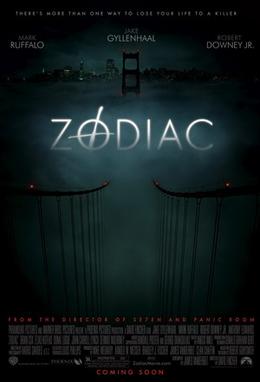
And, if Zodiac survived into the 21st Century, one has to wonder if he showed up in the theaters for 2007’s Zodiac.
One of the best true crime films ever made, Zodiac not only recreates the crimes of the Zodiac but it also examines the mental price of obsessing over the one unknown force of evil. Mark Ruffalo plays Dave Toschi, the celebrity cop who nearly sacrificed his professional reputation in his search for the identity of the killer. Jake Gyllenhaal plays cartoonist Robert Graysmith, who spends over a decade searching for the Zodiac’s identity and who loses his wife (Chloe Sevigny) in the process. And Robert Downey, Jr. plays Paul Avery, the crime reporter to whom the Zodiac wrote and who sunk into paranoia and addiction as a result. This is a film that is less about the Zodiac’s crime and more about how this unknown killer seemed to unleash a darkness that would come to envelope first a city and eventually an entire nation.
As one might expect from a film directed by David Fincher, Zodiac plays out like a filmed nightmare with the starkly portrayed murders being all the more disturbing because they often take place outside, where people would think they would be safe. (The second murder is especially terrifying, as it plays out without even the sound of background music to allow us the escape of remembering that it’s only a movie.) Fincher heightens our paranoia but having a different actor play the killer in each scene, reminding us that the Zodiac could literally be anyone. Indeed, one of the scarier things about Zodiac is that, in the course of his investigation, Graysmith meets so many different people who seem like they could be the killer. Even if they aren’t the Zodiac, the viewer is left with the feeling that the world is full of people who are capable of committing the same crimes. The film becomes a journey into the heart of darkness, with the Zodiac becoming both a malevolent force and potentially your next door neighbor. And with the film’s detailed recreation of the 60s and the 70s, the film becomes a portrait of a country on the verge of changing forever with the Zodaic and his crimes representing all the fear waiting in the future.
Again, as one might expect from a Fincher film, it’s a well-acted film, especially by Robert Downey, Jr. Zodiac came out a year before Iron Man, when Downey was still better known for his personal troubles than for his talent. Downey perfect captures his character’s descent into self-destruction, as he goes from being cocky and self-assured to being so paranoid that he’s carrying a gun. (Paul Avery’s actual colleagues have disputed the film’s portrayal of Avery being mentally destroyed by the Zodiac.) Ruffalo and Gyllenhaal also do a good job of portraying Toschi and Graysmith’s growing obsession with the case while Charles Fleischer and John Carroll Lynch both make strong (and creepy) impressions as two men who might (or might not) be the killer.
Though the film was not a success at the box office and it was totally ignored by the Academy, Zodiac has built up a strong reputation in the years since its released. It’s inspired a whole new generation of web sleuths to search for the killer’s identity. Personally, my favored suspect is Robert Ivan Nichols, an enigmatic engineer who abandoned his former life and changed his name to Joseph Newton Chandler III in the 70s and who committed suicide in 2002. I think much like Jack the Ripper, the Zodiac’s identity will never be definitely known. There have been many compelling suspects but most of the evidence seems to be circumstantial. (That’s certainly the case when it comes to Nichols.) The Zodiac was thought to be in his 30s or even his early 40s in 1969 so it’s doubtful that he’s still alive today. In all probability, his identity and his motive will forever remain an unsolvable mystery.
(Thank you shout-out to my friend Mark for recommending this film!)
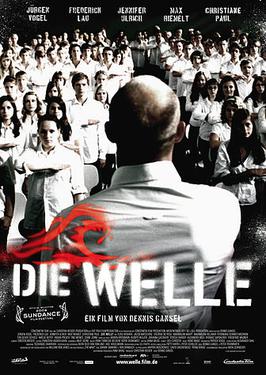
The 2008 German film, The Wave, opens with history teacher and water polo coach Rainer Wenger (Jurgen Vogel), driving to class while listening to the Ramones’s Rock and Roll High School.
Rainer may be a middle-aged authority figure who expects his water polo players to train hard and to always put winning above everything but he still considers himself to be a punk rock rebel, an anarchist who brags about all of the protests that he was involved with. Rainer is upset when he learns that he has been assigned to teach a week-long course on “autocracy.” He very much wanted to teach a class on “anarchy” but that class has been assigned to the most uptight and autocratic teacher in the school. Already feeling resentful, Rainer becomes even more annoyed when it becomes clear that the majority of his students are convinced that there will never be another dictatorship in Germany.
Rainer decides to show them how easily fascism can take root by becoming a dictator in his classroom. Rainer orders the students to call him “Mr. Wegner.” He tells them to all wear the same uniform of jeans and a white shirt to class and when his most intelligent student shows up for class wearing a red blouse because she “doesn’t look good in white,” Rainer refuses to call on her when she raises her hand in class. Mr. Wegner institutes assigned seating, controlling who can sit with who. Everyone is required to stand up if they want to speak. When one student says that he doesn’t want to do any of this, Rainer kicks him and his friends out of class. All three of them eventually return.
Rainer’s experiment works a bit too well. The students come to love being a part of the movement that they come to call The Wave. The Wave ostracizes outsiders, both in school and outside. The Wave covers the town in graffiti, announcing their presence. The Wave doesn’t really have a set goal but the students in Rainer’s class are now obsessed and fanatically loyal to it. One former outcast, Tim (Frederick Lau), becomes so devoted to the cause that he even starts carrying a gun to school so he can defend the other members of The Wave….
If this all sounds familiar, it’s because The Wave is based on the novelization of the American television special of the same name. The German version of The Wave, however, is far more cynical than the American version. Whereas the American version features Bruce Davison as a mild-mannered but always well-intentioned liberal who realizes that his classroom experiment had gone too far, the German version features a teacher who, despite his self-proclaimed radicalism, comes to enjoy the ego boost of being a dictator in the classroom. (Rainer, of course, puts his fascism in superficial left-wing terms, railing against the corporations that make expensive clothing and the individualism that he claims was keeping his class from coming together.) Rainer becomes willfully blind to what he has created. And if the American version of The Wave featured students who eventually learned a lesson and voluntarily walked away from the group they had previous celebrate, the German version presents students who are not willing to abandon their cause, even when their leader tells them that it is time to move on. If the American version featured students who were just play-acting as fascists, the German version features students who go from being blithely unconcerned with the prospect of dictatorship to being the enthusiastic foot soldiers in a cause that has no reason to exist outside of controlling the lives and thoughts of others. If The American version ended with hope for the future, the German version ends with tragedy.
It’s a dark film. Some might claim that The Wave is not a horror film but, by the end of the movie, Rainer’s students have become as relentless and destructive as the zombies from a Romero film or the fanatics who often showed up in Wes Craven’s pre-Scream movies. It takes just one week to transform them from being ordinary teenagers to being the shock troops in a directionless but destructive revolution. They are asked to surrender their individuality and their power to think for themselves and all of them do so without much hesitation, with the desire to belong suddenly superseding everything else about which they claimed to care. Consider this well-acted and disturbing film to be an example of the horror of everyday life.
4 Shots From 4 Films is just what it says it is, 4 shots from 4 of our favorite films. As opposed to the reviews and recaps that we usually post, 4 Shots From 4 Films is all about letting the visuals do the talking.
This October, I am going to be using our 4 Shots From 4 Films feature to pay tribute to some of my favorite horror directors, in alphabetical order! That’s right, we’re going from Argento to Zombie in one month!
Our final director: Rob Zombie.
4 Shots From 4 Rob Zombie Films
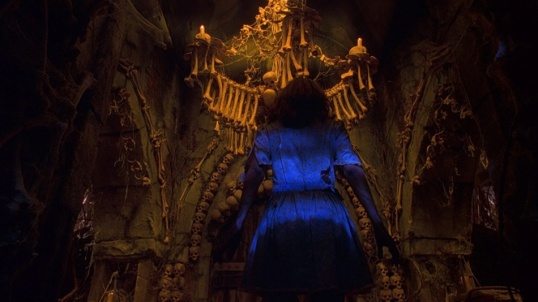
House of 1000 Corpses (2003, dir by Rob Zombie, DP: Alex Poppas and Tom Richmond)

Halloween II (2009, dir by Rob Zombie, DP: Brandon Trost)
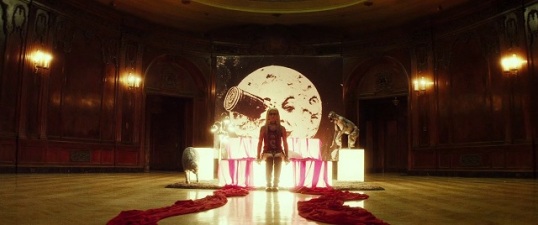
The Lords of Salem (2012, dir by Rob Zombie, DP: Brandon Trost)
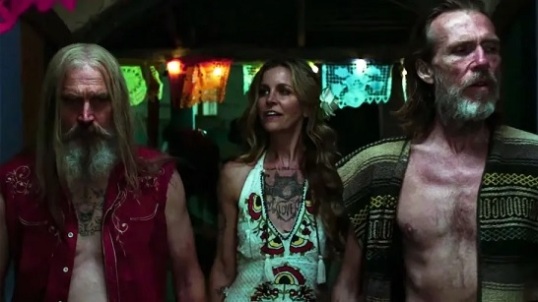
3 From Hell (2019, dir by Rob Zombie, DP: David N . Daniel)
Published by Gold Key Comics, Boris Karloff Tales of Mystery ran from 1963 to 1980. The first few issues contained stories based on episodes of the Boris Karloff-hosted anthology series, Thriller, but later issues featured original tales of horror, science fiction, and mystery, all of which were introduced by a comic book version of Boris Karloff. Today, to help us celebrate Halloween, here is a sampling of the covers of Boris Karloff Tales of Mystery!

Artist Unknown

Artist Unknown

by George Wilson

by George Wilson

by George Wilson

by George Wilson

by George Wilson

by George Wilson

by Jesse Santos

by Luis Dominguez

by Luis Dominguez
Filmed in 1957 for a television program called Westinghouse Studio One, The Night America Trembled is a dramatization of the night in 1938 when Orson Welles’s adaptation of H.G. Wells’s The War of the Worlds reportedly caused a panic amongst listeners.
For legal reasons, Orson Welles is not portrayed nor is his name mentioned. Instead, the focus is mostly on the people listening to the broadcast and getting the wrong idea. That may sound like a comedy but The Night America Trembled takes itself fairly seriously, complete with Edward R. Murrow narrating and taking drags off of a cigarette.
Clocking in at a brisk 60 minutes, The Night America Trembled is an interesting recreation of that October 30th. Among the people panicking are a large collection of future stars and character actors. Ed Asner, James Coburn, John Astin, Warren Oates, and Warren Beatty all make early appearances.
It’s an interesting historical document and you can watch it below!

On October 30th, 1938, Orson Welles and the Mercury Theater On The Air broadcast an adaptation of H.G. Wells’s War of the Worlds and, legend has it, they scared the ever-loving heck out of America.
Actually, there’s some debate as to just how panicked America got when they heard the Mercury Theater On The Air’s adaptation of War of the Worlds. There was definitely some panic but there are differing reports on just how wide spread it was. For our purposes, let’s assume that the entire country was terrified at the same time and that everyone was loading up a shotgun and planning to go out and look for aliens. One thing is for sure. With his adaptation of War of the Worlds, Orson Welles managed to invent the whole found footage genre that would later come to dominate horror cinema in the late 90s and the aughts. Every found footage horror film owes a debt to what Orson Welles accomplished with War of the Worlds. We won’t hold that against Orson. Instead, it’s just another example of how far ahead of his time Orson Welles was.
H.G. Wells, the original author of War of the Worlds, and Orson Welles only met once, while they were both in San Antonio, Texas in 1940. (Orson Welles and H.G. Wells hanging out in San Antonio? To be honest, that sounds like it would make a good movie.) They were interviewed for a local radio station. H.G. Wells expressed some skepticism about the reports of Americans panicking while Welles compared the radio broadcast to someone dressing up like a ghost and shouting “Boo!” during Halloween. Both Wells and Welles then encouraged Americans to worry less about Martians and more about the growing threat of Hitler and the war in Europe.
I’ve shared this before but this just seems like the time to share it again. Here, for Halloween, is the 1938 Mercury Theater On The Air production of The War of the Worlds!

Happy Halloween everyone!
Well, as another horrorthon draws to a close, it’s time for another Shattered Lens tradition! Every Halloween, we share one of the greatest and most iconic horror films ever made. For your Halloween enjoyment, here is George Romero’s Night of the Living Dead!
(Be sure to read Arleigh’s equally famous review!)
To all of our readers
To all of our friends
To every ghoul and fiend out there,
HAPPY HALLOWEEN FROM THE SHATTERED LENS!
May your Halloween bring you more candy than rocks and we hope you enjoy the last day of our annual horrorthon! Be safe, be sincere, and don’t forget the true meaning on Halloween!
 Through the Shattered Lens