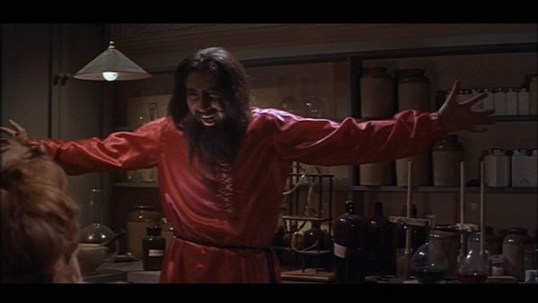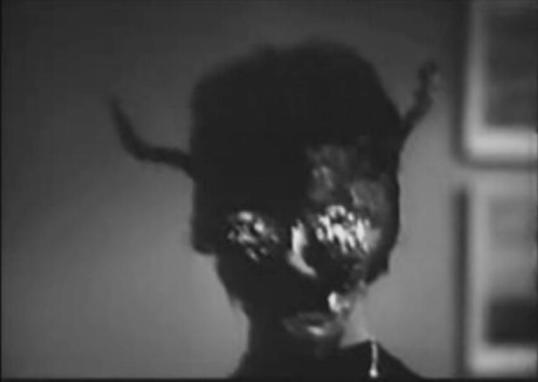
Music Video of the Day: Ride On by Lulabox (1992, directed by ????)


This song appears on the Pet Sematary 2 soundtrack, which might be the best soundtrack to have never been given an official release.  In the film, this is the song that plays over the end credits.  The video follows the film’s story of the dead rising back to life.

Enjoy!

Horror on TV: Ghost Story 1.7 “Half a Death” (dir by Leslie H. Martinson)


On tonight’s episode of Ghost Story, Pamela Franklin plays two roles.  She plays both Christina Burgess and Lisa (hey!), the twin sister who Christina has never met.  When Lisa mysteriously dies (boooo!), Christina finds herself haunted by her sister’s ghost.  But is the ghost benevolent or is the ghost seeking revenge?

Co-written by Richard Matheson, this episode originally aired on November 3rd, 1972.

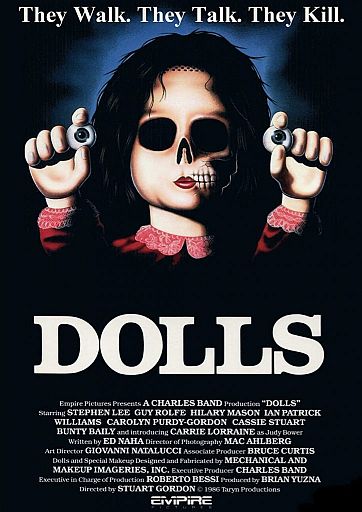
The TSL’s Horror Grindhouse: Dolls (dir by Stuart Gordon)


Sitting out of the middle of nowhere, there’s a house. And in this house, there lives an old man and an old woman. They appear to be very friendly, the type who will happily open up their home to anyone needing a place to stay and have a cup of coffee. They make dolls for a living. They make the type of dolls that smirk at you whenever you trip and that glare at you whenever you say that you don’t care about toys. They’re living dolls and they’re actually kind of vicious. Don’t get on their bad side.

That is exactly the mistake that a few people make when they arrive at the house on one stormy night. Two punk rock girls with exaggerated British accents make the mistake of trying to find something to steal. Uh-oh, here come the dolls! A self-centered man and his wife make the mistake of not caring about their daughter. The dolls aren’t going to stand for that!  Seriously, the dolls may be cute but if they don’t like you, you are doomed!

The dolls, however, do like the daughter. And they appear to be willing to tolerate Ralph, the goofy traveling salesman who made the mistake of picking up the two punk rock girls while they were hitchhiking. Will the dolls continue to like the daughter and Ralph or will they eventually turn on everyone in the house? They may be small but again, you seriously do not want to get these dolls mad.

First released in 1986, Dolls is a seriously strange movie from director Stuart Gordon and producer Charles Band. There’s a lot of good things to be said for Dolls. The house is atmospheric. The dolls are truly creepy. The acting really isn’t that bad, though I do think most viewers won’t necessarily miss the two punks girls.  The movie does take the characters and the dolls in some unexpected directions. But the movie’s tone is all over the place. It starts out as a broad comedy before then turning into a surprisingly violent and bloody horror film and then it turns into this strangely macabre family drama. The movie can’t seem to decide whether it wants you touch your heart or scar your soul. Imagine Home Alone if the movie kept all the heart-warming stuff but then had the kid brutally kill the burglars and laugh while stuffing their corpses in a furnace and you have some idea of what the tone of Dolls is like.

It’s an odd film but it’s hard not to like. Stuart Gordon’s direction is energetic and, since the movie only has a running time of 77 minutes, the whole thing feels like an extra weird episode of Tales From The Crypt or The Twilight Zone. Even the film’s mix of humor and disturbing violence feels strangely appropriate, as if the film itself is an adaptation of a particularly grisly fairy tale.

Watch Dolls and you’ll never look at a toy the same way again!

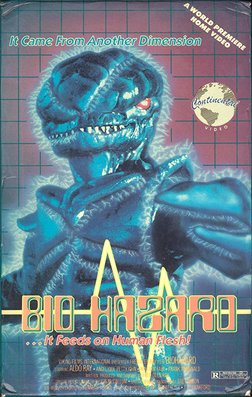
Biohazard (1985, directed by Fred Olen Ray)


At a government research lab in the middle of the desert, Lisa (Angelique Pettyjohn) is a psychic who has the ability to go into different dimensions and bring things back with her.  While demonstrating her abilities for Gen. Randolph (Aldo Ray), she accidentally brings back a container that is carrying a small, humanoid/lizard hybrid.  (Inside the costume was director Fred Olen Ray’s six year-old son, Christopher.)  The monster goes on a rampage, killing hoboes and other random people who live in a nearby town.  Lisa and Carter (William Fair) try to track down the creature before it can cause too much damage and kill too many people.  Meanwhile, the town drunk wants to sell the monster’s story to the newspapers.

Biohazard is a typical early Ray film.  Hire some veterans, like Aldo Ray and Carroll Borland.  (Fred Olen Ray, if nothing else, was good about finding work for Hollywood veterans who, otherwise, would have spent their final years in obscurity.)  Unleash someone in a monster costume.  Toss in some gratuitous nudity.  Spill some fake blood.  Pad it out so that the film reaches feature-length.  Biohazard goes the Hal Needham route when it comes to padding out the film and gives us several minutes of blown takes and other mistakes.  The takes start out amusing but, eventually, there’s only so many times you can watch actors blow lines that weren’t that good to begin with.  It’s still not as bad as having to watch Burt Reynolds slap Dom DeLuise a hundred times during the closing credits of Cannonball Run.  At least most of the actors actually look like they enjoyed being on the set of Biohazard.  

With Fred Olen Ray, you know what you’re going to get and Biohazard delivers all of Ray’s trademark moments, including ineptly lit day-for-night scenes, overacted comedy relief, and one or two scenes that work despite themselves.  As bad as the end result was, the film does have a DIY aesthetic that will appeal to anyone who has ever thought about getting a couple of friends together and just making a movie.  Supposedly, it took Ray two years to complete Biohazard.  Today, an aspiring filmmaker could just film it on his phone over two weekends and then upload it to YouTube and get a few thousand likes.  In some ways, independent filmmakers like Fred Olen Ray were ahead of their time.

Horror Film Review: The Wasp Woman (dir by Roger Corman)


Aging sucks!

I mean, let’s just be honest about that. No one wants to get older. No one wakes up in the morning and thinks to themselves, “Yay! I’m one day closer to death!” People do not celebrate the appearance of a wrinkle or a laugh line. No one is happy when their vision gets blurrier or when they start to ache more and more frequently. No one wants to get old! That’s a simple truth and it’s the truth that is at the heart of the 1958 film, The Wasp Woman.

Directed by B-movie maestro Roger Corman, The Wasp Woman tells the story of Janice Starlin (Susan Cabot). Janice owns a cosmetic company. She’s made a fortune helping people defy their age. Unfortunately, the company’s sales are down because Janice herself cannot defy the passage of time. She’s looking older and apparently, people across the world are saying, “Why would I buy makeup for a mortal? I only buy my makeup from ageless mythological goddesses, who never age.”

So, Janice does what anyone would do. She tries to find a way to stop herself from getting old. When she discovers that a scientist is experimenting with using the enzymes from the royal jelly of a queen wasp to reverse the aging process, she agrees to fund his work. However, she has one condition. She has to be the test subject …. which, now that I think about it, makes absolutely no sense. Surely Janice could hire someone else to be the test subject before undergoing a highly experimental and unproven scientific process herself. I mean, Janice is extremely wealthy! Or maybe Janice could just hire a model to be the new face of her company. Or she could retire and take her millions to Europe and spend the rest of her life living in luxury. My point is that it seems like Janice is acting a bit impulsively here.

Anyway, Dr. Eric Zinthrop (Michael Mark) reluctantly agrees to Janice’s demands. He really needs the money, I guess. And if Janice dies, it’ll just means that he’ll probably go to prison for life. He certainly won’t ever be allowed to experiment with any more wasps. Is anyone in this movie capable of thinking ahead?

At first, the experiments seem to work. After one weekend, Janice looks 20 years younger! However, there is an unfortunate side effect. Janice occasionally transforms into a wasp/human hybrid! Uh-oh! That’s not good….

Clocking in at barely 70 minutes, The Wasp Woman is an entertainingly daft movie. As I’ve already pointed out, this is one of those movies where so much drama could be avoided if people would just consider the possible consequences of their actions. That said, the pace is fast and Susan Cabot is enjoyably bitchy in the role of Janice. The Wasp Woman costume manages to be both ludicrous and effective at the same time. Laugh? Scream? Why not do both!?

In the end, this is a silly but entertaining movie. If nothing else, it proves that sometimes it’s best just to accept that no one stays young forever.

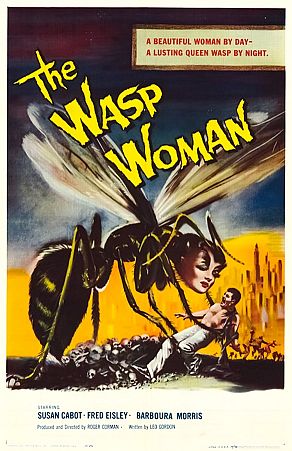
One final note: This film has a great poster, even if it is totally misleading.
Game Review: The Pool (2022, Jacob Reux)


In The Pool, you are a socially awkward employee at a research facility that is investigating aquatic life.  You’re job is to keep the lights on.  As Dr. Chambers, the head of the facility, puts it, you “help to illuminate the world.”  But, at the end-of-the-month reception, you discover that there is something lurking in the facility’s pool and soon, the entire place is flooded with water and monsters.  You’ll have to figure out who you can trust as you try to escape the pool.

This is a choose-your-own-adventure Twine game.  One of my pet peeves when it comes to Interactive Fiction is that so many creators use Twine to create short stories where any choice you make inevitably leads to the same conclusion.  (Anyone who has played enough Twine game will experience the frustration of clicking on a choice, just to be told that your character has changed his mind and decided to go with the other option.)  That is why I am happy that the choices that you make in The Pool actually do make a difference.  Where you go during the reception and who you go with actually does effect the course of the game.  Because each decision also leads to different details about what is in the water, this is a game that rewards being replayed.  All in all, it’s a well-written slice of horror.

Play The Pool.

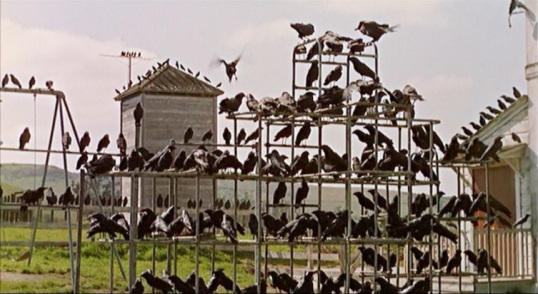
Horror Scenes that I Love: The Gas Station Attack From Alfred Hitchcock’s The Birds


Now, in all honest, it’s not just The Birds that cause chaos in this scene from Alfred Hitchcock’s 1963 film of the same name.  I will never understand why that gentleman decided that he just had to light up a cigar at that particular time.  And if he had used a lighter instead of a match, he could have prevented a lot of trouble.

That said, you do have to respect the Birds for somehow knowing that he would do exactly that and therefore, making sure that the gasoline ended up right around his feet.  Those birds are clever!

Seriously, though, this scene really creeps me out.  I think it’s because there’s so many birds and, as this scene showed, there was absolutely no way the humans on that island were going to be able to win this particular battle.

8 Shots From 8 Horror Films: The Mid 60s


4 Or More Shots From 4 Or More Films is just what it says it is, 4 shots from 4 of our favorite films. As opposed to the reviews and recaps that we usually post, 4 Shots From 4 Films lets the visuals do the talking!

This October, I’m going to be doing something a little bit different with my contribution to 4 (or more) Shots From 4 (or more) Films.  I’m going to be taking a little chronological tour of the history of horror cinema, moving from decade to decade.

Today, we take a look at the mid-60s!

8 Shots From 8 Horror Films: The Mid 60s

Black Sabbath (1963, dir by Mario Bava DP: Mario Bava)

The Birds (1963, dir by Alfred Hitchcock, DP: Robert Burks)

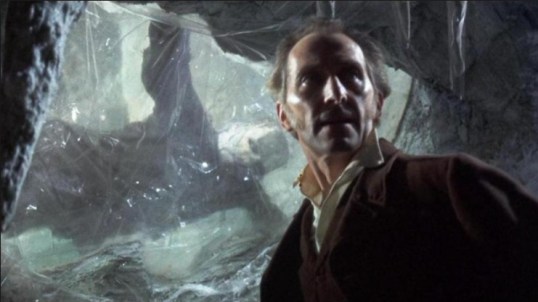
The Raven (1963, dir by Roger Corman, DP: Floyd Crosby)

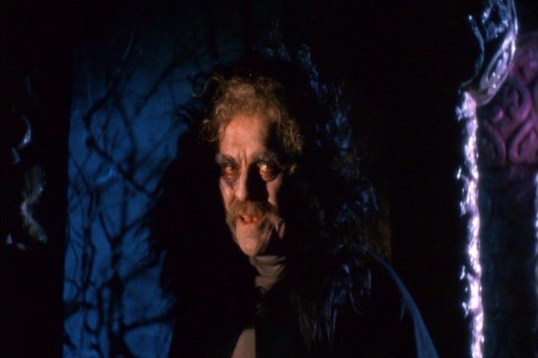
The Evil of Frankenstein (1963, dir by Freddie Francis, DP: John Wilcox)

The Masque of the Red Death (1964, dir by Roger Corman, DP: Nicolas Roeg)

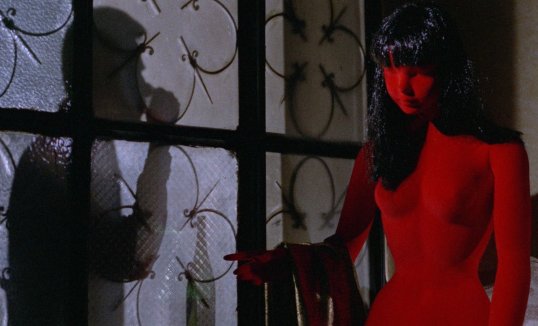
Blood and Black Lace (1964, dir by Mario Bava, DP: Mario Bava)

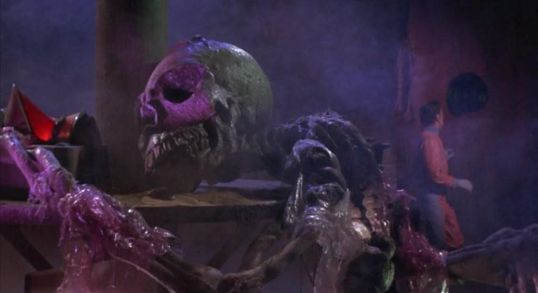
Planet of the Vampires (1965, dir by Mario Bava, DP: Antonio Rinaldi)

Rasputin The Mad Monk (1966, dir by Don Sharp, DP: Michael Reed)

Horror on the Lens: The Night Stalker (dir by John Llewelyn Moxey)


For today’s horror on the lens, we have a real treat!  (We’ll get to the tricks later…)

Long before he achieved holiday immortality by playing the father in A Christmas Story, Darren McGavin played journalist Carl Kolchak in the 1972 made-for-TV movie, The Night Stalker.  Kolchak is investigating a series of murders in Las Vegas, all of which involve victims being drained of their blood.  Kolchak thinks that the murderer might be a vampire.  Everyone else thinks that he’s crazy.

When this movie first aired, it was the highest rated made-for-TV movie of all time.  Eventually, it led to a weekly TV series in which Kolchak investigated various paranormal happenings.  Though the TV series did not last long, it’s still regularly cited as one of the most influential shows ever made.

Anyway, The Night Stalker is an effective little vampire movie and Darren McGavin gives a great performance as Carl Kolchak.

Enjoy!