Horror On TV: Tales From The Crypt 2.6 “The Thing From The Grave”


Welcome to tonight’s excursion into televised horror!

These old episodes of Tales From The Crypt are pretty fun, aren’t they?  Originally, I was planning on only showing Tales From The Crypt on Saturday, Sunday, and Monday but I’ve been enjoying the show so much that I’ve decided to add a Tuesday showing as well.

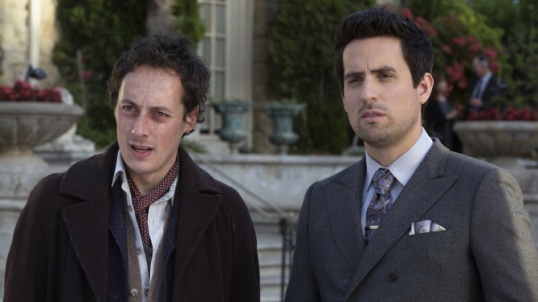
Tonight’s episode is called The Thing From The Grave and it originally aired on May 8th, 1990.  It stars Teri Hatcher as a model who falls in love with a photographer played by Kyle Secor (yes, the same Kyle Secor who went so brilliant over the top in The Purge: Election Year).  Hatcher’s boyfriend, an abusive asshole played by Miguel Ferrer, gets revenge but, since this is Tales From The Crypt, things don’t go quite the way that Ferrer intended.  Nothing can kill love, which is something that I’ve always believed!

This episode was directed by Fred Dekker, who also directed a brilliant film called Night of the Creeps, which I really should review someday.

Enjoy!

Horror On TV: Tales From the Crypt 2.2 “The Switch”


Tonight’s excursion in televised horror comes the second season of HBO’s Tale From The Crypt.  Originally broadcast on April 21st, 1990, The Switch tells the story of an elderly millionaire (William Hickey) who is desperately in love with a younger woman (Kelly Preston).  When she tells him that she’s looking for a younger man, he goes to extreme lengths to become that younger man.

The episode was directed by Arnold Schwarzenegger and features good work from both William Hickey and Kelly Preston.  And, of course, the whole story ends with a sardonic twist that, once again, reminds the viewers that the universe is just as random and meaningless as Werner Herzog says it is.

Enjoy!

Horror On TV: Tales From The Crypt 2.1 “Dead Right” (dir by Howard Deutch)


For tonight’s excursion into televised horror, we present the first episode of the 2nd season of HBO’s Tales From The Crypt!

In Dead Right, Demi Moore plays a secretary named Cathy who is told two things by a psychic.  First, she’ll lose her job.  Next, she’ll marry a man who will inherit a fortune and then violently die shortly afterward.  After losing her job, Cathy meets the grotesque Charlie (Jeffrey Tambor) and she marries him when she finds out that he comes from a wealthy family.

Of course, since this is Tales From The Crypt, there’s a twist.  The medium’s prediction turns out to be true but not quite in the way that Cathy was expecting…

Dead Right is pretty good.  Demi Moore is almost too plausible as a golddigger and Jeffrey Tambor turns Charlie into a truly memorable character, one who is both pathetic and intimidating.  And the story’s twist ending carries a properly nasty punch, as well.

Dead Right originally aired on April 21st, 1990.

Enjoy!

Horror on TV: Tales From The Crypt 1.4 “Only Sin Deep” (dir by Howard Deutch)


You may remember, from previous horrorthons, that I like to end each day in October by sharing a classic example of televised horror.  Over the previous two years, I shared several episodes of The Twilight Zone and everyone seemed to enjoy them.  I know I certainly did.

Unfortunately, I can’t do that anymore.

All of the episodes of the Twilight Zone that were on YouTube have been taken down.  Copyright infringement, they say.  And, unfortunately, Hulu is no longer allowing people to watch The Twilight Zone for free.  I can still embed Hulu videos on this site but unless you’re a subscriber, you wouldn’t be able to watch them.

Which sucks, by the way!  Seriously, I was soooooo mad when I discovered what had happened…

However, fear not!  While I may not be able to share any Twilight Zone episodes this October, it turns out that every episode of HBO’s Tales From The Crypt has been uploaded to YouTube!  And what could be more appropriate for Halloween than a little trip to the crypt?

So, with all that in mind, here’s the fourth episode of Tales From The Crypt.  It’s called Only Sin Deep and it originally aired on June 14th, 1989.  It tells the story of a prostitute named Sylvia Vane (played by Lea Thompson) who agrees to sell her beauty for $10,000 and the chance to marry a rich man.  Sylvia doesn’t take the deal seriously.  You won’t be surprised to learn that was a mistake.  Only Sin Deep is an entertaining little morality tale.  Don’t mess with karma.

(As well, I’m going to assume that the name Sylvia Vane is meant to be an homage to the name of Angela Lansbury’s character in The Picture of Dorian Gray.)

Only Sin Deep was directed by Howard Deutch, who also directed Lea Thompson in Some Kind of Wonderful.  (And, of course, he also married her.)  It was written by Fred Dekker, who directed the classic Night of the Creeps.

And yes, the story is introduced by the infamous Cryptkeeper.

Enjoy!


Scenes I Love: Band of Brothers


Band of Brothers

Band of Brothers is a 10-episode series from HBO that should be shown to every school kid across the nation.

I don’t subscribe to the notion that the youth of today have become lazy, too dependent on their electronics and don’t appreciate what the generations before have accomplished (though they’re more than willing to point out how past generations have ruined their future). Today’s generation and the generation before it grew up with cynicism when it comes to the concept of heroism and sacrifice.

They’ve more than earned that right because their government and those tasked to serve and protect them have failed often enough (though their successes in serving and protecting rarely gets mentioned). While I understand the cynicism and doubt of the current generation and the one before it, it doesn’t change the fact that most of those who lived in the so-called “Greatest Generation” did their duty with honor and tried to make the country prosperous for the generations to come.

That’s why the scene which affected me the most from Band of Brothers wasn’t one of combat, the quiet solitude before battle or the camaraderie exhibited by those who served and fought together for what they thought and believed to be a just cause. No, the scene which hit me the most closed out the series and comes from Maj. Richard Winters. He quotes a passage from a letter he received from one of his men through the years. The letter was from Mike Ranney and in it were words that best signifies why we celebrate Memorial Day and why we should continue to honor and pay respect to this “Greatest Generation” who are gradually leaving us for good.

And now a political endorsement from Lisa Marie…


Normally, I don’t get political on this site.  But I think New Hampshire deserves a congressman of whom it can be proud.

2015 In Review: 16 Good Things I Saw On Television


Last night, as I was trying to write up my annual list of the good things that I saw on TV during the previous year, I realized that I was struggling a bit to come up with enough entries to justify doing a list.  The more I thought about it, the more apparent it became that I watched a lot less TV than usual last year.

(Though I did manage to watch a lot of Lifetime movies…)

Furthermore, when I do think about what I saw on television last year, a lot of my memories deal with being annoyed.  I find myself fixating on those terrible Liberty Mutual Insurance Commercials and that stupid advertisement where they wouldn’t stop saying, “The Tobin Stance…” and especially that Taco Bell commercial with those horrible hipsters, Mary and Dominic, talking about how much they love breakfast tacos.

BLEH!

But, that said, there were still a few things worth praising!  (Hope is never totally lost…)  And here they are in no particular order:

1) South Park Had One Of Its Greatest Seasons Ever!

Seriously, 2015 saw South Park have one of its greatest seasons ever.  Trey and Matt took on the excesses of PC Culture and ended up providing one of the most important and incisive critiques of 21st Century America ever.  At a time when political and cultural criticism is growing increasingly dreary and predictable, South Park delivered a much-needed jolt to the system and reminded of us why satire and humor are so important in the first place.  Perhaps the best part of this season was watching dreary PC-obsessed critics desperately trying to figure out how to praise this season without acknowledging that they were the ones being satirized.

2) UnReal

One of the best shows on television premiered on the Lifetime network.  UnReal took us behind the scenes of a Bachelor-type series and provided the ultimate take down of reality television.  I love reality TV but I loved UnReal even more.

Enjoy Jacksonville, Ash.

3) Ash vs. Evil Dead

Save us, Groovy Bruce!

4) Agent Carter

Agent Carter didn’t get as much attention as it deserved during its 8-episode short season.  I loved the show’s retro look, I loved the way it satirized 40s style sexism, I loved the dashing Dominic Cooper as Iron Man’s father, and most of all, I loved Hayley Atwell as Peggy Carter!  The overrated Supergirl has been getting a lot of attention as an empowering comic book show but honestly, Agent Carter did it first, did it with style and wit, and did it a 100 times better.

5) Show Me A Hero

At times, this HBO miniseries was a bit too heavy-handed for my taste.  But overall, it was a fascinating look at municipal politics and racism up north.  (Yes, there are racists up north, as much as people refuse to admit it.)  Plus, Oscar Isaac gave a great performance as an initially idealistic politician who is literally destroyed by his attempt to do the right thing.

6) Unbreakable Kimmy Schmidt

HBO pretty much fell apart this year (The Brink?  Ballers?) but, fortunately, Netflix was there to offer up some of the best original programming of the year.  Kimmy Schmidt is brilliantly hilarious and gives Elle Kemper a role that is finally worthy of her talents.

Jessica Jones

7) Jessica Jones

Again, who needs Supergirl when you’ve got Jessica Jones?

8) Glenn lived on The Walking Dead!

Actually, I don’t know if that’s a good thing or a bad thing.  To be honest, having Glenn survive that zombie attack totally goes against everything that The Walking Dead previously stood for.  After all, this was the show where anyone could die.  It didn’t matter if you were likable or popular or if the sight of you being ripped into pieces would traumatize the viewers.  Under the previously established rules of the show, Glenn should have died.  And yet, he didn’t.  And I can’t complain because, seriously — was anyone really ready to see Glenn die?  That said, if Glenn somehow escapes certain death a second time, it’ll be a problem.

Degrassi_Season_13_title_card

9) Degrassi Was Picked Up By Netflix!

Oh my God, I was so upset when I heard that my beloved Degrassi would no longer be airing on TeenNick.  I’ve always said that the day when there were no more episodes of Degrassi would be the day that I would finally have to admit to being an adult.  Fortunately, Netflix picked up Degrassi so I got to put off adulthood for at least another year.

10) More Old People TV Networks

I’m a history nerd so I love all of these TV networks that only show reruns of old people TV shows.  I may never get to personally experience what it was like to be alive in the 1970s but I can a rerun on an Old People TV Network and get a taste.  And happily, it seems like there’s a new Old People TV network every day!  Seriously, I’m getting quite an education.

shock

11) Mario Bava and Lucio Fulci on TCM

Last year, they showed both Shock and The House By The Cemetery on TCM!  Finally, Bava and Fulci are getting the respect they deserve.  Now, if only TCM would show a Jean Rollin film…

12) Speaking of TCM…

Actually, I just love TCM in general.  It’s without a doubt the greatest thing in the world!

13) Debate Counter-Programming

Seriously, I am so happy that there is always something else for me to watch while everyone else in the world is watching a Presidential debate.  My main fear is that, in the future, all of the networks will decide to simultaneously air the debates (like they occasionally do with charity fund raisers) and there will be no escape from the droning emptiness of it all.

(Seriously, I could imagine them doing it.  “These debates are damn important…”  Whatever.)

14) One of my tweets appeared on TV!

Seriously that was pretty neat, even if I did turn out to be 100% incorrect in my prediction.

B-e7UMLIUAA9a7V

15) I trashed The Leisure Class and sent at least one troll into a rage spiral!

Seriously, never underestimate how much some people love the unlovable!  My oddly controversial review of the Project Greenlight film really rubbed some people the wrong way.  That some people felt so strongly about it is both alarming and amusing.

16) Dancing Sharks at The Super Bowl!

That was in 2015, wasn’t it?

Dance, Shark, dance!

Dance, Shark, dance!

Tomorrow, I’ll continue my look back at 2015 with my ten favorite non-fiction books of the year!

Previous Entries In The Best of 2015:

  1. Valerie Troutman’s 25 Best, Worst, and Gems I Saw in 2015
  2. Necromoonyeti’s Top 15 Metal Albums of 2015
  3. 2015 In Review: The Best of SyFy
  4. 2015 in Review: The Best of Lifetime
  5. 2015 In Review: Lisa’s Picks For The 16 Worst Films of 2015
  6. 2015 in Review: Lisa Marie’s 10 Favorite Songs of 2015
 

So, I watched The Leisure Class…


leisureclasspic

Well, it had to happen sometime.

After 8 weeks of showing us how the film was made, HBO finally had to broadcast the latest Project Greenlight film.  Over the course of the series, we’ve watched the seemingly humorless director Jason Mann struggle to maintain his “artistic vision” while directing his first feature film, The Leisure Class.  We watched as he fought for and won the right to shoot on film.  We wondered if Jason would be able to pull off the film’s big stunt.  Even more importantly, we watched because we were hooked on the hostility between Jason and the film’s producer, Effie Brown.  Jason resented having to answer to Effie.  Effie resented having to work on something like The Leisure Class.  For 8 weeks, viewers were either Team Jason or Team Effie.

And through it all, we wondered — was The Leisure Class any good?

From the minute that Jason was named as The Leisure Class‘s director, I had my doubts.  A comedic sensibility is something that you either have or you don’t.  At first glance, there was nothing about Jason that suggested he even had a sense of humor.  Once filming started, nothing that we were shown looked all that promising.  The film’s trailer felt more frantic than anything else and I slowly found myself dreading the prospect of sitting through The Leisure Class.

But sit through it I did and … well, it was bad.  Unfortunately, it really wasn’t bad enough to be enjoyable.  Instead, it was just a bland misfire.  If the film was interesting, it was because I related each scene to what I had previously seen on Project Greenlight.  Wow, I thought, Effie sure was mad when they were shooting this scene.  A few minutes later: Is this the scene that Jason was worried would be underlit?  And then later: This is the scene where Bruce Davison wasn’t sure whether he should say pricks or dicks!  I’m glad they were able to make a final decision…

As for the film itself — well, how do you describe the plot of a film that really didn’t seem to have a storyline?  Charles (Ed Weeks) is actually William, a British con artist.  He is about to marry Fiona (Bridget Regan), the daughter of Sen. Langston (Bruce Davison).  At first, Charles was just planning on stealing Langston’s money but now he’s fallen in love with Fiona.  The day before the wedding, Charles’s alcoholic brother, Leonard (Tom Bell), shows up at the Langston estate.  He pretends to be Charles’s best friend.  And then, Leonard gets drunk and encourages a bunch of teenagers to skinny dip.  And then there’s the car accident.  (This is the big stunt that Jason was so concerned with.)  And then Sen. Langston gets drunk and there’s this amazingly ugly scene where he says a lot of nasty things to his wife and his daughters.  And then Langston nearly murders Charles and Leonard but Fiona ends up pulling a gun on him.  And then the next morning, Leonard draws on Langston’s face.  There’s also a prostitute, named Carla (Christina Lakin), who shows up for no reason but at least she gets a few funny lines.  The film doesn’t add up too much, with none of the characters or their actions making much sense.  The script feels like a first draft and, even at only 80 minutes, the movie seems to be way too long.

The overriding theme of Project Greenlight‘s fourth season has been that Jason has gotten nearly everything that he wanted while shooting his film.  Personally, it wouldn’t surprise me to discover that this season was pretty much edited to cast Jason in as negative a light as possible.  (Otherwise, the HBO execs would have to take responsibility of the train wreck that is The Leisure Class.)  Still, it’s impossible to deny that Jason fought a lot of battles and that none of them seem to have made much difference as far as the end product is concerned.

Jason fought to shoot The Leisure Class on film, as opposed to going digital.  He even turned down extra shooting days so that he could get film.  But visually, The Leisure Class is flat and boring.  It may have been shot on film but it still looks like a single camera sitcom.  (In fact, it’s hard not to feel that the film could have been improved if it had taken an Office or Modern Family mockumentary approach.  At least that way, the characters could have explained their often confusing motivation.)

Jason got the cast that he wanted but that cast is let down by a poorly conceived script.  All of the characters are so one-dimensional that it’s doubtful that there’s much anyone in the cast could have done to make them interesting.  I like both Ed Weeks and Tom Bell but the film let both of them down.  Meanwhile, Bruce Davison is reduced to bellowing out his lines.

Jason fought to find the perfect location and spent a lot of time talking about how the Langston estate was almost as important as the characters.  The house looks gorgeous but the film is directed in such a haphazard manner that you never really get to appreciate it.  For a director who spent so much time obsessing over minutiae, Jason’s film is unique for its total lack of interesting detail.

Let’s not forget — when the season began, Jason was selected to direct a broad comedy called Not Another Pretty Woman.  Jason is the one who suggested making The Leisure Class instead.  That said, I have a hard time believing, as some have suggested on twitter, that Not Another Pretty Woman would have been much of an improvement.

Ultimately, Jason seems to be an okay technical director.  He knows how to light a scene.  He understands the importance of moving the camera.  I imagine he could probably spend hours explaining why he chose to use a certain type of lens.  Unfortunately, there’s not a single scene in The Leisure Class that feels spontaneous.  There’s no humanity to the characters.  It’s a cold movie that feels more like a student film than anything else.

From what I’ve read, it appears that there will be at least one more season of Project Greenlight.  And I’m happy to hear that because the show makes for good drama.  I just wish that it would occasionally make for a good movie.

Guilty Pleasure No. 26: Project Greenlight


ProjectGreenlight640

Project Greenlight may be the most guiltiest pleasure to be found on television right now.

The show, which is currently airing its fourth season on HBO, was one of the earliest reality shows.  The concept behind the show is deceptively simple.  Every season, Ben Affleck and Matt Damon have held an online competition for aspiring filmmakers.  The winner of the contest gets to direct a feature film, with the understanding that there will be TV cameras present to record every decision, argument, and screw up.  At the end of the season, the film is released and hopefully, a major new filmmaker is discovered.

The pleasure part is obvious.  If you’re like me and you love movies, there’s no way you can’t be fascinated by the chance to go behind-the-scenes of an actual production.  It’s always fun to watch as the director struggles to maintain his (so far, all of the directors have been male) vision against the whims of studio execs who, often time, seem to be annoyed by the director’s very existence.

As for me, I’ve always been fascinated by the casting process.  (Don’t believe me?  Check out this post that I wrote about The Godfather.  And then check out this one too!)  My favorite part of Project Greenlight is always the episode that deals with the casting.  I love seeing who auditions, who gets turned down, and who decides that they want nothing to do with the film.  It’s a lot of fun!

As for the guilty part of this guilty pleasure, it comes from knowing that a show like this thrives on conflict.  As much as Ben and Matt may say that they are only interested in selecting the most talented director, it’s also obvious that the director they pick has to make for good television.  If production on the film goes smoothly, that’s good for the film but it’s not necessarily good for the show.  That’s just the truth when it comes to reality television.

Hence, watching Project Greenlight always leads to conflicting emotions.  On the one hand, you want the movie to turn out to be a good movie.  You want the director to be up to the task.  On the other hand, you’re specifically watching this show to watch the director screw up and make mistakes and piss people off and get into fights.  Gossip lovers that we are, we love the behind the scenes drama but it’s rare that drama actually leads to a good film.

Check out Project Greenlight‘s track record.

Season 1 started way back in 2001!  (Both this season and season 2 are available on DVD and I recommend checking out both of them.)  The winner was Pete Jones, a friendly nonentity who went on to direct the extremely forgettable Stolen Summer.  There was a lot of behind-the-scenes conflict, mostly due to a clash of personality between certain members of the crew.  From the minute the season started, it was obvious that Pete was a nice guy but essentially in over his head.  And, in many ways, Season 1 taught viewers an important lesson: when it comes to the film industry, nice guys get screwed.

However, as chaotic as season 1 may have been, it was nothing compared to what happened in 2003 when season 2 aired!  Whenever anyone wants to make the argument that Ben and Matt purposefully pick directors who are totally wrong for whatever film is being made, they usually point to season 2.  Season 2 featured the directing team of Kyle Rankin and Efram Potelle directing The Battle of Shaker Heights.  The Battle of Shaker Heights was supposed to be a quirky coming-of-age dramedy and a character study, so, of course, Ben and Matt selected two directors who were apparently incapable of human emotion.  And the end result was pure chaos!

Now, I will say a few things in Kyle and Efram’s defense.  When you watch season 2, the overriding theme is that these two directors totally ruined a great script.  Just in case we missed that, the show even featured screenwriter Erica Beeney complaining that these two directors were totally ruining her great script.  Well, sorry — the script for Battle of Shaker Heights was never that good to begin with.  (“It’s about this kid — Kelly — who is really pissed off,” Erica would tell us at the beginning of every episode, as if she was the first person to ever write about a kid who was really pissed off.)  I doubt anyone could have made a good movie out of that script.  Picking two directors who were so totally wrong for the material only served to compound the inherent suckiness of the material.

Season 2 has got a true train wreck appeal to it.  It’s one of those things that you watch with horrified fascination.  (Incidentally, Shia LaBeouf is heavily featured in season 2 and I have to say that he fits right in.)

The third season of Project Greenlight aired in 2005.  It was broadcast on Bravo and it’s unique in that it actually featured a good director (John Gulager) making a reasonably successful film (Feast).  As such, it doesn’t quite work as a guilty pleasure because, from the minute Gulager starts directing, you don’t feel any guilt about watching him.  Instead, the most interesting part of the third season comes early on when a bitchy casting director continually tries (and succeeds) at sabotaging Gulager’s attempts to get a cast with whom he feels comfortable.

(Season 3 has never been released on DVD but, the last time I checked, it was available on YouTube.)

After that third season, Project Greenlight went away for a while but now, 10 years later, it’s back!  It has returned to HBO and, after three episodes, it’s starting to look like this season may be the guiltiest and most pleasurable of all!  Ben and Matt were producing a comedy called Not Another Pretty Woman this time around.  (Pete Jones even returned to write the script.)  Not Another Pretty Woman has been described as being a broad comedy.  So, of course, they selected Jason Mann, an extremely intense elitist film snob.  One of the first things that Jason Mann did was try to fire Pete Jones and replace him with the screenwriter of that well-known comedy, Boys Don’t Cry.  When that didn’t work, Mann abandoned Not Another Pretty Woman and instead requested to make a film called The Leisure Class instead.  And, amazingly enough, he got HBO Films to agree, which means that either nobody had any faith in Pete Jones or everyone has total faith in Jason Mann!

Will that faith be rewarded or will The Leisure Class be another Battle of Shaker Heights?  Will Jason Mann be another John Gulager or will he fade into the same obscurity in which Efram Potelle and Kyle Rankin currently reside?

As of right now, I don’t know.

But I can’t wait to find out!

photo

Previous Guilty Pleasures

  1. Half-Baked
  2. Save The Last Dance
  3. Every Rose Has Its Thorns
  4. The Jeremy Kyle Show
  5. Invasion USA
  6. The Golden Child
  7. Final Destination 2
  8. Paparazzi
  9. The Principal
  10. The Substitute
  11. Terror In The Family
  12. Pandorum
  13. Lambada
  14. Fear
  15. Cocktail
  16. Keep Off The Grass
  17. Girls, Girls, Girls
  18. Class
  19. Tart
  20. King Kong vs. Godzilla
  21. Hawk the Slayer
  22. Battle Beyond the Stars
  23. Meridian
  24. Walk of Shame
  25. From Justin To Kelly

Film Review: Going Clear: Scientology and The Prison of Belief (dir by Alex Gibney)


tom cruise 2-1

Going Clear: Scientology and the Prison of Belief is one of the most genuinely creepy documentaries that I’ve ever seen.

Going Clear, which premiered on HBO earlier tonight, created a stir at Sundance earlier this year.  Based on a book by journalist Lawrence Wright and directed by veteran and award-winning documentarian Alex Gibney, Going Clear is both a history and an expose of the notoriously secretive church of Scientology.  Featuring interviews with 8 former members of the church (including actor Jason Beghe and Crash director Paul Haggis), there’s a lot of information to be found in Going Clear but most reviews seem to concentrate on the picture that the documentary paints of two of Scientology’s top celebrity adherents, John Travolta and Tom Cruise.

And yes, there is a lot of speculation and, in Cruise’s case, accusations about the two men to be found in Going Clear.  But, honestly, Going Clear is about a lot more than just celebrity gossip.  Ultimately, it’s a disturbing portrait of a cult that uses the facade of glamour to hide a culture of abuse, exploitation, and paranoia.  It’s easy to laugh at Scientology because, by this point, we all know about evil lord Xenu and we’ve all seen that South Park episode.  We’ve seen The Master, which featured Philip Seymour Hoffman as an almost likable charlatan.  Going Clear, however, makes a very convincing case that Scientology may be silly but it’s also nothing to laugh about.

The film opens with the story of L. Ron Hubbard, who is portrayed as being a pathological liar who channeled his need to tell stories into a prolific career as a pulp novelist.  We hear an intriguing story about Hubbard’s brief friendship with occultist and scientist Jack Parsons.  When Hubbard writes a self-help book called Dianetics, a mix of pseudo-science and pseudo-psychology, he launches the movement that will eventually become known as Scientology.

And, for the first 40 minutes of this film, it’s still easy to be rather dismissive of Hubbard.  When he’s seen in archival footage, he’s a ludicrous but deceptively non-threatening figure, a con artist who got lucky.  In fact, when he first appeared and started talking about his “beliefs,” my first reaction was to marvel at how perfectly Philip Seymour Hoffman captured Hubbard’s voice and mannerisms.

But, as Hubbard attracted more and more followers and became more and more powerful, it became apparent that Hubbard was much more than just a flamboyant con artist.  We hear about how he grew increasingly paranoid.  We hear about how schemed to destroy his enemies and just how easy it was to become one of those enemies.  We hear how he eventually retreated onto a boat where his followers obeyed his every whim.  Worst of all, we hear about how he kidnapped his youngest child and then taunted his wife by telling her (falsely) that he had the child killed and cut into little pieces.

Perhaps one of the creepiest scenes in the film is when Scientology’s second-in-command, David Miscavige, is seen announcing the 1987 death of L. Ron Hubbard.  Dressed in what looks like a military uniform and speaking in perhaps the smarmiest tones ever, Miscavige announces that Hubbard has gone on to another state of being and then salutes a rather ludicrous picture of Hubbard dressed like an admiral.  If Going Clear portrays Hubbard as being mentally ill, the portrait that emerges of Miscavige is far more disturbing.

Indeed, the film can be split into two parts.  If the first part is about Hubbard’s Scientology, the second part is about the organization under the direction of David Miscavige.  The majority of the people interviewed in the film were members under David Miscavige and all of them tell stories about a greedy and secretive organization that uses its tax-exempt status to essentially act outside the law.  Stories are told of mental mind games, physical abuse, and constant harassment.  In one of the documentary’s most haunting scenes, Sylvia Taylor (who was John Travolta’s former publicist) tells how she was forcefully separated from her baby and sent to work in a forced labor camp.

But, as disturbing as the interviews may be, the actual footage of David Miscavige himself is almost as unsettling.  Though Miscavige, Travolta, and Cruise all refused to be interviewed by the film, Going Clear is full of archival footage.  We see Miscavige speaking at a series of Nuremberg-style rallies and we listen as Miscavige give speeches that could just as easily pass for a Joel Osteen sermon.  When Miscavige announces that the IRS has recognized Scientology as a religion, he does so at a rally and finishes by reminding the huge and well-dressed crowd that their donations will now be tax-deductible. We see Scientology recruitment videos, which all feature clean-cut white kids with permanent and robotic smiles across their faces.   Much like the earlier footage of Hubbard, it would be silly if it wasn’t for what we know about the organization.

One reoccurring theme to be found in Going Clear is just how much Scientology values and exploits celebrity.  Yes, the film does explore Scientology’s relationship with both John Travolta and Tom Cruise.  The film goes so far as to portray Travolta as essentially being a prisoner of Scientology blackmail, a high-profile hostage who will never leave the church because the church knows too much about his private life.

And while it’s hard not to feel some sympathy for Travolta, it’s far more difficult to feel sorry for Tom Cruise.  Before I saw Going Clear, I always assumed that Cruise was just another actor with a strange belief.   In Going Clear, however, Tom Cruise is portrayed as being a knowing participant in Scientology’s abuses.  As Scientology’s most famous member, Cruise is waited on hand-and-foot by adherents who, we’re told, make 30 cents an hour.

Much like David Miscavige, Cruise refused to be interviewed for the documentary but he’s ultimately undone by archival footage.  We watch Cruise salute both Miscavige and a portrait of Hubbard.  We watch him give a self-congratulatory speech that sounds just as smarmy as anything we’ve heard from Miscavige.  Perhaps worst of all, as far as Cruise’s credibility is concerned, we watch a video of Cruise vacantly laughing as he explains what Scientology means to him.

(What’s ironic, of course, is that for all the extra benefits that Cruise gets as a Scientologist, it’s pretty much destroyed his career.  Edge of Tomorrow was one of the best movies of 2014 but, at this point, who wants to spend two hours with a Scientologist?)

The film ends with a look at how Scientology deals with people who leave the church.  All 8 of the film’s interview subjects have chosen to leave the church and all 8 of them have been harassed and threatened as a result.  And, whenever one is tempted to laugh off the craziness of Scientology, they should remember the footage of several Scientologist thugs conducting a surveillance operation on the house and family of a former member.

A portrait of abuse, brainwashing, and greed, Going Clear is a documentary that everyone should see.