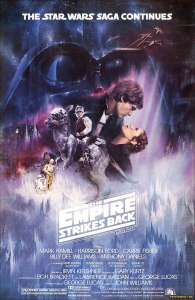
Sci-Fi Review: The Empire Strikes Back (dir. by Irvin Kershner)


empire_strikes_back_style_aThe Year was 1980.

Though three years had passed since A New Hope’s release, it was never truly gone. In the time between A New Hope and The Empire Strikes Back, there was a huge jump in Science Fiction. Films like Alien, Star Trek: The Motion Picture and  The Black Hole jumped on the sci-fi wave and kept audiences busy. If you didn’t want to go to the movies, you could always watch the original Battlestar Galactica.

My father was always a stickler for presentation when it came to movies. It had to be the biggest screen and the best sound available, if possible. My parents took my brother and I on what felt like one of the longest road trips to see the movie. Like Close Encounters of the Third Kind, some films were presented in a 70MM format. In the early 80’s, saying “Panavision” was like saying “IMAX” today. The only problem with this was that Dad decided we should sit like 3 rows from the screen. It remains one of my favorite Star Wars related experiences.

There was a bit of a scare before the film was made. Sometime before production, Mark Hamill was involved in a car accident that broke his nose and part of his cheek. The reconstructive surgery required part of his ear to fix his nose, and anyone watching the film could tell that he looked pretty different from A New Hope. It was like watching Nicole Kidman in Moulin Rouge and then following that with The Stepford Wives. Still, the accident didn’t get in the way of production and it’s believed that Hamill’s damaged look may have actually helped add some authenticity to the Wampa scene, where he’s attacked by a Yeti-looking creature.

If A New Hope was the feel good movie of the year, with heroes winning the day, then The Empire Strikes Back was a downer of a film. Everyone you rooted for in the first film is made to face a challenge that completely knocks them down a peg. It’s almost a perfect middle part to any trilogy. There’s an improvement in nearly every part of the process in the movie, despite the fact that George Lucas didn’t have the directorial duties. It’s as if most of the money earned from A New Hope was moved to ILM’s R&D department. The sound and visual effects have improved, thanks to better blue screen work and recording equipment and the rotoscoping for the lightsabers is sharper. John Williams was brought back to score the film, which features a new theme both for the Empire, Yoda and Han & Leia’s love story.

https://www.youtube.com/watch?v=KvJDItC6tE0

From a writing standpoint, The Empire Strikes Back serves as the best example of Lucas getting out of the way. Though the story is his, the screenplay was written by both Leigh Brackett and Lawrence Kasdan. Between the two of them and director Irwin Kershner’s input, Empire has the tightest characterization of all the films (in my opinion). We’re given a love story that’s both subtle and believable, a villain worth hating without being overly campy, and a hero who discovers that as good as he believes himself to be, he still has much to learn. There’s also an element of comedy peppered throughout, with James Earl Jones and Harrison Ford getting some of the best lines and/or moments. New characters are introduced in the form of Jedi Master Yoda (Frank Oz), Lando Calrissian (Billy Dee Williams), Emperor Palpatine (Ian McDiarmid) and Boba Fett (Played by Jeremy Bulloch and voiced by Jason Wingreen. On a trivia side note, Frank Oz and George Lucas would reunite some years later in Jim Henson’s Labyrinth, produced by Lucas.

The film opens with the Empire sending out probes to locate the rebel forces. There a focus on the Rebellion, stationed on the icy planet of Hoth. The audience is allowed to catch up on our heroes. Luke Skywalker is slowly learning the ways of the Force and is coming into his own. Han Solo and Chewbacca remain his friends and have stayed behind, rather than choosing to leave. Both gentlemen have an awkward approach towards Princess Leia, who continues to lead the Alliance. When Han and Chewie stumble on one of the Empire’s droids, it’s clear they’re going to have to be ready for battle.

The audience is brought back to the Empire’s viewpoint with a grand introduction to former henchman turned major villian, Lord Darth Vader. Seeing as he survived the attack on the first death star (and no one challenged him) he saw fit to give himself a promotion. With the promotion came some perks, including a super Star Destroyer complete with his own little pod chamber. Vader begins a relentless assault on the rebel troops in his search for Luke, who he’s recognized as having some Force abilities. This turns out to be Vader’s one big mistake. While his attentions are focused on the Millenium Falcon, Luke travels to the planet Dagobah to see out Master Yoda. As this was some time before CGI, the original Yoda was more or less a Muppet. Mind you, this was probably a shock to a many viewers. Obi-Wan was good, but this little green fellow was a Jedi? How did that even happen? Still, he was awesome. Through Yoda, Luke gains more skill with the force, but he leaves before he can finish.

The battle itself is an air to ground one, with giant walking tanks (AT-AT’s) on the Empire’s side and Snowspeeders for the rebels. While it’s a great fight, the Rebels are forced to escape their home, looking more like the Quarian Migrant Fleet in Mass Effect by the end of the film. The scene is a great example of how the technology in the Star Wars universe has grown. New ships such as the Tie Bomber also made an appearance. For each film in the series, you’re introduced to some new vehicle and/or weapon. One can only hope that with The Force Awakens, we’ll see more than just Tie Fighters and X-Wings.

Vader eventually catches up with Solo and the Princess by way of Boba Fett, a Mandalorian Bounty Hunter working for Jabba the Hutt. Cinema audiences still wouldn’t see Jabba until 1983’s Return of the Jedi, but it was a good foreshadowing. Under the impression they’ve escaped the Empire, Han & Leia head over to the Cloud City at Bespin, where Han is reunited with his old friend Lando Calrissian. Here we gain a bit of backstory on how Solo acquired the Falcon. It all seems a little too perfect and safe until we all discover that the bad guys (yet again) have the drop on our heroes.

https://www.youtube.com/watch?v=wxdLYWnSzpI

Solo is tortured, along with the rest of the friends in an effort to lure Luke to Bespin. The Empire uses the Cloud City’s carbonite system on Solo as a test (considering that the process could kill him) for when Skywalker arrives. This results in one of the best one liners in the original trilogy, as well as one of the saddest scenes. Five year old me cried so much, this film was just depressing at every turn.

https://www.youtube.com/watch?v=qND0aIXOLbw

With the stage set for the showdown between Luke and Vader, the Lightsaber battle was cut between the escape of Leia, Chewie and Lando, who takes the place of Han as the Millenium Falcon’s pilot. The fight is slow compared to the prequels, but Vader is his best here, easily besting Luke with one hand at the start while trying to seduce him to the Dark Side of the Force. It’s a beautifully lit sequence by cinematographer Peter Suschitzky that would end with a revelation that would leave audiences questioning the film for the 3 years leading up to Return of the Jedi. Luke is able to escape Vader, but given the knowledge that he could be his father, everything changes for him from a character standpoint. Why did Obi-Wan lie to him about it? Can he, knowing Vader is his father, kill him? Should he, even?  Granted, as anyone who’s seen Pitch Perfect knows (or anyone who’s studied basic German), Vader means Father in German. How he didn’t see that coming is beyond me. Then again, when I first saw the film it was news to me, too.

So, there you have The Empire Strikes Back, easily the best film in the entire Star Wars saga. It’s proof that a Star Wars film can be made without Lucas controlling every aspect of it – though it should be noted that as Executive Producer, he was on hand in just about every other scene. We’ll around out our Star Wars coverage on the Eve of The Force Awakens’ release with Return of the Jedi.
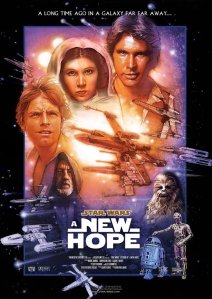
Sci-Fi Review – Star Wars: Episode IV – A New Hope (dir. by George Lucas)


newhopemain

Before I start, a quick apology. This isn’t a great review by any means. One, I rushed it. Two, In writing about a film that everyone knows, I found I had problem figuring out exactly what to say. What you’re getting here is a stream of consciousness. The Empire Strikes Back review will be better.

In anticipation of The Force Awakens, the Shattered Lens are taking on the other films in the Star Wars Saga. It’s next to impossible for anyone to avoid seeing anything related to the new film as the fever grows and we reach the December 18th release date.

There are a few movies where I wish I could’ve been there during their theatrical release. How great would it be to see audiences squirm during Ridley Scott’s Alien, Steven Spielberg’s Jaws or William Friedkin’s The Exorcist? I was a little too young to see the original Star Wars when it premiered in May of 1977, but I can’t imagine it wasn’t amazing. I wouldn’t be familiar with the films until 1980’s The Empire Strikes Back. That was the film I saw first. Then Star Wars on VHS and finally Return of the Jedi in the cinema when I was 9.

Still, I grew up knowing what Star Wars was before I could really read. Thanks to an older brother who was enthralled with the film at 7, there were Star Wars curtains in our room and Star Wars bedsheets/blankets. We had action figures and models to play with. Since LED’s in toys weren’t the norm, our lightsabers consisted of whiffle-bat plastic rods with cuts in them. Swing the sword a bit and you’d hear the “hum” of the blade. It was an awesome time.

Years later, when my little brother was born in the mid-1980’s, we kept him occupied with movies. Once he learned what Star Wars was, it was almost always the film he’d pick out to watch. I took him with me to catch all three of the Prequels during late night runs. We’d spend the wait with our own lightsabers, re-enacting Episode I fights or just talking about what we hoped we’d see. Earlier this year, during my last visit to my friends in Oregon, I was able to introduce a new generation to the magic of it all.

All of that is me, gushing over one of my favorite set of films. You have my sympathies.

So, how did a little sci-fi film in the late 70s manage to become such a pop culture beacon today? Was it the special effects, so ground breaking that we still use its techniques (such as the Green Screen)? Was it the sound design? The cast, perhaps, made up of a mix of relative unknowns and seasoned film veterans?

I’d argue that the film’s biggest success is the overall impact in the Motion Picture industry. Lucas and the production team were forced to make some innovations to get the vision they wanted. To that end, Industrial Light & Magic was created, and the effects studio pioneered special effects for years to come. Pixar wouldn’t have happened without Star Wars and ILM, since they were just a branch of the company that Lucas couldn’t quite find a use for, supposedly. The best comparison I can make for anyone unfamiliar with ILM is Weta Digital and the Lord of the Rings Trilogy. You know when you watched those three films, you were seeing effects that everyone would want to use down the road. That’s just my view. The ties to classic myths were also strong, as Lucas was heavily influenced by Joseph Campbell. Campbell’s Hero Journey is basically the template used for A New Hope (and for The Matrix by the Wachowski’s, if you watch them side by side). Ben Burtt would go on to win a special award for Sound Effects in the film. His work would eventually end up being the backbone of Skywalker Sound.

From a casting standpoint, most of the principals were relative unknowns at the time. Lucas worked with Harrison Ford on American Graffiti some years before. Mark Hamill was brought on board after auditioning at the behest of his friend, Robert Englund (which I found out during writing this). Carrie Fisher loved the script and was also cast as Princess Leia. For some added weight, Lucas managed to cast both Sir Alec Guinness and Peter Cushing. I’m still not entirely certain of how he pulled that off.

Star Wars (or A New Hope as I’ll refer to it) takes place 30 years after the events of Revenge of the Sith. The Galactic Empire is in control over everything, the Jedi are no more. It’s a near complete victory, save for the fact that the plans for the Empire’s greatest weapon were stolen. When a Star Destroyer intercepts a Rebel Cruiser with Princess Leia Organa (Carrie Fisher) on board, she’s captured for interrogation. This is, of course, after she sneaks the plans for the Death Star in her trust R2 Unit, R2-D2 (Kenny Baker). R2, along with his companion C-3PO (Anthony Daniels) manage to escape the Star Destroyer and land on the desert planet of Tatooine.

The Droids are discovered by Jawas and are then sold to Owen Lars, his wife Beru and their nephew, Luke Skywalker. Luke wants to join up with the Alliance and become a starfighter, but the family needs him on the farm. After stumbling on to the message the Princess hid in R2-D2, he looks for his old friend, Ben Kenobi (Alec Guinness), who turns out to be more than what he seems.

In order to get to the Princess, they need someone to get them there. This is where the coolest character in the entire series appears. For a price, Han Solo (Harrison Ford) and his buddy Chewbacca (Peter Mayhew) take Ben and Luke in their spaceship, the Millenium Falcon to search for her. They get captured by the Empire, practically stumble upon the princess and she rescues them by way of a garbage chute. They get the plans, escape the Death Star and collaborate on a rebel assault to destroy it before it can do more harm. That’s the bulk of it, though admittedly, I’m leaving a lot out. It’s a simple tale, but an effective one as well.

Overall, A New Hope is still the template for a lot of Sci-Fi films. Battles in space, a little bit of swashbuckling, and some humor here and there are all elements borrowed by many films and games since it was released. Some handle Sci-Fi better (Mass Effect, Dune) and others fail in comparison (Jupiter Ascending, anyone?), but most modern works pay some homage to Star Wars in a way.

Tomorrow, we take a look at The Empire Strikes Back, arguably the best story in the Star Wars saga.


Sci-Fi Review: The Star Wars Holiday Special (1978, dir. Steve Binder & David Acomba)


vlcsnap-2015-12-12-17h12m50s880

Here I am, glass of soda in hand and Christmas Time (Don’t Let The Bells End) by The Darkness playing while I write about The Star Wars Holiday Special. Didn’t I go to college or something? I have a paper on my wall signed by Schwarzenegger that says I did. Oh, well. Let’s talk about this thing. The special begins and it’s already showing me something sad.

vlcsnap-2015-12-12-17h11m34s712

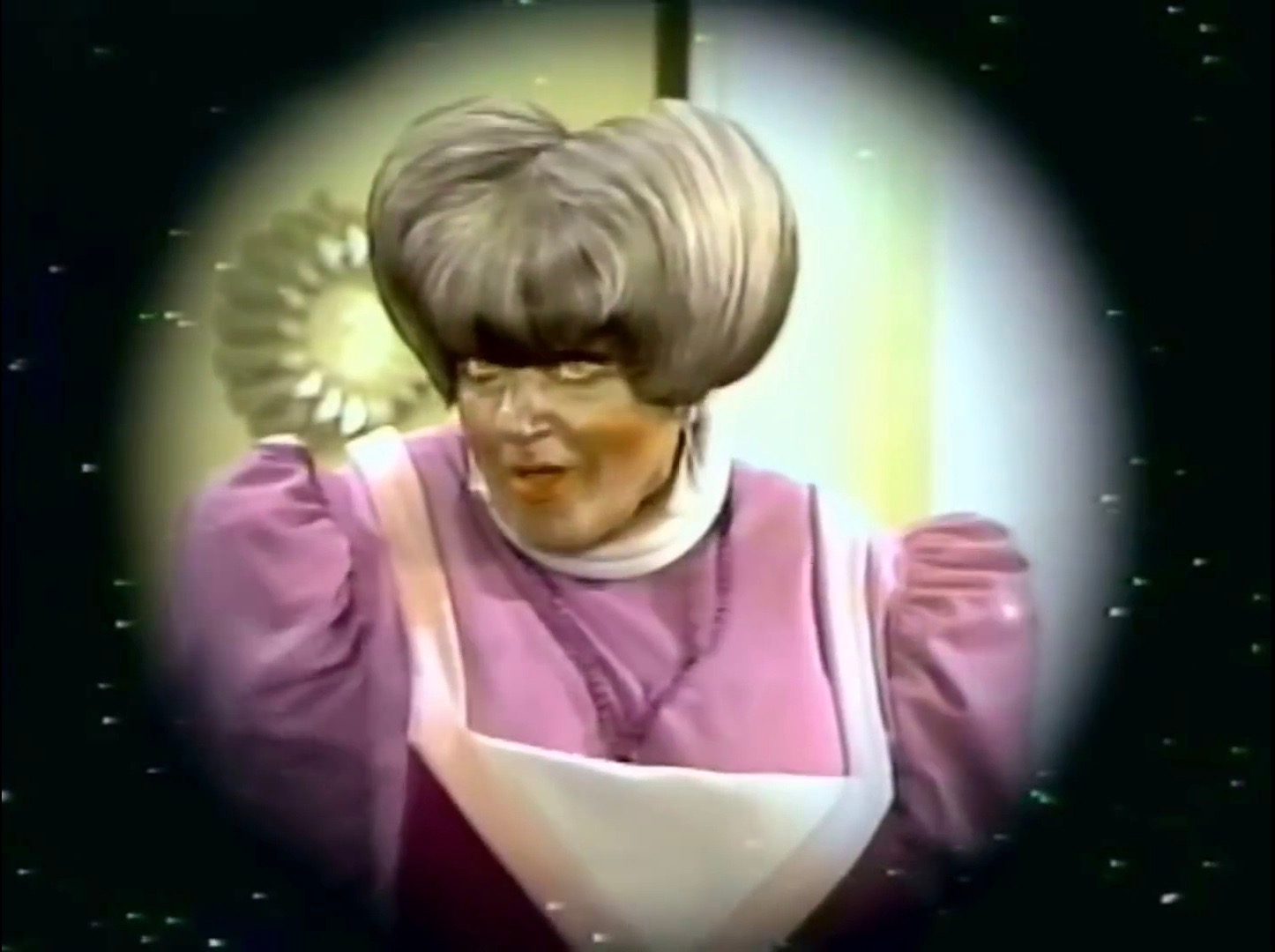
Instead of airing an episode of The Incredible Hulk or Wonder Woman, they aired The Star Wars Holiday Special. Now we cut to Han Solo and Chewbacca in the Millennium Falcon. They are being chased by the Empire while they are trying to reach Chewie’s home planet so he can celebrate Life Day. I’ve watched the whole special and I still don’t know what that means. At first Han is a little hesitant, but they jump to lightspeed anyways. Now we get weird iris shots of people who are in the special including Julia Child if she were a man who was turned into a female plastic doll then given a spray tan.

vlcsnap-2015-12-12-17h14m13s705

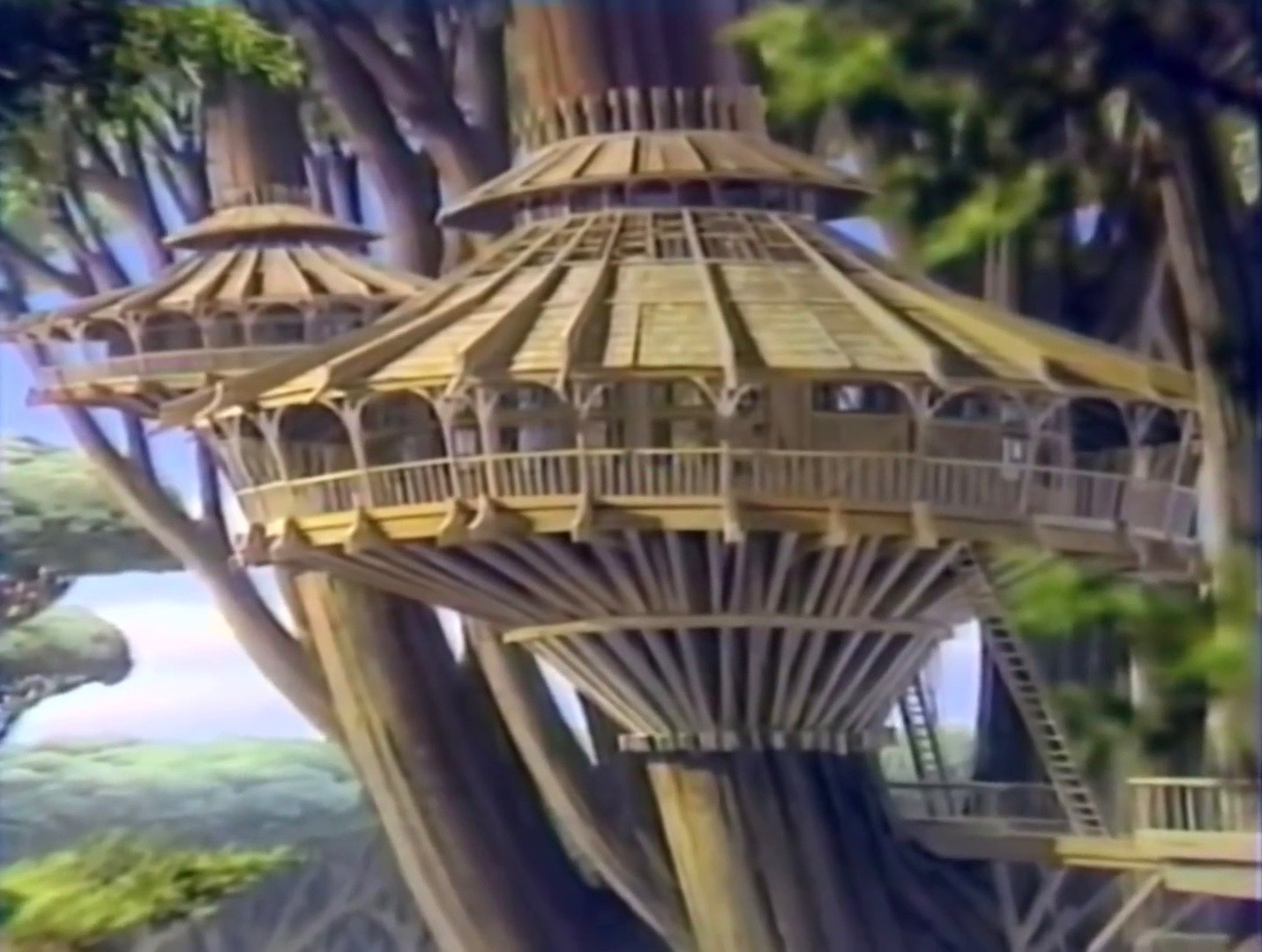
Then we cut to this shot of the Swiss Family Robinson house.

vlcsnap-2015-12-12-17h22m48s369

Inside is the main set filled with the main characters such as:

vlcsnap-2015-12-12-17h23m52s632

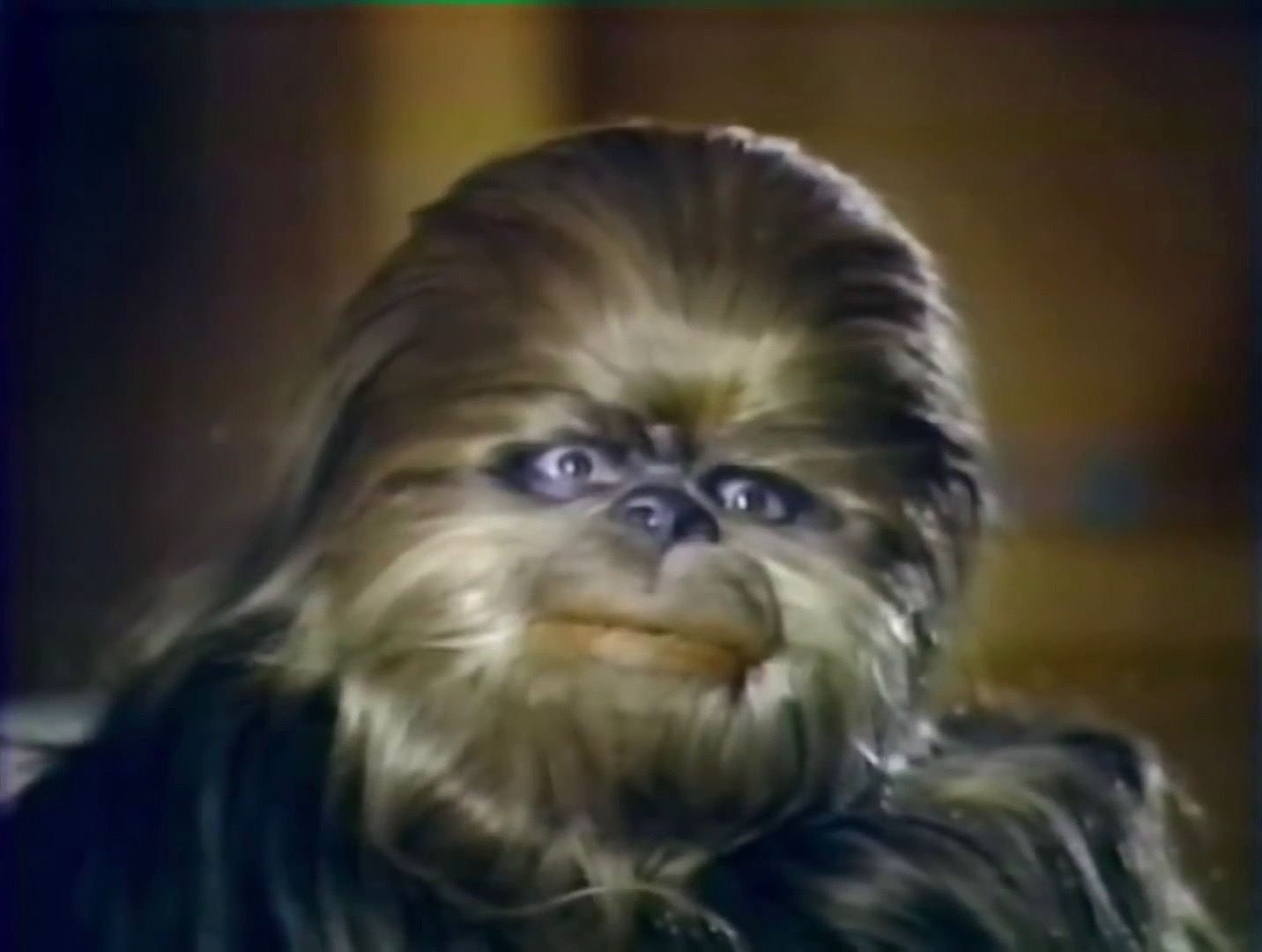
Papa Wookiee who is here to give all the viewers nightmares.

vlcsnap-2015-12-12-17h29m08s993

Mama Wookiee who we know is a woman because she’s working in the kitchen.

vlcsnap-2015-12-12-17h23m42s527

And Baby Wookiee who we can all thank for introducing the worst animation I’ve seen since that Chinese computer animated movie Agent F.O.X. (2014).

After pointless and meaningless noises from the Wookiees, the special reveals it’s true colors. By that I mean that it’s really a variety show of bad comedy and musical numbers. It’s not everyday you get to see Anton Lavey in a musical number though.

vlcsnap-2015-12-12-17h33m11s638

And this shot makes watching the whole special worth it.

vlcsnap-2015-12-12-17h34m15s303

Now the Wookiees put in a call to Luke Skywalker.

vlcsnap-2015-12-12-17h40m00s608

It’s been awhile since I watched the original Star Wars movies, but I don’t remember Mark Hamill looking like this. He reminds me of Pierre Kirby’s girlfriend in Dressed To Fire (1988).

vlcsnap-2015-12-12-17h42m55s088

After Hamill embarrasses himself, we now go back to the Wookiee household. They place a call to “Trading Post Wookiee Planet C”. I call it we roped Art Carney into this horrible thing to do really unfunny comedy bits.

vlcsnap-2015-12-12-17h46m45s347

Next we cut to a shot of Zuco from Brazilian Star Wars

vlcsnap-2015-12-12-17h49m48s368

before cutting back to the Wookiees. Just in case the kids weren’t already traumatized for life…

vlcsnap-2015-12-12-17h54m34s623

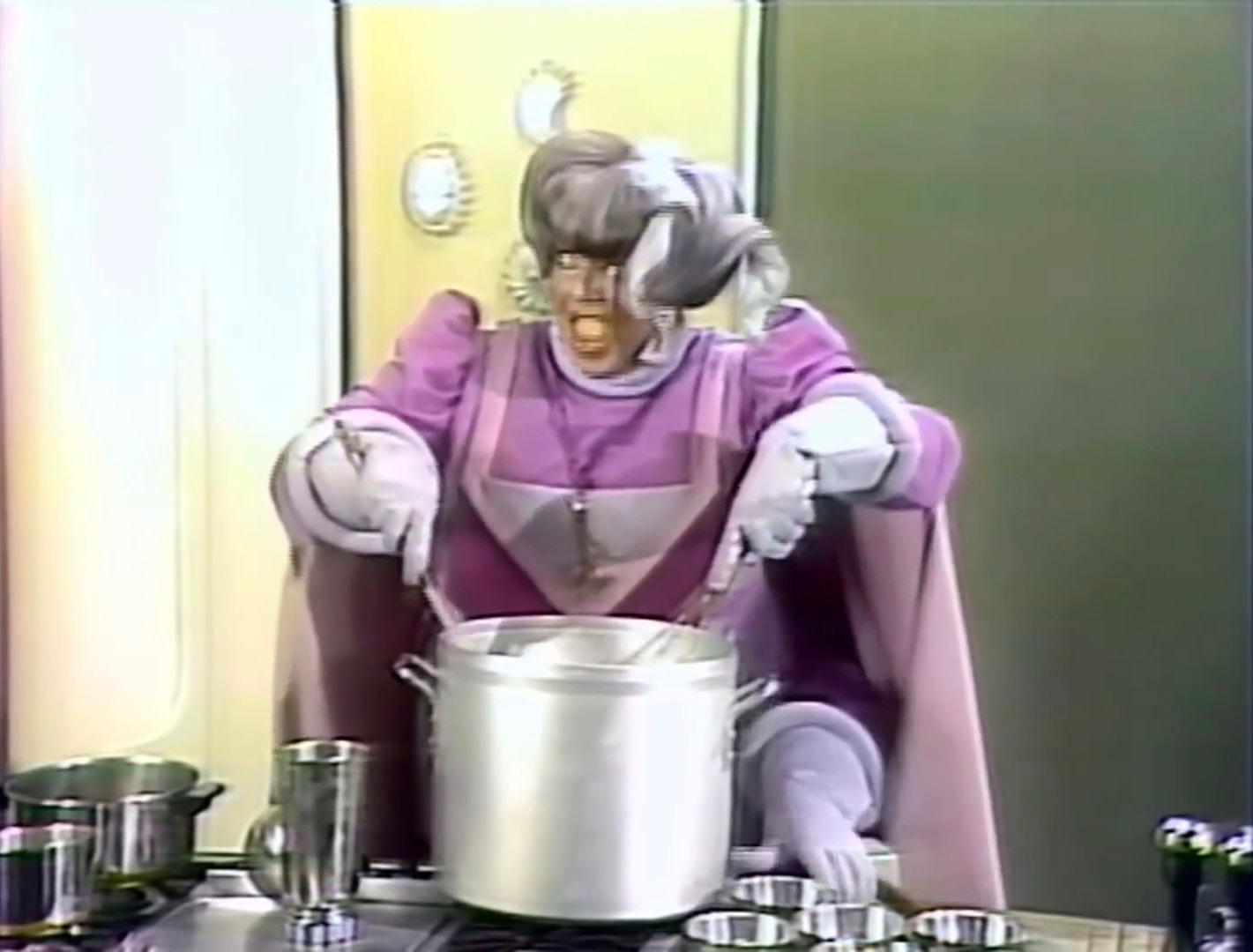
there’s this scene where they thought it would be funny to dress up Harvey Korman like this. I’d be offended since I’m transgender, but all I can feel is sympathy for poor Korman. Not only is he in this, but this is one of his appearances in the special. That thing is cruel and unusual punishment. Mama Wookiee is watching this on TV.

Now the special cuts back to Han and Chewie to remind us they are still in the special before cutting back to more pointless crap. The only difference is that now Art Carney shows up to deliver some stuff to the family. Carney says the name Han as if he is saying the word “hand”. That would have made for a great name, wouldn’t it? Hand Solo. Goes right along with the single weirdest thing in the special that happens next.

vlcsnap-2015-12-12-18h01m18s453

vlcsnap-2015-12-12-18h12m45s563

Papa Wookiee looks at VR porn. Diahann Carroll says things like “Now we can have a good time” and “I’ll tell you a secret. I find you adorable”. Oh, and Papa Wookiee makes drooling noises while pressing a button to have her repeat “I find you adorable” over and over. Then she goes on to sing a reject Bond song. I guess this part could be worse. I’m pretty sure Wookiee’s don’t have genitals and he could have been watching Water Power (1977).

Now the special cuts to Leia and C-3PO to remind us they are in this too before cutting to Chewie and Han. Then Imperials show up at the treehouse to look for Chewbacca and to remind us that people in Dayton, Ohio suffered greatly one night.

vlcsnap-2015-12-12-18h25m13s001

This part goes on forever, and Art Carney gets a brilliant idea. I’ll distract this guy by making him watch Jefferson Starship.

vlcsnap-2015-12-12-18h27m58s363

vlcsnap-2015-12-12-18h31m40s711

We built this special on Schlock ‘N Schtick.

Then Baby Wookiee goes to some sort of device while the Imperials are searching the very small set. He calls up the infamous cartoon. This thing is supposed to introduce us to Boba Fett. I could actually talk about this cartoon, but I think this shot sums it up.

vlcsnap-2015-12-12-19h49m57s599

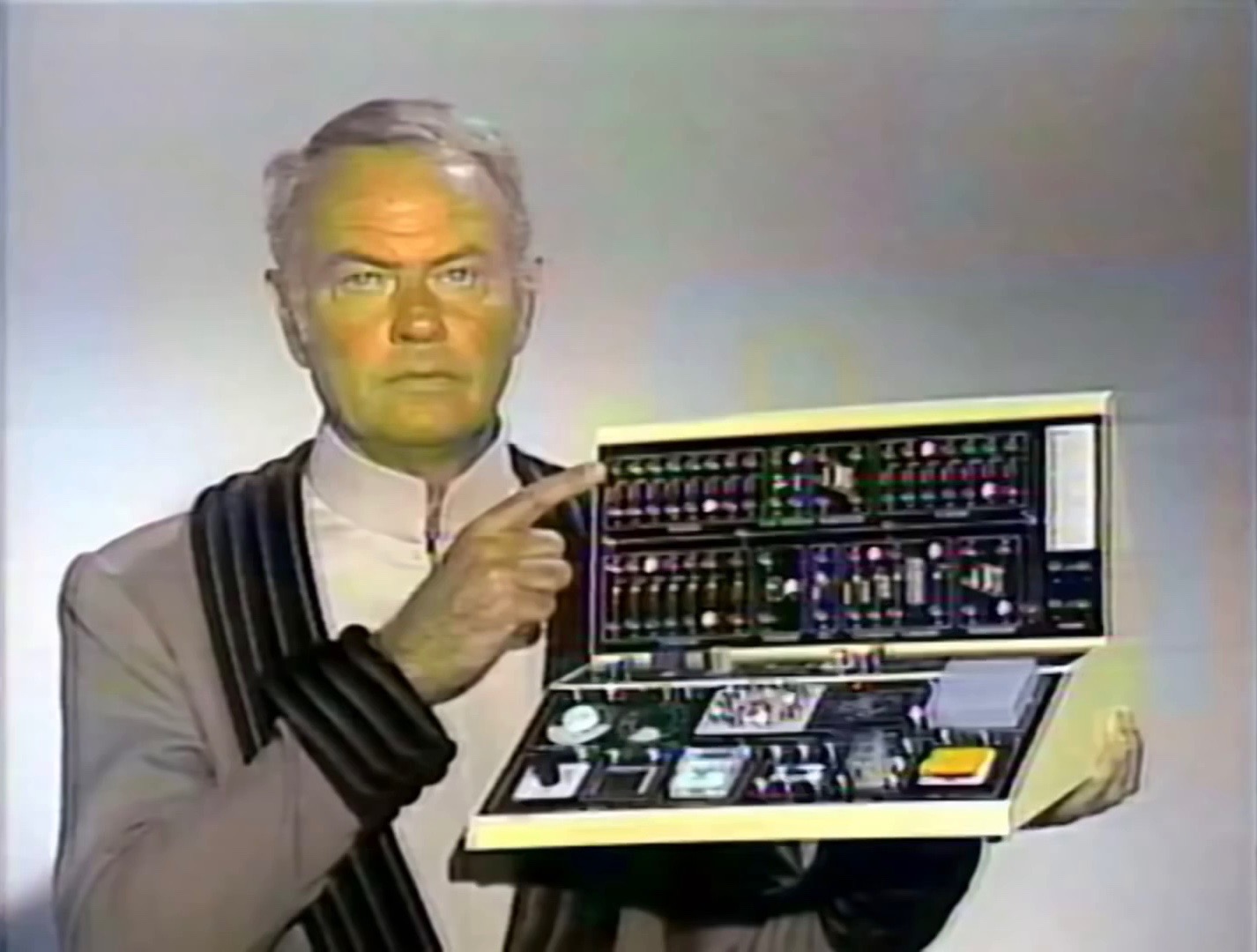
Already missing Harvey Korman doing bad comedy? He now makes a return. Earlier Baby Wookiee opened a present which had the Brain Computer from Brazilian Star Wars in it and now he needs to watch an instructional video on how to use it.

vlcsnap-2015-12-12-19h54m42s237

This part can best be described as Harvey Korman auditioning for Max Headroom about a decade before that show came on the air. Also, it shows us what anyone looking at this special was doing in 1978.

vlcsnap-2015-12-12-19h58m05s272

I don’t know what that was all about, but now we go to the bar scene. This is the only bright point in this special thanks to Bea Arthur.

vlcsnap-2015-12-12-20h02m43s186

Harvey Korman comes into the bar run by Arthur and attempts to hit on her. Korman has a hole in the top of his head that she pours drinks into.

vlcsnap-2015-12-12-20h05m38s772

Didn’t think this character through, did they? If he takes in drink through the top of his head, then what exactly comes in or out of his mouth? Arthur turns him down. Then an announcement is made over the TV that the bar is to be closed by order of the Empire. This is when the scene basically turns into that part from Casablanca where they sing the French National Anthem. Honestly, this scene is not that bad. Granted it’s surrounded by fecal matter, but still. Arthur does a decent job singing and is kind of funny.

Now we cut back to the treehouse where we get a cameo appearance by the Wilhelm scream as Han Solo throws a Stormtrooper off the patio. It’s funny that even during this tiny little scene with Harrison Ford, we can still see why he’s a good actor.

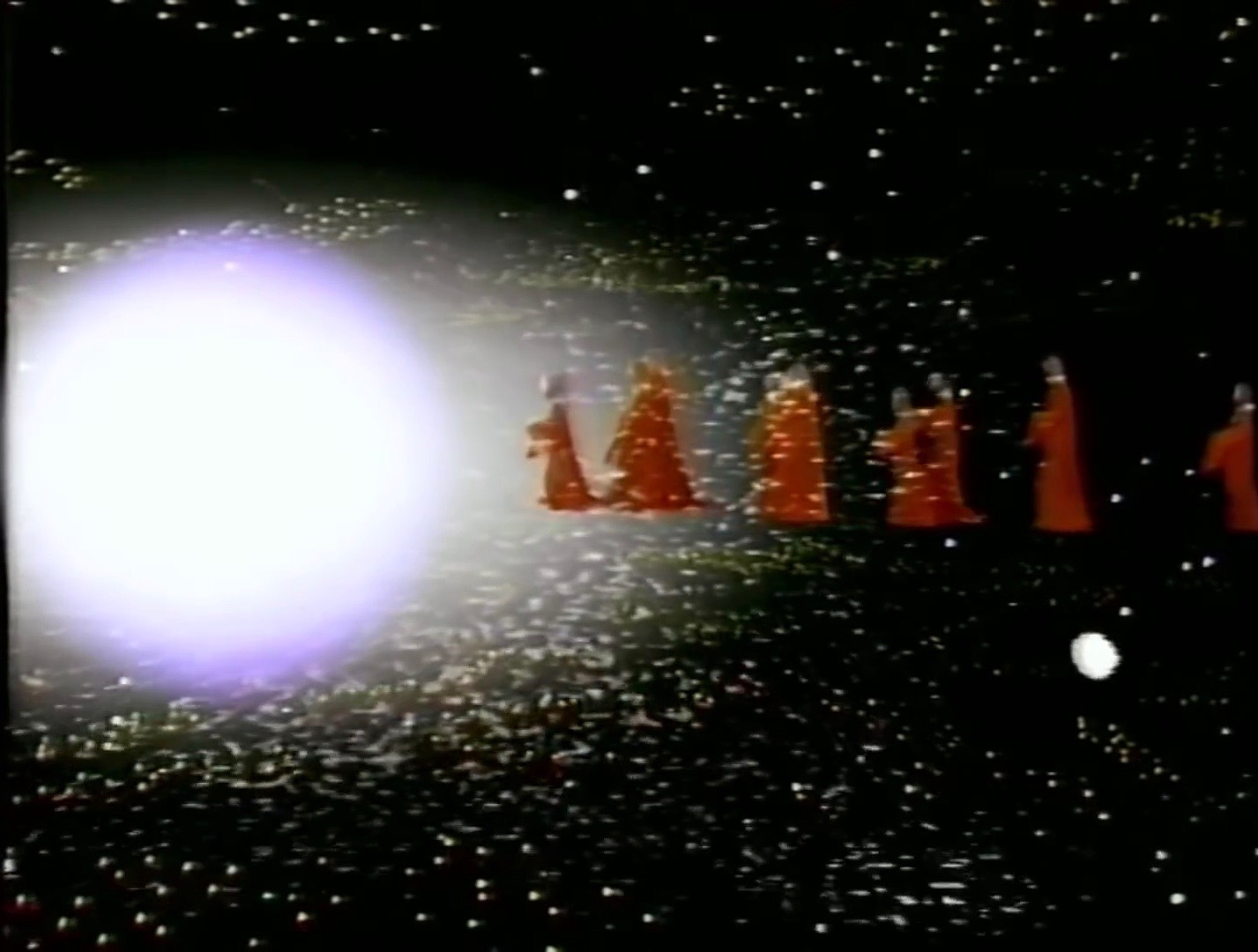
Now the time has finally come to celebrate Life Day where it appears a bunch of people are walking into a star to commit suicide.

vlcsnap-2015-12-12-20h52m08s201

It’s kind of like that overly edited version of the Star Wars commercial with Anna Kendrick that was on YouTube where they cut out enough of her lines that it appears she picks up a knife then kills herself.

vlcsnap-2015-12-12-20h53m42s563

Then we get to see the whole gang together. You know, like I’m sure everyone thought they were going to see when they tuned in to this “Star Wars” special. Carrie Fisher sings here because who cares.

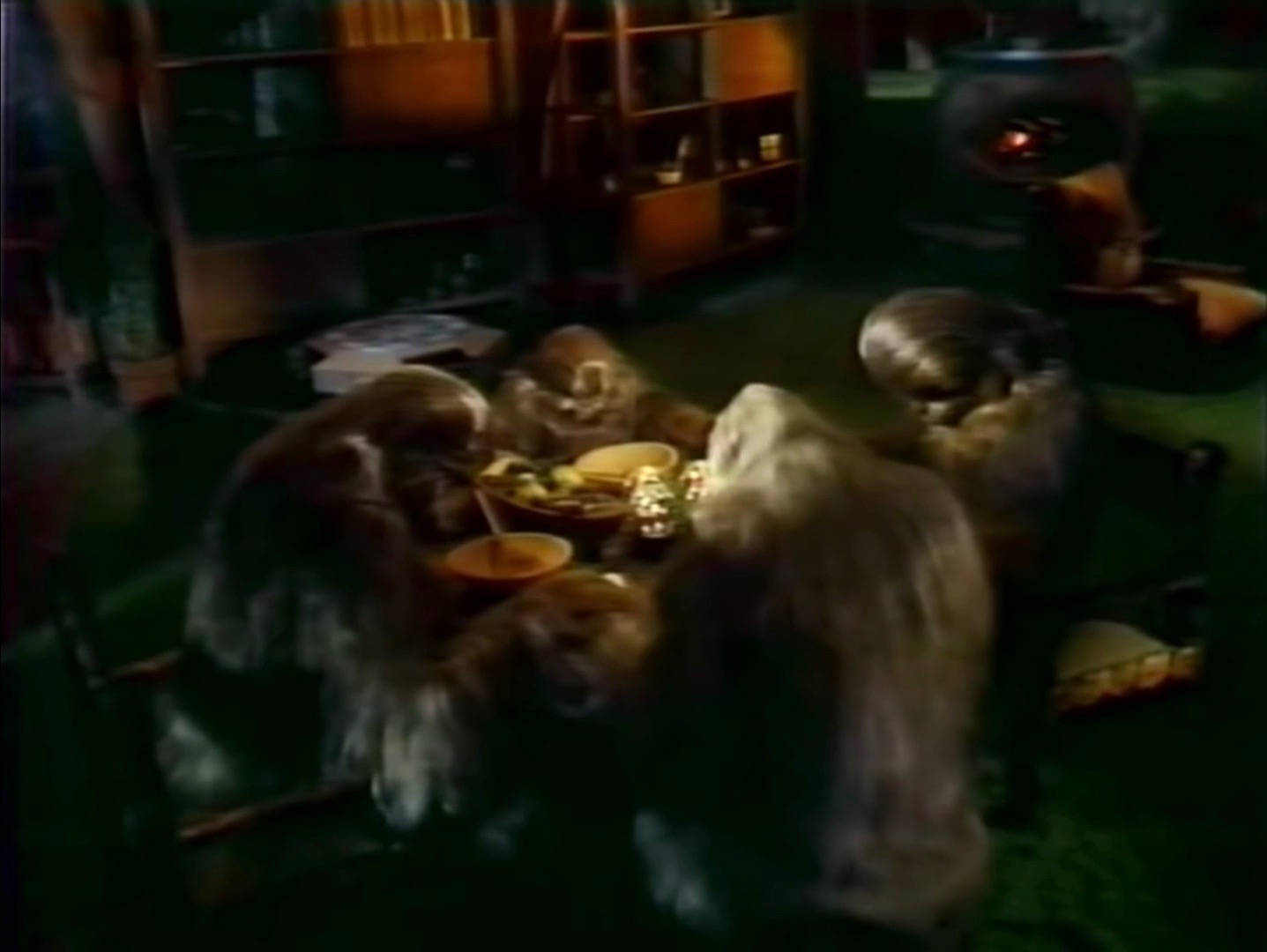
After stock footage from the movie to remind us this thing actually had something to do with Star Wars, we cut to the Wookiees at the dinner table together.

vlcsnap-2015-12-12-20h59m38s711

I’m just going to assume they are conducting a seance to try and contact Obi-Wan. Now the credits roll and according to them we have Bob Mackie to blame for that thing poor Harvey Korman had to wear during the cooking scene. I love that the ending credits don’t include any of the actors names from the Star Wars movie. Apparently, Miki Herman was their “‘Star Wars’ Consultant”. It’s hard to believe that position existed. Oh, and of course David Winters did the choreography. That reminds me, I do need to see Dancin’ It’s On (2015). Heard it’s terrible. Then the 20th Century Fox logo comes up which is nice considering I’ve been watching Godfrey Ho movies that start with a girl standing like the Columbia Pictures lady while the Star Wars theme plays.

And the special goes out like it came in, by reminding us we could have been watching an episode of The Incredible Hulk or Wonder Woman.

vlcsnap-2015-12-12-21h01m55s434

I’m sure there’s a fascinating backstory to this, but I don’t care. This is one of the most ill-conceived and poorly executed things I have sat through this year. And I watched a parody of Rocky where he gets hit in the face with the Star Of David as well as a children’s Hallmark movie where a little girl refers to beauty squirting out of her body onto the floor.

vlcsnap-2015-12-12-19h57m39s364

Japanese Trailer of Star Wars: The Force Awakens Even Better


StarWarsVII

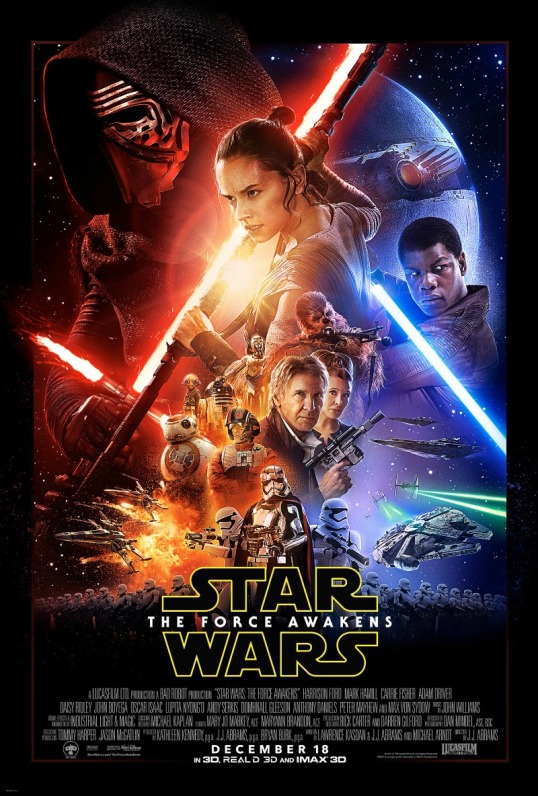
Just a couple weeks ago saw the release of the first and last official trailer for Star Wars: The Force Awakens. It was teasers before that one. The official trailer was suppose to keep the Star Wars fandom sated until December 18 (or earlier for those willing to brave the early advance screenings before midnight). It pushed all the right buttons to keep the fandom happy and wanting more.

Out of the blue, this morning saw Disney release without any fanfare a new trailer but one cut and edited for the Japanese market. It’s a trailer that includes scenes and images already seen in the previous official trailer and two earlier teasers, but also happened to include newer scenes (that still doesn’t spoil what the film will be all about) involving BB-8, Kylo Ren and more Princess Leia and Chewie.

So, it would seem that when Disney said that the trailer released a couple weeks ago would be the one and only trailer for the film it would seem they meant it would be the only domestic trailer. Sneaky, sneaky there Disney.

Plus, I rather prefer the Japanese trailer. Once again proves the Japanese gets the cool things.

Star Wars: The Force Awakens Breaks The Internet


StarWarsVII

It’s not hyperbole when I say that Star Wars: The Force Awakens broke the internet tonight. Fandango announced pre-sale of tickets early by accident which caused the massive Star Wars fandom to rush on-line to be able to buy tickets before they ran out for the early showing on December 17, 2015. Well, this hasn’t gone down well with many who thought the pre-sale orders were going to go up after the trailer debuts during halftime of Monday Night Football.

I was one such out-of-luck individuals, but I remembered my days of youth when pre-ordering tickets to such event films meant going to the theater itself and buying them in person. This I did and I’m blessed to have gotten all the tickets I need.

Thus, despite Star Wars: The Force Awakens breaking the internet it would seem doing things the old-school way still rewards those who still thinks in analog and not just digital.

Now, let’s watch the latest trailer for Star Wars: The Force Awakens over and over before it premieres on December 18, 2015.

Comic-Con Reel Looks At Star Wars: The Force Awakens Behind-the-Scenes


StarWarsVII

Nothing more to say than Star Wars: The Force Awakens is just 5 months away. It’s a wait made to seem even longer after witnessing the behind-the-scenes reel shown during this week’s San Diego Comic-Con.

May the Force be with you.

Embracing the Melodrama Part II #75: Witness (dir by Peter Weir)


Witness_movieLast night, I was lucky enough to watch Witness, a best picture nominee from 1985.

Taking place in Pennsylvania, Witness tells the story of what happens when an Amish widow named Rachel (Kelly McGillis) and her 8 year-old son Samuel (Lukas Haas) decide to take a trip to visit Rachel’s sister.  Traveling on an Amtrak train, Samuel is amazed by his first view of the world outside of the close-knit and insular Amish society.  However, Samuel’s excitement soon turns to horror when they arrive in Philadelphia and he witnesses a man being brutally murdered.

Detective John Book (Harrison Ford, who received his first and, to date, only Oscar nomination for this film) is assigned to the case and arranges for Rachel and Samuel to stay with his sister.  John soon discovers that the murder was committed by two crooked cops, McFee (Danny Glover, who is pure evil in this film) and Ferguson (Angus MacInnes).  John goes to his superior officer, Chief Schaefer (Josef Sommer) with his evidence.  Soon after, McFee attempts to kill and seriously wounds John.  John realizes that Schaefer must be corrupt as well.

Book manages to drive Rachel and Samuel back to their farm in Lancaster County but, after dropping them off, he passes out from blood loss.  Knowing that sending John to the hospital would reveal Rachel and Samuel’s location to Schaefer, Rachel’s father (Jan Rubes) reluctantly allows John to stay at the farm.

And so, while McFee, Ferguson, and Schaefer search for him, John temporarily pretends to be Amish.  He works in the fields.  He helps to build a barn.  He becomes something of a surrogate father to Samuel and he begins a forbidden flirtation with Rachel.

He also goes to town, where he watches as an idiotic local bullies the Amish, knowing that their religion forbids them from fighting back.  John responds by punching a bully, upsetting both the Amish and the a local store owner who yells that this will be terrible for the tourism.  In many ways, the scene is played for laughs and applause but there’s a very serious subtext here, as it would appear that the area’s main appeal to tourists is that you can humiliate the Amish without having to worry about any sort of retaliation.

While we, as viewers, definitely get some satisfaction from seeing John punch that jackass, it also allows Schaefer to discover where he and Rachel are hiding.  One morning, McFee, Ferguson, and Schaefer pull up outside the farm.  They get out of their car and, as the sun rises and with beautiful green fields on either side of them, the three men hold up their shotguns and start to walk down the road….

Witness may technically be a cop film but it’s actually so much more.  It’s a character study of a deeply cynical man who finds himself changed by simple and innocent surroundings.  It’s a love story, with Ford and McGillis illuminating the screen with their chemistry.  It’s a celebration of community, with the harshness of Philadelphia being contrasted with life among the Amish.  It’s a film full of beautiful images and it also features an excellent performance from Harrison Ford.

It’s a good film.  I’m glad that I witnessed Witness.

Star Wars: The Force Awakens A Fandom Into A Frenzy


StarWars7

I was at work when this trailer dropped and I can honestly say that I couldn’t wait to go on break so I could watch it and allow myself to react in an honest and proper way. To say that I lost my ever-loving mind once the trailer began playing would be an understatement.

Star Wars: The Force Awakens looks to return to it’s proper space opera roots. Roots as in the first trilogy instead of the much-maligned (deservedly so) prequel trilogy which would end up marking George Lucas’ final work on the franchise he created in 1977. Walt Disney Studios has bought all that is Star Wars and the industry which sprung from it’s creation and are now master of all.

J.J. Abrams now has the tough task of pulling back in the fans that felt disappointed at how the last three films in the franchise turned out. From what this teaser trailer has shown he seems to have come up with a new entry in the franchise that may just delight fans old and new.

Oh yeah, Chewie is back alive and well. No more of that dropping a moon on his head crap.

Star Wars: The Force Awakens set to give the world a fine Christmas 2015.

Back to School #13: American Graffiti (dir by George Lucas)


Well, this is certainly intimidating.  I know I’ve said this many time before but it deserves to be repeated: it’s often a hundred times more difficult to review a great film than it is to review a merely mediocre one.  When a film fails, it’s usually easy to say why.  The acting was bad.  The directing was uninspired.  The plot didn’t make any sense.  Or maybe the film has been so overpraised that you, as a reviewer, are almost obligated to be tougher on it than you would be with any other film.  However, it’s never as easy to put into words just what exactlyit is that makes a movie great.

Take the 1973 Best Picture nominee American Graffiti for instance.  I could tell you that this is a very well-acted film and that it features an ensemble of very likable performers, many of whom subsequently went on to become stars and celebrated character actors.  Then again, you can say the same thing about countless other films.

american-graffiti-1973-03-g

I could say that director George Lucas does such a good job putting this film together that it’s hard to believe that he’s the same man who would later be responsible for all three of the Star Wars prequels.  Then again, I could also say the same thing about how odd it is that the same man who directed the entertaining Final Destination 5 was also responsible for the far less enthralling Into The Storm.

i007737

I could tell you that the film serves as a valuable time capsule in that not only does it feature a loving recreation of small town America in the early 60s but that it’s also a chance to see what Richard Dreyfuss, Ron Howard, and Charles Martin Smith all looked like when they still had hair.  But then again, I also praised The Young Graduates for being a time capsule as well.

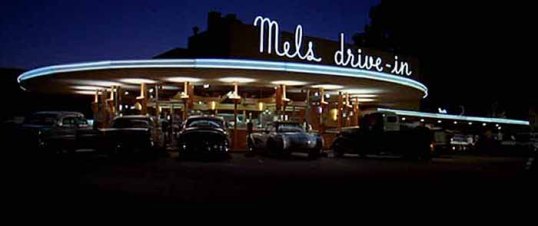
MelsGraffiti

Let’s face it — it’s difficult to define the intangible qualities that make a film great.  Often times, it’s a case of simply knowing it when you see it.  I’ve seen American Graffiti a few times.  The last time I saw it was at a special Sunday showing at the Alamo Drafthouse.  And, on that early Sunday afternoon, the theater was packed with people who had paid for the chance to see the 40 year-old film on the big screen.  I’m 28 years old and it’s significant that, while the majority of the audience was older than me, there were quite a few people who were younger.  American Graffiti is one of those films that obviously spoke to audiences when it was first released and continues to speak to audiences today.

As I mentioned in my review of Rebel Without A Cause, films about teens tend to age quickly and, often times, one generation’s masterpiece will turn out to be a later generation’s joke.  When a film like Rebel or American Graffiti survives the test of time, it’s because the film has managed to capture a universal truth about what it means to be young and to have your entire life ahead of you.

American Graffiti takes place over the course of one long night in Modesto, California in 1962.  The film follows several different characters, the majority of whom have just graduated from high school.  What these characters all have in common is that one phase of their life has ended and a new one is about to begin.  Over the course of that one night, all of them are forced to say goodbye to their past identities and, in some instances, are forced to face their future.

Curt and the Pharoahs

For instance, there’s Curt (an amazingly young Richard Dreyfuss), a neurotic intellectual who spends the night trying to decide whether or not he actually wants to leave for college in the morning.  Complicating Curt’s decision is a mysterious blonde who mouths “I love you” at him before driving away.  While searching for her, Curt finds himself unwillingly recruited into the Pharoahs, a somewhat ludicrous small town gang that’s led by Joe (played, in hilariously clueless fashion, by Bo Hopkins.)  Curt, incidentally, is my favorite character in the film.  He’s just adorable, which admittedly is not a reaction that one often has to Richard Dreyfuss.

(Curt is also featured in one of my favorite scenes, in which he smokes a cigarette with a lecherous teacher named Mr. Wolf.)

Cindy Williams, Ron Howard, and Charles Martin Smith

Curt’s sister (Cindy Williams) is dating Steve Bolander (Ron Howard).  Steve is the former class president and, unlike Curt, he’s very excited about leaving home.  Ron Howard gives such a likable performance that it actually takes a few viewing to realize just how big of a jerk Steve really is.

Terry and Debbie


And then there Terry (Charles Martin Smith) who wears big glasses and has bad skin.  Terry gets to spend the night driving around in Steve’s car and manages to pick up a girl named Debbie (Candy Clark).  For Terry, this is his night to actually be somebody and what makes it all the more poignant is just how obvious it is that Terry will probably never get another chance.  Though he may not realize it, those of us watching understand that this is literally going to the be the best night of Terry’s life.

(Incidentally, much like Ron Howard, Charles Martin Smith would go on to become a film director and gave the world the amazingly sweet Dolphin Tale.)

John Milner

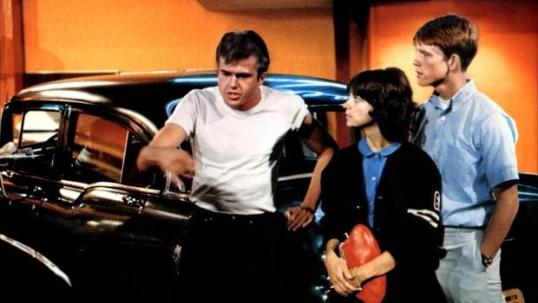
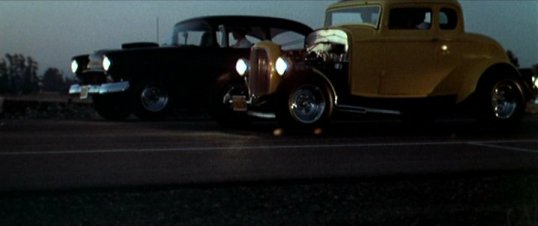
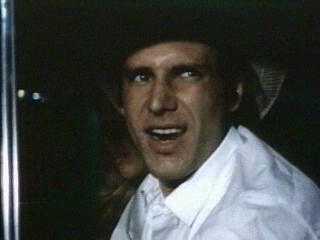
And finally, there’s John Milner (Paul Le Mat).  John is a little older than the other main characters.  He spends most of his time in his car, driving around and getting challenged to race.  He’s the epitome of late 50s/early 60s cool, with an attitude and a look that he obviously borrowed from James Dean and Marlon Brando.  Over the course of the night, he is forced to deal with a bratty 13 year-old stowaway (MacKenzie Phillips) and a mysterious challenger named Bob Falfa (played by a youngish Harrison Ford, who wears a cowboy hat and speaks with a country twang).

Harrison Ford in American Graffiti

The film follows these characters through the night and then, at the end of it, we get the famous epilogue where we discover that all of the male characters have pretty much ended up exactly how we thought they would.  In some cases, that’s a good thing.  And in other cases, it’s not.  It’s a good ending that’s kept from being great by the fact that none of the film’s female characters rate so much as even a mention.

So, what else can be said about American Graffiti?

It’s a great film.

Isn’t that enough?

American Graffiti

Lisa Goes Back To College: Zabriskie Point (dir by Michelangelo Antonioni)


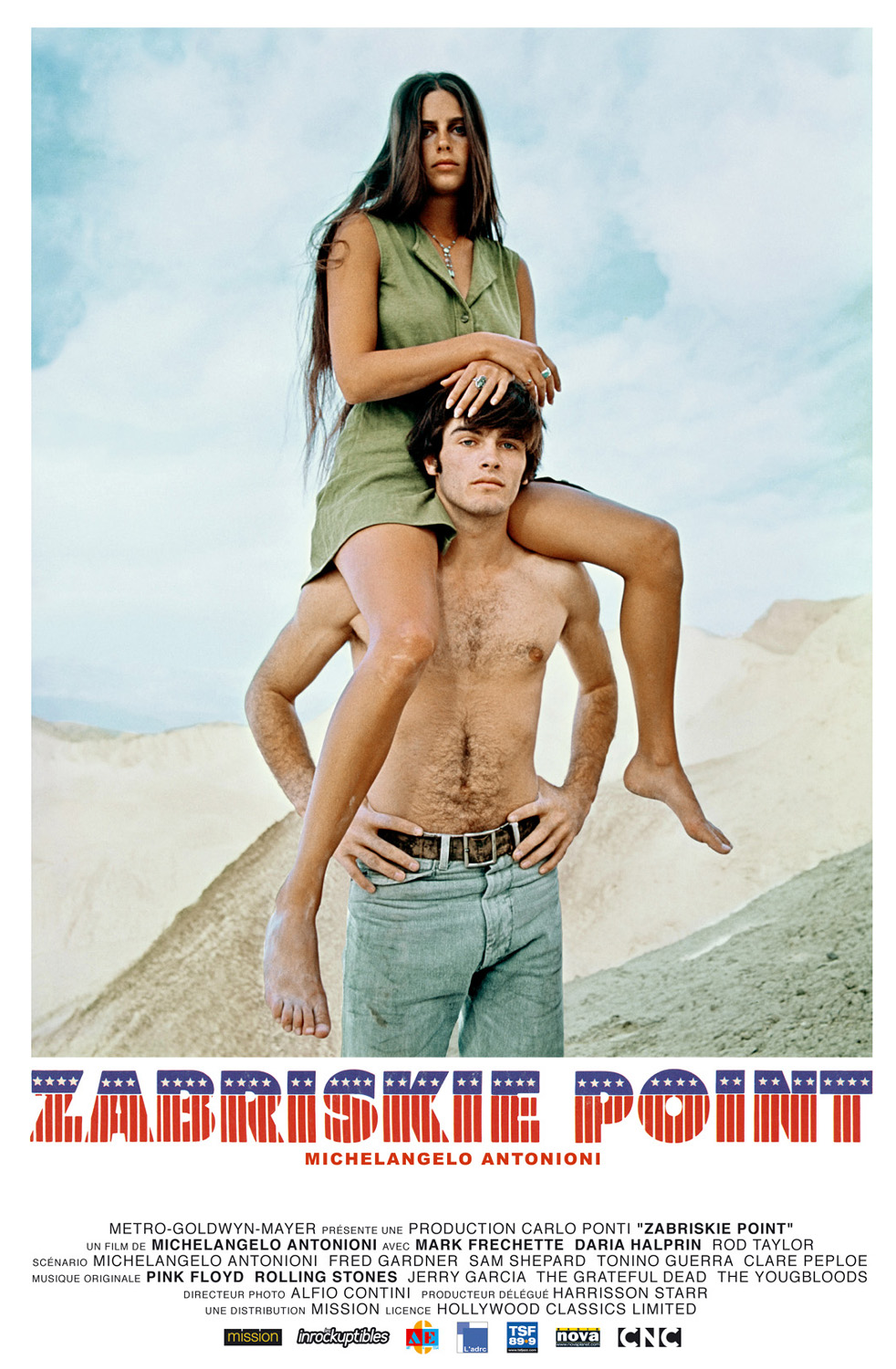
1970_Zabriskie Point_03

After watching Getting Straight, I decided to watch another student protest film from 1970, Michelangelo Antonioni’s Zabriskie Point.  Much like Otto Preminger’s Hurry Sundown, Zabriskie Point is a film that frequently gets mentioned when film bloggers are trying to list the worst films of all time.  Unlike Hurry Sundown, Zabriskie Point is not quite as terrible as some reviewers seem to think.

It’s probably a mistake to describe Zabriskie Point as being as a college film.  Only one of the main characters — Mark (played by Mark Frechette) — is a college student and he drops out early in the film.  The film’s other main character — Daria (played by Daria Halperin) — is a secretary who may (or may not) be the mistress of venal real estate developer Lee Allen (played by Rod Taylor, the sole professional actor out of the starring cast).  However, the film does start on a college campus, it deals with political protest (which was apparently the only thing happening on campuses back in 1970), and the movie’s message and style was obviously meant to appeal to campus radicals.

Mark Frechette, star of Zabriskie Point

Mark Frechette, star of Zabriskie Point

Zabriskie Point opens with the type of lengthy scene that will be familiar to anyone familiar with counter-culture filmmaking.  A bunch of very serious college students sit in a conference room and have a very long conversation about how to best bring about the revolution.  All of the white, middle class students argue for petitions, manifestos, and civil disobedience.  A black woman with a gigantic afro replies that all of the white students are phonies who aren’t truly committed to the revolution.  Some of the students cheer.  Some of the students boo.  The meeting goes on for an eternity and, for the most part, it served to remind me of why I could never stand hanging out with any of the student activists back at the University of North Texas.

Yet, at the same time, it’s an effective scene because it’s one of the rare moments in the film that feels authentic.  For the most part, Antonioni cast this film with nonactors.  (Though apparently — just like in Getting Straight — a young Harrison Ford can be seen in the background of some of the scenes.)  Watching the opening, I got the feeling that I was experiencing what a political gathering in the 70s was truly like.  And, by the end of it, I was happy to have been born long after the 70s were over.

The scene ends when a student named Mark announces that he’s prepared to die for the revolution and then walks out of the meeting.  Mark proceeds to drop out of school, buy a lot of guns, and set up an apartment safe house.  When he gets arrested at a protest, Mark gives his name as “Karl Marx,” which the booking officer proceeds to spell as “Carl Marx.”  Eventually, Mark ends up shooting a police officer.  (Or maybe he didn’t — the film is deliberately vague about whether Mark actually fired his gun or if the officer was shot by somebody else.)  He then steals an airplane, flies out to the desert, and meets Daria.

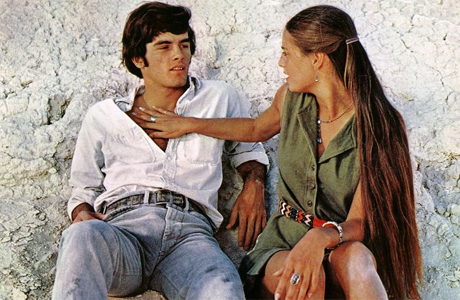
Mark and Daria

Mark and Daria

In the film’s most famous scene, Daria and Mark walk around the desert and talk about — well, nothing in particular.  One of the most frequent criticisms of Zabriskie Point is that neither Mark nor Daria were particularly good actors and that’s certainly true.  However, that’s only a problem if you assume that Antonioni means for you to view these characters as individuals.  As becomes clear during their desert walk, Mark and Daria are meant to be archetypes.  Mark Frechette and Daria Halperin may have been terrible actors but they had the right look and they had the right attitude.  You may not care about them as individuals but Mark and Daria work perfectly as symbols for alienation.  Mark and Daria stand in for everyone who has reached the point where they have to decide whether to join the establishment (represented by Lee Allen and the university) or whether to overthrow it.  In the scenes in the desert, Antonioni presents Mark and Daria less as being people and more as being parts of the American landscape, as permanent as the mountains that surround them.

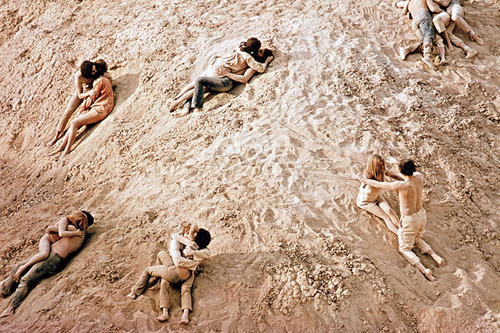
Mark and Daria end up making love in the middle of the desert and, as they have sex, they are suddenly surrounded by hundreds of other hippie couples having sex and it all becomes one big orgy in the middle of Death Valley.  And yes, this scene is totally over-the-top, pretentious, and ludicrous but yet, how can you condemn something so gloriously silly?

Orgy in the desert

Orgy in the desert

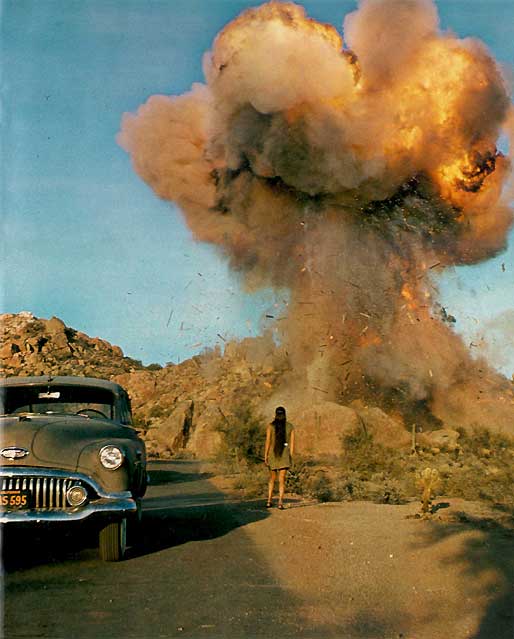
Anyway, after the orgy, Mark and Daria paint his plane and then go their separate ways.  Mark tries to return the plane.  Daria stares at a house in the mountains and imagines it exploding over and over again.

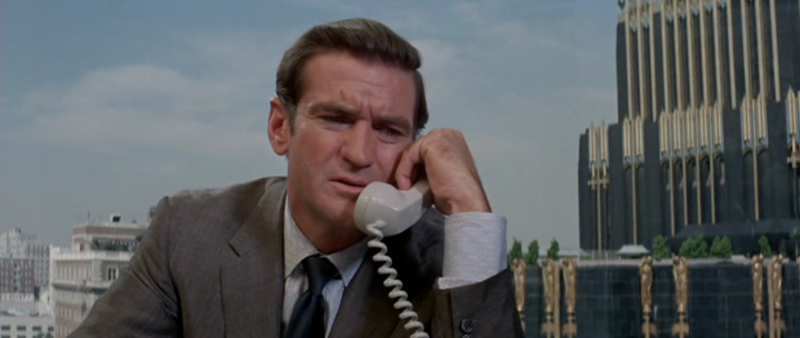
Zabriskie Point is an interesting misfire.  Michelangelo Antonioni (who is best known for directing the classic Blow-Up) originally intended for the film to end with an airplane skywriting “Fuck you, America.”  However, MGM made him cut that from the film.  That Antonioni meant for this film to be an attack on America is pretty obvious.  Antonioni, after all, was a committed Marxist and the film goes out of its way to try to present businessman Lee Allen as being the epitome of capitalist evil.  (Unfortunately, Rod Taylor is such a likable actor that I know, if I had to make a choice between the two, I’d rather spend a day with Lee Allen than Mark Frechette).

Rod Taylor as Lee Allen

Rod Taylor as Lee Allen

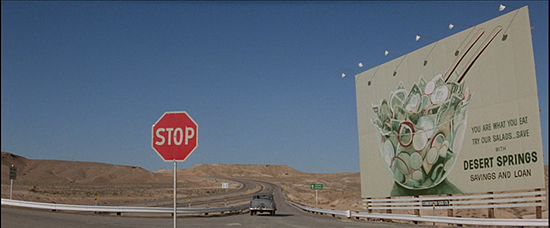
However, at the same time, Antonioni appears to have been fascinated and confused by the material excesses of America as well.  In the first half of the film, as Mark walks through the small town setting, the camera lingers on the billboards that dot the landscape and, as a result, those billboards take on a beauty of their very own.  Even when Daria is walking through Lee Allen’s mansion, the camera can’t help but linger over every opulent detail, almost as if it can’t decide whether it is seeking to condemn or celebrate.  In many ways, Zabriskie Point reminded me of Lars Von Trier’s Dogville.  Both films attempts to condemn America just to end up accidentally celebrating it.

Celebrating America While Condemning It

Celebrating America While Condemning It

Zabriskie Point may not be a good film but it’s an endlessly fascinating and visually beautiful one.  If nothing else, it serves as a record of the time when it was made.  And, as such, it deserves better than to be dismissed as one of the worst.

Boom

Boom