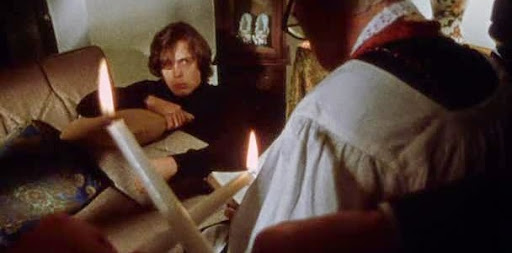
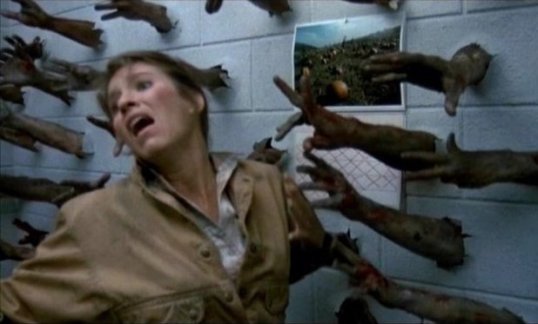
I remember the first time that I ever watched the original Night of the Living Dead, I was really stunned and, to be honest, quite upset by the death of Tom and Judy. They were so likable and earnest that I guess I naturally assumed that they would survive or, at the very least, they wouldn’t die in such a pointless manner. But, ultimately, that’s what made Night of the Living Dead such a frightening film. It didn’t matter who you were or what you’re intentions were. The Dead were going to kill you and then they were going to eat you.
Honestly, everyone should have just stayed in the cellar.
4 Or More Shots From 4 Or More Films is just what it says it is, 4 shots from 4 of our favorite films. As opposed to the reviews and recaps that we usually post, 4 Shots From 4 Films lets the visuals do the talking!
This October, I’m going to be doing something a little bit different with my contribution to 4 (or more) Shots From 4 (or more) Films. I’m going to be taking a little chronological tour of the history of horror cinema, moving from decade to decade.
Today, we take a look at the late 60s!
8 Shots From 8 Horror Films: The Late 60s
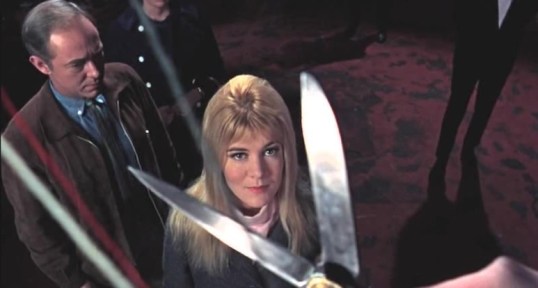
Torture Garden (1967, dir by Freddie Francis, DP: Norman Warwick)
The Sorcerers (1967, dir by Michael Reeves, DP: Stanley Long)
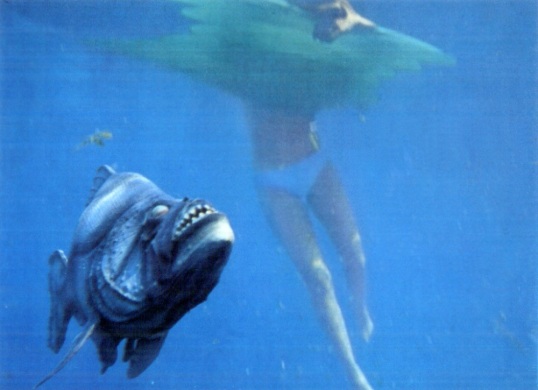
Rosemary’s Baby (1968, dir by Roman Polanski, DP: William A. Fraker)
The Witchfinder General (1968, dir by Michael Reeves, DP: John Coquillon)
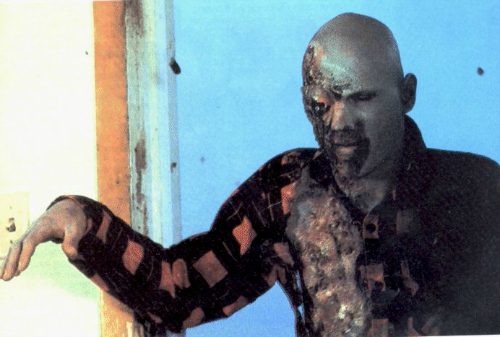
Night of the Living Dead (1968, dir by George Romero, DP: George Romero)
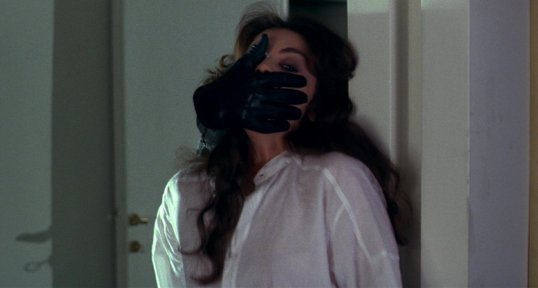
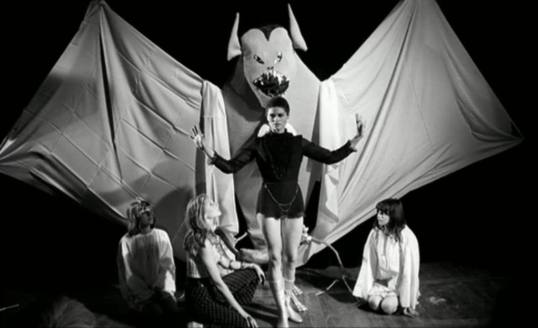
The Rape of the Vampire (1968, dir by Jean Rollin, DP: Jean Rollin)
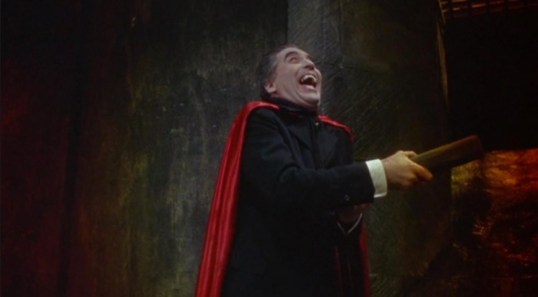
Dracula Has Risen From The Grave (1968, dir by Freddie Francis, DP: Arthur Grant)
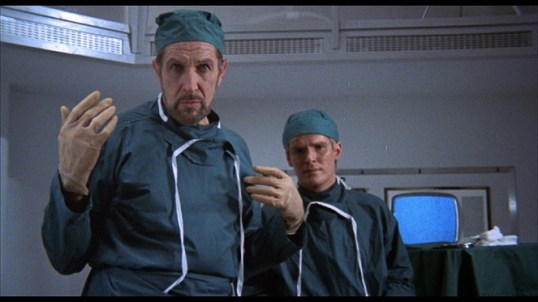
Scream and Scream Again (1969, dir by Gordon Hessler, DP: John Coquillon)
4 Or More Shots From 4 Or More Films is just what it says it is, 4 shots from 4 of our favorite films. As opposed to the reviews and recaps that we usually post, 4 Shots From 4 Films lets the visuals do the talking!
Today, the Shattered Lens wishes a happy birthday to Mr. Stephen King!
In others words, it’s time for….
4 Shots from 4 Stephen King Films
Creepshow (1982, dir by George Romero, written by Stephen King, DP: Michael Gornick)
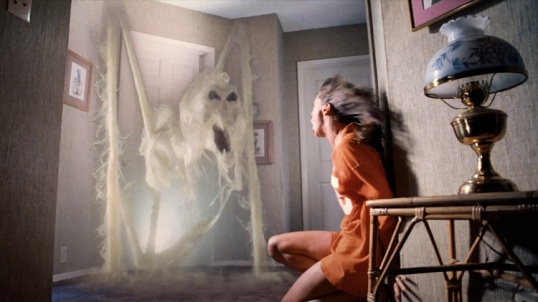
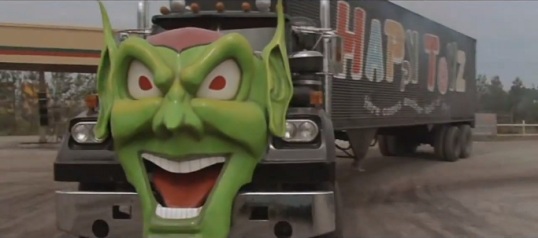
Maximum Overdrive (1986, dir by Stephen King, written by Stephen King, DP: Armando Nannuzzi)
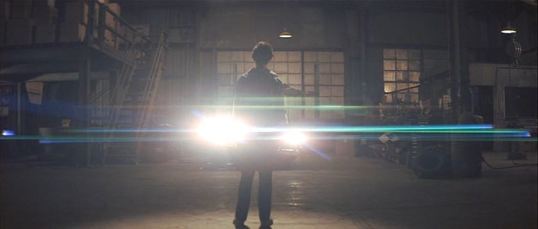
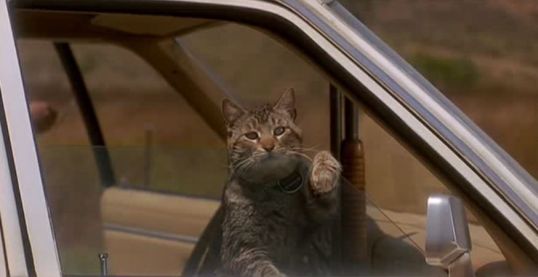
Sleepwalkers (1992, dir by Mick Garris, written by Stephen King, DP: Rodney Charters)
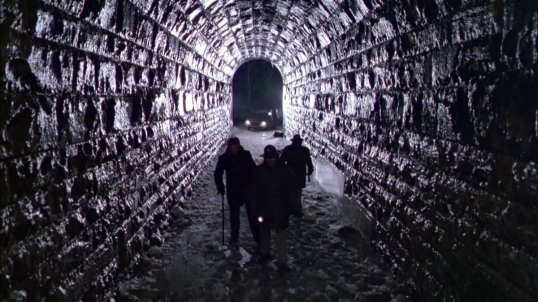
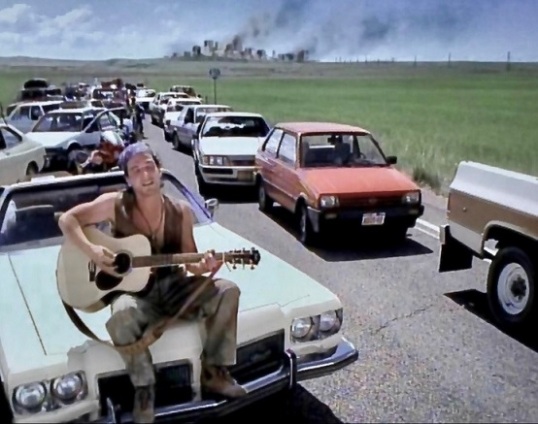
The Stand (1994, dir by Mick Garris, written by Stephen King, DP: Edward J. Pei)
4 Or More Shots From 4 Or More Films is just what it says it is, 4 shots from 4 of our favorite films. As opposed to the reviews and recaps that we usually post, 4 Shots From 4 Films lets the visuals do the talking!
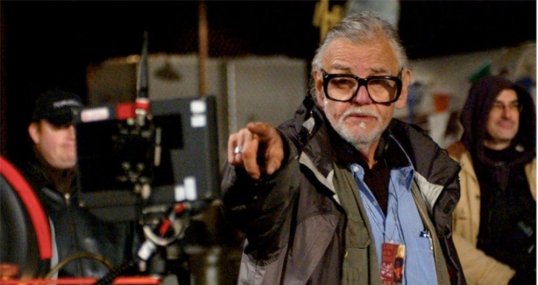
Happy Halloween! Today, we pay tribute to the patron saint of American horror, George Romero! We’ve watched Night of the Living Dead! Now, it’s time for….
4 Shots From 4 George Romero Films
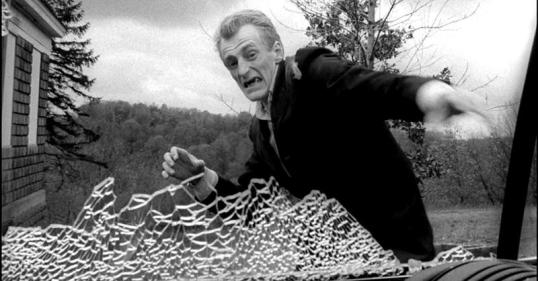
Night of the Living Dead (1968, dir by George Romero, DP: George Romero)
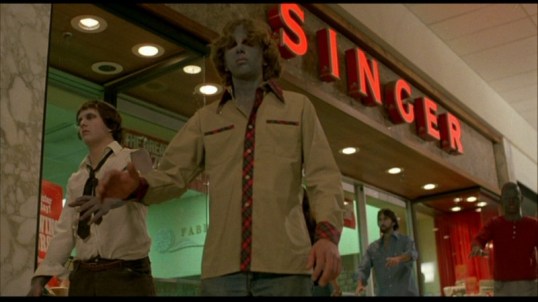
Dawn of the Dead (1978, dir by George Romero, DP: Michael Gornick)
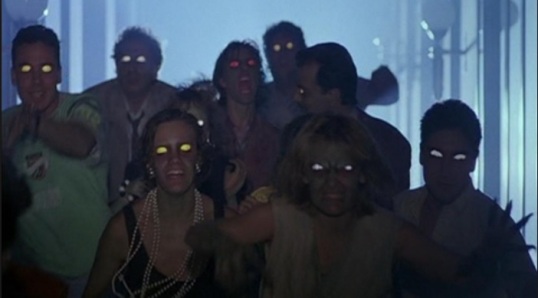
Martin (1978, dir by George Romero, DP: Michael Gornick)
Day of the Dead (1985, dir by George Romero, DP: Michael Gornick)
Well, as another horrorthon draws to a close, it’s time for another Shattered Lens tradition! Every Halloween, we share one of the greatest and most iconic horror films ever made. For your Halloween enjoyment, here is George Romero’s Night of the Living Dead!
It will always fascinate me that Stephen King, one of the most popular writers in the world and one of the legitimate masters of horror, also has one of the least inspiring accounts on twitter.
Seriously, he may be the most popular author in the world but he tweets like a retiree who has just discovered the internet. Go over to his twitter account and you won’t find memorable descriptions of small town hypocrisy. You won’t find scenes of shocking psychological insight. You won’t find moments of unexpected but laugh-out-loud dark humor. Instead, you’ll find a combination of dad jokes, boomer nostalgia, and an unseemly obsession with wishing death on any public figure who is to the right of Bernie Sanders. It’s odd because no one can deny that King’s a good storyteller. At his best, Stephen King is responsible for some of the best horror novels ever written. Everyone who is a horror fan owes him a debt of gratitude for the work that he’s done promoting the genre. At his worst, he’s your uncle who retweets the article without reading it first.
Of course, someone can be great at one thing an terrible at something else. I can dance but I certainly can’t sing. Stephen King can write a best seller but a good tweet is beyond him. That’s the dual nature of existence, I suppose. That’s certainly one of the themes at the heart of both Stephen King’s The Dark Half and the subsequent film adaptation from George Romero.
Filmed in 1990 but not released for three years due to the bankruptcy of the studio that produced it, The Dark Half tells the story of Thad Beaumont and George Stark (both played by Timothy Hutton). Thad is a professor who writes “serious” literature under his real name and violent, pulpy fiction under the name of George Stark. No one reads Thad’s books but they love George Stark and his stories about the master criminal and assassin, Alexis Machine. (Alexis Machine? George Stark may be a good writer but he sucks at coming up with names.) After a demented fan (played, with creepy intensity, by Robert Joy) attempts to blackmail him by threatening to reveal that he’s George Stark, Thad decides to go public on his own. His agent even arranges for a fake funeral so that Thad can bury George once and for all.
Soon, however, Thad’s associates are turning up dead. It seems as if everyone associated with the funeral is now being targeted. Sheriff Alan Pangborn (Michael Rooker) suspects that Thad is the murderer. However, the murderer is actually George Stark, who has come to life and is seeking revenge. Of course, George has more problems than just being buried. His body is decaying and he’s got a bunch of angry sparrows after him. The Sparrows Are Flying Again, we’re told over and over. Seeking to cure his affliction and to get those birds to leave him alone, Stark targets Thad’s wife (Amy Madigan) and their children.
The Dark Half has its moments, as I think we would expect of any film based on a Stephen King novel and directed by George Stark. Some of the deaths are memorably nasty. Hutton is believably neurotic as Thad and cartoonishly evil as Stark and, in both cases, it works well. Rooker may be an unconventional pick for the role but he does a good job as Pangborn and Amy Madigan brings some unexpected energy to the thankless role of being the threatened wife.
But, in the end, The Dark Half never really seems to live up to its potential. In the book, Thad was a recovering alcoholic and it was obvious that George Stark was a metaphor for Thad’s addiction. That element is largely abandoned in the movie and, as a result, George goes from being the literal representation of Thad’s demons to just being another overly loquacious movie serial killer. Despite having a few creepy scenes, the film itself is never as disturbing as it should be. For all the blood, the horror still feels a bit watered down. Take away the sparrows and this could just as easily be a straight-forward action film where the hero has to rescue his family from a smug kidnapper. Comparing this film to Romero’s Martinis all the proof you need that Romero was best-served by working outside the mainstream than by trying to be a part of it.
Add to that, I got sick of the sparrows. Yes, both the film and the book explain why the sparrows are important but “The Sparrows Are Flying Again” almost sounds like something you’d find in something written in a deliberate attempt to parody King’s style. It’s a phrase that’s intriguingly enigmatic the first time that you hear it, annoying the third time, and boring the fifth time.
The Dark Half was a bit of a disappointment but that’s okay. For King fans, there will always be Carrie. (I would probably watch The Shining but apparently, King still hasn’t forgiven Stanley Kubrick for improving on the novel.) And, for us Romero fans, we’ll always have Night of the Living Dead, Martin, Dawn of the Dead, and the original Crazies. And, for fans of George Stark, I’m sure someone else will pick up the story of Alexis Machine. It’s hard to keep a good character down.
This 1973 film is one of George Romero’s best non-Dead films, though it never seems to get the respect that it really deserves. Even today, the original is often overlooked in favor of the remake. And don’t get me wrong — the remake of The Crazies is good and it features several effective jump scares. But the remake is a slick Hollywood film and, watching it, you always have the safety of knowing that you’re watching a slick Hollywood film. The original, though, is rough and low-budget and it looks and it feels real. As a result, it sticks with you long after the haunting final scenes.
The storyline is simple but effective. People in a small Pennsylvania town are going crazy and murdering each other. Usually, it’s impossible to tell who is infected until they’re already attacking you. The infected are just like the zombies from Night of the Living Dead with one key difference. The crazies may be as relentless as the Dead but they’re also human beings. They think. They plan. They scheme. And when they die, they die like humans and we’re reminded that, just a few short hours ago, they were friendly and, more or less, harmless.
The government, of course, shows up in the town and tries to contain the outbreak. The main image that most people will carry away from The Crazies is of men in white hazmat suits, walking through small-town America and killing almost everyone they see. As is typical for a Romero film, the so-called solution often seems to be worse than the problem. We also get the typical conflict between the scientists and the military. The military wants to destroy the infected. The scientists want to cure them. The film is bleakly cynical as the one man who knows how to cure the disease is ignored and finally killed in a stampede of quarantined citizens.
The film follows six people as they attempt to escape from the town and avoid getting sick themselves. Needless to say, it’s not as easy as it sounds. The characters who everyone seems to remember are Artie (Richard Liberty) and his daughter, Kathy (Lynn Lowry). What happens to them is perhaps the most disturbing moment in a film that’s full of them. The other members of the group can only hope to survive, even as they slowly lose their grip on sanity.
It’s a disturbing film, precisely because it’s not slick. The actors are not movie star handsome and the attacks are not perfectly choreographed. The grainy cinematography gives the entire film a documentary feel and serves as a reminder that Romero made industrial films before he revolutionized the horror genre. The Crazies works because it feel like it could be happening in your community or your back yard. And, ultimately, it offers up no solution. Mankind could save itself, Romero seems to be saying, if only mankind wasn’t so stupid.
Needlessly to say, a film as bleak as The Crazies was not a hit in 1973. But it’s lived on and continued to influence other horror makers. It’s one of Romero’s best.
4 Shots From 4 Films is just what it says it is, 4 shots from 4 of our favorite films. As opposed to the reviews and recaps that we usually post, 4 Shots From 4 Films lets the visuals do the talking.
This October, we’ve been using 4 Shots from 4 Films to pay tribute to some of our favorite horror filmmakers! Today, we honor the father of modern horror, George Romero!
4 Shots From 4 George Romero Films
Night of the Living Dead (1968, dir by George Romero)
Well, as another horrorthon draws to a close, it’s time for another Shattered Lens tradition! Every Halloween, we share one of the greatest and most iconic horror films ever made. For your Halloween enjoyment, here is George Romero’s Night of the Living Dead!