4 Shots From 4 Films is just what it says it is, 4 shots from 4 of our favorite films. As opposed to the reviews and recaps that we usually post, 4 Shots From 4 Films lets the visuals do the talking!
Today, we wish a happy birthday to the great Kurt Russell! Last year, we pretty much reviewed every Kurt Russell films that we could find. It was a great day. This year, we cannot let the day pass without offering up….
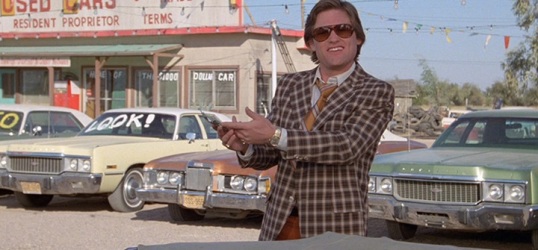
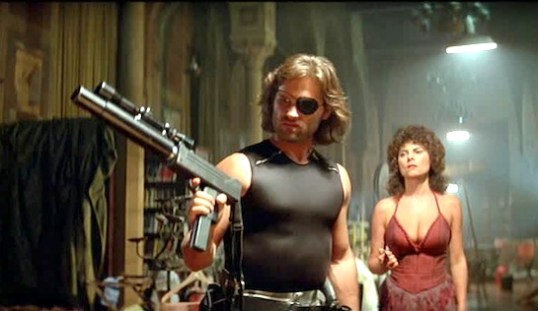
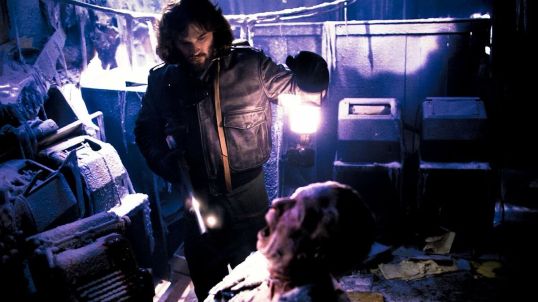
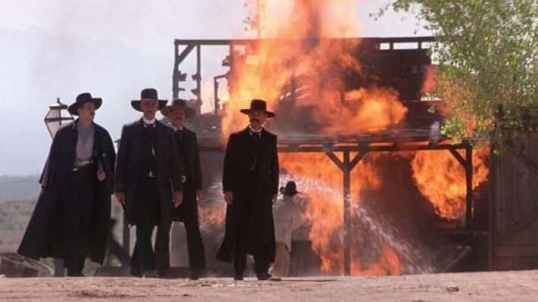
4 Shots From 4 Kurt Russell Films
Used Cars (1980, dir by Robert Zemeckis, DP: Donald M. Morgan)
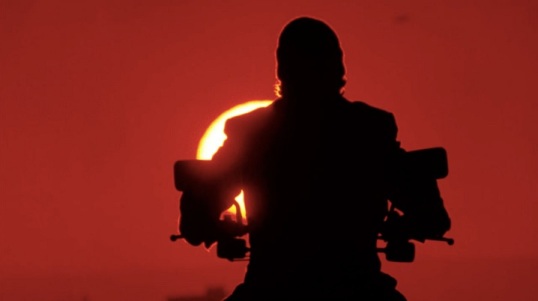
Escape From New York (1981, dir by John Carpenter, DP: Dean Cundey)
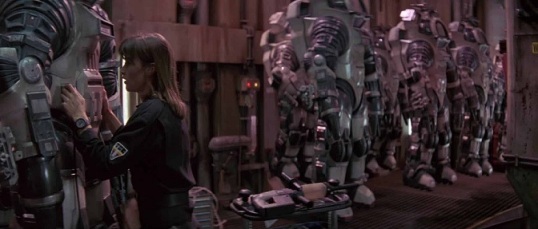
The Thing (1982, dir by John Carpenter, DP: Dean Cundey)
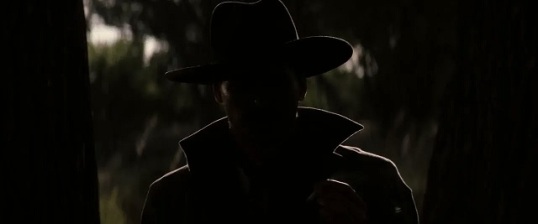
Tombstone (1993, dir by George Pan Cosmatos (and Kurt Russell), DP: William Fraker)
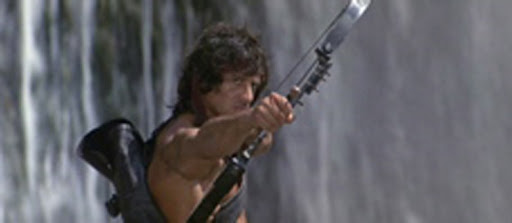
Today’s scene that I love comes from the 1985 film, Rambo: First Blood Part II. In this scene, Sylvester Stallone’s John Rambo — having survived being abandoned yet again in Vietnam — let’s the CIA knew exactly what he thinks about their operation. As directed by George Pan Cosmatos and performed by Stallone, this scene is pure 80s action.
If you ever meet James Cameron, remind him that he wrote the script for this film and see how he reacts.
4 Or More Shots From 4 Or More Films is just what it says it is, 4 shots from 4 of our favorite films. As opposed to the reviews and recaps that we usually post, 4 Shots From 4 Films lets the visuals do the talking!
Today, we celebrate the birth of director George Pan Cosmatos! It’s time for….
4 Shots From 4 George Pan Cosmatos Films
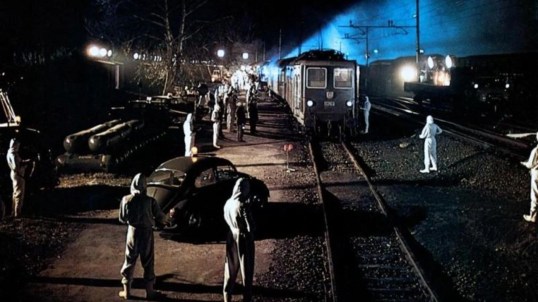
The Cassandra Crossing (1976, dir by George Pan Cosmatos, DP: Ennio Guarnieri)
Rambo: First Blood Part II (1985, dir by George Pan Cosmatos, DP: Jack Cardiff)
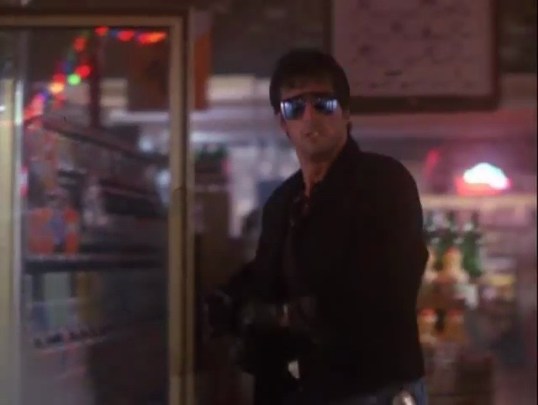
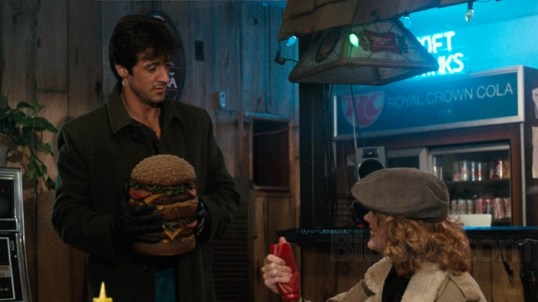
Cobra (1986, dir. George Pan Cosmatos, DP: Ric Waite)
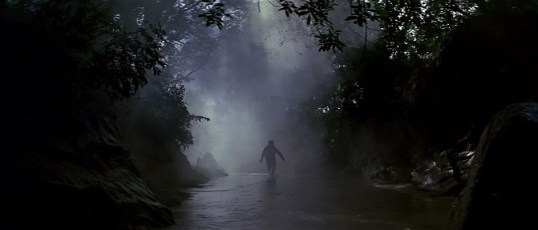
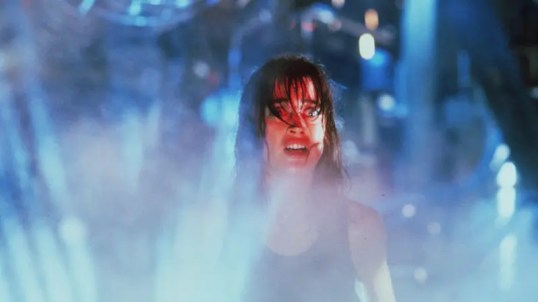
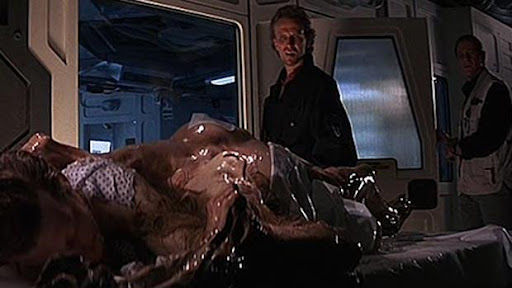
Leviathan (1989, dir by George Pan Cosmatos, DP: Alex Thomson)
1976’s The Cassandra Crossing opens with a shot of the headquarters of the World Health Organization in Geneva, Switzerland. Though the film (and the shot) may be from the 70s, one look at the ugly brutalism of the WHO’s headquarters is all it takes to understand the mentality that, nearly 50 years later, would lead to the organization serving as China’s mouthpiece during the COVID pandemic.
Three Swedish terrorists attack the American mission at the WHO. One of them is killed by a guard. Another immediately falls victims to an unidentified disease that is apparently a new form of the Bubonic plague. The third (Lou Castel) escapes and boards a train that is heading for Sweden. Two Americans, Col. MacKenzie (Burt Lancaster) and Major Stack (John Phillip Law), and Swedish doctor Elena Stadner (Ingrid Thulin), try to figure out how to stop the spread of the infection.
While the infected terrorist lurches around the train, the passengers go through their own personal dramas. Renowned neurologist Jonathan Chamberlain (Richard Harris) flirts with his ex-wife, writer Jennifer Rispoli (Sophia Loren). Wealthy Nicole Dressler (Ava Gardner, whose voice sounds like a cigarette ad) boards the train with her heroin-addicted younger boyfriend, Robby Navarro (a long-haired, dark glasses-wearing Martin Sheen, acting up a storm and apparently having a lot of fun for once). Herman Kaplan (Lee Strasberg) is a regular on the train, a Holocaust survivor who enjoys a good chess game with the conductor, Max (Lionel Stander). Haley (OJ Simpson) is a narcotics agent who is disguised as a priest. Susan (Ann Turkel) is the hippie who just wants to have sex with her boyfriend (Ray Lovelock) but who keeps getting interrupted by other passengers. When she complains about already having had to already deal with one “sweaty pervert” during the day, Chamberlain replies, “Which sweaty pervert?” By this point, Chamberlain knows about the infected man and is trying to track him down before he can infect anyone else on the train.
The Cassandra Crossing is several films in one. It’s an all-star disaster film. It’s medical thriller. Once Col. MacKenzie decides that the best way to deal with the train (and to cover-up the fact that America was researching germ warfare) would be to send the train over the infamous Cassandra Crossing, an unstable bridge that is on the verge of collapse, it becomes a conspiracy thriller. It’s all a bit ludicrous, though in this post-pandemic age, there is definitely a renewed power to the images of Hazmat suit-wearing soldiers carrying submachine guns and threatening to kill anyone who resists going into quarantine. When it comes to films that make Hazmat suits look menacing, The Cassandra Crossing can proudly stand with George Romero’s The Crazies and Zombi 3.
Of course, with any disaster film, the real purpose of the movie is to gather together a collection of familiar faces and then allow the viewer to spend two hours trying to guess who will survive and who will not. The cast is full of actors who all probably deserved a better script. Richard Harris, Burt Lancaster, and Ingrid Thulin all look somewhat embarrassed. Ava Gardner and Martin Sheen fully embrace the melodrama. In fact, it’s hard for me to think of any other movie where Sheen actually seemed to be having as much fun as he does while playing the drug-addicted, prone-to-histrionics mountain climber in The Cassandra Crossing. As was typical of his film career, O.J. Simpson gives a very earnest performance. He’s not exactly good but it’s obvious that he’s trying really hard and it would make him likable if not for the fact that he’s O.J. Simpson, just 20 years away from getting away with murder. Out of the ensemble cast, Lionel Stander, Lee Strasberg, and Sophia Loren are the one who probably come the closest to actually giving good performances. Loren’s husband, Carlo Ponti, produced the film with Sir Lew Grade and Loren gives a performance that is blessed with the confidence of knowing her career had survived far worse than The Cassandra Crossing.
The Cassandra Crossing is the epitome of a film that’s not necessarily good but which is definitely entertaining. Between the drama-stuffed plot and the overwritten dialogue and the performances of Gardner and Sheen, it’s campy in the way that only an overproduced 70s disaster film can be. For certain viewers, there’s undoubtedly a lot of joy to be found in the scenes in which the passengers finally start to stand up to the authoritarians trying to force them into quarantine. That said, this is one of those films where we’re not meant to get particularly upset about hundreds of innocent people dying just because the main characters managed to come through unscathed. The film’s ending is right up there with Man of Steel as far as needless destruction is concerned. Fortunately, the ending also features some terrible miniature shots, all of which remind us not to take it all too seriously.
To paraphrase another 70s film: “Forget it, Jake. It’s The Cassandra Crossing.“
4 Or More Shots From 4 Or More Films is just what it says it is, 4 shots from 4 of our favorite films. As opposed to the reviews and recaps that we usually post, 4 Shots From 4 Films lets the visuals do the talking!
Today, the Shattered Lens wishes a happy birthday to Sylvester Stallone! It’s time for….
4 Shots From 4 Sylvester Stallone Films
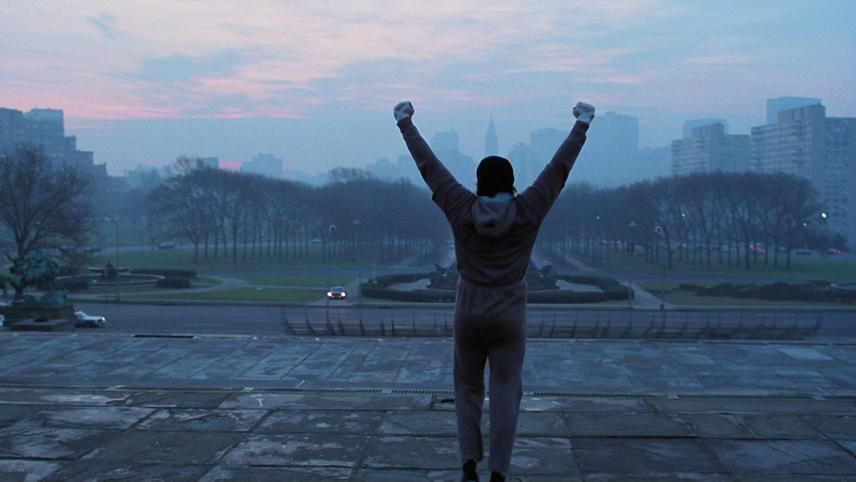
Rocky (1976, dir by John G. Avildsen, DP: James Crabe)
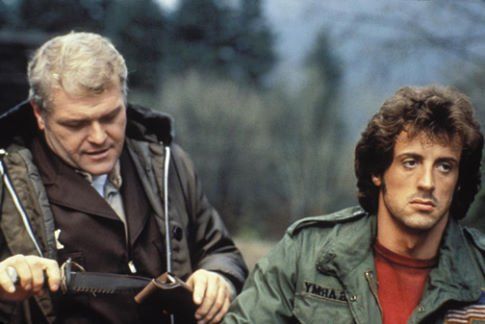
First Blood (1982, dir by Ted Kotcheff, DP: Andrew Laszlo)
Rocky III (1982, dir by Sylvester Stallone, DP: Bill Butler)
Rambo: First Blood Part II (1985, dir by George Pan Cosmatos, DP: Jack Cardiff)
Though the Academy of Motion Picture Arts and Sciences claim that the Oscars honor the best of the year, we all know that there are always worthy films and performances that end up getting overlooked. Sometimes, it’s because the competition too fierce. Sometimes, it’s because the film itself was too controversial. Often, it’s just a case of a film’s quality not being fully recognized until years after its initial released. This series of reviews takes a look at the films and performances that should have been nominated but were, for whatever reason, overlooked. These are the Unnominated.
I have come around on Tombstone.
The first time I watched this 1993 film, I was a bit confused as to why so many of my friends (especially my male friends) worshipped the film. To me, it was a bit too messy for its own good, an overlong film that told a familiar story and which featured so many characters that it was difficult for me to keep track of them all. Perhaps because everyone I knew loved the film so much, I felt the need to play contrarian and pick out every flaw I could find.
And I still think those flaws are there. The film had a troubled production, with original director Kevin Jarre falling behind in shooting and getting replaced by George Pan Cosmatos, a director who didn’t have any real interest in the material and whose all-business approach rubbed many members of the cast the wrong way. Kurt Russell took over production of the film, directing the actors and reportedly paring down the sprawling script to emphasize the relationship between Russell’s Wyatt Earp and Val Kilmer’s Doc Holliday. On the one hand, this led to a lot of characters who really didn’t seem to have much to do in the finished film. Jason Priestley’s bookish deputy comes to mind. On the other hand, Russell was right.
The film’s heart really is found in the friendship between Wyatt and Doc. It doesn’t matter that, in real life, Wyatt Earp was hardly as upstanding as portrayed by Kurt Russell. It also doesn’t matter that the real-life Doc Holliday was perhaps not as poetic as portrayed by Val Kilmer. Today, if you ask someone to picture Wyatt Earp, they’re probably going to picture Kurt Russell with a mustache, a cowboy hat, and a rifle. And if you ask them to picture Doc Holliday, they’re going to picture Val Kilmer, sweating due to tuberculosis but still managing to enjoy life. Did Doc Holliday every say, “I’ll be your huckleberry,” before gunning someone down? He might as well have. That’s how he’s remembered in the popular imagination. And it’s due to the performances of Russell and Kilmer that I’ve come around to eventually liking this big and flawed western. With each subsequent viewing, I’ve come to appreciate how Russell and Kilmer managed to create fully realized characters while still remaining true to the Western genre. If Wyatt Earp initially fought for the law, Doc Holliday fought for friendship. Kilmer is not only believable as a confident gunslinger who has no fear of walking into a dangerous situation. He’s also believable as someone who puts his personal loyalty above all else. He’s the type of friend that everyone would want to have.
That said, I do have to mention that there are a lot of talented people in the cast, many of whom are no longer with us but who will live forever as a result their appearance here. When Powers Boothe delivered the line, “Well …. bye,” he had no way of knowing that he would eventually become a meme. Boothe is no longer with us, I’m sad to say. But he’ll live forever as long as people need a pithy way to respond to someone announcing that they’re leaving social media forever. Charlton Heston appears briefly as a rancher and he links this 90s western with the westerns of the past. Robert Mitchum provides the narration and it just feels right. The large ensemble cast can be difficult to keep track of and even a little distracting but there’s no way I can’t appreciate a film that manages to bring together not just Russell, Kilmer, Boothe, Heston, and Mitchum but also Sam Elliott, Bill Paxton, Michael Biehn, Michael Rooker, Billy Bob Thornton, Frank Stallone, Terry O’Quinn, and even Billy Zane! The female roles are a bit underwritten. Dana Delaney is miscast but Joanna Pacula feels exactly right as Doc Holliday’s lover.
But ultimately, this film really does belong to Val Kilmer. When I heard the sad news that he had passed away last night, I thought of two films. I thought of Top Gun and then I thought of Tombstone. Iceman probably wouldn’t have had much use for Doc Holliday. And Doc Holliday would have resented Iceman’s attitude. But Val Kilmer — that brilliant actor who was so underappreciated until he fell ill — brought both of them to brilliant life. In the documentary Val, Kilmer attends a showing of Tombstone and you can say he much he loves the sound of audience cheering whenever Doc Holliday showed up onscreen.
Tombstone was a flawed film and 1993 was a strong year. But it’s a shame that Val Kilmer was never once nominated for an Oscar. Tombstone may not have been a Best Picture contender but, in a year when Tommy Lee Jones won the Oscar for Best Supporting Actor for his role in the similarly flawed The Fugitive, it seems a shame that Kilmer’s Doc Holliday was overlooked.
Tombstone (1993, dir by George Pan Cosmatos (and Kurt Russell), DP: William Fraker)
4 Shots From 4 Films is just what it says it is, 4 shots from 4 of our favorite films. As opposed to the reviews and recaps that we usually post, 4 Shots From 4 Films lets the visuals do the talking!
Today, let us take a look back at a classic cinematic year. It’s time for….
4 Shots From 4 1985 Films
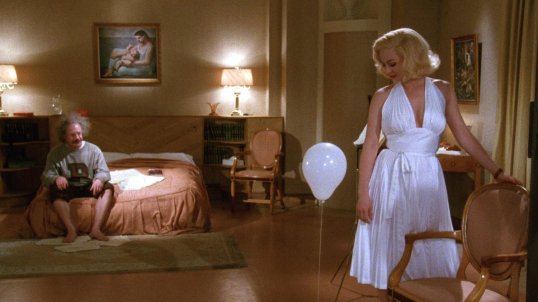
Insignificance (1985, directed by Nicolas Roeg, DP: Peter Hannan)
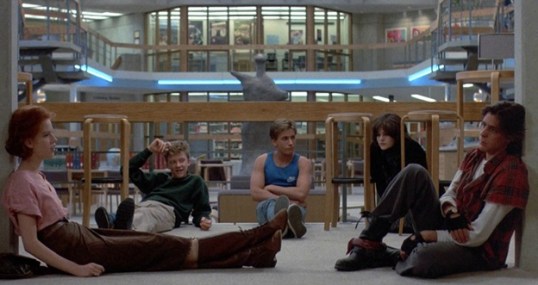
The Breakfast Club (1985, dir by John Hughes, DP: Thomas Del Ruth)
Rambo: First Blood Part II (1985, dir by George Pan Cosmatos, DP: Jack Cardiff)
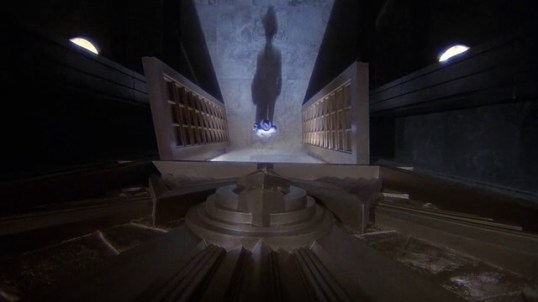
Brazil (1985, dir by Terry Gilliam, DP: Roger Pratt)
4 Or More Shots From 4 Or More Films is just what it says it is, 4 shots from 4 of our favorite films. As opposed to the reviews and recaps that we usually post, 4 Shots From 4 Films lets the visuals do the talking!
Today, we celebrate the birth of director George Pan Cosmatos! It’s time for….
4 Shots From 4 George Pan Cosmatos Films
Rambo: First Blood Part II (1985, dir by George Pan Cosmatos, DP: Jack Cardiff)
Cobra (1986, dir by George Pan Cosmatos, DP: Ric Waite)
Leviathan (1989, dir by George Pan Cosmatos, DP: Alex Thomson)
Tombstone (1993, dir by George Pan Cosmatos (and Kurt Russell), DP: William Fraker)
On this date, in 1941, future director George Pan Cosmatos was born in Italy. Cosmatos would go on to direct some of the most financially successfully (if critically lambasted) films of the 80s. He’s also credited as being the director on Tombstone, though it’s generally agreed that Cosmatos largely deferred to Kurt Russell on that film. (Cosmatos was a last minute replacement for the film’s original director.)
Other than Tombstone, Cosmatos is best-known for the films that he did with Sylvester Stallone. And today’s scene that I love comes from the 1986 film, Cobra. In this short but unforgettable scene, we get a chance to learn a little about the Cobra lifestyle. If you have any doubt that Cobra’s a badass, just wait until you see how eats a pizza. He handles his guns just as well as he handle a slice of Pepperoni and a pair of scissors. That Night Slasher better watch out!
4 Or More Shots From 4 Or More Films is just what it says it is, 4 shots from 4 of our favorite films. As opposed to the reviews and recaps that we usually post, 4 Shots From 4 Films lets the visuals do the talking!
Today, we celebrate the birth of director George Pan Cosmatos! It’s time for….
4 Shots From 4 George Pan Cosmatos Films
Rambo: First Blood Part II (1985, dir by George Pan Cosmatos, DP: Jack Cardiff)
Cobra (1986, dir by George Pan Cosmatos, DP: Ric Waite)
Leviathan (1989, dir by George Pan Cosmatos, DP: Alex Thomson)
Tombstone (1993, dir by George Pan Cosmatos, DP: William Fraker)




 Through the Shattered Lens