If you had just moved to a small town in Georgia and your teenage son was framed for marijuana possession and sentenced to years of hard labor, what would you do?
Would you hire a good lawyer and file appeal after appeal?
Would you go to the media and let them know that the corrupt sheriff and his evil deputy are running a prostitution ring and the only reason your son is in prison is because you dared to call them out on their corruption?
Or would you get in a World War II-era Sherman tank and drive it across Georgia, becoming a folk hero in the process?
If you are Sgt. Zack Carey (James Garner), you take the third option. Sgt. Carey is only a few months from retirement but he is willing to throw that all away to break his son (C. Thomas Howell) out of prison and expose the truth about Sheriff Buelton (G.D. Spradlin) and Deputy Euclid Baker (James Cromwell, playing a redneck). Helping Sgt. Carey out are a prostitute (Jenilee Harrison), Carey’s wife (Shirley Jones), and the citizens of Georgia, who lines the road to cheer the tank as it heads for the Georgia/Kentucky border. It’s just like the O.J. Bronco chase, with James Garner in the role of A.C. Cowlings.
The main thing that Tank has going for it is that tank. Who has not fantasized about driving across the country in a tank and blowing up police cars along the way? James Garner is cool, too, even if he is playing a role that would be better suited for someone like Burt Reynolds. Tank really is Smoky and the Bandit with a tank in the place of that trans am. Personally, I would rather have the trans am but Tank is still entertaining. Dumb but entertaining.
One final note, a piece of political trivia: According to the end credits, the governor of Georgia was played by Wallace Willkinson. At first, I assumed this was the same Wallace Wilkinson who later served as governor of Kentucky. It’ not. It turns out that two men shared the same name. It’s just a coincidence that one played a governor while the other actually became a governor.
Quarterback Cat Catlan (Charlton Heston) used to be one of the greats. For fifteen years, he has been a professional football player. He probably should have retired after he led the New Orleans Saints to their first championship but, instead, the stubborn Cat kept playing. Now, he is 40 years old and struggling to keep up with the younger players. His coach (John Randolph) says that Cat has another two or three years left in him but the team doctor (G.D. Spradlin who, ten years later, played a coach in North Dallas Forty) says that one more strong hit could not only end Cat’s career but possibly his life as well. Two of former Cat’s former teammates (Bruce Dern and Bobby Troup) offer to help Cat find a job off the field but Cat tells them the same thing that he tells his long-suffering wife (Jessica Walter). He just has to win one more championship.
Number One is unique for being one of the first movies to ever take a look at the dark side of professional football. At 40, Cat is facing an uncertain future. His years of being a star have left him unprepared to deal with life in the real world. He has no real friends and a wife who no longer needs him. This would seem like a perfect role for Heston, who always excelled at playing misanthropes. Heston is convincing when he’s arguing with his wife or refusing to sign an autograph but, surprisingly, he is thoroughly unconvincing whenever he’s on the field. For all of his grunting and all the lines delivered through gritted teeth, Heston is simply not believable as a professional athlete, even one who is past his prime. (When he played the 40 year-old Cat, Heston was 46 and looked like he was 56.) Whenever Cat throws a football, he’s played by Heston in close-ups and very obviously replaced by real-life Saints quarterback Billy Kilmer for the long shots. A football film is only as good and convincing as the football action and, on that front, Number One leaves much to be desired.
This 1969 press photo displays Heston’s throwing technique.
Two final notes: For the scene in which Cat is tackled by three Dallas Cowboys (all played by actual players), Heston requested that the players actually tackle him. Heston ended up with three broken ribs.
Finally, Number One was made the cooperation of the New Orleans Saints and features several players in the cast. When Number One was filmed, the Saints were still a relatively new expansion team. Cat is described as having already led the Saints to a championship but it would actually be another 40 years before the Saints would finally make their first trip to the Super Bowl.
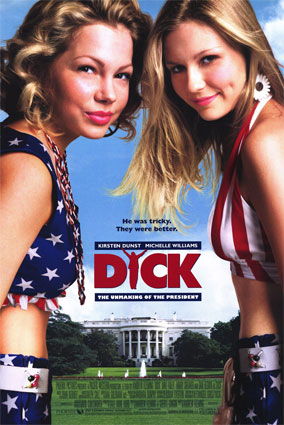
I wouldn’t necessarily say that I love Dick but I still think it’s a pretty good film. (Ha ha, see what I did there?) Of course, to really appreciate this 1999 comedy, it helps to know a little something about political history. For instance, it helps to know that the Dick of the title is President Richard Nixon (played here by a hilariously paranoid Dan Hedaya). In 1973, as the result of his attempt to cover up White House involvement of a burglary at the Watergate Hotel, Nixon became the first President to resign from office.
A lot of the credit for Nixon’s downfall was given to two reporters for the Washington Post, Bob Woodward and Carl Bernstein (played, in this film, by Will Ferrell and Bruce McCulloch). While Woodward and Bernstein investigated the Watergate break-in, they were reportedly fed information by a highly placed informant who was referred to as being Deep Throat. For years, the identity of Deep Throat was a closely held secret. Countless books were written that speculated as to who Deep Throat may have been. (In the film All The President’s Men, he was played by Hal Holbrook.) Finally, in 2005, it was revealed that Deep Throat was a FBI agent named Mark W. Felt, who was upset because he was passed over for a promotion.
And, quite frankly, that’s kind of a disappointing solution. When you think about someone who brought down the government, you hope that he or she will turn out to be something more than just a disgruntled employee whose previous work consisted on running counter intelligence operations against domestic political activists.
In fact, it’s hard not to wish that, perhaps, Deep Throat could have been two 15 year-old girls who just happened to stumble across one of the biggest political scandals in American history.
Well, fortunately, this is the theory proposed in Dick. Betsy (Kirsten Dunst) and Arlene (Michelle Williams) are two friends who, one night in 1972, sneak out of Arlene’s apartment so that they can mail a fan letter to singer Bobby Sherman. While doing so, they happen to stumble across the Watergate burglars and get a good look at White House aide G. Gordon Liddy (Harry Shearer).
The next day, while on a field trip to the White House, the two girls are spotted by Liddy. Liddy arranges for them to be pulled to the side and questioned by chief-of-staff H.R. Haldeman (Dave Foley), who determines that the girls barely know who Nixon is and that they don’t understand what they witnessed. However, before Haldeman can send the girls on their way, Nixon himself enters the office and complains about how poorly planned the break-in was.
This leads to an unlikely relationship between Nixon and Betsy and Arlene. Hoping to win their loyalty (and their silence), Nixon arranges for them to be his official dog walkers. Betsy and Arlene, meanwhile, still don’t have the slightest idea of what’s going on. They accidentally bring pot cookies to the White House (which Nixon particularly enjoys) and Arlene even develops a mad crush on Nixon.
But, of course, Nixon eventually shows his true colors and Betsy and Arlene take down the government….
In many ways Dick is a one-joke film, in which Betsy and Arlene regularly find themselves blissfully unaware while history literally unfolds around them. But it’s actually a pretty clever joke and it’s also a very plausible one. People are often unaware that anything important is happening when it’s actually happening. Often times, it’s only in retrospect that historical moments are seen to be truly historical. And, ultimately, Watergate itself is such a bizarre scandal that it’s the perfect moment in history to be reinterpreted as a comedy.
Dick is ridiculous enough to be funny but plausible enough to be memorable.
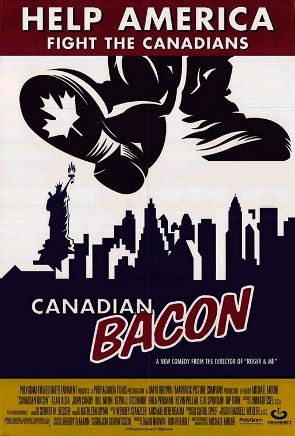
I have mixed feelings about the 1995 films Canadian Bacon.
On the one hand, Canadian Bacon is the only non-documentary to have been directed by Michael Moore. And I’m just going to admit right now that I don’t care much for Michael Moore. I think he’s fake. I think he’s the epitome of the type of limousine liberal who exclusively preaches to the converted and who, when all is said and done, does more harm to his causes than good. Just because he doesn’t shave, dresses like a slob, and apparently has never been to a gym, that doesn’t change the fact that he’s worth $50 million dollars. Just because he may claim to be for the workers, that doesn’t keep him from notoriously overworking and underpaying his own employees. Just because he may make films critical of capitalism, that certainly hasn’t stopped him from investing millions in the very same companies that he claims to oppose. And, quite frankly, it’s hard for me to take seriously a man who rails against income inequality when that man happens to own 9 mansions, none of which are exactly housing the homeless right now.
On the other hand, I love Canada! Canada has produced some of my favorite actors. It’s the country that created Degrassi. It’s the home of Lindsay Dianne and the Becoming A Bolder Being blog! Seriously, how can you not love Canada?
In fact, if a war ever broke out between American and Canada, I’m not sure who I’d support. Then again, hopefully Texas will have seceded from the U.S.A. before that happens. I’m keeping fingers crossed about that. Hopefully, once we have seceded, our first action will be to declare war on Vermont. (Not the rest of America, though. Just Vermont.)
The plot of Canadian Bacon is that the President of the United States (Alan Alda) is suffering from low approval ratings so he decides that America needs to find a new country to be enemies with. Mind you, the President doesn’t necessarily want to go to war. Instead, he just wants to have an enemy that he can always be on the verge of going to war with. After a riot breaks out at a hockey game, the President’s advisors realize that Canada would be the perfect enemy!
(And, while this is played for laughs, there actually is a historical precedent here. The War of 1812 was basically a result of America’s desire to conquer Canada.)
Anyway, American airwaves are soon full of anti-Canada propaganda and, since Michael Moore thinks everyone in America is an idiot except for him, gun-toting rednecks are soon preparing to do whatever it takes to defend America. A patriotic sheriff named Boomer (John Candy) decides to invade Canada on his own. Needless to say, things get even more complicated from there and soon a crazy weapons manufacturer (G.D. Spradlin) is plotting to launch a missile attack on Russia and … oh, who cares?
When Canadian Bacon tries to satirize politics and blind patriotism, it falls flat. Michael Moore has somehow earned a reputation for being a satirist but, if you actually look at his work, it quickly becomes apparent that he really doesn’t have much of a sense of humor. The humor in his documentaries is pretty much based on Moore saying, “Look how stupid everyone is except for me!” Since the people who watch Michael Moore documentaries are usually people who already agree with Michael Moore, they naturally find that to be hilarious because they already think anyone who disagrees with them is a joke. However, that doesn’t mean that Moore himself is a comic genius. He’s just a guy telling a joke to an audience that already knows the punchline.
Canadian Bacon is long on righteous indignation but it’s short on anything that would make you want to spend 90 minutes listening to the same point being made over and over again. Moore did make one good decision, in that he selected Rip Torn to play a crazed general. Rip Torn can deliver militaristic insults with the best of them.
The few times that Canadian Bacon actually works is when it gently (as opposed to indignantly) satirizes Canada’s reputation for being the most polite (and most hockey-obsessed) place on Earth. Dan Aykroyd has a great cameo as a Canadian police officer who pulls over Boomer’s truck and politely reprimands him for not including French translations for all of the anti-Canadian graffiti on the side of the vehicle.
Canadian Bacon could have used more scenes like that.
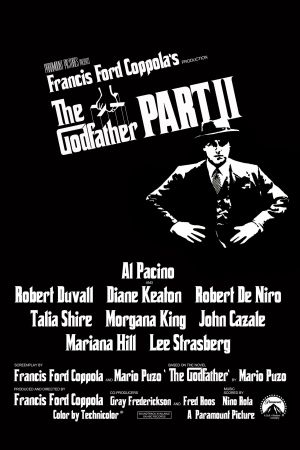
Believe it or not, The Trial of Billy Jackwas not the only lengthy sequel to be released in 1974. Francis Ford Coppola’s The Godfather Part II was released as well and it went on to become the first sequel to win an Oscar for best picture. (It was also the first, and so far, only sequel to a best picture winner to also win best picture.) Among the films that The Godfather, Part II beat: Chinatown, Coppola’s The Conversation, and The Towering Inferno. 1974 was a good year.
Whenever I think about The Godfather, Part II, I find myself wondering what the film would have been like if Richard Castellano hadn’t demanded too much money and had actually returned in the role of Clemenza, as was originally intended. In the first Godfather, Clemenza and Tessio (Abe Vigoda) were Don Corleone’s two lieutenants. Tessio was the one who betrayed Michael and was killed as a result. Meanwhile, Clemenza was the one who taught Michael how to fire a gun and who got to say, “Leave the gun. Take the cannoli.”
Though Castellano did not return to the role, Clemenza is present in The Godfather, Part II. The Godfather, Part II tells two separate stories: during one half of the film, young Vito Corleone comes to America, grows up to be Robert De Niro and then eventually becomes the Godfather. In the other half of the film, Vito’s successor, Michael (Al Pacino), tries to keep the family strong in the 1950s and ultimately either loses, alienates, or kills everyone that he loves.
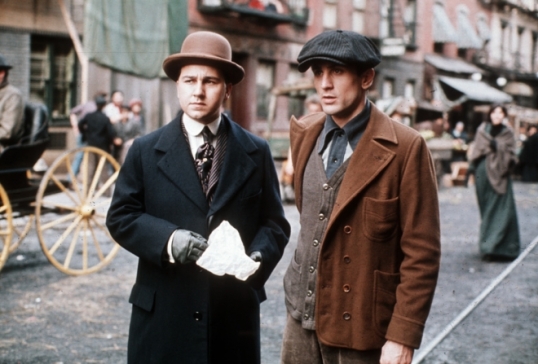
During Vito’s half of the film, we learn how Vito first met Clemenza (played by Bruno Kirby) and Tessio (John Aprea). However, during Michael’s half of the story, Clemenza is nowhere to be seen. Instead, we’re told that Clemenza died off-screen and his successor is Frankie Pentangeli (Michael V. Gazzo). All of the characters talk about Frankie as if he’s an old friend but, as a matter of fact, Frankie was nowhere to be seen during the first film. Nor is he present in Vito’s flashbacks. This is because originally, Frankie was going to be Clemenza. But Richard Castellano demanded too much money and, as a result, he was written out of the script.
And really, it doesn’t matter. Gazzo does fine as Frankie and it’s a great film. But, once you know that Frankie was originally meant to be Clemenza, it’s impossible to watch The Godfather Part II without thinking about how perfectly it would have worked out.
If Clemenza had been around for Michael’s scenes, he would have provided a direct link between Vito’s story and Michael’s story. When Clemenza (as opposed to Frankie) betrayed Michael and went into protective custody, it would have reminded us of how much things had changed for the Corleones (and, by extension, America itself). When Tom Hagen (Robert Duvall) talked Clemenza (as opposed to Frankie) into committing suicide, it truly would have shown that the old, “honorable” Mafia no longer existed. It’s also interesting to note that, before Tessio was taken away and killed, the last person he talked to was Tom Hagen. If Castellano had returned, it once again would have fallen to Tom to let another one of his adopted father’s friends know that it was time to go.
Famously, the Godfather, Part II ends with a flashback to the day after Pearl Harbor. We watch as a young and idealistic Michael tells his family that he’s joined the army. With the exception of Michael and Tom Hagen, every character seen in the flashback has been killed over the course of the previous two films. We see Sonny (James Caan), Carlo (Gianni Russo), Fredo (John Cazale), and even Tessio (Abe Vigoda). Not present: Clemenza. (Vito doesn’t appear in the flashback either but everyone’s talking about him so he might as well be there. Poor Clemenza doesn’t even get mentioned.)
If only Richard Castellano had been willing to return.
Clemenza and Vito
But he didn’t and you know what? You really only miss him if you know that he was originally meant to be in the film. With or without Richard Castellano, The Godfather, Part II is a great film, probably one of the greatest of all time. When it comes to reviewing The Godfather, Part II, the only real question is whether it’s better than the first Godfather.
Which Godfather you prefer really depends on what you’re looking for from a movie. Even with that door getting closed in Kay’s face, the first Godfather was and is a crowd pleaser. In the first Godfather, the Corleones may have been bad but everyone else was worse. You couldn’t help but cheer them on.
The Godfather Part II is far different. In the “modern” scenes, we discover that the playful and idealistic Michael of part one is gone. Micheal is now cold and ruthless, a man who willingly orders a hit on his older brother and who has no trouble threatening Tom Hagen. If Michael spent the first film surrounded by family, he spends the second film talking to professional killers, like Al Neri (Richard Bright) and Rocco Lampone (Tom Rosqui). Whereas the first film ended with someone else closing the door on Kay, the second film features Michael doing it himself. By the end of the film, Michael Corleone is alone in his compound, a tyrant isolated in his castle.
Michael’s story provides a sharp contrast to Vito’s story. Vito’s half of the film is vibrant and colorful and fun in a way that Michael’s half is not and could never be. But every time that you’re tempted to cheer a bit too easily for Vito, the film moves forward in time and it reminds you of what the future holds for the Corleones.
So, which of the first two Godfathers do I prefer? I love them both. If I need to be entertained, I’ll watch The Godfather. If I want to watch a movie that will truly make me think and make me question all of my beliefs about morality, I’ll watch Part Two.
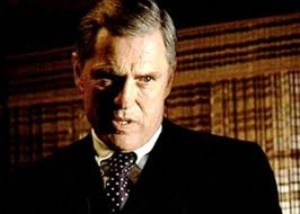
Finally, I can’t end this review without talking about G.D. Spradlin, the actor who plays the role of U.S. Sen. Pat Geary. The Godfather Part II is full of great acting. De Niro won an Oscar. Pacino, Gazzo, Lee Strasberg, and Talia Shire were all nominated. Diane Keaton, Robert Duvall, and John Cazale all deserved nominations. Even Joe Spinell shows up and brilliantly delivers the line, “Yeah, we had lots of buffers.” But, with each viewing of Godfather, Part II, I find myself more and more impressed with G.D. Spradlin.
Sen. Pat Geary doesn’t have a lot of time on-screen. He attends a birthday party at the Corleone Family compound, where he praises Michael in public and then condescendingly insults him in private. Later, he shows up in Cuba, where he watches a sex show with obvious interest. And, when Michael is called before a Senate committee, Geary gives a speech defending the honor of all Italian-Americans.
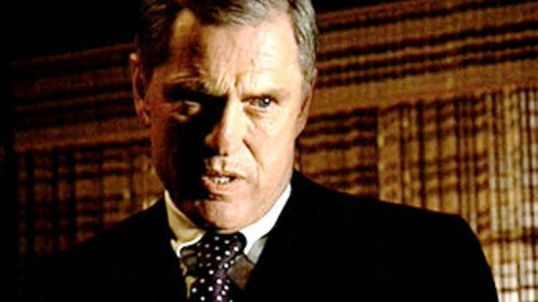
G.D. Spradlin as Sen. Pat Geary
But the scene that we all remember is the one where Tom Hagen meets Sen. Geary in a brothel. As Geary talks about how he passed out earlier, the camera briefly catches the sight of a dead prostitute lying on the bed behind him. What’s especially disturbing about this scene is that neither Hagen nor Geary seem to acknowledge her presence. She’s been reduced to a prop in the Corleone Family’s scheme to blackmail Sen. Geary. His voice shaken, Geary says that he doesn’t know what happened and we see the weakness and the cowardice behind his almost all-American facade.
It’s a disturbing scene that’s well-acted by both Duvall and Spradlin. Of course, what is obvious (even if it’s never explicitly stated) is that Sen. Geary has been set up and that nameless prostitute was killed by the Corleones. It’s a scene that makes us reconsider everything that we previously believed about the heroes of the Godfather.
For forcing us to reconsider and shaking us out of our complacency, The Godfather, Part II is a great film.
(Yes, it’s even better than The Trial of Billy Jack.)
Earlier today, I was looking through the list of recent death on Wikipedia (I do this several times a day. It’s one of my morbid habits.) and I came across the name of G.D. Spradlin.
G.D. Spradlin died on June 24th, at the age of 90. While G.D. Spradlin is a great name, it’s hardly a household name. However, if you’re in any way interested film, you’ve probably seen G.D. Spradlin at least once. G. D. Spradlin was a character actor who played small but key roles in some of the best films of the 1970s.
Spradlin’s most famous role was probably as the corrupt Senator Pat Geary in The Godfather, Part II. We see Sen. Geary a handful of times over the course of the film. At first, he’s just another folksy politician who, behind close doors, proves himself to be coldly corrupt. A bit later, we meet Geary again. This time, Geary is sitting naked in a brothel, shaking as he tries not to look at the dead prostitute lying on the bed behind him. Though it’s never explicitly stated, the suggestion is that the Corleone — the film’s “heroes” — murdered the prostitute and framed Geary for the crime. To me, this is the pivotal scene in the film because it’s the scene that reveals just how much Al Pacino’s Michael Corleone has changed in between the two Godfathers. The Michael from the first film might have ordered Geary killed but he never would have deliberately ordered the murder of an otherwise innocent bystander, regardless of her profession. It’s lucky for Geary that Michael changed his ways because it gives Geary a chance to later accompany him and Hyman Roth to Cuba. Finally, Geary shows up towards the end of the film, passionately defending Michael Corleone before a Senate committee on organized crime.
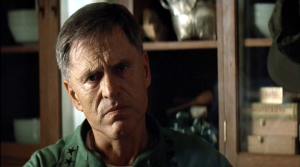
If you don’t remember Spradlin from The Godfather, Part II then maybe you remember him as the friendly yet sinister Gen. Corman from Apocalypse Now. When Martin Sheen is briefed on the man he’s been assigned to kill, it’s Spradlin who does the briefing.
Before going into acting, Spradlin was active in Oklahoma politics and he had the bearing of a man who was used to being in charge. If he had gone into acting a little bit earlier, he probably would have played countless ranchers and bank presidents in various Westerns. However, since he came to prominence as a character actor in the cynical cinema of the 1970s, it was his fate to play roles in which he epitomized the corruption of the American establishment. Though his roles were rarely big, he brought an unexpected depth to all of them and, as a result, played a key role in some of the greatest movies ever made.
Not too bad for a man who was never a household name.
 If you had just moved to a small town in Georgia and your teenage son was framed for marijuana possession and sentenced to years of hard labor, what would you do?
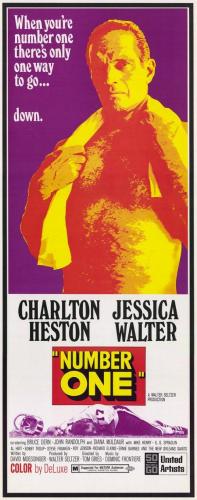 Quarterback Cat Catlan (Charlton Heston) used to be one of the greats. For fifteen years, he has been a professional football player. He probably should have retired after he led the New Orleans Saints to their first championship but, instead, the stubborn Cat kept playing. Now, he is 40 years old and struggling to keep up with the younger players. His coach (John Randolph) says that Cat has another two or three years left in him but the team doctor (G.D. Spradlin who, ten years later, played a coach in North Dallas Forty) says that one more strong hit could not only end Cat’s career but possibly his life as well. Two of former Cat’s former teammates (Bruce Dern and Bobby Troup) offer to help Cat find a job off the field but Cat tells them the same thing that he tells his long-suffering wife (Jessica Walter). He just has to win one more championship.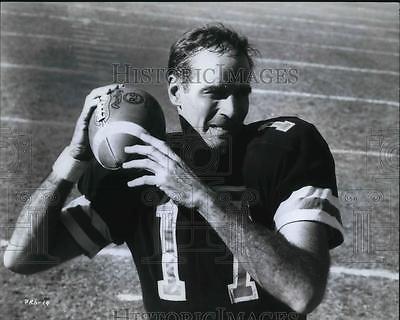
 Through the Shattered Lens