Today’s song of the day is an instrumental that was recorded and released in 1972. Frank Vincent is playing the drums. Joe Pesci is on guitar. Even if not for the celebrity connection, I would love this song. It’s really good!
Today’s song of the day is an instrumental that was recorded and released in 1972. Frank Vincent is playing the drums. Joe Pesci is on guitar. Even if not for the celebrity connection, I would love this song. It’s really good!
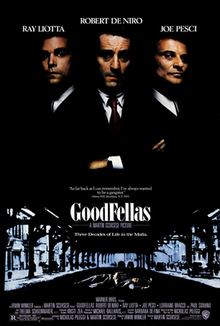
First released in 1990 and continuously acclaimed ever since, Goodfellas did not win the Oscar for Best Picture.
I’m always a bit surprised whenever I remember that. Goodfellas didn’t win Best Picture? That just doesn’t seem right. It’s not the other films nominated that year were bad but Goodfellas was so brilliant that it’s hard to imagine someone actually voting for something else. Seriously, it’s hard to think of a film that has been more influential than Goodfellas. Every gangster film with a soundtrack of kitschy tunes from the 6os and 70s owes huge debt to Goodfellas. Every actor who has ever been cast as a wild and out-of-control psycho gangster owes a debt to Joe Pesci’s performance as Tommy DeVito. When Ray Liotta passed away two years ago, we all immediately heard him saying, “I always wanted to be a gangster.” Robert De Niro’s Jimmy Conway remains the epitome of the ruthless gangster. For many, Paul Sorvino’s neighborhood godfather redefined what it meant to be a crime boss. Lorraine Bracco made such an impression as Karen Hill that it somehow seemed appropriate that she was one of the first people cast in The Sopranos, a show that itself would probably have not existed if not for Goodfellas. Frank Sivero, Samuel L. Jackson, Tobin Bell, Debi Mazer, Vincent Gallo, Ileana Douglas, Frank Vincent, Tony Sirico, Michael Imperioli, Tony Darrow, Mike Starr, Chuck Low, all of them can be seen in Goodfellas. It’s a film that many still consider to be the best of Martin Scorsese’s legendary career. Who can forget Robert De Niro smoking that cigarette while Sunshine of Your Love blared on the soundtrack? Who can forget “Maury’s wigs don’t come off!” or “Rossi, you are nothing but whore!?” Who can forget the cheery Christmas music playing in the background while De Niro’s Jimmy Conway grows more and more paranoid after pulling off the biggest heist of his career?
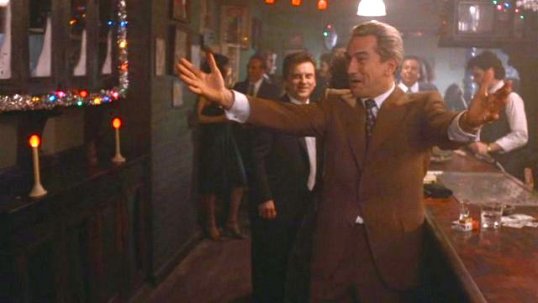
Plus, it’s a Christmas movie!
And yet, it did not win Best Picture.
Myself, whenever I’m sitting behind a garbage truck in traffic, I immediately start to hear the piano coda from Layla. For that matter, whenever I see a helicopter in the sky, I flash back to a coke-addled Henry Hill getting paranoid as he tries to pick up his brother from the hospital. Whenever I see someone walking across the street in the suburbs, I remember the scene where Henry coolly pistol-whips the country club guy and then tells Karen to hide his gun. I always remember Karen saying that she knows that many of her best friends would have run off as soon as their boyfriend gave them a gun to hide but “it turned me on.” It would have turned me on as well. Henry might be a gangster and his friends might be murderers but he doesn’t make any apologies for who he is, unlike everyone else in the world.
But it did not win Best Picture.
How many people have imitated Joe Pesci saying, “How am I funny?” How many times did Pesci and Frank Vincent have to listen to people telling them to “go home and get your fucking shinebox?” A lot of people remember the brutality of the scene where Pesci and De Niro team up to attack Vincent’s crude gangster but I always remember the sound of Donavon’s Atlantis playing on the soundtrack.
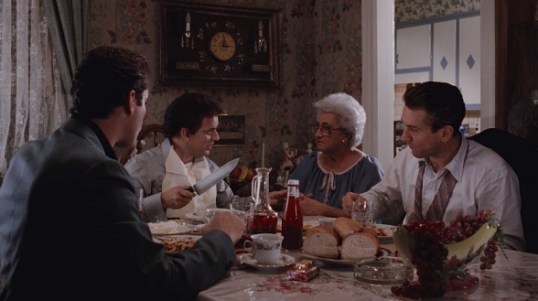
And then there’s Catherine Scorsese, showing up as Tommy’s mom and cooking for everyone while Vincent struggles to escape from the trunk of a car. “He is content to be a jerk,” Tommy says about Henry Hill. Just a few hours earlier, Tommy was apologizing to Henry for getting blood on his floor.
Goodfellas is a fast-paced look at organized crime, spanning from the 50s to the early 80s. Ray Liotta plays Henry Hill, who goes from idolizing gangsters to being a gangster to ultimately fearing his associates after he gets busted for dealing drugs. It’s a dizzying film, full of so many classic scenes and lines that it feels almost pointless to try to list them all here or to pretend like whoever is reading this review doesn’t remember the scene where the camera pans through the club and we meet the members of the crew. (“And then there was Pete The Killer….”) Goodfellas is a film that spend two hours showing us how much fun being a gangster can be and then thirty minutes showing us just how bad it can get when you’re high on coke, the police are after you, and you’ve recently learned that your associates are willing to kill even their oldest friends. No matter how many times I watch Goodfellas, I always get very anxious towards the end of the film. With the music pounding and the camera spinning, with Henry looking for helicopters, and with all of his plans going wrong over the course of one day, it’s almost a relief when Bo Dietl points that gun at Henry’s head and yells at him, revealing that Henry has been captured by the cops and not the Gambinos. Karen desperately running through the house, flushing drugs and hiding a gun in her underwear, always leaves me unsettled. It’s such a nice house but now, everything is crashing down.
There’s a tendency to compare Goodfellas to The Godfather, as their both films that re-imagine American history and culture through the lens of the gangster genre. I think they’re both great but I also think that they are ultimately two very different films. If The Godfather is sweeping and operatic, Goodfellas is the film that reminds us that gangsters also live in the suburbs and go to cookouts and that their wives take care of the kids and watch movies while the FBI searches their home. If The Godfather is about the bosses, Goodfellas is about the blue collar soldiers. The Godfather represents what we wish the Mafia was like while Goodfellas represents the reality.
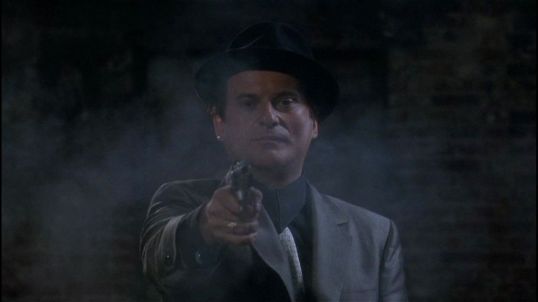
Goodfellas is one of the greatest films ever made but it lost the Best Picture Oscar to Dances With Wolves, a film that left audiences feeling good as opposed to anxious. To be honest, Martin Scorsese losing Best Director to Kevin Costner feels like an even bigger injustice than Goodfellas losing Best Picture. One can understand the desire to reward Dances With Wolves, a film that attempts to correct a decades worth of negative stereotypes about Native Americans. But Scorsese’s direction was so brilliant that it’s truly a shame that he didn’t win and that Lorraine Bracco didn’t win Best Supporting Actress. It’s also a shame that Ray Liotta wasn’t nominated for playing Henry Hill. At least Joe Pesci won an Oscar for redefining what it meant to be a gangster.
Goodfellas is proof that the best film doesn’t always win at the Oscars. But it’s also proof that a great film doesn’t need an Oscar to be remembered.
Welcome to Brooklyn!
The year is 1952 and one neighborhood in Brooklyn is on the verge of exploding.
A thug named Vinnie (Peter Dobson) holds court at a local bar. (His associates include the moronic Sal, who is played by a very young Stephen Baldwin.) Some nights, Vinnie and his associates mug people for money. Sometimes, they just attack people for fun.
A strike at the local factory has entered its sixth month, with management showing no sign of compromising and Boyce (Jerry Orbach), the head of the union, showing little concern for the men who are now struggling to feed their families. The local shop steward, Harry Black (Stephen Lang), is a self-important braggart who never stops talking about how he’s the one leading the strike. At home, Harry ignores his wife, with the exception of a violent quickie. On the streets, Harry embezzles money from the union and uses it to try to impress the men that he would rather be spending his time with. But even the men who Harry considers to be friends quickly turn on him when he is at his most pathetic.
Big Joe (Burt Young) is a proud union member who is shocked to discover that his teenage daughter (Ricki Lake) is 8-months pregnant. Despite being out-of-work and not caring much for Tommy (John Costelloe), Joe puts together the wedding that appears to be the social event of a shabby season. But even at the reception, violence lurks below the surface.
Georgette (Alexis Arquette) is a transgender prostitute who loves Vinnie, even after he and his idiot friends stab her in the leg while playing with a knife. Beaten at home by her homophobic brother (Christopher Murney), Georgette sinks into drug addiction.
Tralala (Jennifer Jason Leigh) is an amoral prostitute, one who specializes in picking up military men and then arranging from them to be mugged by Vinnie and his gang. Sick of being exploited by Vinnie, Tralala heads to Manhattan and meets Steve (Frank Military), an earnest soldier from Idaho. For the first time, Tralala is treated decently by a man but Steve is set to ship out to Korea in a few days and, as he continually points out, there’s a chance that he might not return. For all of the happiness she finds in Manhattan, Tralala is continually drawn back to her self-destructive life in Brooklyn.
First released in 1989 and directed by Uli Edel (who directed another film about desperation, Christiane F.), Last Exit To Brooklyn is based on a controversial novel by Hubert Selby, Jr. In fact, it was so controversial that the novel was banned in several countries and, for a while, was listed as being obscene by the U.S. Post Office. I read the novel in the college and it is indeed a dark and depressing piece of work, one that offers up very little hope for the future. It’s also brilliantly written, one that sucks you into its hopeless world and holds your interest no matter how bleak the stories may be. Due to its reputation, it took over 20 years for Last Exit to Brooklyn to be adapted into a film.
The film is actually a bit more positive than the book. One character who appears to die in the book manages to survive in the film. The wedding subplot was a minor moment in the book but, in the film, it’s made into a major event and provides some mild comedic relief. That said, the film is definitely dark. Almost every character is greedy and angry and those who aren’t are victimized by everyone else. Unfortunately, the film lacks the power of Selby’s pungent prose. As a writer, Selby held your attention even when you want to put the book away. When it comes to the film, the lack of Selby’s voice makes it very easy to stop caring about the characters or their stories. Even with the attempts to lighten up the story, the film is still so dark that it’s easy to stop caring. The non-stop bleakness starts to feel like a bit of an affectation.
And that’s a shame because there are some brilliant moments and some brilliant performances to be found in Last Exit To Brooklyn. An extended sequence where the police fight the striking workers is wonderfully directed, with the police becoming an invading army and the men on strike being transformed from just factory workers to rebels. The scene where Boyce informs Harry that he’s not as important as he thinks is wonderfully acted by both Jerry Orbach and Stephen Lang. As Tralala, Jennifer Jason Leigh gives a raw and powerful performance, whether she’s shyly accepting Steve’s kindness or drunkenly exposing herself to a bar full of lowlifes. In many ways, Tralala is the most tragic of all the characters to be found in Last Exit to Brooklyn. She’s tough. She’s angry. But, in the end, she’s ultimately the victim of men who are too stupid to understand anything other than aggression. The neighborhood applauds her when she confidently walks past a line of cops and strikebreakers but the same people who cheered for her later try to destroy her.
The film ends on an ambiguous note, with a peace that feels very temporary. The message seems to be that men are at their worst when they’re bored so perhaps it’s best to keep them busy, whether with a job or perhaps a wedding. It’s a flawed film but it sticks with you.

Previous Icarus Files:
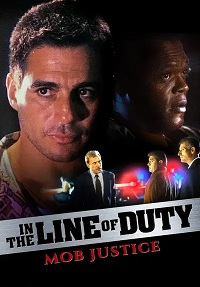 The fourth of NBC’s In The Line of Duty movies, Mob Justice opens with the murder of an undercover DEA agent by a low-level gangster who has just been released from prison. While the gangster goes into hiding, the DEA mobilizes and starts to make life so difficult for all of the other mobsters in New York that soon, the Mafia is as determined to get justice as law enforcement.
This was the first In The Line Of Duty film not be directed by Dick Lowry. Lowry’s fast-paced style is missed as Mob Justice takes forever to get going and regularly gets bogged down with scenes lifted from other mafia movies. The old mobsters talk about the importance of family, play cards in the backroom, and eat big dinners. Opera blares on the soundtrack when the DEA starts to harass them. For a movie that is supposed to honor the work and the sacrifice of federal law enforcement, the DEA actually comes across as being thoroughly incompetent in Mob Justice. A dumb mistake leads to the first murder. A series of other misjudgments lead to the Mafia dispensing the own type of violent justice before the DEA can arrest their man.
The most interesting thing about Mob Justice is the cast.
The trigger-happy gangster is played by Tony Danza, who I guess was trying to prove himself as a dramatic actor after spending years on Taxi and Who’s The Boss but who still comes across like Tony Micelli having a bad day. His best friend is played Nicholas Turturro, who later played a straight arrow detective on NYPD Blue. Frank Vincent and Leonardo Cimino plays the mob bosses who knows that murdering a federal agent is bad for business.
The head of the investigation is played by Ted Levine, who has had a long career but will always be remembered as the killer from The Silence of the Lambs. Working under him is Dan Lauria, who a generation will instantly recognize as being the long-suffering and frequently angry father from The Wonder Years. You know that this is a big case is Buffalo Bill and Jack Arnold are working together. (Dan Lauria actually appeared in several In The Line of Duty films, always playing different characters.)
And finally, the murdered DEA agent is played by none other than Samuel L. Jackson. It’s never a good thing when the best actor in a movie is killed off after the first fifteen minutes.
The cast is great but Mob Justice is forgettable. The main problem is that, after Jackson is taken out of the picture, the rest of the movie is just Danza hiding in different apartments while Levine and Lauria annoy Frank Vincent. Danza’s murderer is never smart nor interesting enough to be a compelling antagonist and there’s never any doubt that, one way or another, he will pay for his stupidity. There is one memorable scene where Danza freaks out while wearing a blonde wig but otherwise, Mob Justice doesn’t leave much of an impression.
This is not my favorite Martin Scorsese film.
I feel like I have to make that clear from the start because, for many people, this is their favorite Scorsese film. Though it may have gotten mixed reviews when it was first released, it is now regularly described as being the high point of Scorsese’s fabled collaboration with Robert De Niro. This was also the first film that Scorsese made with not only Joe Pesci but at also Frank Vincent as well. (In fact, the whole scene in Goodfellas where Pesci and De Niro nearly stomp Vincent to death is a bit of an homage to a scene in Raging Bull. Of course, Vincent got his revenge on Pesci in Casino.) This film earned Martin Scorsese his first Oscar nomination for best director and it’s regularly cited as being one of the greatest film ever made.
Even more importantly, 1980’s Raging Bull has been described — by none other than the director himself — as the film that saved Martin Scorsese’s life. Like a lot of his contemporaries, Scorsese got hooked on cocaine during the 70s. He even nearly died of an overdose. De Niro, who has been on Scorsese to direct Raging Bull for years, visited him in the hospital, brought him the script, told him to clean up his act, and make the film. When Scorsese started to work on the film, he assumed it would be his last. Whether Scorsese thought he would be dead or if he just thought he’d retire, I’m not sure. Still, if Raging Bull had not rejuvenated Scorsese’s love of cinema, he wouldn’t have subsequently directed some of the greatest films ever made. So, regardless of anything else, we have to be thankful that De Niro kept pushing Scorsese to direct Raging Bull.
The film itself is a biopic of Jake LaMotta (Robert De Niro), a brutal boxer who destroys opponents in the ring while destroying everyone who loves him outside of the ring. He’s the type of guy who takes joy in destroying one opponent’s face just because his wife, Vicki (Cathy Moriarty), said that the guy was handsome. When he’s forced to take a dive in order to win a title shot, he sobs in the locker room and it’s as close to being sympathetic as Jake gets. The rest of the movie, he spends his time terrorizing his wife and taking out his frustrations on his loyal brother, Joey (Joe Pesci).
Most boxing films tend to present boxers as being lovable lugs, guys who might not be too smart but who have found the one thing that they’re good at. (Think of the pre-Creed Rocky films.) In Raging Bull, there’s nothing lovable about Jake. He’s an animal, an angry man who fights because that’ the only way that he knows how to relate to the world. He’s the type of guy who spends all of his time looking for an excuse to get mad and throw a punch. The most dangerous thing you can do is make a joke in the presence of Jake LaMotta because, as portrayed in this film, he’s such an idiot that his reaction will always be to see it as a provocation. From beginning to end, he’s a loathsome figure but the young De Niro was such a charismatic actor that you keep watching because — much like Vicki — you keep hoping that you’ll see some glimmer of humanity and some chance of redemption.
Reportedly, Scorsese and De Niro feel that the end of Raging Bull does provide Jake with some redemption. Having lost everyone that ever loved him, an overweight Jake runs a sleazy nightclub and makes a fool of himself reciting dramatic monologues. The production actually shut down so that De Niro could overeat and gain all the extra weight and it is shocking to see him go from being a handsome, athletic man to a fat slob whose shirt can’t even cover his belly. No longer a boxer, Jake is now a faded D-list celebrity. Now that he can’t fight and he can’t make money for the mob and the gamblers, no one cares about him. That’s unfortunate for Jake but I have to say that I’ve never seen much redemption in Jake’s fate. If anything, I was just happy that Vicki finally got away from him.
Raging Bull is a film that’s easier to admire than to actually like. It’s impossible not to appreciate the black-and-white cinematography or the performances of De Niro, Pesci, and Cathy Moriarty. As directed by Scorsese, the boxing scenes are horrifying brutal, to the extent that you find yourself wondering how anyone could enjoy the sport. (When a spray of Jake’s blood hits the people in the first row, you can’t help but think that they’re all getting what they deserved.) That said, the film’s never been a favorite of mine because, as well done as it is, Jake LaMotta never seems like he’s worth spending two hours with.
Obviously, a lot of people disagree with me on that. Raging Bull received 8 Oscar nominations. Robert De Niro won Best Actor. Raging Bull, itself, lost Best Picture to Robert Redford’s Ordinary People.

 Garrison, New Jersey is a middle class suburb that is known as Cop Land. Under the direction of Lt. Ray Donlan (Harvey Keitel), several NYPD cops have made their home in Garrison, financing their homes with bribes that they received from mob boss Tony Torillo (Tony Sirico). The corrupt cops of Garrison, New Jersey live, work, and play together, secure in the knowledge that they can do whatever they want because Donlan has handpicked the sheriff.
Sheriff Freddy Heflin (Sylvester Stallone) always dreamed of being a New York cop but, as the result of diving into icy waters to save a drowning girl, Freddy is now deaf in one ear. Even though he knows that they are all corrupt, Freddy still idolizes cops like Donlan, especially when Donlan dangles the possibility of pulling a few strings and getting Freddy an NYPD job in front of him. The overweight and quiet Freddy spends most of his time at the local bar, where he’s the subject of constant ribbing from the “real” cops. Among the cops, Freddy’s only real friend appears to be disgraced narcotics detective, Gary Figgis (Ray Liotta).
After Donlan’s nephew, Murray Babitch (Michael Rapaport), kills two African-American teenagers and then fakes his own death to escape prosecution, Internal Affairs Lt. Moe Tilden (Robert De Niro) approaches Freddy and asks for his help in investigating the corrupt cops of Garrison. At first, Freddy refuses but he is soon forced to reconsider.
After he became a star, the idea that Sylvester Stallone was a bad actor because so universally accepted that people forgot that, before he played Rocky and Rambo, Stallone was a busy and respectable character actor. Though his range may have been limited and Stallone went through a period where he seemed to always pick the worst scripts available, Stallone was never as terrible as the critics often claimed. In the 90s, when it became clear that both the Rocky and the Rambo films had temporarily run their course, Stallone attempted to reinvent his image. Demolition Man showed that Stallone could laugh at himself and Cop Land was meant to show that Stallone could act.
For the most part, Stallone succeeded. Though there are a few scenes where the movie does seem to be trying too hard to remind us that Freddy is not a typical action hero, this is still one of Sylvester Stallone’s best performances. Stallone plays Freddy as a tired and beaten-down man who knows that he’s getting one final chance to prove himself. It helps that Stallone’s surrounded by some of the best tough guy actors of the 90s. Freddy’s awkwardness around the “real” cops is mirrored by how strange it initially is to see Stallone acting opposite actors like Harvey Keitel, Robert De Niro, and Ray Liotta. Cop Land becomes not only about Freddy proving himself as a cop but Stallone proving himself as an actor.

The film itself is sometimes overstuffed. Along with the corruption investigation and the search for Murray Babitch, there’s also a subplot about Freddy’s unrequited love for Liz Randone (Annabella Sciorra) and her husband’s (Peter Berg) affair with Donlan’s wife (Cathy Moriarty). There’s enough plot here for a Scorsese epic and it’s more than Cop Land‘s 108-minute run time can handle. Cop Land is at its best when it concentrates on Freddy and his attempt to prove to himself that he’s something more than everyone else believes. The most effective scenes are the ones where Freddy quietly drinks at the local tavern, listening to Gary shoot his mouth off and stoically dealing with the taunts of the people that he’s supposed to police. By the time that Freddy finally stands up for himself, both you and he have had enough of everyone talking down to him. The film’s climax, in which a deafened Freddy battles the corrupt cops of Garrison, is an action classic.
Though the story centers on Stallone, Cop Land has got a huge ensemble cast. While it’s hard to buy Janeane Garofalo as a rookie deputy, Ray Liotta and Robert Patrick almost steal the film as two very different cops. Interestingly, many members of the cast would go on to appear on The Sopranos. Along with Sirico, Sciorra, Patrick, and Garofalo, keep an eye out for Frank Vincent, Arthur Nascarella, Frank Pelligrino, John Ventimiglia, Garry Pastore, and Edie Falco in small roles.
Cop Land was considered to be a box office disappointment when it was released and Stallone has said that the film’s failure convinced people that he was just an over-the-hill action star and that, for eight years after it was released, he couldn’t get anyone to take his phone calls. At the time, Cop Land‘s mixed critical and box office reception was due to the high expectations for both the film and Stallone’s performance. In hindsight, it’s clear that Cop Land was a flawed but worthy film and that Stallone’s performance remains one of his best.

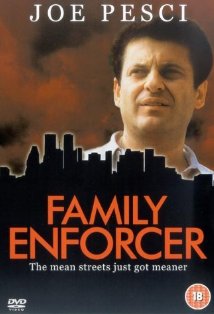 Jerry Bolanti (Joe Cortese) is a cocky loud-mouth who has just returned to New Jersey after serving a prison sentence. Jerry needs a work so a mid-level gangster named Tony (Lou Criscuolo) hires Jerry as a debt collector. The problem is that Jerry is just not very good at his job. His attempt to collect money from Bernie Feldshuh (Frank Vincent) leads to Bernie hiring a legendary hitman (Keith Davis) to kill Jerry. Despite working with two experienced enforcers, Joe (Joe Pesci) and Serge (Bobby Alto), Jerry’s next job is just as unsuccessful and leads to even more unnecessary deaths. Tony starts to wonder if maybe he made a mistake giving a job to Jerry and, unfortunately, no one simply gets fired from the Mafia.
A low-budget and nihilistic film, The Death Collector occupies a strange place in film history. Though it was largely ignored when it was first released, one of the few people who did see it was actor Robert De Niro. De Niro brought the film to the attention of Martin Scorsese, who was casting Raging Bull at the time. Both Joe Pesci and Frank Vincent made their film debuts in The Death Collector and, after watching the movie, Scorsese cast both of them in Raging Bull.
The rest is history:
In Raging Bull, Pesci beats up Vincent.
In Goodfellas, Pesci kills Vincent.
In Casino, Vincent finally gets to kill Pesci.
If not for The Death Collector, Frank Vincent would never have told Joe Pesci to “get your fucking shinebox.” If not for The Death Collector, Joe Pesci would never have thrown Frank Vincent in that trunk. It all started with The Death Collector.
As for the film itself, The Death Collector was filmed on location in New Jersey and it occasionally has a raw and intense grittiness but it suffers because there’s never any reason to care about Jerry. He starts the movie as an asshole and he ends the movie as an asshole and Joe Cortese’s bland performance fails to make Jerry into a compelling antihero. The Death Collector works best whenever Vincent and Pesci are on-screen. Pesci’s performance is slightly toned down version of the hyped-up maniacs that he became best known for playing while Vincent shows that, even in his first film, he was already a master at playing slightly ridiculous tough guys.
The Death Collector can also be found under the title, Family Enforcer. It’s been released on DVD by several companies, all of which claim that the film “stars” Joe Pesci. My copy has a picture of Pesci that was lifted from 8 Heads In A Duffel Bag on the cover.
(Minor spoilers below)
Casino, Martin Scorsese’s epic, Las Vegas-set film from 1995, is one of my favorite films of all time. It seems to show up on cable every other week and, whenever I see that it’s playing, I always make it a point to catch at least a few minutes.
Casino opens with veteran Las Vegas bookie Ace Rothstein (played by Robert De Niro) getting into a car. He starts the engine and the car explodes. The rest of the movie is an extended flashback as both Ace and his friend and eventual rival Nicky (Joe Pesci) explain how Ace went from being the most powerful man in Vegas to getting blown up in his car.
We are shown how Ace was originally sent to Vegas by a group of mobsters who are headquartered in the far less flamboyant town of Kansas City. Ace keeps an eye on the city for the bosses and, as long as the money keep coming in, they leave Ace alone to do whatever he wants. When Ace isn’t bribing government officials (including one particularly sleazy state senator who was reportedly based on future U.S. Sen. Harry Reid) and breaking the fingers of the unlucky gamblers who have been caught trying to cheat the casino, he’s busy falling in love with the beautiful prostitute Ginger (Sharon Stone, who was nominated for Best Actress for her work in this film). Though Ginger warns Ace that she doesn’t love him and is still hung up on her manipulative pimp Lester Diamond (James Woods, who is hilariously sleazy), Ginger and Ace still get married.
Everything’s perfect except for the fact that Ace’s old friend Nicky (Joe Pesci) has also moved to Vegas. As opposed to the calm and low-key Ace, Nicky has a violent temper and soon, he starts drawing unwanted attention to both himself and Ace. When Ace attempts to control Nicky, Nicky responds by turning on his friend and soon, the two of them are fighting an undeclared war for control of the city. Meanwhile, the bosses in Kansas City are starting to notice that less and less money is making its way back to them from Las Vegas…
There are so many things that I love about Casino that I don’t even know where to begin.
First off, I love the film’s glamour. I love the way that the film celebrates the glitz of Las Vegas, presenting it as an oasis of exuberant life sitting in the middle of a barren desert that, we’re told, is full of dead people. I love seeing the tacky yet stylish casinos. I love seeing the inside of Ace’s mansion. And Ginger’s clothes are just to die for!
I love that Scorsese’s signature visual style perfectly keeps up with and comments on the natural flamboyance of Las Vegas. Consider how the film starts, with the shadowy form of Ace Rothstein being tossed through the air and then descending back down to Earth. Consider the image of Ace standing in the middle of the desert and being submerged within a thick cloud of dust as Nicky’s car speeds away from him. Consider how Scorsese’s camera glides through the casino, letting us see both the people who cheat and the people who are watching them cheat. Consider Nicky standing outside of his jewelry stare and freezing the movement of the camera with his reptilian glare. Consider the scene of cocaine being snorted up a straw, seemingly filmed from inside the straw. Casino is a film full of the type of images that all directors promise but few ever actually deliver.
I love that Casino is built around a brilliant lead performance from Robert De Niro. De Niro gives a performance that mixes both tragedy and comedy. My favorite De Niro moment comes about halfway through the film, when Ace finds himself hosting a wonderfully tacky cable access show called Aces High. Ace interviews “celebrities” like Frankie Avalon, introduces the Ace Rothstein Dancers, and even finds the time to do some juggling. De Niro makes Ace into an endearing and awkward character in these scenes, a permanent outsider who has finally managed to become something of a star.
It’s easy to compare Casino to Scorsese’s other classic mix of gangster film and social satire, 1990’s Goodfellas. Both films feature De Niro, Pesci, and Frank Vincent. (In a nice piece of irony, Casino features Vincent getting a little revenge after being attacked twice by Joe Pesci in two different Scorsese films.) Both films are based on nonfiction books by Nicholas Pileggi. Both films feature nonstop music playing on the soundtrack. Both films feature multiple narrators who explain to us how the day-to-day operations of the Mafia are conducted. When Scorsese shows us Ace and Ginger’s wedding day, it feels almost like a scene-for-scene recreation of Henry Hill’s wedding in Goodfellas.
At the same time, there are a few key differences between Goodfellas and Casino. Whereas Goodfellas was all about being a low-level cog in the Mafia, Casino is about management. Casino is about the guys who the Goodfellas made rich. Goodfellas was about the drudgery of everyday life whereas Casino is about the glitz and the glamour promised by the fantasy world of Las Vegas. Whereas Goodfellas was almost obsessively anti-romantic, Casino is a gangster film with heart. No matter what else you might say about him as a character, Ace’s love for both Ginger and Las Vegas is real. On a similar note, when Nicky turns against Ace, it’s because his feelings have been hurt. In the end, Ace and Nicky come across like children who have, temporarily, been given the keys to the world’s biggest playground.
Casino is a glossy, flamboyant film that literally opens with a bang and ends on a note of melancholy and loss. Not only is Ace reduced to being an anonymous old man working out of a nondescript office but our last two views of Vegas are of the old casinos being dynamited and an army of overweight tourists emerging from the airport like the unstoppable zombies from Dawn of the Dead. This, then, is Scorsese’s view of the apocalypse. The world isn’t destroyed by a cataclysm but instead by an invasion of terminal middle American blandness.

 Through the Shattered Lens