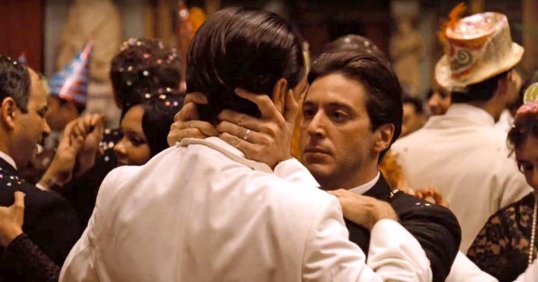
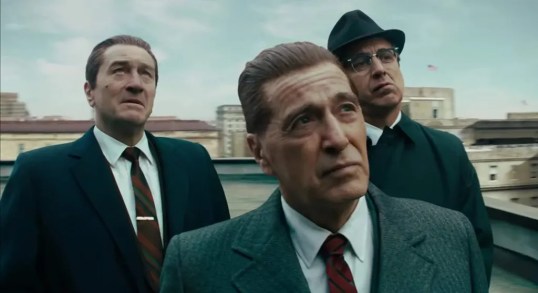
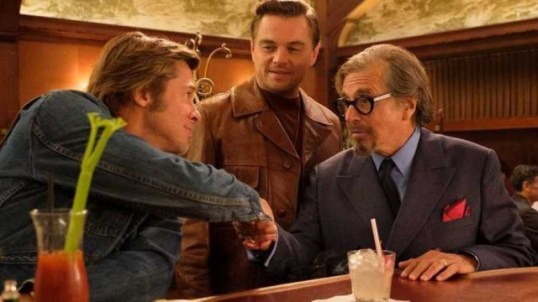
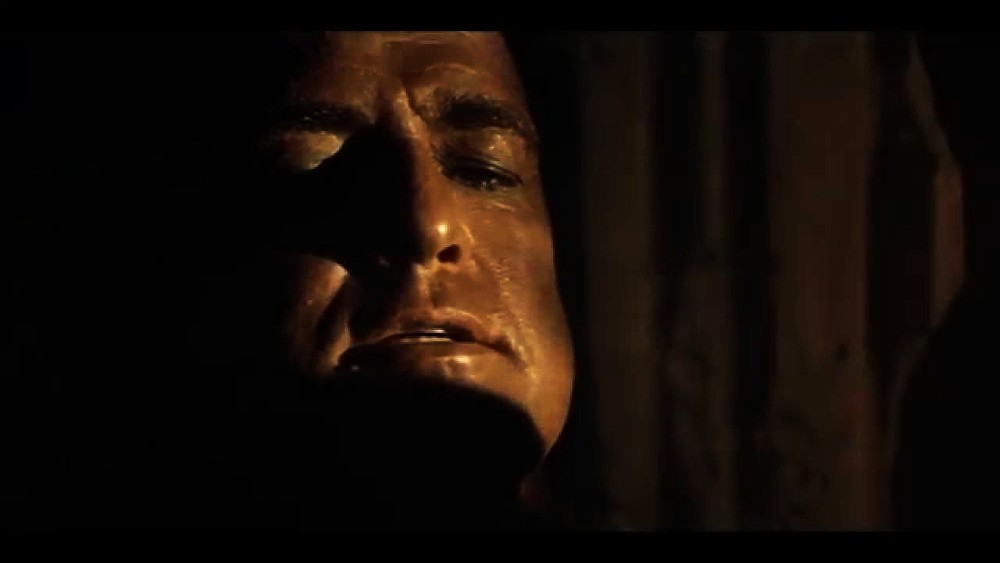
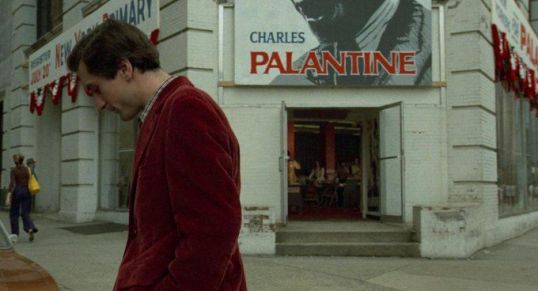
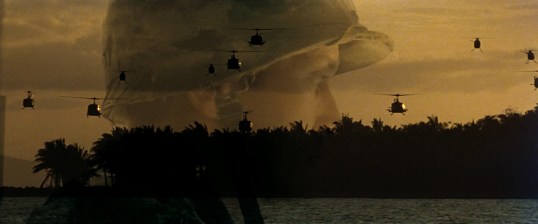
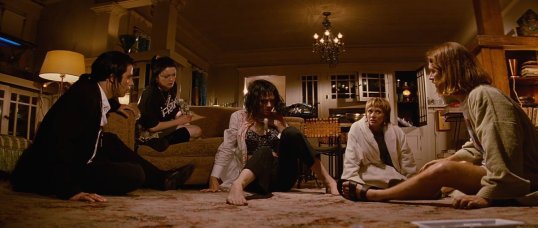
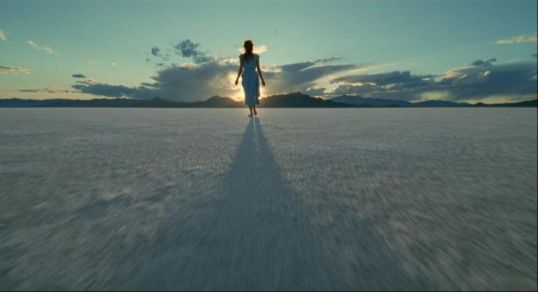
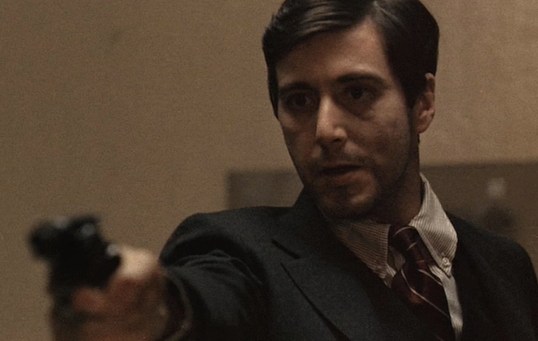
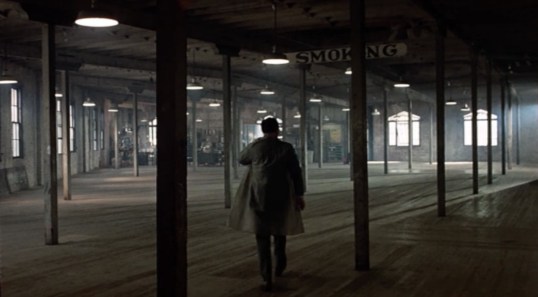
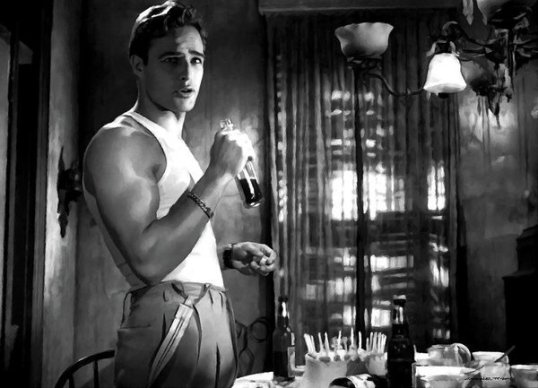
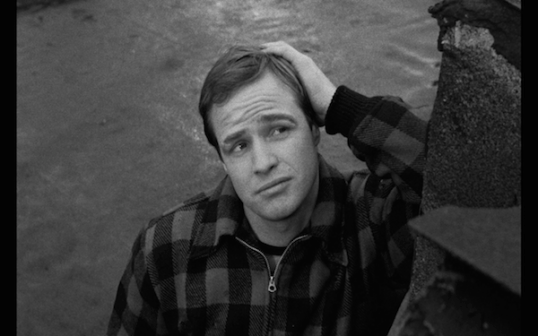
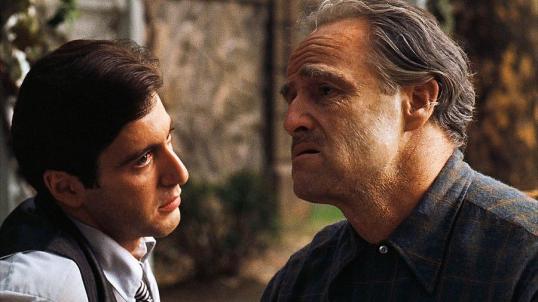
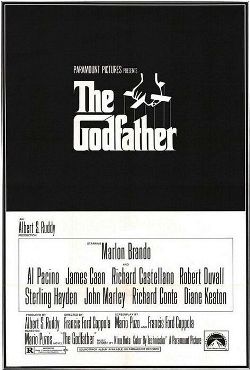
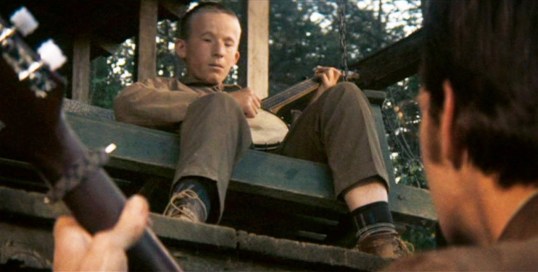
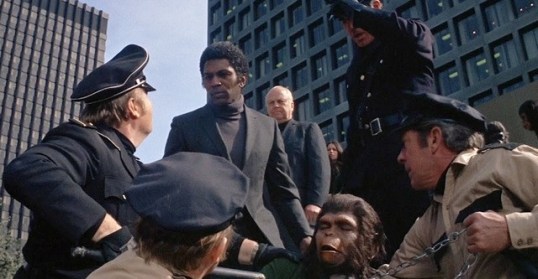
Today would have been James Caan’s 85 birthday so today’s scene that I love comes from one of Caan’s best-known films, The Godfather.
This scene features Caan’s Sonny Corleone in all of his glory, congratulating Michael on his broken jaw and getting on Tom Hagen’s nerves. Robert Duvall and James Caan were close friends in real life and that friendship definitely comes through in their performances as Tom and Sonny.
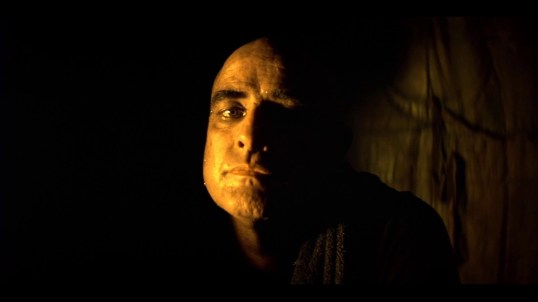
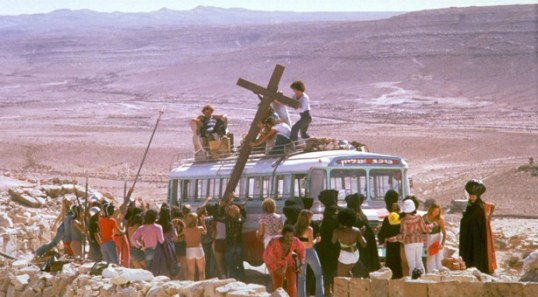
4 Shots From 4 Films is just what it says it is, 4 shots from 4 of our favorite films. As opposed to the reviews and recaps that we usually post, 4 Shots From 4 Films lets the visuals do the talking!
8 Shots From 8 Films is just what it says it is, 4 shots from 4 of our favorite films. As opposed to the reviews and recaps that we usually post, 8 Shots From 8 Films lets the visuals do the talking!
My list of my favorite Best Picture winners is a fluid one. There are a few — like All About Eve, It Happened One Night, the two Godfathers — that are always on the list. I love these four films with all my heart. Then there are films like No Country For Old Men that I think about and say, “Of course that’s going on the list!” There are other films that have snuck up on me. Until I was making out this list, I didn’t realize how much I truly did like Coda.
Anyway, here’s my top 8!
8 Shots From 8 Oscar-Winning Films
It Happened One Night (1934, dir by Frank Capra, DP: Joseph Walker)
Casablanca (1942, dir by Michael Curtiz, DP: Arthur Edeson)
All About Eve (1950, dir by Joseph L. Mankiewicz, DP: Milton R. Krassner)
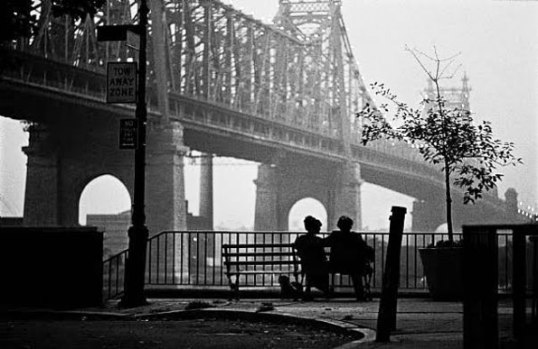
West Side Story (1961, dir by Robert Wise and Jerome Robbins, DP: Daniel L. Fapp)
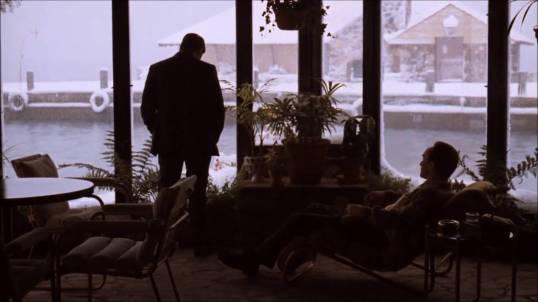
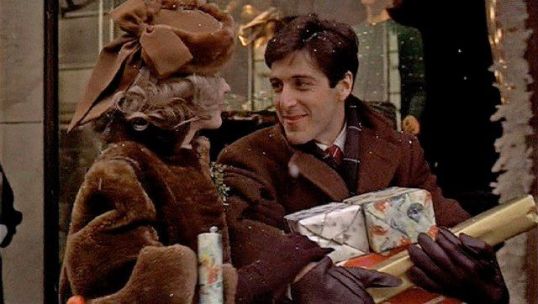
The Godfather (1972, dir by Francis Ford Coppola, DP: Gordon Willis)
The Godfather Part II (dir by Francis Ford Coppola, DP: Gordon Willis)
No Country For Old Men (2007, dir by Joel and Ethan Coen, DP: Roger Deakins)
CODA (2021, dir by Sian Heder, DP: Paula Huidobro)
Today, we wish a happy 95th birthday to the great actor-turned-writer Gene Hackman!
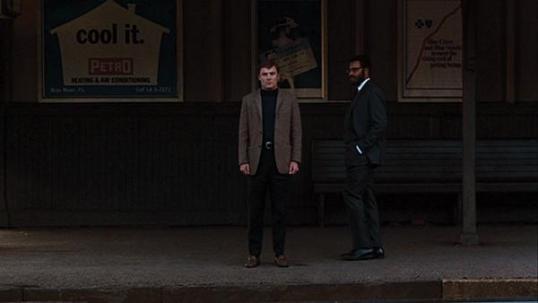
Today’s scene that I love comes from one of Hackman’s best films, 1974’s The Conversation. In this scene, Hackman’s surveillance expert has a nightmare inspired by his fear that his latest job may cause two people to be murdered. Hackman won two Oscars over the course of his career and was nominated several times. The fact that he was not nominated for The Conversation was a huge oversight on the part of the Academy.
First released in 1988, Tucker: The Man and His Dream is a biopic about Preston Tucker.
Tucker was an engineer in Detroit who went from designing vehicles for the Army during World War II to trying to launch his own car company. His ideas for an automobile don’t sound particularly radical today. He wanted every car to have seat belts. He wanted a windshield that popped out as a safety precaution. He want brake pads and he also wanted a car that looked sleek and aerodynamic, as opposed to the old boxy cars that were being pushed out be Detroit. He wanted a car that got good mileage and he wanted one that could be taken just about anywhere. Unfortunately, Tucker’s dreams were cut short when he was indicted for stock fraud, a prosecution that most people agree was a frame-up on behalf of the Big Three auto makers. Tucker was eventually acquitted but his car company went out of business. Of the 50 cars that Tucker did produce, 48 of them were still on the road and being driven forty years later.
The film stars Jeff Bridges as Preston Tucker, Joan Allen as his wife, Christian Slater and Corin Nemec as two of his sons, Lloyd Bridges as the senator who tried to take Tucker down, Martin Landau as Tucker’s business partner, and Dean Stockwell as Howard Hughes, who shows up for a few minutes to encourage Tucker to follow his dreams regardless of how much the government tries to stop him. One gets the feeling that the film was a personal one for director Francis Ford Coppola, a filmmaker who has pretty much spent his entire career fighting with studios while trying to bring his vision to the screen. Tucker fought for seat belts. Coppola fought for a mix of color and black-and-white in Rumble Fish. Tucker stood up for his business partner. Francis Ford Coppola stood up for Al Pacino when no one else could envision him as Michael Corleone. As is the case with many of Coppola’s films, Tucker: The Man And His Dream is a film that Coppola spent years trying to get made. It was the film that Coppola originally intended to be the follow-up to The Godfather, with Marlon Brando projected for the lead role of Tucker. After watching the Tucker, it’s hard not to feel that it worked out for the best that Coppola was not able to make the film in 1973. It’s impossible to imagine anyone other than Jeff Bridges in the role of Preston Tucker.
“Chase that tiger….chase that tiger….chase that tiger….” It’s a song that Tucker sings constantly throughout the film as the camera spins around him and how you react to Tucker: The Man And His Dream will largely depend on how tolerant you are of Coppola’s stylistic flourishes. Coppola directs the film as a combination of Disney fairy tale and film noir. The opening of the film, with Tucker running around in almost a manic state and excitedly telling everyone about his plans, is presented with vibrant colors and frequent smiles and an almost overwhelming air of cheerful optimism. As the film progresses and Tucker finds himself being targeted by both the government and the other auto companies, the film gets darker and the viewer starts to notice more and more shadows in the background. The moments of humor become less and less and there’s a heart-breaking moment where Martin Landau, in one of his best performances, reveals just how far the government will go to take down Tucker’s company. But, in the end, Tucker refuses to surrender and Jeff Bridges’s charming smile continues to fill the viewer with hope. The film becomes about more than just cars. It’s a film that celebrates all of the innovators who are willing to defy the establishment.
There’s a tendency to dismiss the majority of Coppola’s post-Apocalypse Now films. However, Tucker: The Man And His Dream is a later Coppola film that deserves to be remembered.
It’s hard to know where to really start with Megalopolis.
Directed, written, produced, and financed by Francis Ford Coppola, Megalopolis takes place in an alternate version of the United States of America. In this alternative world, New York is called New Rome and it is dominated by a handful of wealthy families. Former District Attorney Franklyn Cicero (Giancarlo Esposito) has been elected mayor. Everyone seems to hate Cicero and the character tends to come across as being a bit whiny so you really do have to wonder how he got elected in the first place.
Cicero is obsessed with the powerful Crassus-Catallina family, which is headed by banker Hamilton Crassus III (Jon Voight). Hamilton’s nephew is Cesar Catallina (Adam Driver), a brilliant architect who won a Nobel Prize for inventing a type of invisible material. Ever since Cesar’s wife vanished under mysterious circumstances, a cloud of scandal has hung over Cesar’s name and with that scandal has come popularity with both the masses and the tabloid press. When Cesar was tried for murder, the prosecutor was Franklin Cicero. Cesar was acquitted but he now spends his time drinking and mourning his wife. Cesar also has the power to stop time for everyone but him. Why he has this power and how he came to possess it is never made clear, though Cesar compares it to the way that a great painter or writer can capture one moment for eternity.
Cesar is driven through the rainy streets of New York by his chauffeur, Fundi Romaine (Laurence Fishburne). Fundi also serves as the film’s narrator, ruminating about how the Roman Empire eventually became a victim of its own decadence. Just in case the viewer somehow doesn’t pick up on the fact that the movie is comparing modern America to ancient Rome, Fundi informs us of this fact. Thanks, Fundi!
After Cesar publicly denounces Cicero’s plans to turn New Rome into a casino, Cicero’s daughter Julia (Nathalie Emmanuel) decides to take a break from decadent partying to follow Cesar around and try to discover whether or not he actually murdered his wife. Julia discovers that Cesar is not only still mourning his wife but she also witnesses him stopping time. Soon, Julia is working for Cesar’s design firm. At some point, she and Cesar become lovers.
Meanwhile, Cesar’s former lover, Wow Platinum (Aubrey Plaza), has married Crassus and is plotting to take control of his bank. Working with Wow is Cesar’s buffoonish cousin, Clodio Pulcher (Shia LaBeouf), who organizes the angry citizens of New Rome into a mob that threatens the safety and power of both Cicero and Cesar. “Make Rome Great Again,” a sign reads at one of Clodio’s rallies, just in case anyone was missing Coppola’s point.
Clodio is obsessed with destroying Cesar. First, he frames Cesar for deflowering New Rome’s vestal virgin, the singer Vesta Sweetwater (Grace VanderWaal). Then, he sends a 12 year-old assassin after Cesar. Cesar fears that he’s lost his ability to stop time. Julia falls more and more in love with him. Cicero gets booed everywhere he goes and, after his fixer (Dustin Hoffman) is mysteriously killed, he finds himself helpless against Clodio’s mob. Can Cesar be convinced to abandon his self-pity long enough to stand up to Clodio?
And what about the Russian spy satellite that just crashed into New Rome? Who will rebuild the city?
And …. well, let’s just say that there’s a lot going on in New Rome.
Francis Ford Coppola originally came up with the idea for Megalopolis in 1977 and he spent decades trying to bring the film to the big screen. Eventually, Coppola ended up producing and financing the film himself. From 2023 to the the day of the film’s Cannes premiere, the trade papers were full of stories about how difficult the production had been, with the underlying theme being that everything was Francis Ford Coppola’s fault and that the movie would be an unmitigated disaster. (In the coverage found in both Variety and The Hollywood Reporter, there seemed to be a good deal of hostility directed at Coppola’s decision to work outside of the Hollywood system.) Disgruntled members of the crew complained that Coppola was an undisciplined director who spent most of the production high. A half-baked attempt to generate a #MeToo scandal around the film made it obvious that Coppola had burned a lot of bridges with both Hollywood and the media. The film was released to critical derision and poor box office returns. Coppola is 85 years old and it’s entirely possible that Megalopolis will be his final film.
Critics be damned, I liked the majority of Megalopolis. Though the film may be thematically and narratively incoherent, it is a feast for the eyes and it’s hard not to respect the fact that, in this age of overwhelming conformity, Coppola brought his own unique vision to the screen. There are a few moments of genuinely macabre beauty to be found in the film. When the Russian satellite crashes into New York, we don’t see the impact but, on the city walls, we do see the shadows of people screaming in fear. When a drunk Cesar is driven through New Rome, he sees gigantic statues stepping off of their bases and slumping to the ground, exhausted with being on display. Coppola films New Rome like a beautiful, open-air prison. It’s an amazing view but don’t even think about trying to escape. The scenes in New Rome’s Coliseum are filled with an epic yet seedy grandeur. At times, the film’s scenes seem to be almost randomly assembled, leaving us to wonder if we’re seeing the past, the present, or maybe just something that Cesar is imagining in his head.
What is the film actually about? It’s not always easy to say. Even in his best films, Coppola has had a tendency to be self-indulgent. Sometimes, that self-indulgence pays off. Though few would admit it now, The Godfather Part II is one of the most self-indulgent films ever made. But it’s also brilliant so it doesn’t matter. However, with Megalopolis, it’s hard not to feel that this film was such a passion project for Coppola that he didn’t stop to consider whether or not he really had anything new to say. Megalopolis is hardly the first film to compare the supposed decline of America to the fall of the Roman Empire. As much as I enjoyed the film’s visuals, I cringed at the film’s ending. One can only imagine how a past Coppola collaborator like John Milius would have reacted to a bunch of children reciting a pledge to take care of the “one Earth.”
It’s a random film, one in which plot points are raised and often quickly abandoned. At one point, Cesar starts to recite Hamlet’s famous “to be or not to be” soliloquy. The cast is huge and everyone seems to be acting in a different movie. Surprisingly enough, neither Esposito nor Adam Driver are particularly believable in their roles, though I think that has more to do with the film’s loose narrative structure than anything else. Shia LaBeouf is convincingly feral as Clodio while Jon Voight seems to be having fun as the wealthy and crude Crassus. The best performance in the film comes from Aubrey Plaza, who plays her role like a vampish femme fatale who has somehow found herself in a science fiction story. Plaza holds nothing back with her performance and she actually manages to bring some genuine human emotion to Coppola’s surreal epic.
Megalopolis is a monument to self-indulgence but it’s always watchable. Coppola may not know what he’s trying to say but he captures the surreal beauty that comes from getting trapped in one’s own imagination. Megalopolis is not a film for everyone but I’m glad it exists. At a time when artistic freedom seems to be under constant attack, it’s hard not to be happy that Coppola did things his way.
4 Shots From 4 Films is just what it says it is, 4 shots from 4 of our favorite films. As opposed to the reviews and recaps that we usually post, 4 Shots From 4 Films lets the visuals do the talking.
Happy New Year’s Day! Did you have as wonderful a celebration as the characters featured in today’s special edition of 4 Shots From 4 Films?
4 Shots From 4 Films
The Poseidon Adventure (1972, dir by Ronald Neame, DP: Harold E. Stine)
The Godfather Part II (1974, dir by Francis Ford Coppola, DP: Gordon Willis)
New Year’s Evil (1980, dir by Emmett Alston, DP: Edward Thomas)
Once Upon A Time In America (1984, dir by Sergio Leone, DP: Tonino Delli Colli)
4 Shots From 4 Films is just what it says it is, 4 shots from 4 of our favorite films. As opposed to the reviews and recaps that we usually post, 4 Shots From 4 Films lets the visuals do the talking.
It’s Christmas! Here are 4 Shots from 4 Christmas classics!
4 Shots From 4 Films
The Godfather (1972, dir by Francis Ford Coppola, DP: Gordon Willis)
Die Hard (1988, directed by John McTiernan, DP: Jan de Bont)
Goodfellas (1990, dir by Martin Scorsese, DP: Michael Ballhaus)
Eyes Wide Shut (1999, dir by Stanley Kubrick, DP: Larry Smith)
The Michigan Movie Critics Guild have announced their picks for the best of 2024!
(The winners are listed in bold.)
Best Picture Anora
The Brutalist
Dune: Part Two
The Substance
Wicked
Best Director
Sean Baker – Anora
Jon M. Chu – Wicked Brady Corbet – The Brutalist
Robert Eggers – Nosferatu
Coralie Fargeat – The Substance
Best Actress
Amy Adams – Nightbitch
Cynthia Erivo – Wicked
Nicole Kidman – Babygirl Mikey Madison – Anora
Demi Moore – The Substance
Best Actor Adrien Brody – The Brutalist
Timothée Chalamet – A Complete Unknown
Daniel Craig – Queer
Colman Domingo – Sing Sing
Hugh Grant – Heretic
Best Supporting Actress Ariana Grande-Butera – Wicked
Felicity Jones – The Brutalist
Natasha Lyonne – His Three Daughters
Margaret Qualley – The Substance
Zoe Saldaña – Emilia Pérez
Best Supporting Actor
Yura Burisov – Anora
Kieran Culkin – A Real Pain
Clarence Maclin – Sing Sing Guy Pearce – The Brutalist
Adam Pearson – A Different Man
Denzel Washington – Gladiator II
Best Animated Film
Flow
Inside Out 2
Piece By Piece
Transformers One The Wild Robot
Best Documentary
Daughters
Music By John Williams
No Other Land
Piece By Piece Super/Man: The Christopher Reeve Story
Will & Harper
Best Ensemble Conclave
Dune: Part Two
Nosferatu
Saturday Night
Wicked
Best Screenplay (Adapted or Original) Anora
The Brutalist
Challengers
Nosferatu
The Substance
Wicked
Breakthrough Award Mikey Madison – Actress for Anora
Giovanni Ribisi – Cinematographer for Strange Darling
Jane Schoenbrun – Director for I Saw the TV Glow
Maisy Stella – Actress for My Old Ass
Zelda Williams – Director for Lisa Frankenstein
Stunts
Deadpool & Wolverine
The Fall Guy
Furiosa: A Mad Max Saga
Kill Monkey Man
Road House
The MMCG Award for Film Excellence (presented to a filmmaker, writer, actor, crew member, etc., who has Michigan ties or to a film made or set in Michigan) The Fire Inside (Set in Flint, and lead actress Ryan Destiny is a Detroit native)
Francis Ford Coppola (Writer/Director of Megalopolis)
Hundreds of Beavers (Partially filmed in Michigan)
Keegan-Michael Key (Actor in IF, Transformers One & Dear Santa)
J.K. Simmons (Actor in Saturday Night, Red One and Juror #2)
The Michigan Movie Critics Guild have announced their nominations for the best of 2024. The winners will be announced on December 9th!
Best Picture
Anora
The Brutalist
Dune: Part Two
The Substance
Wicked
Best Director
Sean Baker – Anora
Jon M. Chu – Wicked
Brady Corbet – The Brutalist
Robert Eggers – Nosferatu
Coralie Fargeat – The Substance
Best Actress
Amy Adams – Nightbitch
Cynthia Erivo – Wicked
Nicole Kidman – Babygirl
Mikey Madison – Anora
Demi Moore – The Substance
Best Actor
Adrien Brody – The Brutalist
Timothée Chalamet – A Complete Unknown
Daniel Craig – Queer
Colman Domingo – Sing Sing
Hugh Grant – Heretic
Best Supporting Actress
Ariana Grande-Butera – Wicked
Felicity Jones – The Brutalist
Natasha Lyonne – His Three Daughters
Margaret Qualley – The Substance
Zoe Saldaña – Emilia Pérez
Best Supporting Actor
Yura Burisov – Anora
Kieran Culkin – A Real Pain
Clarence Maclin – Sing Sing
Guy Pearce – The Brutalist
Adam Pearson – A Different Man
Denzel Washington – Gladiator II
Best Animated Film
Flow
Inside Out 2
Piece By Piece
Transformers One
The Wild Robot
Best Documentary
Daughters
Music By John Williams
No Other Land
Piece By Piece
Super/Man: The Christopher Reeve Story
Will & Harper
Best Ensemble
Conclave
Dune: Part Two
Nosferatu
Saturday Night
Wicked
Best Screenplay (Adapted or Original)
Anora
The Brutalist
Challengers
Nosferatu
The Substance
Wicked
Breakthrough Award
Mikey Madison – Actress for Anora
Giovanni Ribisi – Cinematographer for Strange Darling
Jane Schoenbrun – Director for I Saw the TV Glow
Maisy Stella – Actress for My Old Ass
Zelda Williams – Director for Lisa Frankenstein
Stunts
Deadpool & Wolverine
The Fall Guy
Furiosa: A Mad Max Saga
Kill
Monkey Man
Road House
The MMCG Award for Film Excellence (presented to a filmmaker, writer, actor, crew member, etc., who has Michigan ties or to a film made or set in Michigan)
The Fire Inside (Set in Flint, and lead actress Ryan Destiny is a Detroit native)
Francis Ford Coppola (Writer/Director of Megalopolis)
Hundreds of Beavers (Partially filmed in Michigan)
Keegan-Michael Key (Actor in IF, Transformers One & Dear Santa)
J.K. Simmons (Actor in Saturday Night, Red One and Juror #2)