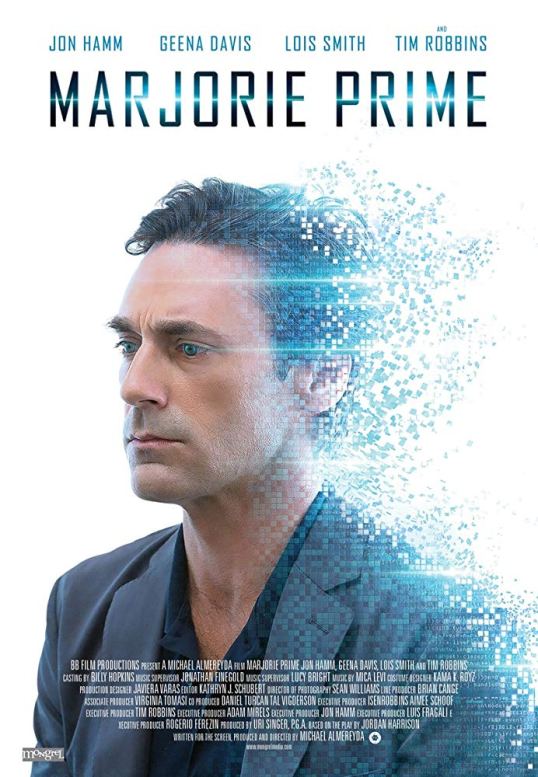
Ghosts of Sundance Past #5: Marjorie Prime (dir by Michael Almereyda)


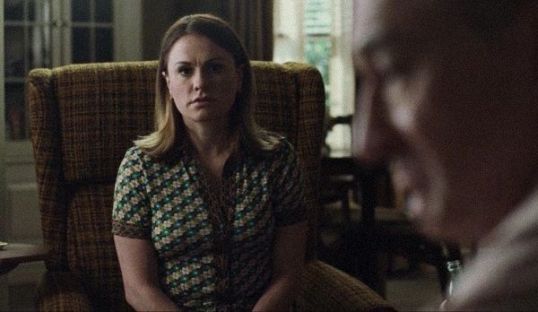
In the year 2050, a woman (Lois Smith) sits in the living room of her beautiful house.  Through the windows, we can see that she has a view of an even more beautiful beach.  In fact, the beach is nearly too pristine.  So is the house.  Somehow, everything about the location feels both inviting and fake at the same time.  We find ourselves wondering what could possibly be lurking underneath the surface.

The woman is 85 years old.  Her name is Marjorie.  She’s talking to a very handsome and charming man named Walter (Jon Hamm).  As they talk, it becomes obvious that Walter and Marjorie are married.  Walter mentions that he proposed to her after they saw the movie My Best Friend’s Wedding.  Marjorie doesn’t remember ever seeing a movie by that name and when Walter explains the plot to her, Marjorie simply smiles and nods along.  Afterwards, she says that she wishes they had gotten married after seeing Casablanca.  She wants a better memory than the one they have.

We can’t help but notice that Walter appears to be quite a bit younger than Marjorie, despite Marjorie saying that Walter was considerably older than her when they first got married.  This is because the Walter to whom she is speaking is not the real Walter.  The real Walter died years ago.  Walter Prime is a hologram, a computer program designed to give Marjorie someone to speak to.  Marjorie is in the early stages of Alzheimer’s.  When she first got Walter Prime, she specifically decided that she wanted to spend her days with the young Walter, as opposed to the old man that he became.  Sometimes, she knows that Walter is just a program and other times, she thinks that he’s real.

Living with Marjorie is her daughter, Tess (Geena Davis) and Tess’s husband, Jon (Tim Robbins).  Tess finds the hologram of her father to be somewhat creepy and she wonders why her mother treats the hologram better than she treats her own daughter.  Jon, on the other hand, feels that the hologram is just what Marjorie needs.

Time passes.  Marjorie grows closer to the hologram while Tess grows angrier and angrier over her mother’s condition.  When Tess discovers that Marjorie has been reading a bible, she has a meltdown because her mother has apparently forgotten that she was always a militant atheist.  Jon tries to keep everyone calm.  Is Jon trying to the inevitable better for everyone or is he just trying to distract himself from the pain that’s all around him?

The hologram and Jon have a meeting.  The hologram says that, even though Jon and Tess have programmed him to act, think, and talk just like the original Walter, there are still things that he hasn’t been properly programmed for.  While filling Walter Prime in on some more of Marjorie and Walter’s past, Jon reveals the family tragedy that has haunted the family for years….

Marjorie Prime is not a particularly happy movie.  It takes place over the course of several decades and we follow Marjorie, Jon, Tess, and Walter through a great deal of changes.  The only thing the remains consistent is that everyone is eventually left with only half-remembered fragments of their past.  Some of those fragments are happy and others are full of regret.  Everyone ages except for the holograms but, as becomes apparent in one particularly heart-breaking scene, a hologram is only as good as the person programming it.  A hologram can be programmed to superficially act like someone but it can never actually be that person.  As much as Jon, Tess, and Marjorie attempt to recreate the past, it can’t be done because the past can never truly be relived.

Marjorie Prime is science fiction without CGI.  It’s a film that’s designed to make you think and it succeeds.  It would also probably be unbearably depressing if not for the skills of the cast.  Lois Smith is heart-breaking and sympathetic as Marjorie while Jon Hamm does a good job of showing why Walter Prime would be so attractive in theory and so frustrating in reality.  (Walter Prime can be programmed to act like he cares but he can’t truly do it.)  Geena Davis gives an intelligent and thoughtful performance as Tess, capturing both her anger and regret and the film even makes good use of Tim Robbins’s tendency towards to smarminess.

Marjorie Prime, which was acclaimed when it premiered at Sundance in 2017, is currently streaming on Amazon Prime.

The Writers Guild Honors Parasite


Last night, the Writers Guild of America honored their picks for the best screenplays of 2019.  It was a very good night for Parasite.

Here are the winners:

SCREENPLAY NOMINEES

ORIGINAL SCREENPLAY

1917, Written by Sam Mendes & Krysty Wilson-Cairns; Universal Pictures

Booksmart, Written by Emily Halpern & Sarah Haskins and Susanna Fogel and Katie Silberman; United Artists Releasing

Knives Out, Written by Rian Johnson; Lionsgate

Marriage Story, Written by Noah Baumbach; Netflix

WINNER – Parasite, Screenplay by Bong Joon Ho and Han Jin Won, Story by Bong Joon Ho; Neon

ADAPTED SCREENPLAY

A Beautiful Day in the Neighborhood, Written by Micah Fitzerman-Blue & Noah Harpster, Inspired by the Article “Can You Say…Hero?” by Tom Junod; TriStar Pictures

The Irishman, Screenplay by Steven Zaillian, Based upon the Book I Heard You Paint Houses by Charles Brandt; Netflix

WINNER – Jojo Rabbit, Screenplay by Taika Waititi, Based on the book Caging Skies by Christine Leunens; Fox Searchlight

Joker, Written by Todd Phillips & Scott Silver, Based on Characters from DC Comics; Warner Bros. Pictures

Little Women, Screenplay by Greta Gerwig, Based on the Novel by Louisa May Alcott; Sony Pictures

DOCUMENTARY SCREENPLAY

Citizen K, Written by Alex Gibney; Greenwich Entertainment

Foster, Written by Mark Jonathan Harris; HBO Documentary Films

WINNER – The Inventor: Out for Blood in Silicon Valley, Written by Alex Gibney; HBO Documentary Films

Joseph Pulitzer: Voice of the People, Written by Robert Seidman & Oren Rudavsky; First Run Features

The Kingmaker, Written by Lauren Greenfield; Showtime Documentary Films

TELEVISION, NEW MEDIA, AND NEWS NOMINEES

DRAMA SERIES

The Crown, Written by James Graham, David Hancock, Peter Morgan; Netflix

The Handmaid’s Tale, Written by Marissa Jo Cerar, Yahlin Chang, Nina Fiore, Dorothy Fortenberry, Jacey Heldrich, John Herrera, Lynn Renee Maxcy, Bruce Miller, Kira Snyder, Eric Tuchman; Hulu

Mindhunter, Written by Pamela Cederquist, Joshua Donen, Marcus Gardley, Shaun Grant, Liz Hannah, Phillip Howze, Jason Johnson, Doug Jung, Colin J. Louro, Alex Metcalf, Courtenay Miles, Dominic Orlando, Joe Penhall, Ruby Rae Spiegel; Netflix

WINNER – Succession, Written by Jesse Armstrong, Alice Birch, Jon Brown, Jonathan Glatzer, Cord Jefferson, Mary Laws, Lucy Prebble, Georgia Pritchett, Tony Roche, Gary Shteyngart, Susan Soon He Stanton, Will Tracy; HBO

Watchmen, Written by Lila Byock, Nick Cuse, Christal Henry, Branden Jacobs-Jenkins, Cord Jefferson, Jeff Jensen, Claire Kiechel, Damon Lindelof, Janine Nabers, Stacy Osei-Kuffour, Tom Spezialy, Carly Wray; HBO

COMEDY SERIES

WINNER – Barry, Written by Alec Berg, Duffy Boudreau, Bill Hader, Emily Heller, Jason Kim, Taofik Kolade, Elizabeth Sarnoff; HBO

The Marvelous Mrs. Maisel, Written by Kate Fodor, Noah Gardenswartz, Daniel Goldfarb, Alison Leiby, Daniel Palladino, Sono Patel, Amy Sherman-Palladino, Jordan Temple; Prime Video

PEN15, Written by Jeff Chan, Maya Erskine, Anna Konkle, Gabe Liedman, Stacy Osei-Kuffour, Andrew Rhymer, Jessica Watson, Sam Zvibleman; Hulu

Russian Doll, Written by Jocelyn Bioh, Flora Birnbaum, Cirocco Dunlap, Leslye Headland, Natasha Lyonne, Amy Poehler, Tami Sagher, Allison Silverman; Netflix

Veep, Written by Gabrielle Allan-Greenberg, Rachel Axler, Emilia Barrosse, Ted Cohen, Jennifer Crittenden, Alex Gregory, Steve Hely, Peter Huyck, Erik Kenward, Billy Kimball, David Mandel, Ian Maxtone-Graham, Dan Mintz, Lew Morton, Dan O’Keefe, Georgia Pritchett, Leila Strachan; HBO

NEW SERIES

Dead To Me, Written by Rebecca Addelman, Njeri Brown, Liz Feldman, Kelly Hutchinson, Anthony King, Emma Rathbone, Kate Robin, Abe Sylvia; Netflix

PEN15, Written by Jeff Chan, Maya Erskine, Anna Konkle, Gabe Liedman, Stacy Osei-Kuffour, Andrew Rhymer, Jessica Watson, Sam Zvibleman; Hulu

Russian Doll, Written by Jocelyn Bioh, Flora Birnbaum, Cirocco Dunlap, Leslye Headland, Natasha Lyonne, Amy Poehler, Tami Sagher, Allison Silverman; Netflix

WINNER – Watchmen, Written by Lila Byock, Nick Cuse, Christal Henry, Branden Jacobs-Jenkins, Cord Jefferson, Jeff Jensen, Claire Kiechel, Damon Lindelof, Janine Nabers, Stacy Osei-Kuffour, Tom Spezialy, Carly Wray; HBO

What We Do in the Shadows, Written by Jesse Armstrong, Sam Bain, Jemaine Clement, Josh Lieb, Iain Morris, Stefani Robinson, Duncan Sarkies, Marika Sawyer, Tom Scharpling, Paul Simms,Taika Waititi; FX Networks

ORIGINAL LONG FORM

WINNER – Chernobyl, Written by Craig Mazin; HBO

The Terror: Infamy, Written by Max Borenstein, Alessandra DiMona, Shannon Goss, Steven Hanna, Naomi Iizuka, Benjamin Klein, Danielle Roderick, Tony Tost, Alexander Woo; AMC

Togo, Written by Tom Flynn; Disney+

True Detective, Written by Alessandra DiMona, Graham Gordy, Gabriel Hobson, David Milch, Nic Pizzolatto; HBO

ADAPTED LONG FORM

El Camino: A Breaking Bad Movie, Written by Vince Gilligan; Netflix

WINNER – Fosse/Verdon, Written by Debora Cahn, Joel Fields, Ike Holter, Thomas Kail, Steven Levenson, Charlotte Stoudt, Tracey Scott Wilson, Based on the book Fosse by Sam Wasson; FX Networks

The Loudest Voice, Written by John Harrington Bland, Laura Eason, Tom McCarthy, Alex Metcalf, Gabriel Sherman, Jennifer Stahl, Based on the Book The Loudest Voice in the Room and the New York Magazine Articles by Gabriel Sherman; Showtime

Unbelievable, Written by Michael Chabon, Susannah Grant, Becky Mode, Jennifer Schuur, Ayelet Waldman, Based on the Pro Publica & The Marshall Project article “An Unbelievable Story of Rape” and This American Life radio episode “Anatomy of Doubt;” Netflix

ORIGINAL SHORT FORM NEW MEDIA

After Forever, Written by Michael Slade & Kevin Spirtas; Prime Video

WINNER – Special, Written by Ryan O’Connell; Netflix

ANIMATION

“Bed, Bob & Beyond” (Bob’s Burgers), Written by Kelvin Yu; Fox

“The Gene Mile” (Bob’s Burgers), Written by Steven Davis; Fox

“Go Big or Go Homer” (The Simpsons), Written by John Frink; Fox

“A Horse Walks Into A Rehab” (BoJack Horseman), Written by Elijah Aron; Netflix

“Livin’ La Pura Vida” (The Simpsons), Written by Brian Kelley; Fox

WINNER – “Thanksgiving of Horror” (The Simpsons), Written by Dan Vebber; Fox

EPISODIC DRAMA

“407 Proxy Authentication Required” (Mr. Robot), Written by Sam Esmail; USA Network

“A Good Man is Hard to Find” (Ray Donovan), Written by Joshua Marston; Showtime

“Mirror Mirror” (The OA), Written by Dominic Orlando & Claire Kiechel; Netflix

“Moondust” (The Crown), Written by Peter Morgan; Netflix

“Our Little Island Girl” (This Is Us), Written by Eboni Freeman; NBC

WINNER – “Tern Haven” (Succession), Written by Will Tracy; HBO

EPISODIC COMEDY

“Here’s Where We Get Off” (Orange Is the New Black), Written by Jenji Kohan; Netflix

“It’s Comedy or Cabbage” (The Marvelous Mrs. Maisel), Written by Amy Sherman-Palladino; Prime Video

“Nice Knowing You” (Living With Yourself), Written by Timothy Greenberg; Netflix

WINNER – “Pilot” (Dead to Me), Written by Liz Feldman; Netflix

“The Stinker Thinker” (On Becoming a God in Central Florida), Written by Robert F. Funke & Matt Lutsky; Showtime

“Veep” (Veep), Written by David Mandel; HBO

COMEDY/VARIETY TALK SERIES

Conan, Head Writer: Matt O’Brien Writers: Jose Arroyo, Glenn Boozan, Daniel Cronin, Andres du Bouchet, Jessie Gaskell, Brian Kiley, Laurie Kilmartin, Todd Levin, Levi MacDougall, Conan O’Brien, Andy Richter, Frank Smiley, Mike Sweeney; TBS

Full Frontal with Samantha Bee, Head Writer: Melinda Taub Writing Supervised by: Joe Grossman, Nicole Silverberg Writers: Samantha Bee, Kristen Bartlett, Pat Cassels, Sean Crespo, Mike Drucker, Mathan Erhardt, Miles Kahn, Sahar Rizvi, Special Material by: Allison Silverman; TBS

WINNER – Last Week Tonight with John Oliver, Senior Writers: Dan Gurewitch, Jeff Maurer, Jill Twiss, Juli Weiner Writers: Tim Carvell, Daniel O’Brien, John Oliver, Owen Parsons, Charlie Redd, Joanna Rothkopf, Ben Silva, Seena Vali; HBO

Late Night with Seth Meyers, Head writer: Alex Baze Supervising Writers: Sal Gentile, Seth Reiss, Writers: Jermaine Affonso, Karen Chee, Bryan Donaldson, Matt Goldich, Dina Gusovsky, Jenny Hagel, Allison Hord, Mike Karnell, John Lutz, Seth Meyers, Ian Morgan, Amber Ruffin, Mike Scollins, Mike Shoemaker, Ben Warheit; NBC Universal

The Late Late Show with James Corden, Head Writers: Lauren Greenberg, Ian Karmel Writers: Demi Adejuyigbe, James Corden, Rob Crabbe, Lawrence Dai, Nate Fernald, Caroline Goldfarb, Olivia Harewood, David Javerbaum, John Kennedy, Kayleigh Lamb, James Longman, Jared Moskowitz, CeCe Pleasants, Tim Siedell, Benjamin Stout, Tom Thriveni, Louis Waymouth, Ben Winston; CBS

The Late Show with Stephen Colbert, Head Writers: Jay Katsir, Opus Moreschi Writers: Michael Brumm, River Clegg, Aaron Cohen, Stephen Colbert, Paul Dinello, Ariel Dumas, Glenn Eichler, Django Gold, Gabe Gronli, Greg Iwinski, Barry Julien, Daniel Kibblesmith, Eliana Kwartler, Matt Lappin, Asher Perlman, Tom Purcell, Kate Sidley, Jen Spyra, Brian Stack, John Thibodeaux; CBS

COMEDY/VARIETY SPECIALS

Desi Lydic: Abroad, Written by Devin Delliquanti, Lauren Sarver Means; Comedy Central

WINNER – Full Frontal with Samantha Bee Presents: Not the White House Correspondents’ Dinner Part 2, Head Writer Melinda Taub, Writing Supervised by Joe Grossman, Nicole Silverberg, Writers Samantha Bee, Kristen Bartlett, Pat Cassels, Sean Crespo, Mike Drucker, Mathan Erhardt, Lewis Friedman, Miles Kahn, Sahar Rizvi, Special Material by Allison Silverman; TBS

The Late Late Show Carpool Karaoke Primetime Special 2019, Head Writers Lauren Greenberg, Ian Karmel, Writers Demi Adejuyigbe, James Corden, Rob Crabbe, Lawrence Dai, Nate Fernald, Caroline Goldfarb, John Kennedy, James Longman, Jared Moskowitz, CeCe Pleasants, Tim Siedell, Benjamin D. Stout, Tom Thriveni, Louis Waymouth, Ben Winston; CBS

Ramy Youssef: Feelings, Written by Ramy Youssef; HBO

COMEDY/VARIETY SKETCH SERIES

At Home with Amy Sedaris, Writers: Cole Escola, Amy Sedaris, Allison Silverman; truTV

WINNER – I Think You Should Leave with Tim Robinson, Writers: Jeremy Beiler, Zach Kanin, Tim Robinson, John Solomon; Netflix

Saturday Night Live, Head Writers: Michael Che, Colin Jost, Kent Sublette Supervising Writers: Anna Drezen, Fran Gillespie, Sudi Green, Streeter Seidell Senior Writer: Bryan Tucker Weekend Update Head Writer: Pete Schultz Writers: James Anderson, Neal Brennan, Andrew Briedis, Dan Bulla, Megan Callahan, Steven Castillo, Emma Clark, Andrew Dismukes, Alison Gates, Tim Herlihy, Steve Higgins, Sam Jay, Erik Kenward, Steve Koren, Rob Klein, Michael Koman, Dan Licata, Alan Linic, Eli Coyote Mandel, Dave McCary, Dennis McNicholas, Lorne Michaels, John Mulaney, Josh Patten, Jasmine Pierce, Katie Rich, Simon Rich, Gary Richardson, Marika Sawyer, Robert Smigel, Mark Steinbach, Will Stephen, Julio Torres, Bowen Yang; NBC Universal

QUIZ AND AUDIENCE PARTICIPATION

Are You Smarter Than A 5th Grader?, Head Writer Bret Calvert, Writers Seth Harrington, Rosemarie DiSalvo; Nickelodeon

Hollywood Game Night, Head Writers Ann Slichter, Grant Taylor, Writers Michael Agbabian, Marshall Davis, Allie Kokesh, Dwight D. Smith; NBC

Jeopardy!, Writers Matthew Caruso, John Duarte, Harry Friedman, Mark Gaberman, Debbie Griffin, Michele Loud, Robert McClenaghan, Jim Rhine, Steve D. Tamerius, Billy Wisse; ABC

Who Wants To Be A Millionaire, Head Writer Stephen Melcher, Writers Kyle Beakley, Patricia A. Cotter, Ryan Hopak, Gary Lucy, James Rowley, Ann Slichter; Disney/ABC Syndication

DAYTIME DRAMA

Days of Our Lives, Writers: Lorraine Broderick, Ron Carlivati, Joanna Cohen, Carolyn Culliton, Richard Culliton, Rick Draughon, Dave Kreizman, Rebecca McCarty, Ryan Quan, Dave Ryan, Katie Schock, Betsy Snyder; NBC Universal

General Hospital, Head Writers: Shelly Altman, Christopher Van Etten, Dan O’Connor Associate Head Writer: Anna T. Cascio Writers: Barbara Bloom, Suzanne Flynn, Charlotte Gibson, Lucky Gold, Kate Hall, Elizabeth Korte, Donny Sheldon, Scott Sickles; ABC

WINNER – The Young and the Restless, Writers: Amanda L. Beall, Jeff Beldner, Sara Bibel, Matt Clifford, Annie Compton, Christopher Dunn, Sara Endsley, Janice Ferri Esser, Mellinda Hensley, Lynn Martin, Anne Schoettle, Natalie Minardi Slater, Teresa Zimmerman; CBS

CHILDREN’S EPISODIC, LONG FORM AND SPECIALS

“It’s Just… Weird” (Alexa & Katie), Written by Romi Barta; Netflix

WINNER – “Remember Black Elvis?” (Family Reunion), Written by Howard Jordan, Jr.; Netflix

“Remember How This All Started?” (Family Reunion), Written by Meg DeLoatch; Netflix

“Stupid Binder” (Alexa & Katie), Written by Nancy Cohen; Netflix

“Time to Make… My Move” (Jim Henson’s The Dark Crystal: Age of Resistance), Written by Javier Grillo-Marxuach; Netflix

DOCUMENTARY SCRIPT – CURRENT EVENTS

“Coal’s Deadly Dust” (Frontline), Written by Elaine McMillion Sheldon; PBS

“The Mueller Investigation” (Frontline), Written by Michael Kirk & Mike Wiser; PBS

WINNER – “Trump’s Trade War” (Frontline), Written by Rick Young; PBS

DOCUMENTARY SCRIPT – OTHER THAN CURRENT EVENTS

“Chasing The Moon Part One: A Place Beyond The Sky” (American Experience), Written by Robert Stone; PBS

WINNER – “Right To Fail” (Frontline), Written by Tom Jennings; PBS

“Supreme Revenge” (Frontline), Written by Michael Kirk & Mike Wiser; PBS

NEWS SCRIPT – REGULARLY SCHEDULED, BULLETIN, OR BREAKING REPORT

WINNER – “Terror in America: The Massacres in El Paso and Dayton” (Special Edition of the CBS Evening News with Norah O’Donnell), Written by Jerry Cipriano, Joe Clines, Bob Meyer; CBS News

NEWS SCRIPT – ANALYSIS, FEATURE, OR COMMENTARY

“Atlanta, EP. 3” (A King’s Place), Written by Jessica Moulite, Ashley Velez; TheRoot.com

WINNER – “Fly Like An Eagle” (60 Minutes), Written by Katie Kerbstat Jacobson, Scott Pelley, Nicole Young; CBS News

“’Tis the Season: Here’s How Jesus Became So Widely Accepted as White,” Written by Joon Chung, Felice León, Ashley Velez; TheRoot.com

“Toxic Water Crisis Still This Haunts New York Town”, Written by Lena Jackson; HuffPost.com

DIGITAL NEWS

“A Gridiron of Their Own,” Written by Kelsey McKinney; Deadspin.com

WINNER – “Stories About My Brother,” Written by Prachi Gupta, Jezebel.com

RADIO/AUDIO NOMINEES

RADIO/AUDIO NEWS SCRIPT – REGULARLY SCHEDULED, BULLETIN, OR BREAKING REPORT

“CBS News on the Hour with Norah O’Donnell – El Paso, Texas and Dayton, Ohio – Communities in Mourning,” Written by James Hutton; CBS News Radio

WINNER – “Hail and Farewell: Remembering Some Headline Makers,” Written by Gail Lee; CBS News Radio

“World News This Week, August 9, 2019,” Written by Stephanie Pawlowski and Jim Ryan; ABC News Radio

“World News This Week, September 13, 2019,” Written by Joan B. Harris; ABC News Radio

RADIO/AUDIO NEWS SCRIPT – ANALYSIS, FEATURE, OR COMMENTARY

WINNER – “The Enduring Legacy of Jackie Kennedy Onassis,” Written by Dianne E. James, Gail Lee; CBS News Radio

“Woodstock: Back to the Garden,” Written by Gail Lee, CBS News Radio

PROMOTIONAL WRITING NOMINEES

ON AIR PROMOTION

“CBS Promos”, Written by Molly Neylan; CBS

“Star. Kill. Evil. FBI.,” Written by Ralph Buado; CBS

WINNER – “Star Trek: Picard” and “All Rise Promos,” Written by Jessica Katzenstein; CBS
Lisa Reviews An Oscar Nominee: Great Expectations (dir by David Lean)


“My Christian name was Philip Pirrip, which I pronounced Pip….”

SHUT UP, PIP!

Seriously, there’s a lot of good things that can be said about Charles Dickens’s Great Expectations but most readers simply can’t get past the fact that the narrator insists on being called Pip.  I don’t necessarily blame them, as Pip might be a good nickname for a child but, by the time you’re 16, you should be demanding that everyone call you Phil.  That said, I’ve always liked Great Expectations.  Despite the fact that Charles Dickens could be a terribly pedantic writer, the plot of Great Expectations is genuinely interesting and the book is full of interesting characters, the majority of whom don’t demand to be known by their childhood nicknames.  Plus, I’ve always related to Estella.

The 1946 film adaptation of Great Expectations was at least the third movie to be made from the novel and it would be followed by many more.  (In 1998, there was a modernized version where Pip was wisely renamed Finn.)  Still, the 1946 adaptation is the best.  As directed by David Lean (and based on a stage version that was put together by none other than Alec Guinness), Great Expectations remains true to the source material while, at the same time, cutting away a lot of extraneous material.  As a result, Lean’s film version of the story maintains a clear narrative momentum, which is something that eluded Dickens in his sprawling original.

John Mills plays Pip, an orphan who is being raised by his wicked aunt and her husband, the simple but kind-hearted blacksmith, Joe Gargery (Bernard Miles).  One night, Pip helps out an escaped convict named Magwitch (Finlay Currie) and, though Magwitch is eventually recaptured, that one act of kindness will determine the rest of Pip’s life.

Pip is invited to visit the mansion of a recluse named Miss Havisham (Martita Hunt) and it’s there that he first meets and falls in love with the beautiful but rather cold-hearted Estella (Jean Simmons and then, after Estella grows up, Valerie Hobson).  Of course, what Pip doesn’t realize is that Miss Havisham has specifically raised Estella to destroy the hopes and dreams of every man that she meets.

Eventually, Pip grows up and discovers that he has a mysterious benefactor who feels that Pip should be transformed into a gentlemen so that he might be able to meet the “great expectations” that the benefactor has for him.  Pip, of course, assumes that it’s Miss Havisham but even those who haven’t read the book will probably suspect that there’s more to it than just that.  Pip moves to London, where he stays with Herbert Pocket (Alec Guinness), a pale young man (for that’s how Dickens described him) who teaches Pip that a gentleman does not use his knife as a fork.  Herbert was always my favorite character in the book and he’s my favorite character in the film, largely because he’s played by the totally charming Alec Guinness.

Anyway, Pip becomes a bit of a snob but eventually, he discovers the truth about his benefactor and the last few years of his life.  It causes him to not only rip down a lot of curtains but also to reconsider what it truly means to be a a gentleman.

It’s all very well-done, largely because David Lean doesn’t allow the fact that he’s making a film out of a great novel get in the way of telling a good story.  The film is well-acted by a wonderful cast of British thespians, all of whom manage to make even the most artificial of scenes and lines seem naturalistic and believable.  Even though Pip is a bit of a jerk, John Mills manage to turn him into a sympathetic character.  (Mills plays Pip as if he himself cannot stand the fact that he’s turned into such a snob.)  Both Jean Simmons and Valerie Hobson do a wonderful job of bringing the potentially problematic character of Estella to life and Bernard Miles is wonderfully empathetic in the role of the Joe Gargery.  The scene where a nervous Gargery first meets Pip after Pip has become a gentleman is a true example of great acting.

Not surprisingly, Lean also does a great job of bringing 19th century England to life.  Watching this film is a bit like stepping into a time machine and going back to the Dickensian era.  As filmed by Lean, London is as bright and vibrant as Pip’s childhood home is dark and constraining.  When Pip finds Magwitch on the beach, Lean directs the scene as if it were from a film noir.  When Pip enters the darkened home of Miss Havisham and meets the beautiful but destructive Estella, the film flirts with becoming a Rebecca-style gothic romance.  And when it’s just Pip and Herbert Pocket talking, it becomes a comedy of manners.  Not surprisingly, Great Expectations won Oscars for both its art design and its gorgeous black-and-white cinematography.

Great Expectations was also nominated for Best Picture.  However, it lost to Gentleman’s Agreement.

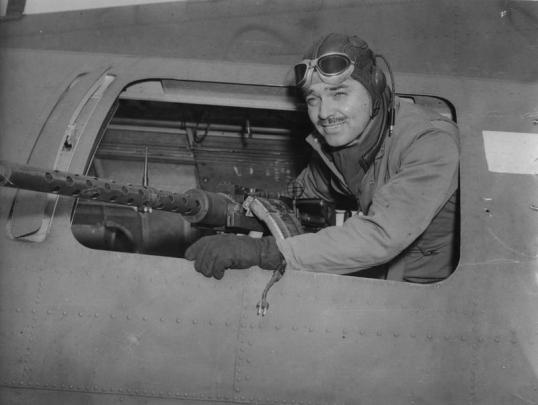
A Blast From The Past: Combat America (narrated by Clark Gable)


Today is the birthday of one of America’s greatest screen legends, the one and only Clark Gable!

Clark Gable was born 119 years ago today and, in honor of the birthday of this cinematic icon, we’re sharing a little blast from the past.   When in the past?  1945, to be exact.  In Combat America, Gable takes you on a tour through the world of aerial combat during World War II.  Gable joined the U.S. Army in 1943, shortly after the death of his wife, Carole Lombard.  (Lombard died in a plane crash.  She had been traveling across the country, working to build up support for the war effort.  Shortly after Lombard’s death, Gable’s co-star from Gone With The Wind, Leslie Howard, was also killed when the Germans shot down a plane in which he was traveling.)  Gable trained as an aerial gunner and flew five combat missions in 1943. Reportedly, Gable was ordered to stop flying because it was feared that the American morale at home would never recover if he was shot down.

Combat America was one of Gable’s contributions to the war effort, as well as a tribute to all the men who sacrificed their lives to defeat the Nazis.  Gable both narrates and appears on camera.

Incidentally, I know that Clark Gable will always be Rhett Butler to most people but my favorite Gable performance is his Oscar-winning work in It Happened One Night.  If I had been Claudette Colbert in that film, the Walls of Jericho would have come down very quickly.  Just saying.


Scenes That I Love: Audrey’s Dance From Twin Peaks: The Return


So, today is Sherilyn Fenn’s birthday and I figured that this would be the perfect time to share a scene that I love from Twin Peaks: The Return.  It’s also one of the most controversial scenes from the entire 18-hour film (and make no mistake, Twin Peaks: The Return is a film).  That’s saying something, considering that just about every single minute of David Lynch’s masterpiece was, at the very least, a little bit controversial.

From Twin Peaks: The Return Part 16, it’s Audrey’s Dance!

So, what’s happening here?  That Audrey has undergone a great personal trauma is obvious to anyone who compares the Audrey in Twin Peaks: The Return to the Audrey in the original series.  The original series ended with Audrey in a coma.  In between the end of the first series and the start of the second, she was raped by the Doppelganger (apparently while she was still comatose) and she subsequently gave birth to the thoroughly evil Richard Horne.  There’s a lot of horrifying things in Twin Peaks but there’s nothing as horrific as what happened to Audrey.

Where things get murky is what happened to Audrey after the birth of Richard.  According to the books that Mark Frost wrote before and after Twin Peaks: The Return aired, Audrey later became a beautician and married her business manager.  For that reason, I think we can discount the theory that Audrey is still in the coma and having a dream in this scene.  Another popular theory is that Audrey is hallucinating in a mental hospital but again, I think we can discount that because, if she’s institutionalized, how could she become a beautician and marry her business manager?

I think a far more probable theory is that the Audrey who is living in Twin Peaks is another doppelganger and the real Audrey, like the original Cooper, is trapped in one of the lodges.  I also think that it can be argued that the Road House, where Audrey dances, is itself a portal.  It’s not an actual Lodge but it does seem to have a connection to the Black Lodge.  Perhaps the master of ceremonies is like emcee from Mulholland Drive, revealing that everything is an illusion.

Who knows, right?

As for Audrey’s dance in this scene, it’s a callback to a time when Audrey had her entire future ahead of her.  What Audrey once did playfully, she now does wistfully and with regret.  And yet, there’s a lot of hope to be found in her dance, or at least there is until reality intrudes in the form of two idiots getting into a fight.  That’s when Audrey (or Audrey’s doppelganger) is reminded that the world has changed and there’s no more room for happiness.

Hopefully, things have gotten better for Audrey since we last saw her.

Ghosts of Sundance Past #4: Frozen River (dir by Courtney Hunt)


The 2008 film, Frozen River, tells the story of two desperate mothers.

Ray Eddy (Melissa Leo) has spent two years working as a clerk in a discount store and still cannot convince her boss to promote her to full time because, in his opinion, she’s just not “long-term employee” material.  Ray’s husband, a compulsive gambler, has vanished and taken the majority of their money with him.  Ray and her two sons live in a mobile home, where they subsist on a diet of popcorn and tang.  Every few days, a man comes by and threatens to repossess the home and leave Ray and her children homeless.  Ray always manages to talk him out of it.  If there’s anything that Ray can do, it’s talk her way out of trouble.

Lila Littlewolf (Misty Upham) is a Native American who lives on the St. Regis Mohawk Reservation and who works at a bingo parlor.  Because Lila is struggling financially and often resorts to illegal means to make ends meet, Lila’s mother-in-law has taken away her infant son.  If Ray’s defining characteristic seems to be her ability to talk her way out of trouble, Lila is quiet and often seems to be hiding from the world.

One day, while Ray is out looking for her husband, she spots Lila driving his car.  Lila claims that she found the car, sitting deserted at a gas station.  (It’s never established whether Lila is telling the truth or if she actually stole the car.)  Ray discovers that Lila makes her money by smuggling undocumented immigrants over the Canadian border and Ray soon joins her.

Frozen River takes place a few days before Christmas in Upstate New York.  There’s snow on the ground and a Christmas tree in the mobile home but there’s little holiday cheer to be found in the film.  In order to smuggle people across the border, Ray and Lila take them across the frozen St. Lawrence River and, just like the ice on the river, Ray’s occasional moments of happiness seem to be destined to only be temporary.  Just as the ice is eventually going to break, so is Ray and Lila’s operation.  One gets the feeling that it’s only a matter of time.  Ray and Lila almost immediately attract the attention of the stern State Trooper Finnerty (Michael O’Keefe).  Significantly , Finnerty’s suspicions are initially limited to only Lila and he even tries to warn Ray that she’s hanging out with a known smuggler.

Frozen River is dominated by two strong lead performances.  Melissa Leo is the one who was nominated for best actress but I actually think that Misty Upham (who tragically died a few years after this film was released) is even better.  Leo is the one who gets the big scenes and who gets to deliver all of the best lines and she does a great job with a richly written character.  Upham, meanwhile, has to largely create her character in silence.  She rarely speaks but, when she does, she makes it count.  When Ray and Lila get pulled over by Finnerty and Lila snaps that Ray will be okay because she’s white, the way Upham delivers that one line tells you so much about what has led her to be in her current situation.  When you see Upham in the background, watching Ray or Finnerty or anyone else who is standing in the way of her seeing her baby, her glare is worth a thousand monologues.  Both Leo and Upham are so good that they hold your interest even when the film’s script and direction veers towards the heavy-handed.  (Director Courtney Hunt, for the most part, does a good job of keeping things credible but it’s hard not to roll your eyes a bit when a duffel bag being carried by two refugees turns out to not contain, as Ray originally suspects, explosives but a baby instead.)

Frozen River was a hit at the 2008 Sundance Film Festival, where it won the U.S. Dramatic Grand Jury Prize.  Leo went on to receive an Oscar nomination for Best Actress, though she lost to Kate Winslet in The Reader.

Lisa Reviews An Oscar Nominee: East Lynne (dir by Frank Lloyd)


In the history of the Academy Awards, East Lynne is a curiosity.

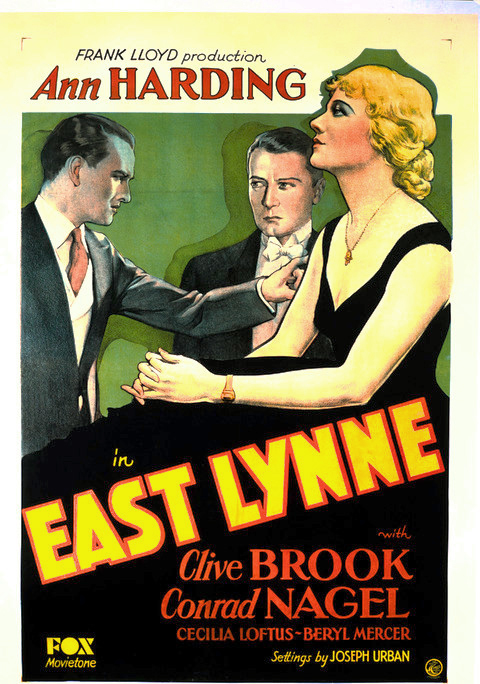
Released in 1931, East Lynne was one of the five films to be nominated for Best Picture at the fourth annual Academy Awards.  Best Picture was the only nomination that East Lynne received, which of course leaves you to wonder just what exactly was so good about it.  Why was it nominated as opposed to something like A Free Soul, which received nominations for Best Actress and Director and which won the Best Actor Oscar for Lionel Barrymore?  East Lynne was a success at the box office but so were The Public Enemy, Little Caesar, and Scarface.  None of those classic gangster films made much of an impression with the Academy but all of them are better remembered today than East Lynne.

One reason why East Lynne has fallen into obscurity is because it’s not an easy film to see.  There is only one complete print of East Lynne still in existence.  It’s housed at the UCLA’s Instructional Media Lab but it can only be viewed by appointment.  There are, however, a few bootleg copies on DVD.  The picture is grainy.  The sound is inconsistent.  Even worse, the bootleg is missing the last 12 minutes of the film.  Still, for those of us who don’t live near UCLA, that bootleg copy is the only convenient way to watch East Lynne.

That’s how I watched it.  (I also looked up how the film ended so I know where the story eventually led, despite those missing 12 minutes.)  Having now seen the film, I can now say that it makes even less sense that the film was nominated because it’s pretty bad.  I can only imagine that it received its nomination as a result of Fox Film Corporation (which would later merge with 20th Century Pictures to be come 20th Century Fox) demanding that its employees vote for it.

Based on a Victorian novel that had already been filmed several times during the silent era, East Lynne tells the story of Lady Isabella (Ann Harding), a British noblewoman who marries a stuffy attorney named Robert Carlyle (Conrad Nagel).  From the beginning it’s an awkward marriage.  Isabella is sociable and popular and wants to enjoy life.  Carlyle is a humorless jerk.  Not even the fact that they live in a nice mansion called East Lynne provides much comfort.

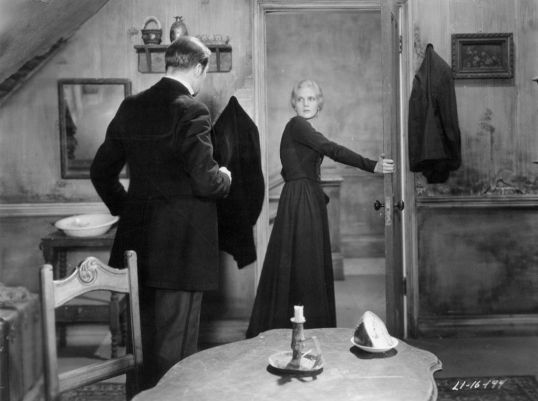
When Isabella accepts a kiss from a cad named Captain William Levinson (Clive Brook), Isabella’s sister-in-law uses it to drive a wedge between Isabella and Carlyle.  Carlyle, being a jerk, kicks Isabella out of the house and takes custody of their child.  Now viewed as being a figure of scandal, Isabella goes abroad with Levinson.  (Since this is a pre-code film, going abroad amounts to going to a then-racy show in Vienna.)  However, through a series of improbable events, Levinson ends up dead and Isabella ends up very slowly going blind.  However, Isabella is determined to see her child just once more before losing her sight so it’s up to her to convince a maid to sneak her back into East Lynne late at night….

And then the bootleg version of the film ends!  Now, I did my research and I discovered — here’s your SPOILER ALERT — that the film apparently ends with a blind Isabella stumbling over a cliff and her husband realizing too late that maybe he was kind of a jerk.  I’m kind of sorry that I didn’t get to see that.  I may have to book a flight to UCLA.

Anyway, from what I did see, East Lynne is a creaky old film.  This is one of those films where you can tell that the cast was still adjusting to the new sound era.  Ann Harding’s screen presence is a bit too insubstantial to keep the film’s melodramatic story grounded and neither Conrad Nagel nor Clive Brook seem to be worth all of the trouble that Isabella goes through.  Frank Lloyd’s direction is painfully slow and stagy, though things do pick up briefly when the action moves to Vienna.  Worst of all, the film is pretty much on Carlyle’s side.  He’s a jerk, the movie says, but Isabella should have made more of an effort to keep him happy.  Welcome to 1931!

East Lynne lost the best picture race to Cimarron, which was another fairly forgettable film.  Though there were plenty of good films to choose from in 1931, it doesn’t appear that the Academy nominated any of them.  Of course, that wouldn’t be the last time that would happen.


The Casting Society of America Honors Once Upon A Time In Hollywood


The Academy does not have a category to honor Best Casting.  They really should, though.

Until the Academy gets their act together, the Casting Society of America will have to do the job.  Here are their picks for the best of 2019:

BIG BUDGET – DRAMA
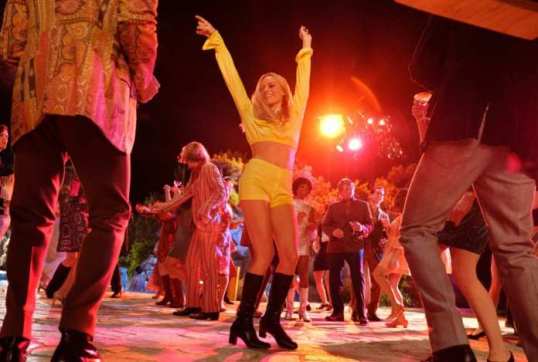
Once Upon A Time…In Hollywood – Victoria Thomas

BIG BUDGET – COMEDY
Knives Out – Mary Vernieu, Angela Peri (Location Casting), Bret Howe (Associate)

STUDIO OR INDEPENDENT – COMEDY
Jojo Rabbit – Des Hamilton

STUDIO OR INDEPENDENT – DRAMA
Marriage Story – Francine Maisler, Douglas Aibel, Kathy Driscoll-Mohler (Associate)

LOW BUDGET – COMEDY OR DRAMA
The Last Black Man in San Francisco – Julia Kim, Nina Henninger (Location Casting),
Sarah Kliban (Associate)

MICRO BUDGET – COMEDY OR DRAMA
Skin in the Game – Matthew Lessall

ANIMATION
(tie) The Lion King – Sarah Halley Finn, Jason B. Stamey (Associate)
and Toy Story 4 – Kevin Reher, Natalie Lyon

THE ZEITGEIST AWARD
Star Wars: The Rise of Skywalker – Nina Gold, April Webster, Alyssa Weisberg,
Angela Young (Associate)

TELEVISION PILOT AND FIRST SEASON – COMEDY
“Russian Doll” – Christine Kromer, Andrew Femenella (Associate)

TELEVISION PILOT AND FIRST SEASON – DRAMA
“Pose” – Alexa L. Fogel, Kathryn Zamora-Benson (Associate), Caitlin D. Jones
(Associate)

TELEVISION SERIES COMEDY
“The Marvelous Mrs. Maisel” – Cindy Tolan, Juliette Ménager (Location Casting),
Anne Davison (Associate)

TELEVISION SERIES – DRAMA
“Game of Thrones” – Nina Gold, Robert Sterne, Carla Stronge (Location Casting)

LIMITED SERIES
“When They See Us” – Aisha Coley, Billy Hopkins (Location Casting), Ashley Ingram
(Location Casting)

FILM – NON-THEATRICAL RELEASE
To All the Boys I’ve Loved Before – Tamara-Lee Notcutt, Tiffany Mak (Location
Casting), Alexis Allen (Associate)

LIVE TELEVISION PERFORMANCE, VARIETY OR SKETCH COMEDY
“Live in Front of a Studio Audience: ‘All in the Family’ and ‘The Jeffersons’” – Marc
Hirschfeld, Geralyn Flood, Katrina Wandel George (Associate)

CHILDREN’S PILOT AND SERIES (LIVE ACTION)
“Andi Mack” – Amber Horn, Danielle Aufiero, Steven Tylor O’Connor (Associate)

TELEVISION ANIMATION
“Big Mouth” – Julie Ashton-Barson

REALITY SERIES
“Queer Eye” – Gretchen Palek, Danielle Gervais, Ally Capriotti Grant, Quinn Fegan,
Pamela Vallarelli

SHORT FILM
Skin – Jessica Sherman

SHORT FORM SERIES
“It’s Bruno!” – Bess Fifer

NEW YORK BROADWAY THEATRE – COMEDY OR DRAMA
To Kill a Mockingbird – Daniel Swee

NEW YORK BROADWAY THEATRE – MUSICAL
Hadestown – Duncan Stewart, Benton Whitley

NEW YORK BROADWAY THEATRE – REVIVAL, COMEDY OR DRAMA
The Waverly Gallery – David Caparelliotis, Lauren Port

NEW YORK BROADWAY THEATRE – REVIVAL, MUSICAL
Oklahoma! – Adam Caldwell, Will Cantler

NEW YORK THEATRE – COMEDY OR MUSICAL
Fiddler on the Roof in Yiddish (Fidler Afn Dakh) – Jamibeth Margolis

NEW YORK THEATRE – DRAMA
Daddy – Judy Henderson, Nick Peciaro (Associate)

REGIONAL THEATRE
In the Heights (Westport Country Playhouse) – Tara Rubin, Claire Burke

LOS ANGELES THEATRE
Sweat – Heidi Levitt, Billy Hopkins (NY Casting), Ashley Ingram (NY Casting), Marin
Hope (Associate)

SPECIAL THEATRICAL PERFORMANCE
Annie – Margery Simkin, Michael Donovan, Beth Lipari, Richie Ferris (Associate)

THEATRE TOURS
Hamilton – Bethany Knox, Lauren Harris (Associate)

The Irishman and The Lion King Are Honored By The Visual Effects Society


Here are the winners from last night’s meeting of the Visual Effects Society!

Outstanding Visual Effects in a Photoreal Feature
The Lion King
(Robert Legato, Tom Peitzman, Adam Valdez, Andrew R. Jones)

Outstanding Supporting Visual Effects in a Photoreal Feature
The Irishman
(Pablo Helman, Mitchell Ferm, Jill Brooks, Leandro Estebecorena, Jeff Brink)

Outstanding Visual Effects in an Animated Feature
Missing Link
(Brad Schiff, Travis Knight, Steve Emerson, Benoit Dubuc)

Outstanding Visual Effects in a Photoreal Episode
The Mandalorian; “The Child”
(Richard Bluff, Abbigail Keller, Jason Porter, Hayden Jones, Roy K. Cancion)

Outstanding Supporting Visual Effects in a Photoreal Episode
Chernobyl; “1:23:45”
(Max Dennison, Lindsay McFarlane, Clare Cheetham, Paul Jones, Claudius Christian Rauch)

Outstanding Visual Effects in a Real-Time Project
Control
(Janne Pulkkinen, Elmeri Raitanen, Matti Hämäläinen, James Tottman)

Outstanding Visual Effects in a Commercial
“Hennessy: The Seven Worlds”
(Carsten Keller, Selcuk Ergen, Kiril Mirkov, William Laban)

Outstanding Visual Effects in a Special Venue Project
Star Wars: Rise of the Resistance
(Jason Bayever, Patrick Kearney, Carol Norton, Bill George)

Outstanding Animated Character in a Photoreal Feature
Alita: Battle Angel; Alita
(Michael Cozens, Mark Haenga, Olivier Lesaint, Dejan Momcilovic)

Outstanding Animated Character in an Animated Feature
Missing Link; Susan
(Rachelle Lambden, Brenda Baumgarten, Morgan Hay, Benoit Dubuc)

Outstanding Animated Character in an Episode or Real-Time Project
Stranger Things 3; Tom/Bruce Monster
(Joseph Dubé-Arsenault, Antoine Barthod, Frederick Gagnon, Xavier Lafarge)

Outstanding Animated Character in a Commercial
“Cyberpunk 2077”; Dex
(Jonas Ekman, Jonas Skoog, Marek Madej, Grzegorz Chojnacki)

Outstanding Created Environment in a Photoreal Feature
The Lion King; The Pridelands
(Marco Rolandi, Luca Bonatti, Jules Bodenstein, Filippo Preti)

Outstanding Created Environment in an Animated Feature
Toy Story 4; Antiques Mall
(Hosuk Chang, Andrew Finley, Alison Leaf, Philip Shoebottom)

Outstanding Created Environment in an Episode, Commercial, or Real-Time Project
Game of Thrones; The Iron Throne; Red Keep Plaza
(Carlos Patrick DeLeon, Alonso Bocanegra Martinez, Marcela Silva, Benjamin Ross)

Outstanding Virtual Cinematography in a CG Project
The Lion King
(Robert Legato, Caleb Deschanel, Ben Grossmann, AJ Sciutto)

Outstanding Model in a Photoreal or Animated Project
The Mandalorian; The Sin; The Razorcrest
(Doug Chiang, Jay Machado, John Goodson, Landis Fields IV)

Outstanding Effects Simulations in a Photoreal Feature
Star Wars: The Rise of Skywalker
(Don Wong, Thibault Gauriau, Goncalo Cababca, François-Maxence Desplanques)

Outstanding Effects Simulations in an Animated Feature
Frozen 2
(Erin V. Ramos, Scott Townsend, Thomas Wickes, Rattanin Sirinaruemarn)

Outstanding Effects Simulations in an Episode, Commercial, or Real-Time Project
Stranger Things 3; “Melting Tom/Bruce”
(Nathan Arbuckle, Christian Gaumond, James Dong, Aleksandr Starkov)

Outstanding Compositing in a Feature
The Irishman
(Nelson Sepulveda, Vincent Papaix, Benjamin O’Brien, Christopher Doerhoff)

Outstanding Compositing in an Episode
Game of Thrones; “The Long Night”; “Dragon Ground Battle”
(Mark Richardson, Darren Christie, Nathan Abbot, Owen Longstaff)

Outstanding Compositing in a Commercial
“Hennessy: The Seven Worlds”
(Rod Norman, Guillaume Weiss, Alexander Kulikov, Alessandro Granella)

Outstanding Special (Practical) Effects in a Photoreal or Animated Project
The Dark Crystal: Age of Resistance; “She Knows All the Secrets”
(Sean Mathiesen, Jon Savage, Toby Froud, Phil Harvey)

Outstanding Visual Effects in a Student Project
The Beauty
(Marc Angele, Aleksandra Todorovic, Pascal Schelbli, Noel Winzen)

Ghosts of Sundance Past #3: Crown Heights (dir by Matt Ruskin)


The 2017 film, Crown Heights, tells the story of two friends and a miscarriage of justice.

In 1980, a 19 year-old Trinidadian named Colin Warner (Lakeith Stanfield) is arrested in the Crown Heights neighborhood of Brooklyn.  Taken down to the police station, Colin is told that he has been arrested for the murder of Marvin Grant, a man who he has never heard of.  When Colin says that he is innocencent, he’s informed that eyewitnesses saw him at the scene of the crime.  Though he continues to protest his innocence, Colin is transferred to a jail where he is to await his trial.

From the start, it’s obvious that Colin didn’t have anything to do with the shooting of Marvin Grant.  What’s messed up is that the people prosecuting him know it as well.  When another prisoner tell the detectives the name of the man who actually committed the murder, his statement is ignored because he refuses to name his source.  When one of the prosecution’s witnesses testifies that he saw someone other than Colin fire the gun, the prosecutor “corrects” his witnesses’s testimony in open court. After the jury returns a guilty of verdict for Colin and another man, the judge says that he can’t be sure whether or not Colin is guilty but that he can only follow the law.  And the law says that, as an adult convicted of a crime, Colin is going to spend the rest of his life in prison.  No one in the legal establishment cares that Colin is obviously not guilty.  He’s a young black man with a minor criminal history and, by convicting him, the police can close one homicide investigation and move on to the next one.

In prison, Colin finds himself isolated, both literally and figuratively.  When he refuses to get involved with any of the prison gangs, the other prisoners shun him and he finds himself being targeted.  When a prison guard pushes Colin until Colin finally snaps and throws a punch, Colin ends up spending two years in solitary confinement.

Meanwhile, on the outside, Colin’s best friend, Carl King (Nnamdi Asomugha), attempts to prove that his friend is innocent.  That proves to be even more difficult than Carl initially expects.  No one is interested in reopening a closed case and Carl can’t even afford a good attorney to help him pursue Colin’s appeal.  Still, Carl never gives up.  He even trains to become a process server so that he can have an excuse to hang out at the court house and hopefully meet a lawyer who will be willing to take on Colin’s case.  Amazingly, that’s exactly what happens.

Of course, by this point, Colin Warner has been in prison for 20 years….

Based on a true story, Crown Heights was a hit at the 2017 Sundance Film Festival, winning the Audience Award for the U.S. Dramatic Film competition.  Watching the film, you can easily see why it was such a crowd pleaser.  Not only does the film deal with serious issues of race and economic disparity but, when watching the film, it’s impossible not to be moved by the strength of Carl and Colin’s friendship.  Despite all of the difficulties that are placed in front of him, Carl never gives up in his quest to prove Colin’s innocence and get him out of prison.  The film works as both a cry for freedom and a celebration of friendship.

The film’s execution is not quite as strong as its message.  Matt Ruskin’s direction occasionally veer towards made-for-TV (or, at the very least, made-for-HBO) territory and the film’s constant switching back and forth between Colin in prison and Carl searching for witnesses sometimes seems to prevent either storyline for really maintaining a consistent momentum.  20 years is a long time to cover in just 90 minutes and sometimes, it’s hard not to feel as if important parts of the story have been left out or, at the very least, glossed over.  That said, it’s a heartfelt film and it’s blessed with two wonderful lead performances from Lakeith Stanfield and Nnamdi Asomugha.

Crown Heights is not a perfect film but the story and the performances are powerful enough to make you think and to leave you moved.