Mardi Gras Film Review: Gothic Harvest (dir by Ashley Hamilton)


Are you currently heading to New Orleans for Mardi Gras?  Or are you already in New Orleans, getting drunk and dreaming about how many beads you’ll end up with by the end of Tuesday night?  If that’s the case, have fun but be careful.  New Orleans is a town that’s full of ghosts and voodoo.

At least, that’s what the movies would have you believe.  Whenever you see a horror film that’s set in New Orleans, you know that voodoo is going to somehow play into it.  The other thing that you can usually count on is that there will be at least one scene set during Mardi Gras.  Really, that’s not surprising.  Mardi Gras in New Orleans is not only a great party but it’s also uniquely cinematic in a way that Mardi Gras in Dallas never is.

(Yes, we celebrate Mardi Gras in Dallas.  It’s nothing to get too excited about.)

The 2018 film, Gothic Harvest, is all about Mardi Gras and voodoo.  When four college students head down to New Orleans for the party of the year, they have no idea that they’re about to get sucked into a centuries old curse.  When Hope (Abbie Gayle) meets the handsome and enigmatic Gar (Ashley Hamilton, who also directed the film), she goes off with him without bothering to tell her friends where she’s going.  That turns out to be a mistake because it turns out that Gar is a member of a cursed family.  The family is immortal but that immortality comes with a price.  Every year, they have to find and sacrifice a young woman in order to stay alive.  It’s all because the family, centuries ago, ran afoul the queen of New Orleans voodoo, Marie Laveau (Janee Michelle).

Hope’s friends are concerned about her disappearance but they can’t get anyone to help them out.  After all, it’s Mardi Gras and the entire city is full of people who are probably going to wake up in a strange bed with a hangover on Wednesday morning.  However, Hope’s friends do eventually run into an undercover cop named Detective Hollis (Bill Moseley).  Hollis has an impressive beard and brags about how his favorite band is Pantera.  He seems to be a bit strange but he agrees to help the girls look for Hope.


Hope, meanwhile, has now met the cursed and immortal Boudine family and, not surprisingly, they’re an interesting group of characters.  What distinguished them from other cursed immortals is that they all seem to be hate being stuck with each other but they hate the idea of dying even more.  So, they keep doing what they have to do even though it makes them all miserable.  The family matriarch is Griselda (Lin Shayne) while her daughter, Amelia (Sofia Mattson), is a self-styled dominatrix.  And then there’s Dolly (Ciara Rizzo), who is obsessed with dolls.

Gothic Harvest is a bit of a strange viewing experience.  This was Ashley Hamilton’s directorial debut and the film itself can be confusing upon first viewing.  The timeline jumps back and forth, from the past to the present, and it can often be hard to keep track of just who is doing what or why.  It’s hard not to feel that the film might have worked better if it had dropped the modern storyline and instead just concentrated on telling the story of how the family came to be cursed.  That said, Gothic Harvest does occasionally achieve a dream-like intensity and Hamilton makes good use of New Orleans’s spooky atmosphere.  This is a flawed film that doesn’t really work but I would still be interested in seeing what Hamilton directs next.

The cast is a bit of a mixed bag.  Hope and her friends are not particularly memorable but Bill Moseley and Lin Shaye are both ideally cast.  Moseley, in particular, appears to be having fun and there’s a great scene where he sits in a truck and recites some of the worst pick-up lines ever.  Finally, Janee Michelle goes totally over the top as Marie Laveau but that’s exactly the right approach to take to the character.  The Queen of New Orleans Voodoo isn’t going to be a quiet or a reserved character.

For those of you celebrating, have fun but use your common sense.  If someone says that he needs to sacrifice you so that his family can continue to live forever, don’t go off with him regardless of how many beads he offers.

 

Love On The Shattered Lens: An Officer and a Gentleman (dir by Taylor Hackford)


Almost everyone knows that one scene from the 1982 film, An Officer and a Gentleman.  You can probably guess which scene it is that I’m talking about.  It’s been parodied and imitated in so many other shows and movies that it’s one of those pop cultural moments that everyone has “seen” even they haven’t actually watched it.  It’s the scene where….

I AIN’T GOT NOWHERE ELSE TO GO!

What?

I AIN’T GOT NOWHERE ELSE TO GO!

I know, Mayo, I’m getting to that!  Let me tell everyone about the iconic factory scene first, okay?

I AIN’T GOT NOWHERE ELSE TO GO!

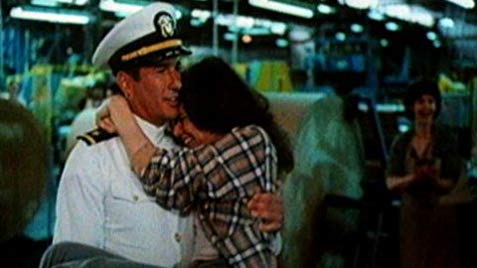
Uhmmm …. right.  Where was I?  Oh yeah, it’s the scene where Debra Winger is working in a factory and a youngish Richard Gere suddenly shows up and he’s wearing a white uniform and he picks her up and carries her out of the factory while all of her coworkers cheer.  Meanwhile, that Up Where We Belong song starts to play on the soundtrack.  Even though, up until recently, I had never actually sat down and watched An Officer and a Gentleman, I certainly knew that scene.

Last Friday, I noticed that I had An Officer and a Gentleman saved on the DVR and I thought to myself, “Well, I might as well go ahead and watch it and find out what else happens in the movie.”  Add to that, I only had three hours of recording space left on the DVR so I figured I could watch the movie and then delete it and free up some space….

I AIN’T GOT NOWHERE ELSE TO GO!

Goddammit, Mayo, be quiet!  I’m getting to it!

Anyway, I watched the film and I discovered that it’s actually about a lot more than just Richard Gere getting Debra Winger fired from her job at the factory.  It’s also about how Zack Mayo (the character played by Richard Gere) hopes to make something of himself by graduating from Aviation Officer Candidate School so that he can become not only a Navy pilot but also an officer and a gentleman.  His father (Robert Loggia) is an alcoholic, his mother committed suicide when Mayo was a child and Mayo …. well, I’ll let him tell you himself.

I AIN’T GOT NOWHERE ELSE TO GO!

That’s right.  Mayo has not got anywhere else to go.

I AIN’T GOT NOWHERE ELSE TO GO!

Ain’t is not a word, Mayo.

As you may have already guessed, we know that Mayo doesn’t have anywhere else to go because there’s a scene where he continually yells, “I ain’t got nowhere else to go!” over and over again.  He yells it after being forced to do a thousand push-ups and sit-ups by his drill sergeant, Foley (Louis Gossett, Jr.)  Foley thinks that Mayo doesn’t have the right attitude to be either an officer or a gentleman.  Mayo is determined to prove him wrong.

I AIN’T GOT–

Oh give it a rest, Mayo!

Debra Winger plays Paula.  Paula is a townie.  She lives in a dilapidated house with her parents.  Her friend, Lynette (Lisa Blount), dreams of marrying a Naval officer and getting to travel the world.  Lynette gets involved with Mayo’s friend, Sid Worley (David Keith).  Foley warns both Sid and Mayo to stay away from the townie girls because they’re not to be trusted.  That turns out to be true in Lynette’s case but Paula’s love provides Mayo with the strength that he needs to believe in something more than just himself.

I AIN’T–

Yes, you do have some place to go, Mayo!  That’s the point of the whole goddamn movie!

Anyway, watching An Officer and a Gentleman, I was kind of surprised to discover that it’s actually two movies in one.  It’s a traditional army training film, one in which Richard Gere is whipped into shape by a tough drill sergeant.  It’s also a film about life in an economically depressed small town, where the only hope of escape comes from marrying the right aviation officer candidate.  As a military film it’s predictable if occasionally effective.  As a film about small town life, it’s surprisingly poignant.  An Officer And A Gentleman doesn’t pull any punches when it comes to depicting just how little life in the town has to offer to people like Paula and Lynette.  They have spent their entire lives being told they can either work in a factory for minimum wage and get drunk on the weekend or they can land a man who will hopefully take them away from all that and give them something more to look forward to than cirrhosis of the liver.  Lynette has accepted that as being her only option.  While Paula dreams of escape, she dreams of escaping on her terms.  She may fall in love with Mayo but she’s not going to pretend to be someone that she’s not just to keep him around.

Though he’s evolved into a good character actor, Richard Gere was remarkably blank-faced when he was younger and his performance as Mayo alternates between being bland and shrill.  However, Debra Winger brings a welcome edge to her role.  She plays Paula as someone who knows she’s stuck in a dead end existence.  She’s not happy about it but, at the same time, she’s not going to surrender her principles in order to escape.  She holds onto her ideals, even though she appears to be stuck in a crappy situation and that’s something that Mayo learns from her.  In the end, Paula saves Mayo just as surely as the Navy does.  And, just as Paula saves Mayo, Winger saves the movie.

I AIN’T GOT NOWHERE ELSE TO GO!

Oh, shut the Hell up, Mayo.  Go pick up Paula and carry her off to a better life….

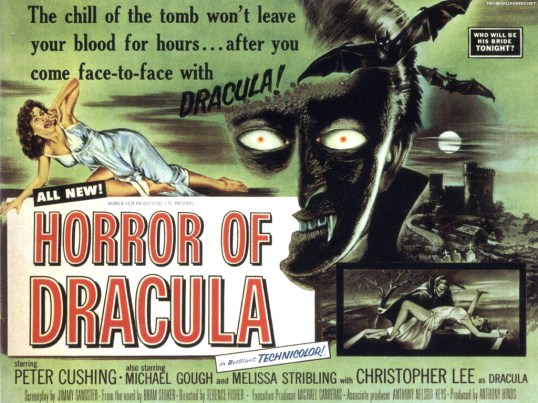
Scenes That I Love: Vampire Lucy Makes Her Presence Known In Horror of Dracula


Today is the 116th anniversary of the birth of the British director, Terence Fisher.

Though Fisher had a long career as both an editor and a director and he worked in almost every genre, he achieved immortality with the horror films that he directed for Hammer Films.  Fisher’s horror films took the monsters that had previously been made famous by Universal Studios and resurrected them with a pop art spin.  Regardless of whether the subject matter was Frankenstein, the Mummy, Dracula, or some other fearsome creature, Fisher brought a vibrant splash of color to their stories.  (Often that color was blood red.)  At a time when American horror films were still hobbled by the production code and tended to hide their themes under several heavy layers of subtext, Terence Fisher brought Hammer’s stories to life with explicit violence and unapologetic sexuality.  When Christopher Lee’s Dracula stared at a victim with lustful eyes, there was little doubt about what was actually happening.  Once Fisher started working for Hammer, he never left the horror genre.  Personally, I would have liked to have seen what he could have done with a Bond film.

Today’s scene that I love comes from one of the first of the Fisher-directed Hammer horror films, 1958’s Horror of Dracula.  (In the UK, it was simply know as Dracula.)  Christopher Lee may not appear in this scene but it’s still one of the creepiest moments in the film.  In this scene, Lucy (Carol Marsh) returns from the dead and, sporting a new set of fangs, attempts to get her former maid’s daughter, Tania, to come for a walk with her.  Thanks to both Fisher’s direction and Marsh’s unforgettable performance, this is a scene that sticks with you even after the film ends.   Whenever I see Lucy peeking out from behind that tree and calling out to little Tania, my mind flashes back to when I was in the 1st grade and a police officer stopped by the classroom to ask if we all knew what to do if an adult who we didn’t know tried to get us to go off with them.  This scene definitely gives off stranger danger vibes and it’s all the more creepy as a result.


4 Shots From 4 Paul Morrissey Films: Chelsea Girls, Trash, Blood For Dracula, Mixed Blood


4 Shots From 4 Films is just what it says it is, 4 shots from 4 of our favorite films. As opposed to the reviews and recaps that we usually post, 4 Shots From 4 Films lets the visuals do the talking!

Today, the Shattered Lens wishes a happy 82nd birthday to the one and only Paul Morrissey!

Though he may not be as well known as some of his contemporaries, Paul Morrissey is one of the godfathers of independent film.  He first came to notice as a collaborator of Andy Warhol’s.  Morrisey’s first films were shot at the Factory and starred the members of Warhol’s entourage.  At a time when the indie film scene barely even existed, Morrissey was making boldly transgressive films and distributing them largely on his own.  In fact, it could probably be argued that, if not for Paul Morrissey, the American independent film scene would never have grown into the impressive artistic and financial force that it is today.

There’s always been some debate over how much influence Warhol had over Morrissey’s films.  Morrissey has always said that Warhol had next to nothing to do with the films, beyond occasionally taking a producer’s or a co-director’s credit.  Others have disagreed.  What can be said for sure is that, even after Warhol retreated from directly involving himself in the cinematic arts, Morrissey continued to make fiercely independent films.

Paul Morrissey made films about outsiders.  While other directors were telling stories about the middle and upper classes, Morrissey was making movies about junkies, prostitutes, and people simply trying to make it from one day to another.  His films also frequently satirized classic Hollywood genres.  In fact, his two best-known films, Flesh for Frankenstein and Blood for Dracula, not only satirized the old Universal horror films but also the Marxist-themed films being made in Europe.  A devout Catholic and a political conservative, Morrissey took a particular delight in tweaking the left-wing assumptions of the counterculture.  Who can forget Joe Dallesandro’s gloriously shallow revolutionary in Blood for Dracula?

Here are….

4 Shots From 4 Paul Morrissey Films

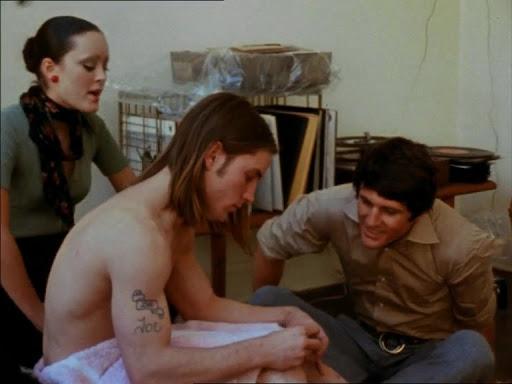
Chelsea Girls (1966, dir by Paul Morrissey and Andy Warhol)

Trash (1970, dir by Paul Morrissey)

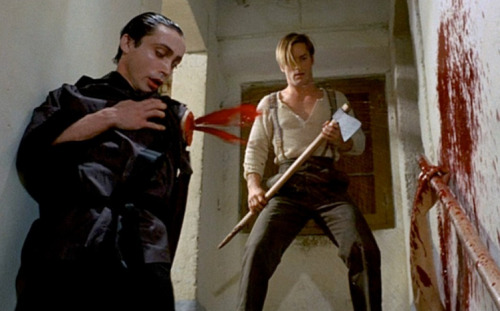
Blood For Dracula (1974, dir by Paul Morrissey)

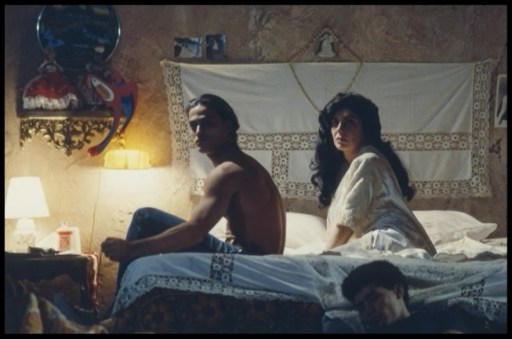
Mixed Blood (1984, dir by Paul Morrissey)

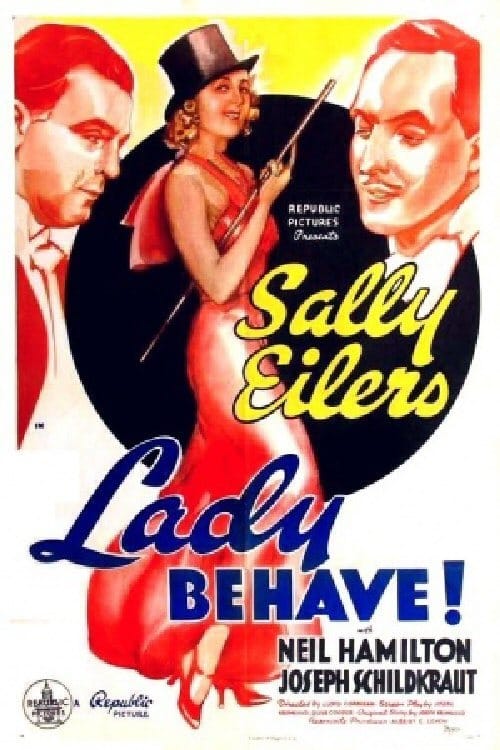
Mardi Gras Film Review: Lady Behave! (dir by Lloyd Corrigan)


The 1938 film, Lady Behave!, begins with a woman named Clarice (Patricia Farr) getting ready to go out and celebrate Mardi Gras.  Even though Clarice invites her older sister, Paula (Sally Eilers), to come with her, Paula refuses.  Paula has work to do at home.  It’s pretty obvious that this is the way that it’s always been between the two sisters.  Clarice has fun while Paula stays home and waits for her to return.

Fortunately, Clarice does return in the morning.  As she tells Paula, she had a great time during Mardi Gras.  In fact, she had such a great time that she ended up getting married!  She married a wealthy northerner named Stephen Cormack (Neil Hamilton).  The only problem is that Clarice is already married!  She’s totally forgotten that she only recently became the wife of a dissolute playboy named Michael Andrews (Joseph Schildkraut).  By getting married a second time, Clarice has committed bigamy!  She could go to prison for 10 years!

Whatever is Paula to do?

Well, what if she arranges for Clarice to leave the country?

What if she tries to bribe Michael into accepting an annulment?

What if Paula goes up to New York and pretends to be Clarice (because, after all, Stephen was pretty drunk when he married her)?

What is she does all three!?

Of course, when Paula goes up to New York, she discovers that Stephen is out of the country.  She moves into his mansion, where she discovers that his two children — Patricia (Marcia Mae Jones) and Hank (George Ernest) — are convinced that she’s just a gold digger who only wants to steal their father’s money (and, it should be noted, also their inheritance).  When Michael shows up at Stephen’s mansion, he explains to Paula that he needs $10,000 for a horse and he’ll only agree to an annulment if he gets the money.  However, when he meets Patricia and Hank, he tells them that if they pay him $30,000, he’ll help to break up the marriage between Stephen and Paula (who, of course, everyone but Michael thinks is actually Clarice).

Eventually, Stephen shows up and he assumes that Paula actually is Clarice.  Paula and Stephen quickly fall in love and it turns out that Stephen is very serious about his new marriage.  He even wants to take Paula on a honeymoon.  Of course, he thinks Paula is Clarice and Paula is freaking out because they’re not actually married but she wishes that they were.  But, if they did actually get married, Stephen would be guilty of bigamy and then he’d have to leave the country like Clarice and….

Yes, this is one of those somewhat busy screwball comedies where almost every action is motivated by a misunderstanding and where all of the dialogue is extremely snappy.  To be honest, it’s all a bit too hyper.  Though the film originally had a running time of 70 minutes, most of the existing prints are only 57 minutes long.  This film has a lot of plot for only 57 minutes and it’s often difficult to keep track of what’s happening from one scene to the next.  That wouldn’t be a problem if this film starred someone like William Powell and Carole Lombard (or, for that matter, Cary Grant and Myrna Loy) but instead, this film features Sally Eilers and Neil Hamilton, who are likable performers but not quite likable enough to carry the film over it’s rough edges.

On the plus side, Joseph Schildkraut has some very funny scenes as the flamboyant Michael.  And Marcia Mae Jones and George Ernest both do a great work as Stephen’s paranoid children.  They consistently made me laugh.  Otherwise, Lady Behave! is a bit too frantic for its own good.

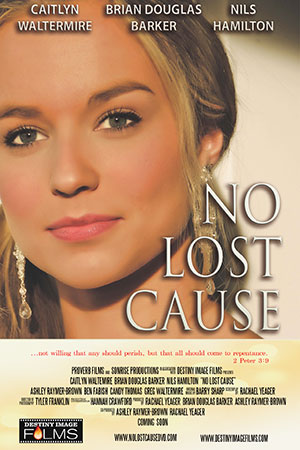
Love On The Shattered Lens: No Lost Cause (dir by Ashley Raymer-Brown and Rachael Yeager)


I’d like to start this review by quoting one of my favorite episode of King of the Hill.

Church Hopping, which aired during King of the Hill‘s 10th season, found Hank and his family searching for a new church after the reverend of their old church blows off Hank’s suggestion that seating should be assigned.  Peggy wants the family to start attending the new mega-church but Hank worries that it might be too big for him.  However, after the Hills have tried out every other church in town and found them to be not quite right for their needs, Peggy tells Hanks that they only have two options — go to the new megachurch or “live the empty barren existence of secular humanism.”  Hank finally agrees to give the megachurch a try.

At first, Hank loves the place.  He appreciates that the church broadcasts Cowboys games on Sunday.  He gets along with all of the members.  But, quickly, the church starts to dominate every aspect of his life.  As he feared, it is simply too big for him.  As he tells his nephew-in-law, Lucky, “My old church wouldn’t pay attention to me and my new church won’t leave me alone.”  When Hank announces that he will no longer be attending church and will instead look for some other way to worship, Peggy brings the church’s pastor to the house to counsel him.

After struggling for a bit to explain why he’s not comfortable at the megachurch, Hank finally exclaims, “No offense, but your church just keeps coming at you.”

Luckily, things work out in the end.  The Hills return to their old church and are spared from secular humanism.  It’s heart-warming in the way that the best episodes of King of Hill often were.  And that line about the church has always stuck with me.

I have to admit that, as I watched the 2011 film No Lost Cause, I found myself thinking about Hank’s lament.  No Lost Cause is about a young college student named Beth Ann Collins (Caitlyn Waltermire) who is paralyzed as the result of a car accident.  Making matters even worse for Beth Ann is that, after her accident, she finds herself living with her father, a farmer named Billy (Brian Douglas Baker).

Billy is an outspoken Christian.

Beth Ann is a bitter agnostic.  (This is one of those films where it’s pretty much taken for granted that all nonbelievers are bitter about something.)

Together …. THEY SOLVE CRIMES!

No, actually, they fight a lot.  Beth Ann does not want Billy in her life and she’s not amused when he keeps insisting that she comes to church with him.  Billy is not happy when Beth Ann announces that she just wants to stay in her bedroom and work on vaguely defined college work.  I know that the film expected us to automatically sympathize with Billy but I have to admit that I was on Beth Ann’s side the entire time.  It’s not just that Beth Ann had every right to be angry about her situation.  It’s also that Billy’s church just keeps coming at her.

Billy tells Beth Ann that they’re going to the church potluck.  While everyone else eats, Beth Ann sits in a corner and does some ill-defined term paper work.  Nick (Nils Hamilton) approaches her and asks why she’s at the potluck if she’s not going to eat.  And I’m just like, “BECAUSE HER DAD MADE HER COME!  Now leave her alone and let her write her paper!”

(I also have to admit that, by the end of the whole potluck scene, I was yelling at the characters in the film, “Say ‘potluck’ one more time!  GO ON, I DARE YOU!”  Seriously, potluck is just an annoying word.)

Later, at the house, Beth Ann is again trying to get work on her paper done when Billy shows up and announces that he’s invited the entire church over for dinner.  Suddenly, the house is full of people and while Beth Ann sits in a corner and tries to do her work, people keep sitting down at the table with her and talking to her.  Beth Ann has no desire to speak to anyone and actually does have some important work to do but that doesn’t matter to the members of Billy’s church.  They just keep coming at her.

“Seriously,” I found myself yelling at the screen, “leave Beth Ann alone!  She doesn’t want to talk to you!”

(I may have been projecting because it seems like whenever I’m in the middle of doing something important, I get interrupted.)

Anyway, the film gets off to a pretty rough start but it does get better.  Beth Ann does eventually grow comfortable about living with Billy and she even falls in love with Nick.  It’s predictable but occasionally sweet and Caitlyn Watermire gives a good and sympathetic performance as Beth Ann.  Unfortunately, the film also has Beth Ann suddenly regain the ability to walk, with the suggestion being that it’s all due to her newly found faith but that only forces the audience to wonder about all of the faithful who have a better attitude than Beth Ann but still don’t get healed.  It’s hard not to feel that the film would have been more effective if it had focused on Beth Ann coming to terms with being in the wheelchair as opposed to falling back on a miracle.

As a love story, No Lost Cause works a bit better than you might expect.  Caitlyn Watermire and Nils Hamilton have a likable chemistry and you do hope find yourself hoping the best for them, even if Nick does come across as a bit pushy about the whole potluck thing.  This is one of those film’s that will probably be best appreciated by people who already share the film’s view of the world but, as far as religious-themed films are concerned, No Lost Cause is better acted than most and it features some nice shots of the countryside.  That said, it’s still hard to watch the film without feeling that Beth Ann occasionally deserves some time to herself.

4 Shots From 4 Luis Buñuel Films: Illusions Travels By Streetcar, The Exterminating Angel, Simon of the Desert, Belle de Jour


4 Shots From 4 Films is just what it says it is, 4 shots from 4 of our favorite films. As opposed to the reviews and recaps that we usually post, 4 Shots From 4 Films lets the visuals do the talking!

Today is the 120th birthday of the great Spanish surrealist filmmaker, Luis Bunuel!  Continuing the tradition that we’ve just started here at the Shattered Lens, that means that it is now time for….

4 Shots From 4 Luis Buñuel Films

(This post, I should add, was a true pleasure to put together because Luis Buñuel is truly one of the most visually inspiring directors of all time.  If you haven’t seen a Luis Buñuel film, 2020 is the perfect year to discover him!)

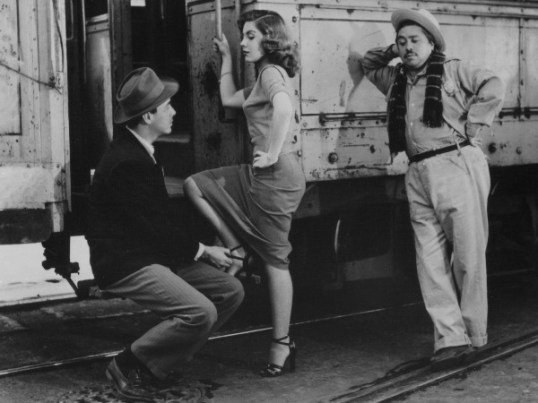
Illusion Travels By Streetcar (1954, dir by Luis Buñuel)

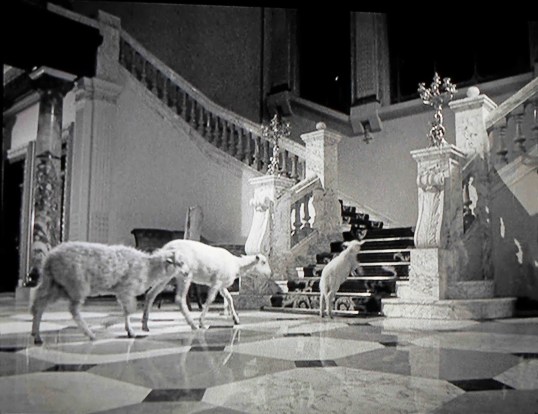
The Exterminating Angel (1962, dir by Luis Buñuel)

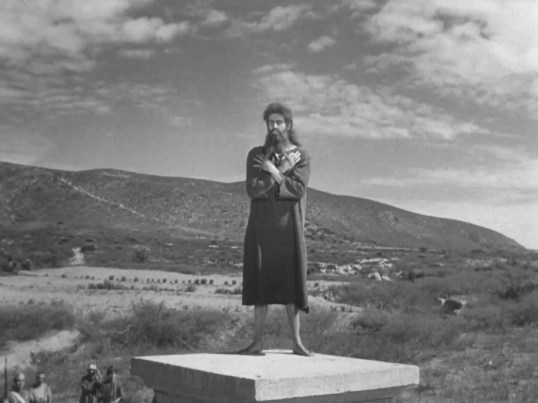
Simon of the Desert (1965, dir by Luis Buñuel)

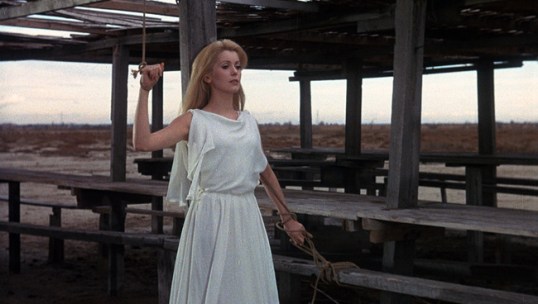
Belle de Jour (1967, dir by Luis Buñuel)

The Things You Find On Netflix: The Last Thing He Wanted (dir by Dee Rees)


As I watched The Last Thing He Wanted on Netflix, it occurred to me that smoking cigarettes and slamming down phones is no substitute for a personality.

The Last Thing He Wanted stars Anne Hathaway as Elena McMahon and, over the course of the movie, she smokes a lot of cigarettes and slams down a lot of phones.  That’s because Elena is supposed to be a veteran D.C. journalist.  She works for The Atlantic Post, which is an awkward name for a newspaper.  (In the novel on which this film was based, Elena worked for The Washington Post but I assume that plot point was changed to avoid upsetting Jeff Bezos.  That’s the sort of thing that gets this film off to a bad start.)  Hathaway is never exactly believable as a hard-boiled journalist who is known for uncovering government scandals and reporting from war zones.  She is, however, believable as a talented but miscast actress who watched a lot of old journalism movies before showing up on the set of The Last Thing He Wanted.  The end result is a performance that feels like cosplay.

Anyway, the film itself is a mess.  It takes place in 1984 and starts out with Elena getting yanked off of her usual Central America beat and assigned to instead cover the presidential campaign.  This leads to a lot of scenes of Elena lighting cigarettes and slamming down phones while talking about how difficult it is to be a journalist when you’re working for a spineless organization like the Atlantic Post.

Elena is estranged from her father, a dissolute drunk named Dick.  Dick is played by Willem DaFoe, who deals with the fact that he really doesn’t have much of a character to play by chewing up every piece of scenery that he can get his hands on.  (At times, it seems like Willem DaFoe has been replaced by someone doing a poorly conceived Willem DaFoe impersonation.)  Dick is suffering from dementia and he keeps forgetting that his wife is dead.  Dick needs Elena to do something for him.  It turns out that Dick has set up a “huge deal.”  Elena assumes that it must be a drug deal but it turns out that Dick is actually a small-time arms dealer.  So now, Elena is transporting weaponry through Central America and — surprise! — it all links back to the very story that her editors at the Atlantic Post didn’t want her to cover in the first place.

Soon, Elena is flying all over the place and meeting a rogue’s gallery of anti-communist rebels and arms dealers.  In a different film, they would all be fascinating characters but, in this one, it just comes across as being more cosplay.  Ben Affleck shows up a few times, playing some sort of Washington D.C. fixer and he’s absolutely the worst actor to cast in a film like this because the film’s vaguely-defined liberalism brings out his worst instincts as a performer.  The character’s written to be an enigmatic rogue but Affleck appears to be incapable of playing him as being anything other than just a one-note Republican.  (Whenever Affleck is cast in a role like this, you can see him thinking, “How would Matt Damon play this scene?”)  Toby Jones also makes an appearance and you’re excited to see him until you realize that he’s just going to be recycling his Truman Capote imitation from Infamous to no great effect.  There’s a lot of good performers in The Last Thing He Wanted but they’re left stranded by a script that doesn’t seem to know why any of them are there.  It all leads to an absolutely terrible ending, one that proves that combining voice over narration with slow motion is not always the brilliant narrative technique that some directors believe it to be.

The Last Thing He Wanted was directed and co-written by Dee Rees and it has all of the flaws but none of the strengths of Rees’s previous Netflix film, MudboundMudbound was frequently ponderous and predictable but it was redeemed by some beautiful images and some unexpectedly nuanced performances.  The Last Thing He Wanted is ponderous without being much else.

Mardi Gras Film Review: On Hostile Ground (dir by Mario Azzopardi)


Uh-oh!  New Orleans might be in trouble!

In the 2000 film, On Hostile Ground, John Corbett plays a geologist named Matt Andrews.  Matt has been asked to investigate why two giant sinkholes have suddenly opened in New Orleans.  The mayor’s press secretary, George Regan (Peter Stebbins), hopes that Matt will just do a perfunctory investigation and then declare the sinkholes to be no big deal.  After all, it’s nearly time for Mardi Gras and it would be an economic disaster to cancel this year’s celebration.  One can only assume that, like most movie bureaucrats, Regan has never seen Jaws and therefore doesn’t understand the folly of saying, “We can’t close the city during tourist season!”

However, Matt’s a geologist and he holds himself up to a higher standard.  He doesn’t care about whether or not people get to celebrate Mardi Gras or not.  In fact, just listening to him talk and watching him work, you get the feeling that Matt was probably the guy who, during previous Mardi Gras celebrations, would say, “You guys go without me.  I’ve got to get some work done.”  Anyway, Matt does some investigating and discovers that New Orleans is basically about to collapse into the Earth.  It could happen tomorrow or it could happen 3,000 years from now but it will happen.  Matt also points out that, even if the entire city manages to not sink into the Earth, the sinkholes could cause the levees to collapse and then the entire city would be flooded.  (This movie was made before Katrina.)

Regan hears Matt out and then decides to hide all of his evidence and let Mardi Gras go on as planned.

Can you guess what happens?

There’s a few things that I immediately noticed about On Hostile Ground.

First off, my family lived in Louisiana for about a year and a half.  I’ve been to New Orleans during Mardi Gras.  I can usually tell when a film has actually been shot in Louisiana as opposed to some place nearby like, say, Georgia.  Watching On Hostile Ground, I noticed that it appeared that at least a few of the Mardi Gras scenes had actually been filmed in New Orleans.  There wasn’t quite as much Mardi Gras footage as I was expecting but what there was appeared to be authentic.  However, whenever the action moved outside of the French Quarter, I couldn’t help but notice that the surroundings looked very Canadian and that very few of the extras sounded like they had ever spent any time anywhere near the Big Easy.  In short, it quickly became obvious that the majority of this made-for-television film was shot in Montreal and Toronto.  Canada really can’t pass for Louisiana, much as how they could have never shot an episode of Degrassi in New Orleans.

The other thing I noticed is that, despite New Orleans being below sea level, Matt and his fellow geologists had no trouble finding dry underground caverns underneath the city.  It reminded me a bit of that old X-Files movie where the kids find an underground cavern right outside of Dallas.  Some things just aren’t going to happen, okay?

Anyway, this is one of those low-budget disaster films where everyone refuses to listen to the scientist and disaster follows.  This is the type of film that, nowadays, would probably be made by the Asylum for the SyFy Network.  That said, the Asylum version would probably be a lot more fun because there would be probably be like a sea serpent or killer Mardi Gras floats or something.  This one is just kind of dull and spends too much time on build-up without enough pay-off.

On Hostile Ground is not really worth sacrificing any beads for.


Love On The Shattered Lens: Xanadu (dir by Robert Greenwald)


“What the Hell did I just watch?” I asked myself as the end credits rolled for the 1980 film, Xanadu.

Xanadu is one of those films where words just fail you.  It’s a musical and it stars Olivia Newton-John, who has a good voice even if she’s also kind of a bland screen presence.  The music is really good.  I love the main song and it’s definitely one that has gotten stuck in my head every time that I’ve heard it.  Of course, for the longest time, I thought Olivia was singing, “One-a-due.”  (Seriously, I’m the worst when it comes to mishearing lyrics.)  But no, I later discover that she was singing about Xanadu and who would have guessed that Xanadu would turn out to be a roller disco?

Yes, it’s a very strange movie.

Xanadu starts out with a mural of nine women coming to life.  The 9 women are the Muses.  You may remember them from Greek mythology.  They exist to inspire artists who inevitably end up falling in love with him without realizing that a muse is not allowed to love back.  This leads to a lot of great art but also to a lot of broken hearts.  Olivia Newton-John plays a muse named Terpsichore but she prefers to be known as Kira because …. well, wouldn’t you?  For centuries, Kira has inspired great works of art.  She’s worked with Michelangelo and probably a few poets as well.  As someone who majored in Art History, I’m thankful for Kira because, without her, my degree would be totally useless as opposed to just slightly.  In the year 1980, Kira has again entered the mortal world so that she can inspire …. a roller disco.

Yeah, okay.

Listen, I could probably go on for about a thousand words about how disappointed I would be to go from inspiring the Mona Lisa to inspiring a tacky roller disco in Malibu.  But it doesn’t seem to bother Kira so good for her!  Of course, Kira is a bit distracted because she’s broken the number one rule of being a muse.  She’s fallen in love with an artist!

Sonny Malone (Michael Beck) is a painter whose job involves painting larger versions of album covers so that they can be displayed in the windows of record stores.  Sonny dreams of being an independent artist but instead, he’s stuck recreating the works of others.  He feels like his life and his work are going nowhere.  However, once he sees a picture of Kira, he is immediately inspired.  And then, when Kira skates up behind him and kisses him, he’s in love!

Yay!

The only problem, of course, is that Sonny is a human being and Kira is a mythological creature.  If Sonny was destined to fall in love with a creature from Greek mythology, I guess he should be happy that it was one of the muses and not Medusa.  But anyway, Kira says that she’s not allowed to be with Sonny so Sonny tries to talk Zeus and Hera into changing the rules.  Whether or not he succeeds is kind of left up in the air.  I think a bigger problem would be the fact that Kira is immortal whereas Sonny comes across like he’ll probably end up snorting too much cocaine before the 80s are over.  But that’s never really brought up in the film.

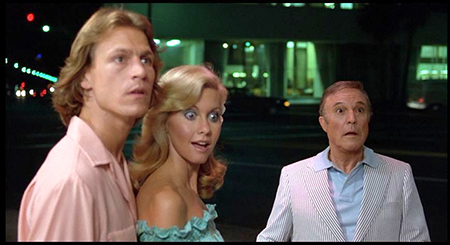
Around the same time that Sonny meets Kira, he also meets Danny (Gene Kelly!), who is a former big time band leader who now spends his time hanging out on the beach and dreaming about opening up a roller disco.  It turns out that, when Danny was a young man, he was also inspired by Kira.  Danny and Sonny join forces and soon, Xanadu is a reality!  Danny fantasizes about a 1940s style nightclub.  Sonny fantasizes about a generic “rock club.”  They may have two different visions but fortunately, they both agree one one thing: everyone has to wear roller skates.

Xanadu is one of those films where not much really happens but it’s still incredibly busy.  Danny keeps on dancing.  Sonny keeps on painting and bitching about how his life isn’t going anywhere.  Kira keeps on roller skating through everyone’s life.  As I said, the music’s great but the storyline …. well, to be honest, I thought the film’s story was fun as an example of something that could only have seemed logical in the late 70s.  I mean, it’s an incredibly stupid film but Gene Kelly’s in it and, even at the age of 68, he was still such a dedicated old trouper that you can’t help but smile whenever he breaks out a few moves.  Add to that, Michael Beck and Olivia Newton-John do make for a cute couple, even if both of them were reportedly miserable during filming.  They just look like they belong together, in a California beach community sort of way.

Xanadu’s a big mess of a movie but it’ll make you dance and it’ll make you sing.  All together now: One-a-due, One-a-due something want to do….*