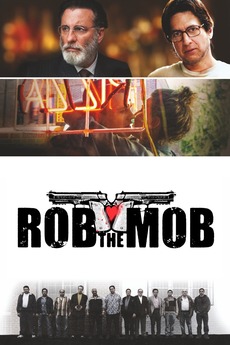
An Offer You Can’t Refuse #9: Rob the Mob (dir by Raymond De Felitta)


The 2014 film, Rob the Mob, tells the true story of a young couple in love who became minor celebrities when they robbed the mob.  Of course, they also ended up with a huge target on their back, which tends to happen when you repeatedly humiliate a bunch of angry men who have weapons at their disposal.

The year is 1992 and Tommy Uva (Michael Pitt) and his wife, Rosemarie (Nina Arianda) are professional criminals who, after getting busted for trying to rob a florist on Valentine’s Day, end up working at a debt collection agency.  Their boss (played by Griffin Dunne) spent time in prison for insider trading and he believes in giving convicts a second chance.  The problem is that Tommy doesn’t really want a second chance.  He’s actually pretty happy being a criminal.

Tommy has some issues with the Mafia, largely due to the fact that his father borrowed money from the mob to open up a shop and spent the rest of his short life being beaten and humiliated by loan sharks.  Tommy believes that the pressure is what led his father to an early grave.  Tommy’s mother (Cathy Moriarty), on the other hand, claims that it was the stress caused by Tommy being a criminal.  Regardless, seeing his father repeatedly mistreated has definitely left Tommy with some anger issues.

Even though Tommy claims that he hates the Mafia, he still seems to be rather obsessed with them.  At times, it’s hard to tell if Tommy is angry with the Mafia or if he’s just jealous about the fact that he’ll never be as rich or as powerful as the local neighborhood mobster.  Tommy starts to skip work so that he can observe the trial of John Gotti.  It’s while doing this that Tommy hears that guns are not allowed in Mafia social clubs.

Soon, Tommy is robbing those same clubs, taking all of the money that he can and humiliating the mobsters at the same time.  (He forces one group of paunchy gangsters to march outside in their underwear.)  With Rosemarie serving as his getaway driver, Tommy soon becomes something of a legend.  The mobsters even nickname the pair “Bonnie and Clyde.”  Because the Mafia doesn’t want to attract any unnecessary attention during the Gotti trial, Tommy and Rosemarie are able to get away with their activities for a while.  But then they make the mistake of stealing a list that could bring down the entire New York Mafia….

Rob the Mob is a bit of an uneven film.  The film starts with Tommy and Rosemarie getting high and then attempting to rob a florist and, in that scene, they both seemed like such idiots that I really wasn’t sure that I wanted to spend 104 minutes of my life watching a film about them.  Even after Tommy got out of a prison and got a legitimate job, he still seemed like such an unsympathetic loser that I found myself wondering why I should care.

However, once Tommy and Rosemarie start actually robbing the mob, the film picks up.  We meet Big Al, the temporary head of the New York mafia, and he’s played by Andy Garcia, who gives an intelligent and understated performance.  Big Al may be a mobster but he’s not an unsympathetic character.  The film presents him as being someone who has been unexpectedly thrust into a position of power and who is doing his best to keep everything from falling apart.  Then, as the robberies continue, Ray Romano shows up as Jerry Cardozo, a reporter who makes “Bonnie and Clyde” famous but who realizes too late that he’s also put their lives in even greater danger than they were before.  Over the past few years, Romano has gone from being a former sitcom star to being a surprisingly effective character actor and his performance here gives Rob the Mob its conscience.

Perhaps even more importantly, during the second half of the film, the chemistry of Michael Pitt and Nina Arianda finally won me over and I actually started to care about what would happen to Tommy and Rosemarie.  Tommy and Rosemarie find a reason for living in their criminal activities.  They go from being losers to being minor New York celebrities, even if they can’t reveal their actual identities.  They may be idiots but their love is real and there’s something very touching about how much they actually do care about each other.  It’s hard not to be happy for them, even if it’s obvious from the start that their story is not going to have a happy ending.

Rob the Mob is uneven but, in the end, it’s more than worth watching.  This is an offer you should not refuse.
Previous Offers You Can’t (or Can) Refuse:

  1. The Public Enemy
  2. Scarface
  3. The Purple Gang
  4. The Gang That Could’t Shoot Straight
  5. The Happening
  6. King of the Roaring Twenties: The Story of Arnold Rothstein 
  7. The Roaring Twenties
  8. Force of Evil

An Offer You Can’t Refuse #8: Force of Evil (dir by Abraham Polonsky)


The 1948 film noir, Force of Evil, plays out like a fever dream of dark and disturbing things.

The film begins on the third of July with attorney Joe Morse (John Garfield) telling us that, by the end of the 4th of July, he will have made his first million dollars, something that he describes as being “an important moment in every man’s life.”  Joe has an appreciation of money that one can only get from growing up poor.  By his own admission, Joe spent most of his youth on the streets, committing petty crimes.  It was his older brother, Leo (Thomas Gomez), who held things together back home and who kept Joe from getting into any truly serious trouble.  Now, years later, Joe is an attorney and Leo is a small-time player in New York’s numbers racket.

(The numbers racket, as the film explains, is an illegal lottery in which people — mostly in working class neighborhoods — bet on which three numbers will be drawn at the end of the day.  In this film, those three numbers are the last three digits of “the handle”, the amount race track bettors placed on race day at a major racetrack, published in the major newspapers in New York.)

Joe now works for Ben Tucker (Roy Roberts).  Tucker may look like a respectable businessman and he may operate out of an office building but he’s actually a gangster.  He got his start as a bootlegger and then, after prohibition ended, he moved into the number game.  He and Joe have come up with a scheme to consolidate and take over the entire New York numbers racket.  They’re going to fix the handle so that, on July 4th, everyone who picks “776” as their three numbers will win.  (As Joe explains, a mix of patriotism and superstition leads to thousands of people picking 776 on every Independence Day.)  When the small time operators don’t have the money to pay off the winners, Tucker will loan them the money to stay afloat.  However, by accepting the loan, the operators will now be in debt to Tucker and Tucker will basically control their operations.  Anyone who doesn’t want to work for Tucker will either be out of work or dead.  It’s all strictly business.

The only problem is that Joe knows that the plan will basically bankrupt Leo.  When Joe goes to Leo and tries to warn him, Leo refuses to listen to him.  Leo may be a criminal but he’s an honest criminal and he has no interest in getting involved with someone like Ben Tucker.  Leo watches out for the people working underneath him and treat them fairly, a concept that men like Ben Tucker will never understand.  In fact, the only thing that Leo asks from Joe is that Joe make sure that Leo’s longtime secretary, Doris Lowry (Beatrice Pearson), is taken care of.

Needless to say, things get even more complicated from there….

Force of Evil presents us with a world where everyone — with exception of maybe Doris — is corrupt and where everything — from blackmail to murder — is strictly business.  Greed is the motivator for every action and the more money that comes in, the easier it is to justify every ruthless act.  Joe makes his fortune over the course of one of America’s most sacred holidays but it comes at the expense of his brother.  His brother tries to do the right thing as far as his employee are concerned, just to discover that the Walter Tuckers of the world don’t care what happens to the people who work for them as long as the money keeps coming in.  It’s a dark and cynical movie, a gangster movie were the cops are just as dangerous as the people they’re arresting and where concepts like love and loyalty mean nothing when there’s money to be made.

As directed by Abraham Polonsky, Force of Evil plays out like a filmed nightmare.  Every interior seems to be full of ominous shadows and the exterior scenes always seem to find characters like Leo Morse and his timid accountant (Howland Chamberlain) dwarfed by the city around them.  Gangsters like Ben Tucker and his associates emerge from the darkness, with the film’s final shoot-out taking place in complete darkness and featuring characters shooting at shadows despite not knowing who that shadow might belong to.  It’s a dark and claustrophobic world that Polonsky presents, one that always seems to be closing in on the Morse brothers and the people unlucky enough to be around them.  (The real world would later close in on Polonsky, an unapologetic Marxist whose ideology is obvious in the film’s portrait of crime just being another form of big business.  Polonsky was among those blacklisted in the 50s.  Force of Evil was the first of only three movies that he would ever direct.)

John Garfield plays Joe Morse with a barely contained anger.  Even after he’s made his first million, he’s still angry at the world.  Getting rich is his revenge on a society that predicted that someone like him would never amount to anything.  Roy Roberts is perfectly sleazy as the outwardly respectable Walter Tucker and Marie Windsor has a few wonderful scenes as his vampish wife.  Perhaps the film’s best performance comes from Howland Chamberlain, playing an accountant who soon finds himself in over his head as Tucker makes his move on Leo’s operation.

Tough, violent, and visually unforgettable, Force of Evil is an excellent gangster film and a classic noir.  It’s definitely an offer that you can’t refuse.

John Garfield in Force of Evil

Previous Offers You Can’t (or Can) Refuse:

  1. The Public Enemy
  2. Scarface
  3. The Purple Gang
  4. The Gang That Could’t Shoot Straight
  5. The Happening
  6. King of the Roaring Twenties: The Story of Arnold Rothstein 
  7. The Roaring Twenties


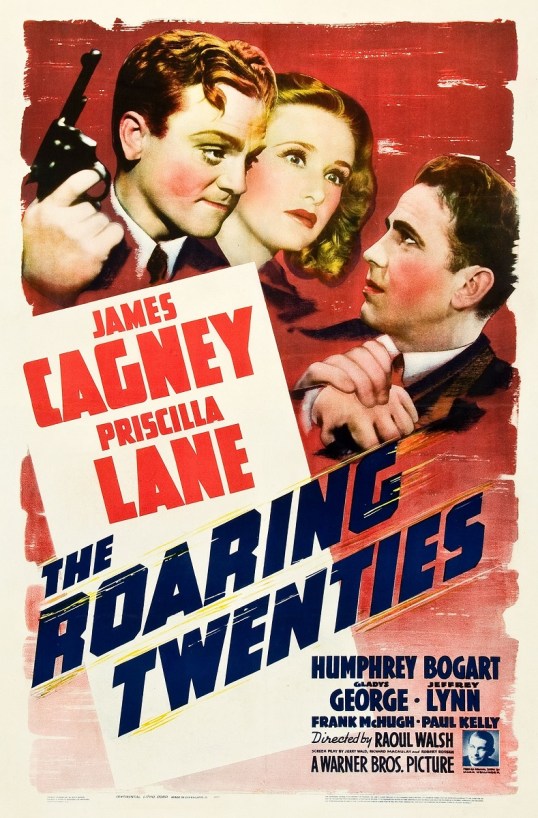
An Offer You Can’t Refuse #7: The Roaring Twenties (dir by Raoul Walsh)


The 1939 gangster epic, The Roaring Twenties opens with newsreel footage of men like Franklin D. Roosevelt, Winston Churchill, and Adolf Hitler.  We watch as they give speeches and as armed soldiers march across Europe.  For those of us watching in the present, these are figures from the past.  For audiences in 1939, though, these were the men who were shaping both their present and their future.

A narrator informs us that the world has changed much over the past few years and that it’s on the verge of changing again.  The world is preparing for war and who knows what society is going to look like afterwards.  (Interestingly enough, at the time that The Roaring Twenties was released, the U.S. was officially neutral when it came to the war in Europe, with many politicians arguing that the U.S. should pursue an isolationist foreign policy.  Though the film seems to be speaking to a nation that was already committed to war but that was actually not the case.)  The narrator goes on to say that it’s easy to forget what America was like just 20 years ago.  World War I was ending.  Soldiers were returning home.  Prohibition has just become the law of the land and, as a result, there was now a whole new way to make illicit cash.  It was a different era, the narrator tells us, one that is running the risk of being forgotten.

With that narration, it’s made obvious that The Roaring Twenties is designed to be more than just a gangster film.  It’s also a history lesson.  With Americans aware that another war might be coming, perhaps they needed to be reminded of what happened during and after the previous one.  By that same token, with people across the world already dying in the fight for freedom, perhaps Americans needed to be reminded of what happened the last time they allowed the government to take those freedoms away.

The Roaring Twenties tells the story of three men who first met in 1918, while they were all hiding out in a foxhole while a bloody and violent war rages all around them.  (The narrator somewhat archly notes that the three men — like all the men who fought and died in World War I — had been told that they were making “the world safe for democracy.”)  The three of them become friend while under fire and they remain friends when they return home to a war-weary nation that refuses to take care of its veterans.  Unfortunately, that friendship doesn’t survive the roaring 20s.

George Holly (Humphrey Bogart) is a former saloon keeper who becomes a major bootlegger after the passage of prohibition.  George is the type who takes pleasure in gunning down a 15 year-old during World War I.  (“He’ll never make 16,” George says after pulling the trigger.)  He doesn’t improve once he returns home but he does find a lot of success as a bootlegger.  Soon, he’s got a mansion.  He’s got bodyguards.  He goes to the best clubs and owns the best clothes.  Prohibition may have been meant to put George Holly out-of-business but instead it’s made him a rich and influential man.

Lloyd Hart (Jeffrey Lynn) is a college-educated idealist, one who becomes a lawyer once he returns home.  Even the most successful of bootleggers needs a good lawyer but Lloyd refuses to compromise his belief in the law, even when it comes to helping out his friends.  Lloyd will eventually end up working out of the district attorney’s office, where he builds cases against men like George Holly.

And finally, there’s Eddie Bartlett (James Cagney).  Eddie is the film’s main character.  He’s a criminal but, unlike George, he’s not totally corrupt.  In many ways, he’s an idealist but he’s never as self-righteous as Lloyd.  While his friends worry about their place and their role in society, Eddie is just trying to survive.  Before he went off to war, Eddie was a mechanic but, once he returns, he discovers that his job has been filled.  With no other work available, Eddie is finally hired to drive a cab.  What is those cabs could be used to smuggle alcohol?  Eddie finds himself working with Panama Smith (Gladys George) while, at the same time, going to war with Nick Brown (Paul Kelly).  In between making and losing a fortune (due to both the end of prohibition and the 1929 stock market crash), Eddie falls in love with singer Jean Sherman (Priscilla Lane).  Because Eddie can’t leave the rackets, Jean ends up married to Lloyd instead.

The film follows these characters, from 1918 to 1933.  Along the way, it also provides a critique of prohibition.  Prohibition is presented as being a bad law, one that led to men like George Holly getting rich and which destroyed the lives of countless people.  By making liquor illegal, the film argues, it also made it appealing to people who would have otherwise never had a drink.  There’s a definite appeal to the forbidden.  Interestingly enough, Eddie never takes a drink while he’s getting rich smuggling the stuff.  It’s only after prohibition is repealed and Eddie finds himself once again reduced to driving a cab for a living that he becomes a drunk.  Rich George and educated Lloyd might survive the end of prohibition by Eddie — who was as much a foot soldier during prohibition as he was during World War I — against finds himself cast out by a society that wants to forget about the national trauma that it’s just gone through.  Eddie, however, isn’t going to go down without a fight.  He’s played by James Cagney, after all.

The Roaring Twenties is a true classic.  It works as a gangster movie, a historical epic, and a portrait of the side effects of out-of-control regulation.  It tells the story about what happens when society becomes more interested in governing people than in helping them.  Indeed, the film asks, what were men like Eddie Bartlett supposed to do when, after risking their lives for their country, they returned home to discover that their jobs were gone, rent had gone up, and the government wouldn’t even allow them to commiserate their sorrows over a cold beer?  Who can blame America for rebelling?  Who can blame the Eddie Barletts of the world for doing what they had to do to survive?

Finally, not only does The Roaring Twenties feature brilliant performances from genre veterans like Bogart and Cagney (in fact, this is a probably Cagney’s best gangster performance) but it also recreates the 20s with such skill that you can’t help but wish that you could have been a part of it.  It all ends with a brilliant final scene on the steps of a church.  “He used to be a big shot!”  Yes, he was.

This is definitely an offer not to refuse.

Previous Offers You Can’t (or Can) Refuse:

  1. The Public Enemy
  2. Scarface
  3. The Purple Gang
  4. The Gang That Could’t Shoot Straight
  5. The Happening
  6. King of the Roaring Twenties: The Story of Arnold Rothstein 

An Offer You Can’t Refuse #6: King of the Roaring 20s: The Story of Arnold Rothstein (dir by Joseph M. Newman)


The 1961 gangster biopic, King of the Roaring ’20s: The Story of Arnold Rothstein, tells the story of two men.

David Janssen is Arnold Rothstein, the gambler-turned-millionaire crime lord who, in the early years of the 20th Century, was one of the dominant figures in American organized crime.  Though he may be best-remembered for his alleged role in fixing the 1918 World Series, Rothstein also served as a mentor to men like Lucky Luciano, Meyer Lansky, and Bugsy Siegel.  Rothstein was perhaps the first gangster to to treat crime like a business.

Mickey Rooney is Johnny Burke, Arnold’s best friend from childhood who grows up to be a low-level hood and notoriously unsuccessful gambler.  Whereas Arnold is intelligent, cunning, and always calm, Johnny always seems to be a desperate.  Whereas Arnold’s success is due to his ability to keep a secret, Johnny simply can’t stop talking.

Together …. THEY SOLVE CRIMES!

No, actually, they don’t.  They both commit crimes, sometimes together and sometimes apart.  Perhaps not surprisingly, Arnold turns out to be a better criminal than Johnny.  In fact, Johnny is always in over his head.  He often has to go to his friend Arnold and beg him for his help.  Johnny does this even though Arnold continually tells him, “I only care about myself and money.”

The friendship between Arnold and Johnny is at the heart of King of the Roaring 20s, though it’s not much of a heart since every conversation they have begins with Johnny begging Arnold for help and ends with Arnold declaring that he only cares about money.  At a certain point, it’s hard not to feel that Johnny is bringing a lot of this trouble on himself by consistently seeking help from someone who brags about not helping anyone.  From the minute that the film begins, Arnold Rothstein’s mantra is that he only cares about money, gambling, and winning a poker game with a royal flush.  Everything else — from his friendship to Johnny to his marriage to former showgirl Carolyn Green (Dianne Foster) to even his violent rivalry with crooked cop Phil Butler (Dan O’Herlihy) — comes second to his own greed.  The film’s portrayal of Rothstein as being a single-minded and heartless sociopath may be a convincing portrait of the type of mindset necessary to be a successful crime lord but it hardly makes for a compelling protagonist.

Oddly enough, the film leaves out a lot of the things that the real-life Arnold Rothstein was best known for.  There’s no real mention of Rothstein fixing the World Series. His mentorship to Luciano, Lansky, and Seigel is not depicted.  The fact that Rothstein was reportedly the first gangster to realize how much money could be made off of bootlegging goes unacknowledged.  By most reports, Arnold Rothstein was a flamboyant figure.  (Meyer Wolfsheim, the uncouth gangster from The Great Gatsby, was reportedly based on him.)   There’s nothing flamboyant about David Janssen’s performance in this film.  He plays Rothstein as being a tightly-wound and rather unemotional businessman.  It’s not a bad performance as much as it just doesn’t feel right for a character who, according to the film’s title, was the King of the Roaring 20s.

That said, there are still enough pleasures to be found in this film to make it worth watching.  As if to make up for Janssen’s subdued performance, everyone else in the cast attacks the scenery with gusto.  Mickey Rooney does a good job acting desperate and Dan O’Herlihy is effectively villainous as the crooked cop.  Jack Carson has a few good scenes as a corrupt political fixer and Dianne Foster does the best that she can with the somewhat thankless role of Rothstein’s wife.  The film moves quickly and, even if it’s not as violent as the typical gangster film, it does make a relevant point about how organized crime became a big business.

It’s not a great gangster film by any stretch of the imagination and the lead role is miscast but there’s still enough about this film that works to make it worth a watch for gangster movie fans.

Previous Offers You Can’t (or Can) Refuse:
  1. The Public Enemy
  2. Scarface
  3. The Purple Gang
  4. The Gang That Could’t Shoot Straight
  5. The Happening

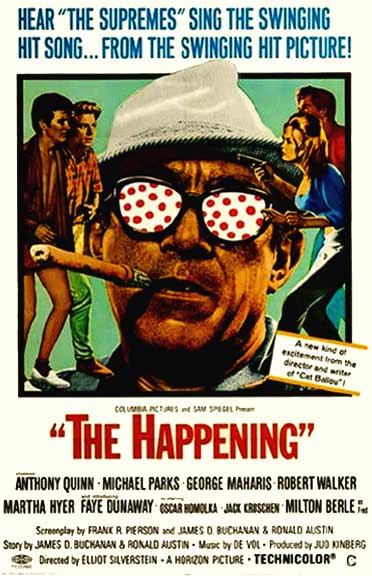
An Offer You Can Refuse #5: The Happening (dir by Elliot Silverstein)


The 1967 film, The Happening, opens with two “young” people — Sureshot (Michael Parks) and Sandy (Faye Dunaway) — waking up on a Florida beach.  The previous night, they attended a party so wild that the beach is full of passed out people, one of whom apparently fell asleep while standing on his head.  (It’s a happening!)  From the dialogue, we discover that, despite their impeccably clean-cut appearances, both Sureshot and Sandy are meant to be hippies.

After trying to remember whether or not they “made love” the previous night (wow, how edgy!), Sandy and Sureshot attempt to find their way off of the beach.  As they walk along, they’re joined by two other partygoers.  Taurus is played by George Maharis, who was 38 when this film was shot and looked about ten years older.  Taurus is a tough guy who carries a gun and dreams of being a revolutionary and who says stuff like, “Bam!  Et cetera!”  Herbie is eccentric, thin, and neurotic and, presumably because Roddy McDowall wanted too much money, he’s played by Robert Walker, Jr.

Anyway, the four of them end up stealing a boat and talking about how life is a drag, man.  Eventually, they end up breaking into a mansion and threatening the owner and his wife.  Since this movie was made before the Manson murders, this is all played for laughs.  The owner of the mansion is Roc Delmonico (Anthony Quinn).  Roc used to be a gangster but now he’s a legitimate businessman.  The “hippies” decide to kidnap Roc because they assume they’ll be able to get a lot of money for him.

The only problem is that no one is willing to pay the ransom!

Not Roc’s wife (Martha Hyer)!

Not Roc’s best friend (Milton Berle), who happens to be sleeping with Roc’s wife!

Not Roc’s former mob boss (Oscar Homolka)!

Roc gets so angry when he find out that no one wants to pay that he decides to take control of the kidnapping,  He announces that he knows secrets about everyone who refused to pay any money for him and unless they do pay the ransom, he’s going to reveal them.  We’ve gone from kidnapping to blackmail.

Along the way, Roc bonds with his kidnappers.  He teaches them how to commit crimes and they teach him how to be anti-establishment or something.  Actually, I’m not sure what they were supposed to have taught him.  The Happening is a comedy that I guess was trying to say something about the divide between the young and the middle-aged but it doesn’t really have much of a message beyond that the middle-aged could stand to laugh a little more and that the young are just silly and kind of useless.  Of course, the whole young/old divide would probably work better if all of the young hippies weren’t played by actors who were all either in their 30 or close enough to 30 to make their dorm room angst seem a bit silly.

It’s an odd film.  The tone is all over the place and everyone seems to be acting in a different movie.  Anthony Quinn actually gives a pretty good dramatic performance but his good performance only serves to highlight how miscast almost everyone else in the film is.  Michael Parks comes across like he would rather be beating up hippies than hanging out with them while Faye Dunaway seems to be bored with the entire film.  George Maharis, meanwhile, goes overboard on the Brando impersonation while Robert Walker, Jr. seems like he just needs someone to tell him to calm down.

But even beyond the weird mix of acting style, the film’s message is a mess.  On the one hand, the “hippies” are presented as being right about the establishment being full of hypocritical phonies.  On the other hand, the establishment is proven to be correct about the “hippies” being a bunch of easily distracted idiots.  This is one of those films that wants to have it both ways, kind of like an old episode of Saved By The Bell where Mr. Belding learns to loosen up while Zack learns to respect authority.  This is an offer that you can refuse.

And that’s what’s happening!

Previous Offers You Can’t (or Can) Refuse:

  1. The Public Enemy
  2. Scarface
  3. The Purple Gang
  4. The Gang That Could’t Shoot Straight

An Offer You Can Refuse #4: The Gang That Couldn’t Shoot Straight (dir by James Goldstone)


“Oh, fuck you.”

That was my reaction, last night, as I watched the 1971 film, The Gang That Couldn’t Shoot Straight.  I was talking to my DVR and yes, I was cursing quite a bit.  You know that a film has to be bad when it actually drives me to start cursing at an inanimate object.  The Gang That Couldn’t Shoot Straight was so bad that I actually got pissed off at my DVR for recording it.  It’s true that I am the one who scheduled the recording but still …. my DVR should have known better than to listen to me!

What is The Gang That Couldn’t Shoot Straight about?  I have no idea.  I watched the damn movie and I have no idea what the point of it was.  The film stars Jerry Orbach as a low-level gangster named Kid Sally.  Kid Sally’s crew — the Gang That Couldn’t Shoot Straight — is made up of a collection of malcontents, morons, and other stereotypes.  One member of the crew is a little person.  That’s the joke.  He’s a tough gangster who is wiling to put a bullet between your legs but that’s just because he’s crotch-height.  Ha ha.

Anyway, the big boss is a guy named Baccala (Lionel Stander).  Every morning, Baccala’s wife starts the car to check for bombs.  Whenever she goes outside, Baccala crawls underneath the kitchen table and waits.  Like a lot of the stuff in this movie, that’s one of those things that would be funny if it hadn’t been taken too such a cartoonish extreme.  Anyway, Baccala has zero respect for Kid Sally and Kid Sally wants to take over Baccala’s rackets.  Is it time for a mob war!?

Maybe.  A lot of people die in various “amusing” ways over the course of the film but I was never quite sure whether or not the killings were part of a mob war or if they were just the type of random mishaps that occur when a bunch of dumbasses get their hands on a cache of weapons.  Trying to follow the plot of The Gang Who Couldn’t Shoot Straight is next to impossible.  The editing of the film is so ragged that you’re rarely aware of how one scene relates to another.  If The Godfather showed how a gangster story could be a historical epic and if Goodfellas showed how an editor could recreate the kinetic experience of being a gangster, The Gang Who Couldn’t Shoot Straight shows how a mafia movie can just be a collection of random vignettes that may or may not be connected.  It’s impossible to care about the potential war between Kid Sally and Baccala because neither Kid Sally nor Baccala exist as characters beyond their silly names.

A young Robert De Niro is in this film.  He plays Mario, an Italian thief who comes to New York for a bicycle race and joins Kid Sally’s crew.  Or at least, I think he joins the crew.  It’s hard to tell.  Mario often dresses like a priest, for some reason.  He’s also fallen in love with Angela (Leigh Taylor-Young), who is Kid Sally’s sister though she could just as easily be his cousin or maybe his daughter-in-law from Tuscon.  I wouldn’t necessarily say that De Niro gives a good performance here as much as it’s just impossible not to pay attention to him because he’s a young Robert De Niro.  He and Leigh Taylor-Young do have a very sincere and touching chemistry but it’s out-of-place in a film that’s dominated by slapstick and scenes of Kid Sally using a lion to intimidate shop owners.  (Yes, that happens.)  De Niro certainly seems to be trying hard to give a good performance but he’s not a natural comedian.  Of course, you don’t need me to tell you that.  FOR THE LOVE OF GOD, WE’VE ALL SEEN DIRTY GRANDPA!

Anyway, the main problem with this film is that it’s a comedy that was apparently put together by people who think that comedy involves a lot of screaming and silly music.  I’ve actually seen a handful of other films that were directed by James Goldstone — Brother John, Rollercoaster, When Time Ran Out.  Significantly, none of those other films were comedies and there’s nothing about any of Goldstone’s other films that suggest that he was anything more than a director-for-hire.  The film itself was written by Waldo Salt, who also worked on the scripts for Midnight Cowboy, Coming Home, and Serpico.  Again, none of those films are particularly funny.  70s era Mel Brooks probably could have made this into a funny film but James Goldstone and Waldo Salt could not.

As bad as The Gang Who Couldn’t Shoot Straight is, it is also the answer to a very interesting trivia question.  This is the film that Al Pacino dropped out of when he was cast as Michael Corleone in The Godfather.  The actor who replaced Pacino was Robert De Niro.

Anyway, The Gang That Couldn’t Shoot Straight is an offer you can refuse.

Previous Offers You Can’t (or Can) Refuse:
  1. The Public Enemy
  2. Scarface
  3. The Purple Gang

An Offer You Can’t Refuse #3: The Purple Gang (dir by Frank McDonald)


The 1960 gangster film, The Purple Gang, really took me by surprise.

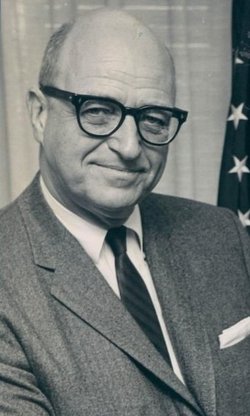
The film opens with U.S. Rep. James Roosevelt standing in front of his desk.  James Roosevelt was the son of President Franklin D. Roosevelt.  He was a notoriously shady businessman who, before entering politics, dabbled a bit in Hollywood.  That probably explains how he eventually came to be standing in his congressional office, filming the introduction for a low-budget B-movie about Detroit gangsters.  Roosevelt tells us that he’s already watched the movie that we’re about to see and that he can assure us that it is an accurate portrayal of not just the history of The Purple Gang but also of how 1920s bootlegging led to a host of other crimes.  Roosevelt goes on to compare bootleggers to modern day drug pushers.  The most interesting thing about the speech is that it almost sounds like a defense of prohibition, the law that FDR famously opposed.

To use a term from the film’s era, it’s kind of a square opening.  James Roosevelt comes across as being so vacuously earnest that it’s almost as if Beto O’Rourke got his hands on a time machine and went back to 1960.  At the same time, there’s something oddly charming about how awkward it is.  One can only imagine how audiences would react if a film today opened with a speech from a congressperson.  I guess some parts of the country would love it.  Down here in Texas, the theater would probably get set on fire.

Now, based on that less than edgy opening, you might be justified in expecting that The Purple Gang will just be your standard 1960s crime thriller but it most definitely is not.  The Purple Gang is a tough and violet movie, one that is full of shadowy and sometimes disturbing imagery.  A very young Robert Blake plays Honeyboy Willard, a teenage hoodlum who, through pure sociopathic ruthlessness, takes over the rackets in Detroit.  Barry Sullivan is Lt. Harley, the police detective whose quest to bring down the Purple Gang leads to him losing almost everything that was important to him.

Our first impression of Lt. Harley comes when he skeptically listens to a liberal social worker, Joan McNamara (Jody Lawrance), explain that criminals are not born but are instead made by their circumstances.  Harley obviously doesn’t agree.  Later, while Joan is walking around Detroit at night, she is attacked, rape,d and then murdered by the same criminals that she was earlier defending.  With the city outraged over Joan’s murder, Lt. Harley steps up his efforts to bring down the gang so Honeyboy murders Harley’s pregnant wife.

While Harley seeks revenge, Honeyboy is busy making deals with Canadian liquor distributors and building the Purple Gang into the biggest criminal enterprise in the northern midwest.  When a group of distraught businessmen, upset at being extorted by the Purple Gang, turns to the Mafia for help, Honeyboy declares war….

Of course, despite James Roosevelt’s assurance at the start of the film and the semi-documentary approach that director Frank McDonald takes to the material, the truth is far different from the movie.   In real life, The Purple Gang was predominantly made up of the children of recent immigrants from Russia and Poland.  It was run not by Honeyboy Willard but by the four Bernstein brothers.  The Purple Gang did not go to war with the Mafia but instead, they were allied with Lucky Luciano and Meyer Lansky in their attempts to create a national crime syndicate.  They were also closely allied with Al Capone, to the extent that it’s been suggested that Capone used Purple Gang gunmen to carry out the St. Valentine’s Day Massacre.  The Purple Gang eventually fell apart due to infighting and the end of prohibition, with the majority of the members who weren’t in jail simply joining other gangs.

So, no, The Purple Gang is not historically accurate but it’s still an effective and surprisingly brutal gangster film.  The noirish photography makes certain scenes seem almost as if they’ve been lifted straight out of a nightmare and, historically accurate or not, the film does do a good job of showing how organized crime came to exist in the United States.  It’s a quick-paced and energetic film and it features a great performance from Robert Blake as the chillingly sociopathic Honeyboy.  The Purple Gang is a low-budget B-movie that packs a punch.

Plus, James Roosevelt did ask you to watch.  Are you going to say no to James Roosevelt?

James Roosevelt, film critic

Previous Offers You Can’t Refuse:

  1. The Public Enemy
  2. Scarface

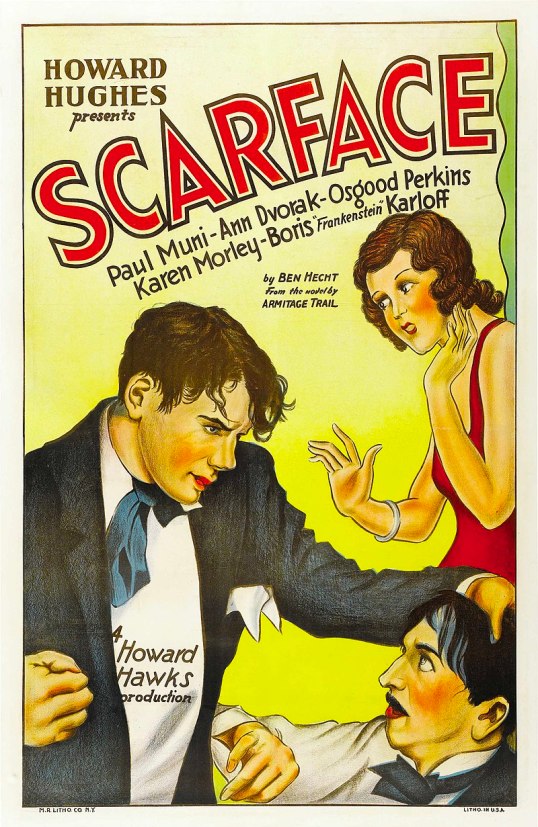
An Offer You Can’t Refuse #2: Scarface (dir by Howard Hawks)


Before there was Tony Montana …. there was Tony Camonte!

And, of course, before there was Tony Camonte, there was Al Capone.  The 1932 film Scarface was one of the many gangster movies to be based on the life of Al Capone.  Capone and Tony Camonte even share the same nickname, though — unlike Camonte — Capone hated being called Scarface.  On the other hand, as played by the charismatic and cocky Paul Muni, Tony Camonte wears his scar like a badge of honor.  He says that he got his scar serving in the war.  His best friend, Guino (George Raft, a real-life gangster associate who became a star as a result of his performance in this film), says that the scar is the result of a bar fight.

In many ways, that scar tells you almost everything you need to know about Tony Camonte.  If you can look away from the scar, he’s a handsome and charismatic figure.  But when you see the scar, you’re reminded that his life is about violence.  Everything that Tony has is due to his violent nature and it’s somewhat inevitable that his end will also be due to that violence, not to mention his obsession with his sister, Cesca (Ann Dvorak).  It’s not just Tony’s face that’s scarred.  It’s his soul as well.

The film follows Tony, from his early days of working as a gunman for Johnny Lovo (Osgood Perkins) to his eventual usurpation of Lovo’s place as the king of the underworld.  Tony not only takes over Lovo’s rackets but he also goes after Lovo’s girlfriend, the glamorous Poppy (Karen Morley).  The well-bred Poppy may be dismissive of Tony’s ambitions but, as Tony shows her, he lives in the glow of a neon sign that announces, “The World Is Yours.”  That’s something that Tony truly believes and, for a while, the world is his.  He’s done with a gun what other do with lawyer and a clever accountant.  He’s achieved the American dream and he has the money and the beautiful lover to prove it.  Only for a while, though.  You reap what you sow.

The film recreates many scenes from Al Capone’s life.  One of Tony’s rivals is gunned down in a flower shop, much as happened to Dean O’Bannion when he challenged Capone’s power.  At another point, two of Tony’s men dress up like policemen and gun down rival gangsters, just as happened during the St. Valentine’s Day Massacre.  The script was written by Ben Hecht, a Chicago native who had actually met Capone.  When Capone heard that Hecht was writing a film called Scarface, he sent two men to find out what the film was about.  Hecht assured them that the film was not about Capone but was instead a parody of the gangster genre.  Hecht was left alone but the fact that Capone was worried about his public image is quite a contrast to more recent stories about made men studying The Godfather, Goodfellas, and The Sopranos for tips on how to go about their business.  Of course, the film was made before Capone’s anticlimatic downfall so it’s not a combination of tax evasion and syphilis that ends Tony Camonte’s reign of terror.  Camonte goes out in a much more dramatically satisfying manner.

It’s a violent film.  It was a violent film for 1932 and, in some scenes, it’s a violent film for even today.  I’ve read that director Howard Hawks used live ammunition in the scenes that featured guns being fired.  In many of the scenes in which someone is portrayed as running for their lives, the actors in question were literally running and ducking for their lives.  Luckily, the cast survived making the film, though it’s been said that one crew member lost an eye.  Paul Muni went on to have a very distinguished film career, one that inspired future acting greats like John Garfield, Montgomery Clift, and Marlon Brando.  Despite his star-making turn as Muni’s best friend, George Raft’s career was not quite as distinguished, as he ended up turning down a chance to star in Casablanca.  Osgood Perkins’s son, Tony, would become a horror icon when he played Norman Bates.  And Boris Karloff went from portraying a bowling gangster in this film to playing the Monster in Frankenstein.

And, of course, the legacy of Scarface lives on, thanks to the 1983 remake starring Al Pacino.  There’s a third remake on the way, reportedly from Luca Guadagnino, who I guess decided that since he got away with tarnishing the legacy of Suspiria, he might as well go after another classic cult film.  Both versions of Scarface are rightly known as being classics of the gangster genre.  The 1983 version is great but so is the original.

Previous Offers You Can’t Refuse:

  1. The Public Enemy (1931)

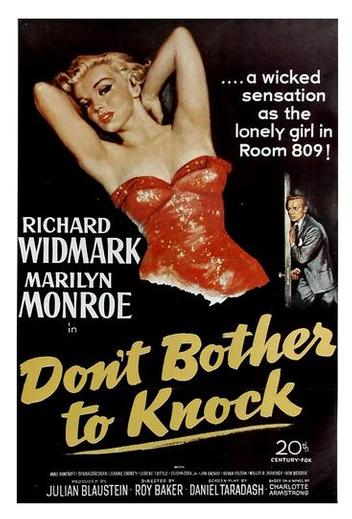
Scenes That I Love: Marilyn Monroe in Don’t Bother To Knock


Marilyn Monroe would have been 94 years old today.

Unfortunately, Marilyn died when she was just 36 years old and also when she was only starting to get a chance to reveal what she was truly capable of as an actress.  It’s a shame, because I would have liked to have seen what type of roles she would have played in her 40s and her 50s.  Would she have eventually become a respected, award-winning character actor or would she have ended up like Bette Davis, doing cameos in films that weren’t particularly worthy of her talents?  Who knows but it’s a shame that the world will never get to find out.

For her birthday, I’m going to share a scene from one of her earlier films, 1952’s Don’t Bother To Knock.  In this film, Marilyn plays an unstable woman who is staying at a hotel.  Her cousin (played by Elisha Cook, Jr.) gets her job as a babysitter but is shocked to find out that Marilyn has been trying on her employer’s clothes.  After getting admonished by her cousin and pretending to be sorry, she proceeds to then summon another gust (played by Richard Widmark) over to her room.

It’s a simple scene but it’s wonderfully played by Monroe.  This was one of her first truly dramatic roles and she does a good job with it.

From Don’t Bother To Knock, here is a scene that I love:

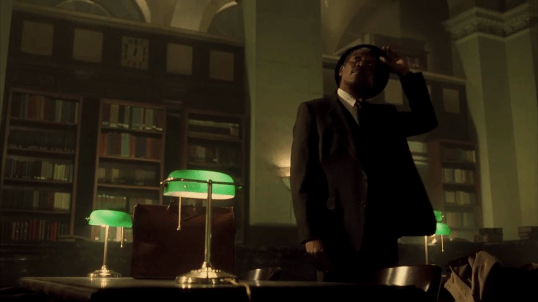
4 Shots From 4 Films: Special Morgan Freeman Edition


4 Shots From 4 Films is just what it says it is, 4 shots from 4 of our favorite films. As opposed to the reviews and recaps that we usually post, 4 Shots From 4 Films lets the visuals do the talking!

Today is Morgan Freeman’s 83rd birthday!

Morgan Freeman is one of my favorite actors but then again, I think he’s one of everyone’s favorite actors.  He’s an icon, not just for that famous voice but also because he’s a damn good actor.  Though he seems to get cast in a lot of mentor roles, he’s shown that he’s capable of playing a wide variety of roles, from heroes to villains to Gods.

(I have to admit that I would be so intimidated if I ever met Morgan Freeman, if just because I know that if I accidentally said something stupid, he’d probably give me a look of such utter disappointment that it would probably haunt me for the rest of my life.)

Here are….

4 Shots From 4 Films

Seven (1995, dir by David Fincher)

The Dark Knight (2008, dir by Christopher Nolan)

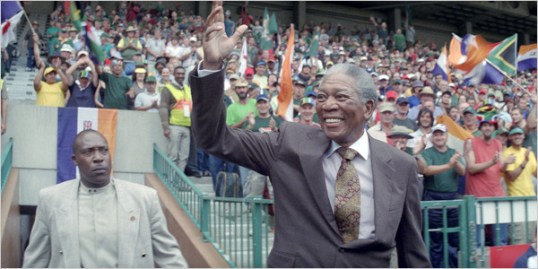
Invictus (2009, dir by Clint Eastwood)

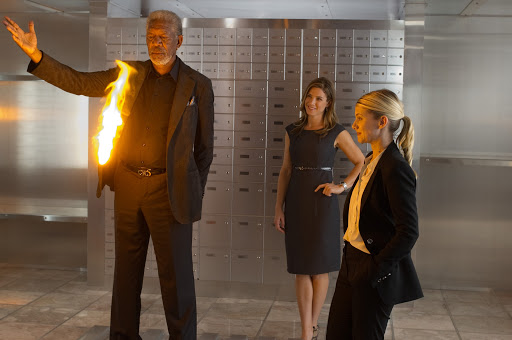
Now You See Me (2013, dir by Louis Leterrier)