Yesterday, the world learned the sad news that the great Texas character actor, Dabney Coleman, had passed away at the age of 93.
Today’s scene that I love comes from 1984’s The Muppets Take Manhattan. In this scene, the Muppets try to sell Coleman on their idea for a musical. Coleman, meanwhile, does his best to cheat the Muppets out of all of their money. It takes a truly great actor to give a convincing performance while acting opposite a very large group of puppets.
(I mean, we all know Kermit’s real but I’m pretty sure that the rest of them are puppets….)
As some of our regular readers undoubtedly know, I am involved in a few weekly live tweets on twitter. I host #FridayNightFlix every Friday, I co-host #ScarySocial on Saturday, and I am one of the five hosts of #MondayActionMovie! Every week, we get together. We watch a movie. We tweet our way through it.
Tonight, at 9 pm et, Tim Buntley will be hosting #ScarySocial! The movie? 2023’s Tell Me A Creepy Story!
If you want to join us this Friday, just hop onto twitter, start the movie at 9 pm et, and use the #ScarySocial hashtag! I’ll be there tweeting and I imagine some other members of the TSL Crew will be there as well. It’s a friendly group and welcoming of newcomers so don’t be shy.
Tell Me A Creepy Story is available on Prime and Tubi!
4 Or More Shots From 4 Or More Films is just what it says it is, 4 shots from 4 of our favorite films. As opposed to the reviews and recaps that we usually post, 4 Shots From 4 Films lets the visuals do the talking!
127 years ago, on this date, Frank Capra was born in Sicily. Capra was six years old when his family immigrated to the United States and, for the rest of his long life, he would often talk about seeing the Statue of Liberty from the deck of a boat sailing to Ellis Island. Capra went on to become a director whose work celebrated the ideals and the promise of America. He not only gave us the holiday classic, It’s A Wonderful Life, but he also directed one of the few political films that matteed, Mr. Smith Goes To Washington. And let us not forget that the first two comedies to win the Oscar for Best Picture were directed by Capra, It Happened One Night and You Can’t Take It With You.
In honor of a great career and legacy, here are….
4 Shots From 4 Frank Capra Films
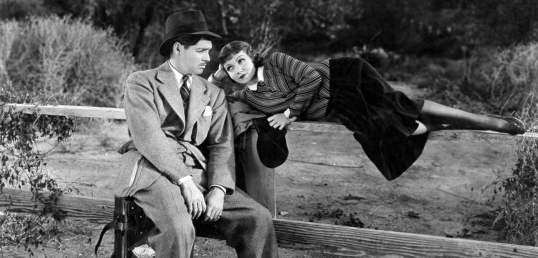
It Happened One Night (1934, dir by Frank Capra, DP: Joseph Walker)
You Can’t Take It With You (1938, dir by Frank Capra, DP: Joseph Walker)
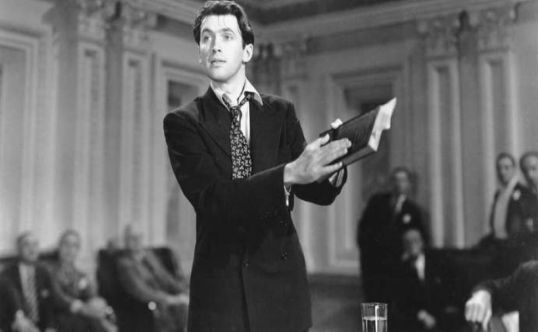
Mr. Smith Goes To Washington (1939, dir by Frank Capra, DP: Joseph Walker)
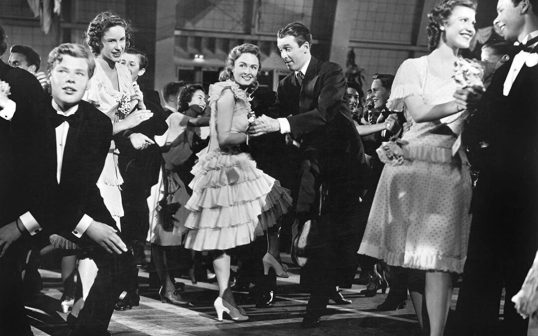
It’s A Wonderful Life (1946, dir by Frank Capra, DP: Joseph Walker and Joseph Biroc)
The year is 1964. Kennedy is dead and Johnson is president. American troops are in Vietnam but the American public is not yet concerned with that conflict. Instead, it’s the British Invasion that has intrigued the youth of America. People know that times are changing but they have no idea just how much change is waiting for them in the future.
Jim Goodwin (Zachary Quninto) is a meek animal trainer who is driving across the country with his chimpanzee, Spanky. At one time, Spanky was a celebrity. He ice skated with the stars. He appeared on the Ed Sullivan Show. Everyone loved Spanky but now, it appears that his time has passed. People are more interested in Beatles than chimps. With Spanky no longer in demand, Jim’s marriage is failing and he’s struggling to pay the bills.
At a Nevada gas station, Jim sees a young man named Bobby Falls (Jacob Elordi) trying to hitch a ride. Assuming that Bobby is a college student and wanting someone to talk to during the long drive to Chicago, Jim offers him a ride. Bobby is reluctant at first and demands to know if Jim has some sort of sinister motive for picking him up. After Jim promises that he doesn’t, Bobby gets in the truck with him.
What Jim doesn’t know, but eventually learns, is that Bobby is a criminal. Using a derringer, Bobby has been robbing gas stations and executing the gas station attendants. Their journey becomes a rather macabre road trip, with Jim and Bobby bonding despite the fact that Jim is scared of Bobby and Bobby always seems to be one step away from snapping. Bobby encourages Jim to stop being such a wimp and Jim encourages Bobby to maybe not be such a violent sociopath. Though Bobby and Jim come from different worlds, they both have one thing in common. They really like the chimpanzee.
I have to admit that I liked the chimpanzee as well. Bobby’s a killer so it’s impossible for me to like him. Jim is a wimp who fails to take advantage of several opportunities to escape so it’s impossible for me to respect him. But Spanky is an innocent animal who likes to eat apples and who sincerely cares about both his owner and the hitchhiker who keeps losing his temper. I watched the film dreading that something bad would happen to Spanky. In fact, the only reason I stuck with the film for its entire running time was because I wanted to make sure Spanky survived.
(SPOILER ALERT: He did. Whatever other flaws this film may have, there is no deliberate animal cruelty.)
I have to admit that I have mixed feelings about this movie. There was a lot that I didn’t like about the film. I never bought the relationship between the two main characters (though I should also acknowledge that the film is loosely based on a true story and ends with an interview with the real life model for Jim). The performances felt a bit one-note. And, to be honest, I’m a bit bored with movies about people who spend the majority of their time killing other people. At the same time, the film looked great. Visually, it really captured the arid beauty of the American desert. And the film’s final twist was just bizarre enough to make me smile. Tragically, director Jeffrey Darling died shortly after completing production of this film. (It was his feature directorial debut.) And while I didn’t care much for the film, there were moments where I could see the talent of the director peeking through. I would have liked to have seen what Darling’s second film would have been.
As for He Went That Way, it’s not a disastrous film but it’s also not one that I will probably ever feel like rewatching.
Bill Paxton would have been 69 years old today. As a lover of both films and eccentric Texans, I still miss Bill Paxton.
Today’s scene that I love comes from Twister and it features Bill Paxton showing off some wonderful chemistry with Helen Hunt. One of the great things about Bill Paxton is that he was equally at home in both big blockbusters like Twister and Titanic and low-budget indies like Near Dark. He was an artist who also happened to be a star.
4 (or more) Shots From 4 (or more) Films is just what it says it is, 4 (or more) shots from 4 (or more) of our favorite films. As opposed to the reviews and recaps that we usually post, 4 (or more) Shots From 4 (or more) Films lets the visuals do the talking.
88 years ago, Dennis Hopper was born in Dodge City, Kansas.
It seems rather appropriate that one of America’s greatest cinematic outlaws was born in a town that will be forever associated with the old west. Dennis Hopper was a rebel, back when there were actual consequences for being one. He started out acting in the 50s, appearing in films like Rebel Without A Cause and Giant and developing a reputation for being a disciple of James Dean. He also developed a reputation for eccentricity and for being difficult on set and he probably would have gotten completely kicked out of Hollywood if not for a somewhat improbable friendship with John Wayne. (Wayne thought Hopper was a communist but he liked him anyways. Interestingly enough, Hopper later became a Republican.) Somehow, Hopper managed to survive both a raging drug addiction and an obsession with guns and, after a mid-80s trip to rehab, he eventually became an almost universally beloved and busy character actor.
Hopper, however, always wanted to direct. He made his directorial debut with 1969’s Easy Rider, a film that became a huge success despite being an infamously chaotic shoot. The success of Easy Rider led to the Hollywood studios briefly trying to produce counter-culture films of their own. Hopper was given several million dollars and sent to Peru to make one of them, the somewhat dangerously titled The Last Movie. Unfortunately, The Last Movie, was such a bomb that it not only temporarily derailed Hopper’s career but it also turned Hollywood off of financing counter culture films. Hopper spent a decade in the Hollywood wilderness, giving acclaimed performances in independent films like Tracks and The American Friend, even while continuing to increase his reputation for drug-fueled instability. Hopper would eventually return to directing with his masterpiece, 1980’s Out of the Blue. (Out of the Blue was so controversial that, when it played at Cannes, Canada refused to acknowledge that it was a Canadian production. It played as a film without a country. Out of the Blue, however, is a film that has stood the test of time.) Unfortunately, even after a newly cleaned-up Hopper was re-embraced by the mainstream, his directorial career never really took off. He directed 7 films, of which only Easy Rider and Colors were financially successful. Contemporary critics often didn’t seem to know what to make of Dennis Hopper as a director. In recent years, however, Hopper’s directorial efforts have been reevaluated. Even The Last Movie has won over some new fans.
Today, on his birthday, we honor Dennis Hopper’s directorial career with….
4 Shots From 4 Dennis Hopper Films
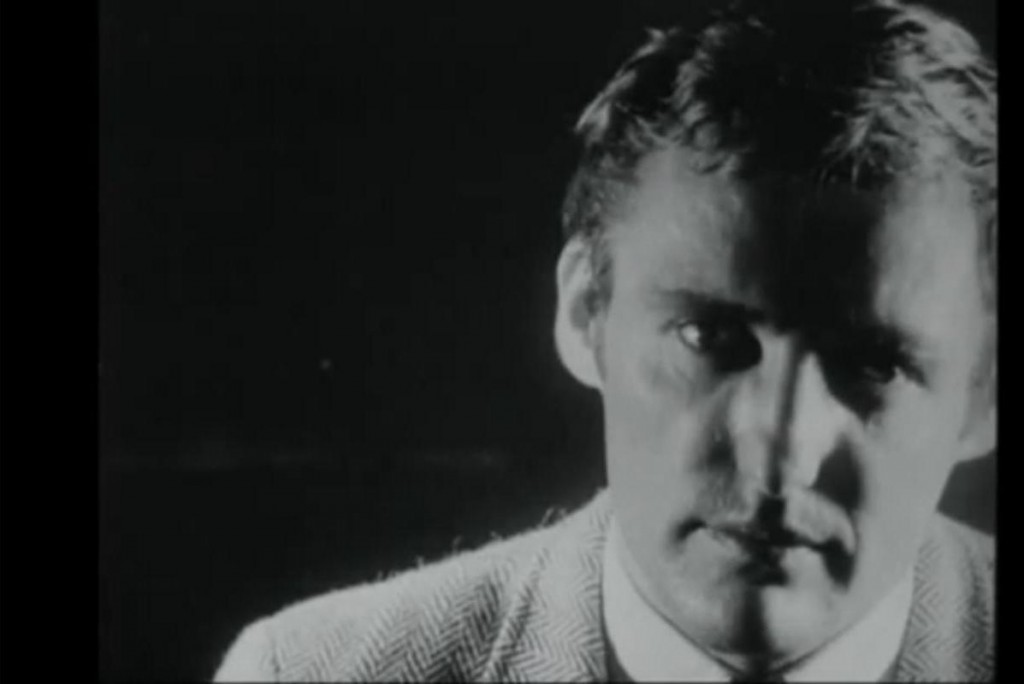
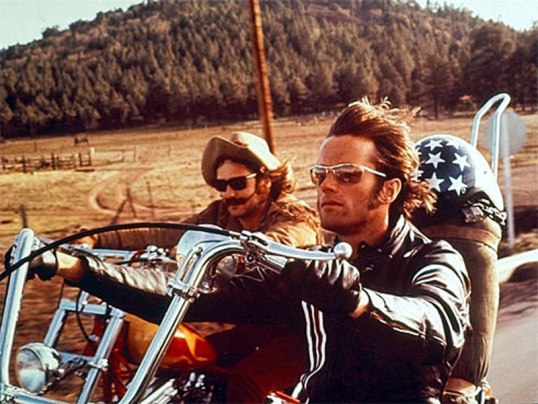
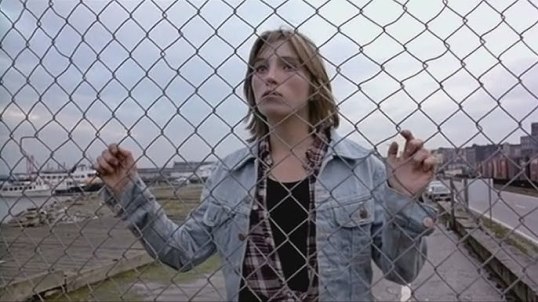
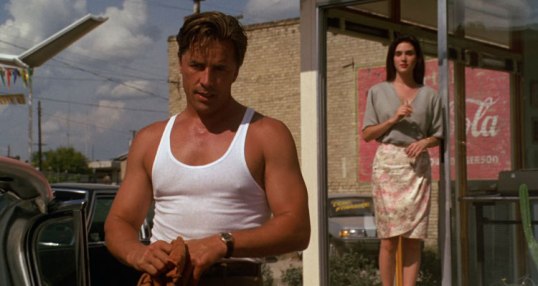
Easy Rider (1969, dir by Dennis Hopper, DP: Laszlo Kovacs)The Last Movie (1971, dir by Dennis Hopper, DP: Laszlo Kovacs)Out of the Blue (1980, dir by Dennis Hopper, DP: Marc Champion)The Hot Spot (1990, dir by Dennis Hopper, DP: Ueli Steiger)
As some of our regular readers undoubtedly know, I am involved in a few weekly live tweets on Twitter and Mastodon. I host #FridayNightFlix every Friday, I co-host #ScarySocial on Saturday, and I am one of the five hosts of #MondayActionMovie! Every week, we get together. We watch a movie. We tweet our way through it.
Tonight, at 10 pm et, we’ve got 1998’s Run, Lola, Run!
If you want to join us this Friday, just hop onto twitter, start the movie at 10 pm et, and use the #FridayNightFlix hashtag! It’s a friendly group and welcoming of newcomers so don’t be shy.
Run, Lola, Run is available on Prime! See you there!
The Painter tells the rather predictable story of Peter.
Orphaned by a terrorist attack when he was a child, Peter (Charlie Webber) was raised by a CIA agent named Byrne (Jon Voight). Realizing that the attack had left Peter with superhearing, Byrne raised Peter to be a CIA assassin. But after a failed mission led to the shooting his pregnant wife, Elena (Rryla McIntosh), an embittered Peter retired from the agency. Now, going by the name of Mark, he paints!
Why do retired CIA agents always end up living in a cabin and obsessively pursuing only one hobby? This feels like the 100th film that I’ve seen about a former assassin living in a cabin. Some retired agents keep bees. Some become bricklayers. Some become painters. Oddly, none of them seem to become both bricklayers and painters.
Anyway, Peter is happy with his isolated life but then, everything is upended when a 17 year-old girl named Sophia (Madison Bailey) follows him to his cabin and claims to be his daughter. She says that Elena has vanished and she needs Peter’s help to find her. Peter insists that his name is Mark until his superhearing picks up the sound of heavily armed men gathering outside of his cabin.
This is another one of those action films where the main character is someone who kills without the slightest hesitation and who has trouble showing his emotions. Naturally, there’s a conspiracy inside the CIA and this leads to several scenes of people saying stuff like, “Copy that.” The only fictional character who ever sounded cool saying, “Copy that,” was Kiefer Sutherland on 24. All the rest of these people are just pretenders.
The Painter is pretty stupid. It won’t take you long to guess who the main villain is going to turn out to be and it also won’t take you long to guess how the final showdown is going to go. The action scenes are so haphazardly edited that it’s difficult to keep track of who is actually fighting who and, even if you did know who was fighting who, you wouldn’t really care because none of these people are particularly compelling.
In general, if your main character is going to be remorseless killer, it’s a good idea to cast a charismatic actor in the lead role. Audiences will forgive a lot as long as their watching someone with a compelling screen presence. Unfortunately, both Charlie Webber and Madison Bailey give rather bland performances and neither Peter nor Sophia are particularly likable characters. In particular, Peter drags one innocent computer store owner into his mess and then doesn’t seem to be particularly upset when the poor guy ends up with a bullet in his brain. It’s one thing to be an assassin. It’s another thing to be a jerk about it.
On the plus side, Jon Voight is enough of an old pro to understand that this is a movie that does not reward subtlety and he gives a performance that is totally over-the-top but which is also more than appropriate for the material with which he’s working. (Voight is still a talented actor and it’s a shame that, due to voting for different candidates than the majority of Hollywood, he’s pretty much going to end his career appearing in movies like this.) As well, Max Montesi gives such a cheerfully bizarre performance as a rival assassin that he actually bring the movie to life whenever he’s on the screen.
Unfortunately, the lunacy of Voight and Montesi is not enough to save The Painter. At one point, someone dismisses Peter’s paintings as being “derivative.” They could have been talking about this film as a whole.
Fonda was born 119 years ago today and, over the course of his long career, he was often cast in role the epitomized everything great about America. It’s rare to find a Henry Fonda film in which he played an out-and-out villain, though he did just that in Sergio Leone’s Once Upon A Time In The West. (Leone, in fact, cast Fonda as the evil Frank because he knew audiences would be shocked to see Fonda coldly gunning down settlers and their families.)
One of Fonda’s finest films was 1943’s The Ox-Bow Incident, in which he played a cowboy who finds himself drafted into joining a posse that ends up hanging three men for the crime of murder and cattle rustling. The members of the posse (including seven of whom voted against hanging the men) later learn that the men were innocent. In today’s scene that I love, Henry Fonda reads aloud the letter that one of the men wrote to his wife shortly before he was hung. This was one of Fonda’s most heartfelt and powerful performances.
4 Shots From 4 Films is just what it says it is, 4 shots from 4 of our favorite films. As opposed to the reviews and recaps that we usually post, 4 Shots From 4 Films lets the visuals do the talking!
Today, the Shattered Len wishes a happy 80th birthday to the man and the legend, Danny Trejo! Trejo’s journey from being a gang member to an ex-con to a drug counselor to a pop cultural institution is an inspiring one, all the more so because Danny Trejo is so candid about both his past struggles and his present successes.
It’s time for….
4 Shots From 4 Danny Trejo Films
Runaway Train (1985, dir by Andrei Konchalovsky, DP: Alan Hume)
Death Wish 4: The Crackdown (1987, dir by J. Lee Thompson, DP: Gideon Porath)
Heat (1995, dir by Michael Mann, DP: Dante Spinotti)
Machete Kills (2013, dir by Robert Rodriguez, DP: Robert Rodriguez)