Film Review: Dark Star (dir by John Carpenter)


Dark Star (1974, dir by John Carpenter, DP: Douglas Knapp)

What’s it like to live in outer space?

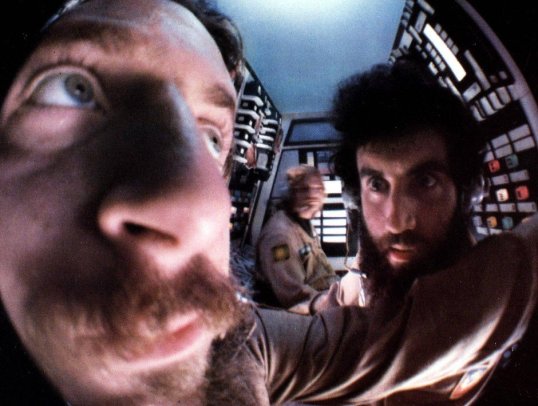
That’s the question posed by 1974’s Dark Star and the answer seems to be that it’s boring as Hell.  Lt. Doolittle (Brian Narelle), Sgt. Pinback (future director and screenwriter Dan O’Bannon), Boiler (Cal Kuniholm), and Talby (Andreijah “Dre” Pahich) have been floating in their spaceship for over twenty years.  (Because of the vagaries of the space-time continuum, they’ve only aged three years in all that time.)  The leader of their mission, Commander Powell (Joe Saunders) was killed when he was accidentally electrocuted at the start of the mission.  The crew put his body in suspended animation so that they could still ask him question despite the fact that he’s not quite alive.  (When they do talk to Powell, Powell is very resentful about the whole situation.)  Doolittle, a former surfer, has taken over as commander of the ship though no one seems to be quite sure what their mission is.

The men struggle to find ways to pass the time as they float endlessly through space.  Some of them watch the asteroids in the distance.  Doolittle fantasizes about surfing.  Pinback plays jokes on people and claims to be an imposter who killed the real Pinback before the start of the mission.  The spaceship is a cluttered mess and the crew looks more like a collection of long-haired hippies than a group of rigorously trained astronauts.  They spend their time getting on each other’s nerves.

They do have a few things that they have to deal with over the course of the film.  The men aren’t particularly smart and whatever discipline they had was abandoned long ago.  As a result, their ship constantly seems to be on the verge of literally falling apart.  A dangerous alien that looks like a beach ball gets loose on the ship.  Even worse, one of the ship’s talking bomb is having an existential crisis.  It’s been over 20 years and it has yet to be used to blow anything up.  What, the bomb wonders, is the purpose of being a bomb if you can’t blow anything up?  Then again, what is the purpose of being in space if there’s nothing left to explore or to discover?

Dark Star is a film that requires a bit of patience.  It moves at its own deliberate pace and a lot of the humor comes from the contrast between the shabbiness of the film’s crew and Stanley Kubrick’s far sleeker vision of space travel in 2001: A Space Odyssey.  Both Dark Star and 2001 are existential films about man’s search for meaning in the stars.  In 2001, Dave Bowman finds that meaning, even if he doesn’t realize it.  The crew of the Dark Star however have to deal with very real possibility that there is no meaning.  Dark Star‘s comedy comes from poking fun at the concept that going into space would make people any less frustrated than they already are on Earth.

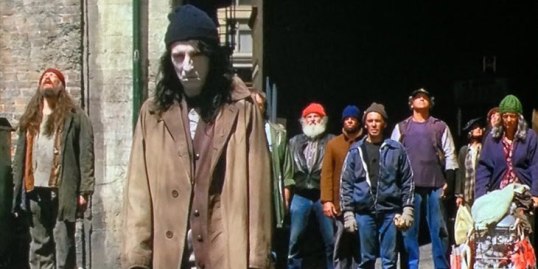
Essentially a stoner comedy set in space, Dark Star was John Carpenter’s feature debut.  It started out as a student film but Carpenter and Dan O’Bannon were able to raise an extra $10,ooo  to extend it to feature length.  Largely overlooked when it was first released, it was re-released in 1979.  By that point, Carpenter had directed Halloween and O’Bannon had written Alien, a film that had more than a little in common with Dark Star’s shabby future and its dangerous alien.  While Dark Star definitely shows its origins as a student film, I’ve always enjoyed it.  It’s hard not appreciate the film’s ambition.  And, in its way, it’s probably one of the most realistic vision of life in space ever captured on film.  Humans, the film says, will always be humans.  They’ll always screw things up but occasionally, if they’re lucky, they’ll also get to surf amongst the stars.
Lisa Marie Reviews An Oscar Nominee: The Elephant Man (dir by David Lynch)


The Elephant Man (1980, dir by David Lynch, DP: Freddie Francis)

David Lynch never won a competitive Oscar.

He received an honorary award from the Academy in 2019.  He generated some minor but hopeful buzz as a possible nominee for Best Supporting Actor for his role in Steven Spielberg’s The Fabelmans.  He was nominated for Best Director three times and once for Best Adapted Screenplay.  But he never won an Oscar and indeed, even his nominations felt like they were given almost begrudgingly on the part of the Academy.  In an industry that celebrated conformity and put the box office before all other concerns, David Lynch was an iconoclastic contrarian and the Academy often didn’t do know what to make of him.  Of the many worthy films that he directed, only one David Lynch film was nominated for Best Picture and, in my opinion, it should have won.

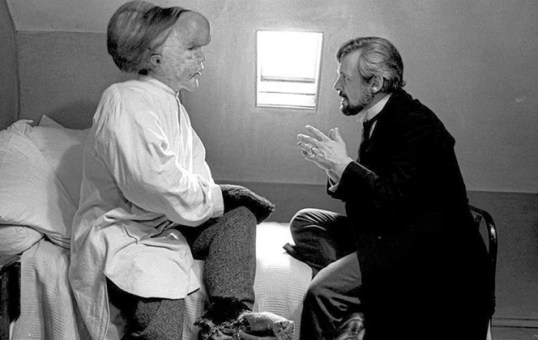
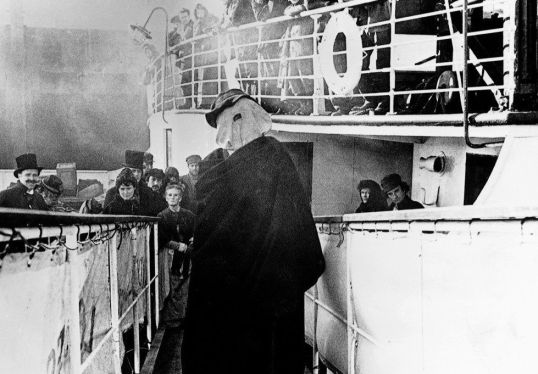
1980’s The Elephant Man is based on the true story of Joseph Merrick (renamed John for the film), a man who was horribly deformed and terribly abused until he was saved from a freak show by a surgeon named Dr. Frederick Treves.  The sensitive and intelligent Merrick went on to become a celebrity in Victorian London, visited by members of high society and allowed to live at London Hospital.  (Even members of the royal family dropped in to visit the man who had once been forced to live in a cage.)  Merrick lived to be 27 years old, ultimately dying of asphyxiation when he attempted to lie down and, in Treves’s opinion, sleep like a “normal person” despite his oversized and heavy head.  In the film, Merrick is played by John Hurt (who gives a wonderful performance that, despite Hurt acting under a ton on makeup, still perfectly communicates Merrick’s humanity) while Treves is played by Anthony Hopkins, who is equally as good as Hurt.  (Hurt was nominated for Best Actor but Hopkins was not.  Personally, I prefer Hopkins’s performance as the genuinely kind Dr. Treves to any of his more-rewarded work as Dr. Lecter.)  The rest of the cast is made up of veteran British stars, including John Gielgud, Wendy Hiller, Freddie Jones, and Kenny Baker.

Lynch’s version of The Elephant Man is only loosely based on the facts of Merrick’s life.  It opens with a disturbing fantasy sequence (one which I assume is meant to be from Merrick’s point of view) in which a herd of elephants strike down Merrick’s mother and then appear to assault her.  Shot in stark black-and-white and often featuring the sounds of droning machinery in the background (in many ways, The Elephant Man feels like it takes place in the same world as Eraserhead), the first half of The Elephant Man feels like a particularly surreal Hammer film.  (Veteran Hammer director Freddie Francis served as The Elephant Man‘s cinematographer.)  Merrick is kept off-camera and, when we finally do see his face, it’s in a split-second scene in which Merrick is as terrified as the person who sees him.  Before we really meet Merrick, we’ve already heard Treves and the hospital administrator (John Gielgud) discuss all of the clinical details of his condition.  We know why he’s deformed.  After we see him, we know how he’s deformed.  After all of that, the audience is finally ready to know Merrick the human being.  Without engaging in too much obvious sentimentality, Lynch shows us that Merrick is a kind soul, one who has been tragically mistreated by the world.  Just as with the real Merrick, almost everyone who meets the film’s John Merrick is ultimately charmed by him.  In the film, Merrick is kidnapped by his former owner, the alcoholic Bytes (Freddie Jones), who wants again puts Merrick on display in a cage.  In the end, it’s Merrick’s fellow so-called “freaks” who set him free and allow him to return to the hospital, where he has one final vision of his mother.  This vision is a much less disturbing than the one that opened the film.  The film celebrates the humanity of John Merrick but is also reveals the genius of David Lynch.  There’s so many moments when the film could have gone off the rails or become too obvious for its own good.  But Lynch’s unique style so draws you into the film’s world that even the mysterious visions of his mother somehow feel completely necessary and natural.  The Elephant Man is the David Lynch film that makes me cry.  Lynch was a surrealist with a heart.

The Elephant Man was only David Lynch’s second film.  He was hired to direct by none other than Mel Brooks, who produced the film but went uncredited to prevent people from thinking it would be a comedy.  (Lynch, however, did cast Brooks’s wife, Anne Bancroft, as an actress who visits Merrick.)  Brooks hired Lynch after seeing Eraserhead and recognizing a talent that many in Hollywood would never have had the guts to take a chance on.  (Despite the success of Eraserhead on the midnight circuit, David Lynch was working as a roofer when he was offered The Elephant Man and had nearly given up on the idea of ever making another film.)  Reportedly, Brooks stayed out of Lynch’s way and protected him from other executives who fears Lynch’s version of the story would be too strange to be a success.  Lynch and Brooks proved those doubters wrong.  Acclaimed by critics and popular with audiences, The Elephant Man was nominated for Best Picture and David Lynch was nominated for Best Director.  I like Ordinary People.  I like Raging Bull.  But The Elephant Man was the film that should have won in 1980.

The Elephant Man remains a powerful movie and an example of how an independent artist can make a mainstream movie without compromising his vision.  (Of course, I imagine it helps to have a producer who has the intelligence and faith necessary to stay out of your way.)  David Lynch may be gone but his art will live forever.  The Elephant Man will continue to make me cry for the rest of my life and for that, I’m thankful.

The Elephant Man (1980, dir by David Lynch, DP: Freddie Francis)

RIP David Lynch (1946-2025) 🙏 – A personal reflection…


It was around 1986 or 1987, and I was around 13 years old. I had never heard of David Lynch, but I was at this video store at the Park Plaza mall in Little Rock when I came across a VHS tape of BLUE VELVET on sale for $1.99. The description looked very interesting, and it had Dennis Hopper in it. I recognized Hopper because he was in one of my favorite movies at the time, HOOSIERS. My dad was a high school basketball coach, so basketball was my life up until I graduated high school. Somehow, I was able to talk my mom into buying it for me. BLUE VELVET was probably the strangest film I had seen up to that point in my life, and there was no doubt that I didn’t understand what was going on in some parts of the film, but I was still mesmerized by it. I became an immediate fan of Lynch.

For the next decade or so, I was on the lookout for anything new from David Lynch, whether it be the TWIN PEAKS T.V. series, or even more importantly to me, WILD AT HEART, with Nicolas Cage, Laura Dern and Willem Dafoe. I’d watch the man’s work all by myself in my home in Toad Suck, Arkansas. It felt like I was in a gang of 1, as I’m not sure there was another person in my community who had any clue who David Lynch was, or who appreciated his work. But that was okay. I enjoyed his films and that’s all that matters.

I haven’t kept up with David Lynch that much over the last few years, but I’ve always recognized what a unique talent he was. Rest in peace, sir, and congratulations on a life well lived!

VAMPIRES (1998) – Happy Birthday, John Carpenter!


In celebration of the 77th birthday of the great Director John Carpenter, I decided to watch his 1998 film VAMPIRES, starring one of my favorite actors in James Woods. I specifically remember the first time I ever read that this movie was being made and that it would star Woods. It was 1996, and I had just been hired to work for a company called Acxiom Corporation in Conway, Arkansas. It was at this job that I first had access to this new thing called the Worldwide Web. As far as I know, it was the first time I had ever looked at the internet. Of course, I immediately started completing searches on some of my favorite actors, including James Woods, when I came across VAMPIRES as a movie currently in production. These were the first times in my life that I was able to find out about new film projects without looking in a magazine or watching shows like Entertainment Tonight.

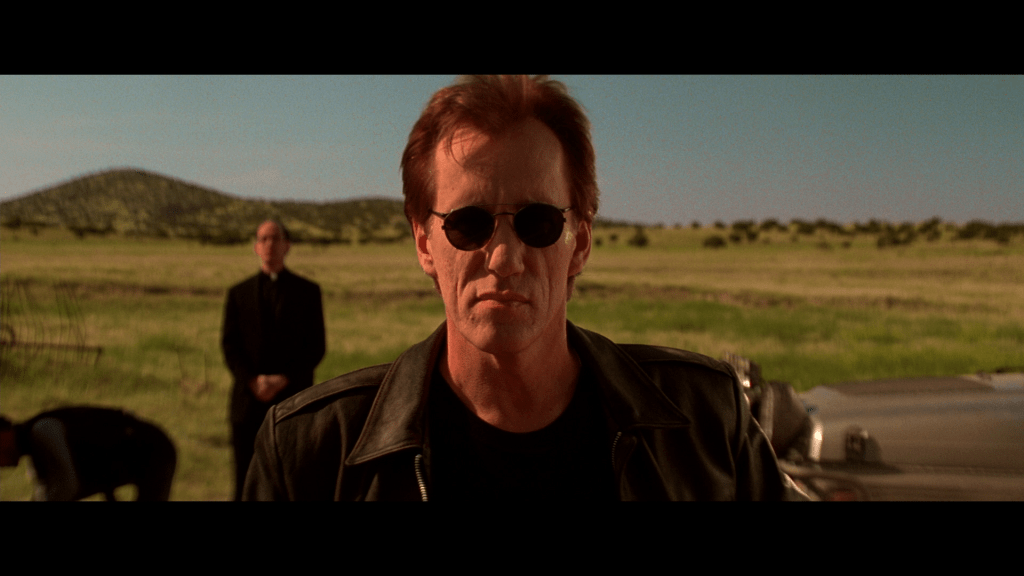
In VAMPIRES, James Woods stars as Jack Crow, the leader of team of vampire hunters who get their funding from the Vatican. We’re introduced to the team when they go into a house in New Mexico and proceed to impale and burn a nest of vampires. While the rest of the team celebrates the mission that night in a hotel filled alcohol, drugs, and whores, Jack can’t escape the feeling that something isn’t right, as he doesn’t believe they got the “master vampire” of the group. Unfortunately, Jack is right to worry. As they’re partying, the master vampire Valek (Thomas Ian Griffith) interrupts the fun and proceeds to kill everyone there, with the exception of Jack, his partner Tony (Daniel Baldwin), and Katrina (Sheryl Lee), a prostitute he decided to just bite on. Valek isn’t just a regular old master vampire, either. As it turns out, he’s the original vampire, and he’s on a quest to find the Berziers Cross, an ancient Catholic relic, that will allow him and other vampires to walk in the daylight. Against this backdrop, Jack, Tony, and a priest named Adam (Tim Guinee) use Katrina, who now has a psychic link with Valek, to try to kill the ultimate master vampire Valek, his cleric accomplice Cardinal Alba (Maximillian Schell), and just hopefully, save mankind in the process!

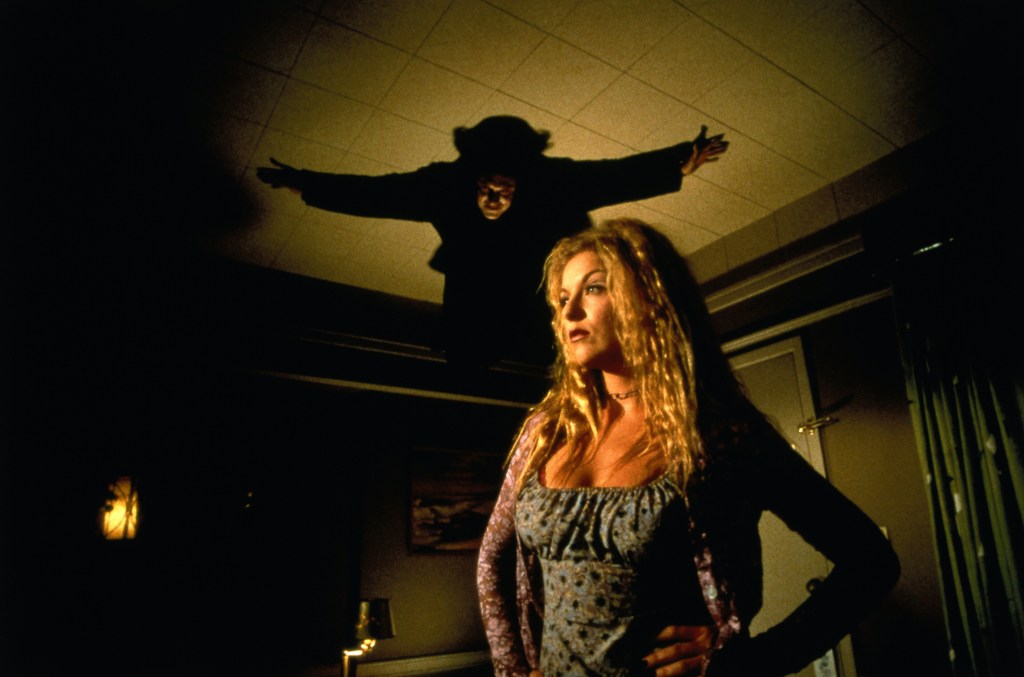
I know that VAMPIRES is not the most well-known or beloved John Carpenter film. He’s done so many great movies, but VAMPIRES is special to me as it was the first of his films that I ever saw in the movie theater. And the opening 30 minutes of the film is as badass as it gets. Carpenter is a master of the set-up. There’s lots of slow motion as Carpenter’s guitar riffs rock the soundtrack and the camera moves in on James Woods, with his cool sunglasses and black leather jacket, just before his team goes in and destroys a vampire nest at the beginning of the film. I also think the set-up of Thomas Ian Griffith as Valek is awesome, as he strolls up to the hotel room while the vampire hunters celebrate, completely unaware of the carnage about to befall them. Griffith has never looked cooler than he did in his long black coat and long hair, both blowing in the wind. These were awesome moments that illustrated Carpenter’s ability to project a sense of visual cool and power that I was mesmerized with. I wanted to see what happens next. And as a 25-year-old man at the time of VAMPIRE’s Halloween release in 1998, I also gladly admit that I really enjoyed the beauty of a 31-year-old Sheryl Lee. I would have definitely done everything I could do to save and protect her. The remainder of the film may have not been able to keep the same momentum as those first 30 minutes, but it’s a solid, enjoyable film, buoyed by the intense performance of Woods!

Vampires (1998) Directed by John Carpenter Shown: Thomas Ian Griffith, Sheryl Lee

There are several items of trivia that interest me about VAMPIRES:

  1. John Carpenter had a good working relationship with James Woods on the set, but they had a deal: Carpenter could film one scene as it is written, and he would film another scene in which Woods was allowed to improvise. The deal worked great, and Carpenter found that many of Woods’ improvised scenes were brilliant.
  2. VAMPIRES was John Carpenter’s only successful film of the 1990’s. Its opening weekend box office of $9.1 million is the highest of any John Carpenter film.
  3. The screenplay for VAMPIRES is credited to Don Jakoby. Jakoby has some good writing credits, including the Roy Scheider film BLUE THUNDER (1983), the Cannon Films “classic” LIFEFORCE (1985), and the Spielberg produced ARACHNAPHOBIA (1990). The reason Don Jakoby interests me, however, is the fact that he had his name removed from the film I’ve seen more than any other, that being DEATH WISH 3 (1985), starring Charles Bronson. Even though Jakoby provided the script for DEATH WISH 3, due to the drastic number of changes, Jakoby insisted his name be removed. The script is credited to the fake “Michael Edmonds” instead.
  4. As I was typing up my thoughts on VAMPIRES today, I learned of the death of the director David Lynch. This brings special poignancy to the fact that John Carpenter cast Sheryl Lee after seeing her on Lynch’s T.V. series TWIN PEAKS (1990).
  5. Frank Darabont, who directed one of the great films of all time, THE SHAWSHANK REDEMPTION (1994), has a cameo as “Man with Buick.” Fairly early in the film, after Crow, Montoya, and Katrina crash their truck escaping the hotel massacre, they encounter the man at a gas station and forcefully take the Buick. This is a strong sign of just how respected John Carpenter was by other great filmmakers at the time.

John Carpenter has directed some absolute classics like ASSAULT ON PRECINCT 13 (1976), HALLOWEEN (1978), ESCAPE FROM NEW YORK (1981), THE THING (1982), and BIG TROUBLE IN LITTLE CHINA (1986). There’s no wrong way to celebrate a man who has brought such joy into our lives through his work. Today, I’m just thankful that he has been given the opportunity to share his talents with us!   

Rest in Peace, David Lynch


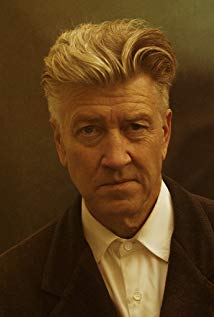
I’m truly devastated to hear the David Lynch, one of the few true visionaries of our age, has passed away.  His death was not totally unexpected.  He had recently opened up about his health difficulties.  But it’s still hard to believe that David Lynch is no longer with us.  He was 78 years old and he was one of the best.  I’m sure we all have much more to write and share about him in the future.  For now, I’m still coming to terms with the news.

From What Did Jack Do?

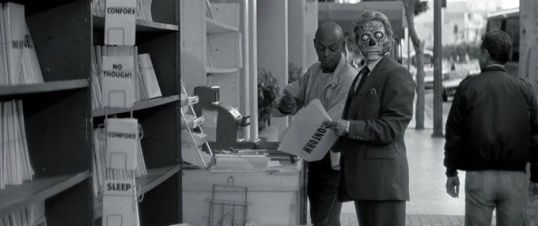
Scene That I Love: “Obey” from John Carpenter’s They Live


They Live (1988, dir by John Carpenter, DP: Gary B. Kibbe)

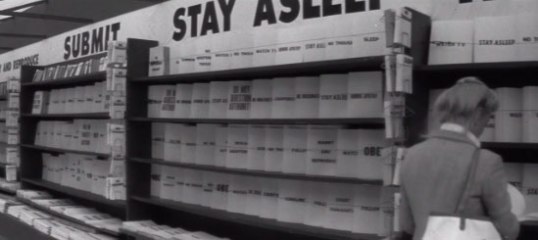
Today, we continue to wish John Carpenter a truly happy birthday!  Needless to say, today’s scene that I love comes from a Carpenter film, 1988’s They Live.  Though They Live was apparently not a huge box office success when it was first released, it’s a film that feels more relevant with each passing day.  Carpenter is often described as being a great horror director but, with this film and The Thing, he shows that he’s a master of capturing cinematic paranoia.

There’s definitely a reason why They Live continues to find new fans over 30 years since it was originally released.  Who hasn’t experienced that secret message of “OBEY!”

6 Shots From 6 Films: Special John Carpenter Edition


4 Or More Shots From 4 Or More Films is just what it says it is, 4 shots from 4 of our favorite films. As opposed to the reviews and recaps that we usually post, 4 Shots From 4 Films lets the visuals do the talking!

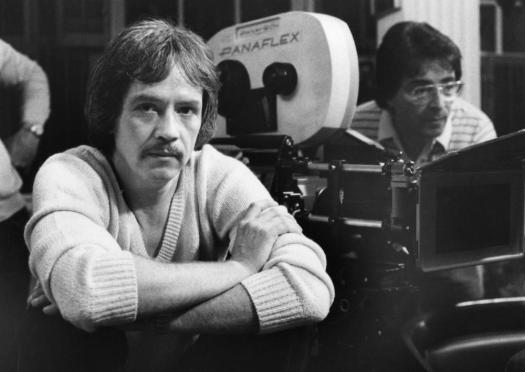
Today, the Shattered Lens wishes a happy 77th birthday to one of this site’s favorite filmmakers and a patron saint of the independent spirit, the great John Carpenter!

In honor of the man and his legacy, here are….

6 Shots From 6 John Carpenter Films

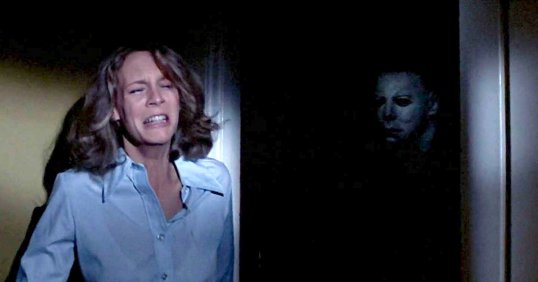
Halloween (1978, dir by John Carpenter, DP: Dean Cudney)

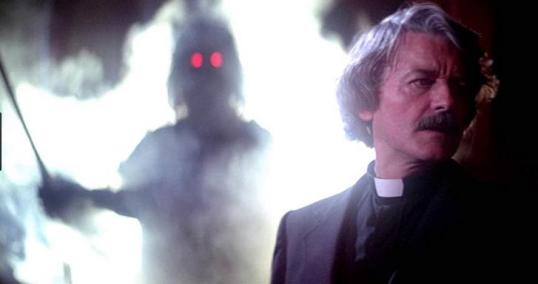
The Fog (1980, dir by John Carpenter, DP: Dean Cudney)

Escape From New York (1981, dir by John Carpenter, DP: Dean Cundey)

The Thing (1982, dir by John Carpenter, DP: Dean Cundey)

Prince of Darkness (1987, dir by John Carpenter, DP: Gary B. Kibbe)

They Live (1988, dir by John Carpenter, DP: Gary B. Kibbe)

The Films of 2025: Dead Before They Wake (dir by Andy Crane and Nathan Shepka)


It’s always interesting to compare American films about the UK with the films made by the people who actually live there.

American films about the UK are all about meeting quirky people, visiting clean and brightly-lit castles, maybe falling in love with a member of royalty, and perhaps discovering that your father is actually a member of Parliament played by Colin Firth.  If the action moves out of London or into Scotland or Wales, one cab be assured that it will involve an American having car trouble outside of a goat farm and then meeting an eccentric but handsome veterinarian.  If the film takes place in Scotland, the veterinarian and his randy father will wear a kilt.  The same thing will happen if the film is set in Wales because most Americans don’t know the difference between Scotland and Wales.

Films about the UK that are actually made in the UK tend to be visually moody and full of people dealing with economic uncertainty while living in depressingly tiny flats.  The cities are often portrayed as being covered in graffiti and no one, not even the film’s hero, is ever particularly happy.  British films about the UK are full of melancholy, rainy atmosphere and are often as violent as American films about the UK are quirky.

Dead Before They Wake takes place and was filmed in some of the darkest corners of Glasgow.  Nathan Shepka plays Alex, a nightclub bouncer who occasionally takes on other jobs.  He’s someone who knows how to handle himself in a fight and he often returns to his small and cramped home with split knuckles and a bruised face.  At the same time, he’s also a loving son whose deaf and very ill father is in a retirement community.  (His father encourages Alex to settle down and get married.)  Outside of his father, the only person with whom he has an regular contact is Gemma (Grace Cordell), a teacher who moonlights as a stripper to make extra money.  (That said, she still finds herself receiving an eviction notice.)  Alex pays Gemma to have sex with him but it’s obvious that there’s something more to their relationship than just a transaction.  They’re two people lost in an increasingly dark world.

Alex is approached by a shabby but well-intentioned attorney named Evan (Sylvester McCoy).  Evan hires Alex to track down a 14 year-old girl who Evan believes has been abducted by a sex trafficking ring.  The girl’s mother is a heroin addict.  The girl’s father is a government official.  Alex reluctantly takes the job and he soon manages to link the girl’s disappearance to a low-rent operation run by Amar (Manjot Sumal).  Amar is someone who is very protective of his own teenage daughter but who has no problem with the idea of abducting girls who are the same age or younger and forcing them to work in his makeshift brothel.  While Alex tries to find a way to infiltrate Amar’s operation, a mysterious man named Holden (Patrick Bergin) watches from the shadows.

Though the plot may remind some of Taken, Dead Before They Wake is far more thoughtful than any Liam Neeson’s admittedly entertaining thrillers.  Alex is not a former secret agent with a precise set of skills.  He’s just a tough guy who knows how to throw (and take) a punch and his investigation of Amar’s operation pushes him over the edge not because he’s trying to rescue a family member but because Alex is a human being who cannot believe or forgive the amount of depravity that he discovers during his investigation.  Throughout the film, there are hints that Amar’s operation is actually fairly small-scale when compared to some of the others.  A meeting with a representative of a national syndicate brings to mind the scandals of the late British DJ Jimmy Savile, who may not be well-known in the States but who, in the UK, became a symbol of depravity when it was revealed, after his death, that he was a prolific pedophile and sex abuser whose actions were largely ignored and sometimes even covered up by the British establishment.

Throughout Dead Before They Wake, there are scenes and details that establish that the film is more than just a revenge flick.  Gemma’s struggle to survive financially is handled with sensitivity and Grace Cordell gives an authentic performance in the role.  The scene where she tries to hide her growing fear upon learning that a picture of her dancing has appeared online and been seen by at least one of her students is wonderfully-acted.  The film contrasts Alex’s small flat with the large home that is owned by Amar and the film opens with a disturbing scene that shows just how exactly Amar kidnaps the girls who he then gets hooked on drugs and forces to work for him.  Dead Before They Wake is about much more than just action.

Dead Before They Wake does have its flaws.  Towards the end of the film, we’re expected to believe that one character overlooked something so obvious that it momentarily makes it difficult for us to suspend our disbelief.  But, for the most part, this is a disturbing and effective thriller, one that concludes on a proper note of Scottish melancholy.

SLING BLADE (1996) – #ArkansasMovies, my celebration of movies filmed in the Natural State!


I love watching movies that are filmed in my home state of Arkansas. We’ve had our share of big stars show up in the Natural State. Burt Reynolds, Billy Bob Thornton, Bill Paxton, Robert De Niro, Dennis Quaid, Matthew McConaughey, Tom Cruise and Andy Griffith have all filmed really good movies here. Martin Scorsese directed one of his very first movies in southern Arkansas. It’s going to be fun revisiting some of my favorite Arkansas movies and sharing them with you!

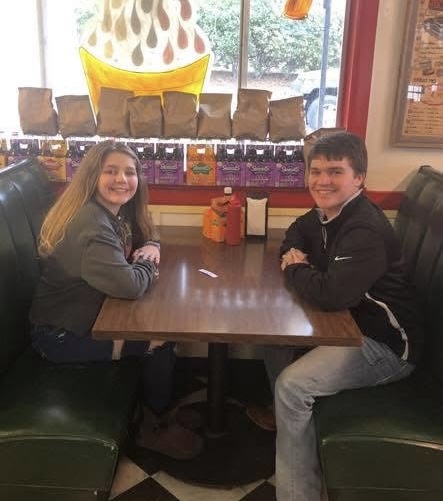
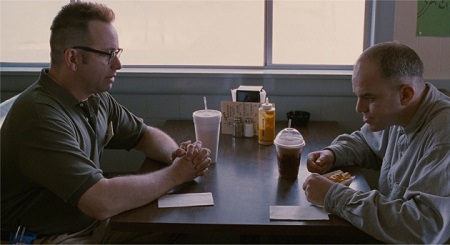
I live out in the country in Saline County, Arkansas. Back in 1996, Billy Bob Thornton wrote, directed and starred in a little film made right here called SLING BLADE (1996). It’s one of my favorite movies. Here’s a picture of our son and daughter sitting at the same table at Garry’s Drive-In Diner where Billy Bob Thornton and John Ritter sat in the movie. 

Thornton stars as Karl Childers, a developmentally disabled man who was abused as a child by his parents and the other children in the community. At the age of 12, he murdered his mom and her teenage lover Jessie Dixon with a sling blade. After 30 years in the mental hospital, the state decides he’s no longer dangerous, so they give him his stack of books and send him on his way. Karl has no clue of how to get on with his life, but the administrator of the hospital (James Hampton) helps him get a job as a small engine mechanic in his hometown. Hanging out at the laundromat one day, Karl meets a boy named Frank (Lucas Black) and helps him carry his bags of clothes back to his house. The two become friends and start hanging out a lot together. Frank introduces Karl to his mom, Linda (Natalie Canerday), and her gay best friend and boss, Vaughan (John Ritter). Karl also meets Linda’s abusive and alcoholic boyfriend, Doyle (Dwight Yoakam). Karl grows to love Frank and Linda. When he witnesses a drunk Doyle’s abusive and threatening behavior towards Frank and Linda one night, Karl starts thinking that Doyle may really hurt his friends someday. He decides he’s going to make sure that can never happen. 

First and foremost, I love SLING BLADE because of Billy Bob Thornton’s performance as Karl Childers. He had been developing the character of Karl for many years before the movie was made. He loved pulling “Karl” out when he was just hanging out and goofing around with his friends. He based his character on bits and pieces of so many different people in his life. As a native Arkansan, many of the words he says and the way he says them reminds me of different people I’ve known over the years. His opening monologue where he describes the murders of his mother and the young Jessie Dixon is a masterpiece in and of itself. Thornton created a truly unique character, and that’s extremely rare these days. It’s a performance for the ages and continues to inspire terrible imitations to this day!

The remainder of the cast in SLING BLADE is so good and natural. Lucas Black is phenomenal as Frank. Billy Bob Thornton has been asked how he got such a great performance from the then 12-year-old boy from Alabama. He says he didn’t get that performance; that’s just the kind of actor Lucas Black is. The relationship between Karl and Frank is the key to the film working, and Black is perfect. Natalie Canerday is excellent as Frank’s mom, Linda. She’s from Russellville, Arkansas, so her accent is authentic, and she just blends perfectly into the film. John Ritter provides a very solid supporting performance as Linda’s gay friend who cares deeply for her and Frank. Thornton was part of the cast of Ritter’s early 90’s sitcom with Markie Post called HEARTS AFIRE. He actually wrote this screenplay while working on the show. The two were great friends off camera and Ritter actually worried that he wouldn’t be able to give a serious performance opposite Thornton’s portrayal of Karl. And then there’s country music superstar Dwight Yoakam as the abusive bully Doyle Hargraves. He’s simply great in the film. He doesn’t just portray Doyle as a monster either. There are many people in this world like Doyle Hargraves, and Yoakam is able to capture that. Director Jim Jarmusch has a memorable cameo in the film. He sells Karl his “french fried potaters.” And the great Robert Duvall even makes a short appearance in the film as Karl’s dad. Duvall was over in the Memphis area filming his own movie A FAMILY THING, which was written by Thornton. He just made the 2 hour drive over for the day and filmed his scene.

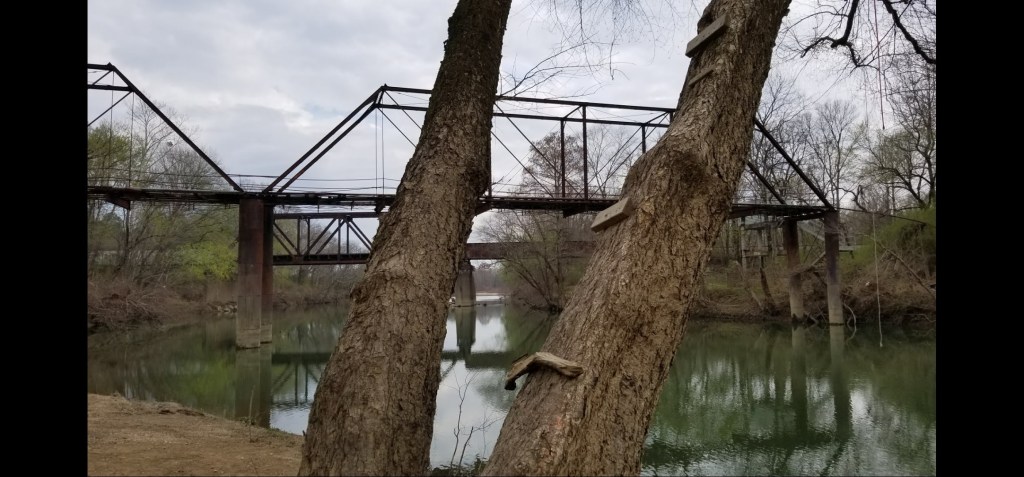
Every scene filmed in SLING BLADE is filmed here in Benton and Saline County. The opening and closing scenes between Thornton and actor J.T. Walsh at the “nervous hospital” were filmed at the old Benton Services Center, which is now a psychiatric nursing home just outside of Benton. I’ve driven by the location of the home where Linda and Frank lived. I drive by the laundromat where Karl meets Frank every time I go eat at Garry’s Sling Blade Drive-in. I’ve driven out to the bridge over the Saline River that is prominently featured in the film (see picture below). Heck, I even went to college at the University of Central Arkansas with one of the young ladies who interview Karl at the beginning of the film. I love this movie, and I’m so proud that it was filmed in my backyard. 

SLING BLADE is an incredible film with a truly unique character at its center. The film is at times funny, heartbreaking, violent, slow, awkward, dramatic, and thrilling. It’s a resounding success for Billy Bob Thornton as a director, actor, and writer, even winning him an Oscar for his screenplay. I give this film my highest recommendation. 

I’ve included the trailer for SLING BLADE below:

Past reviews in the #ArkansasMovies series include:

Lisa Marie Reviews An Oscar Nominee: Mississippi Burning (dir by Alan Parker)


1988’s Mississippi Burning opens on a lonely Mississippi backroad in 1964.  A car is pulled over by the police.  Inside the car are three young men, one black and two white.  Judging from their nervous expressions and the sound of the people who stopped them and the fact that they’re in Mississippi during the 60s, we can guess what is about to happen to the people in the car.

With the three men, who were civil rights activists who were involved in voter registration efforts, officially considered to be missing, the FBI sends down two agents to find out what happened.  The two agents are Alan Ward (Willem DaFoe) and Rupert Anderson (Gene Hackman).  Ward is a Northerner who does things by the book and who resents having to deal with lax Southern law enforcement.  He is serious-minded and, just in case we need a reminder of how serious he is, he wears bar-rimmed glasses that make him look like the world’s most fearsome IRS agent.  Anderson is from Mississippi.  He’s a talkative good ol’ boy who was a sheriff before he joined the FBI.  “You know what has four eyes but can’t see?” Anderson asks, “Mississippi.”  It’s a tense partnership, as Ward sometimes disapproves of Anderson’s methods and Anderson thinks that Ward doesn’t understand how things work in Mississippi.

From the first minute we meet local law enforcement, we know that they’re the killers.  Just the fact that one of them are played by Brad Dourif is evidence enough.  However, no one in town is willing to say a word against the police or their cronies.  The white citizens are either too intimidated or they agree with what happened to the three civil rights workers.  (The three men are often referred to as being “outside agitators.”)  The black townspeople live in fear of the Klan and have no reason to trust the word of white FBI agents like Ward and Anderson.

Ward and Anderson investigate the case, hoping that they can find some bit of evidence that will prove the guilt of Sheriff Stuckey (Gailard Sartain), Deputy Pell (Brad Dourif), KKK leader Clayton Townley (Stephen Tobolowsky), and maybe even the town’s mayor (R. Lee Ermey).  One advantage that the FBI has is that the murderers are incredibly stupid.  Another is that Deputy Pell’s abused wife (Frances McDormand, giving the film’s best performance) might be persuaded to testify against her husband.

Mississippi Burning is an example of both powerful filmmaking and problematic history.  Like Ridley Scott, director Alan Parker got his start making commercials and he brought the same sensibility to his movies.  He knew what audiences wanted to see and he made sure to give it to them.  Mississippi Burning looks fantastic and is full of memorable performances.  (Both McDormand and Hackman received Oscar nominations).  The action moves quickly and the villains are so hateful that watching them end up getting humiliated really does bring about a sort of emotional release.

At the same time, this is a film about the Civil Rights era that presents the FBI as being the heroes.  And while it’s true that the FBI did investigate the real-life murders that inspired this film, Mississippi Burning leaves out the fact that the FBI was just a rigorous in harassing and wire tapping Martin Luther King as they were in keeping an eye on the leaders of the Klan.  It’s a film about racism in which the heroes are as white as the villains.  Gene Hackman gives a good performance as Rupert Anderson but the film never really delves all that deeply into Anderson’s feelings about racism in the South.  We’re told that he was a sheriff in Mississippi but we never learn much about what type of sheriff Anderson was.  He’s opposed to the Klan but, historically, the same can be said of many segregationists in the 60s, many of whom felt the Klan’s activities brought unwanted federal attention to what was happening in their home states.  By not delving into Anderson’s own history as a member of Mississippi law enforcement or the FBI’s own more problematic history when it comes to the civil rights movement, the film provides viewers with the escape of viewing the bad guys as being aberrations as opposed to being the norm in 1964.  In the end, Mississippi Burning is an effective thriller with strong heroes and hateful villains.  Just don’t watch it for historical accuracy.

Mississippi Burning was nominated for Best Picture but it lost to Rain Man.