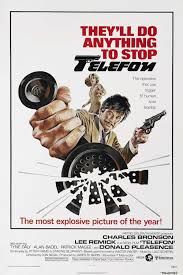
Well before THE NAKED GUN was triggering Reggie Jackson, director Don Siegel and Charles Bronson were triggering human time bombs in TELEFON (1977). Quentin Tarantino even borrowed from this film when he chose the Robert Frost poem for Stuntman Mike’s (Kurt Russell) lap dance from Arlene (Vanessa Furlito). It’s not as sexy, but it’s still a good time as Bronson tries to prevent World War III. Enjoy!
Released in 1999, The Straight Story is one of the greatest films ever made about America.
Alvin Straight (Richard Farnsworth) is an elderly veteran of World War II. He lives in Iowa, a kind but rather taciturn man who doesn’t have time for doctors and would rather live on his own terms. That said, when his daughter (Sissy Spacek) finally does manage to drag Alvin to a doctor, he’s told to stop smoking and to start using a walker to get around. Alvin refuses, though he does start using two canes. Alvin is an old man. He’s lived a long time and, in his opinion, he knows best about what he needs to do.
For instance, when Alvin hears that his long-estranged brother Lyle (Harry Dean Stanton), has had a stroke, Alvin decides that he need to go Wisconsin to see him. The only problem is that Alvin can barely see and he can’t walk and there’s no way anyone is going to give him a car or even a driver’s license. His solution is to ride a lawnmower from Iowa to Wisconsin.
It’s based on a true story and if The Straight Story sounds like a film that will make you cry, it is. Richard Farnsworth was terminally ill when he was offered the role of Alvin and he accepted because he admired Alvin’s determination to live life his own way. As portrayed in the film, Alvin is not one to easily betray his emotions. He grew up as a part of that stoic generation. He saw his share of violence and death while he was serving during World War II and one gets the feeling that his attitude has always been that, if he could survive that, he can survive anything. (The closest Alvin gets to becoming openly emotional is when he meets another veteran in a bar and it becomes obvious that the two of them share a bond that, as people who seen and survived war, only they can really understand.) Farnsworth so completely becomes Alvin Straight that it’s easy to forger that he was a veteran actor who had a long career before starring in The Straight Story. Alvin may not show much emotion but Farnsworth communicates so much with just the weariness in his eyes and his slow but determined gait that we feel like we know everything about him.
The film follows Alvin on his way to Wisconsin. Along the way, he meets various people and, for the most part, they’re all good folks. Even the runaway hitchhiker (Anastasia Webb) turns out to be a kind soul. When Alvin momentarily loses control of his lawn mower, a group of stranger run out to help him. They don’t know who he is or why he was riding his lawnmower down the street. All that matter is that, at that moment, he’s a person who needs help. The Straight Story celebrates both the beauty and the people of America. It’s one of the most sincere and life-affirming films ever made, one that contains not a trace of cynicism and which is all the better for it. And while many people might be shocked to discover that this film was directed by David Lynch, the truth of the matter is that a strong love for America and Americana runs through all of Lynch’s films. Lynch was an artist who believed that people could surprise you with their kindness and that’s certainly the case with The Straight Story.
The Straight Story was the only one of David Lynch’s films to receive a G-rating. It was also the only film that Lynch made for Disney. It’s interesting to look at Lynch’s filmography and see this heartfelt and deeply touching film sitting between Lost Highway and Mulholland Drive. But The Straight Story really does feature David Lynch at his best. It also reveals him as a filmmaker who could do something unexpected without compromising his signature vision. There’s a lot of beautiful, Lynchian images in The Straight Story. But there’s also a lot of heart.
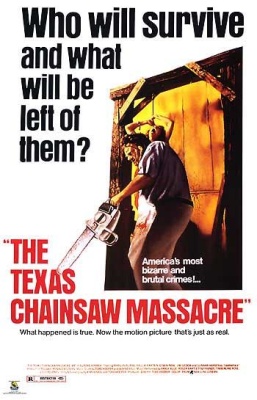
Since today is Tobe Hooper’s birthday, it seems fitting that today’s scene of the day should come from his best-known film. The opening of 1974’s The Texas Chainsaw Massacre is genuinely unsettling, from the opening narration to the scene of the body being dug up to the news reports of grave robbery. Even the opening credits feel ominous!
The narration was, of course, provided by a young John Larroquette, who has since said that he was “paid in marijuana” for what would become his first feature film credit.
4 Shots From 4 Films is just what it says it is, 4 shots from 4 of our favorite films. As opposed to the reviews and recaps that we usually post, 4 Shots From 4 Films lets the visuals do the talking!
Today, on what would have been his 82nd birthday, the Shattered Lens pays tribute to Texas’s own, Tobe Hooper!
The Austin hippie who redefined horror and left thousands of yankees terrified of driving through South Texas, Tobe Hooper often struggled to duplicate both the critical and the box office success of The Texas Chainsaw Massacre. It’s only been in the years since his death that many critics and viewers have come to truly appreciate his unique and subversive vision.
Down here, in Texas, we always believed in him.
It’s time for….
4 Shots From 4 Tobe Hooper Films
Eggshells (1969, dir by Tobe Hooper, DP: Tobe Hooper)
The Texas Chainsaw Massacre (1974, dir by Tobe Hooper, DP: Daniel Pearl)
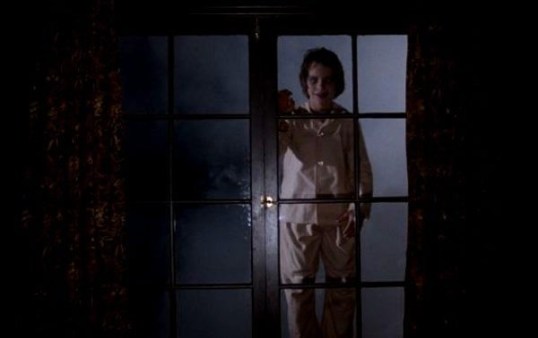
Salem’s Lot (1978, dir by Tobe Hooper, DP: Jules Bremmer)
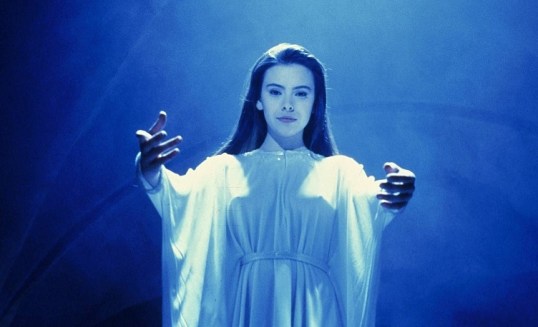
Lifeforce (1985, dir by Tobe Hooper, DP: Alan Hume)
As some of our regular readers undoubtedly know, I am involved in a few weekly live tweets on twitter. I host #FridayNightFlix every Friday, I co-host #ScarySocial on Saturday, and I am one of the five hosts of #MondayActionMovie! Every week, we get together. We watch a movie. We tweet our way through it.
Tonight, at 9 pm et, Tim Buntley will be hosting #ScarySocial! The movie? Diary of the Dead, from George Romero!
If you want to join us this Friday, just hop onto twitter, start the movie at 9 pm et, and use the #ScarySocial hashtag! I’ll be there tweeting and I imagine some other members of the TSL Crew will be there as well. It’s a friendly group and welcoming of newcomers so don’t be shy.
The Sundance Film Festival is currently underway in Utah. For the next few days, I’ll be taking a look at some of the films that have previously won awards at Sundance.
First released in 1990, Longtime Companion was one of the first mainstream feature films to deal with the early days of the AIDS epidemic.
The film follows a group of friends and lovers over the course of ten years. The film opens with a crowded and joyous 4th of July weekend at Fire Island. Willy (Campbell Scott) is a personal trainer who has just started a relationship with an entertainment lawyer who, due to his beard, is nicknamed Fuzzy (Stephen Caffrey). Willy’s best friend is the personable and popular John (Dermot Mulroney). David (Bruce Davison) and Sean (Mark Lamos) are the elder couple of the group. Sean writes for a soap opera and one of Fuzzy’s clients, Howard (Patrick Cassidy), has just landed a role on the show. He’ll be playing a gay character, even though everyone warns him that the role will lead to him getting typecast. The group’s straight friend is Lisa (Mary-Louise Parker), an antique dealer who lives next door to Howard and who is Fuzzy’s sister. The film takes it times showing us the friendships and the relationships between these characters, allowing us to get to know them all as individuals.
Even as the group celebrates the 4th, they are talking about an article in the New York Times about the rise of a “gay cancer.” Some members of the group are concerned but the majority simply shrug it off as another out-there rumor.
The movie moves quickly, from one year to another. John, the youngest of them, is the first member of the group to die, passing away alone in a hospital room while hooked up to a respirator. (The sound of the respirator is one of the most haunting parts of the film.) Sean soon becomes ill and starts to dramatically deteriorate. It falls to David to take care of Sean and to even ghostwrite his scripts for the soap opera. Howard’s acting career is sabotaged by rumors that he has AIDS while Willy and Fuzzy tentatively try to have a relationship at time when they’re not even sure how AIDS is transmitted. At one point, Willy visits a friend in the hospital and then furiously scrubs his skin in case he’s somehow been infected. When one member of the group passes, his lover is referred to as being his “longtime companion” in the obituary. Even while dealing with tragedy and feeling as if they’ve been shunned and abandoned to die by the rest of America, the characters are expected to hide the details of the lives and their grief.
It’s a poignant and low-key film, one that was originally made for PBS but then given a theatrical release after production was complete. Seen today, the film feels like a companion piece to Roger Spottiswoode’s And The Band Played On. If And The Band Played On dealt with the politics around AIDS and the early struggle to get people to even acknowledge that it existed, Longtime Companion is about the human cost of the epidemic. The film is wonderfully acted by the talented cast. Bruce Davison was nominated for an Oscar for his sensitive performance as David. If not for Joe Pesci’s performance in Goodfellas, it’s easy to imagine that Davison would have won. The scene where he encourages the comatose Sean to pass on will make you cry. Interestingly, when David gets sick himself, it happens off-screen as if the filmmakers knew there was no way the audience would have been able to emotionally handle watching David suffer any further.
Longtime Companion played at the 1990 Sundance Film Festival, where it won the Dramatic Audience Award.
One of my favorite scenes from TV’s King of the Hill occurs in an episode in which Hank and Peggy are celebrating their wedding anniversary. They’ve sent Bobby and Luanne away for the weekend. They have the house to themselves but, after their anniversary party, Peggy is feeling depressed. She tells Hank that, for the first time ever, she feels old and she regrets all the dreams that she had that have yet to come true, like inventing and selling her own barbecue sauce.
Trying to cheer her up, Hank says, “C’mon, Peg. We got the house to ourselves for weekend …. and I rented an R-rated movie!”
Peggy looks up, briefly hopeful that Hank did something romantic. “What movie?” she asks.
Hank hesitates, glances down at the floor, and says, “Uhmm …. Platoon.”
It’s funny because it’s true. Just about every man that I know loves Platoon. First released in 1986 and reportedly based on Oliver Stone’s own experiences as an infantryman in Vietnam, Platoon is often cited as being one of the greatest war films ever made. Oddly enough, the film has an anti-war and anti-military message but, in my experience, those who love it talk more about the battle scenes than any message that Stone may have been trying to impart about the futility of war. Pauline Kael once wrote that Oliver Stone had left-wing politics but a right-wing sensibility and I think you can definitely see that in Platoon. Despite all of the characters talking about how pointless the war is and how much they resent being forced to risk their lives for no apparent purpose, the film’s energy comes from the scenes of Chris Taylor (Charlie Sheen) stalking through the jungle and, towards the end, losing his mind and giving himself completely over to the adrenaline that comes from being trapped in the middle of a battle. Throughout the film, we hear Taylor’s rather pedantic thoughts on the military and his fellow soldiers but it’s hard not to notice that his actions and his dialogue are usually far less eloquent. Taylor may be a rich intellectual (and wow, is Charlie Sheen ever unconvincing when it comes to portraying that part of Taylor’s personality) but when he’s in the jungle, he’s just fighting for survival.
The film’s plot centers around the conflict between two sergeants, the peace-loving Elias (Willem DaFoe) and the war-loving Barnes (Tom Berenger). Taylor has to decide which one of the two to follow. The pot-smoking Elias loves his men and goes out of his way to protect them. The beer-drinking Barnes has a much harsher view of the world but, at the same time, he’s the type of scarred warrior who seems immortal. One gets the feeling that he’ll never be defeated. The rest of the platoon is full of familiar faces, with everyone from John C. McGinley to Francesco Quinn to Tony Todd to Forest Whitaker to Johnny Depp to a baby-faced Kevin Dillon showing up. (Dillon is especially frightening as a psycho who has, for some reason, been nicknamed Bunny.) The majority of the platoon is dead by the end of the film. Even with the leadership of Elias and Barnes, the soldiers are stuck in a winless situation. As Taylor points out, the Americans aren’t just fighting the enemy. They’re also fighting each other.
Platoon is certainly not my favorite of the film nominated in 1986. I would have gone with A Room With A View. (Blue Velvet, which is as influential a film as Platoon, was not even nominated.) That said, I can’t deny the power of Platoon‘s combat scenes. Though Stone’s script is didactic and Taylor’s narration is awkwardly deployed throughout the film, Stone’s direction definitely captures the fear and dread of being in a strange place with no idea of whether or not you’re going to survive. Stone is critical of the military (at one point, an officer calls an air strike on his own men) but seems to love the soldiers, even the ones who have pushed over to the dark side.
Platoon was not the first Best Picture nominee to be made about the Vietnam War. The Deer Hunter, Coming Home, and Apocalypse Now were all released first. But both The Deer Hunter and Apocalypse Now are surreal epics that seem to take place in a dream world. Coming Home, which has a script that somehow manages to be even more didactic than Platoon‘s, focuses on the war back home. Platoon is far more gritty and personal film. Watching Platoon, you can smell the gunpowder and the napalm and feel the humidity of the jungle. I can understand why it won, even if I prefer to watch Helena Bonham Carter and Julian Sands fall in love.
Like Woman of the Hour, Hit Man is a Netflix film that was critically acclaimed when it was released but which didn’t get much of an Oscar push during Awards Season.
The majority of the film’s acclaim was for Glen Powell, who plays Gary Johnson. Gary is a psychology professor at the University of New Orleans. When we first see him, he’s not exactly the most dynamic professor on campus. In fact, he’s so mild-mannered that most of his students would probably be stunned to learn that he has a side job working for the New Orleans Police Department. He helps them set up sting operations, advising a cop named Jasper (Austin Amelio) on how to pretend to be a hit man. Jasper, being kind of a douchebag, doesn’t really appreciate the advice. However, when Jasper gets suspended for beating a suspect, Gary is quickly recruited to take Jasper’s place as the department’s fake killer.
To his surprise, Gary turns out to be very good at pretending to be a professional killer. Using his academic skills, he gets a read on the person who wants to hire him and then he shapes his persona to appeal to that person’s needs. The best part of the film are the montages where we see Gary taking on identity after identity. Soon, Gary is the NPD’s best undercover cop, even if he’s technically not even a part of the force. He even becomes a better psychology professor as pretending to be someone else allows him to loosen up in his real life as well. But then he meets a woman (Adria Arjona) who wants to have her abusive husband killed. For the first time, Gary tries to talk someone out of committing a murder.
And through it all, Glen Powell gives an excellent and charismatic performance as not only Gary but also all the different killers that he pretends to be. If nothing else, this film proves that Glen Powell is not just a likable actor. He’s a legitimate film star, capable of creating a believable character and getting the audience to care about what happens to him. Powell gets good support from both Arjona and Austin Amelio and the various actors who pop up as people who want to hire a hit man all make a strong impression as well. But, make no mistake about it, Hit Man is a showcase for Glen Powell. Just as he did with Matthew McConaughey in Dazed and Confused, Richard Linklater introduces audiences to a film star in Hit Man.
That said, I have to admit that, outside of Powell’s performance, I was a little bit dissatisfied with the direction that Hit Man took its story. There are eventually two actual murders in Hit Man. One of the murders occurs offscreen and can at least be justified by what we know about the victim. The other murder takes place onscreen and, even though the victim isn’t particularly likable, it still feels a bit drawn out and out-of-place in what had otherwise been a fairly breezy comedy.
Narrative flaws aside, Hit Man is worth seeing for Powell’s movie star performance.
Charles Bronson plays a boat captain named Joe Martin who seems be living the good life in the south of France. He has a great job renting out boats to tourists! He has great luck beating his friends out of big stacks of cash in poker. He has a beautiful wife (Liv Ullman), and most importantly, he has about the biggest biceps I’ve seen in a movie not starring Arnold Schwarzenegger. This idyllic existence falls apart when some men from his past show up and force him to use his boat to help them smuggle drugs. It seems these guys feel like Martin owes them something since they had to go to prison for killing a cop, while ace driver Martin, escaped. As you might expect, nobody’s plans go as expected and much action ensues!
The first thing that stands out in this film is the cast, that includes James Mason, Liv Ullman, Michael Constantin, and Jill Ireland. Bronson’s European films uniformly had tremendous casts and this one is no different. Even with these well known actors, Jean Topart as the villainous Katanga, is a real standout. Second, this is the first of three films that Bronson completed with director Terence Young, who is most famous for kicking off the James Bond franchise with DR. NO, THUNDERBALL, and FROM RUSSIA WITH LOVE. Young knows how to stage action scenes, and with the help of famous French stuntman Remy Julienne, the two men cook up some impressive car stunts and chase sequences. Finally, Bronson himself exudes charisma and is in maximum physical condition in this film. In a career defined largely by his supreme conditioning, this may be Bronson’s most impressive physical performance.
Charles Bronson became an international superstar when he went to Europe in 1968, where he made a series of good films with great international casts. COLD SWEAT doesn’t come together quite as well as some of his other European films like RIDER ON THE RAIN, VIOLENT CITY & RED SUN, but it’s still a fun film with good action sequences and an impressively pumped up Charles Bronson. And the film has never looked better. After decades of shabby VHS and DVD copies, Kino Lorber put out a very nice blu ray in 2019. It’s nice seeing the movie in such a high quality presentation.
As some of our regular readers undoubtedly know, I am involved in a few weekly live tweets on Twitter and Mastodon. I host #FridayNightFlix every Friday, I co-host #ScarySocial on Saturday, and I am one of the five hosts of #MondayActionMovie! Every week, we get together. We watch a movie. We tweet our way through it.
Tonight, at 10 pm et, #FridayNightFlix presents one of my favorite movies, Shattered Glass!
If you want to join us this Friday, just hop onto twitter, start the movie at 10 pm et, and use the #FridayNightFlix hashtag! It’s a friendly group and welcoming of newcomers so don’t be shy.
Shattered Glass is available on Prime and Pluto! See you there!



 Through the Shattered Lens